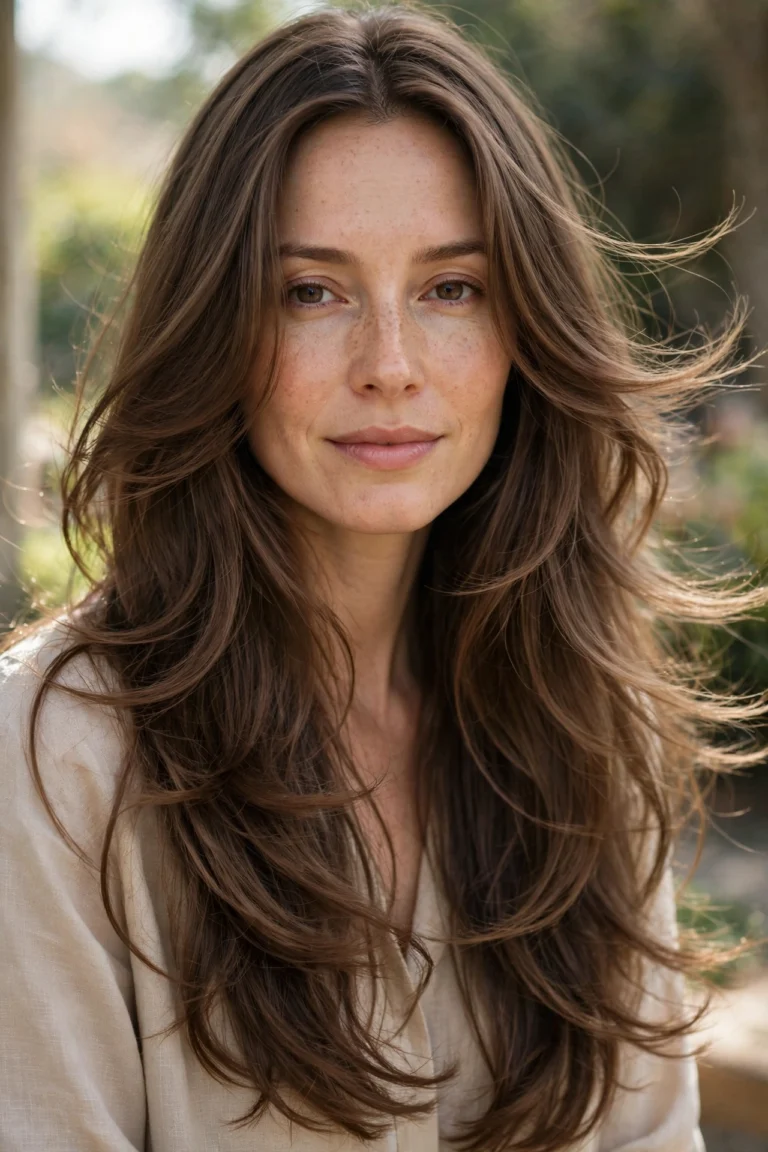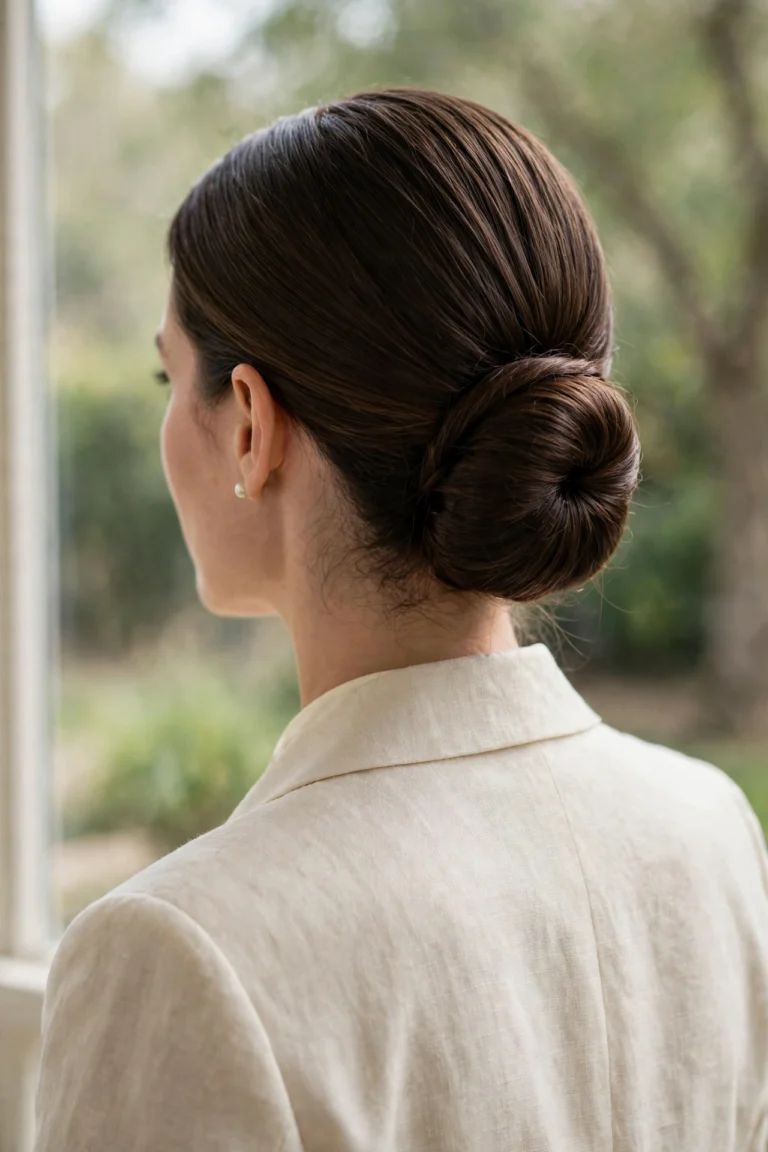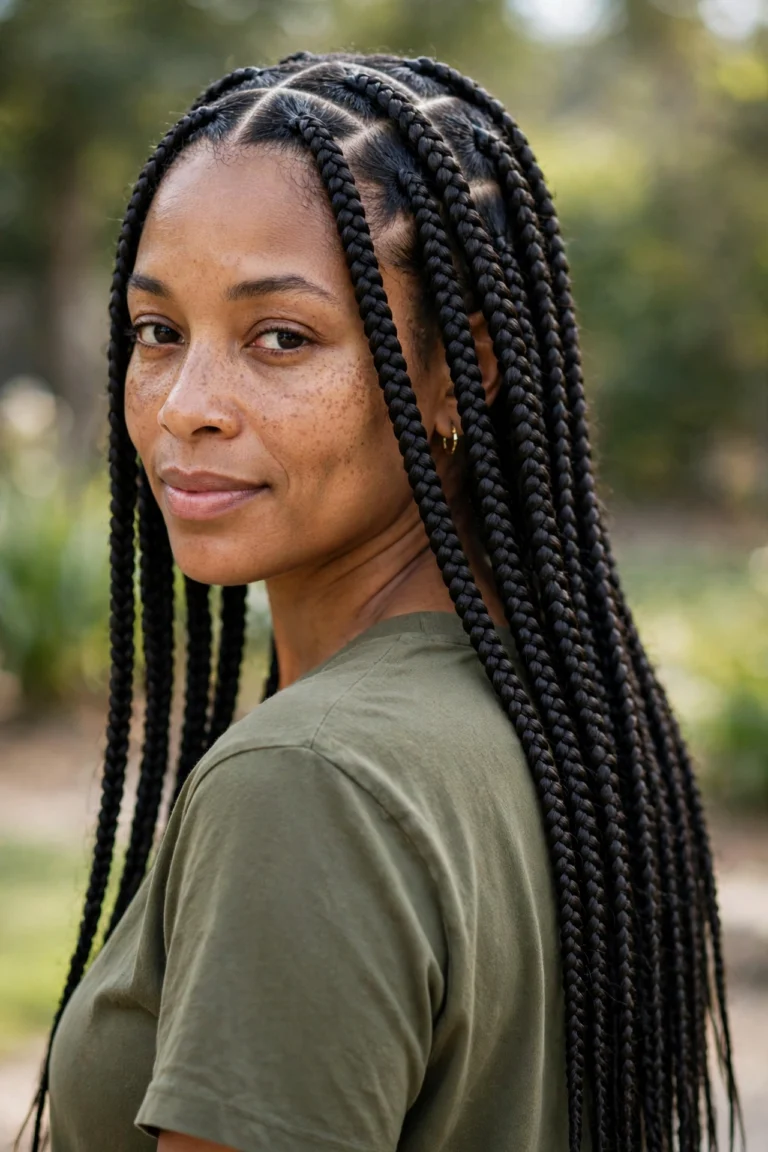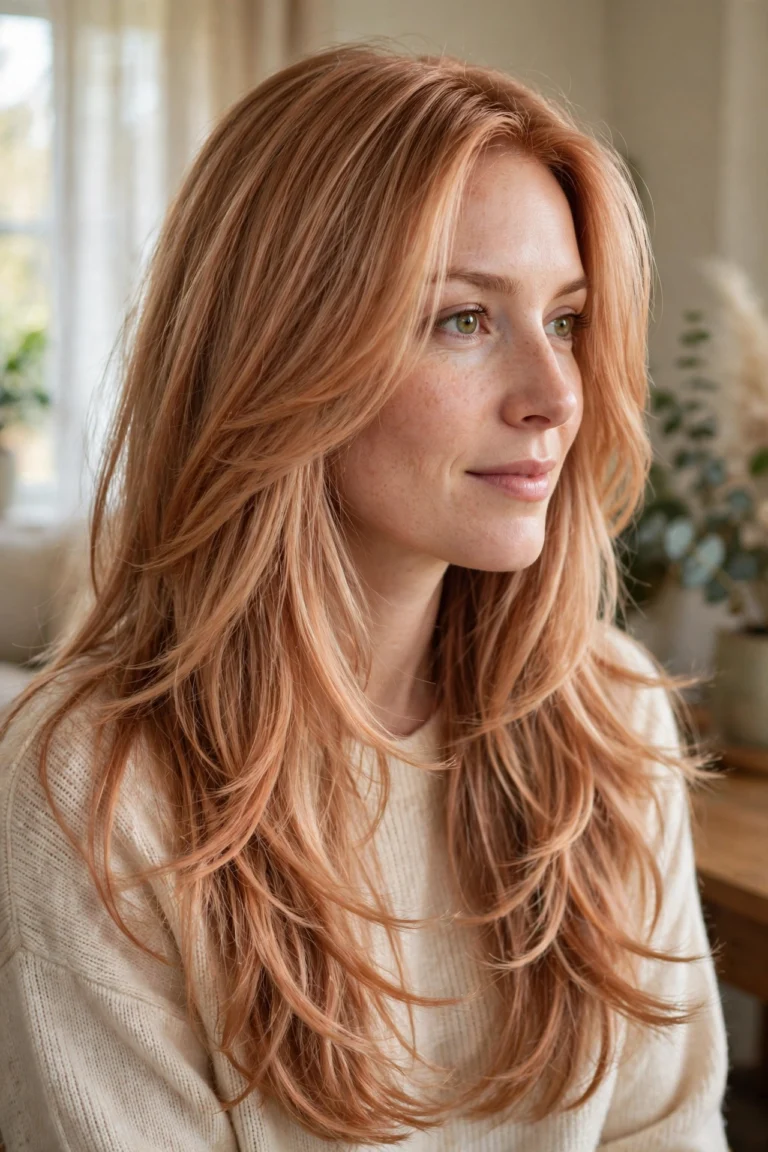
33 Dutch Braids & French Braids Ideas for 2026 — Classic, Boho & Wedding Styles
Introduction
French braids and Dutch braids are two of the most loved hairstyles in the world, and for good reason. They keep hair neat and out of the face, they work for school, work, weddings and weekends, and they suit almost every hair length and texture. The only real difference is the technique: a French braid weaves strands over the middle so the braid sits flat against the head, while a Dutch braid weaves strands under the middle so the braid pops out in a bold, raised rope. Once you know both, you can mix them into endless styles.
In this guide you will find 33 Dutch braid and French braid ideas, each with its own original photo and practical styling advice. There are classic single braids, double braids, crowns, buns, ponytails, side braids, boho looks, wedding styles and options for short, medium and very long hair. Every idea is written so a beginner can follow it with just a brush, a few hair ties and some bobby pins.
Whether you are braiding your own hair or someone else's, the key is patience and practice. Start with clean, slightly damp or day-old hair, because freshly washed hair can be slippery. A little texturising spray or dry shampoo adds grip, and a light mist of hairspray at the end keeps everything in place. Work through the ideas below, pick the ones that fit your hair and your day, and enjoy discovering how versatile a simple braid can be.
1. Classic French Braid
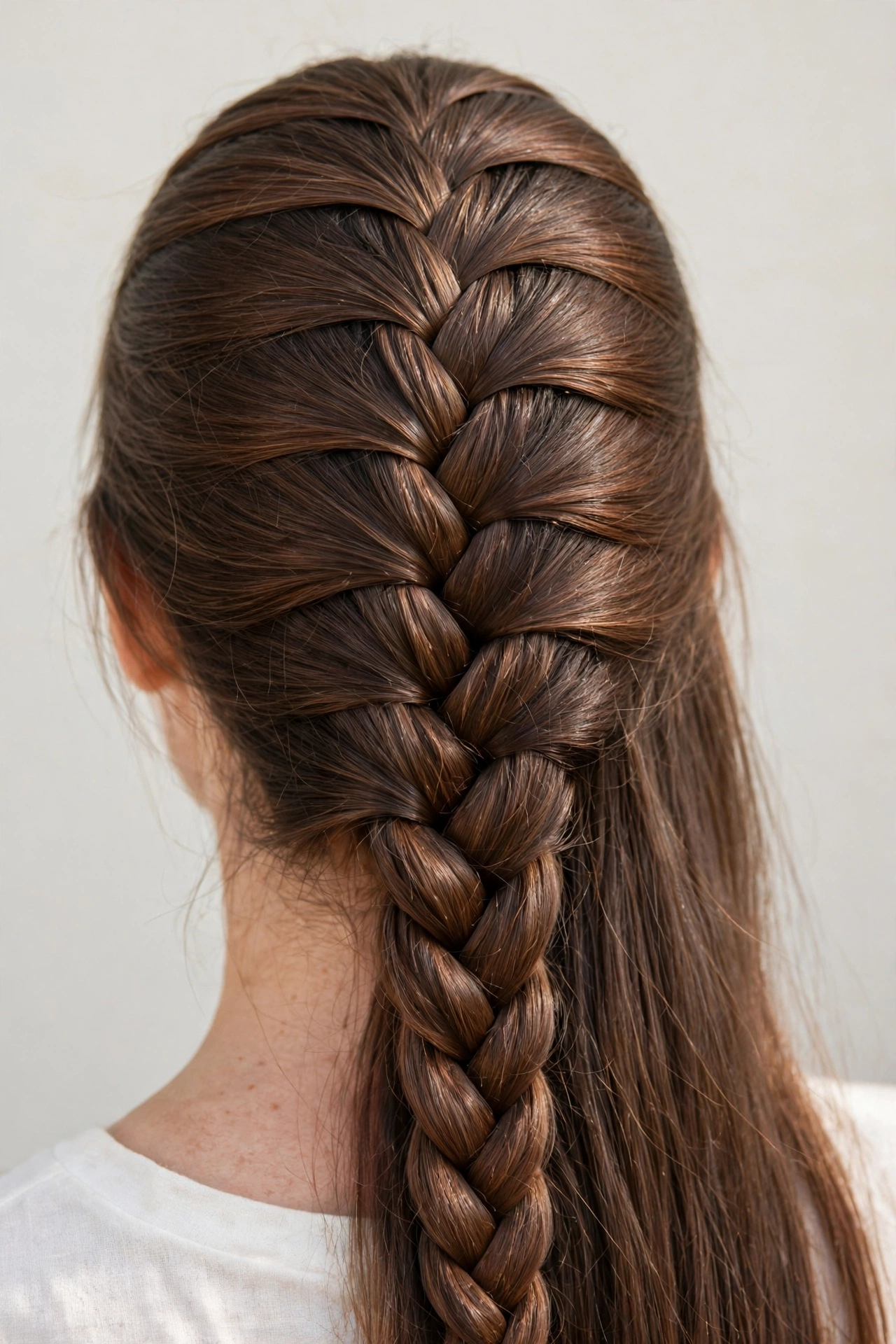
The classic French braid is the foundation of almost every braided style, and it never goes out of fashion. It starts at the crown and gathers in small sections of hair as it travels down the head, finishing in a neat plait that sits flat and smooth. This is the braid to learn first, because once you can do it confidently, every other French braid variation becomes much easier.
To create it, brush the hair smooth and gather a section at the top of the head. Divide it into three strands and begin a normal plait, adding a small piece of loose hair to each side strand before crossing it over the middle. Keep your sections even and your tension gentle but firm. Finish with a hair tie and a light mist of hairspray, and pull the braid very slightly wider at the end if you want a softer, fuller look.
2. Classic Dutch Braid
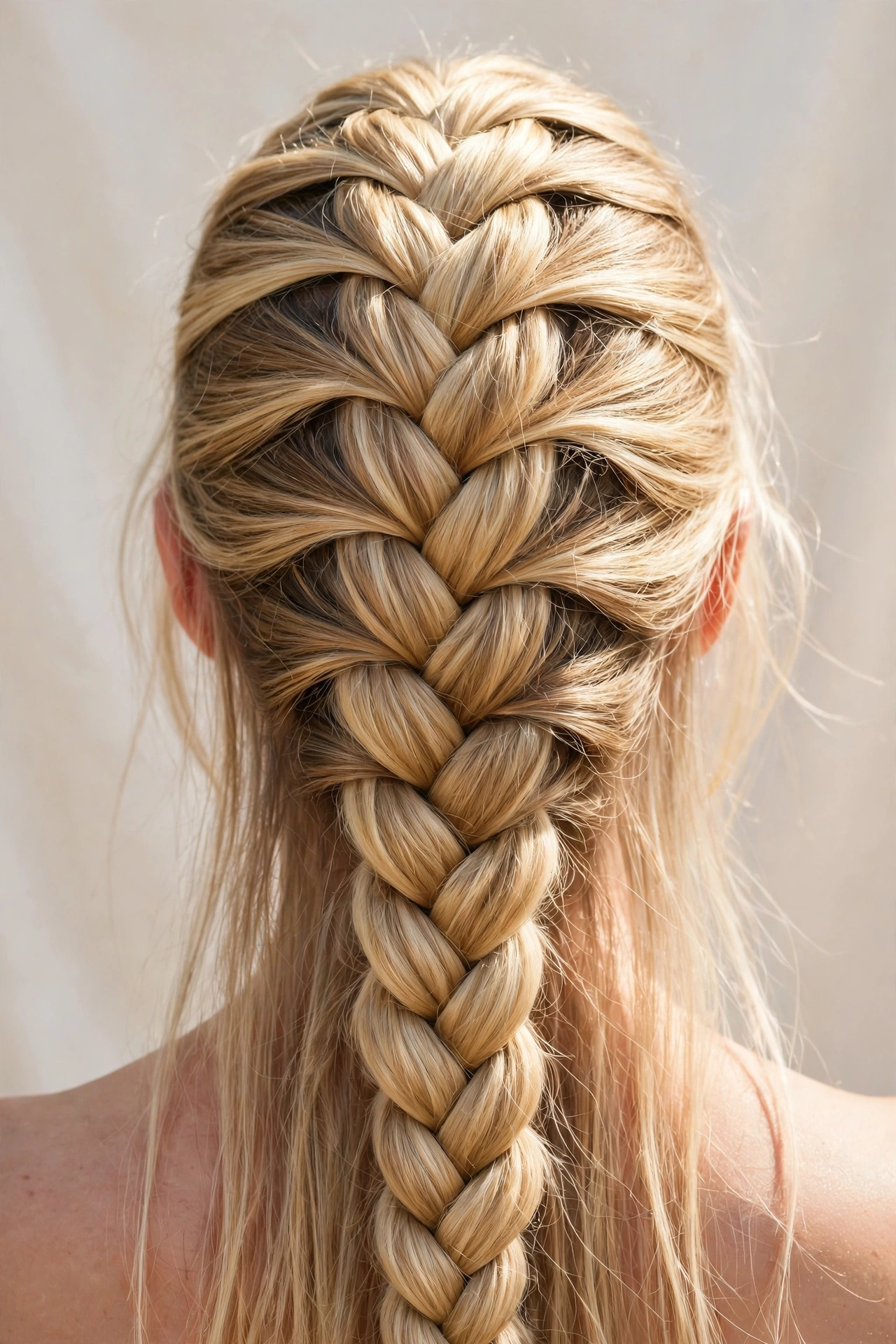
The classic Dutch braid, often called the reverse French braid, is the bolder cousin of the French braid. Because each strand passes under the middle instead of over it, the braid sits on top of the hair like a raised rope. It makes a striking statement even on its own, and it photographs beautifully from behind.
Start the same way as a French braid, with a section at the crown divided into three strands. This time, cross each side strand under the middle strand, adding loose hair as you go. Keep the braid centred and your sections even so the raised pattern looks tidy. Dutch braids hold up brilliantly in wind and during sport, which is why they are a favourite for active days and holidays.
3. Double French Braids
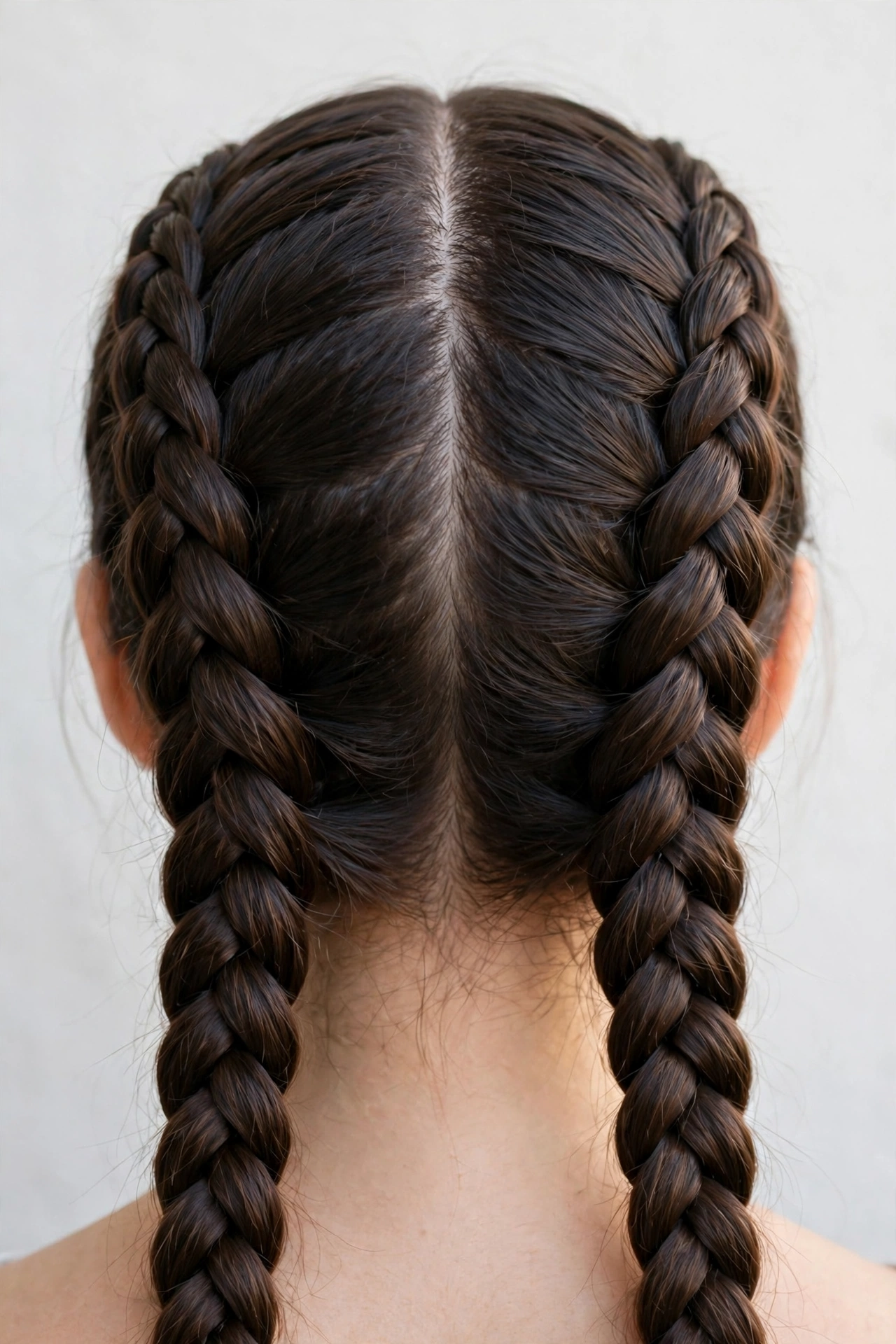
Double French braids are a youthful, sporty classic that works for school, the gym and casual weekends. Two neat braids run down either side of a centre parting, keeping every strand secure and giving a balanced, symmetrical look. They are also one of the best styles for keeping hair tidy overnight, so you can wake up with soft waves the next morning.
Part the hair neatly down the middle and clip one side out of the way while you braid the other. French braid each side from the front hairline to the nape, then continue as a simple plait and secure with a small elastic. Matching the two sides takes a little practice, so check them in a mirror and adjust the tension as you go. A touch of smoothing serum on the parting keeps the finish polished.
4. Double Dutch Braids
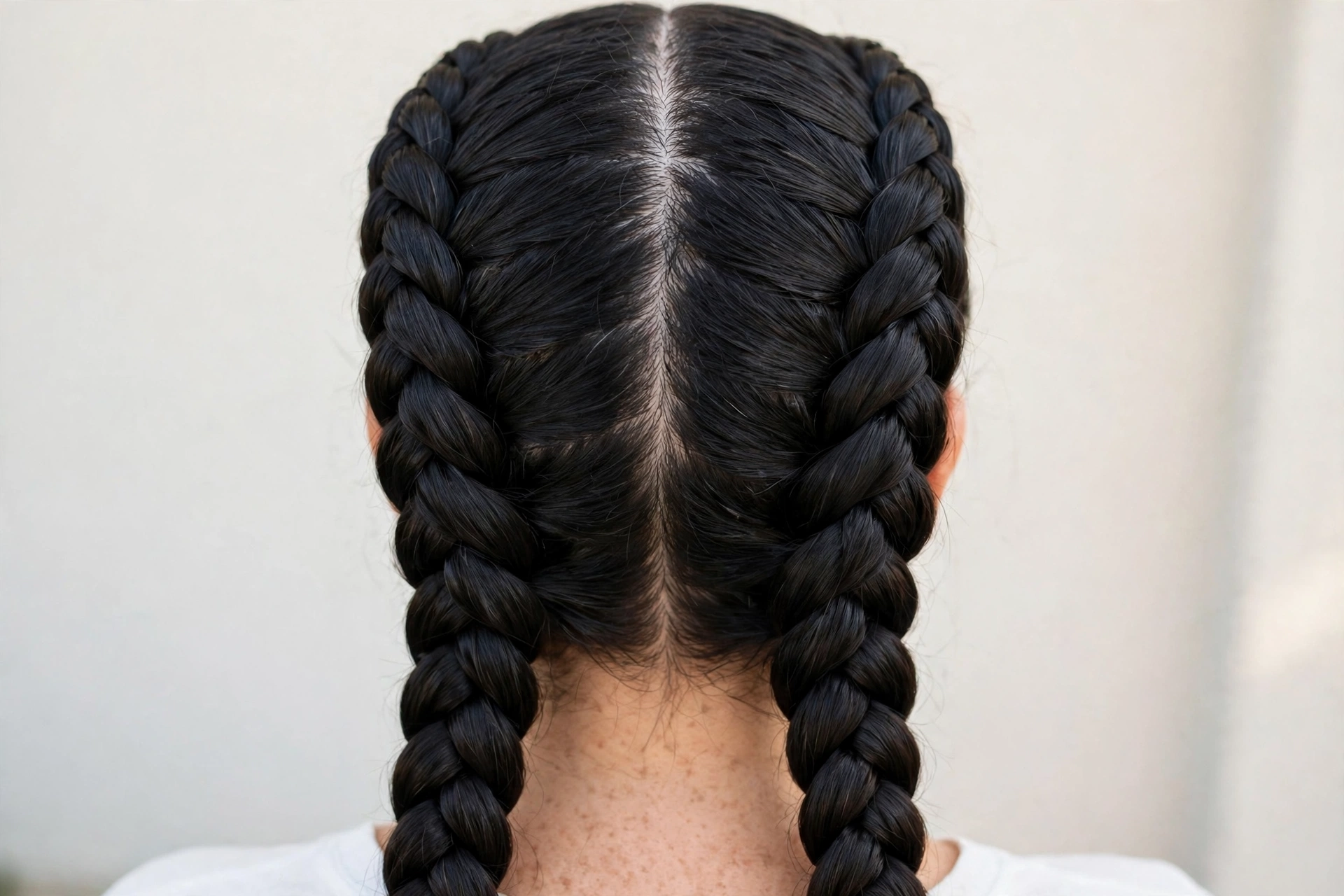
Double Dutch braids are the bold, statement version of the double braid, and they are hugely popular for festivals, workouts and holidays. The raised braids stand out clearly against the head, giving a strong graphic look that works with everything from gym wear to summer dresses. They are also wonderfully practical, keeping hair completely secure all day.
Divide the hair with a clean centre parting and work on one side at a time. Dutch braid each side by crossing strands under the middle, adding hair as you move towards the nape. Gently tug the outer edges of each braid once you have finished, a technique called pancaking, to make the braids look thicker and fuller. Finish with matching elastics and a little hairspray to tame flyaways.
5. French Braid Crown
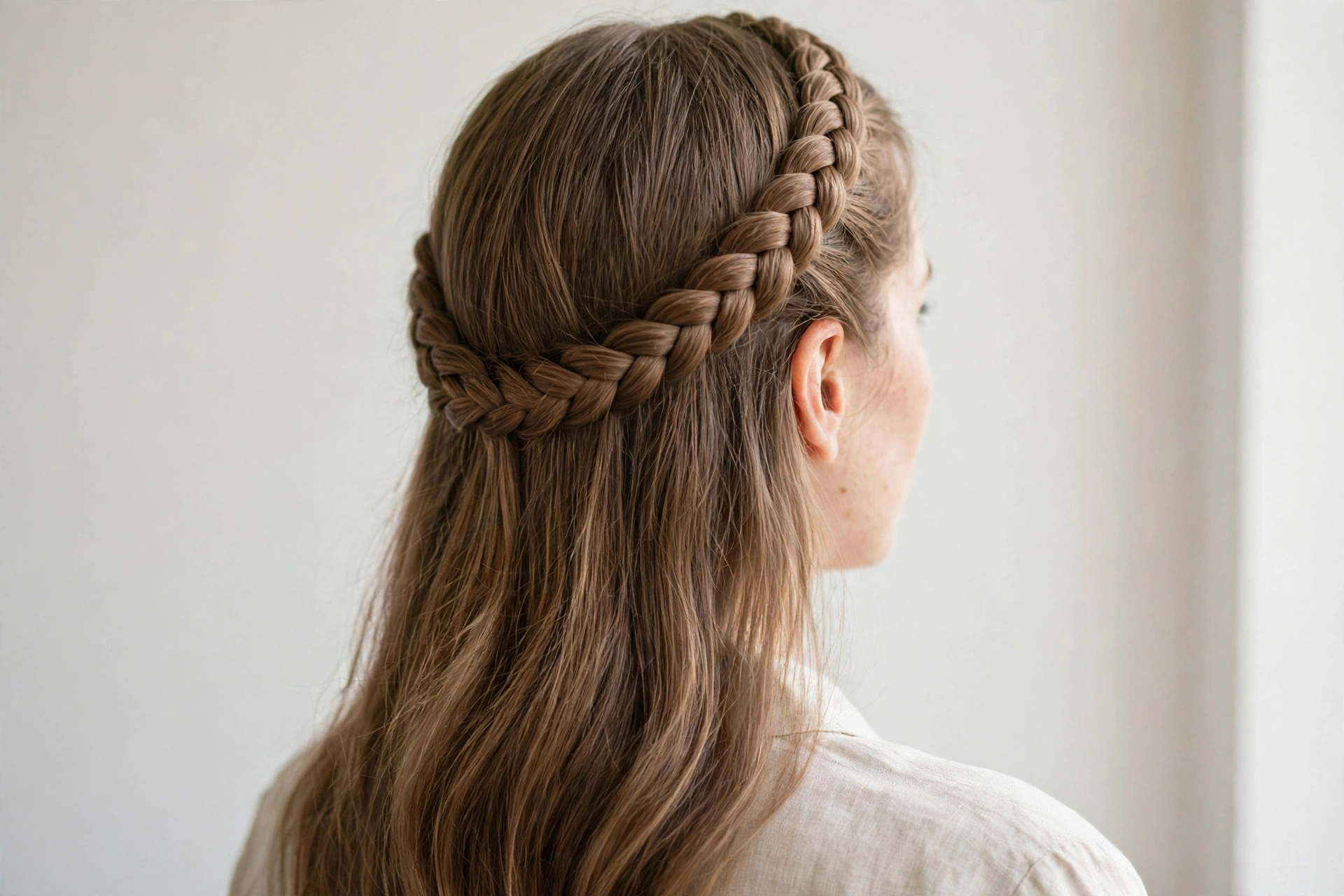
A French braid crown wraps around the head like a halo, and it is one of the most elegant braided styles you can wear. It keeps hair completely off the face and neck, which makes it perfect for hot days, formal events and weddings. The soft, flat braid looks delicate and romantic, especially when paired with a dress or soft makeup.
Begin the braid behind one ear and work it around the hairline, adding hair as you go, until you reach the starting point. Tuck the tail underneath and pin it securely so the join is hidden. If your hair is not quite long enough to wrap all the way around, braid to the nape and pin the end behind the opposite ear instead. Loosen a few face-framing strands for a softer, more romantic finish.
6. Dutch Braid Crown
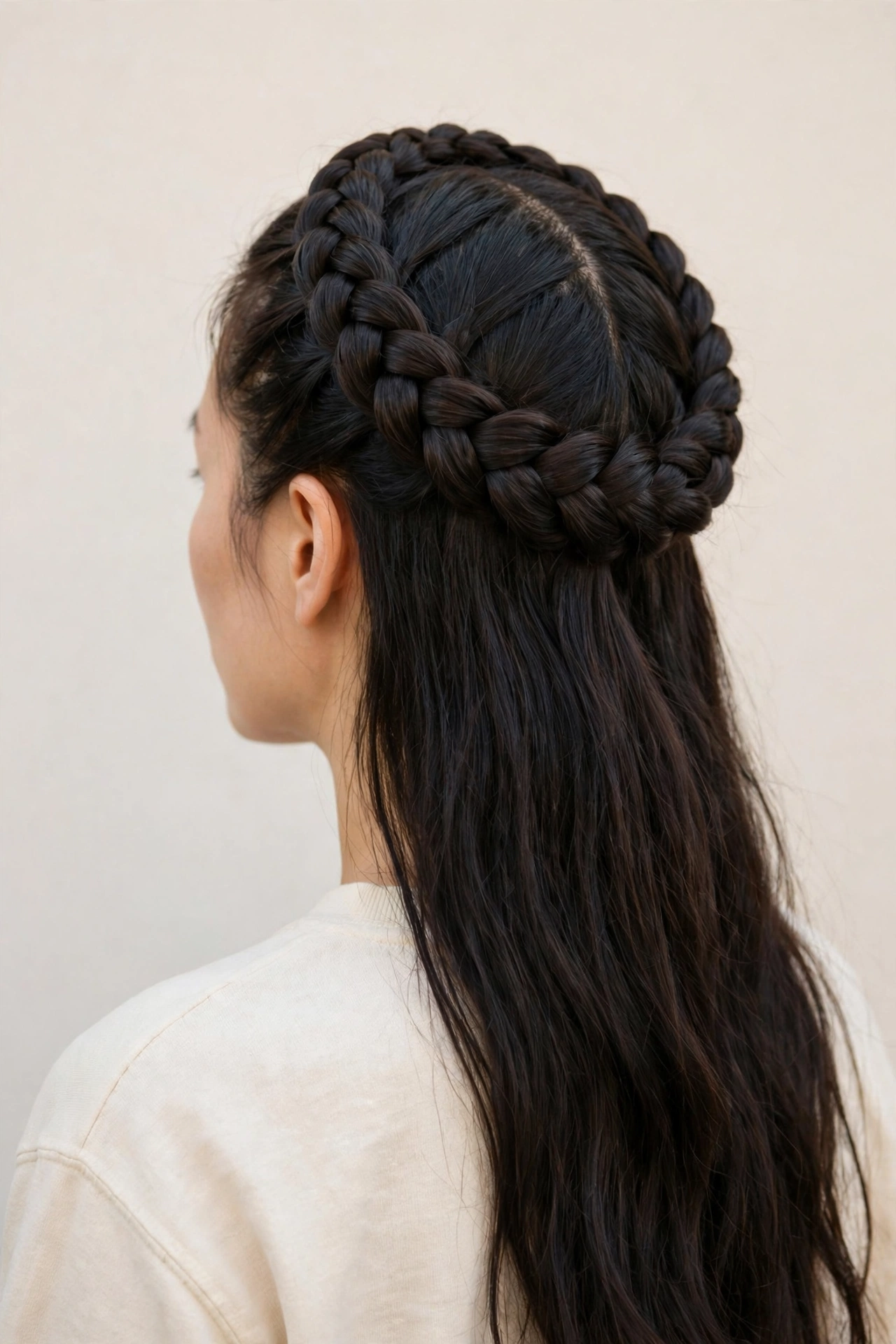
A Dutch braid crown takes the same halo idea and makes it bolder, with a raised braid that frames the face like a statement headband. It is a favourite for festivals, photoshoots and special occasions because it looks impressive while keeping hair fully under control. The raised texture also shows off highlights and balayage beautifully.
Start behind one ear and Dutch braid around the hairline, crossing strands under the middle as you add hair. Work slowly around the head and keep the braid close to the hairline so it sits like a crown. Secure the tail underneath with pins and pancake the braid gently to make it look fuller. This style works best on medium to long hair, and a few pins will keep it secure for hours.
7. French Braid Ponytail
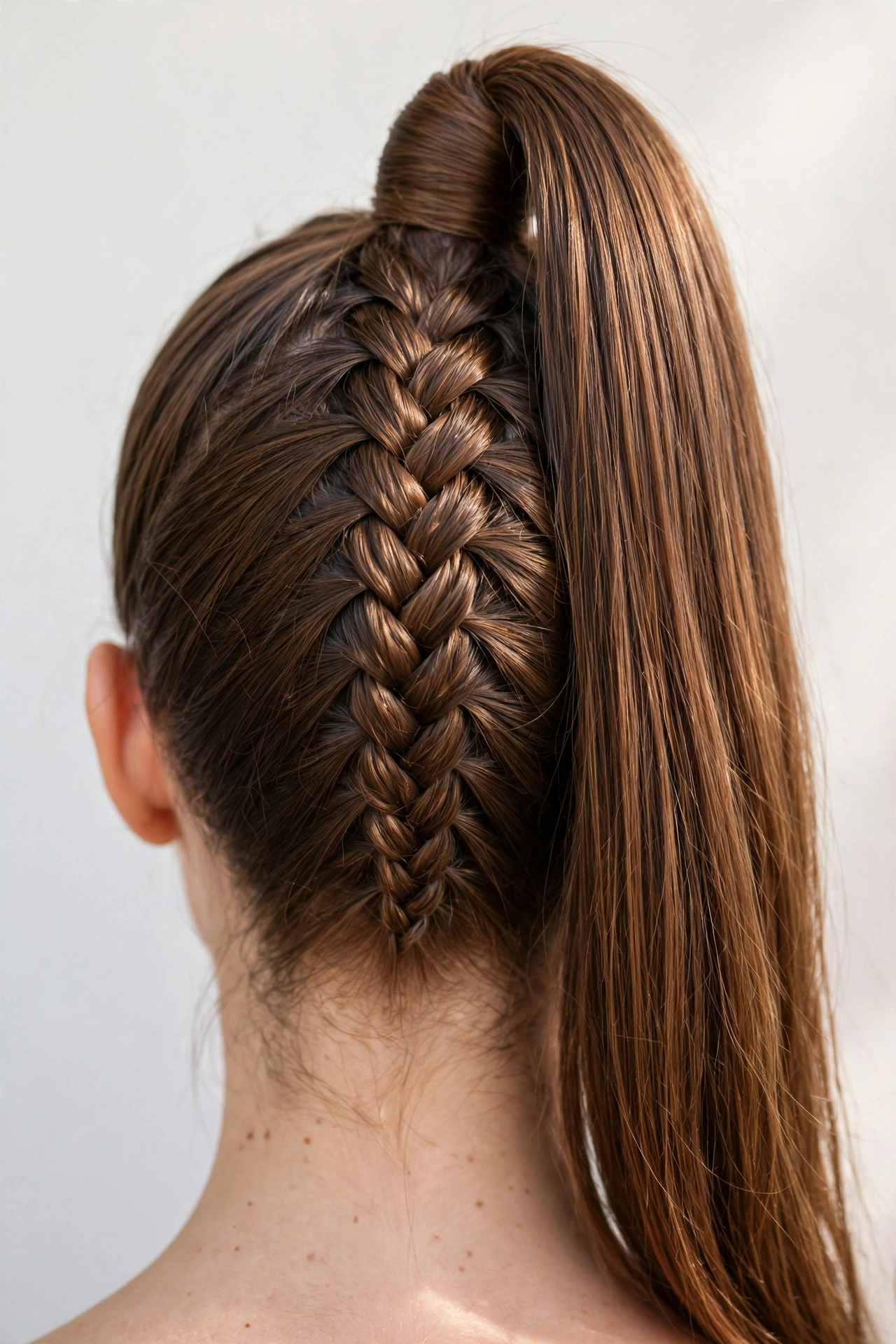
A French braid ponytail combines the neatness of a braid with the energy of a high ponytail. The braid runs down the centre of the head and flows straight into a ponytail, giving a sleek, sporty look that works for the gym, the office and evenings out. It is also a great way to add interest to a plain ponytail without much extra effort.
French braid from the front hairline towards the crown, gathering hair as you go, and stop at the point where you want the ponytail to sit. Gather all the hair into a ponytail and secure it with a strong elastic. Wrap a small strand of hair around the elastic and pin it underneath for a polished finish. Smooth the sides with a brush and a little gel for a sleek result, or leave a few wisps out for a softer look.
8. Dutch Braid Ponytail
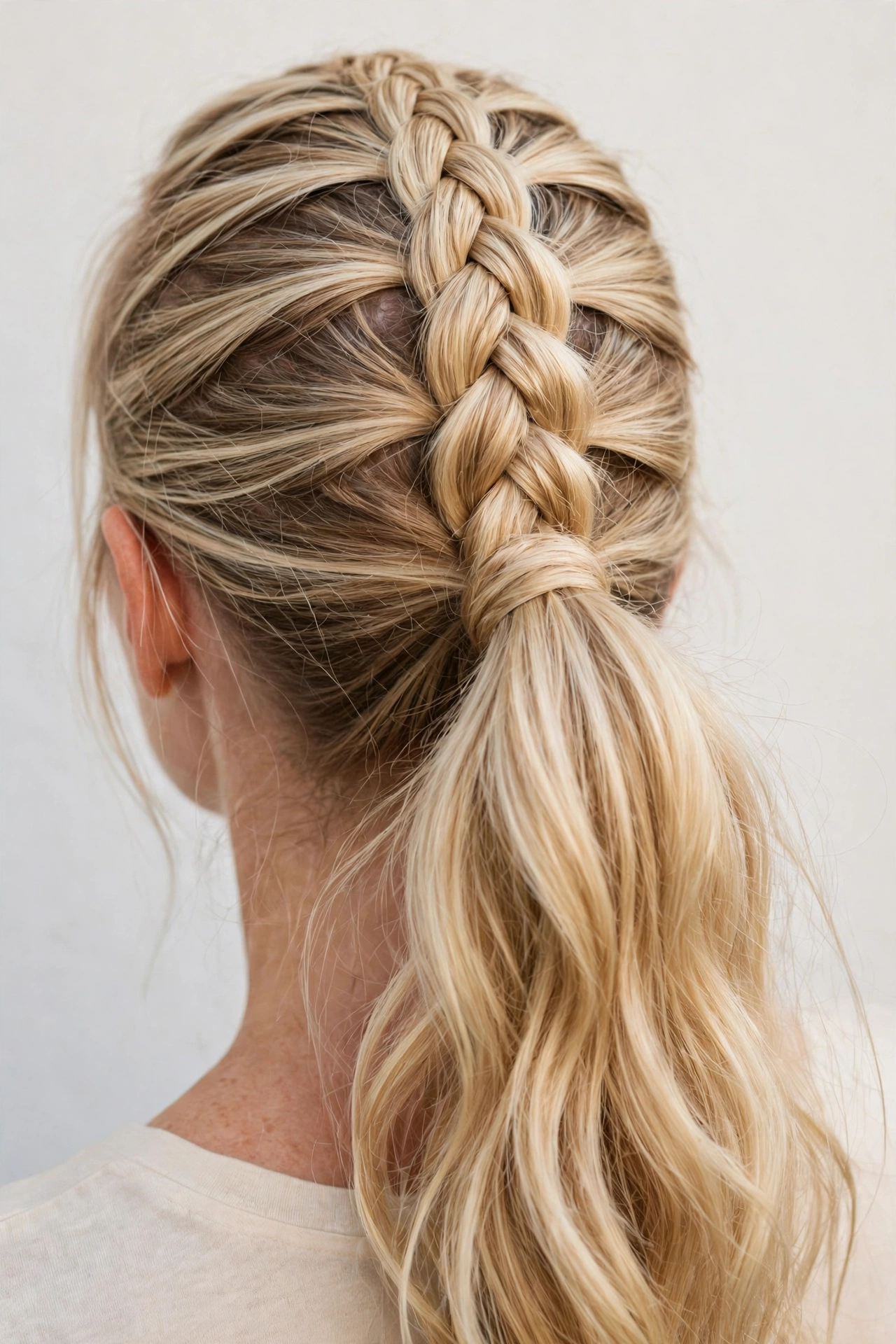
A Dutch braid ponytail is the bolder version of the braided ponytail, with a raised braid leading into a high, full ponytail. It has a confident, athletic feel and it holds up brilliantly during workouts, dancing and long days out. The contrast between the structured braid and the flowing ponytail makes it a real head-turner.
Dutch braid from the front hairline to the crown, crossing strands under the middle, then gather everything into a high ponytail. Secure firmly and wrap a strand around the base to hide the elastic. For extra volume, backcomb the ponytail gently or curl the ends. This style looks fantastic on long, thick hair, but it works on medium lengths too if you keep the braid a little looser.
9. Side French Braid
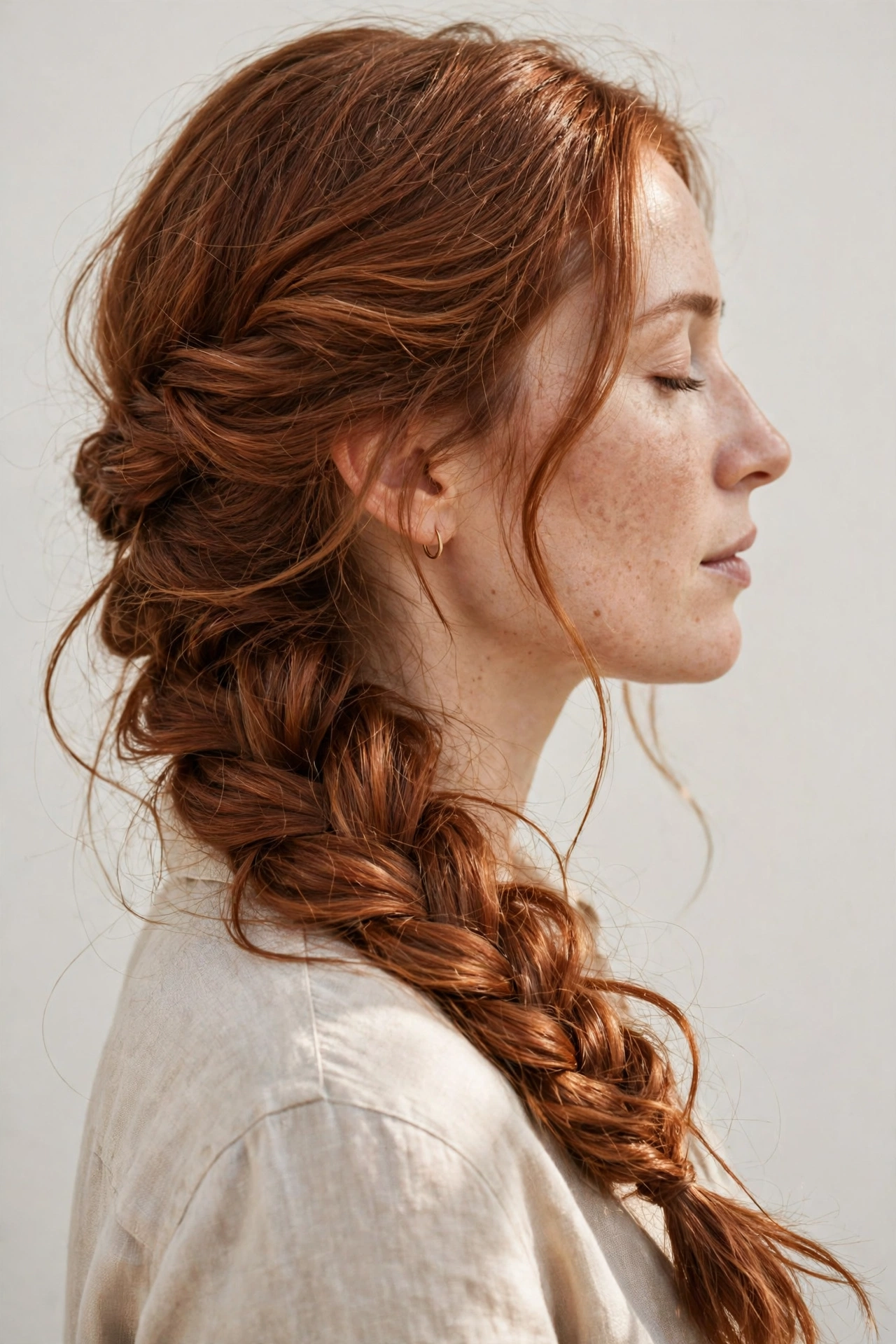
A side French braid sweeps all the hair over one shoulder, giving a soft, romantic look that is perfect for dates, parties and everyday wear. It shows off the braid from the front, which makes it a lovely choice for photos, and it keeps hair out of the way without pulling it all back. It works on almost every hair length from shoulder-length upwards.
Sweep all the hair to one side and begin a French braid just above the ear on the opposite side, working diagonally across the back of the head. Keep adding hair as you move towards the chosen shoulder, then continue as a normal plait and tie it off. Loosen the braid gently with your fingers for a relaxed, fuller finish, and let a few strands fall around the face.
10. Side Dutch Braid
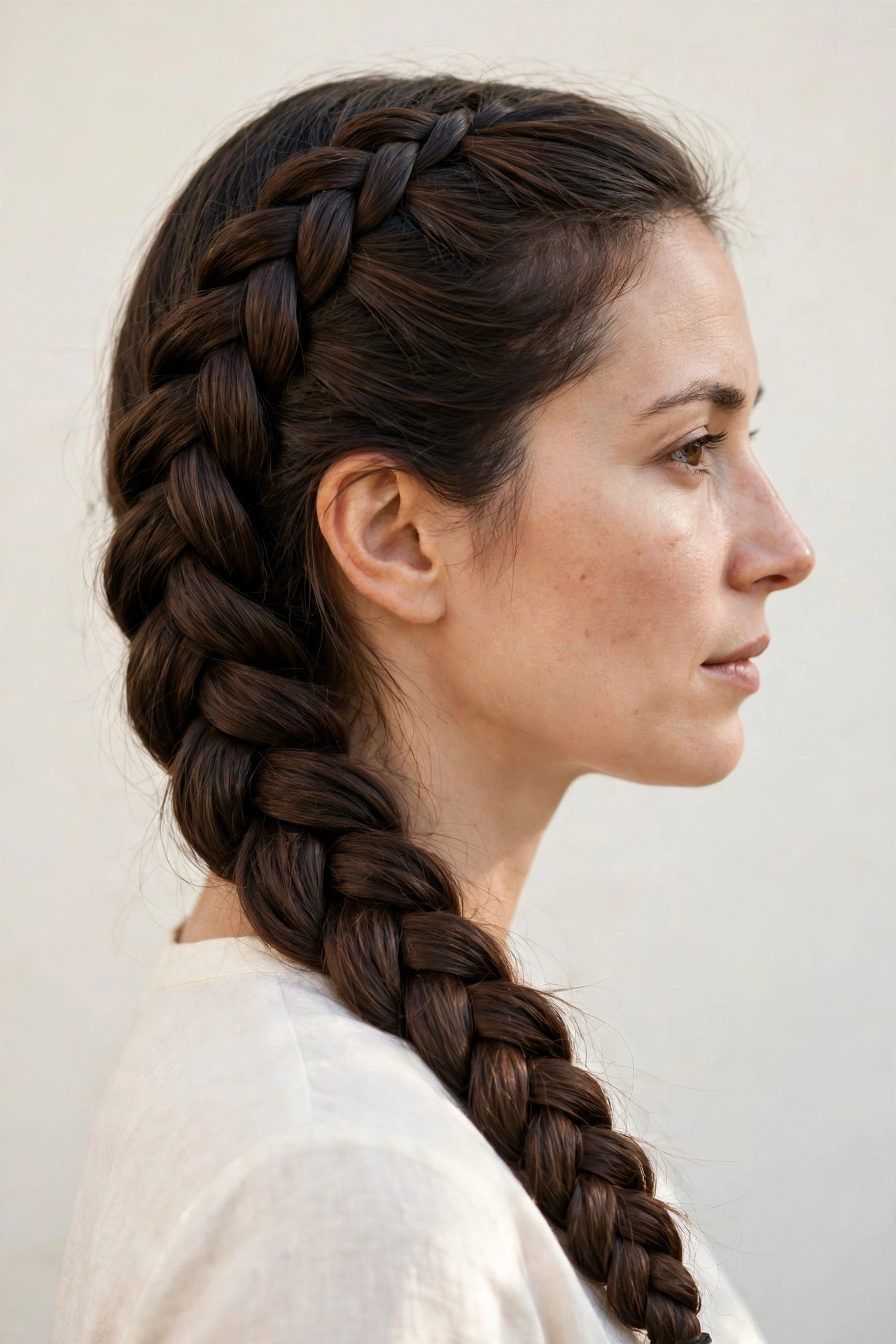
A side Dutch braid is the statement version of the side braid, with a bold raised plait running diagonally across the head and over one shoulder. It feels modern and edgy, and it is a great way to show off thick hair or a fresh colour. It also keeps hair secure on windy days while still looking deliberately styled.
Part the hair to one side and start the Dutch braid above the ear on the heavier side, working diagonally towards the opposite shoulder. Cross strands under the middle and add hair as you go, keeping the braid close to the head. Once the braid passes the shoulder, continue as a regular plait and secure it. Pancake the edges gently to make the braid look thicker and more dramatic.
11. French Braid Bun
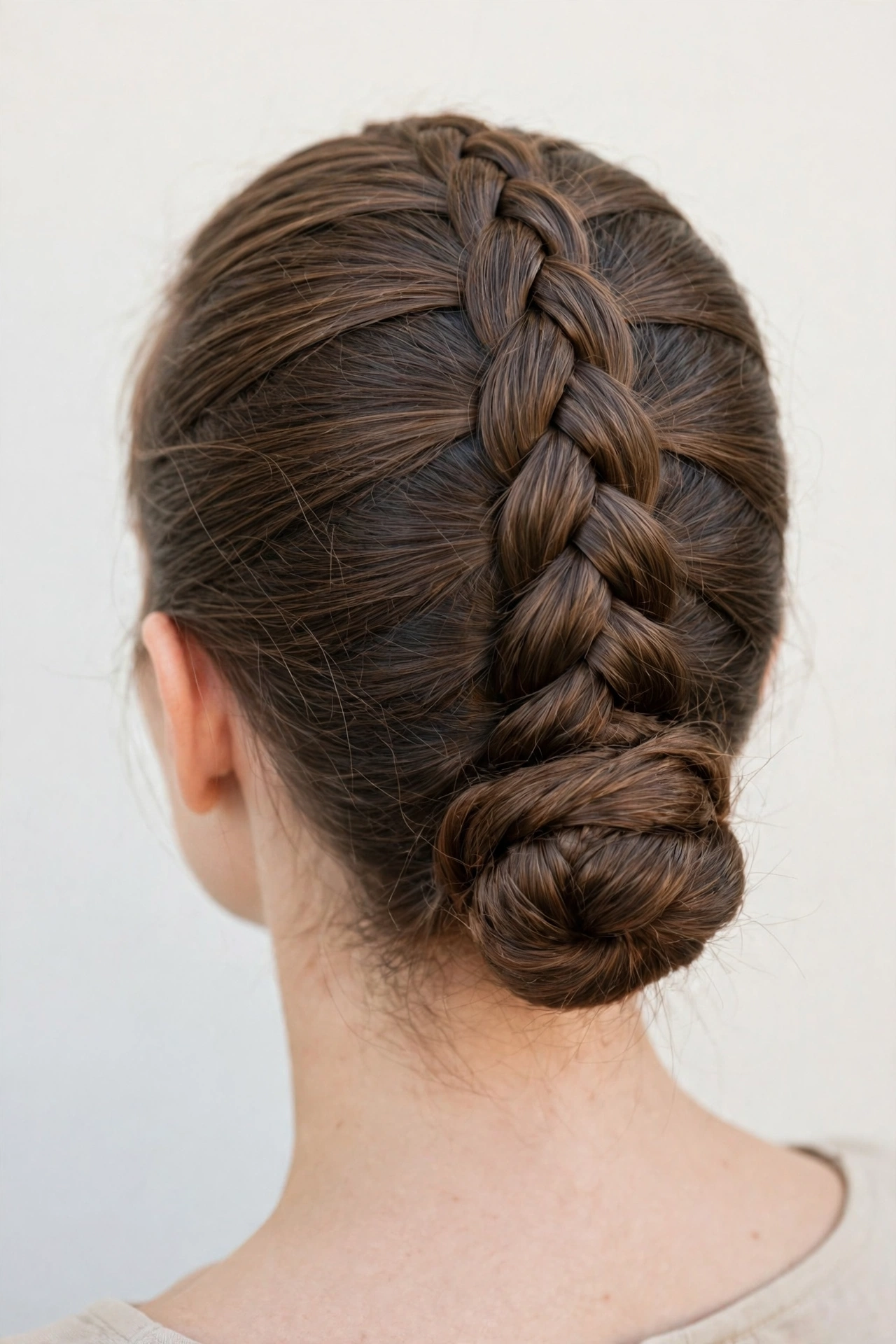
A French braid bun is an elegant updo that starts as a braid and ends as a bun, making it perfect for work, formal events and hot weather. The braid adds texture and interest to a classic bun, and the whole style keeps hair completely off the neck. It looks polished from every angle, which is why it is a popular choice for weddings and job interviews.
Flip the head upside down and French braid from the nape upwards towards the crown, adding hair as you go. When you reach the crown, gather all the hair into a ponytail and twist it into a bun. Pin the bun securely and tuck in any loose ends. Smooth the braid with a little serum for shine, and add a decorative pin or clip if you want a finishing touch.
12. Dutch Braid Bun
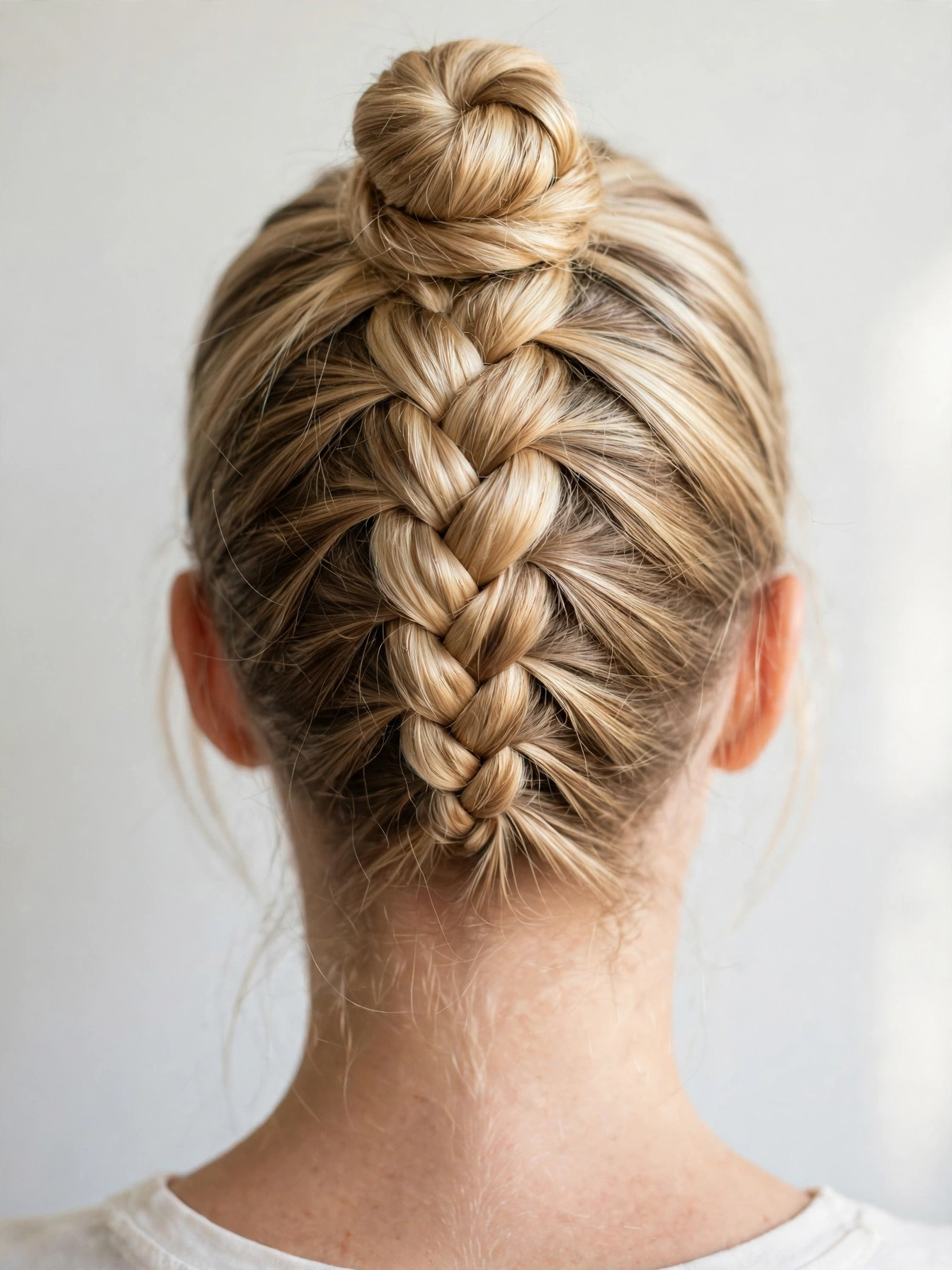
A Dutch braid bun pairs a bold raised braid with a neat top bun for a look that is both striking and practical. It is a favourite for ballet, dance, sport and formal occasions, because it holds hair firmly in place while looking far more interesting than a plain bun. The raised braid also gives the style a beautiful texture that photographs well.
Braid from the nape upwards using the Dutch technique, crossing strands under the middle, until you reach the top of the head. Gather the hair into a high ponytail and twist it into a bun, pinning it flat and secure. Pancake the braid gently before you start the bun to make it look fuller. Finish with hairspray and a few pins, and smooth any flyaways with a small amount of gel.
13. Half-Up French Braid
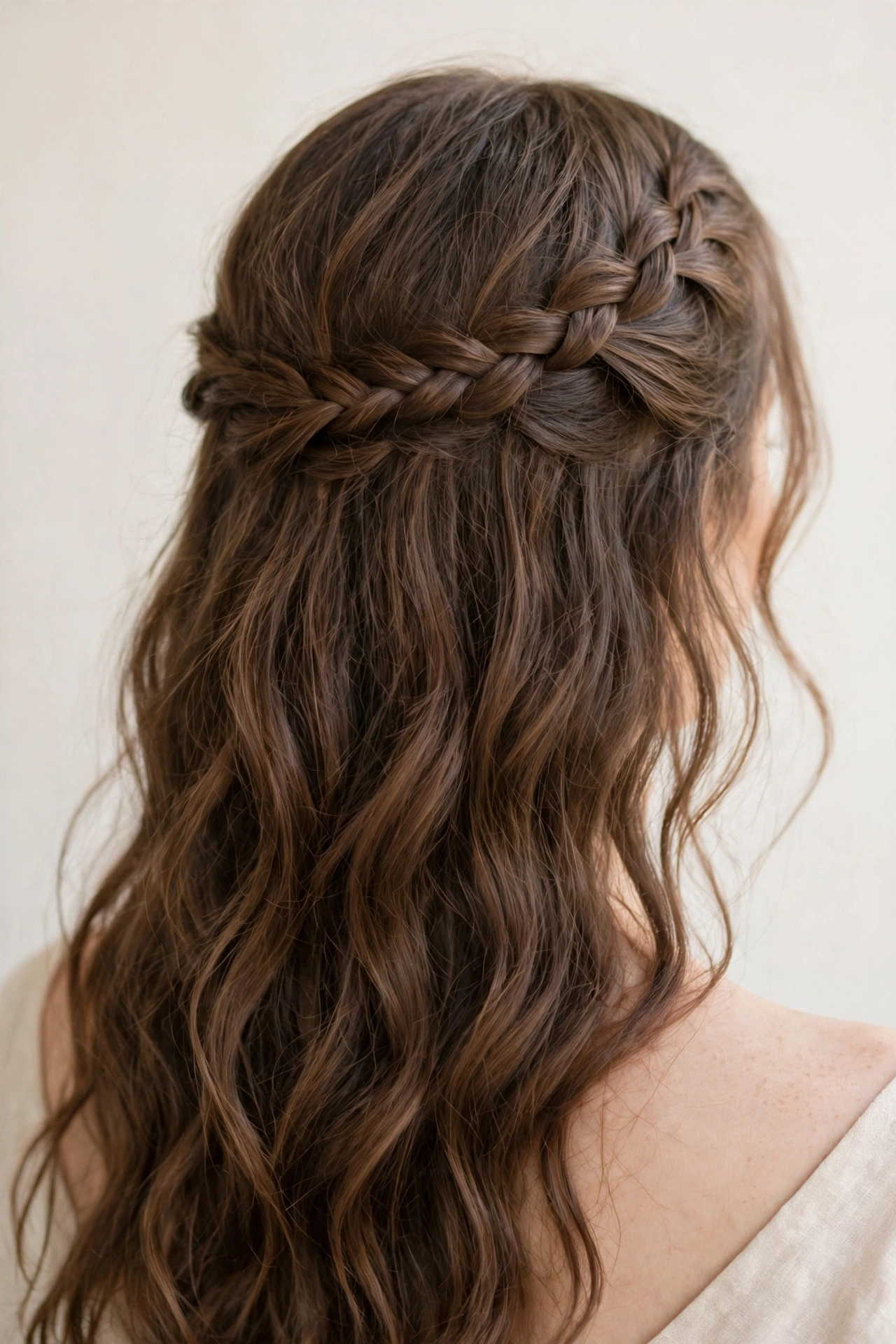
A half-up French braid is the perfect in-between style: the top half is braided and secure while the rest of the hair flows free. It works beautifully on wavy and curly hair, and it is a lovely choice for everyday wear, dates and casual parties. It keeps hair out of the eyes while still showing off your length and texture.
Take a section of hair from the crown and French braid it for a few inches, then secure it with a small elastic or pin it at the back. Leave the rest of the hair down and add soft waves with a curling wand if you like. This style is quick to do, taking less than five minutes once you know the steps, and it suits almost every face shape.
14. Half-Up Dutch Braid
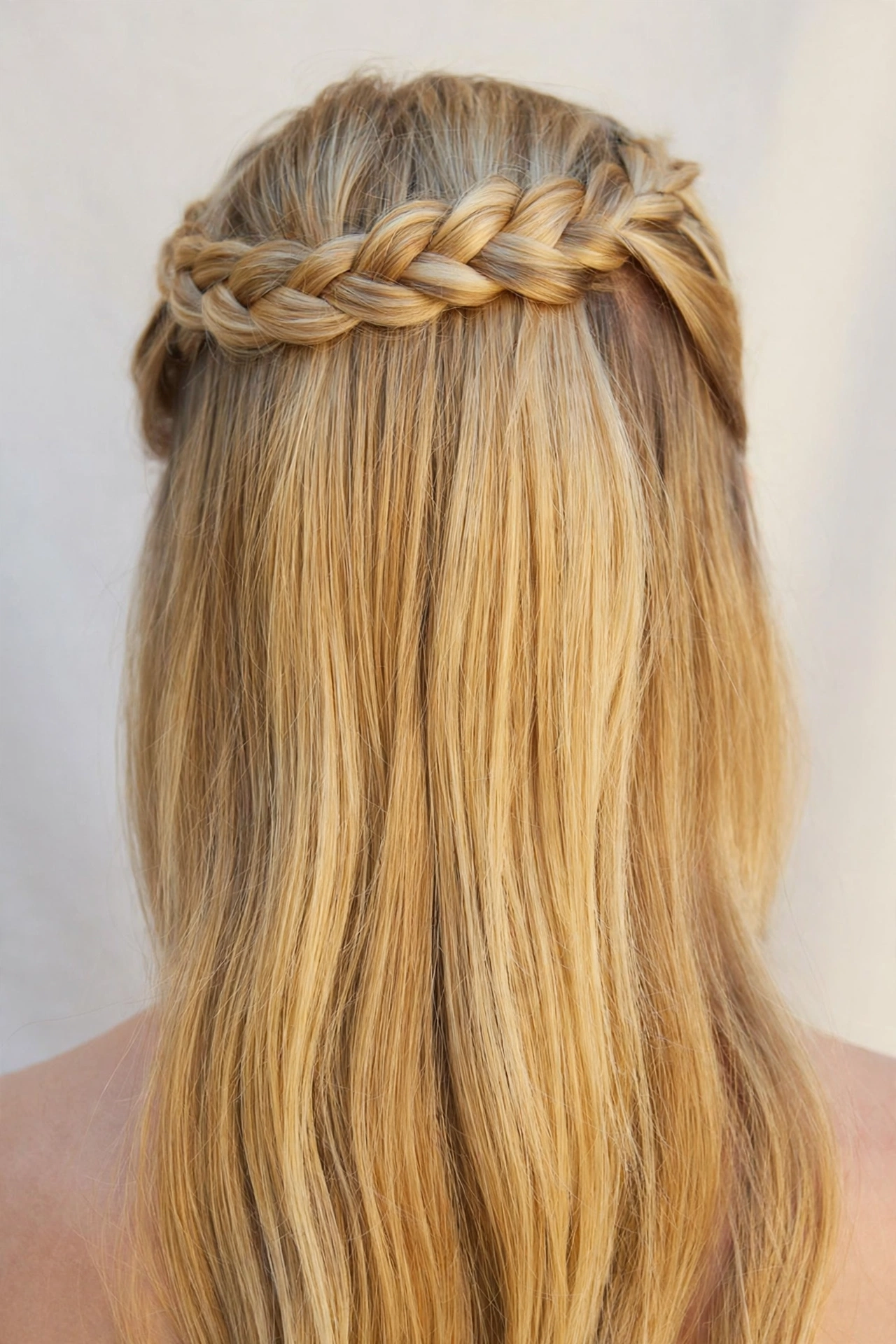
A half-up Dutch braid gives the classic half-up style a bolder, more modern edge. The raised braid across the crown stands out clearly, making it a great choice when you want the braid to be the star of the look. It pairs beautifully with straight, sleek hair, but it also works with gentle waves.
Section off the top half of the hair and Dutch braid it across the crown, crossing strands under the middle. Secure the braid at the back with a small elastic or a decorative clip, and let the rest of the hair fall naturally. Smooth the sides with a brush for a polished finish, or add a little texture spray to the loose hair for a relaxed feel. It is an easy way to make a simple outfit look thoughtfully styled.
15. French Braid with Loose Curls
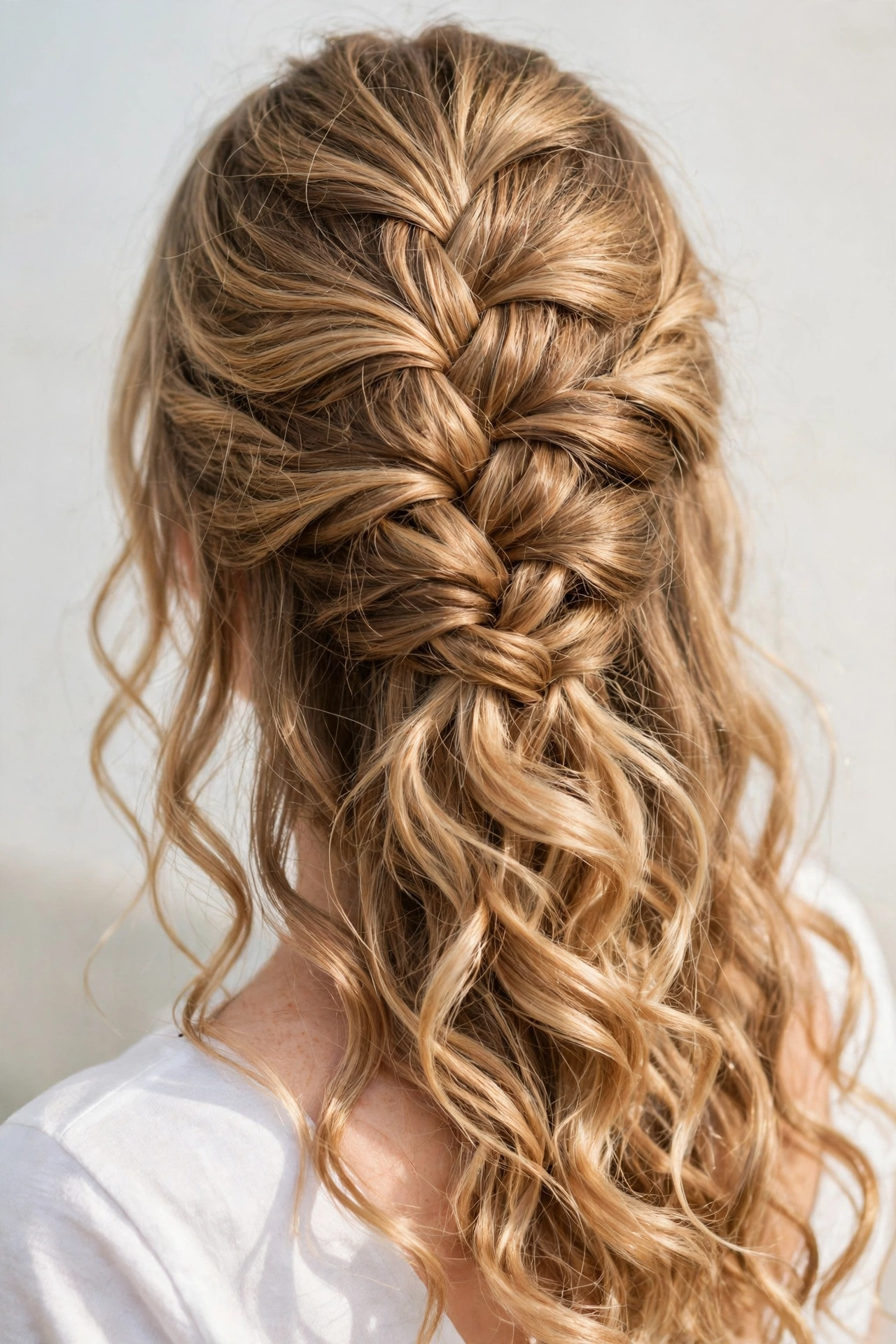
A French braid with loose curls is a romantic, soft style that is made for weddings, proms and special evenings. The braid gives the look structure at the top, while the curls add movement and softness at the ends. It is a beautiful combination that flatters almost everyone and photographs wonderfully.
French braid the top half of the hair loosely, then leave the rest down. Curl the loose hair in large sections with a curling iron, brushing the curls out gently so they fall into soft waves. Secure the braid with pins rather than an elastic for a seamless finish, and mist everything with a flexible-hold hairspray so the curls keep their shape without going stiff.
16. Dutch Braid with Beach Waves
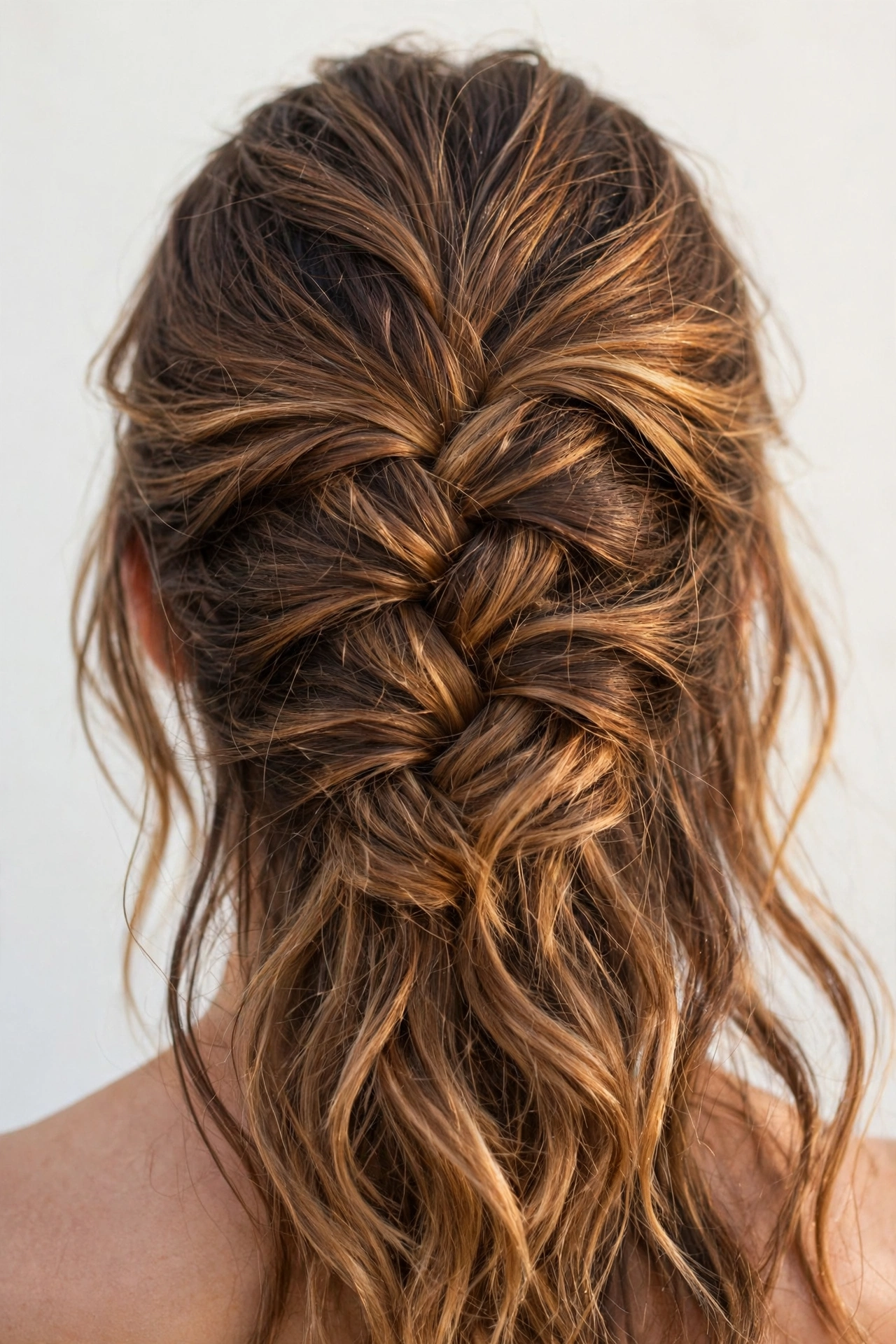
A Dutch braid with beach waves is a relaxed, sun-kissed style that is perfect for summer, holidays and festivals. The raised braid adds structure while the tousled waves keep the whole look carefree and effortless. It is the kind of hairstyle that looks even better as the day goes on and the waves loosen a little.
Dutch braid the top section of the hair, pancaking it gently to make it look full and relaxed. Leave the rest of the hair down and create loose waves with a flat iron or a sea salt spray, scrunching the ends as they dry. Pull out a few strands around the face for a soft, lived-in finish. This style works best on medium to long hair with some natural texture.
17. Fishtail French Braid
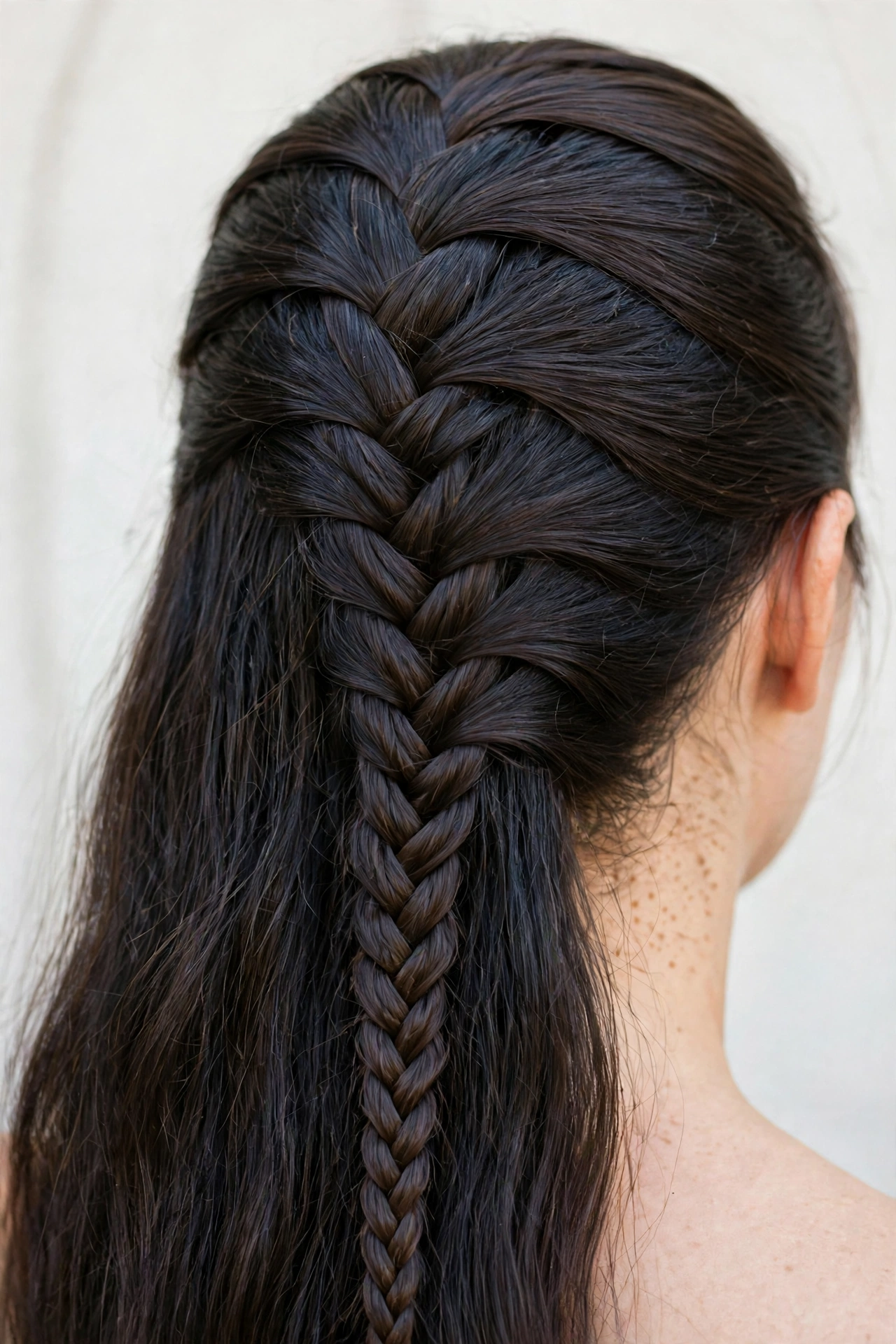
A fishtail French braid combines two classic techniques into one intricate, eye-catching style. The top of the braid is a French braid that gathers hair as it goes, and the length continues as a fishtail, made by crossing small sections from each side. The result is a detailed, woven texture that looks far more complicated than it is.
Start with a French braid from the crown to the nape, then switch to a fishtail by dividing the hair into two sections and crossing a thin strand from the outside of one section to the inside of the other. Keep the strands small and even for a neat fishtail, and tie the end securely. Gently pull the edges of the fishtail wider to show off the woven pattern, and finish with a light mist of hairspray.
18. Dutch Braid Pigtails
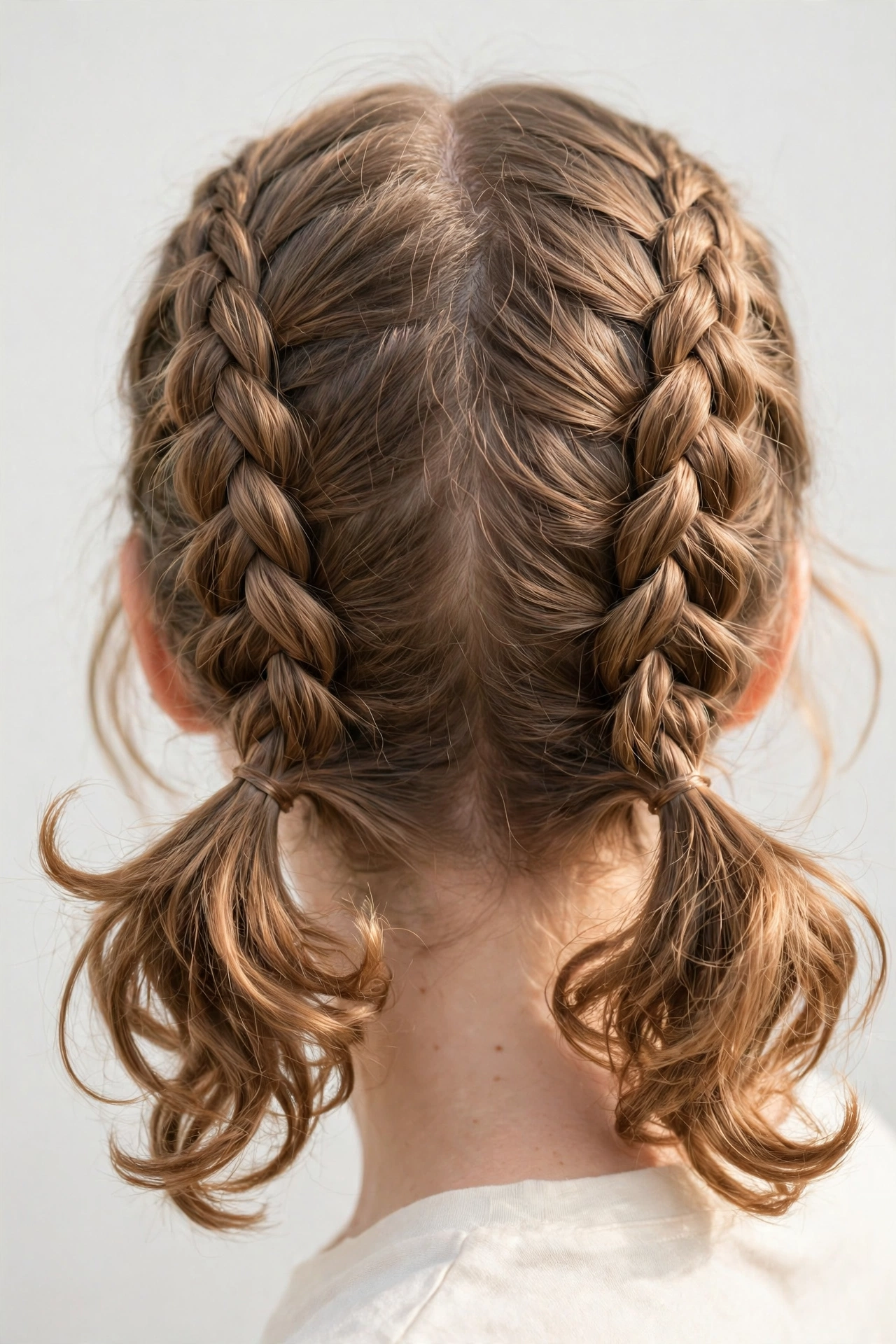
Dutch braid pigtails are a fun, youthful style that is perfect for festivals, school, sports and playful days out. Two raised braids run down either side of the head and finish as pigtails, giving a cute, energetic look that keeps hair completely under control. They are also a great protective style for long hair.
Part the hair down the middle and Dutch braid each side from the front hairline to the nape. Continue each braid as a simple plait and secure with colourful or matching elastics. For a fuller look, pancake the braids gently before tying them off. This style works on medium and long hair, and it is a lovely choice for kids and teenagers as well as adults.
19. French Braid Headband
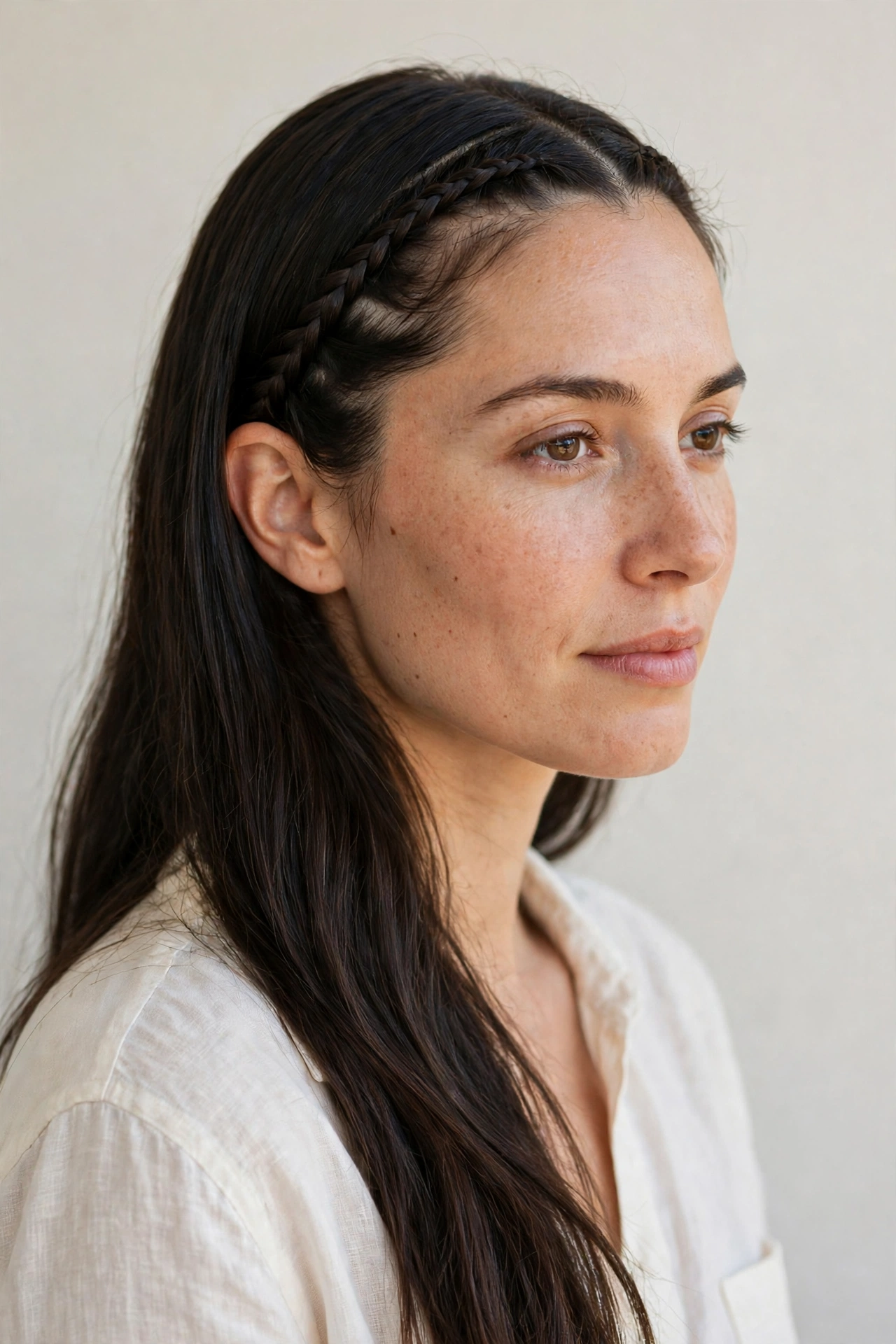
A French braid headband is a clever way to keep hair off the face without wearing a real headband. A slim braid runs along the hairline from one ear to the other, acting as a natural hair accessory. It is elegant, practical and perfect for work, school and occasions when you want your hair down but out of your eyes.
Take a small section of hair near one temple and French braid it along the hairline, adding small pieces of hair as you go. Braid across the front of the head to the opposite ear, then pin the tail underneath the loose hair. Leave the rest of the hair down, straight or wavy. This style works on most hair lengths, and it looks especially pretty with a side parting.
20. Dutch Braid Mohawk
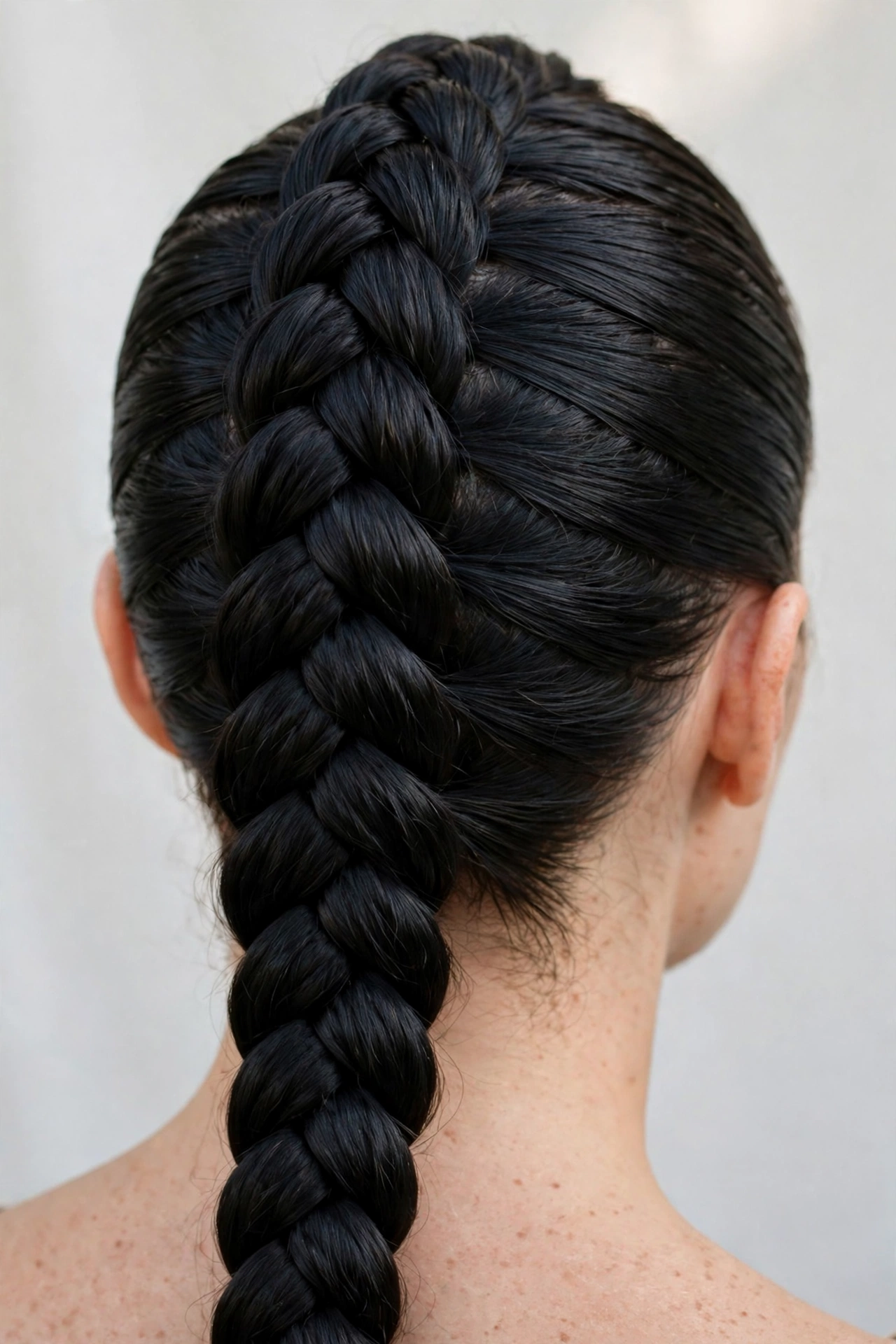
A Dutch braid mohawk is a bold, edgy style that turns a braid into a statement. A wide raised braid runs down the centre of the head like a mohawk, while the sides are pulled smooth and tight. It is a favourite for concerts, festivals and nights out, and it looks incredible on thick, long hair.
Section off a wide strip of hair down the centre of the head and clip the sides out of the way. Dutch braid the centre section from the front hairline to the nape, keeping the braid wide and raised. Secure the sides smoothly with gel and pins so the contrast with the mohawk braid stands out. Finish the braid as a plait or tuck it into a bun, and set everything with strong-hold hairspray.
21. French Braid Low Bun
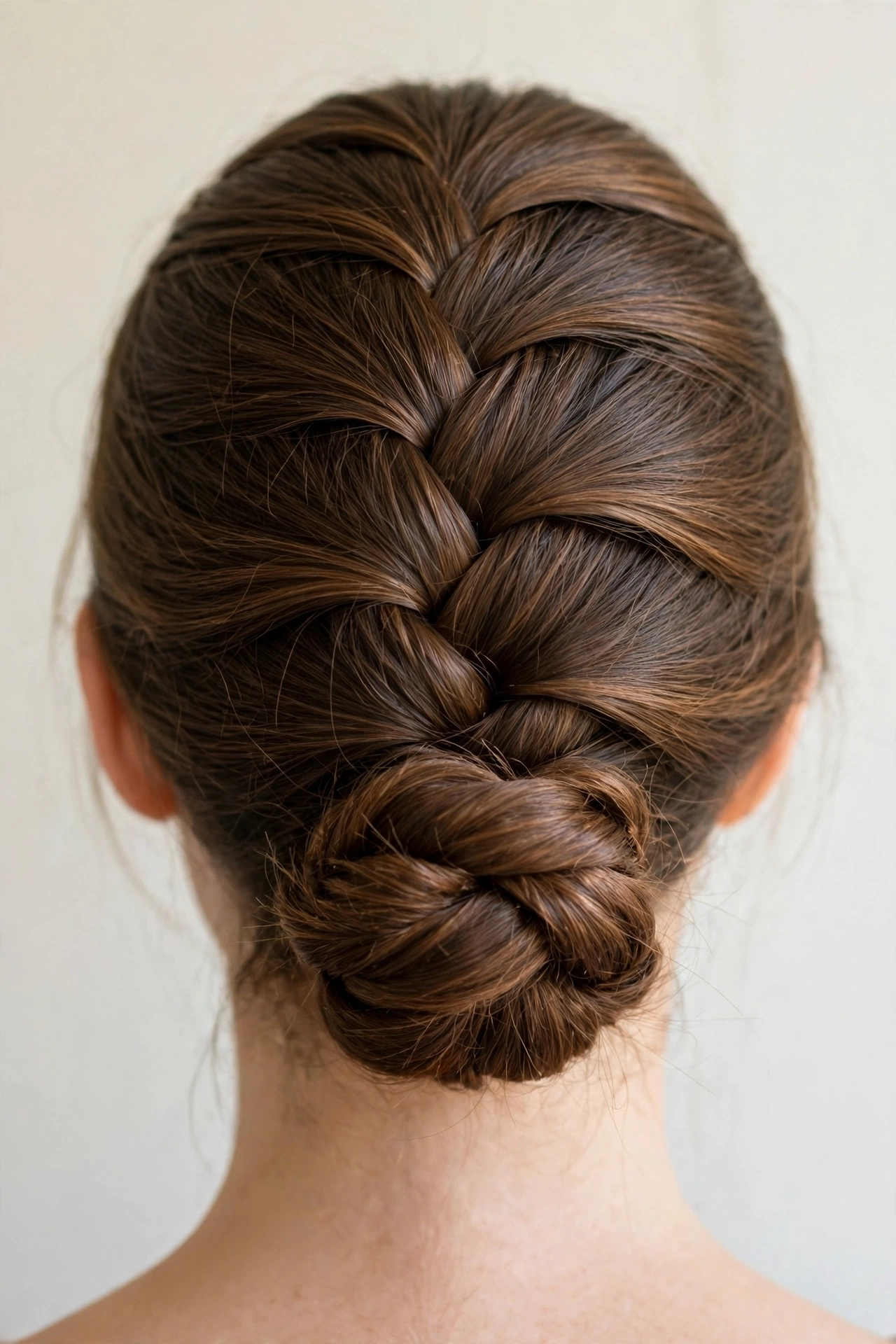
A French braid low bun is a refined, graceful updo that is ideal for weddings, formal dinners and the office. The braid flows from the crown into a low bun at the nape, giving the style a soft, polished silhouette. It suits every hair type and it stays comfortable all day, which makes it a reliable choice for long events.
French braid from the crown down to the nape, gathering hair as you go, then twist the remaining hair into a low bun. Pin the bun securely and tuck in the ends so the finish is smooth. Leave a couple of soft strands around the face for a romantic touch, or keep everything sleek for a more formal look. A few pearl pins or a small clip can turn this everyday updo into something special.
22. Dutch Braid Low Bun
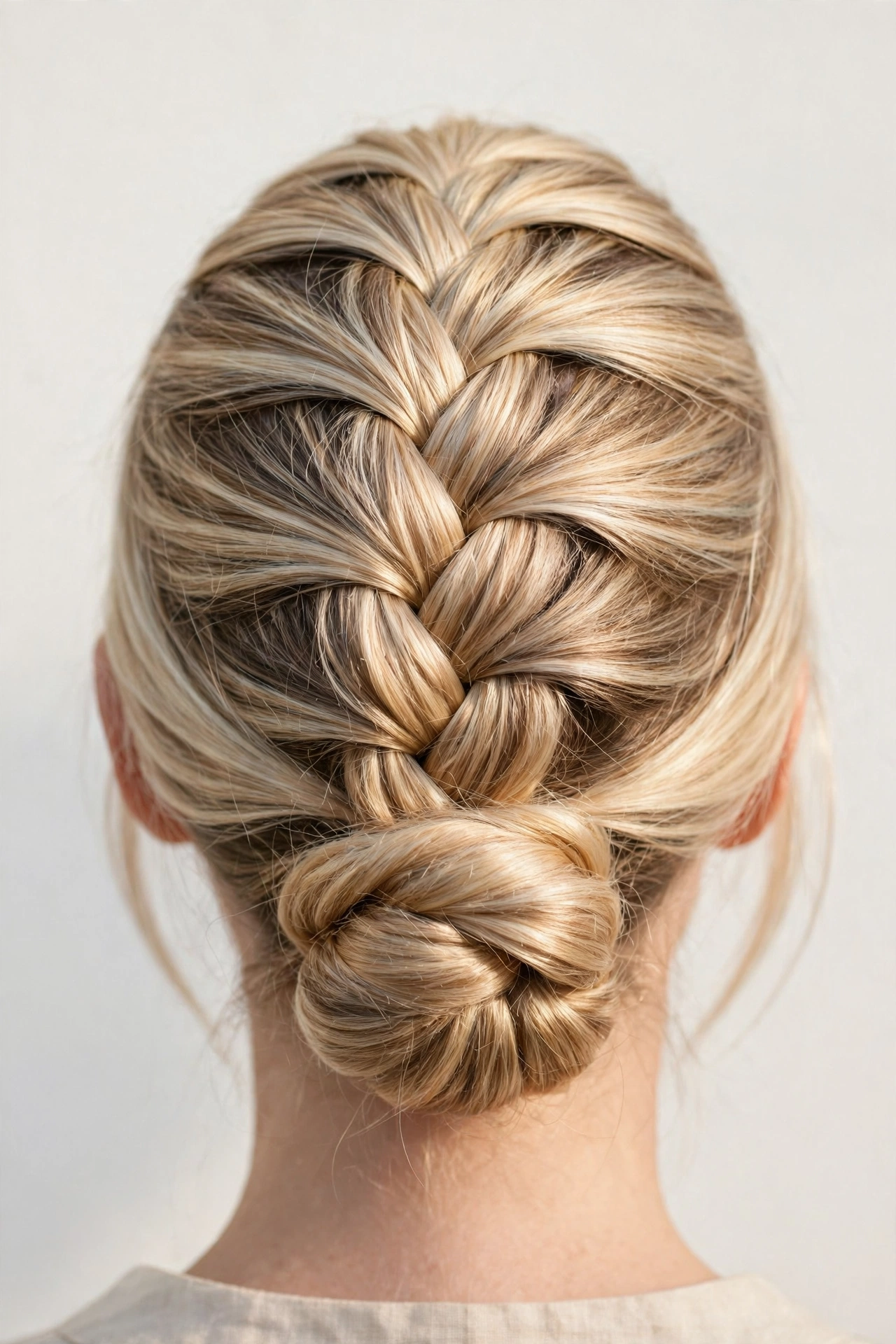
A Dutch braid low bun pairs a bold raised braid with a classic low bun for a look that is both modern and elegant. The raised braid adds texture and drama to the top of the head, while the low bun keeps the style balanced and wearable. It is a lovely choice for bridesmaids, formal events and anyone who wants an updo with a twist.
Dutch braid from the crown to the nape, crossing strands under the middle, then gather the hair into a low bun. Pancake the braid gently before forming the bun so it looks full and defined. Pin the bun in place and smooth the sides with a brush and a little serum. This style holds up well for hours, and it looks beautiful from every angle.
23. French Braid with Ribbon
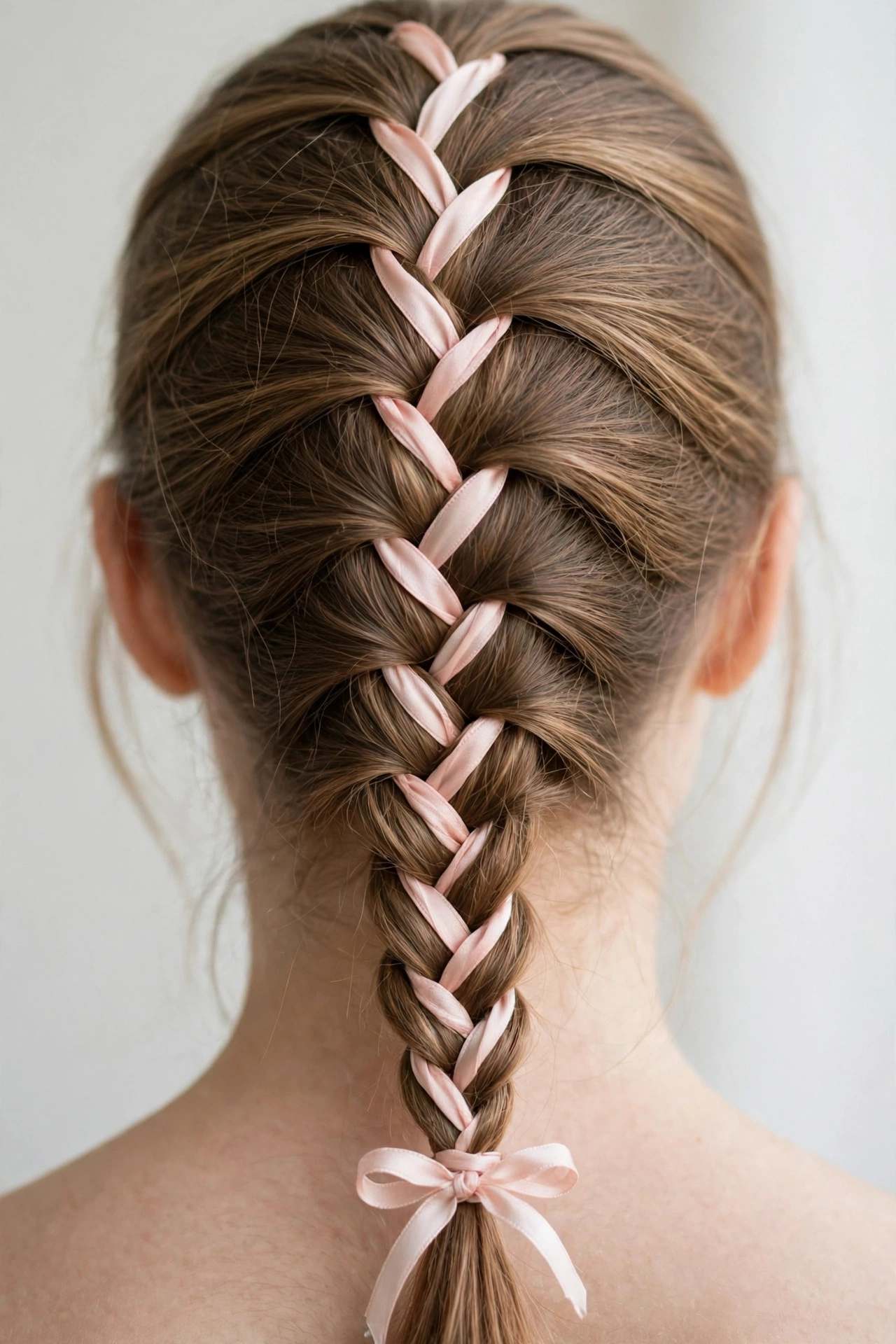
A French braid with ribbon is a sweet, delicate style that adds a pop of colour to a classic braid. A thin silk ribbon is woven through the braid as you go, giving a pretty, feminine finish that is perfect for parties, school events and spring weddings. It is an easy way to match your hairstyle to your outfit.
Choose a ribbon that complements your clothes and tie it to a strand at the top of the braid, or simply weave it in as a fourth strand. French braid as normal, keeping the ribbon visible on the outside of each crossing. Tie the ribbon into a small bow at the end of the braid. Velvet, satin and grosgrain ribbons all work well, and you can swap the colour to suit any season or occasion.
24. Dutch Braid with Colourful Extensions
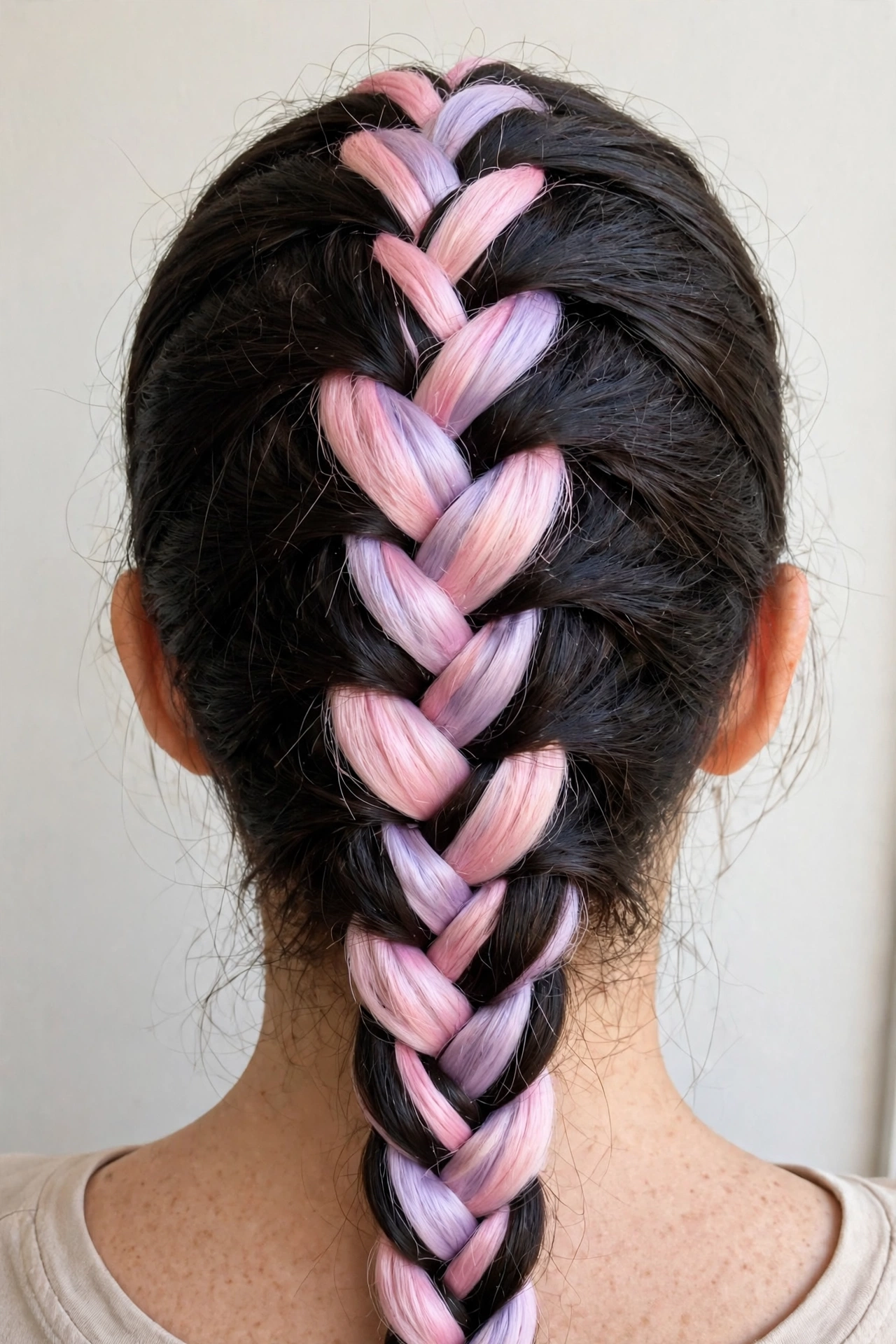
A Dutch braid with colourful extensions is a playful, creative style that lets you try bold colour without dyeing your hair. Strands of pastel or bright hair are braided in with your own hair, so the colour runs through the raised braid in vivid streaks. It is perfect for festivals, holidays and anyone who loves to experiment.
Clip in a few coloured extension strands at the crown before you start braiding, or use coloured braiding hair for a fuller effect. Dutch braid as normal, making sure the coloured strands sit on the outside of the braid where they are most visible. Secure with a clear elastic and pancake the braid gently to show off the colours. The extensions can be removed at the end of the day, so it is a commitment-free way to play with colour.
25. Boho Messy French Braid
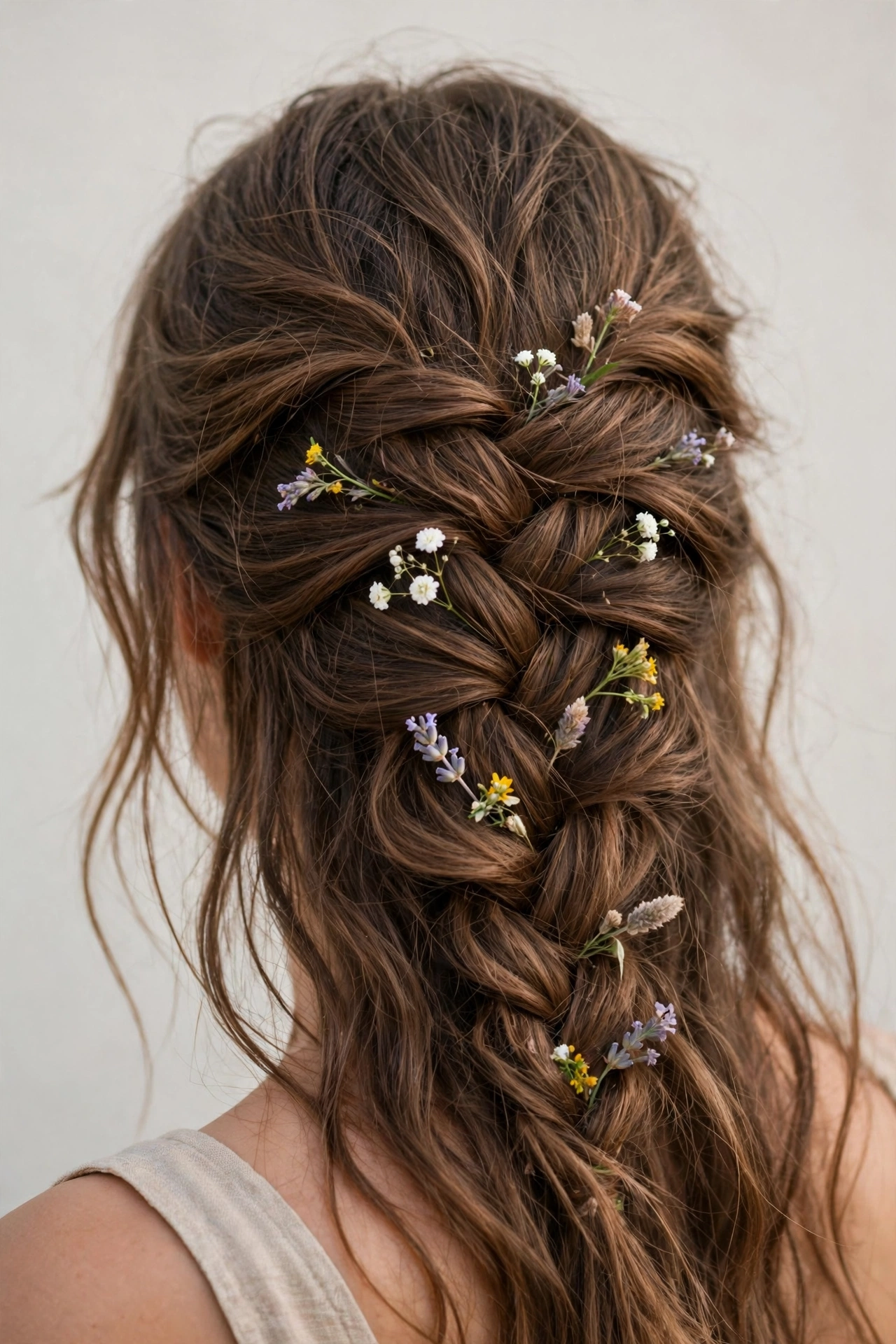
A boho messy French braid is the relaxed, free-spirited version of the classic braid, and it is made for festivals, outdoor weddings and summer days. The braid is deliberately loose, with soft pulled-out strands and a few tiny flowers tucked in for a romantic, earthy feel. It looks effortless, even though it takes a little practice to get the looseness just right.
French braid loosely from the crown, keeping your tension soft and your sections a little uneven for a natural look. Once the braid is tied off, gently pull at the edges to make it wider and fuller, and tug out a few wisps around the face. Tuck in small flowers or a few sprigs of greenery if you like. A sea salt spray on the loose hair adds to the relaxed, boho texture.
26. Boho Messy Dutch Braid
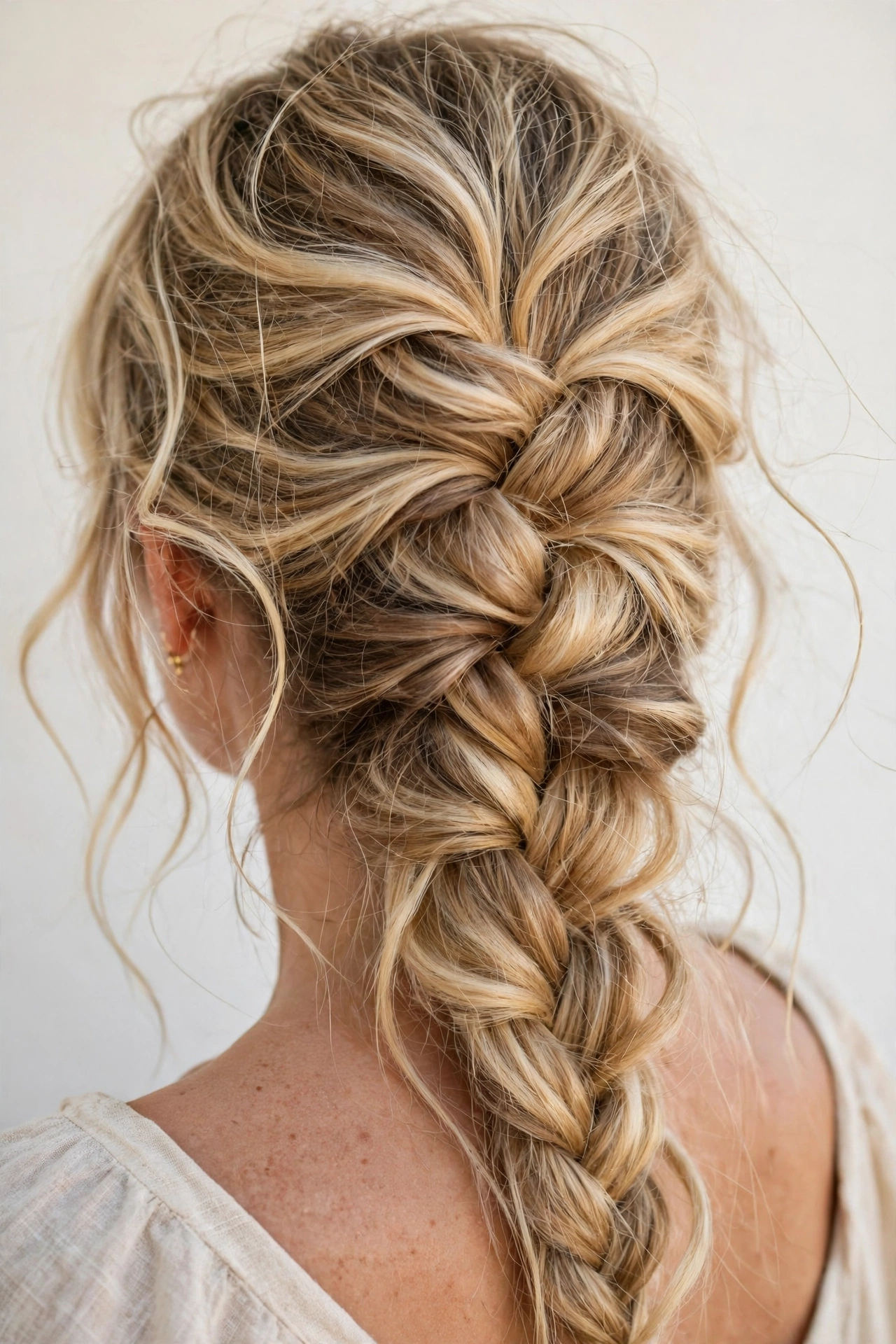
A boho messy Dutch braid takes the bold raised braid and softens it into something relaxed and romantic. The braid is pancaked wide and the edges are pulled loose, giving a full, textured look that pairs beautifully with floaty dresses and festival outfits. It is a wonderful style for wavy or slightly curly hair, where the natural texture adds to the boho feel.
Dutch braid loosely from the front hairline, crossing strands under the middle, and keep your grip relaxed. When the braid is finished, pancake it generously by pulling the outer edges outwards, and let a few strands fall around the face. Finish with a texturising spray rather than a stiff hairspray, so the style keeps its soft movement. This is a great style to wear to a festival, a picnic or a beach wedding.
27. French Braid for Short Hair
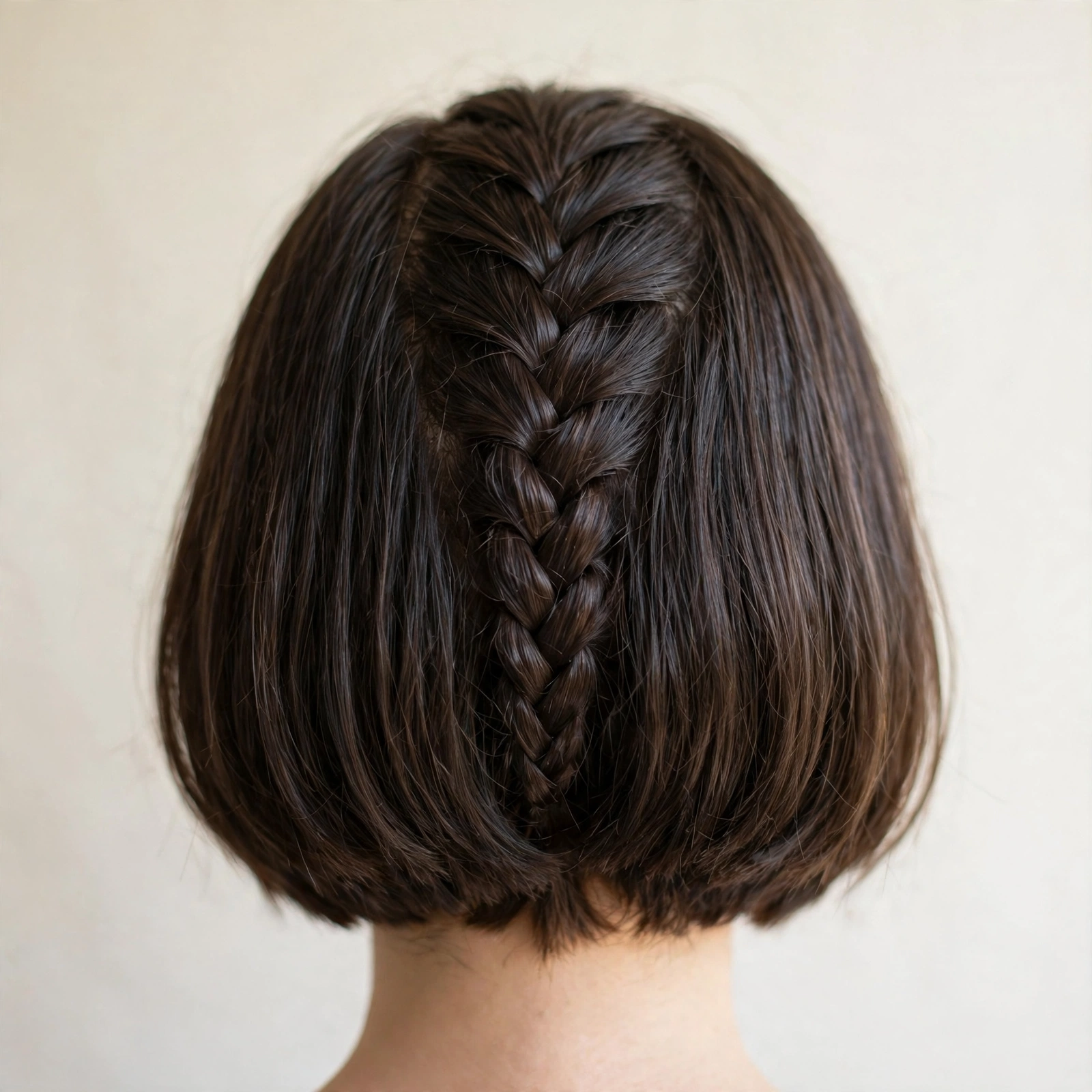
French braids are not just for long hair — they work beautifully on short hair too, including bobs and lobs. A short French braid along the crown or the side adds texture and keeps the front layers out of the face, which is a lifesaver on busy days. It is a quick, practical style that makes short hair feel freshly styled in minutes.
Take a small section at the front hairline and French braid it for a few inches, adding small pieces of hair as you go. Secure the end with a tiny elastic and pin it underneath the rest of the hair so it disappears. Because short hair has less length to hold the braid, use a little texturising spray first for grip, and finish with bobby pins to keep the braid secure all day.
28. Dutch Braid for Short Hair
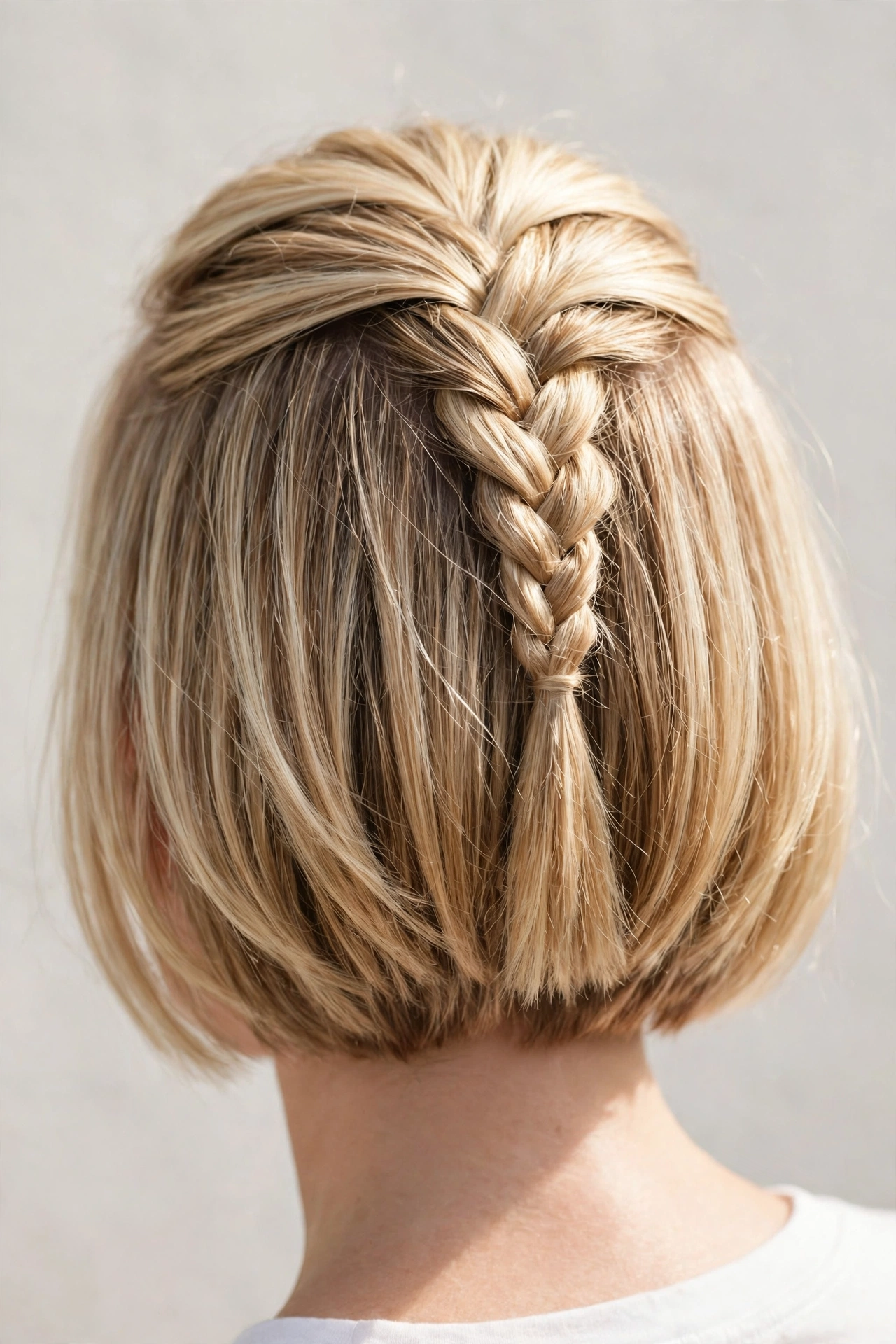
A Dutch braid on short hair is a modern, punchy style that proves braids are for every length. The raised braid stands out clearly against a bob or lob, giving a bold accent that works for everyday wear and nights out. It is also a clever way to grow out a fringe or keep short layers tidy.
Part the hair where you want the braid to sit and Dutch braid a small section, crossing strands under the middle. Keep the sections small and the braid close to the head, and pin the end discreetly underneath. A little pomade or styling cream helps short hair grip the braid and keeps flyaways under control. Pair it with a sleek blow-dry for a polished look, or with tousled texture for something more casual.
29. French Braid for Long Hair
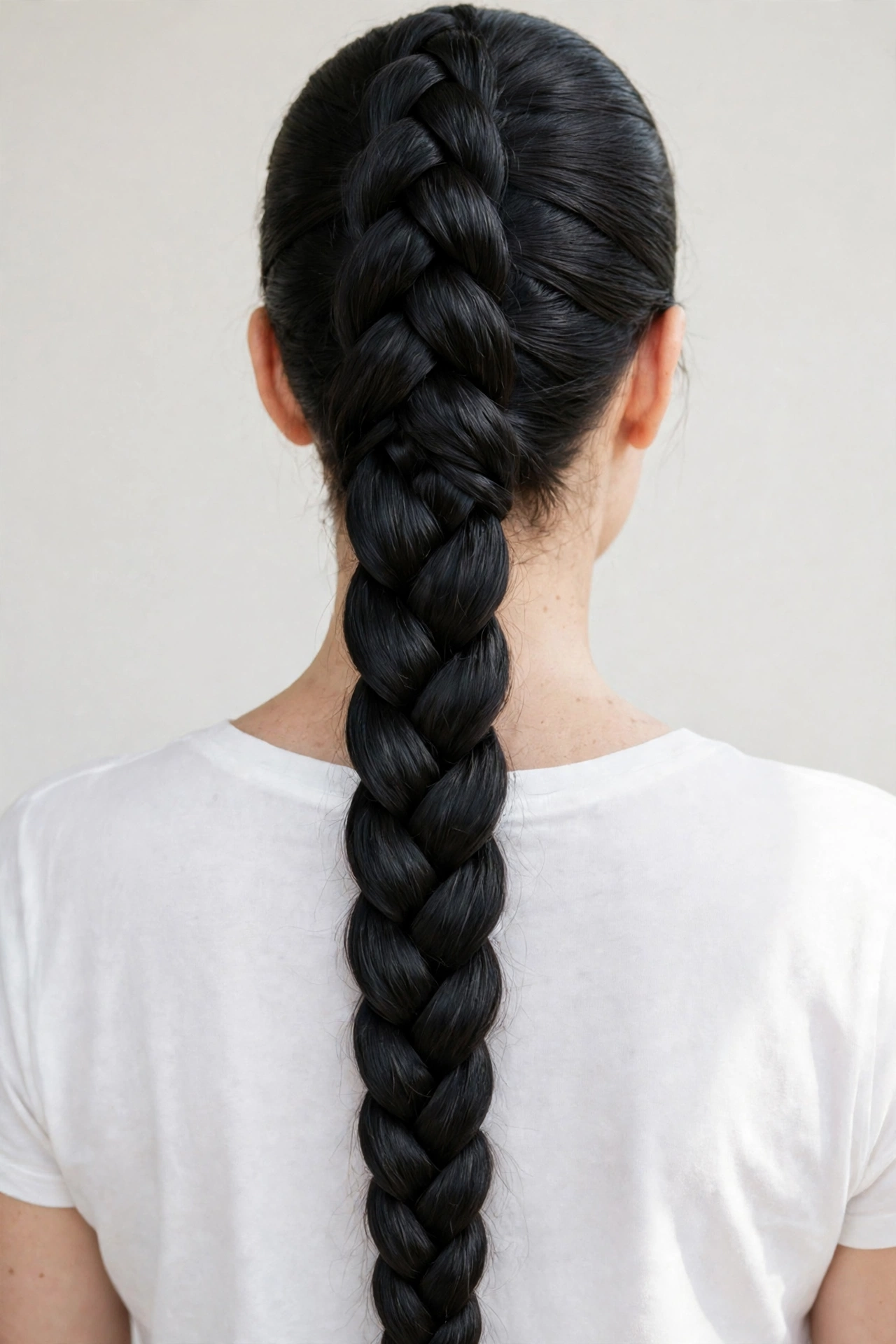
A French braid on very long hair is a classic for a reason: it shows off the length, keeps the hair protected and looks stunning from behind. The long plait has a beautiful, even rhythm, and it works for everything from everyday errands to formal events. It is also one of the best protective styles for long hair, reducing tangles and breakage.
Brush the hair thoroughly and French braid from the crown all the way down, adding hair evenly as you go. Keep your tension consistent so the braid looks smooth and even from top to bottom. Tie the end with a strong elastic and smooth the surface with a little serum for shine. For extra fullness, pancake the braid gently once it is finished, and mist with hairspray to keep it neat.
30. Dutch Braid for Long Hair
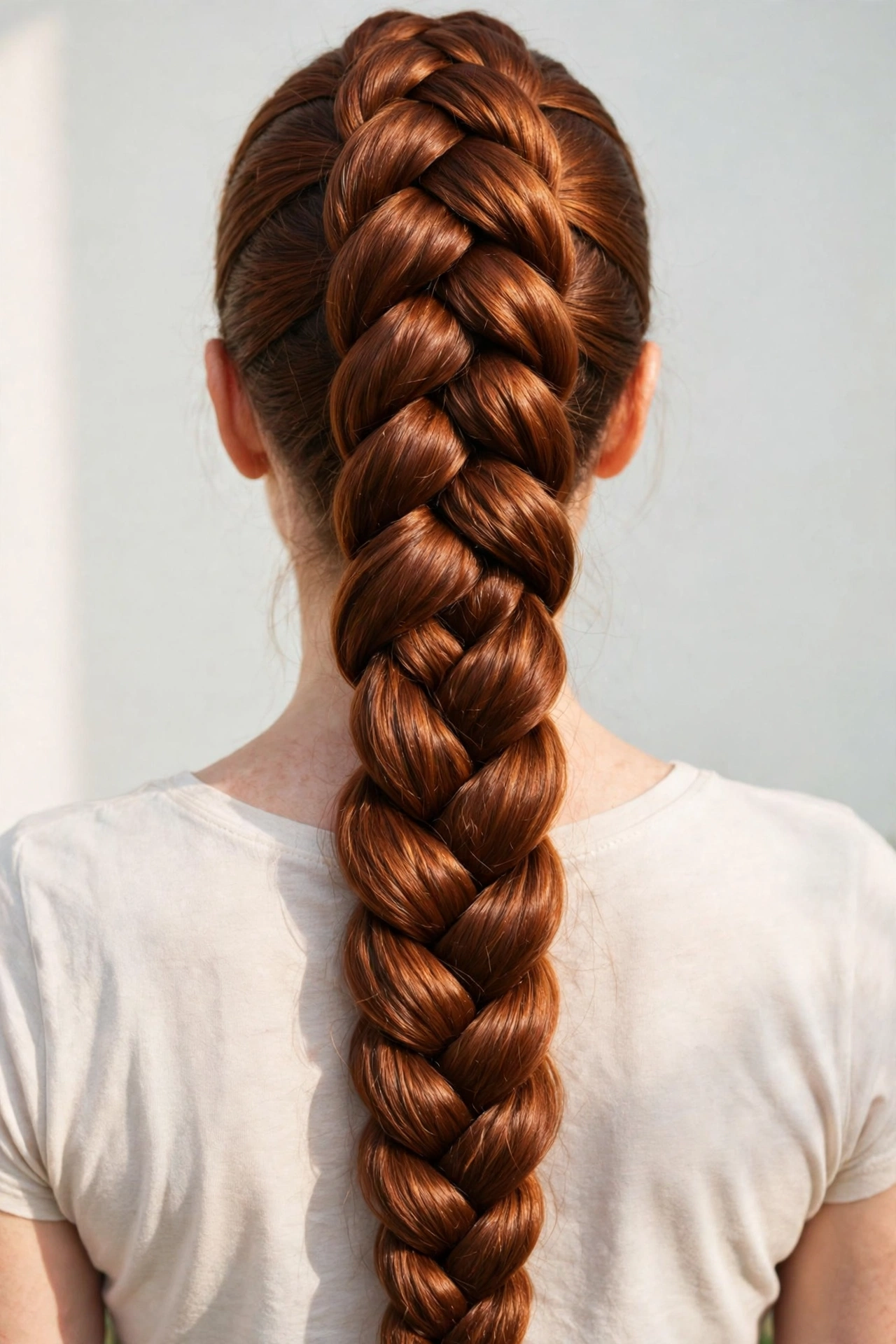
A Dutch braid on very long hair is a show-stopping style, with a thick raised rope of hair running all the way down the back. It is a favourite for photos, festivals and special occasions, because the bold braid makes the most of long, thick hair. It also keeps long hair secure and tangle-free during travel, sport and windy weather.
Dutch braid from the crown to the ends, crossing strands under the middle and adding hair evenly. Long hair can get heavy, so take your time and rest your arms if you need to. Secure the end firmly and pancake the braid to make it look even thicker. A light oil on the ends keeps them smooth, and a silk scrunchie at the end of the braid protects the hair from damage.
31. Wedding French Braid
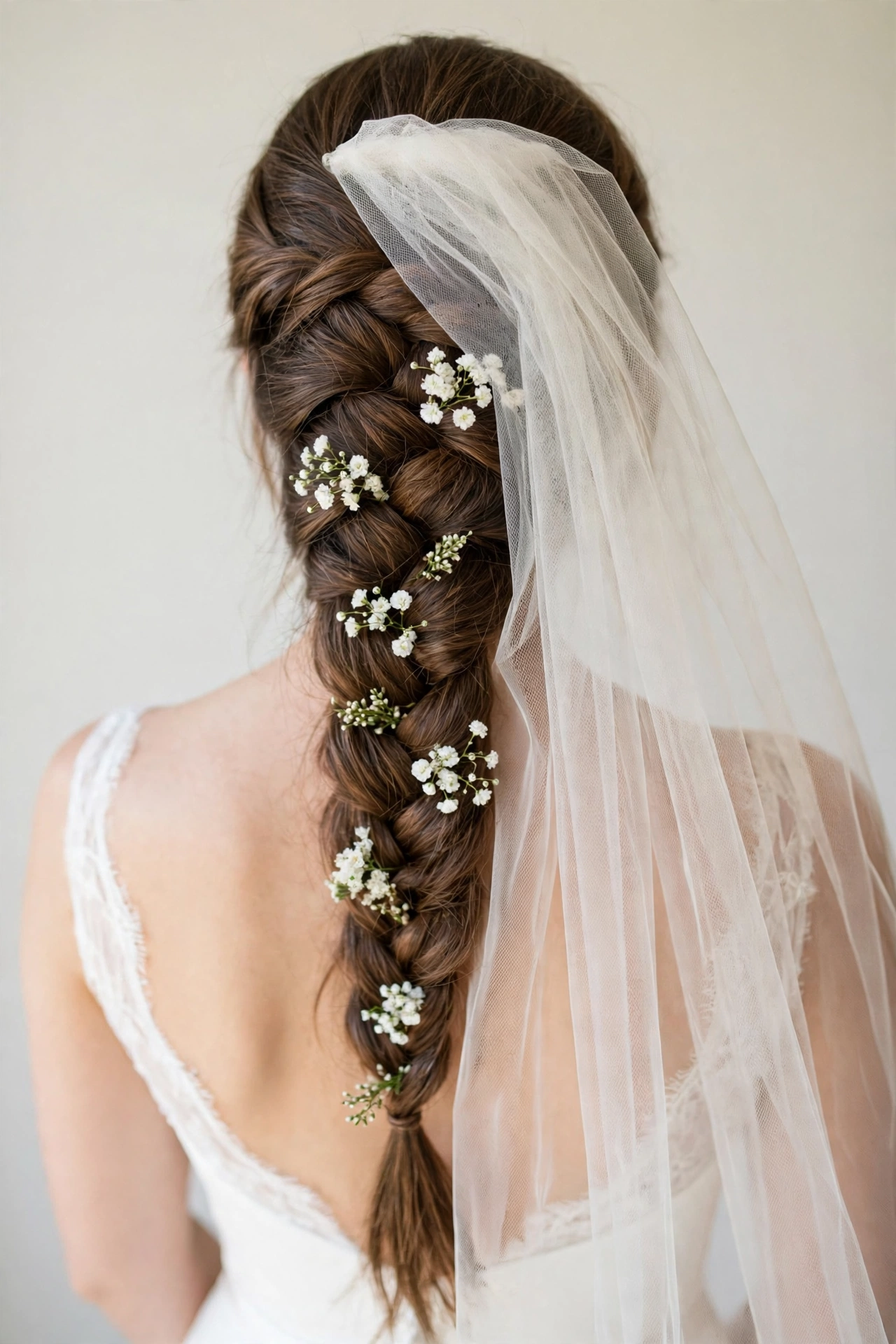
A wedding French braid is a timeless bridal choice, elegant and romantic without being overdone. The flat, graceful braid can be dressed up with fresh flowers, pearl pins or a delicate veil, and it holds up beautifully through a long day of photos, dancing and celebration. It suits brides who want a soft, classic look.
French braid loosely from the crown, keeping the braid soft and a little relaxed rather than tight. Secure it at the nape or sweep it into a low bun, then tuck in small white flowers or pearl pins along the braid. A veil can be attached just above the braid for a traditional finish. Practise the style a few times before the wedding day, and ask your stylist to use pins that match your hair colour so they disappear into the braid.
32. Wedding Dutch Braid
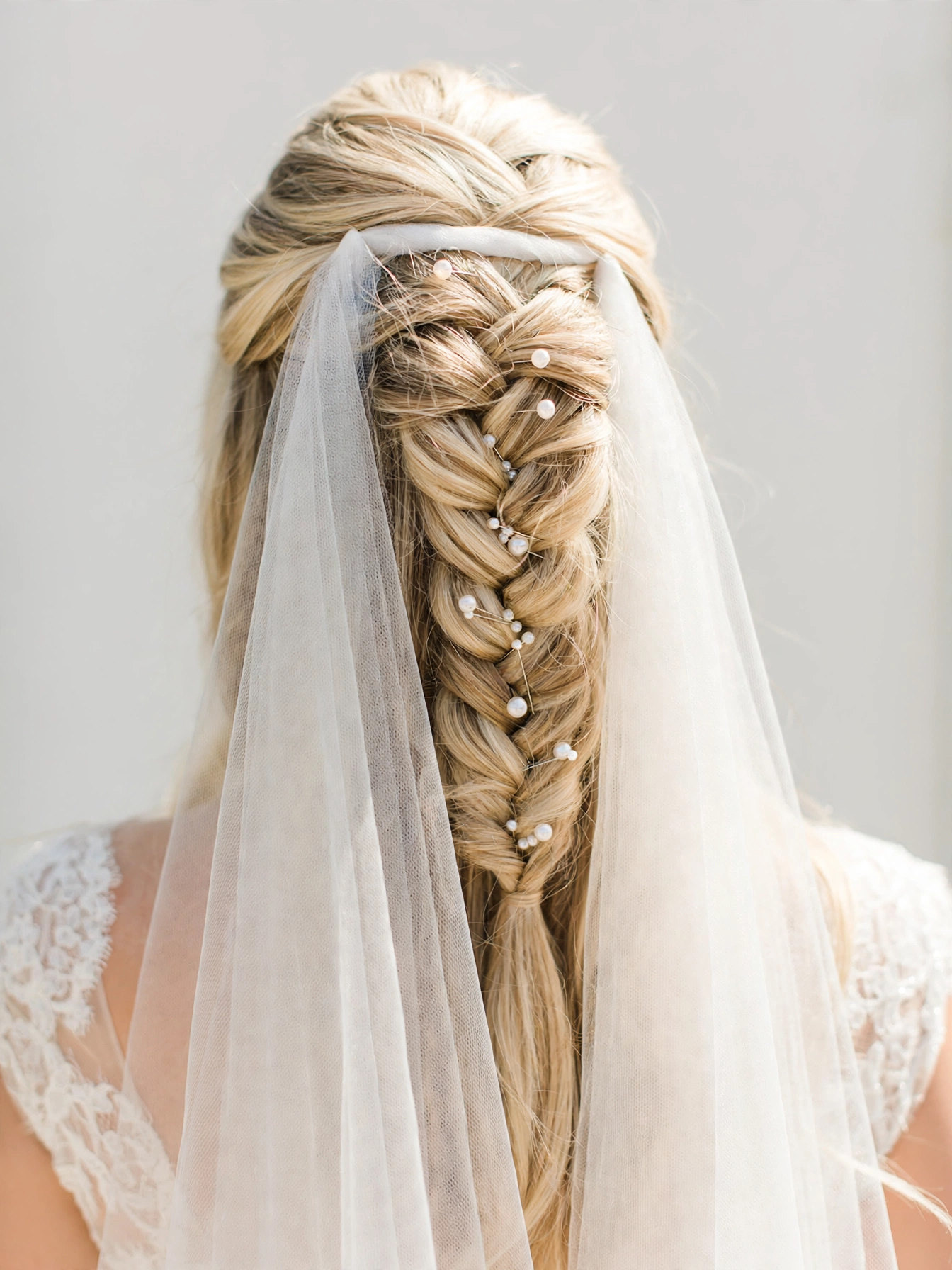
A wedding Dutch braid is a modern bridal look with a bold, romantic twist. The raised braid stands out beautifully in photos, and it can be softened with pearl pins, flowers or a veil for a dreamy finish. It is a lovely choice for brides who want something a little different from the classic French braid, while still keeping the elegance a wedding deserves.
Dutch braid softly from the crown, pancaking the edges gently so the braid looks full and romantic rather than severe. Sweep the braid into a low bun or let it fall over one shoulder, and add pearl pins or small flowers along its length. A veil sits beautifully above a Dutch braid, and the raised texture helps it stay in place. Do a trial run with your stylist so the style is comfortable and secure for the whole day.
33. French and Dutch Braid Combo
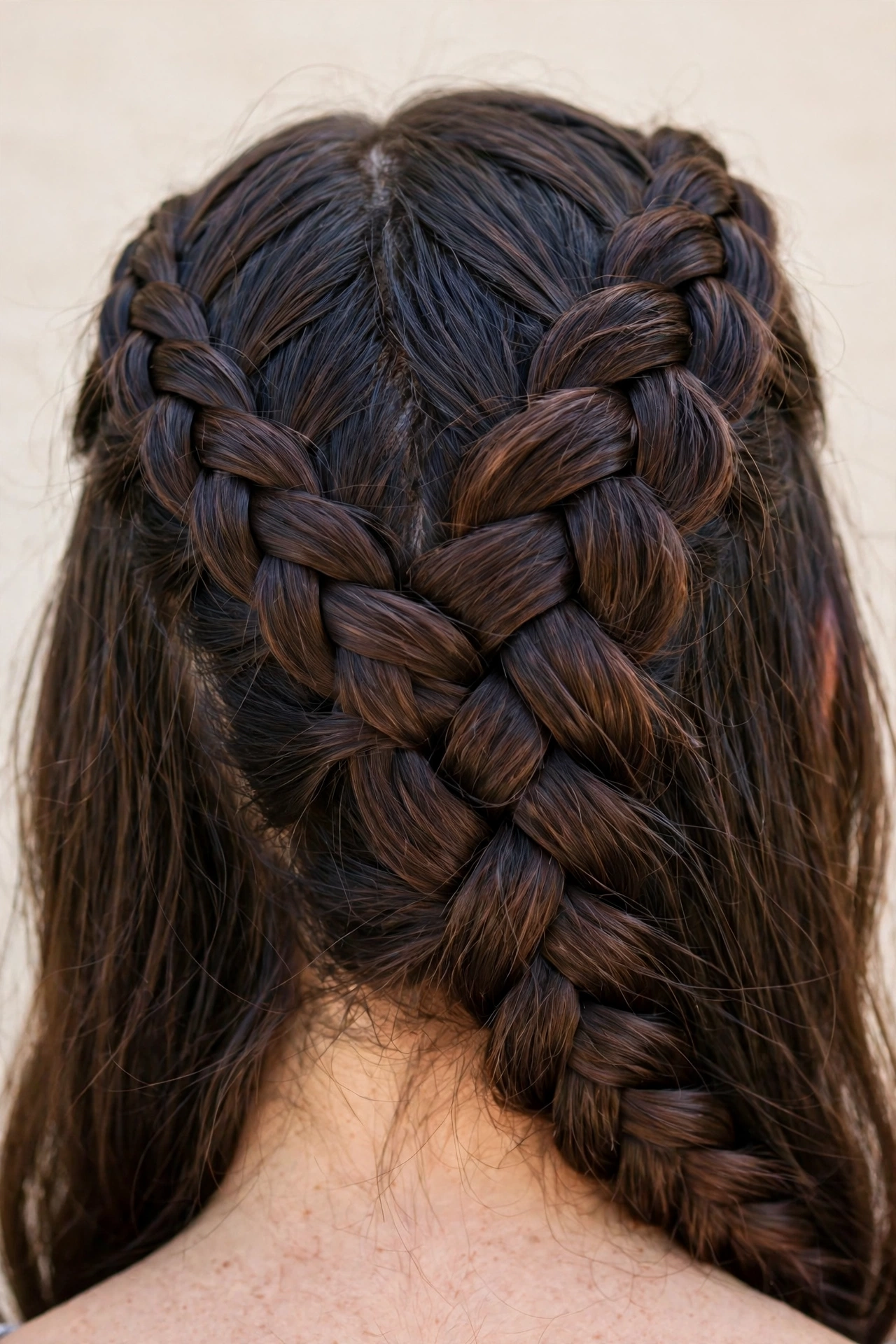
A French and Dutch braid combo is a creative style that mixes both techniques in one look: a flat French braid on one side and a bold raised Dutch braid on the other, meeting in the middle. It is a fun, artistic choice for anyone who has mastered both braids and wants to show off their skills. It is perfect for festivals, photoshoots and days when you want your hair to be the talking point.
Part the hair down the middle and French braid one side, then Dutch braid the other, working from the front hairline towards the back. Join the two braids at the nape and continue as a single plait, or tie them off separately. Keep the tension even on both sides so the two braids look balanced. This style takes a little extra time, but the result is a unique braid that no one else will be wearing.
Conclusion
French braids and Dutch braids are two simple techniques that open up a world of hairstyles. From the classic single braid to crowns, buns, ponytails, side braids, boho looks and wedding styles, there is a braid here for every hair length, every occasion and every skill level. The best way to learn is to practise a little at a time, starting with the classic French braid and moving on to the Dutch braid once you feel confident.
Try the styles in this guide one by one, and do not worry if your first attempts are not perfect — braiding is a skill that improves quickly with practice. Keep a brush, a few elastics and some bobby pins handy, use a little texturising spray for grip, and remember that a slightly messy braid often looks more beautiful than a perfect one. Pick your favourites, save this guide for your next hair day, and enjoy the endless ways you can wear these two timeless braids.
Frequently Asked Questions
What is the difference between a French braid and a Dutch braid?
The difference is in the direction of the weave. In a French braid, each side strand crosses over the middle strand, so the braid sits flat against the head and looks smooth. In a Dutch braid, each side strand crosses under the middle strand, so the braid pops out and sits on top of the hair like a raised rope. The starting sections and the way you add hair are the same for both — only the crossing direction changes. Once you can do one, the other is easy to learn.
Can you do French and Dutch braids on short hair?
Yes, both braids work on short hair, including bobs and lobs. The key is to braid a small section rather than trying to gather all the hair, and to secure the end with a tiny elastic and bobby pins so it stays hidden. A little texturising spray or dry shampoo adds grip, which helps short layers stay in the braid. Side braids, crown braids and half-up braids are usually the easiest options on short hair.
How do you make braids last all day?
Start with hair that is not freshly washed, or add dry shampoo or texturising spray for grip. Braid with firm, even tension and secure the end with a strong elastic. A light mist of hairspray over the finished braid keeps flyaways in check, and a few bobby pins at the nape and behind the ears stop the braid from loosening. For very active days, Dutch braids tend to hold up slightly better than French braids because the raised weave locks the sections in place.
How do you make a French or Dutch braid look thicker?
The easiest trick is pancaking: once the braid is tied off, gently pull the outer edges of each section outwards with your fingers, working from the bottom up. This makes the braid look wider and fuller straight away. Starting with texturised or slightly wavy hair also helps, as does braiding with larger sections. For a dramatic effect, you can add clip-in extensions at the crown before you start braiding.
Are French and Dutch braids good for sleeping?
Yes, both are excellent overnight styles. A loose French or Dutch braid keeps hair from tangling while you sleep, and in the morning you can undo it to reveal soft, natural waves. Braid the hair loosely rather than tightly so it is comfortable against the pillow, and use a soft fabric elastic instead of a tight rubber band to avoid kinks and breakage. Sleeping on a silk or satin pillowcase helps the braid stay smooth and reduces frizz.