45 French Curl Braids & Curly Hairstyles (2026 Guide)
Introduction
French curl braids are the perfect meeting point between a protective style and a soft, romantic finish. The braids themselves give you structure, neatness and weeks of low-effort wear, while the loose curly ends keep the whole look light, feminine and full of movement. Whether you choose long braids, a short bob version or a knotless install, the curly finish means you never have to choose between a polished style and natural-looking texture.
This guide brings together 45 ideas, from classic French curl braids to curly hairstyles that pair beautifully with them, including curly bobs, layered cuts, wash-and-go curls and elegant curly updos. For every style you will find honest advice on who it suits, how to look after it, and exactly what to ask for at the salon or from your braider, so you can walk in confident and walk out with a style that truly works for your hair, your face shape and your lifestyle.
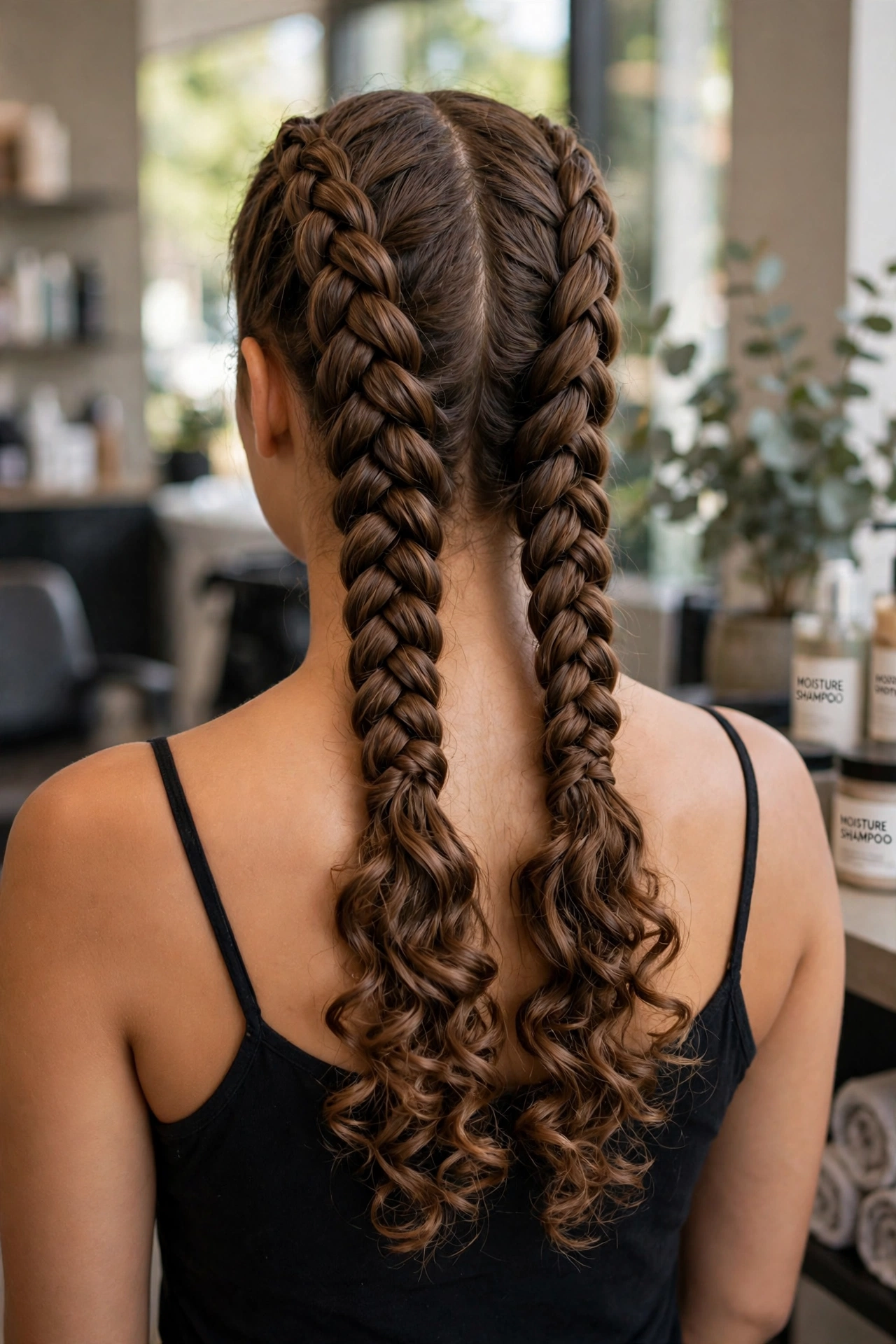
1. Classic Long French Curl Braids
Classic long French curl braids suit almost everyone, and they are the best starting point if you are trying this style for the first time. The length adds drama and movement, while the curly ends soften the braids and stop them looking severe. They flatter oval, round and heart-shaped faces alike, because the long lines draw the eye downwards, and they work beautifully on thick hair as well as on finer hair that needs the volume the curls provide.
Upkeep is refreshingly simple: wrap your hair in a satin scarf or bonnet at night, mist the curly ends with water and a little leave-in conditioner, and separate the curls gently with your fingers rather than brushing them out. At the salon, ask for medium-sized braids with French curl hair at the ends, and agree the length before your braider starts — waist length is the most popular choice, but hip length gives even more movement if you do not mind the extra weight.
2. Boho French Curl Braids
Boho French curl braids are the relaxed, undone cousin of the classic style, with a few loose curls pulled out around the face and a softer, less uniform finish. They suit wavy and curly hair textures best, and they are ideal for oval and long faces, because the face-framing pieces add width and softness exactly where it is needed. If you like a style that looks effortless rather than perfectly polished, this is the one to choose.
To keep the boho look from turning messy, refresh the loose curls every few days with a curl cream, and resist the urge to re-braid stray pieces — a little softness is the whole point. At your appointment, ask for boho French curl braids with curly pieces left out at the front and a slightly looser braid tension, and show your braider a reference photo so the amount of looseness matches what you have in mind.
3. Knotless French Curl Braids
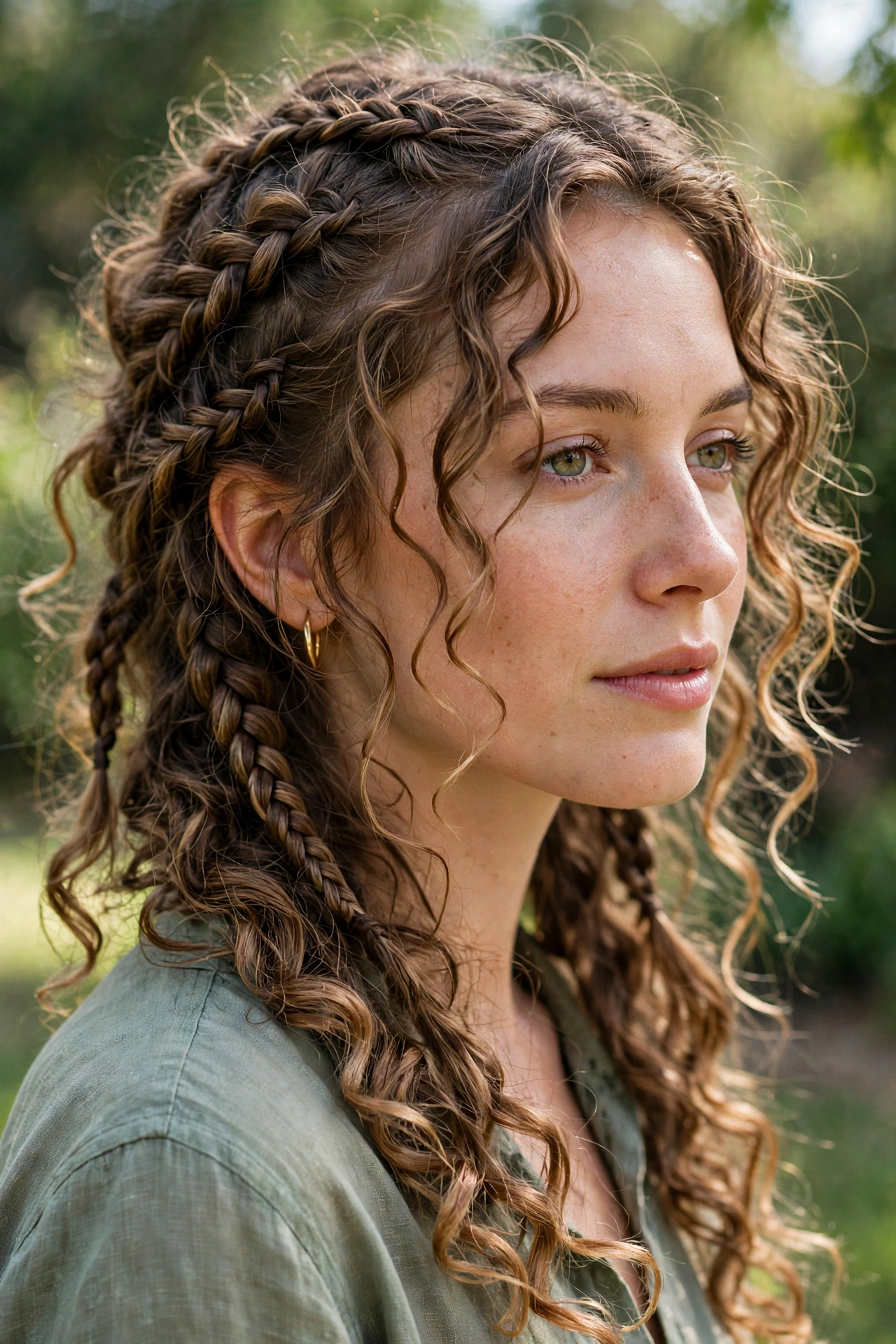
Knotless French curl braids start with your natural hair rather than a tight knot, which means less tension on your scalp and a much more natural-looking hairline. They are an excellent choice if you have a sensitive scalp, fine hair or a history of tension headaches from braids, and they suit every face shape because the softer root blends so naturally. The curly ends keep the style from looking flat, even though the braids themselves lie very smoothly.
Because there is no bulky knot to hide, knotless braids tend to last well and grow out gracefully, but you should still protect the curly ends with a light oil and a satin bonnet at night. Ask your braider for knotless French curl braids in your preferred size, and be clear about how much baby hair or edge control you want, since the feed-in technique gives a very clean finish that some people like to soften with a few wispy pieces.
4. Jumbo French Curl Braids
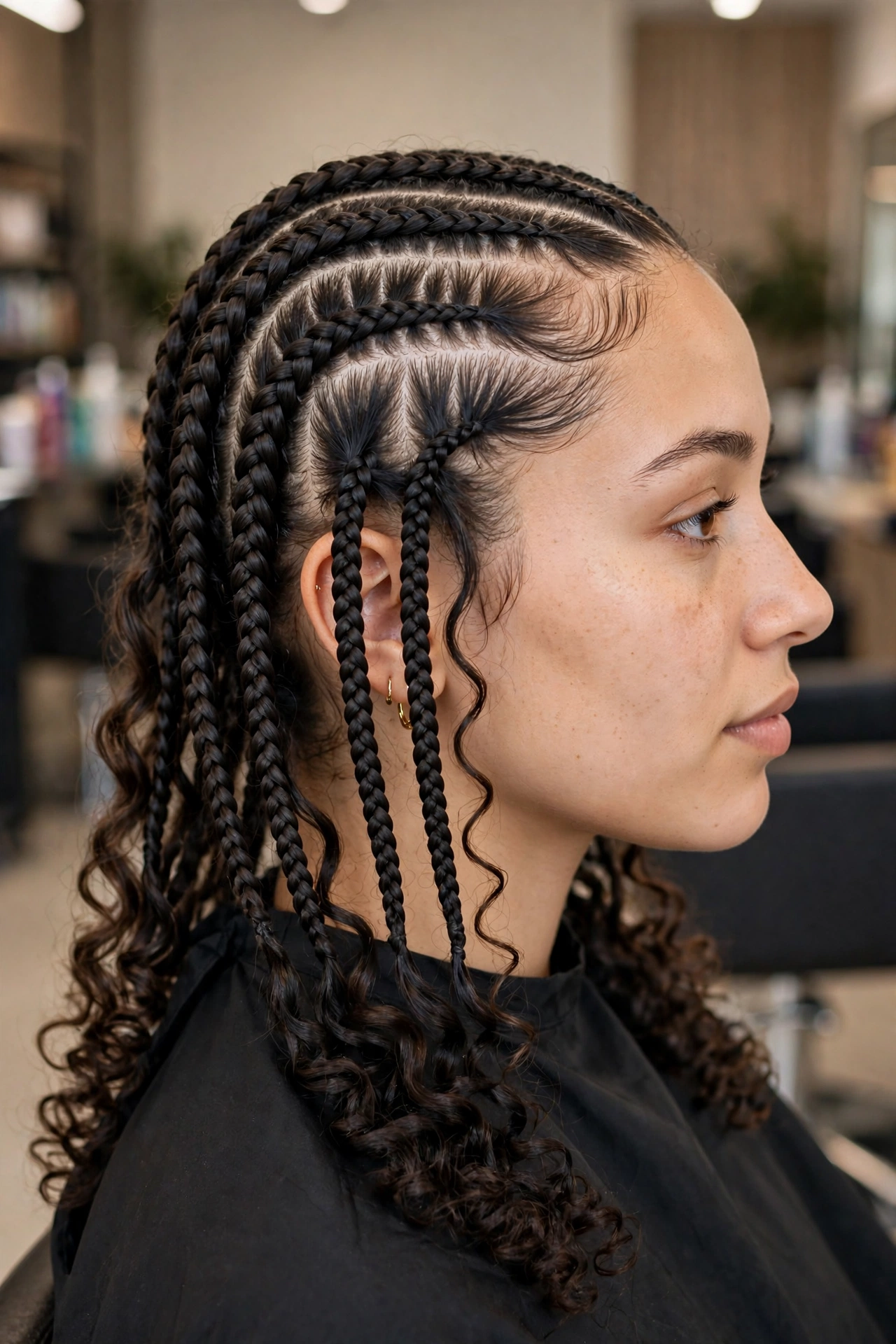
Jumbo French curl braids make a bold statement with thick, chunky braids and big, voluminous curly ends. They suit thick hair and strong features beautifully, and they are especially flattering on round and square faces, where the larger sections and full curls balance the face rather than crowding it. They also take far less time to install than small braids, which makes them a great choice if you want a dramatic style without a full day in the chair.
The trade-off is weight, so keep the length moderate if you are sensitive to heavy styles, and avoid pulling jumbo braids into very tight updos. At the salon, ask for jumbo French curl braids with generous curly ends, and agree the number of braids in advance — fewer, thicker braids give the boldest look, while a few extra braids keep the style a little more versatile for updos.
5. Small French Curl Braids
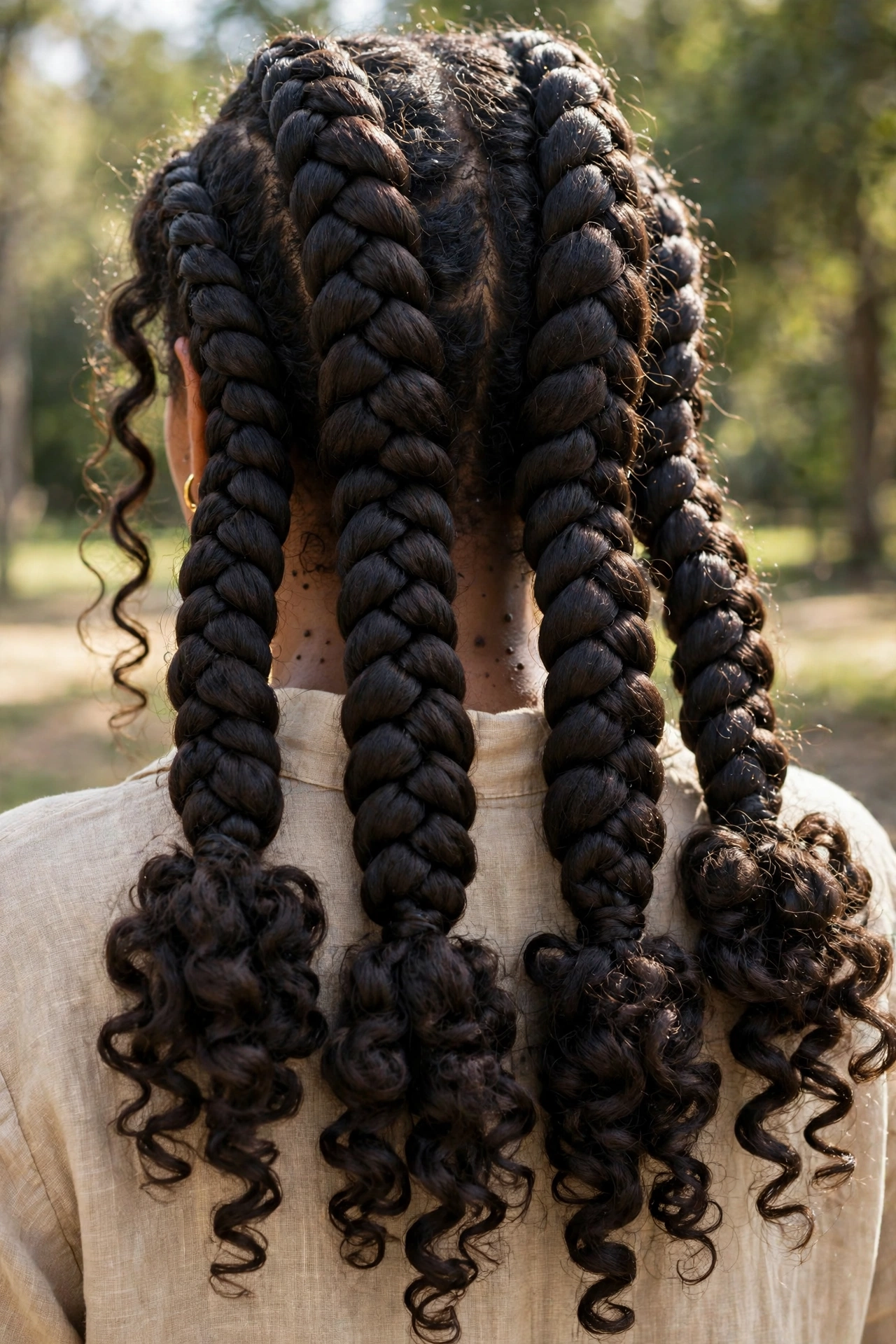
Small French curl braids are delicate, detailed and incredibly versatile, giving you a full head of fine braids that can be styled in almost any direction. They suit fine to medium hair particularly well, because the small sections add the illusion of density, and they flatter smaller or heart-shaped faces by keeping the overall silhouette neat rather than overwhelming. If you love changing your hairstyle day to day, small braids are worth the longer installation time.
Upkeep means being gentle: small braids can frizz faster at the roots if you are rough with them, so wash with diluted shampoo, pat dry rather than rubbing, and keep the curly ends moisturised. Ask your braider for small French curl braids, confirm how long the appointment will take, and decide whether you want the curls to be tight and springy or looser and more flowing, since that choice changes the whole feel of the style.
6. French Curl Bob Braids
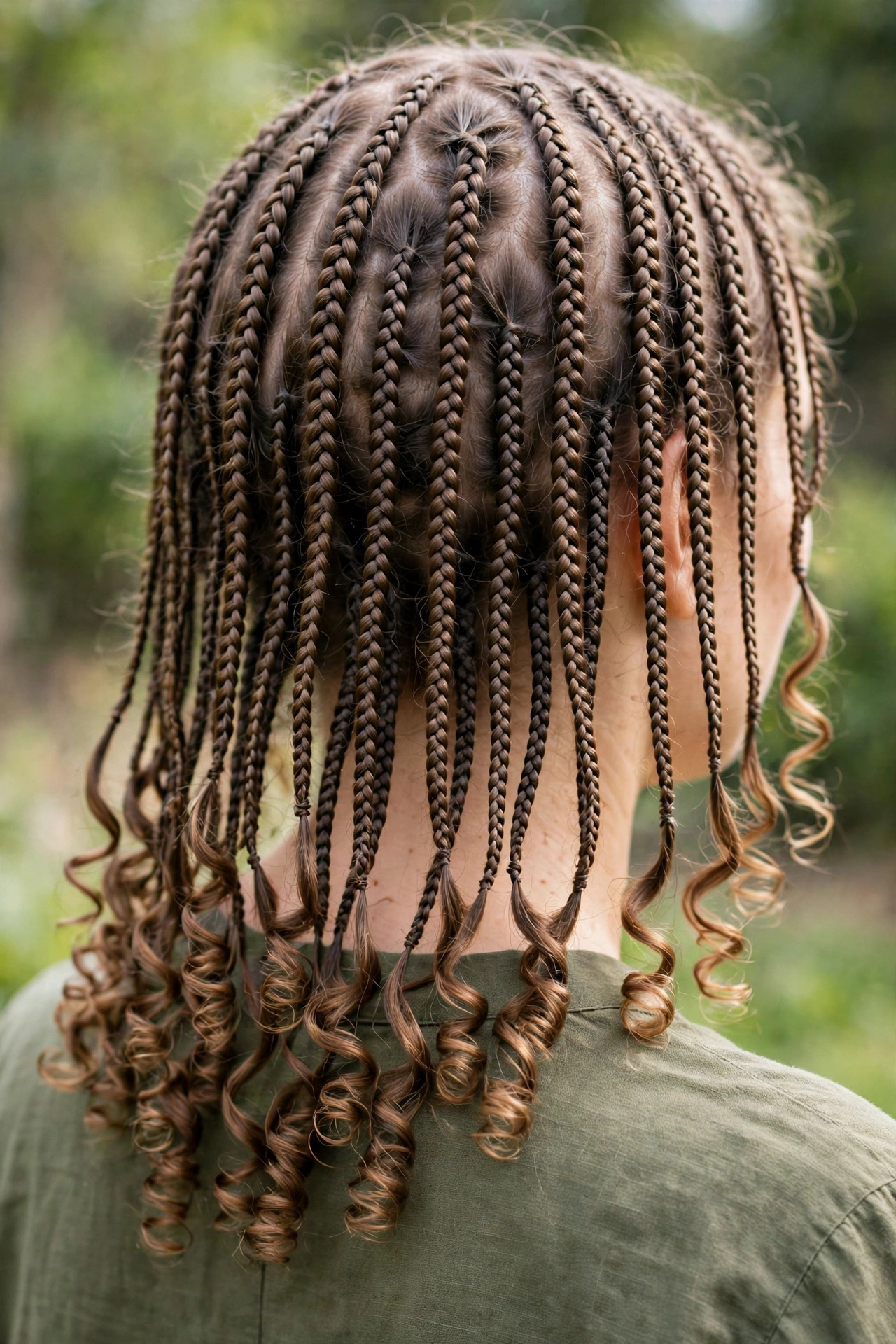
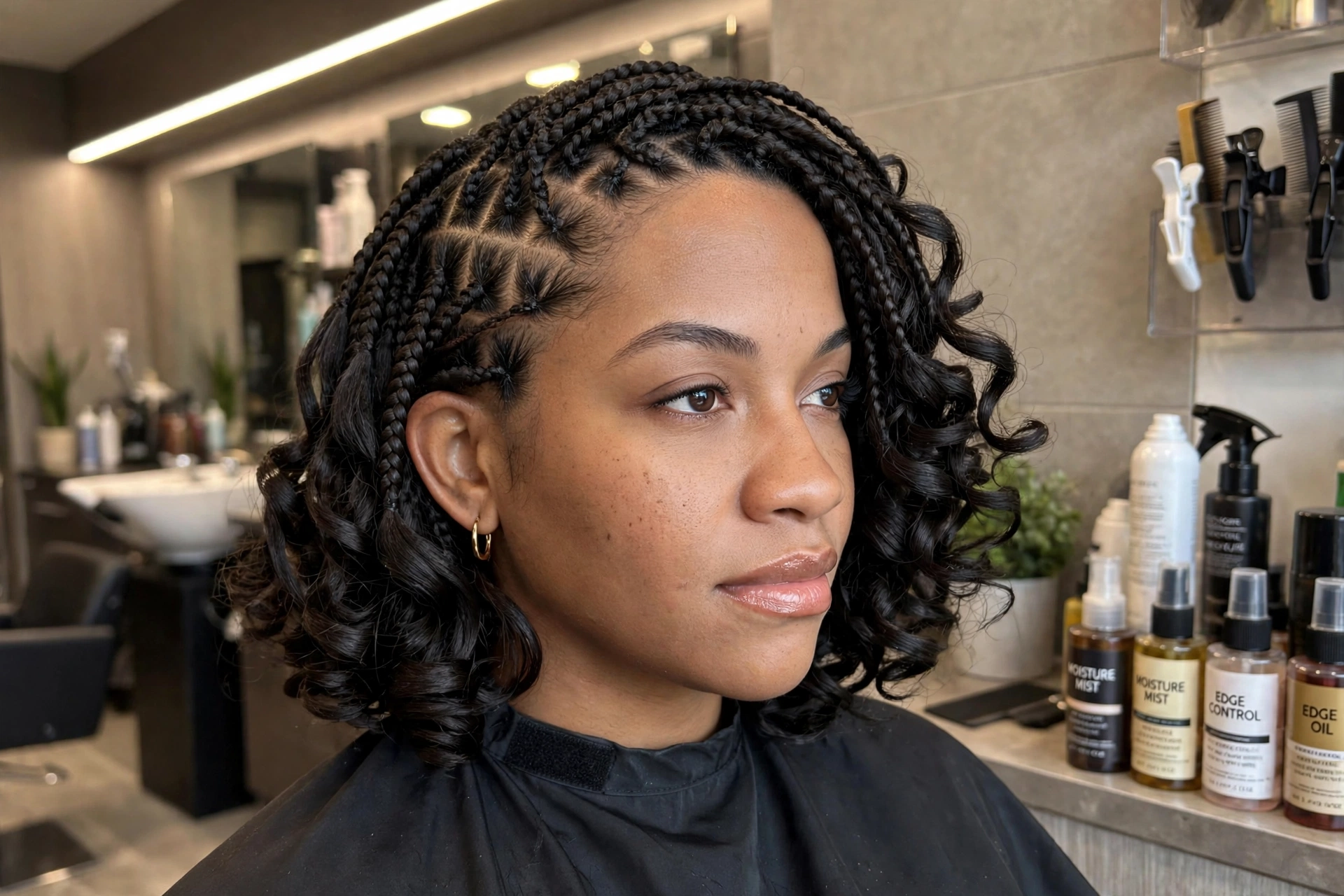
French curl bob braids bring the French curl trend to a short, chic length, with braids that end around the chin or jaw and finish in bouncy curls. They are a wonderful choice for round and oval faces, because the bob length frames the jawline without adding weight to the shoulders, and they are far lighter and cooler than long braids, which makes them ideal for summer or for anyone who finds long styles heavy.
The bob length also means the curly ends are always on show, so refresh them often with a curl-defining cream and scrunch them back into shape after sleeping. At the salon, ask for French curl bob braids cut to your chosen length, and be specific about whether you want a blunt bob outline or a slightly layered, rounded shape, since the curls will spring up shorter than the braided length.
7. French Curl Braids with High Ponytail
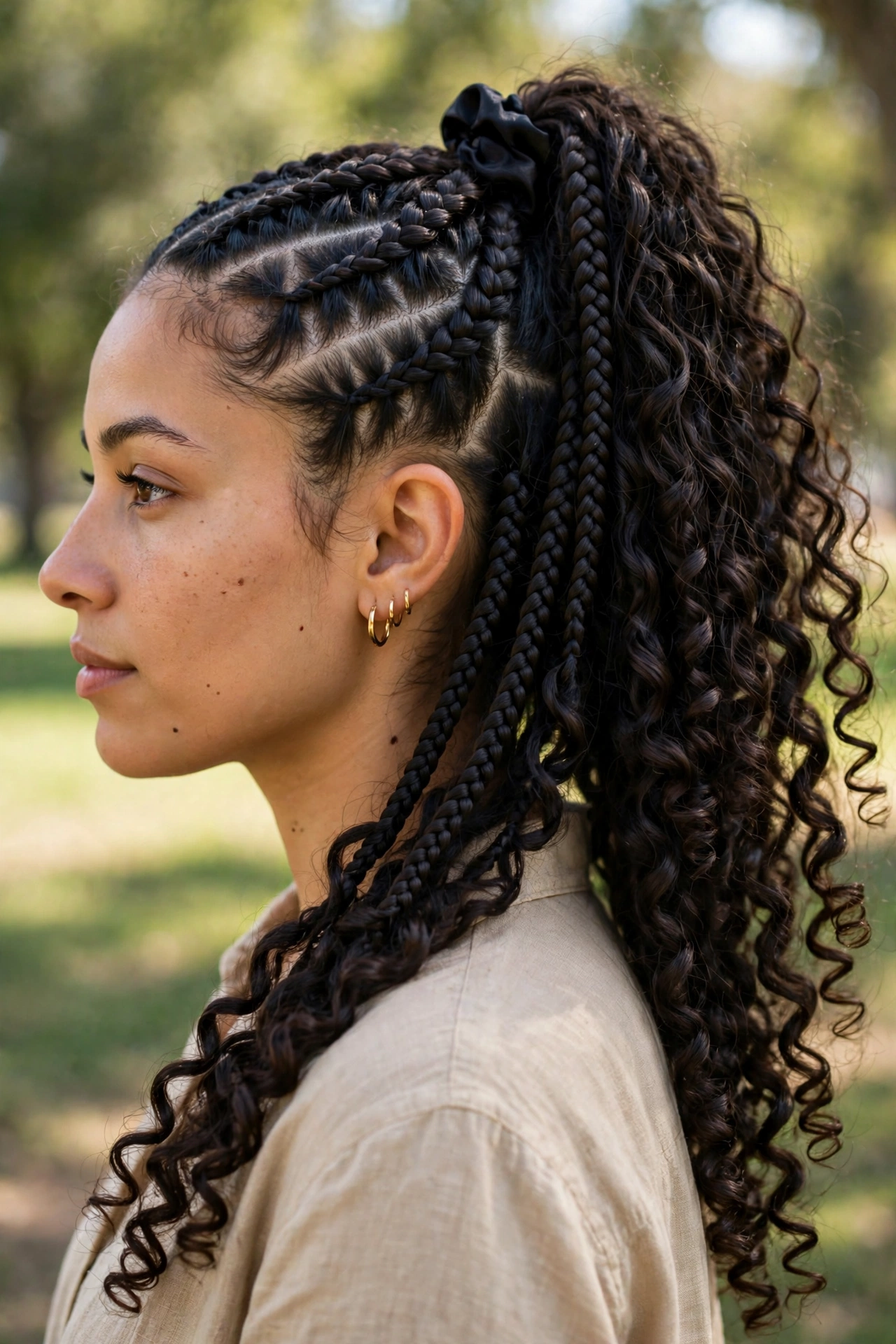
Gathering French curl braids into a high ponytail instantly turns a everyday protective style into something sleek and glamorous. The high placement suits oval and long faces especially well, because it lifts the whole silhouette and shows off your cheekbones, and it works for both casual days and dressed-up evenings. The curly ends cascading from the ponytail keep the look soft rather than severe.
To protect your edges, do not pull the ponytail too tight, and vary its position from day to day so the same hairs are not always under tension. Use a snag-free tie or a silk scrunchie, and wrap a small braid around the base for a polished finish. Ask your braider to leave the braids long enough to gather comfortably, and to keep the front braids neat so the ponytail looks smooth from every angle.
8. French Curl Braids Half Up Half Down
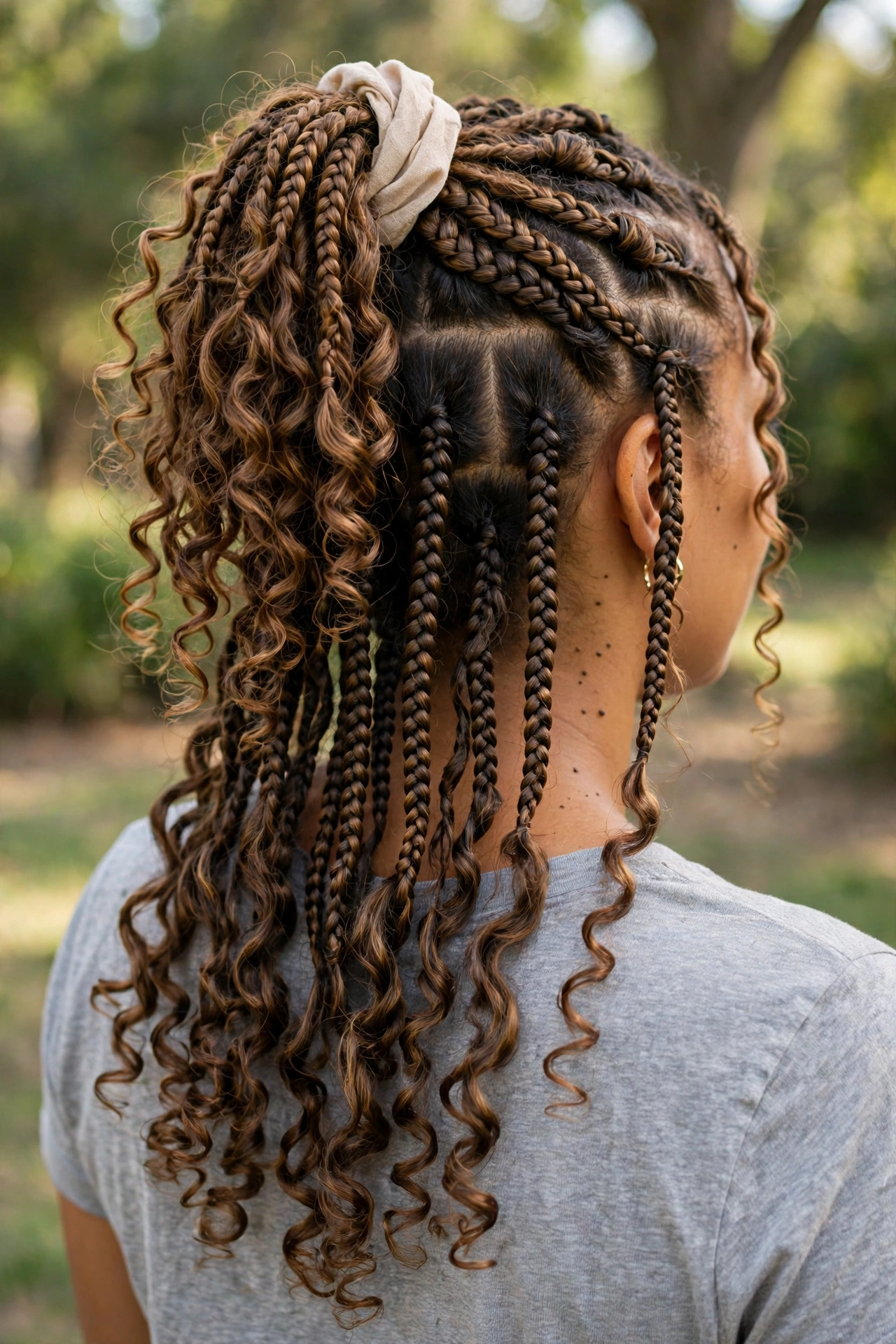
Half up half down is the best of both worlds: the top section is pulled away from your face for a tidy, lifted look, while the rest of your French curl braids fall loose with their curly ends on full display. It suits almost every face shape, and it is particularly kind to round faces, because the height on top lengthens the face while the loose length keeps the style soft. It is also one of the easiest braided styles to refresh mid-week.
Keep the top section from looking flat by gently pulling a few braids forward for volume, and secure it with a claw clip or a covered band rather than a tight elastic. At the salon, simply ask for French curl braids long enough to style half up, and mention that you plan to wear them this way, so your braider can keep the top braids neat and evenly sized for a clean parting.
9. French Curl Braids in a High Bun
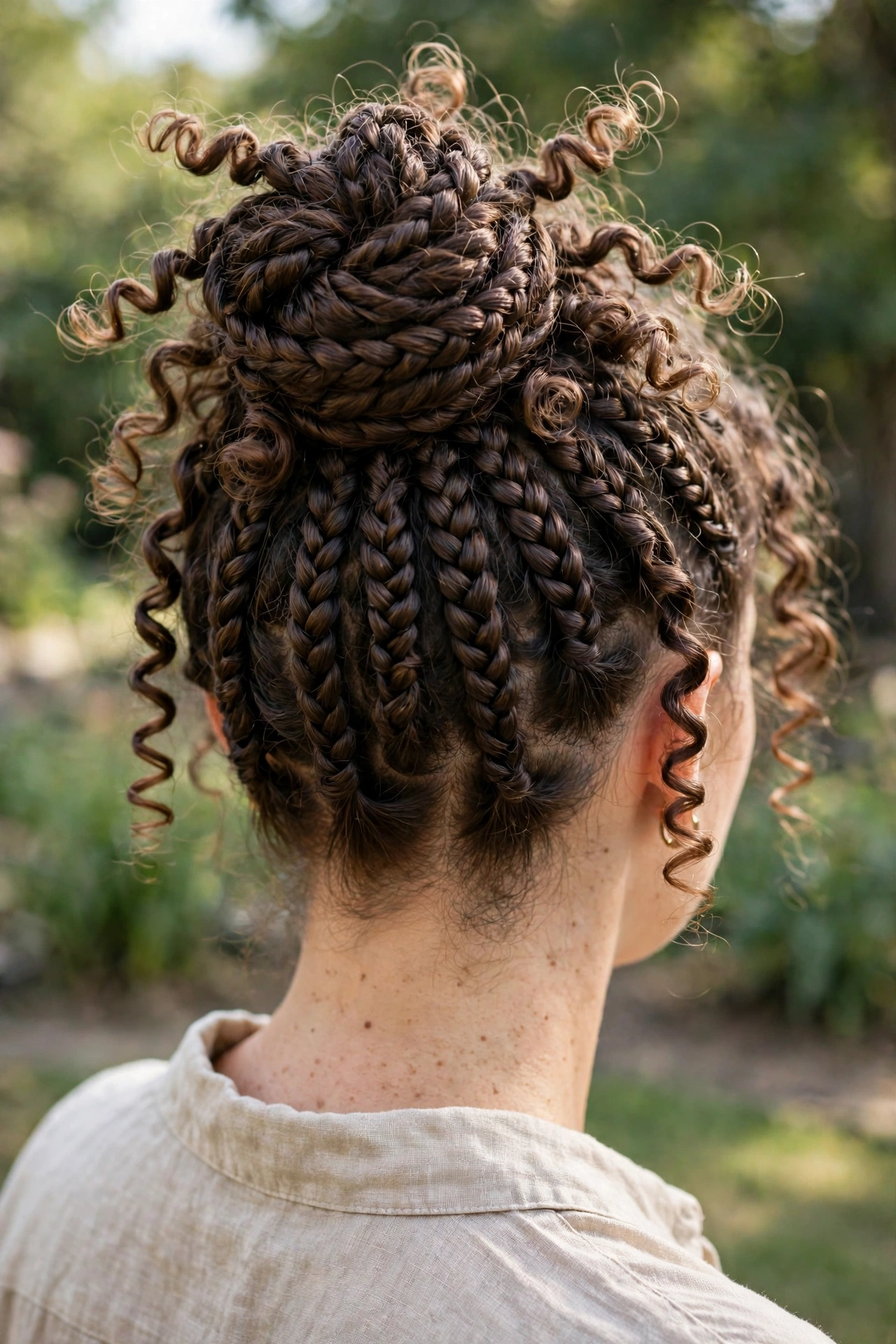
A high bun made from French curl braids is elegant, practical and perfect for hot weather, workouts or formal occasions. The height suits oval, round and heart-shaped faces, because it draws attention upwards and opens up the face, and the curly ends peeking out of the bun stop the style looking too strict. It is also a brilliant second-week style, when you want your braids off your neck without taking them out.
Avoid wrapping the bun too tightly, and pin the curly ends loosely so they keep their shape instead of being crushed flat. Ask your braider for braids that are long and flexible enough to wrap comfortably, and if you plan to wear a bun often, mention it at the appointment so the braid size and parting suit an updo as well as wearing the braids down.
10. Side-Part French Curl Braids
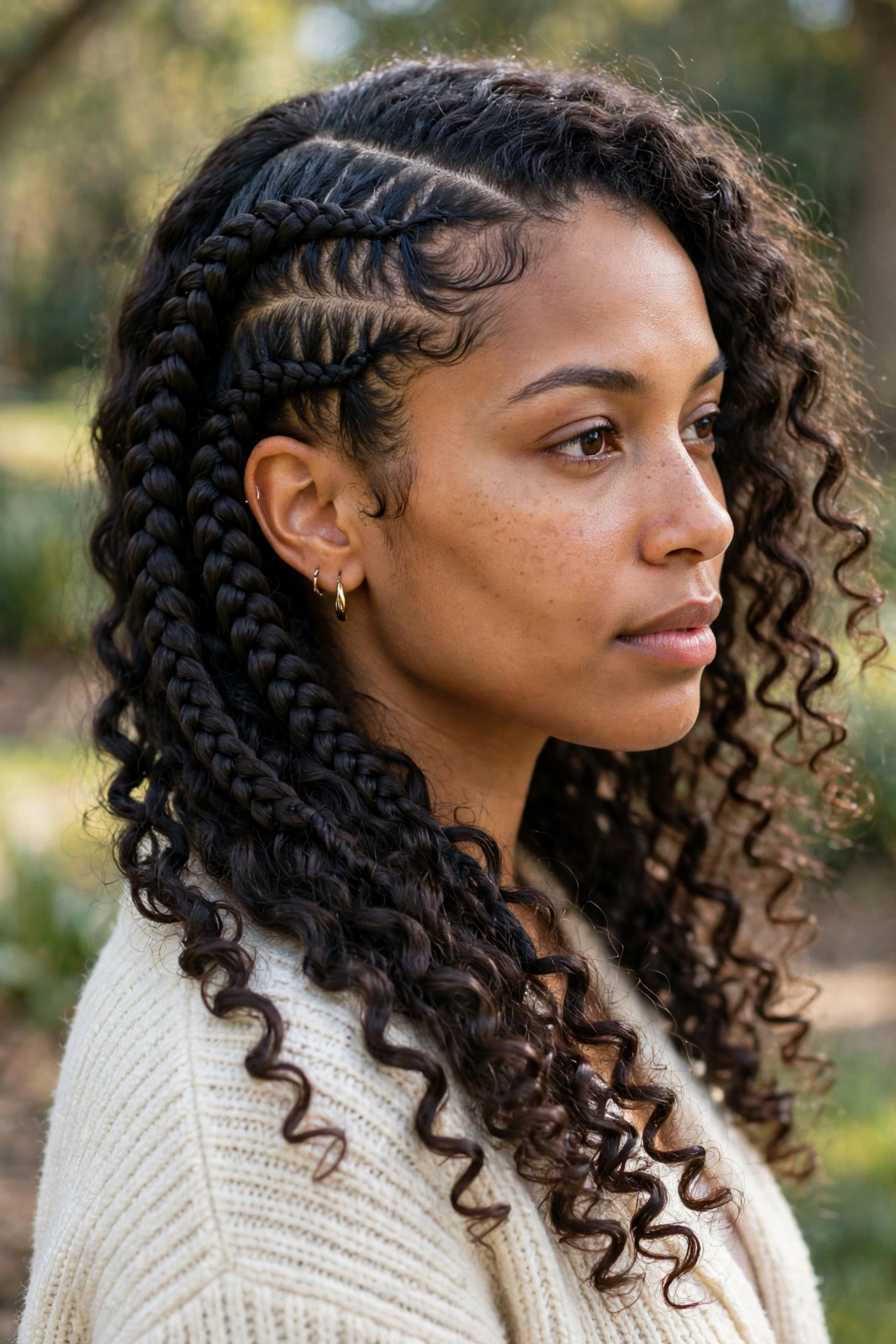
A deep side part gives French curl braids instant glamour, sweeping most of the braids over one shoulder and creating beautiful asymmetry. Side parts suit square and round faces especially well, because the diagonal line breaks up the symmetry of the face and adds softness, and they are a lovely choice if you usually wear a middle part and want a change without cutting or colouring anything.
To keep the part looking intentional, re-define it with the tail of a comb after washing, and keep the heavier side moisturised so the curls do not separate into frizz. Ask your braider for a deep side part with French curl braids, and decide together how deep the part should be — a subtle off-centre part is everyday-friendly, while a dramatic deep part is pure evening glamour.
11. Middle-Part French Curl Braids
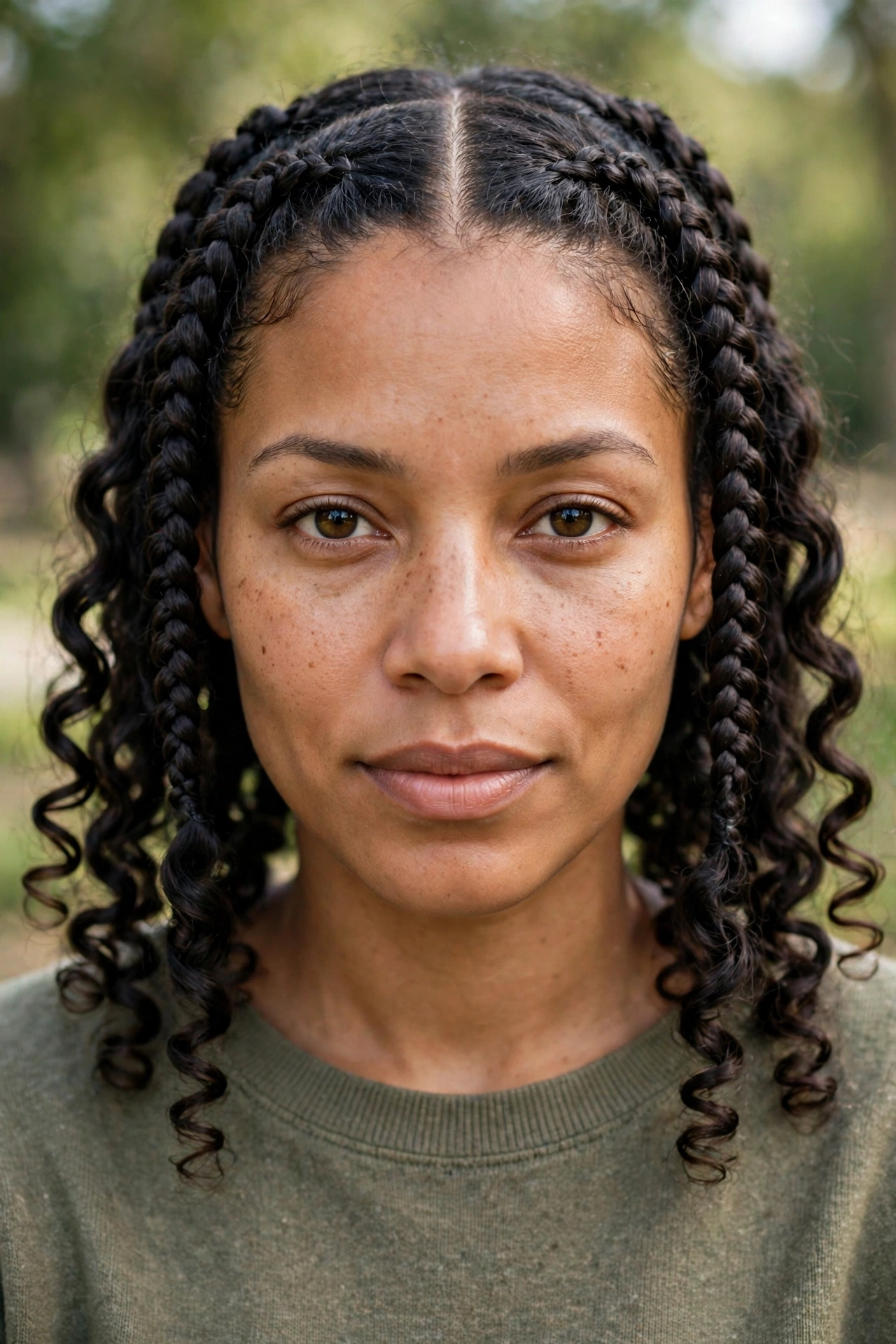
Middle-part French curl braids are clean, symmetrical and timeless, with braids falling evenly on both sides of the face and curly ends framing the shoulders. They suit oval and heart-shaped faces best, because the symmetry highlights balanced features, and they are the most versatile parting for styling — you can sweep the braids back, tie them up or leave them loose without fighting against the part.
The key to a good middle part is neatness at the front, so keep your edges smooth with a light edge control and avoid letting the part drift off-centre as the style grows out. At the salon, ask for a precise middle part with French curl braids, and check the part in the mirror before your braider finishes, since a straight centre part is much harder to correct once the braids are complete.
12. French Curl Braids with Curly Bangs
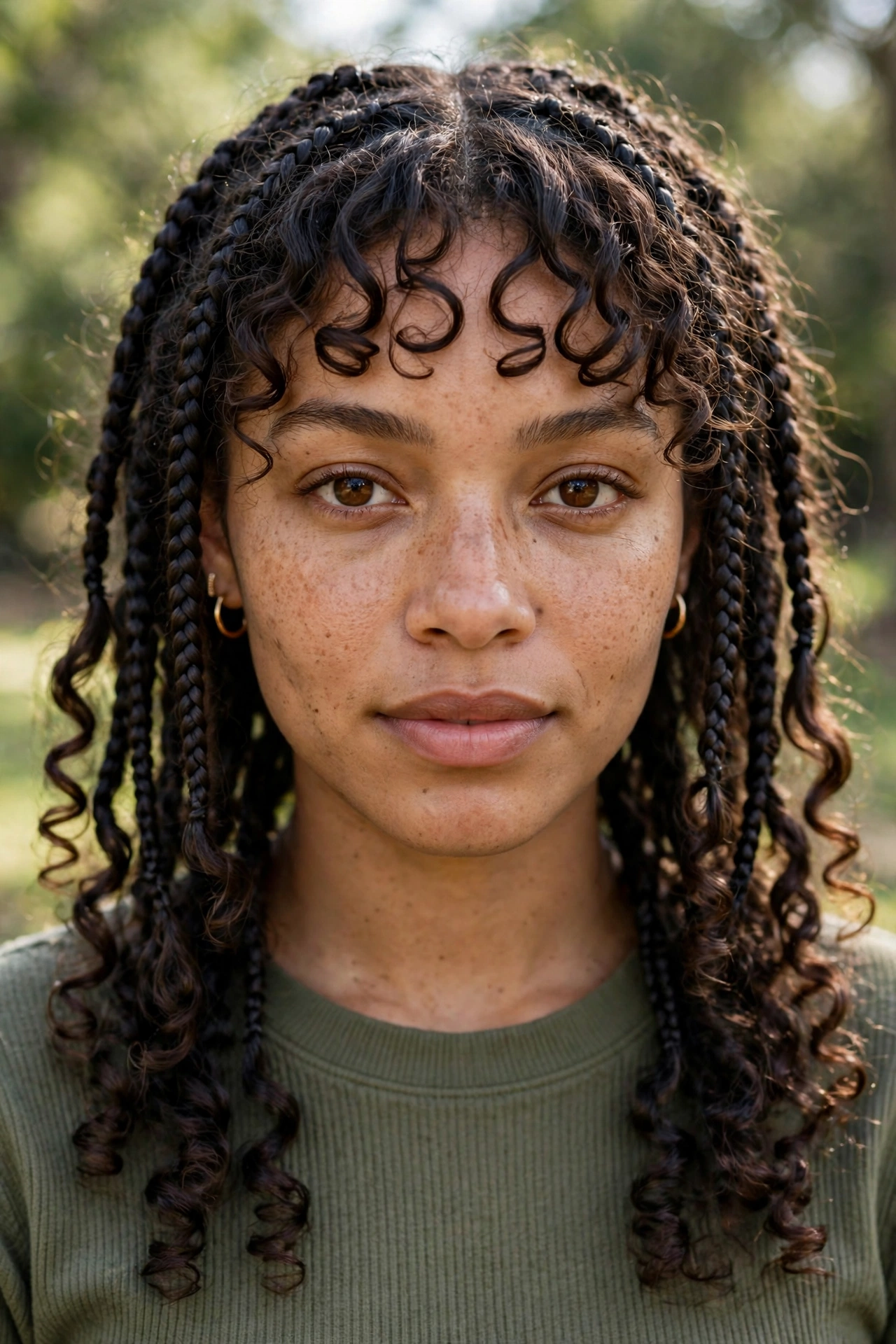
Adding curly bangs to French curl braids gives you a playful, face-framing finish that softens the forehead and draws attention to the eyes. Curly bangs suit long and oval faces particularly well, because they shorten the appearance of the forehead, and they work beautifully if you like a style with personality rather than a plain, pulled-back look. The bangs can be braided loosely at the root and left curly, or made entirely from loose curls.
Curly bangs need a little more daily attention than the braids themselves, so refresh them each morning with a spritz of water and curl cream, and trim them only when dry, since wet curls spring up much shorter. Ask your braider or stylist for French curl braids with curly bangs, and agree the bang length while your hair is dry and curly, so you do not end up with bangs that sit higher than you expected.
13. Honey Blonde French Curl Braids
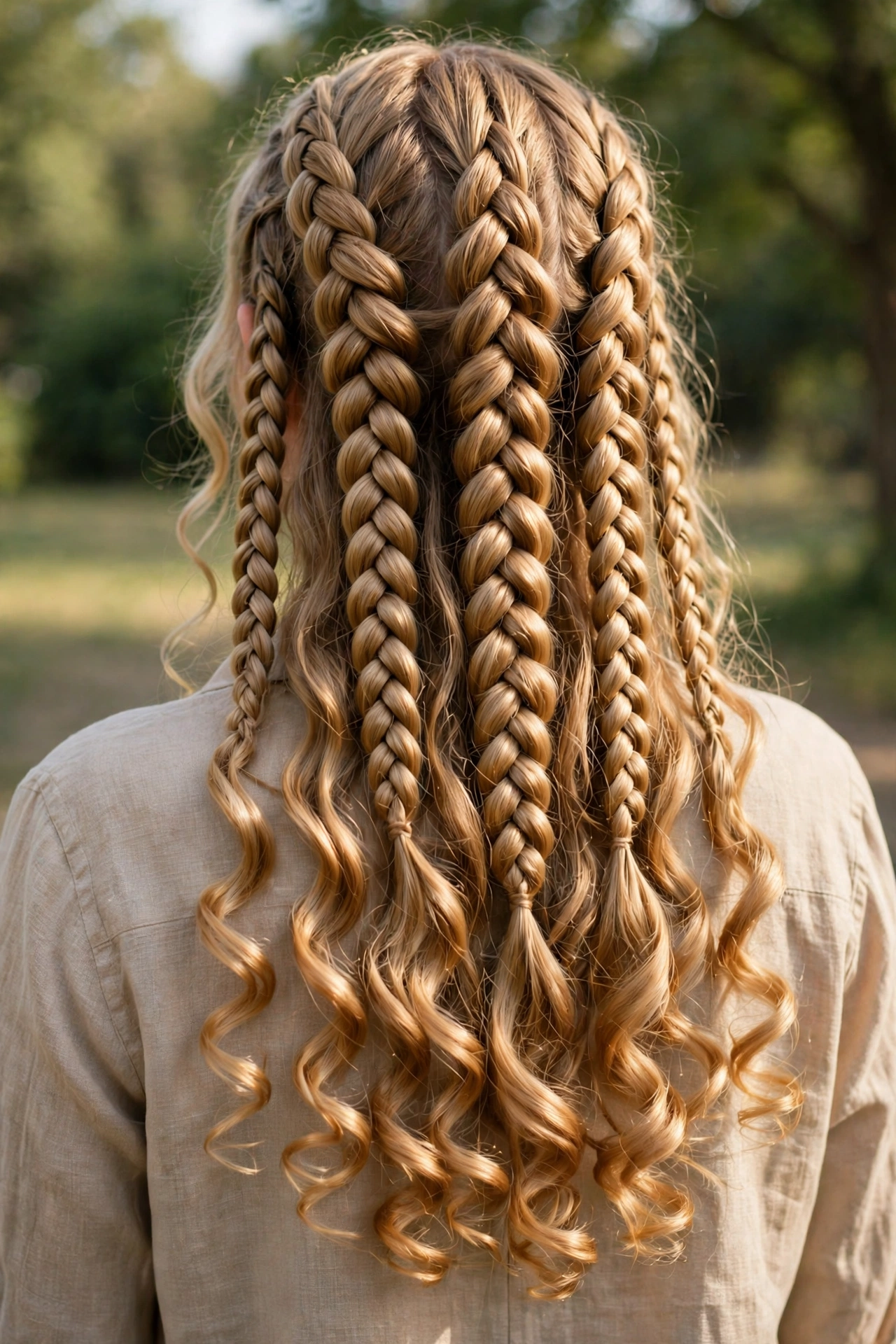
Honey blonde French curl braids bring warmth and light to the style, with golden tones that catch the sun and make the curly ends look even more dimensional. Warm blonde suits warm and neutral skin tones beautifully, and it flatters round and oval faces by adding brightness around the face. It is a great choice if you want to try colour without dyeing your natural hair, since the colour comes from the braiding hair.
Coloured braiding hair can dry out faster than natural shades, so keep the curly ends well moisturised and avoid heavy heat styling on them. At the salon, ask for honey blonde French curl braids and check the shade against your skin in natural light before installation, since honey blonde ranges from soft caramel to bright gold, and the right depth makes all the difference.
14. Burgundy French Curl Braids
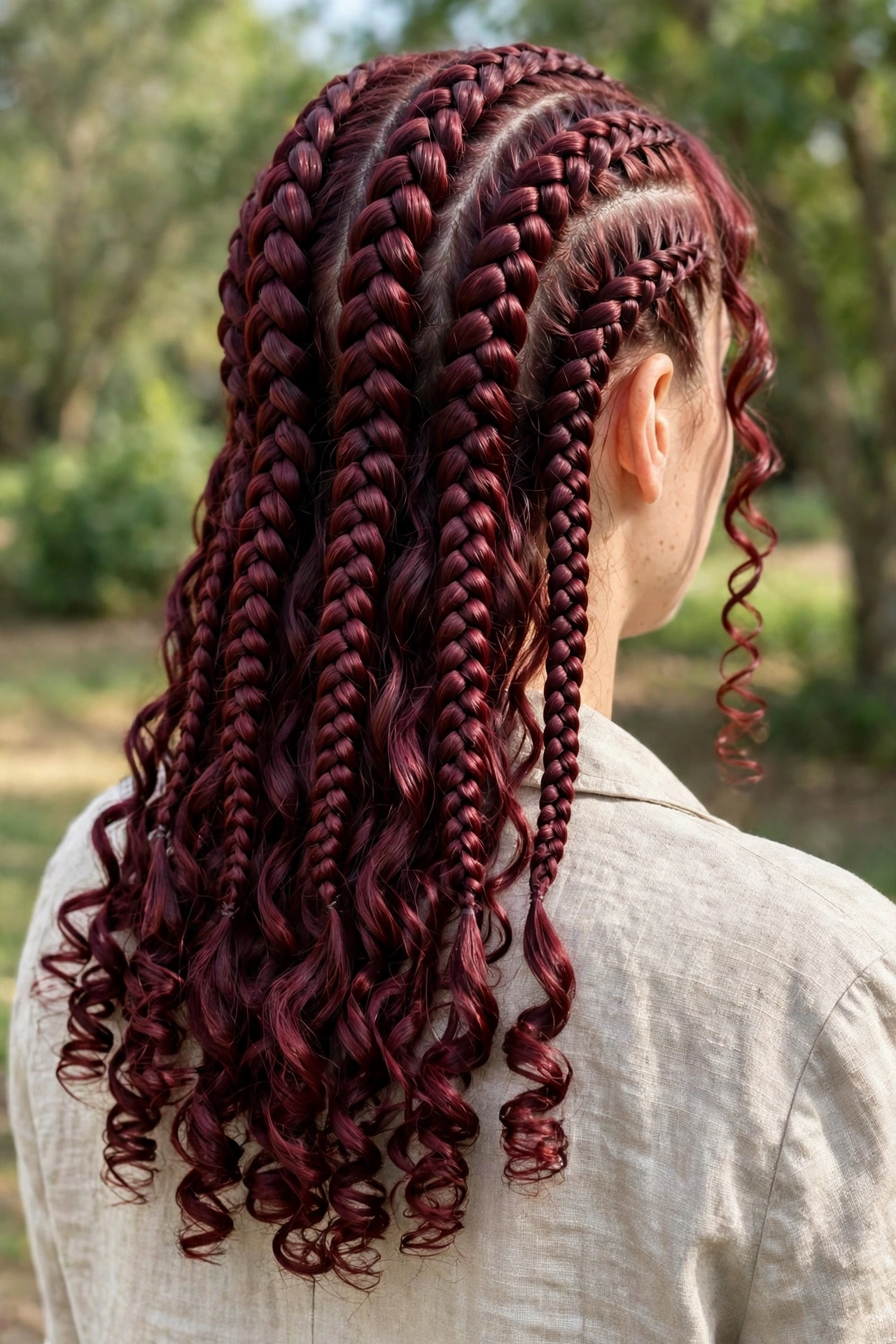
Burgundy French curl braids are rich, bold and surprisingly wearable, with a deep red-wine tone that looks stunning on dark hair and adds instant depth to the curly ends. Burgundy suits cool and neutral skin tones especially well, and it flatters every face shape because the colour itself becomes the focal point rather than the shape of the style. It is an excellent choice for autumn, winter or any occasion when you want your hair to stand out.
To keep burgundy looking rich rather than faded, wash with cool water, use colour-safe products, and protect the braids from prolonged sun exposure. Ask your braider for burgundy French curl braids, and confirm whether you want a solid burgundy or a burgundy blend with darker roots, since a blend grows out more subtly and looks more natural as the style ages.
15. French Curl Braids with Beads and Cuffs
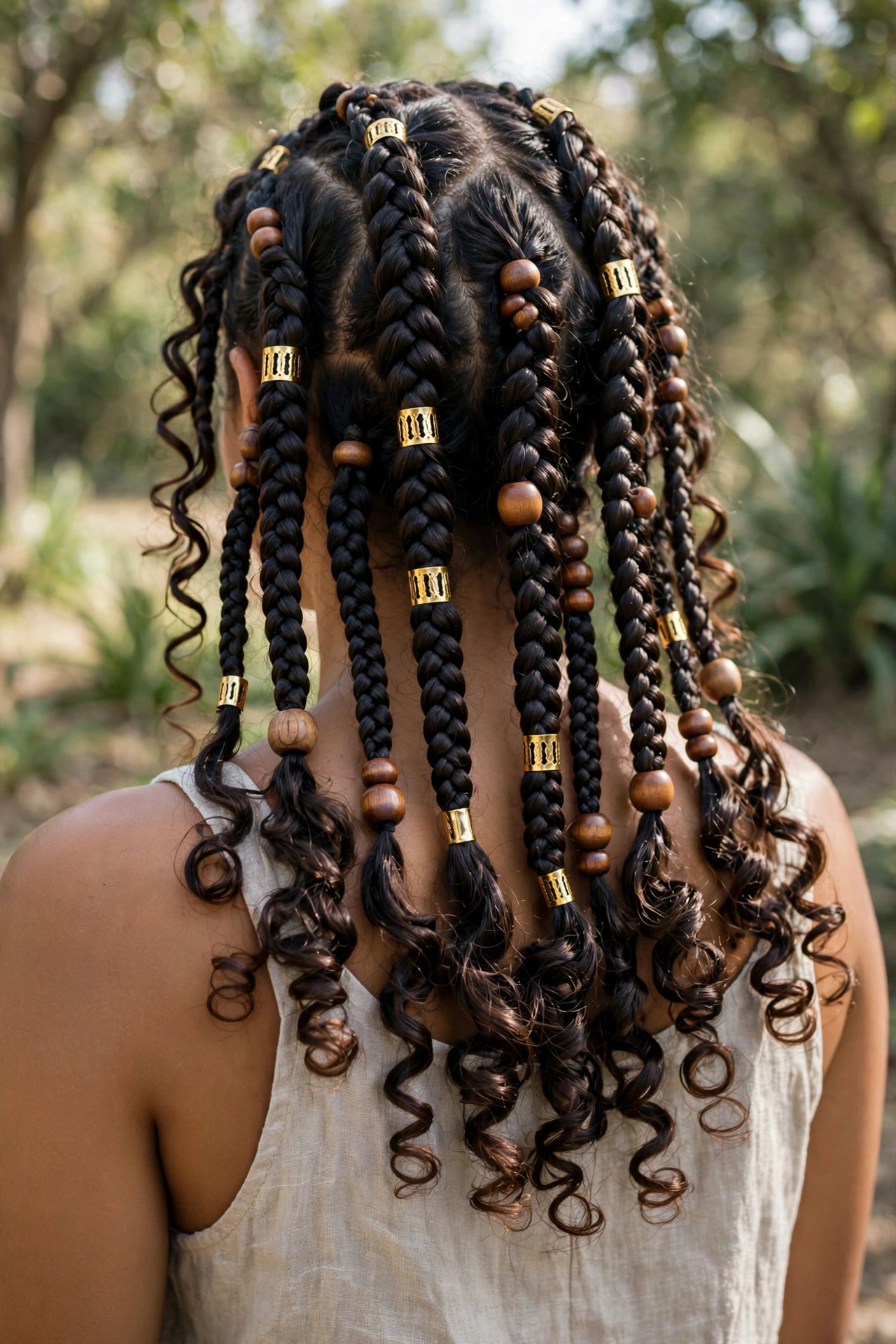
Beads and cuffs turn French curl braids into a piece of jewellery, adding gold, wooden or colourful accents along the braids and at the curly ends. This style suits anyone who loves personal, creative details, and it works on every face shape because the accessories can be placed to draw attention wherever you like — near the face for sparkle, or towards the ends for movement. It is especially popular for holidays, festivals and celebrations.
Keep accessories light enough that they do not pull on the braids, and remove any that snag the curly ends before they cause tangling. At the salon, ask for French curl braids with beads and cuffs, and bring your own accessories if you have a specific colour scheme in mind, since salons may only stock a limited range and your own pieces will match your wardrobe better.
16. French Curl Braids for a Wedding
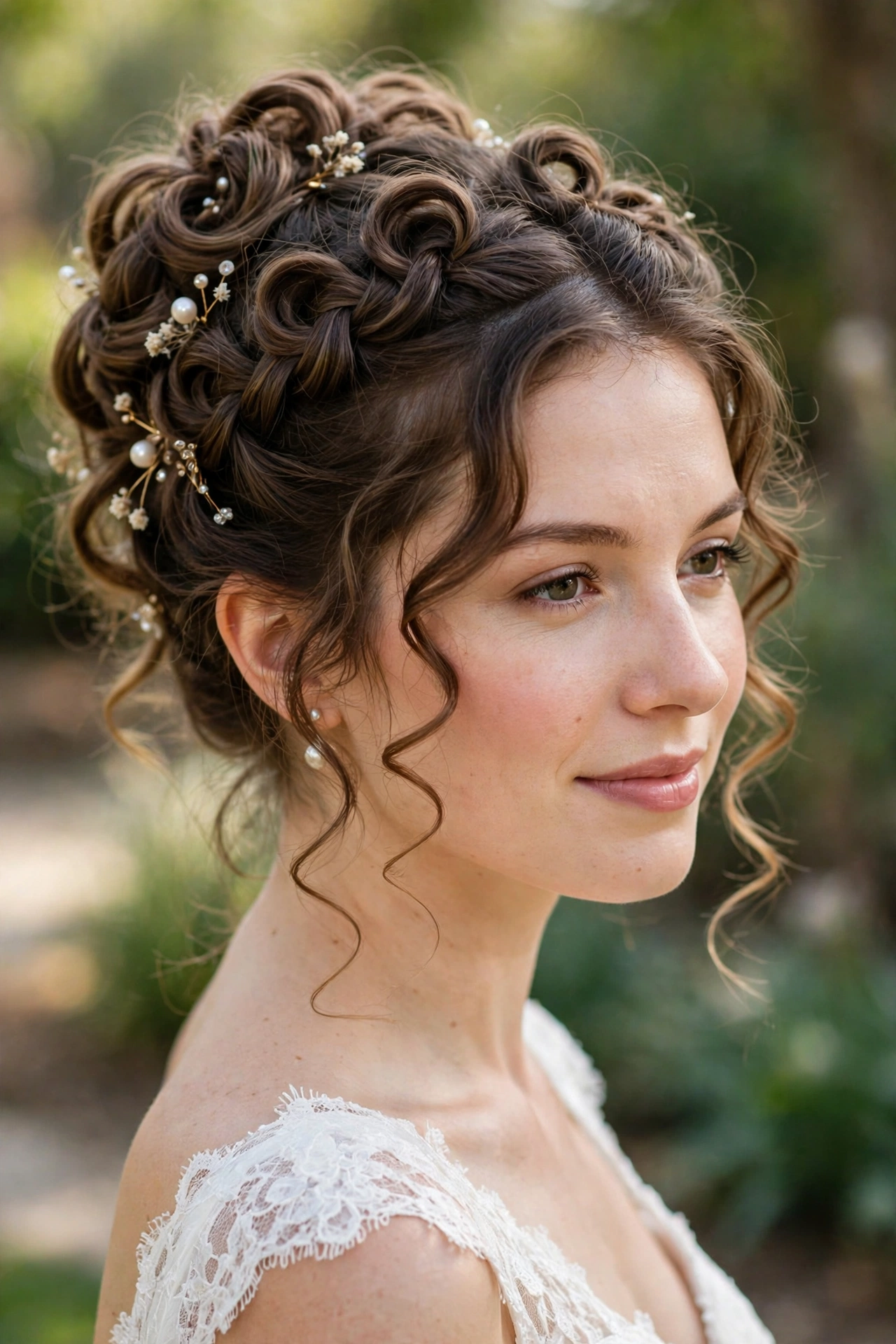
French curl braids for a wedding are styled up, polished and romantic, with the braids swept into an updo or half-up style and the curly ends left soft and touchable. They suit brides and wedding guests alike, and they flatter every face shape when the front is softened with a few loose curls. The protective nature of braids is a bonus on a long wedding day, because the style holds its shape from morning photographs to the last dance.
Book a trial if the wedding is your own, and bring your veil or hair accessories to the trial so the placement works with them. On the day, use a light-hold spray rather than a heavy gel on the curls, so they keep their movement in photographs. Ask your braider for a wedding-ready French curl braid style, and agree the updo shape in advance, since a high, elegant updo and a soft, low chignon give very different overall looks.
17. French Curl Braids with a Low Bun
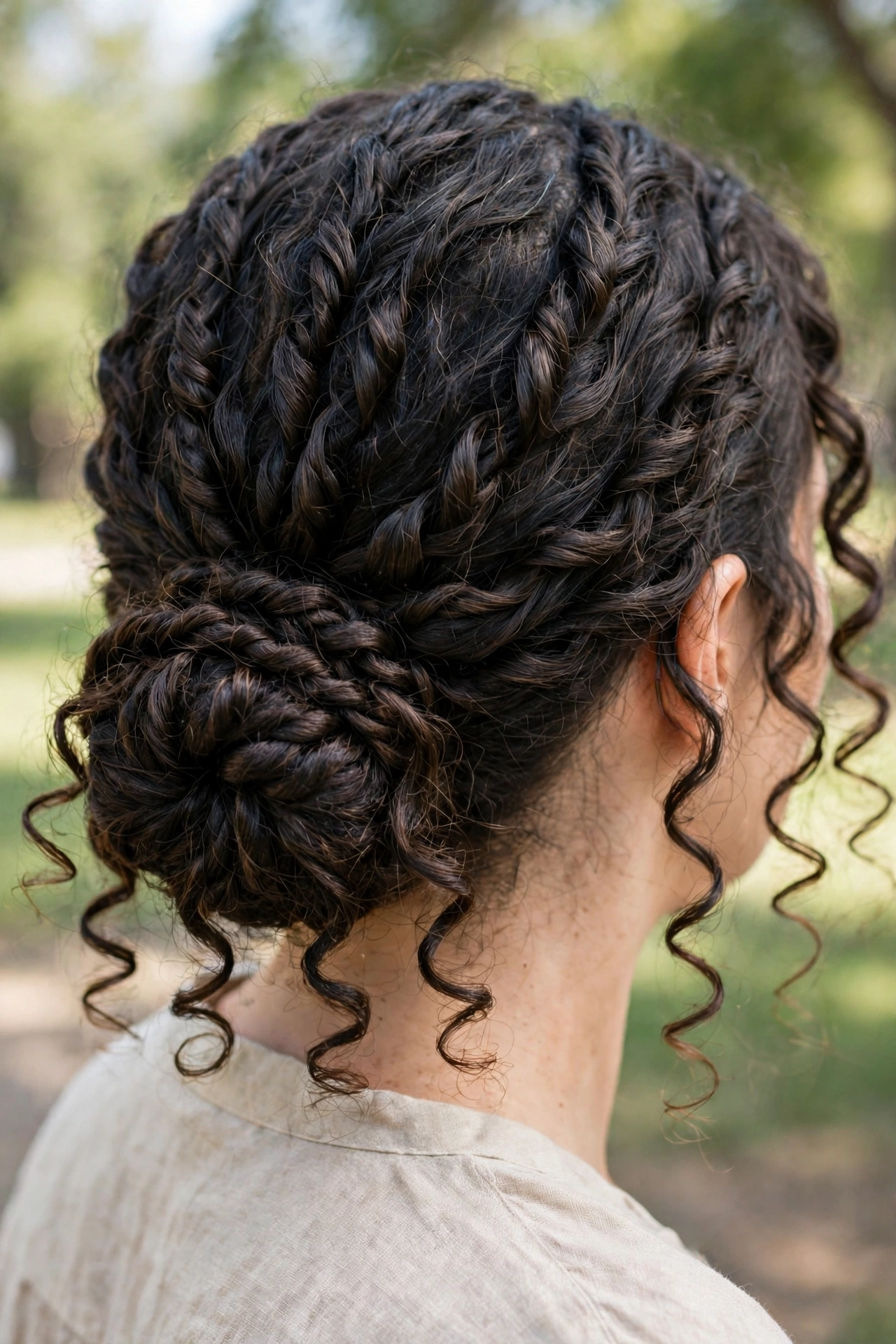
A low bun is the understated, elegant way to wear French curl braids, sitting at the nape and keeping the neckline clean. It suits long and oval faces beautifully, because the low placement balances length, and it is ideal for work, formal events or any day when you want your hair completely out of the way without sacrificing style. A few loose curls left out around the face keep the bun from looking too severe.
Secure the bun with large pins rather than a tight elastic, and let the curly ends form a soft, textured bun instead of tucking them away completely. At the salon, ask for French curl braids long enough to gather into a low bun, and mention that you prefer low styles, so your braider can keep the nape braids neat and comfortable when they are pulled back.
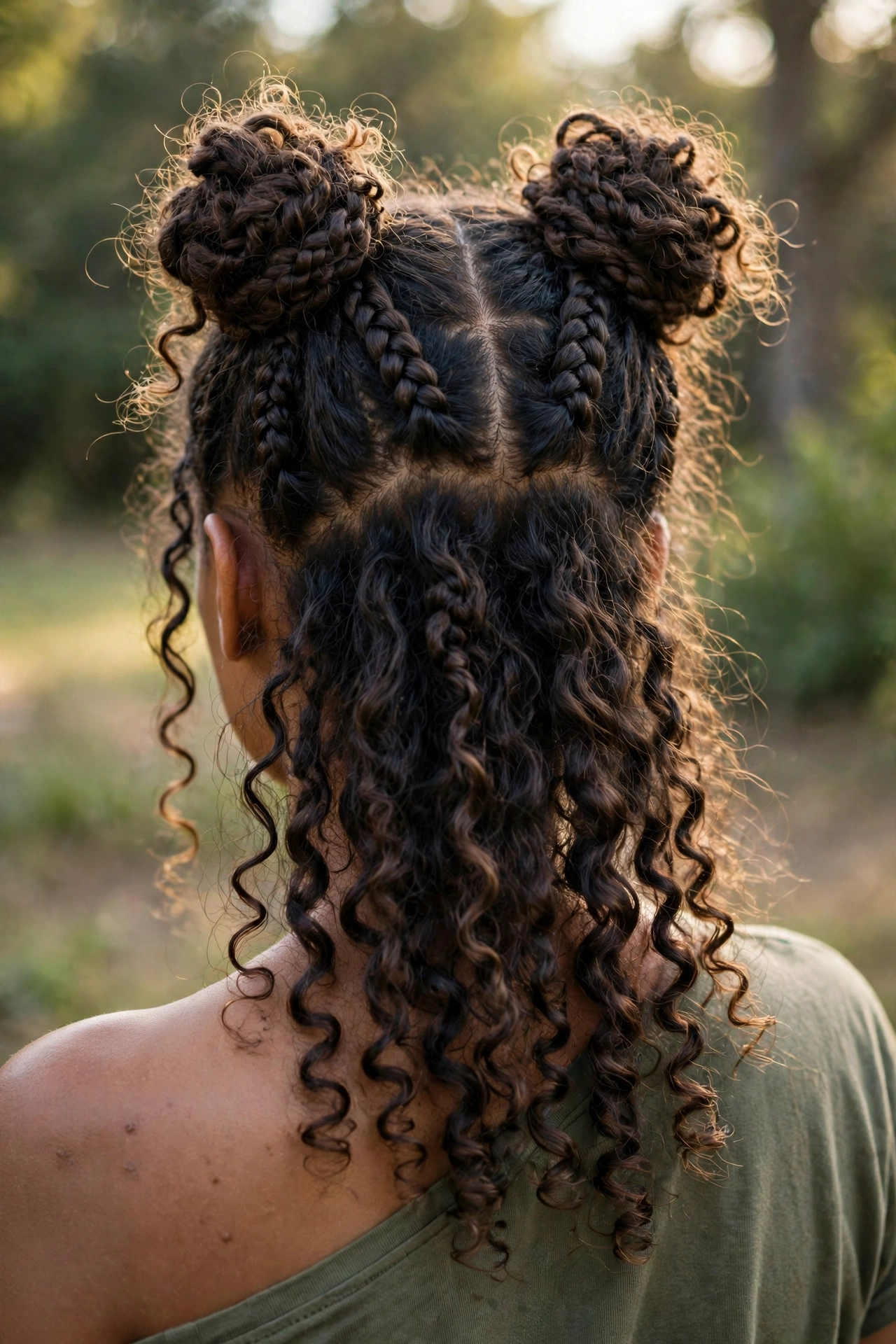
18. French Curl Braids with Space Buns
Space buns made from French curl braids are fun, youthful and full of personality, with two buns on top and curly ends left loose at the back. They suit round and heart-shaped faces, because the height and symmetry on top balance the face, and they are a favourite for festivals, holidays and playful everyday looks. The combination of neat braids and bouncy curls keeps the style from looking childish.
Keep the buns roughly equal in size by dividing the braids evenly before you start, and secure them with pins rather than pulling them tight. Ask your braider for French curl braids with enough length and flexibility for space buns, and if you like the look, ask for the parting to be a clean middle part, since that gives the most symmetrical space bun result.
19. French Curl Braids with a Side Swept Finish
A side swept finish gathers all your French curl braids over one shoulder, creating a glamorous, red-carpet silhouette with the curly ends cascading down one side. It suits square and oval faces especially well, because the sweep softens strong jawlines, and it is a wonderful choice for evenings out, when you want maximum impact with minimum effort. The style also shows off earrings and necklines beautifully.
To keep the sweep in place, use a few discreet pins at the back and a light-hold spray on the curls, and avoid over-handling the ends or they will frizz. At the salon, ask for French curl braids swept to one side, and decide whether you want a deep side part or a swept-back front, since the front shaping changes how dramatic the final sweep looks.
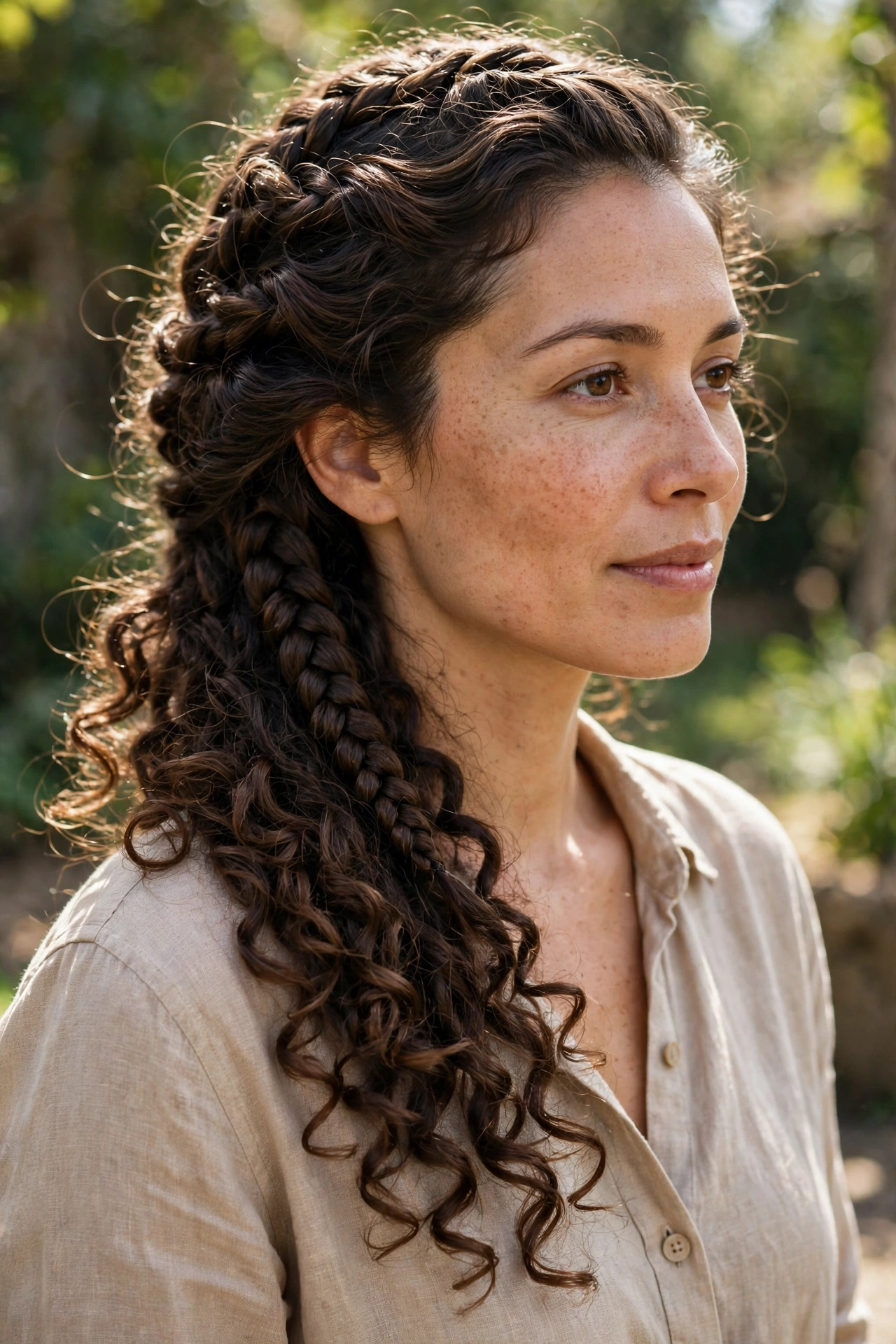
20. Short French Curl Braids
Short French curl braids end around the shoulders and are lighter, cooler and quicker to install than long versions, while still giving you the full French curl effect. They suit petite frames and round faces particularly well, because the shorter length keeps the proportions balanced, and they are ideal if you are active, work in a warm environment or simply prefer a style that does not get in the way.
Short braids still need curl care, so refresh the ends regularly and sleep in a satin bonnet to stop them tangling at the back. Ask your braider for short French curl braids, and be clear about the exact finishing length, remembering that the curls will spring up a little shorter than where the braids end, so a shoulder-length braid may finish just above the shoulder once curled.
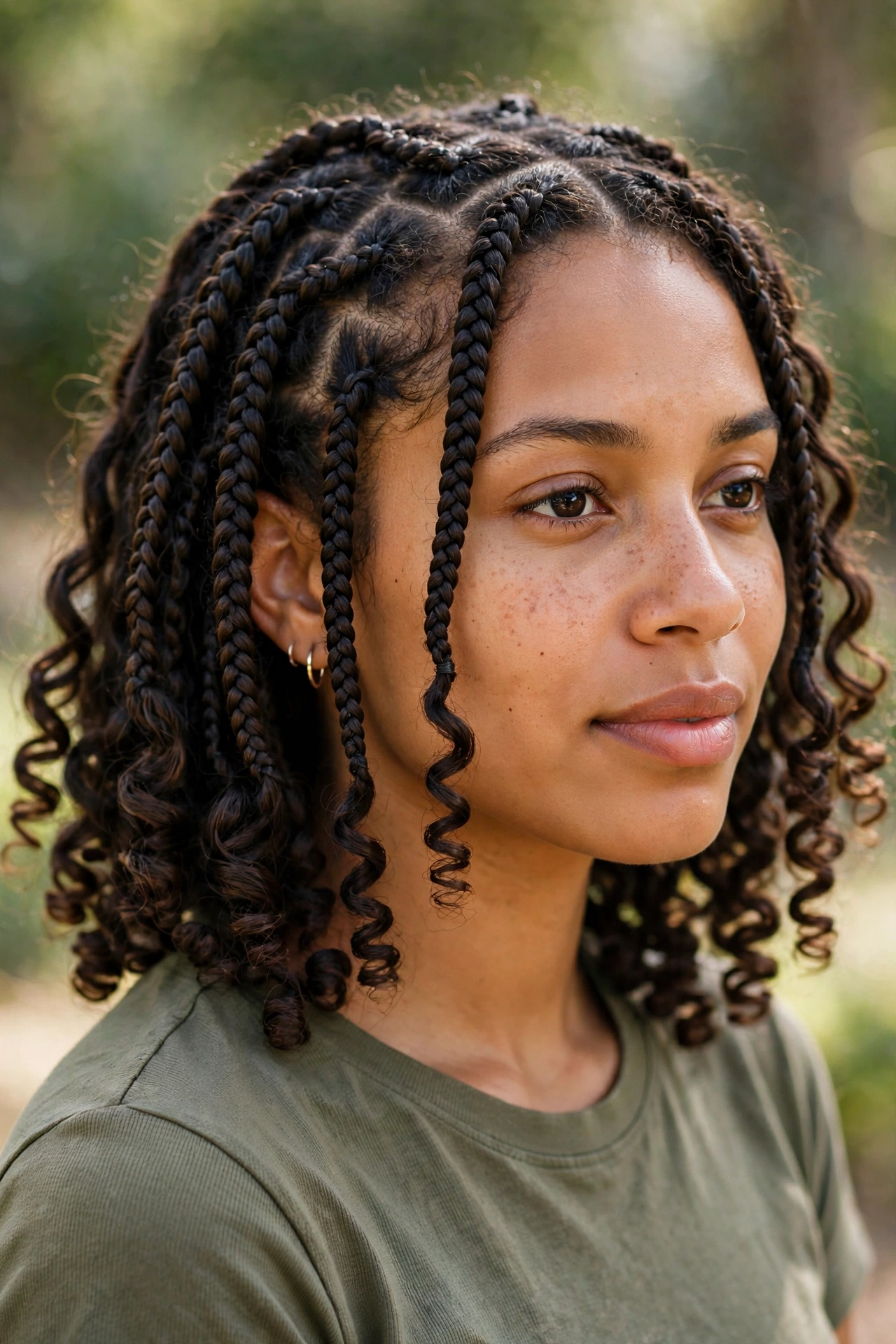
21. Curly Bob with Defined Curls
A curly bob with defined curls is the natural-hair partner to French curl bob braids, giving you the same chic length with your own curl pattern on show. Defined curls suit oval, round and heart-shaped faces, because the bob frames the face without overwhelming it, and the style works best on curl patterns from loose waves to tight coils, as long as the cut is shaped for shrinkage. It is a confident, modern cut that looks polished with very little daily styling.
Definition comes from styling on soaking wet hair with a curl cream or gel, then letting the curls dry without touching them until they are fully set. At the salon, ask for a curly bob cut dry or on defined curls, and bring photographs of the shape you want, since a curly bob cut straight will spring up much shorter once it dries and curls.
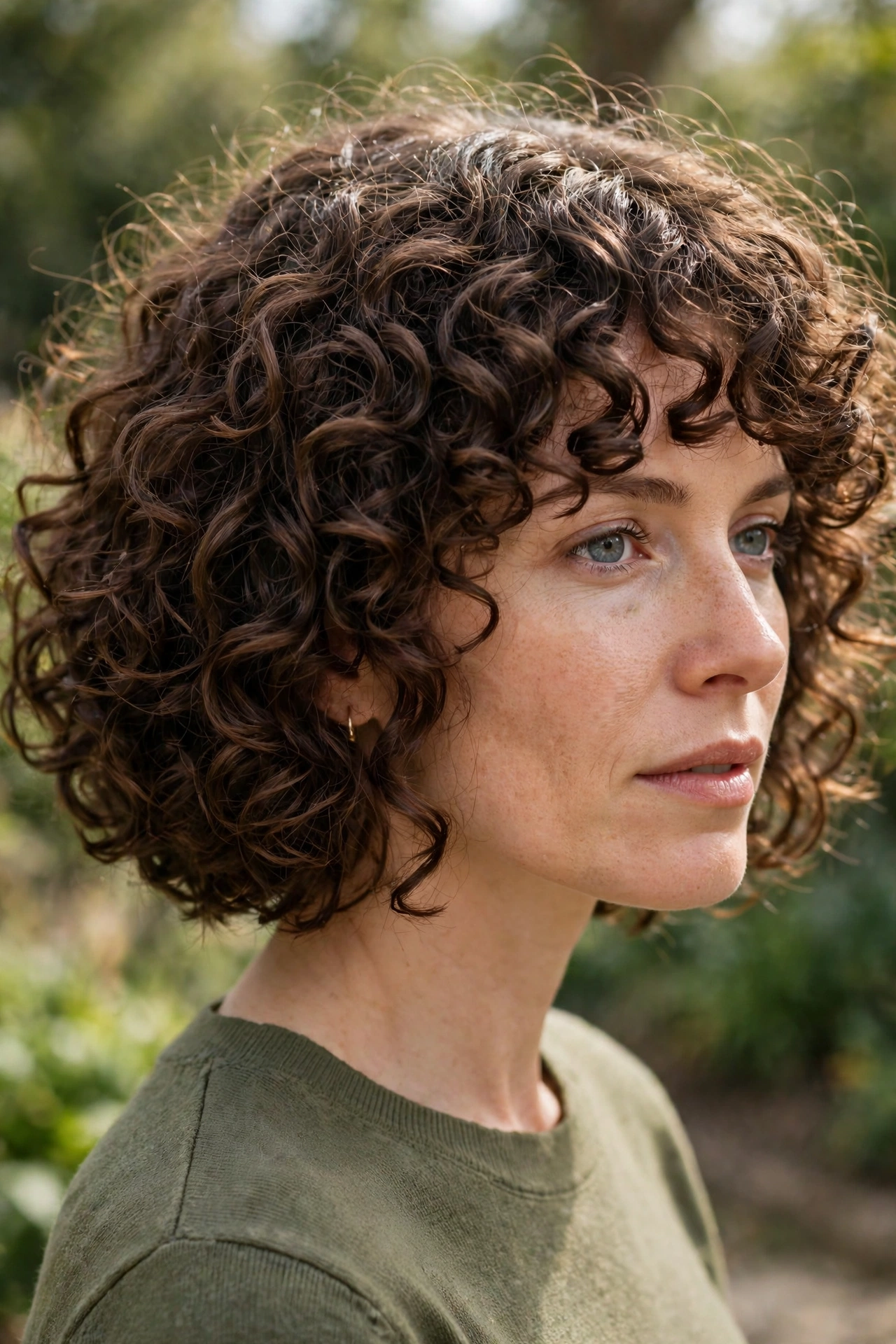
22. Layered Curly Cut
A layered curly cut removes weight and bulk from curly hair, letting each layer spring up and move independently instead of forming a heavy triangle shape. Layers suit thick, dense curls best, and they flatter round and square faces by adding height at the crown and movement around the face. If your curls feel heavy, flat on top or hard to manage, layers are usually the first fix a good curly stylist will suggest.
Keep layers healthy with regular trims every eight to twelve weeks, and use a diffuser on a low heat setting to encourage volume without frizz. Ask your stylist for long layers cut into your natural curl pattern, and explain whether you want subtle layers for shape or shorter, more dramatic layers for volume, since the two give very different silhouettes.
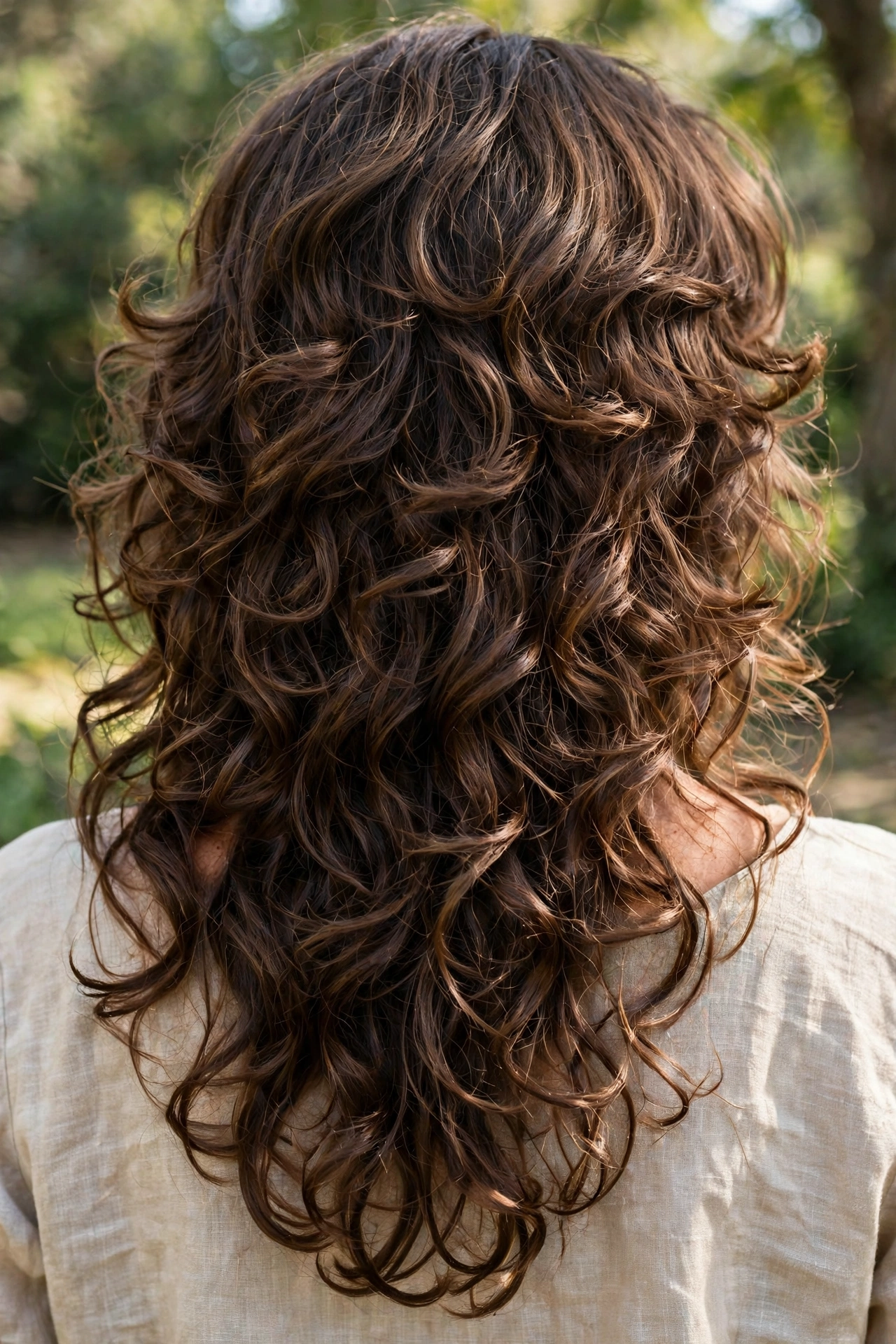
23. Wash and Go Curls
Wash and go curls are the simplest way to wear natural curls: wash, apply your styling products, and let your curl pattern do the work. They suit all curl types, from wavy to coily, and they flatter every face shape because the style follows your natural growth and volume rather than forcing a shape. Wash and go is also the best way to learn what your curls actually need, since you see the true pattern every time.
The secret is product application on very wet hair, working in sections and scrunching to encourage clumps, then leaving the hair completely alone until dry. Ask your stylist for a wash-and-go-friendly cut with layers that support your curl pattern, and ask them to show you the product routine in the salon, so you can repeat it confidently at home.
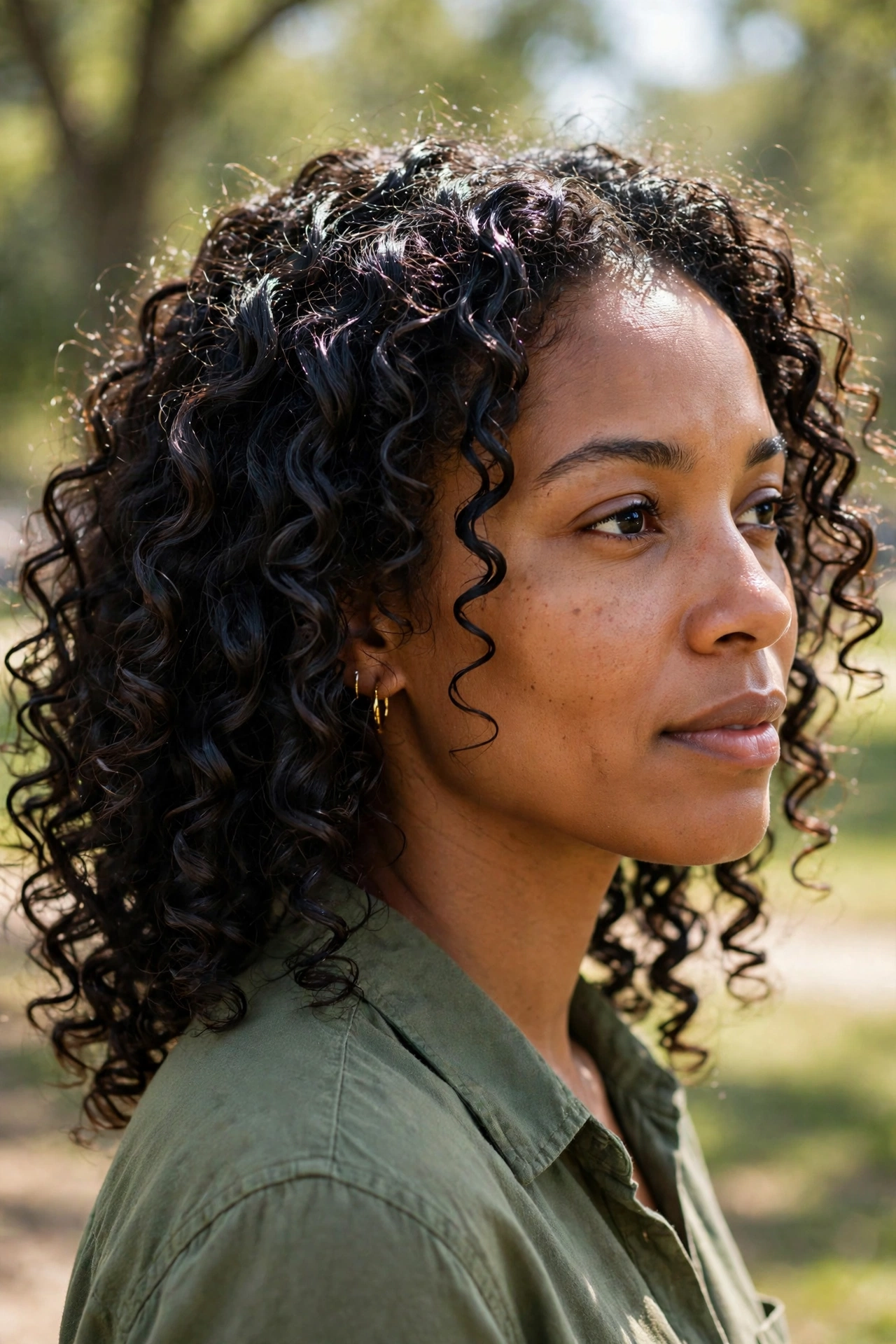
24. Curly Shag
A curly shag combines choppy layers, a soft fringe and lots of texture for a cool, lived-in look that never tries too hard. It suits oval and long faces especially well, because the fringe and layers add width and break up length, and it works beautifully on medium to thick curls that can hold the shaggy shape. If you love a style with movement and personality, the curly shag is hard to beat.
The shag grows out gracefully, but it needs a trim every couple of months to keep the layers from merging into one heavy shape. Style it with a light mousse or texture spray rather than heavy creams, which can weigh the layers down. Ask your stylist for a curly shag with a soft, curly fringe, and be clear about how short you are willing to go on the top layers.
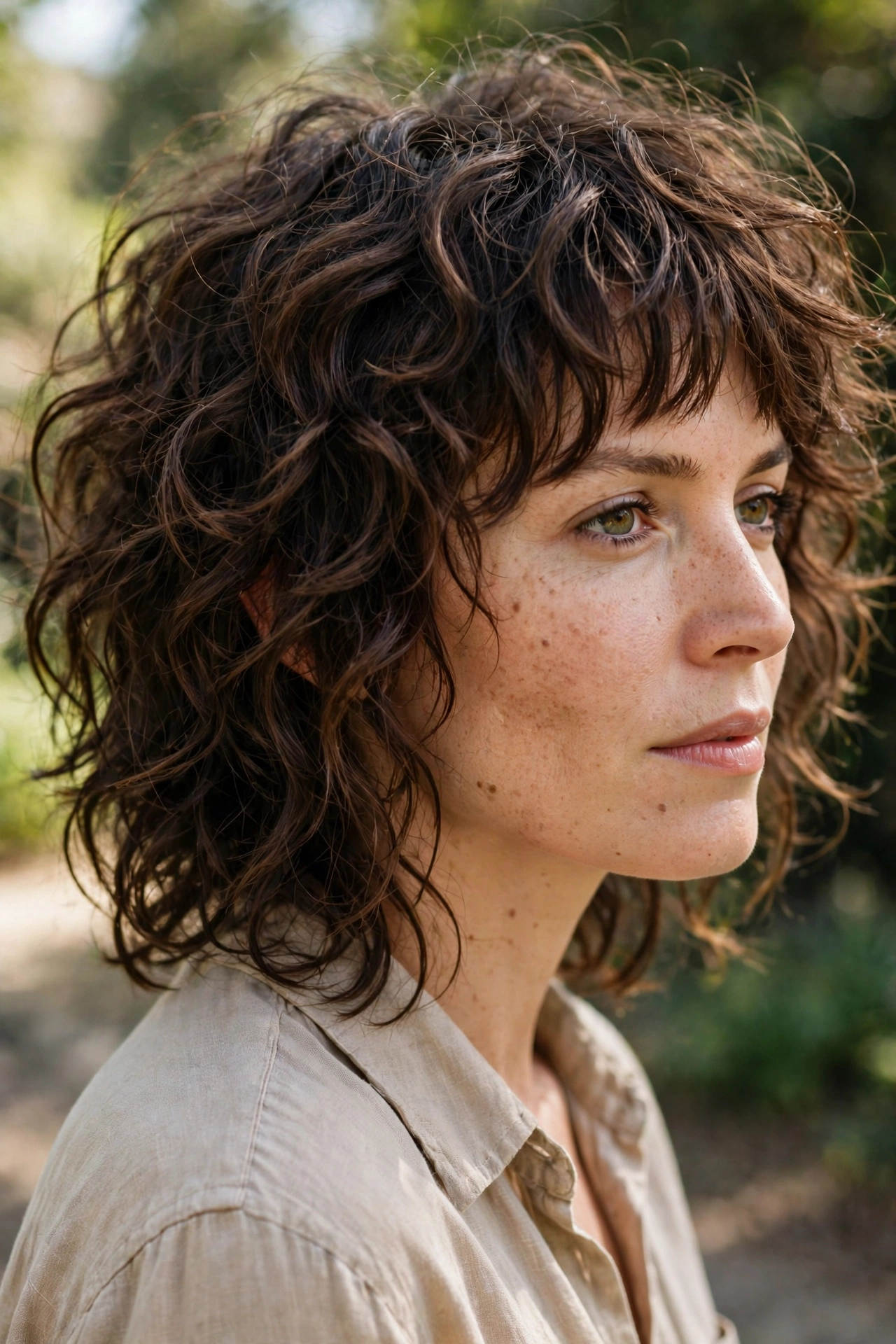
25. Curly Updo with Loose Curls
A curly updo with loose curls is soft, romantic and far more forgiving than a sleek updo, because the curls themselves provide the texture and volume. It suits every face shape, and it is especially flattering for round and square faces, because the loose pieces around the face soften strong lines. It is a go-to style for weddings, parties and any occasion when you want to look dressed up without looking stiff.
Build the updo loosely, pinning sections rather than pulling them tight, and leave a few curls out at the front and nape for softness. At the salon, ask for a curly updo with loose, face-framing curls, and bring a photograph of the looseness you like, since one person's relaxed updo is another person's messy one, and a picture avoids that misunderstanding.
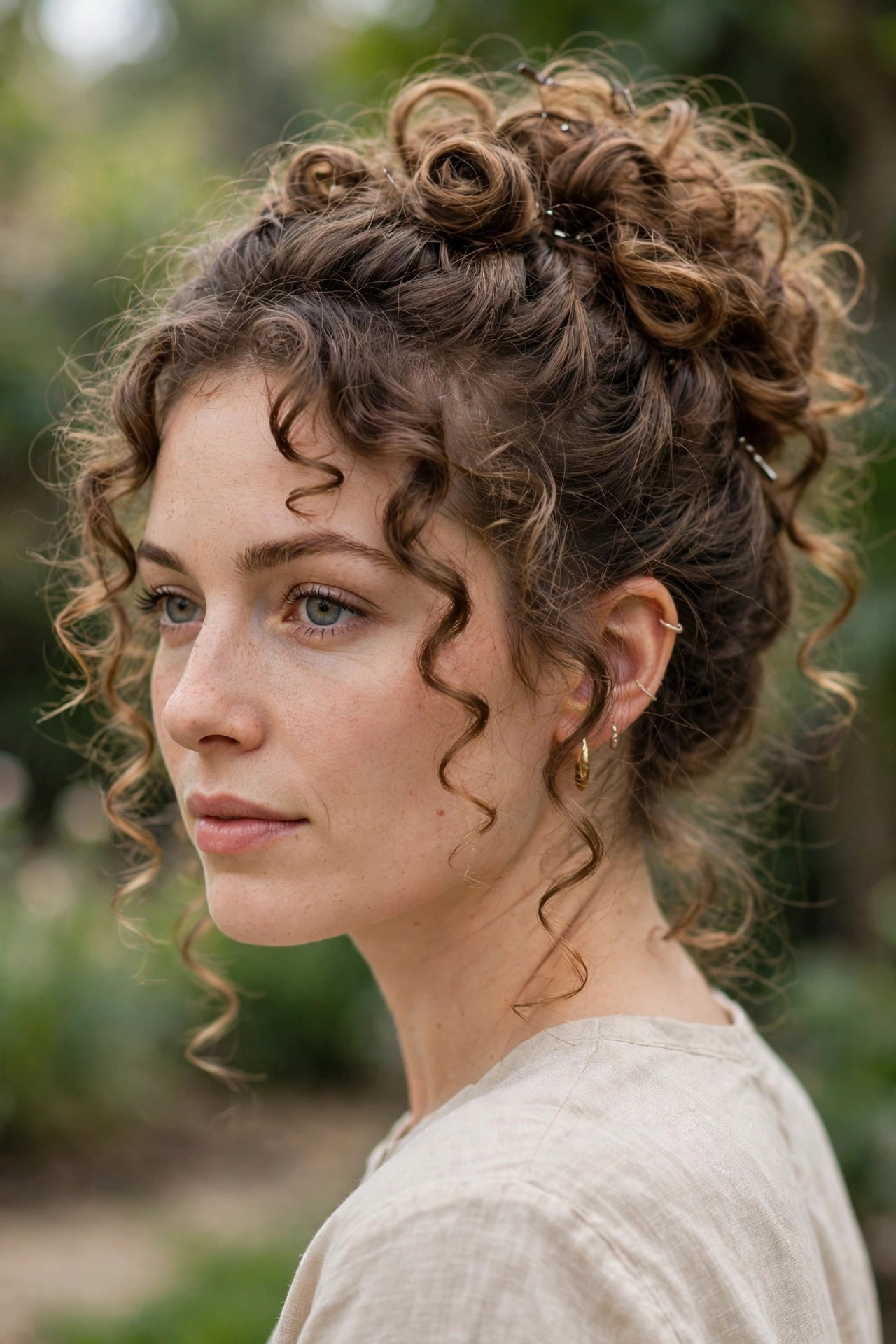
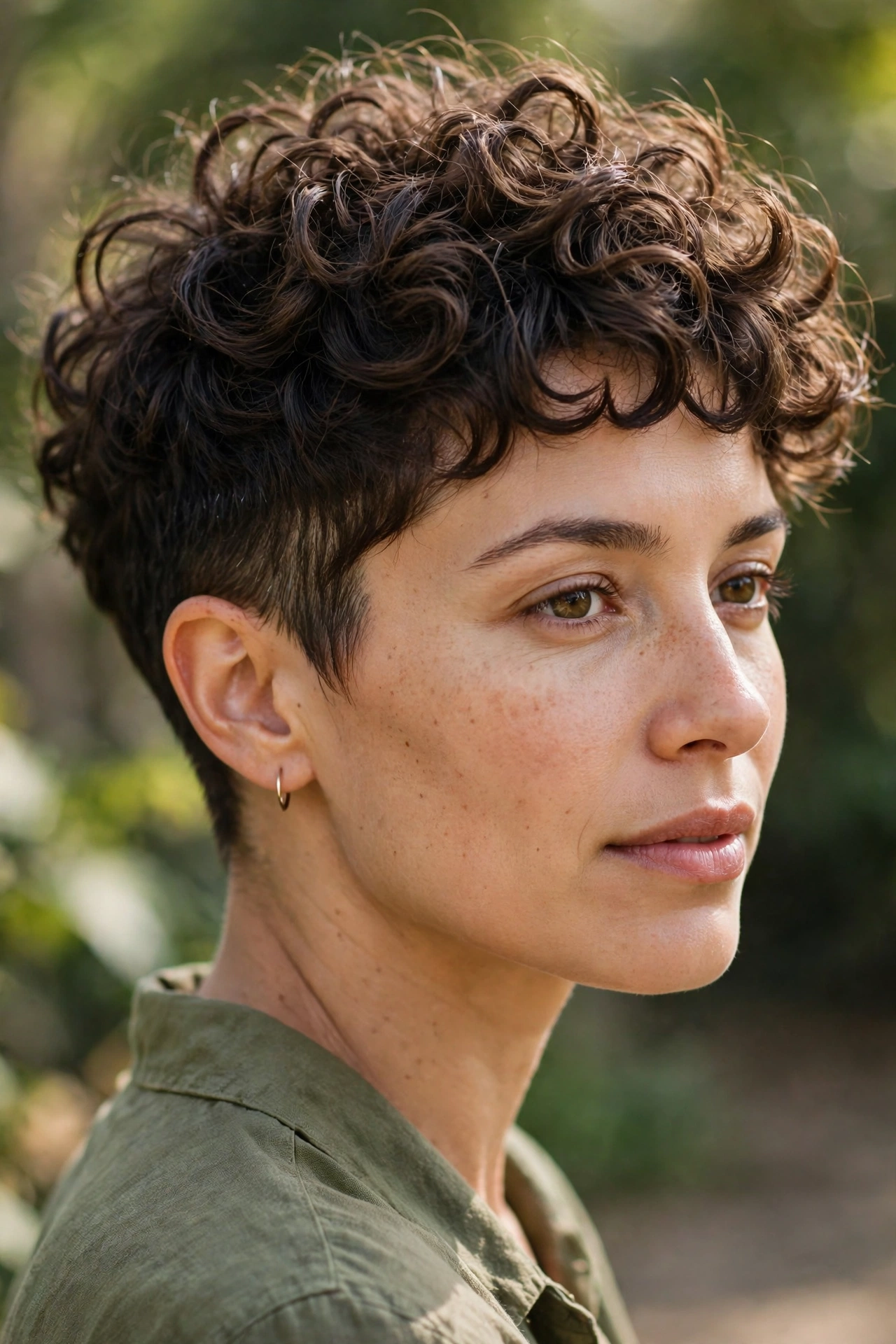
26. Curly Pixie
A curly pixie is bold, liberating and surprisingly versatile, with short, textured curls on top and neatly tapered sides. It suits oval, heart-shaped and petite faces best, because the short length puts the focus on your features, and it works on tight curls and coils that hold their shape well when short. It is also one of the lowest-maintenance curly styles once the cut is right, since wash and go becomes genuinely quick.
Keep the pixie shaped with trims every four to six weeks, and define the top curls with a small amount of curl cream, scrunching rather than combing. Ask your stylist for a curly pixie cut on dry, defined curls, and discuss the taper length carefully, since a very short taper and a softer, longer taper give the pixie a completely different character.
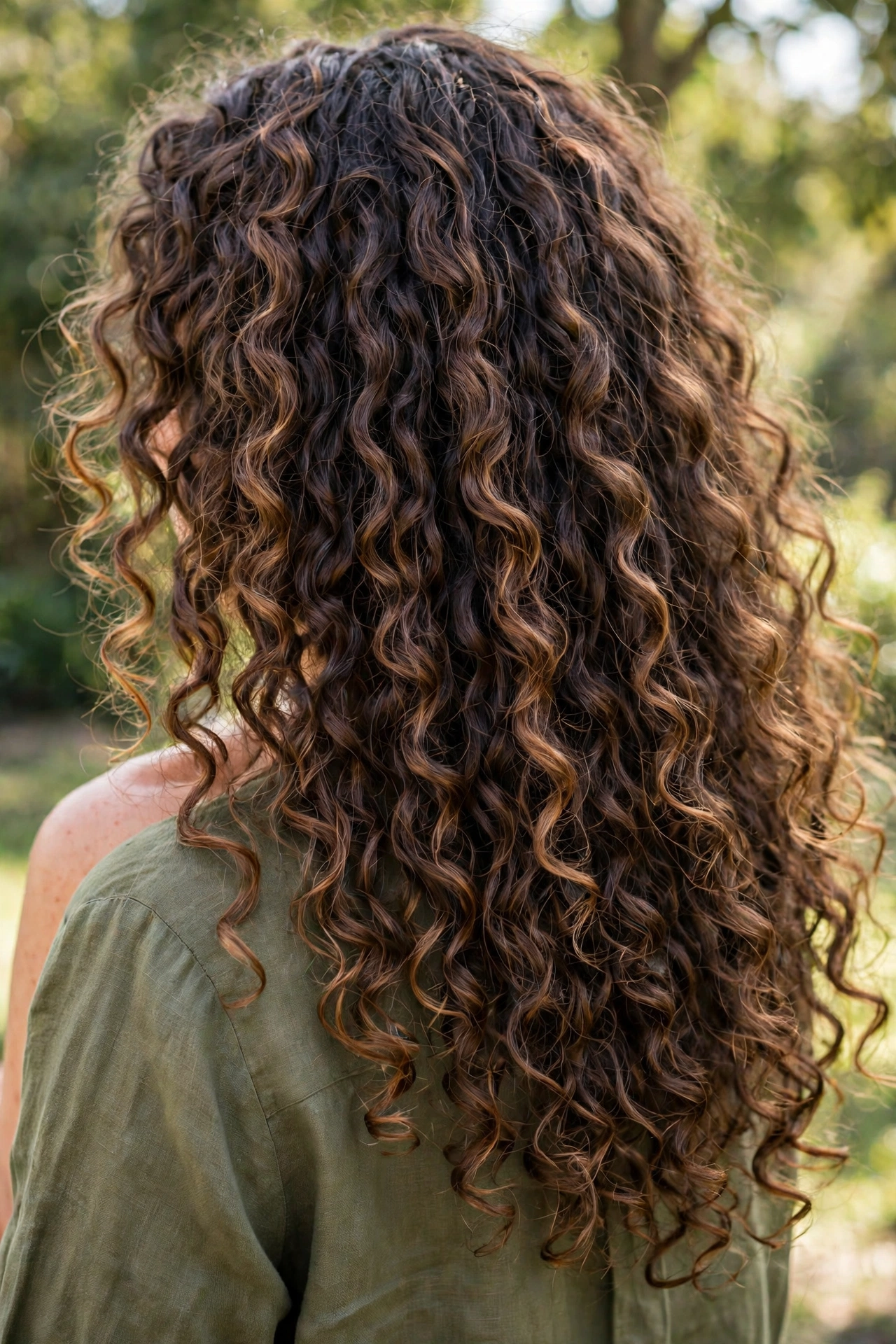
27. Long Voluminous Curls
Long voluminous curls are the ultimate statement of natural texture, with length, fullness and movement all working together. They suit oval and long faces particularly well, because the volume balances length, and they work best on thick hair or on curls that hold volume without collapsing. If you have the patience for the wash-day routine, long curls reward you with a style that needs almost no heat or manipulation.
Volume without frizz comes from layering, diffusing upside down, and picking out the roots gently once the hair is fully dry. Ask your stylist for long layers that support volume rather than weight, and be honest about how much time you spend on your hair each week, so the cut matches your real routine rather than an ideal one.
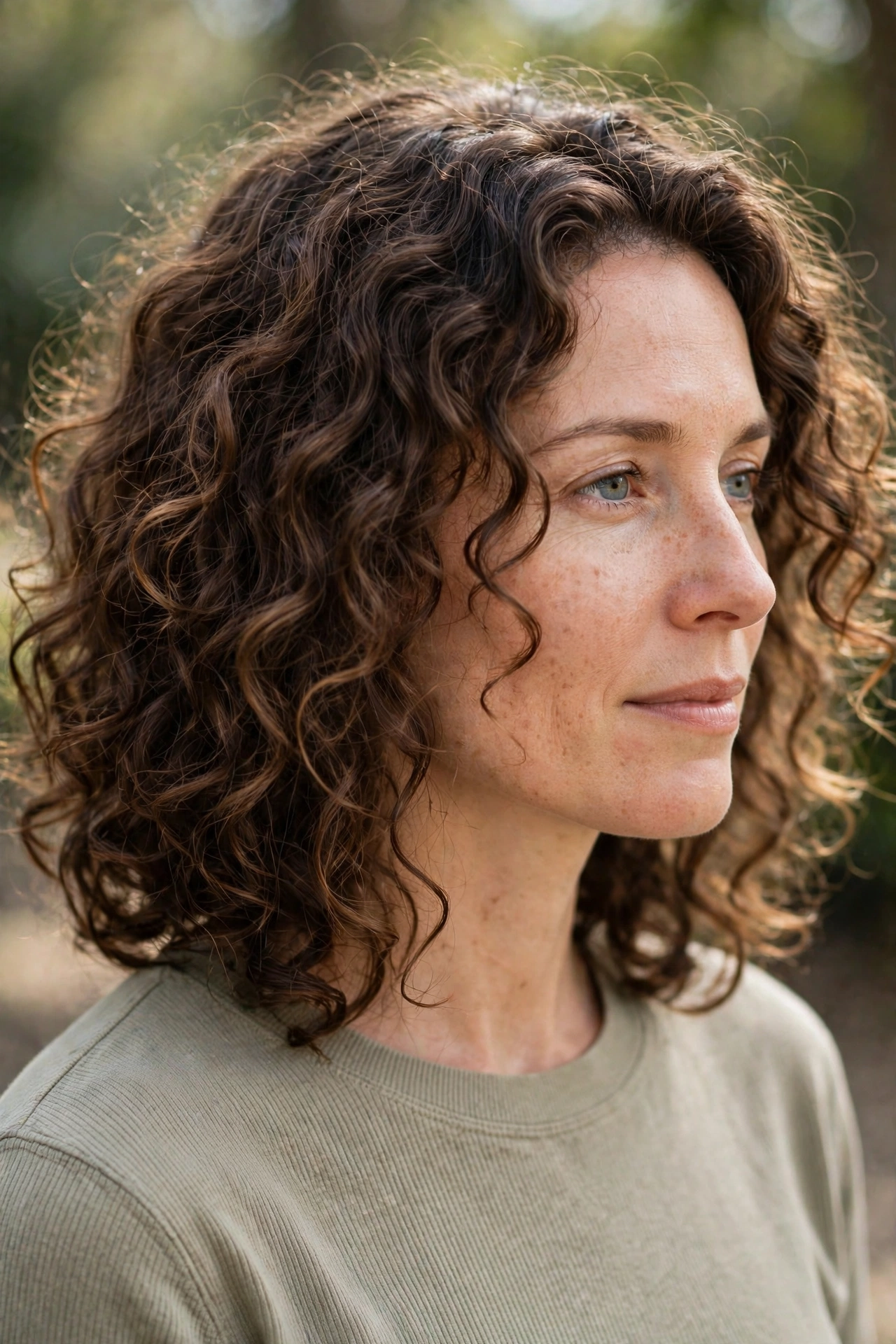
28. Curly Lob
A curly lob, or long bob, sits around the shoulders and is one of the most wearable curly lengths, long enough to tie up but short enough to keep its shape. It suits every face shape, and it is especially kind to round faces, because the shoulder length elongates the face without the weight of very long hair. The lob is also a smart choice if you are growing out a shorter cut or cutting down from very long curls.
Keep the lob from turning triangular by asking for layers and regular trims, and refresh the curls between washes with a water and leave-in spray. At the salon, ask for a curly lob cut with your curl pattern in mind, and check the length when your hair is dry and curly, since wet curls can look several inches longer than they will once dry.
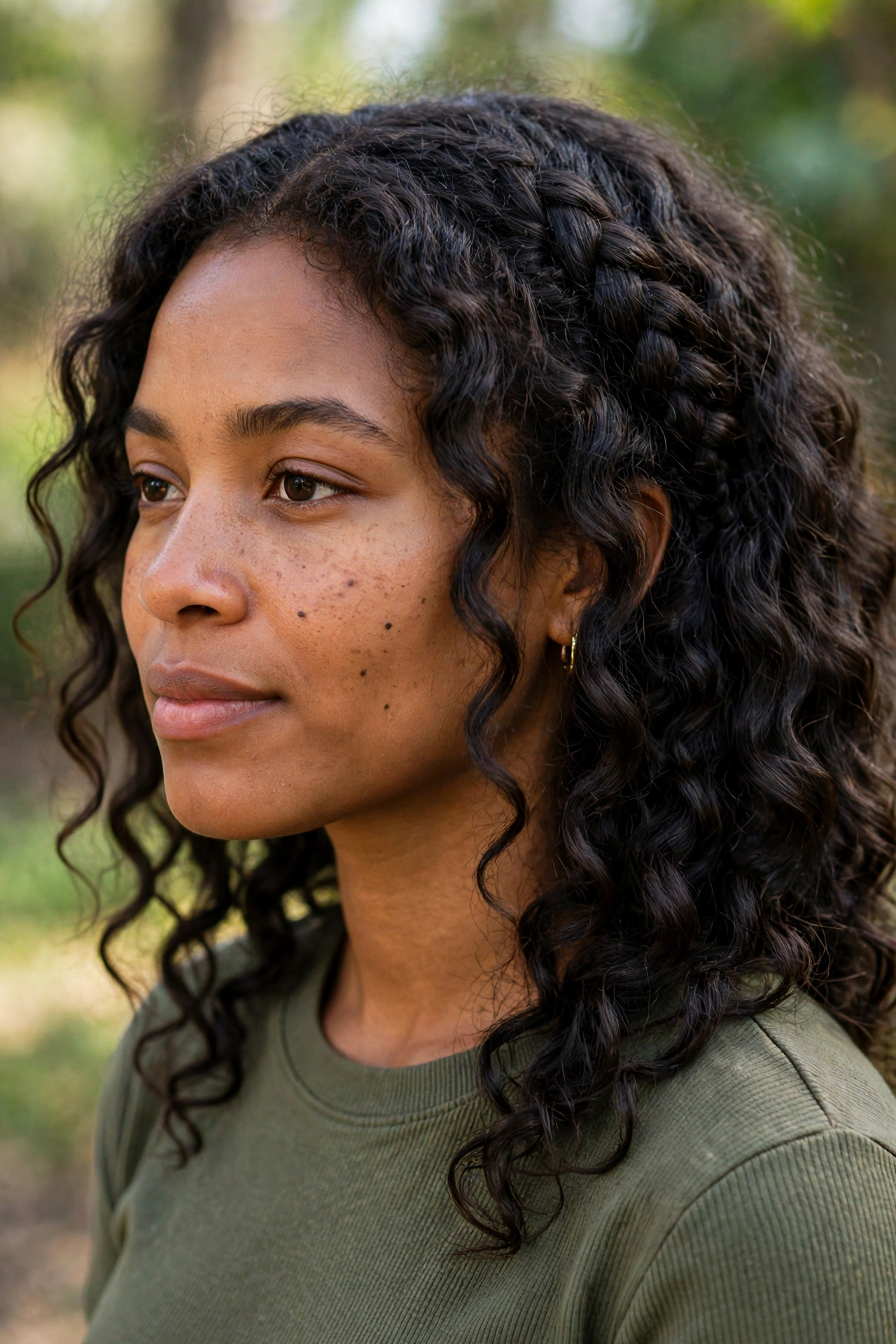
29. Curly Braid Out
A braid out gives you defined, wavy curls by braiding damp hair, letting it dry, and then unravelling the braids for a stretched, patterned finish. It suits all curl types, and it is particularly helpful for tighter curl patterns that want elongation without heat. The braid out flatters every face shape, because you can control the volume by how many braids you use and how much you separate the finished curls.
For the best definition, braid on damp, product-coated hair, let it dry completely before unravelling, and separate the curls with oiled fingers rather than a comb. Ask your stylist to show you the ideal braid size for your hair, since larger braids give loose waves and smaller braids give tighter, more defined curls.
30. Curly Twist Out
A twist out is similar to a braid out but uses two-strand twists, giving softer, more rounded curls with a slightly different texture. It suits coily and curly hair beautifully, and it flatters oval and round faces because the soft, full shape frames the face gently. Twist outs are also a wonderful protective style in themselves, since the hair is twisted and tucked away while it sets.
Twist on damp hair with a butter or cream for hold, let the twists dry fully, and unravel carefully, twisting in the opposite direction to avoid frizz. At the salon, ask for a twist-out tutorial or a first twist-out set, and discuss which products suit your porosity, since the wrong product weight is the most common reason a twist out falls flat or feels crunchy.
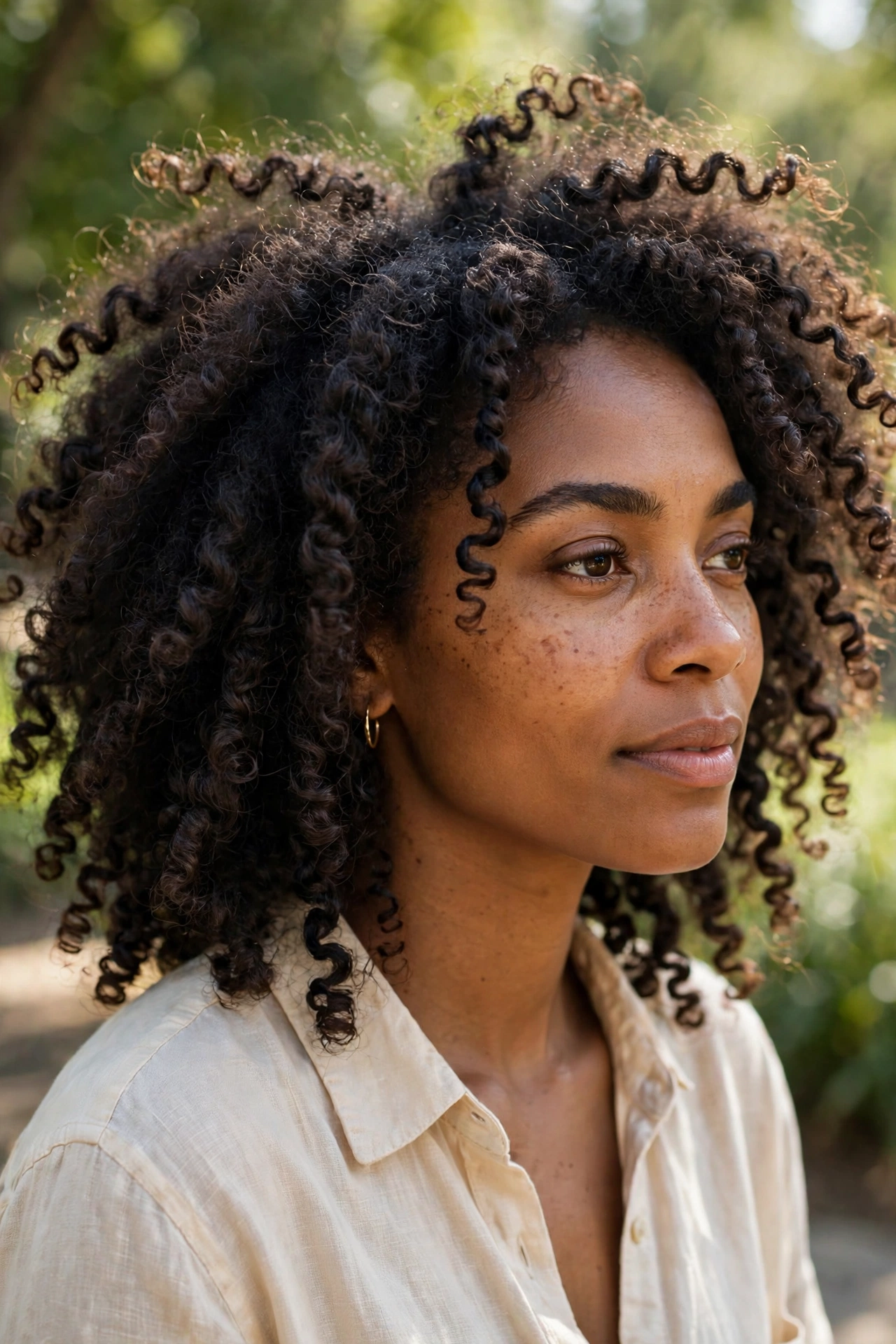
31. Curly Puff
A curly puff gathers your curls into a full, rounded shape on top of the head, celebrating natural volume in its simplest form. It suits oval, round and heart-shaped faces, because the height on top lengthens and balances the face, and it works best on medium to thick curls that can hold a full puff without collapsing. It is quick, protective and endlessly adaptable with headbands, scarves or pins.
Protect your edges by using a soft band and varying the puff position, and fluff the puff gently from underneath for fullness rather than pulling at the surface curls. Ask your stylist for a cut that supports a puff, with enough length on top and shaped sides, so the puff sits evenly rather than leaning to one side.
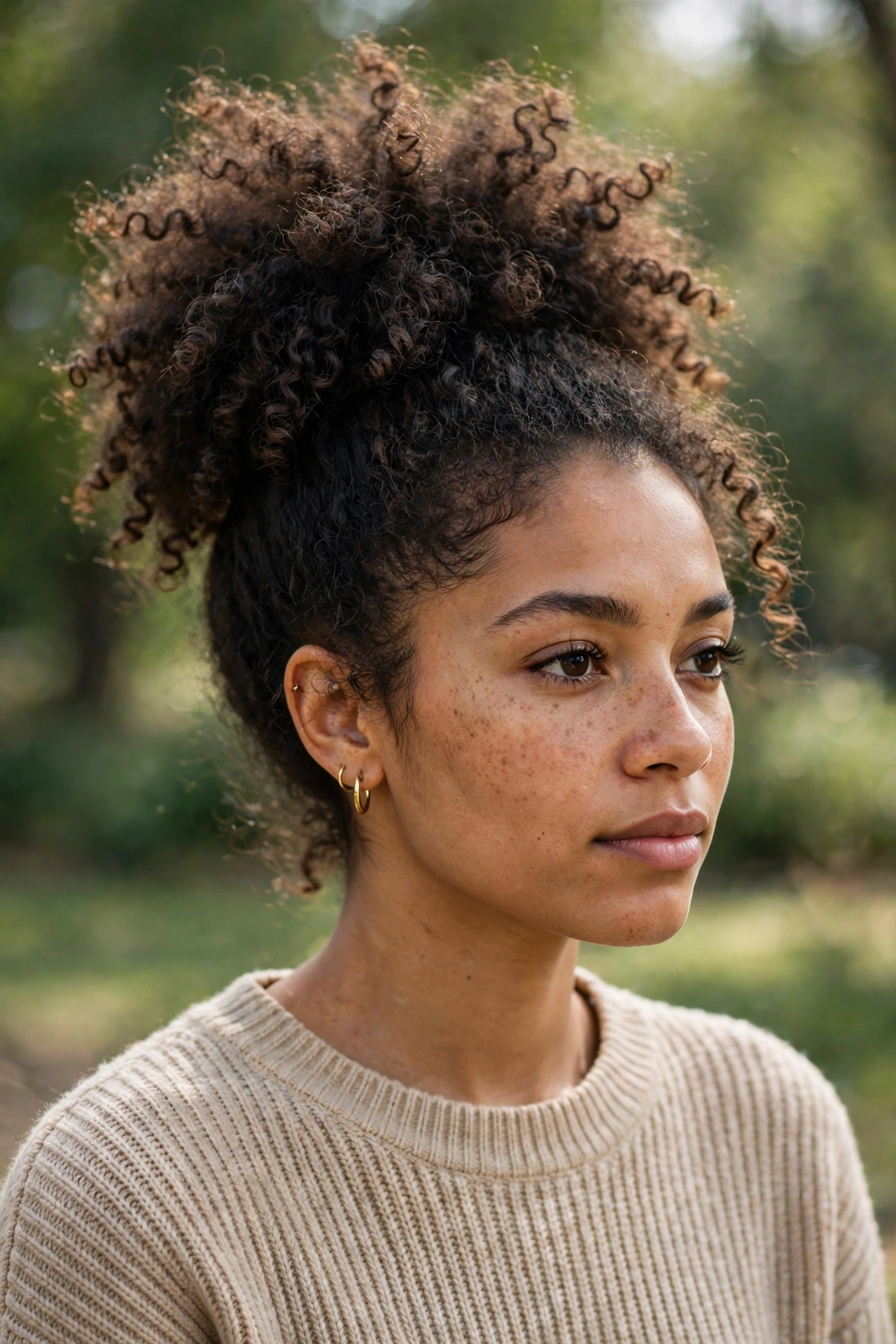
32. Curly Half Up Claw Clip
A curly half up claw clip style is the effortless answer to second-day curls, lifting the front sections away from your face while the rest of your curls fall freely. It suits every face shape, and it is especially helpful for round faces, because the lifted top adds height. The claw clip keeps the style gentle on curls, since it does not pull or crease them the way a tight elastic can.
Choose a large, sturdy clip that can hold your curl volume, and twist the top section loosely before clipping so the style looks intentional rather than rushed. At the salon, ask for a curly cut with face-framing layers, which make a half-up style look softer and more finished without any extra effort at home.
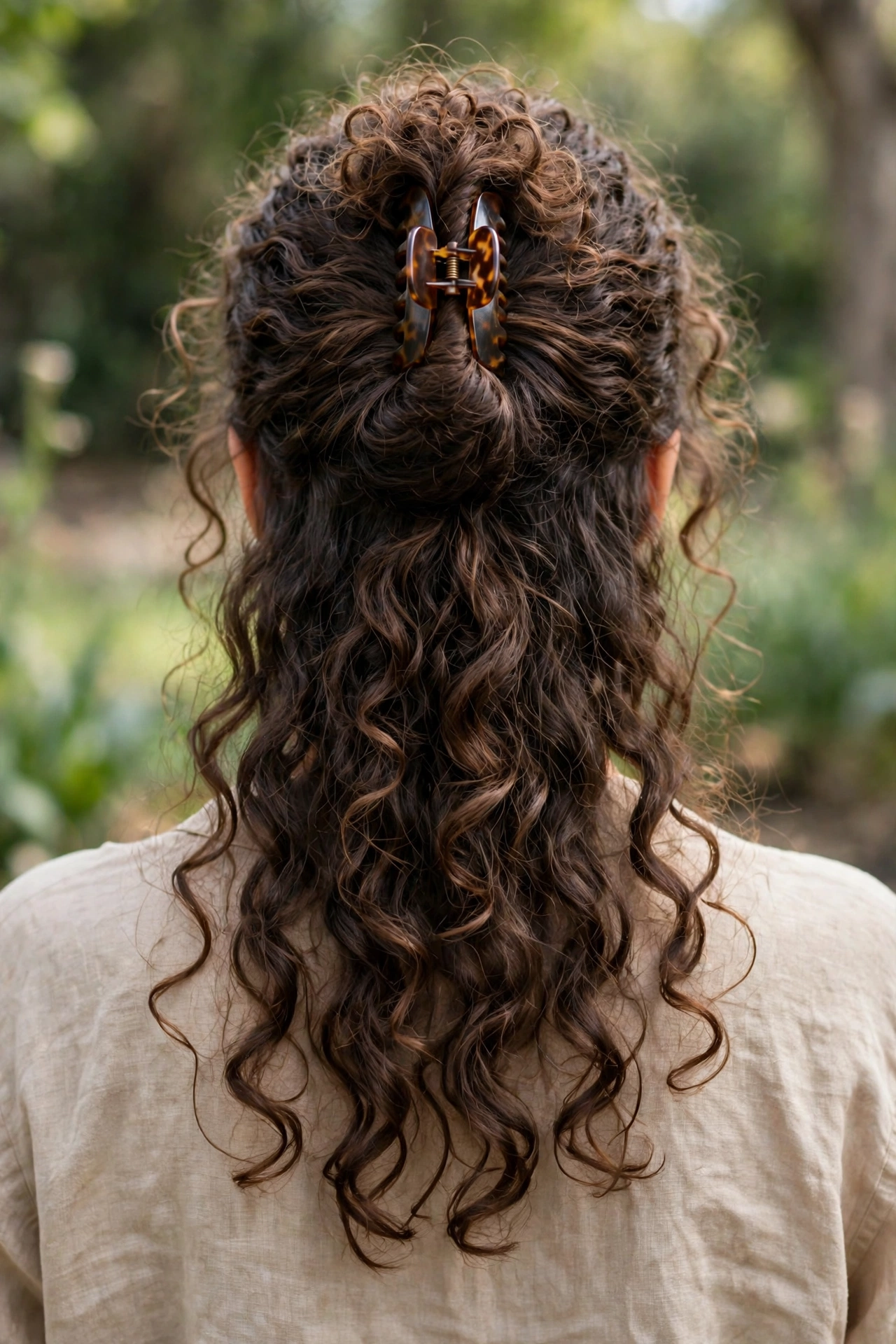
33. Curly High Puff Ponytail
A curly high puff ponytail lifts your curls high on the head for a dramatic, energetic silhouette with cascading curls. It suits oval and long faces best, because the height adds balance, and it works beautifully on thick curls that hold volume. It is a favourite for workouts, dance and days when you want your hair completely off your face but still full of personality.
Avoid a very tight ponytail, and use a soft, wide band or a puff cuff to distribute the tension. Fluff the ponytail from underneath for fullness, and keep the ends moisturised so the cascading curls stay defined. Ask your stylist for layers that support a high ponytail, so the curls fall evenly rather than in one heavy section.
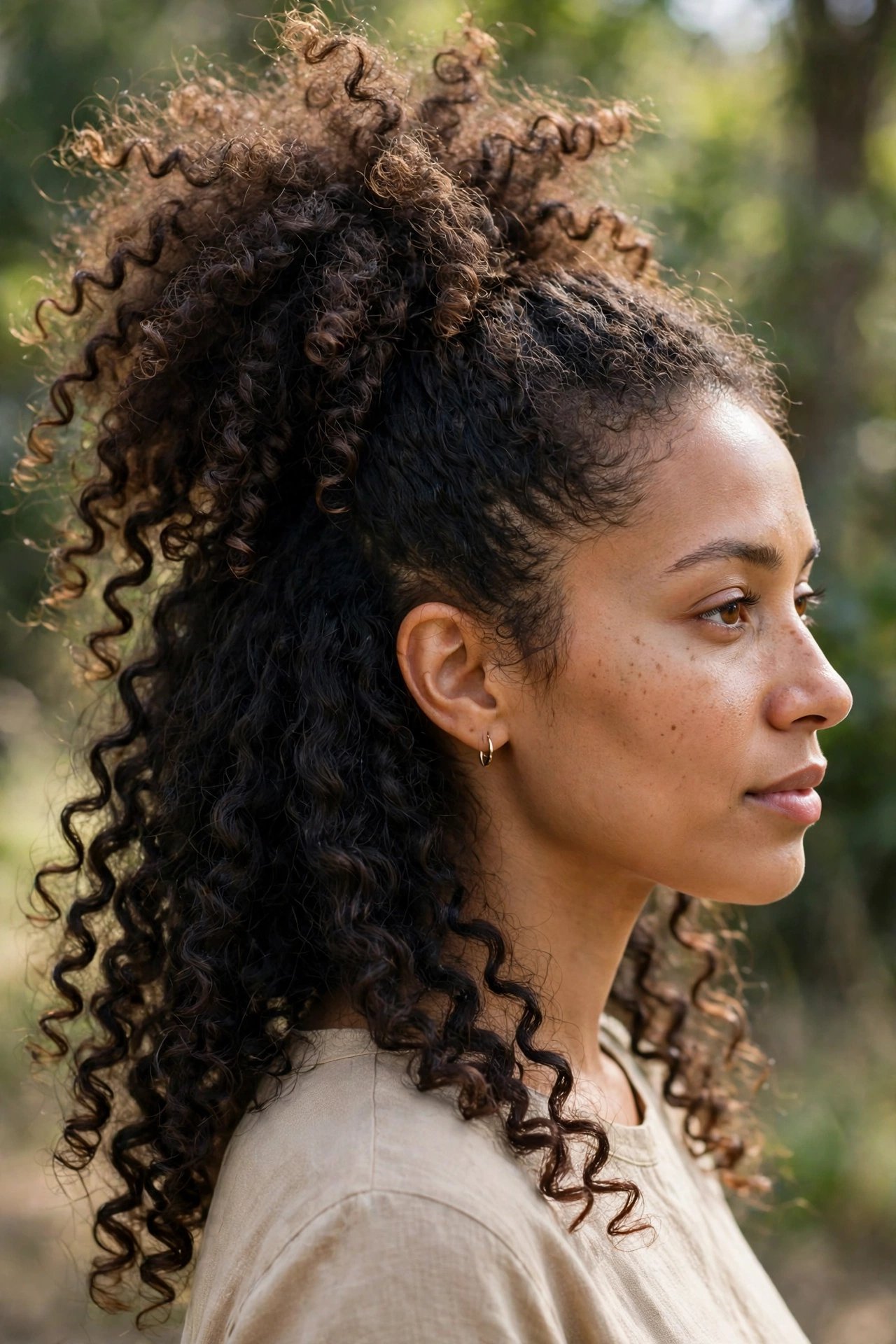
34. Curly Bangs and Layers
Curly bangs paired with layers give you a complete, face-framing shape, with a soft fringe and curls that move freely around the shoulders. They suit long and oval faces especially well, because the bangs shorten the forehead and the layers add width, and they work on loose to medium curl patterns that can hold a fringe shape without constant restyling. This is a style with real character and softness.
Bangs need trimming more often than the rest of the hair, and they should always be trimmed dry and curly. Refresh the fringe each morning with a little water and curl cream, and keep it light on product so it does not go flat. Ask your stylist for curly bangs cut dry, and agree the length when the curls are in their natural, shrunken state.
35. Copper Curly Hair
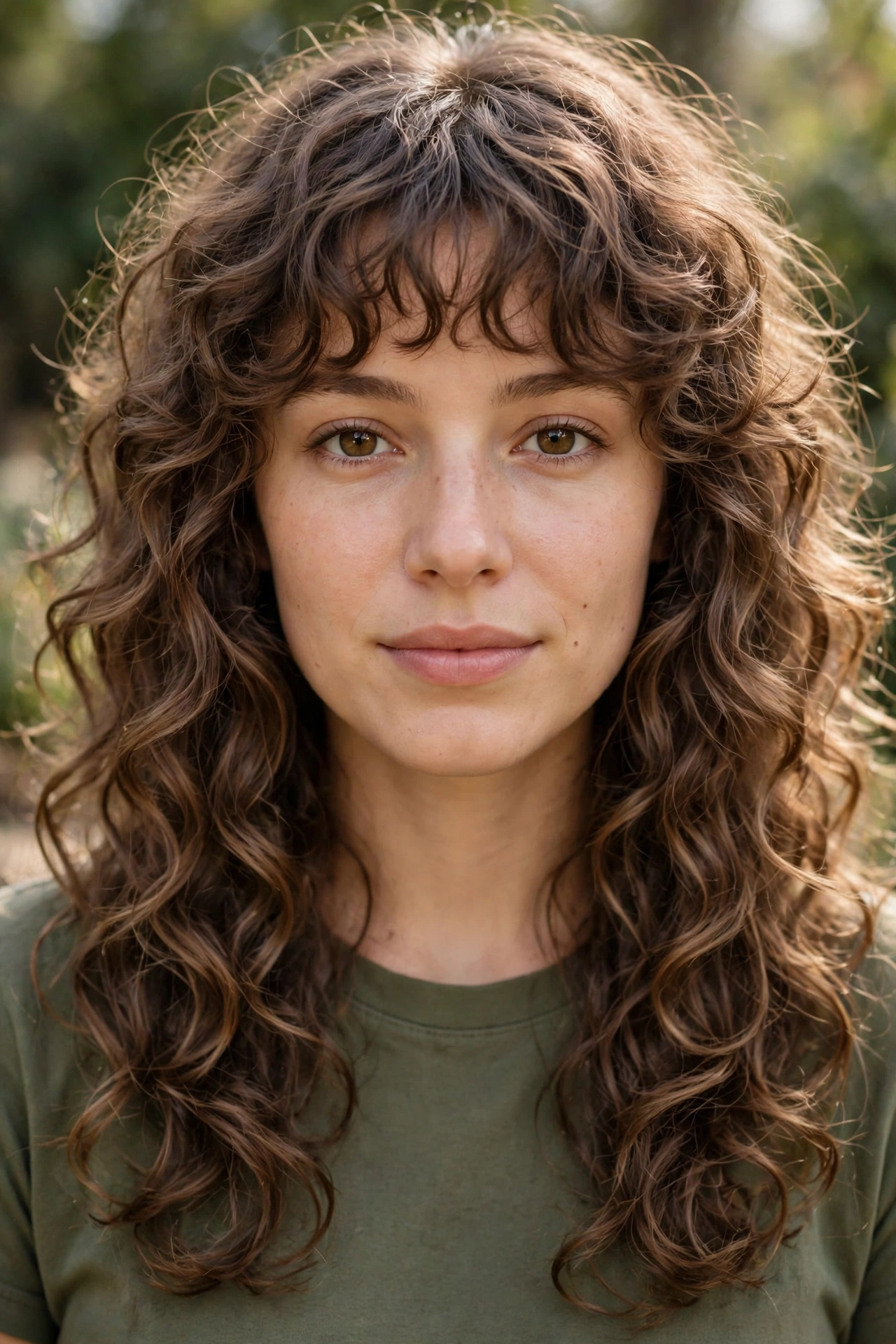
Copper curly hair brings warmth, richness and incredible dimension to curls, with tones ranging from soft auburn to vivid copper. Warm copper suits warm and neutral skin tones, and it flatters every face shape because the colour adds depth and light to each individual curl. Colour also makes curl definition more visible, which is why copper curls photograph so beautifully.
Coloured curls need extra moisture, so use colour-safe, hydrating products, wash with cool water, and deep condition regularly. At the salon, ask for a copper shade matched to your skin tone, and discuss whether you want a full colour, balayage or highlights, since each option grows out differently and needs a different maintenance schedule.
36. Curly Hair with Highlights
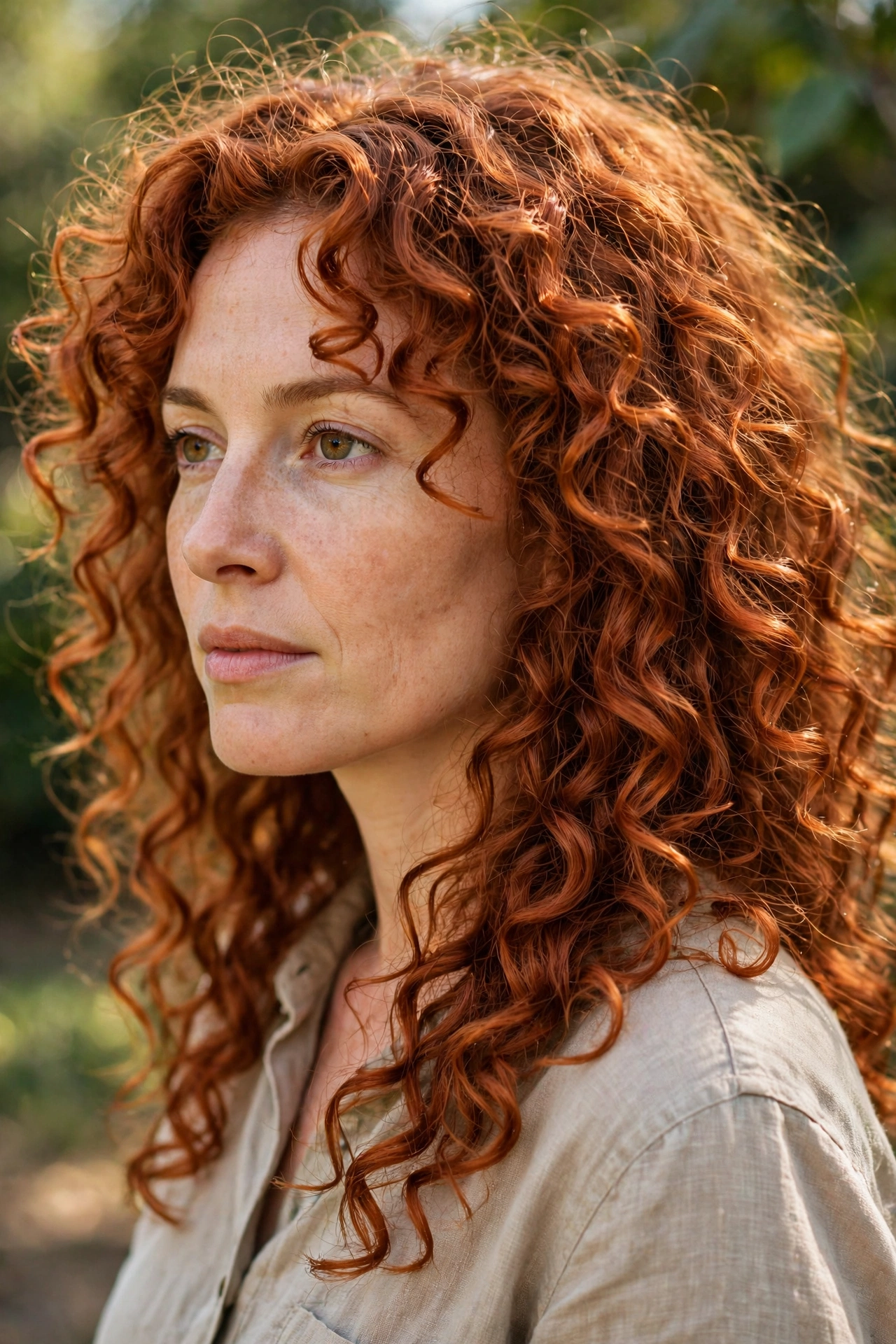
Highlights on curly hair add dimension, light and movement, making each curl stand out rather than blending into one dark mass. They suit every face shape, and face-framing highlights are especially flattering, because they brighten the area around the face. Highlights work on all curl types, but they look most natural when they follow the curl pattern rather than cutting across it in straight lines.
Keep highlighted curls moisturised, since lightening can dry the hair, and use a colour-safe routine with regular deep conditioning. Ask your colourist for curly-friendly highlights, such as balayage or hand-painted pieces that follow your curls, and bring photographs showing how much contrast you want, since subtle and bold highlights need very different techniques.
37. Tight Coily Curls
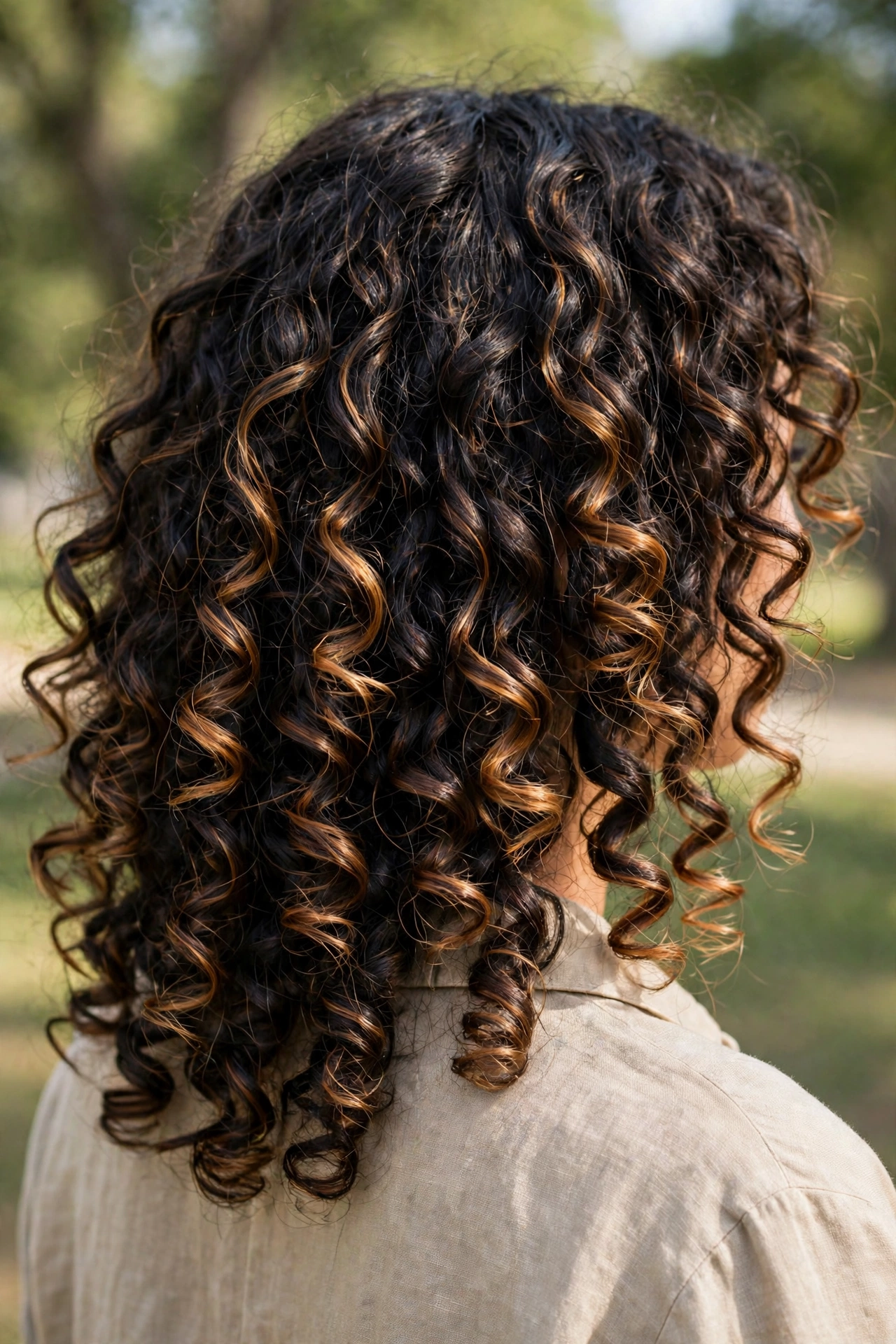
Tight coily curls are dense, springy and full of beautiful texture, forming a rounded, sculptural shape that is striking in its natural state. They suit oval, round and heart-shaped faces, because the full shape frames the face evenly, and they are at their best when shaped with regular trims and kept deeply moisturised. Coily hair rewards a consistent routine more than any single product or tool.
Moisture is everything: use the LOC or LCO method, seal with a butter or oil, and protect coily hair at night with a satin bonnet or pineapple. Ask your stylist for a coily-friendly cut shaped dry, and be clear about the shape you want — rounded, tapered or elongated — since each shape changes how the coils fall and how much volume you get.
38. Loose Beach Curls
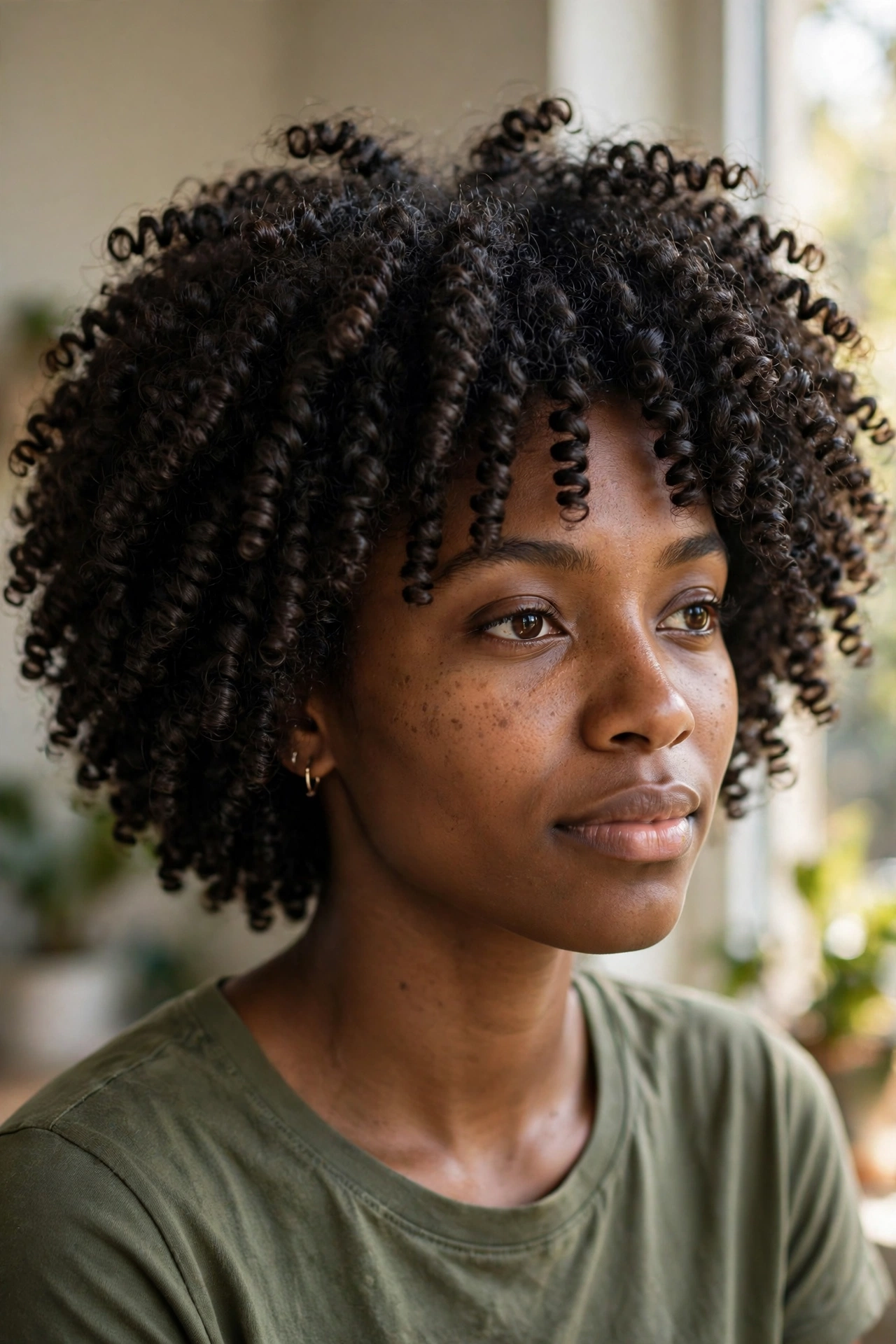
Loose beach curls are relaxed, tousled and sun-kissed, with soft waves and curls that look like they dried naturally by the sea. They suit oval, square and long faces, because the relaxed texture softens strong features, and they work best on wavy to loosely curly hair that can hold a wave without a lot of product. It is the ultimate low-effort summer style.
Create beach curls with a salt spray or light mousse, scrunching and air-drying rather than using heavy heat tools, and let a little frizz be part of the look. At the salon, ask for long layers and a cut that encourages natural wave, and discuss whether you want a lived-in colour finish to complete the beachy effect.
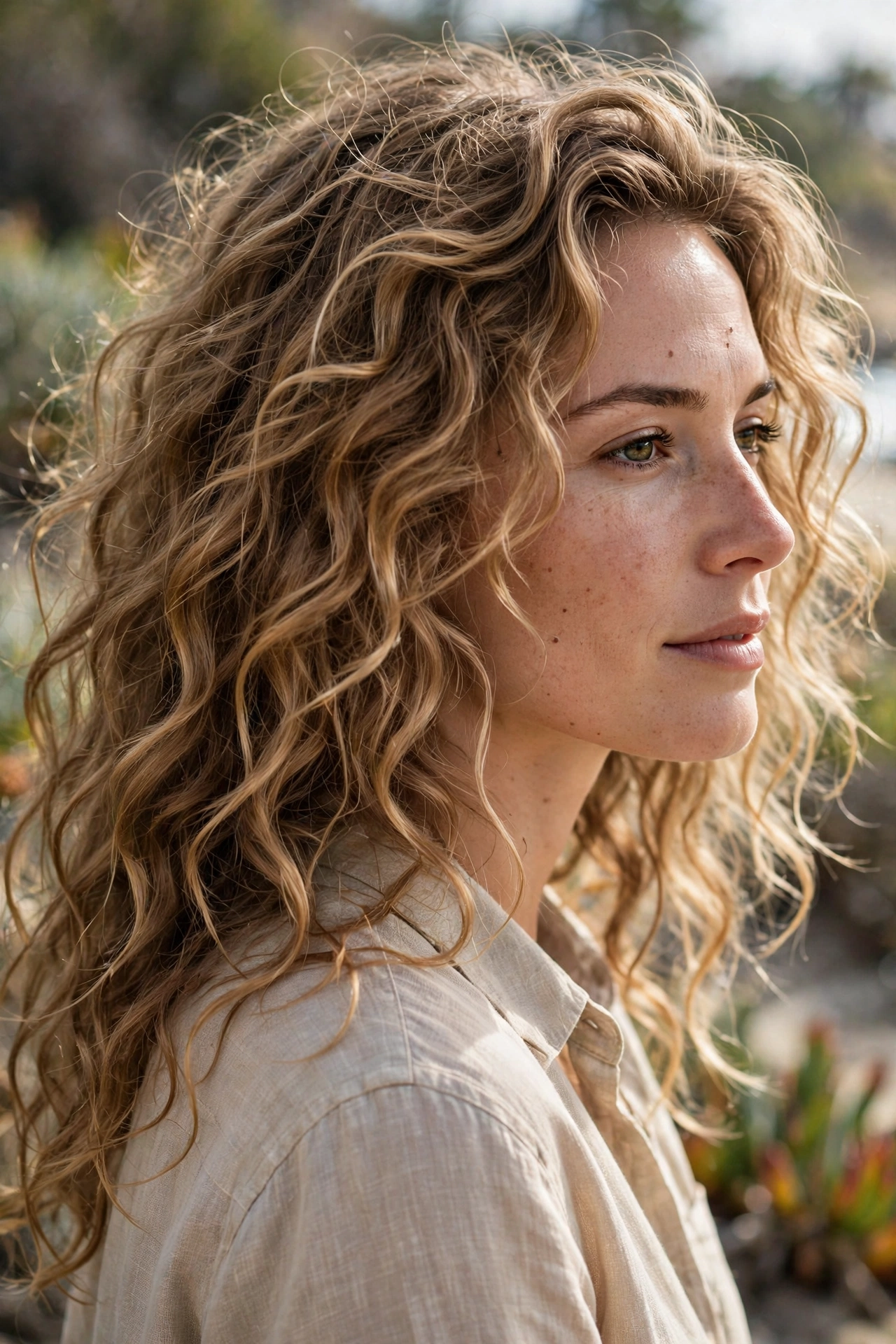
39. Curly Side Part Lob
A curly side part lob combines the wearable shoulder length of a lob with the glamour of a deep side part, giving you volume on one side and a sleek sweep on the other. It suits square and round faces especially well, because the diagonal part breaks up symmetry, and it works on medium to thick curls that hold volume. It is a polished, grown-up curly style that still feels relaxed.
Keep the part defined with a comb after washing, and use a light cream on the heavier side to stop the curls separating. Ask your stylist for a curly lob with a side part cut into the shape, so the volume falls naturally to one side rather than needing to be forced there every morning.
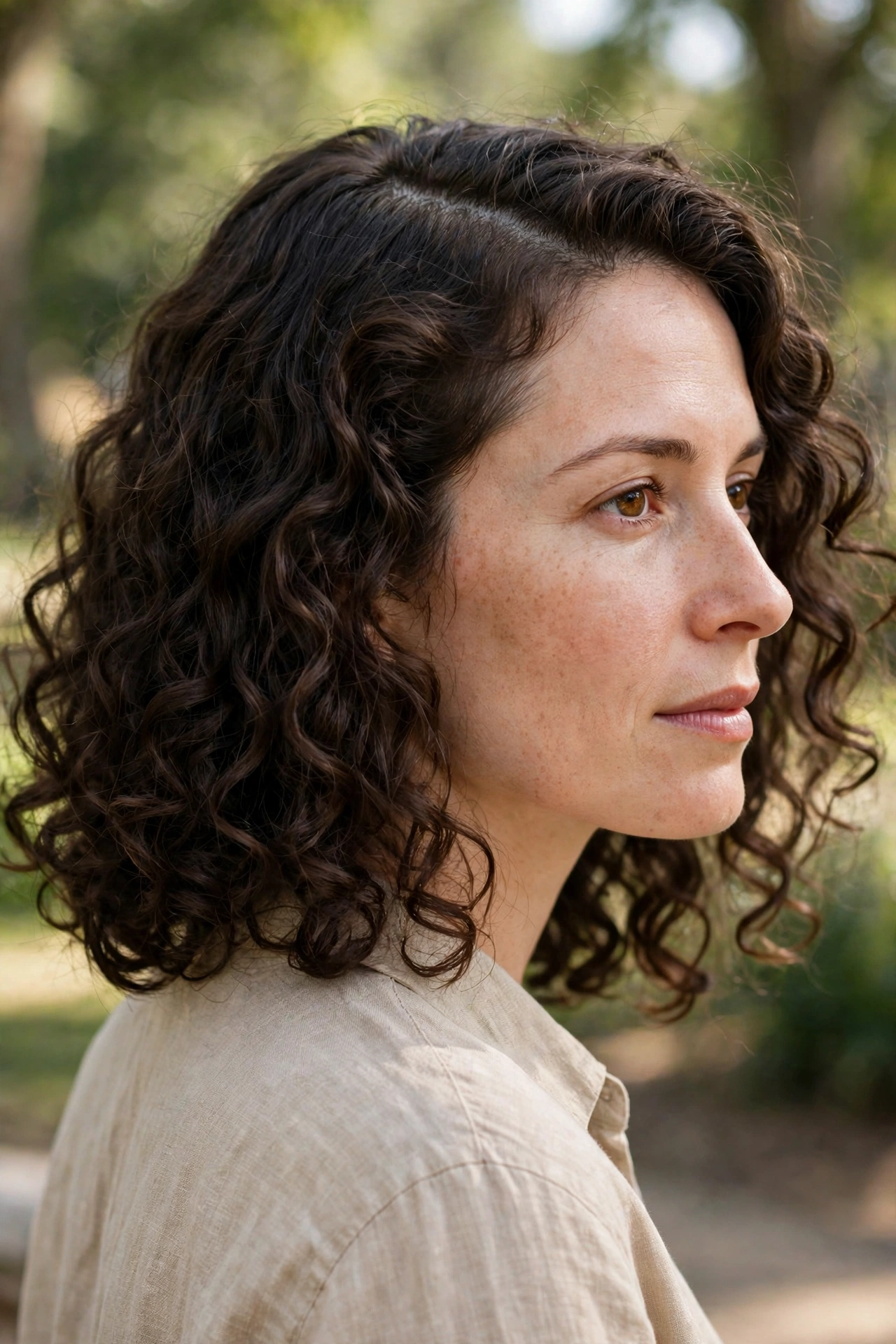
40. Curly Top Knot
A curly top knot gathers your curls into a knot on top of the head, with loose curls left at the nape for softness. It suits oval and round faces, because the height lengthens the face, and it is perfect for busy days, workouts or hot weather when you want your curls up but still want to show some texture. The top knot also works beautifully as a second-day style.
Do not pull the knot too tight, and wrap it loosely so the curls keep their shape instead of being flattened. Use pins rather than a tight band for the final hold. At the salon, ask for a curly cut with enough top length for a knot, and layers that leave a few soft pieces free at the nape.
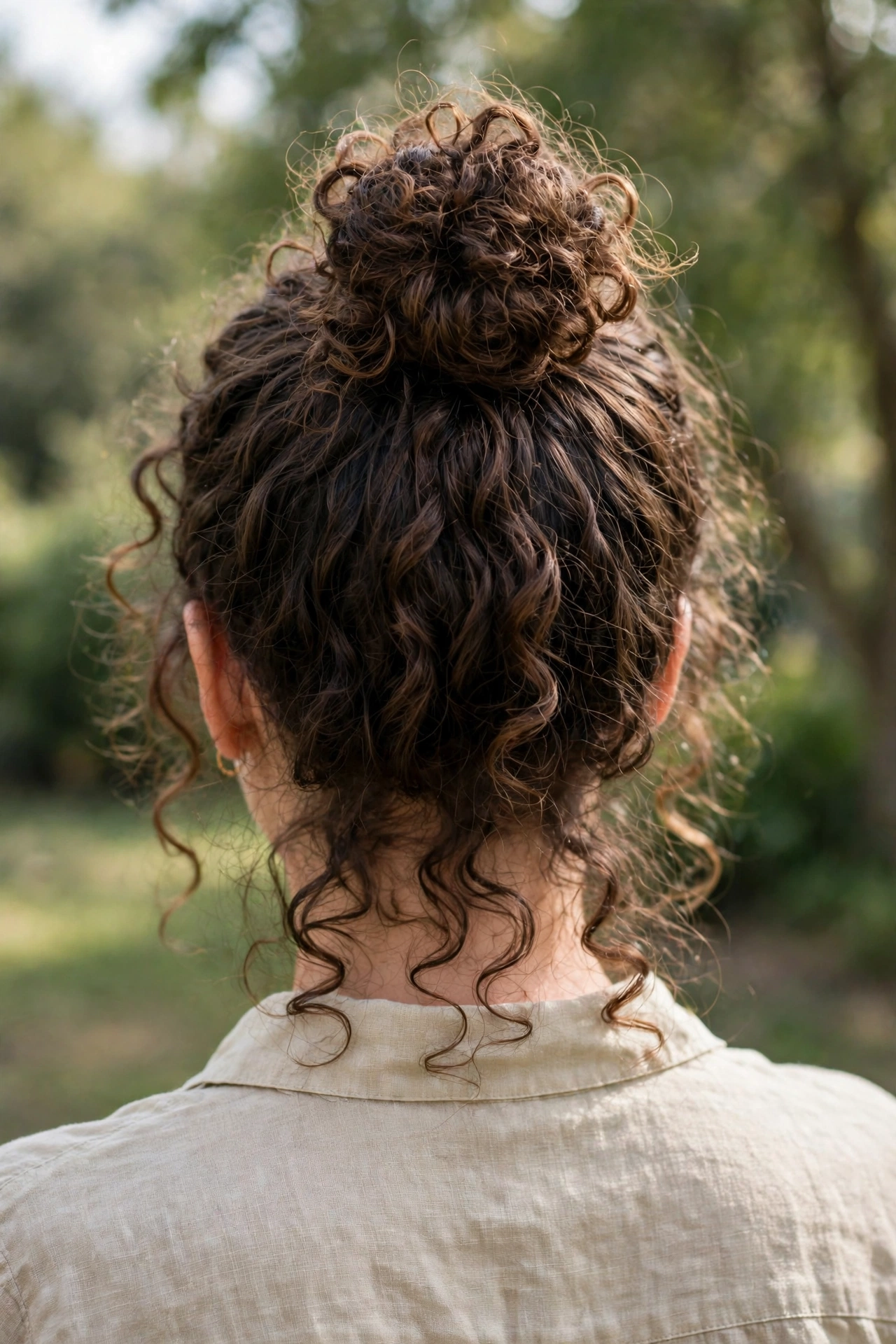
41. Curly Low Ponytail
A curly low ponytail is understated, elegant and kind to your curls, gathering them at the nape with soft face-framing pieces left free. It suits long and oval faces beautifully, because the low placement balances length, and it is ideal for work, formal occasions or any day when you want a tidy style without sacrificing curl texture. The low ponytail also protects the curls from wind and friction.
Use a silk scrunchie or a soft band, and wrap a small section of curls around the base for a finished look. Keep the face-framing curls moisturised so they stay defined rather than frizzy. Ask your stylist for a cut with face-framing layers, which make a low ponytail look intentional and soft rather than simply pulled back.
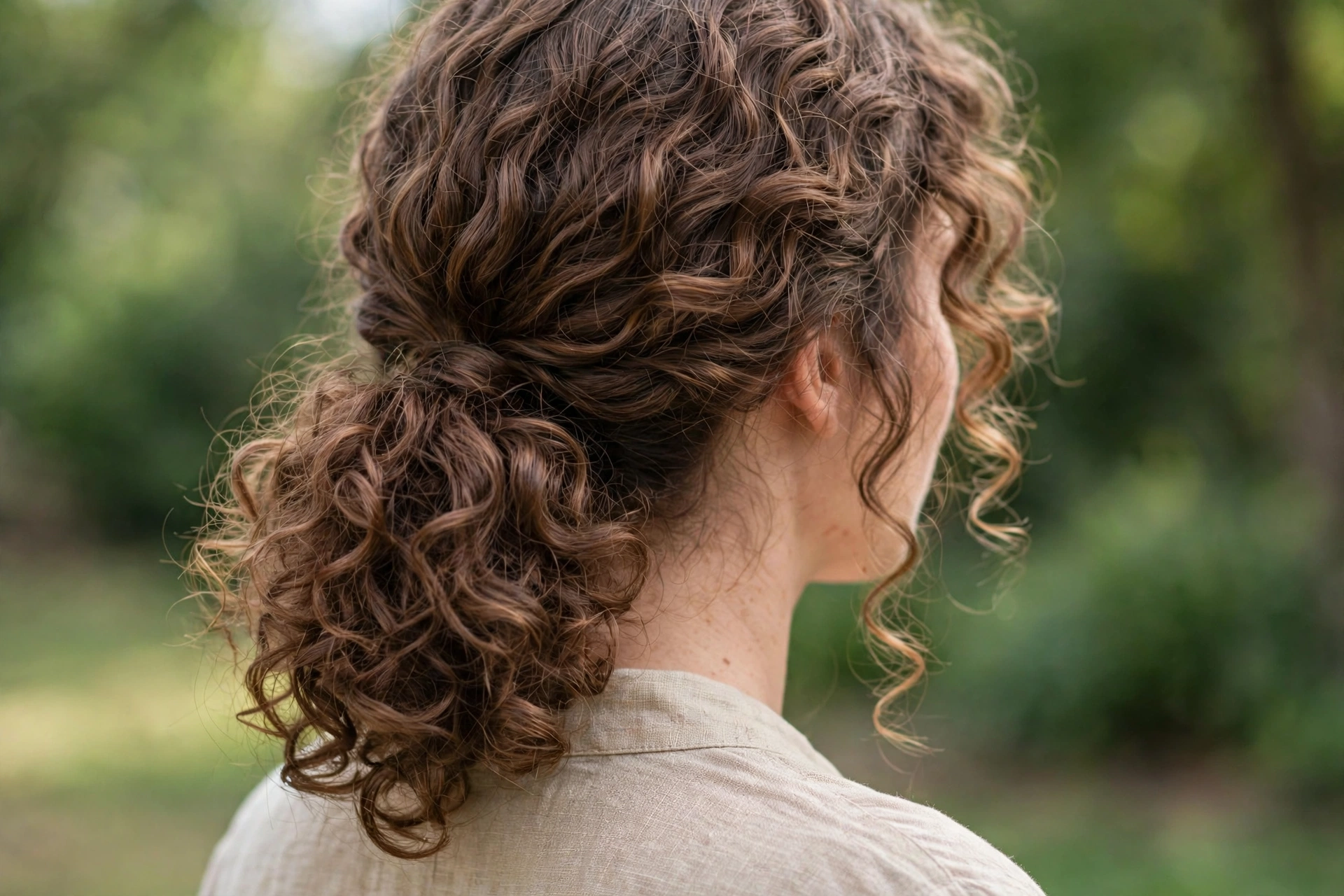
42. Curly Wedding Updo
A curly wedding updo is romantic, timeless and built to last through a long celebration, with pinned curls, loose tendrils and a delicate accessory. It suits every face shape when the front is softened, and it is especially flattering for brides who want to keep their natural texture rather than straightening it for the occasion. Curls hold an updo beautifully, because their natural grip helps pins stay in place.
Always book a trial, bring your veil and accessories, and choose a light-hold product so the curls keep their movement in photographs. On the day, allow extra time, since curly updos are built section by section. Ask your stylist for a curly wedding updo with loose tendrils, and agree the height and placement of the updo in advance, so it complements your dress neckline.
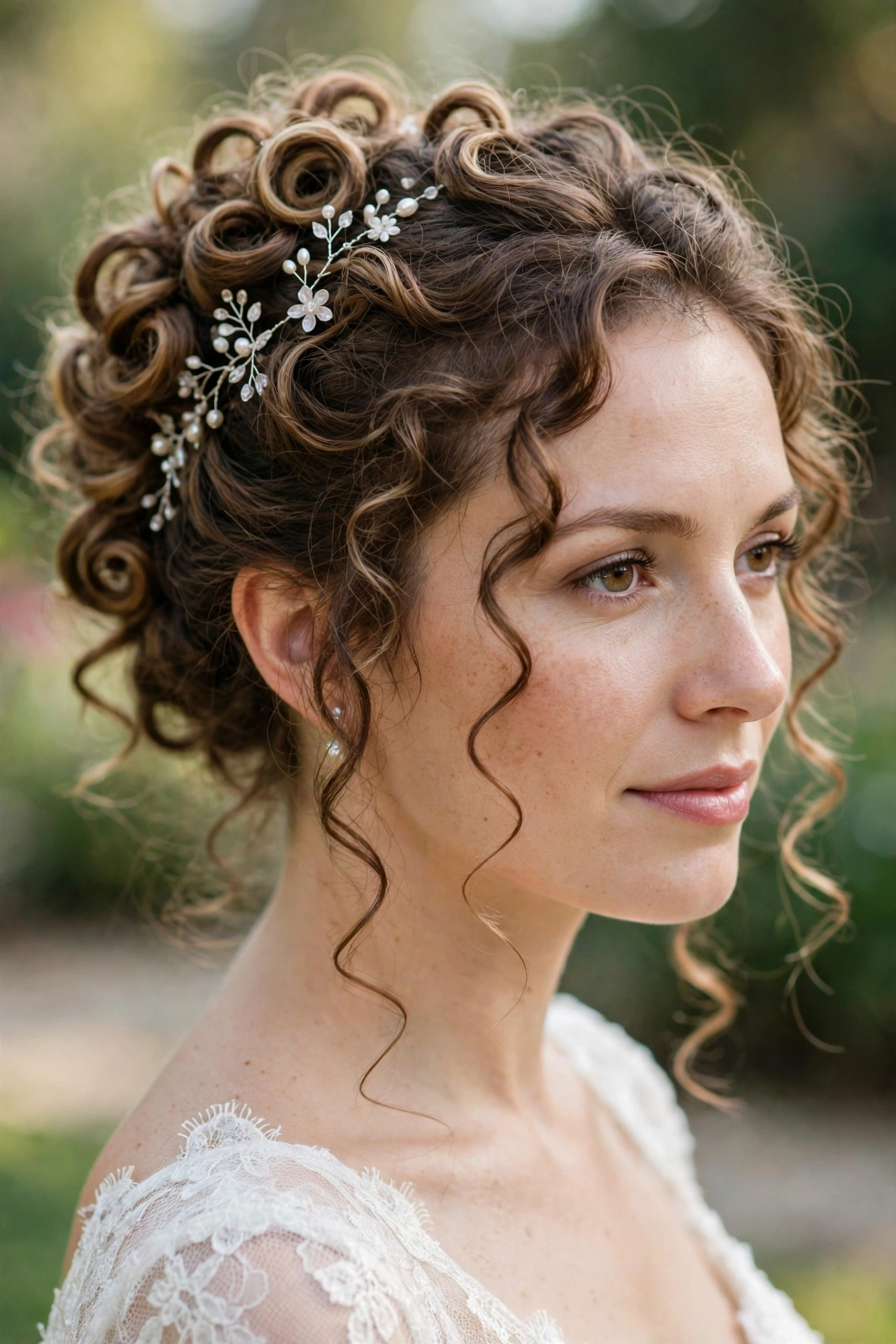
43. French Curl Braids with Wavy Ends
French curl braids with wavy ends offer a softer alternative to tight ringlets, with the braids finishing in loose, flowing waves. They suit fine hair and oval or long faces particularly well, because the waves add movement without too much bulk, and they are a lovely choice if you find tight curls too bouncy or hard to manage. The wavy finish also blends beautifully with naturally wavy hair.
Wavy ends need gentle handling: separate them with your fingers, use a light wave cream, and avoid brushing them out. At the salon, ask for French curl braids with a wavy, rather than tightly curled, finishing hair, and check a sample of the wave pattern before installation, since wave sizes vary a great deal between brands.
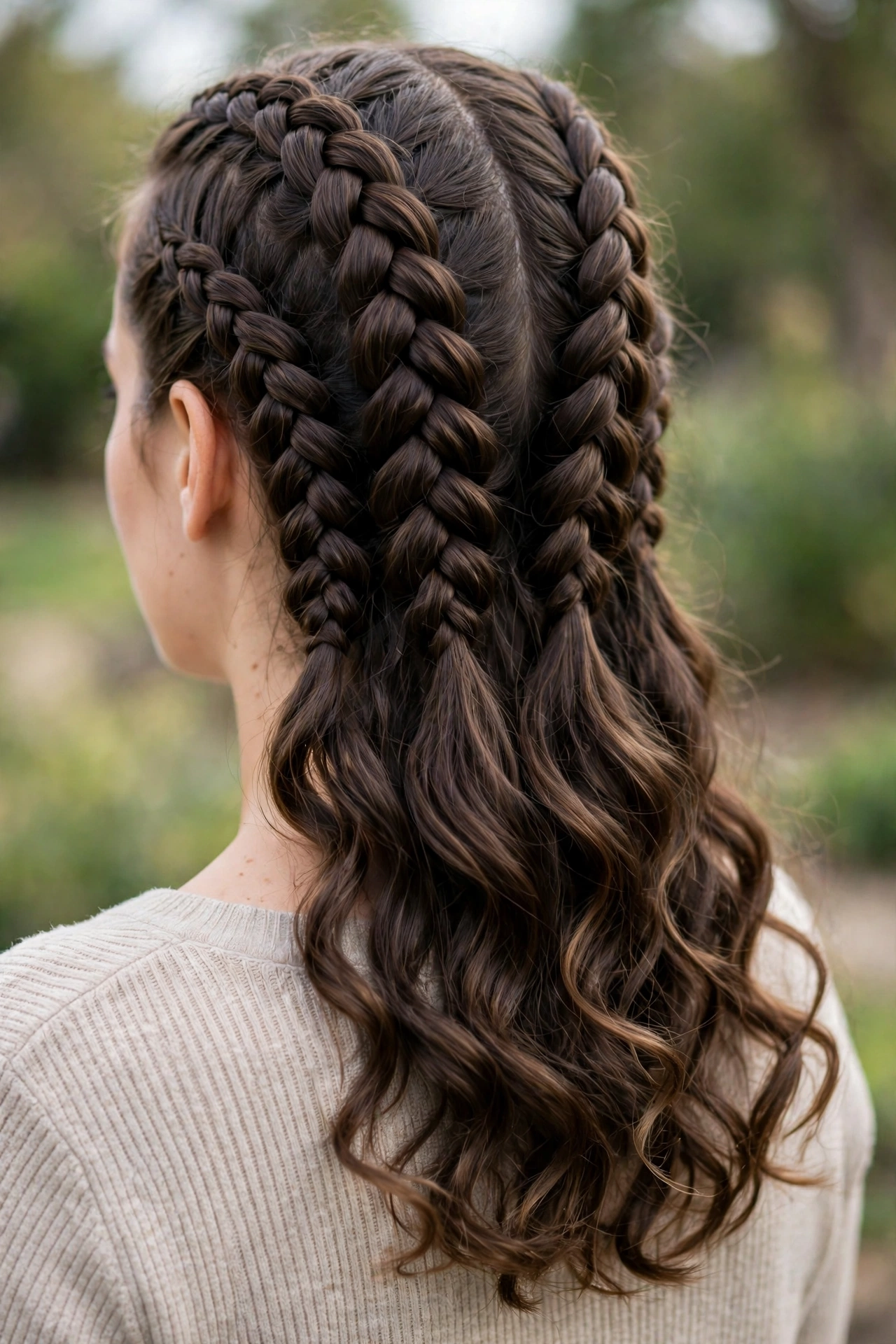
44. Curly Afro Shape
A curly afro shape celebrates full, rounded volume, with curls shaped into a soft halo around the head. It suits oval, round and heart-shaped faces, because the balanced shape frames the face evenly, and it works best on coily and tightly curly hair that holds a rounded silhouette. The afro shape is bold, beautiful and deeply rooted in natural hair heritage.
Shape is maintained with regular trims, picking out the roots for even volume, and keeping the hair deeply moisturised so the curls stay defined rather than dry. Ask your stylist for a rounded afro shape cut dry, and discuss how much volume you want at the sides versus the top, since that balance defines the whole look.
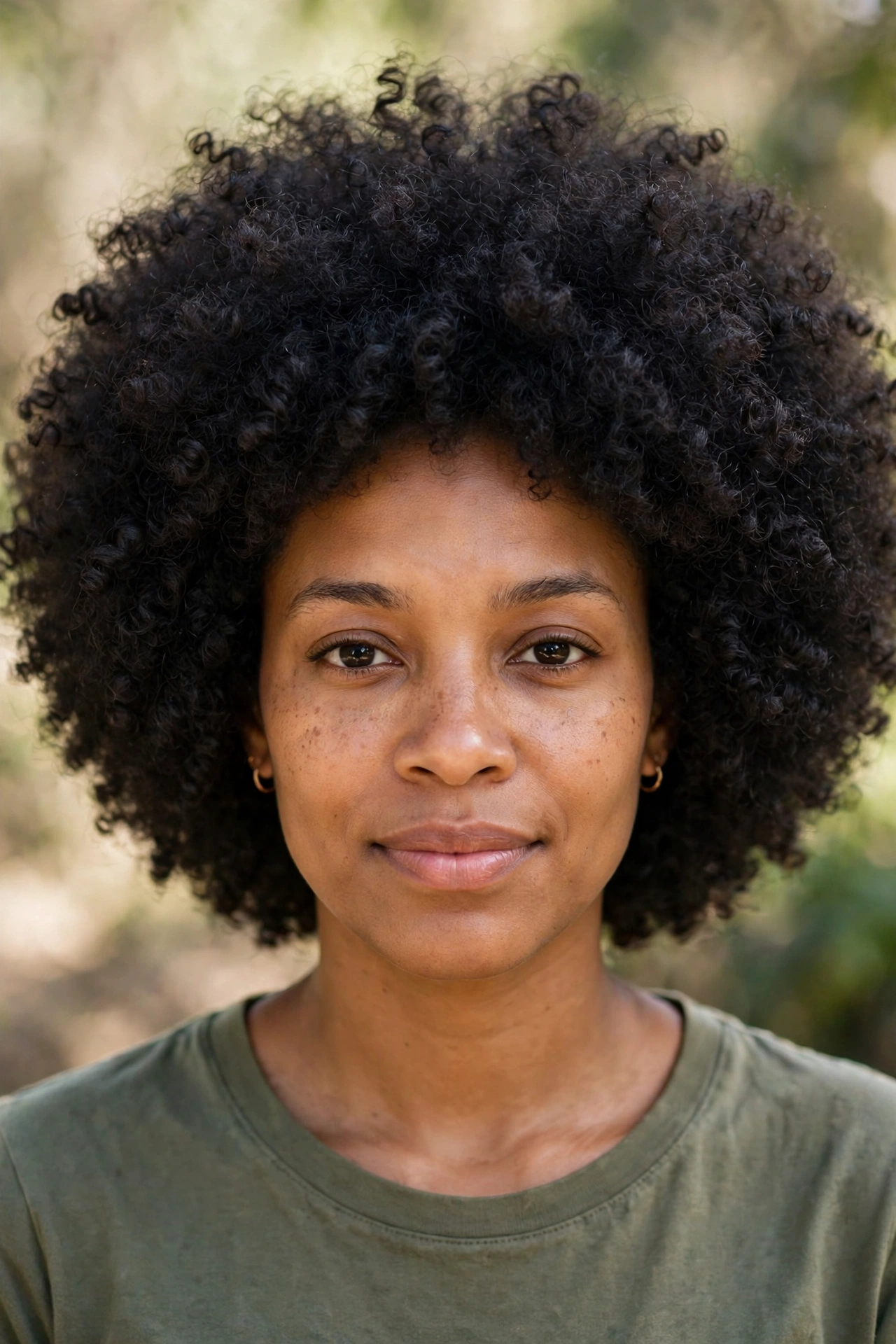
45. French Curl Braids with a Curly Crown Updo
A curly crown updo wraps French curl braids around the head like a crown, with the curly ends gathered on top for a regal, eye-catching finish. It suits oval and heart-shaped faces especially well, because the crown height draws attention upwards, and it is a show-stopping choice for weddings, celebrations and formal events. The style also keeps braids completely off the neck, which is a blessing in warm weather.
The crown needs secure pinning, so use large pins and check the balance from the front and back before you leave the salon. Keep the curly top soft by pinning loosely and finishing with a light spray. Ask your braider for a crown updo from French curl braids, and bring a reference photograph, since crown updos vary from a neat wrapped braid to a loose, curly halo.
Frequently Asked Questions
How long do French curl braids last?
French curl braids typically last four to six weeks with good care, although the curly ends may need refreshing sooner than the braids themselves. Protect them at night with a satin bonnet, keep your scalp clean with diluted shampoo or a scalp cleanser, and moisturise the curly ends regularly. Take them out sooner if you notice itching, tension, thinning at the edges or matting at the roots, since keeping any protective style in too long can damage your natural hair.
What hair should I ask for to get French curl ends?
Ask for French curl braiding hair, which is specifically made to give that soft, curly finish, and check the curl pattern before your appointment, since patterns range from loose waves to tight ringlets. Your braider can advise on the best brand and length for your chosen style, and it is worth buying one extra pack so you are not caught short mid-installation. If you are unsure, bring a photograph of the curl type you want and let your braider match it.
Are French curl braids suitable for fine hair?
Yes, French curl braids can work beautifully on fine hair, especially knotless or small braids, which distribute tension more evenly and add the appearance of fullness. The key is to avoid braids that are too heavy or too tight, and to keep the length moderate if your hair is very fine. Tell your braider about your hair density honestly, and ask them to use a lighter tension at the hairline, so the style protects rather than stresses your natural hair.
How do I keep the curly ends from tangling?
Keep the curly ends moisturised with a leave-in conditioner or light oil, separate them gently with your fingers, and never brush them when dry. Sleep in a satin bonnet or on a satin pillowcase, and refresh the curls with water and curl cream rather than re-wetting them fully every day. If tangles do form, work through them slowly with your fingers and a little conditioner, starting from the ends and moving upwards.
Can I wash French curl braids?
Yes, you can wash French curl braids, but keep it gentle: use diluted shampoo massaged into the scalp, rinse thoroughly, and let the braids air dry or dry them on a low heat setting. Avoid heavy conditioners on the braided sections, which can cause build-up, and focus any conditioning on the curly ends. Wash every one to two weeks, depending on your scalp and lifestyle, and always dry the braids fully to prevent dampness and odour.
Conclusion
French curl braids and their curly companions offer something for every hair type, face shape and occasion, from long, dramatic braids to short bobs, elegant updos and joyful wash-and-go curls. The common thread is that the curls do the work: they add softness, movement and personality to every style, while the braids or the cut underneath give you structure and staying power.
At Hair Birth, we believe the best hairstyle is the one that fits your real life, not just a photograph. Use this guide to choose a style that suits your curl pattern and your routine, take the salon questions with you to your appointment, and give your curls the moisture and gentle handling they deserve. With the right style and the right care, your French curl braids and curly hairstyles will look beautiful from the first day to the last.