30 Bixie Cut Ideas for 2026
Introduction
A bixie cut sits exactly where most short haircuts refuse to go: longer and softer than a pixie, but shorter, lighter and far more layered than a bob. It keeps the cropped, tapered nape and the piecey crown of a pixie, while leaving enough length around the ears, cheeks and jaw to tuck, sweep, wave or pin back. That in-between length is why it suits so many people — it gives you the freedom of short hair without the all-or-nothing feeling of a full pixie crop.
The trick to a good bixie is not the name on the appointment card, it is the detail. The same cut can look polished, edgy, soft or shaggy depending on where the layers sit, how the nape is tapered, whether you add a fringe, and how much texture your stylist builds in. Use the 30 ideas below to find the version that fits your face shape, hair type and the amount of morning effort you honestly want to give, and take the "what to ask for" line in each section to your salon appointment.
1. The Classic Textured Bixie

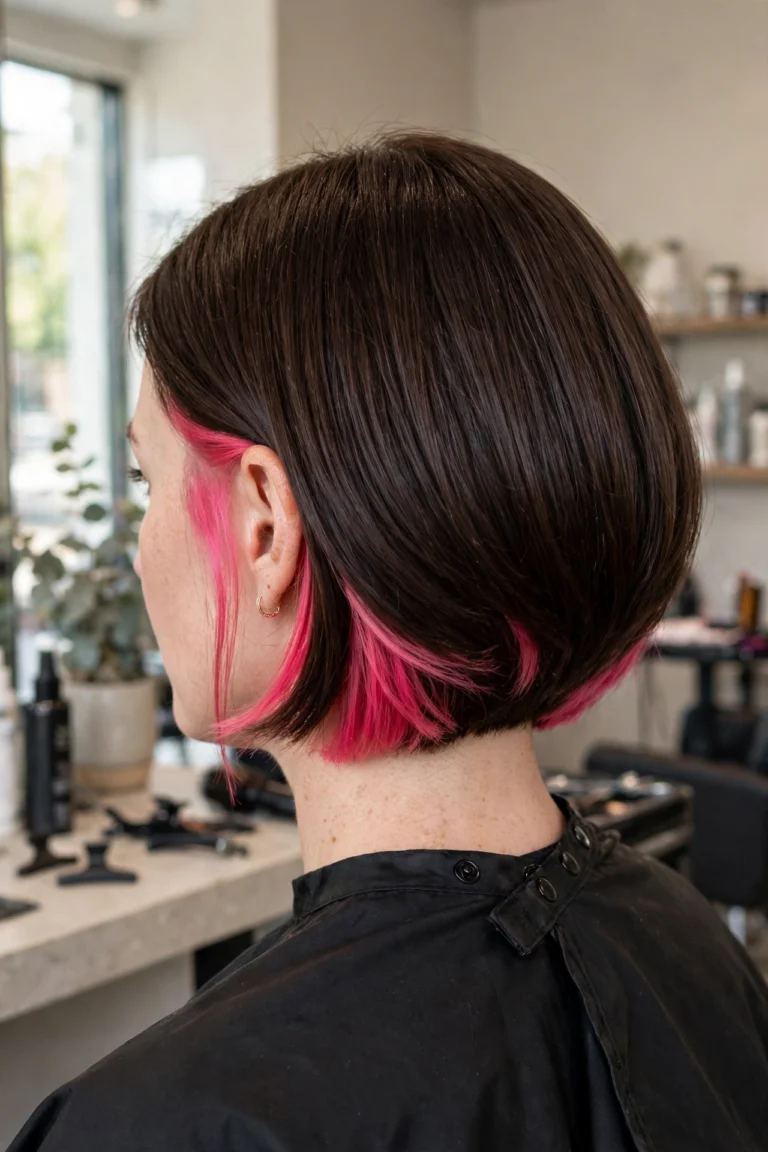
This is the benchmark bixie: soft, choppy layers through the crown, a neatly tapered nape, and pieces around the ears and cheekbones that are long enough to tuck behind the ear. It flatters oval, heart and square faces especially well, because the face-framing length softens the jaw while the layered crown keeps the shape from looking heavy. It works on straight, wavy and slightly curly hair, and on medium density hair it holds its shape with very little help.
Maintenance is genuinely low. Expect a trim every six to eight weeks to keep the nape tidy and the layers from merging into a bob shape. To style it, work a pea-sized amount of texture cream through damp hair, rough-dry with your fingers, and pinch the ends into pieces once dry. At the salon, ask for a textured bixie with a tapered nape, layered crown and face-framing pieces that sit just below the ear.
2. The Choppy Layered Bixie
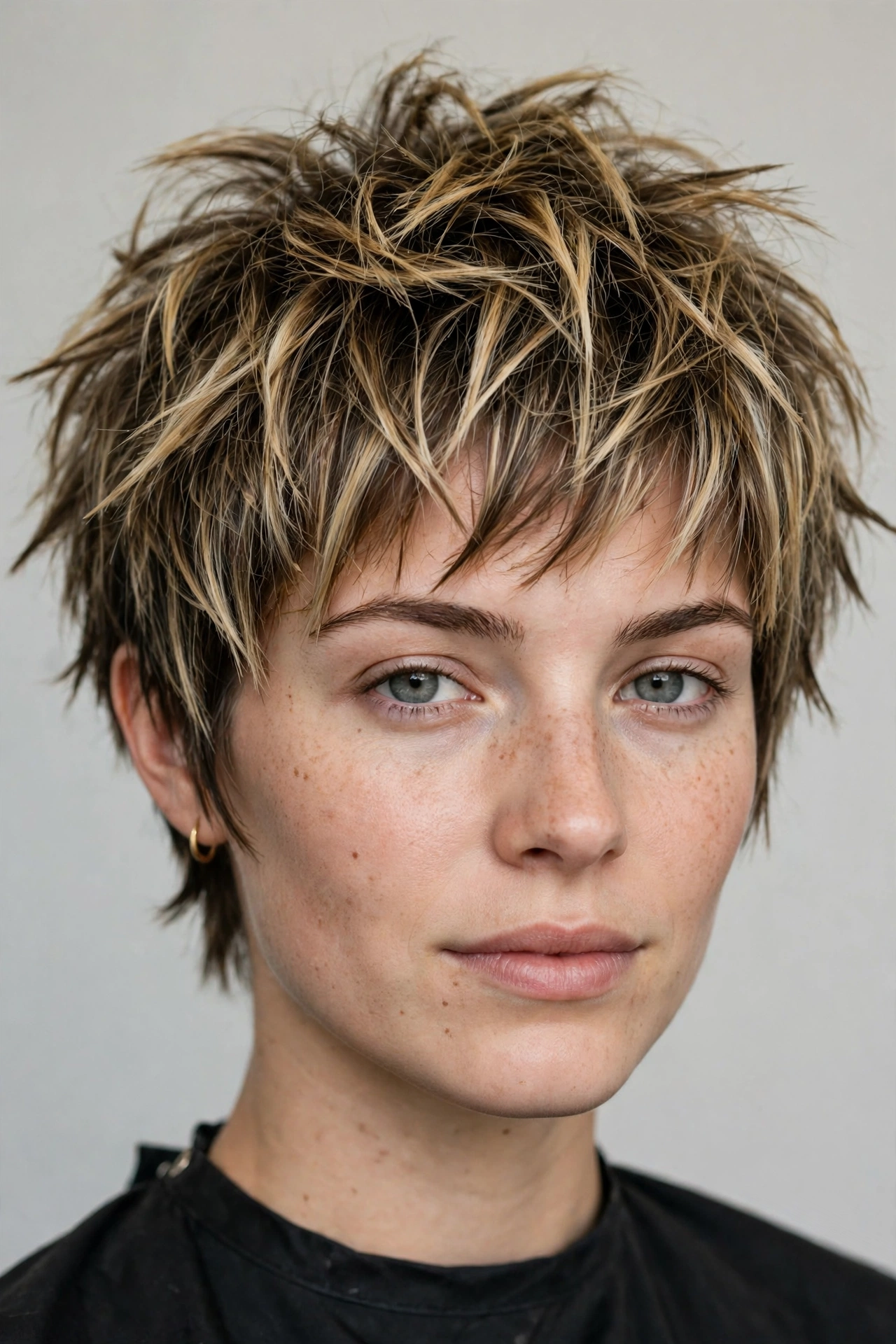
The choppy layered bixie turns the texture up: short, shattered layers are cut into the crown and sides so the ends flick in different directions instead of sitting in one smooth line. It is a strong choice for straight or slightly wavy hair that tends to fall flat, and for oval and long faces, where the extra width and movement balance the face length. Very thick hair needs careful thinning first, or the choppy layers can puff out too much.
This cut needs a little more styling than a classic bixie, but not much. A light wax or paste, warmed between your palms and scrunched through the ends, is what creates the piecey finish — heavy gel will glue the layers together. Book a trim every five to seven weeks, because choppy ends lose their definition as they grow. Ask your stylist for heavily textured, point-cut layers with a short tapered back, and show a photo so "choppy" means the same thing to both of you.
3. The Sleek Polished Bixie

Not every bixie has to look undone. The sleek polished version keeps the bixie outline — shorter back, longer face-framing front — but smooths it into a curved, glossy shape that tucks neatly behind the ears. It suits straight, fine to medium hair and oval, heart and long faces, and it is one of the best short cuts for work, weddings and formal events because it reads as deliberate rather than casual. Curly or very wavy hair can wear it too, but only with regular blow-drying or straightening.
Maintenance is medium: the shape itself is forgiving, but the sleek finish needs a blow-dry with a small round brush and a drop of smoothing serum, plus a flat iron pass over any stubborn sections. Trims every six weeks keep the tuck-behind-the-ear length exact. Ask for a smooth bixie with minimal internal texture, a clean tapered nape, and enough front length to tuck behind the ears without springing out.
4. The Curly Bixie

A curly bixie lets curls do the work that layers do on straight hair. The cut is shaped dry or on natural curl pattern, with a tapered nape underneath and longer, layered curls on top and around the face so the shape stays rounded rather than triangular. It suits round, oval and square faces, and it is made for medium to thick curly and coily hair — the layers stop the sides from ballooning out while the length at the front keeps the face open.
Styling is about definition, not control. Apply curl cream to soaking-wet hair, scrunch upward, and either diffuse on low heat or air-dry without touching the curls until they are fully dry. Avoid brushing dry curls, which turns this cut into frizz. Trims every eight to ten weeks are usually enough, and ask for a curly cut by a stylist who cuts curls dry, with the nape tapered short and the top left long enough to spring up without shrinking above the ears.
5. The Wavy Tousled Bixie

This is the bixie for hair that already has a bend in it. Loose, tousled waves are layered so they fall in soft, uneven pieces around the cheeks and jaw, with a shorter back that keeps the cut from turning into a shaggy bob. It flatters almost every face shape, but it is especially kind to square and round faces, because the waves break up strong lines without adding width at the widest point. Fine wavy hair gains movement; thick wavy hair gains shape.
It is one of the lowest-effort bixies you can own. Scrunch sea-salt spray or light mousse into damp hair, let it air-dry, and shake it out — the cut is designed to look slightly imperfect. If your waves fall flat overnight, a quick scrunch with damp hands revives them. Ask for a layered bixie cut to enhance your natural wave, with the back tapered and the front pieces left long enough to wave past the cheekbones.
6. The Bixie with Curtain Bangs
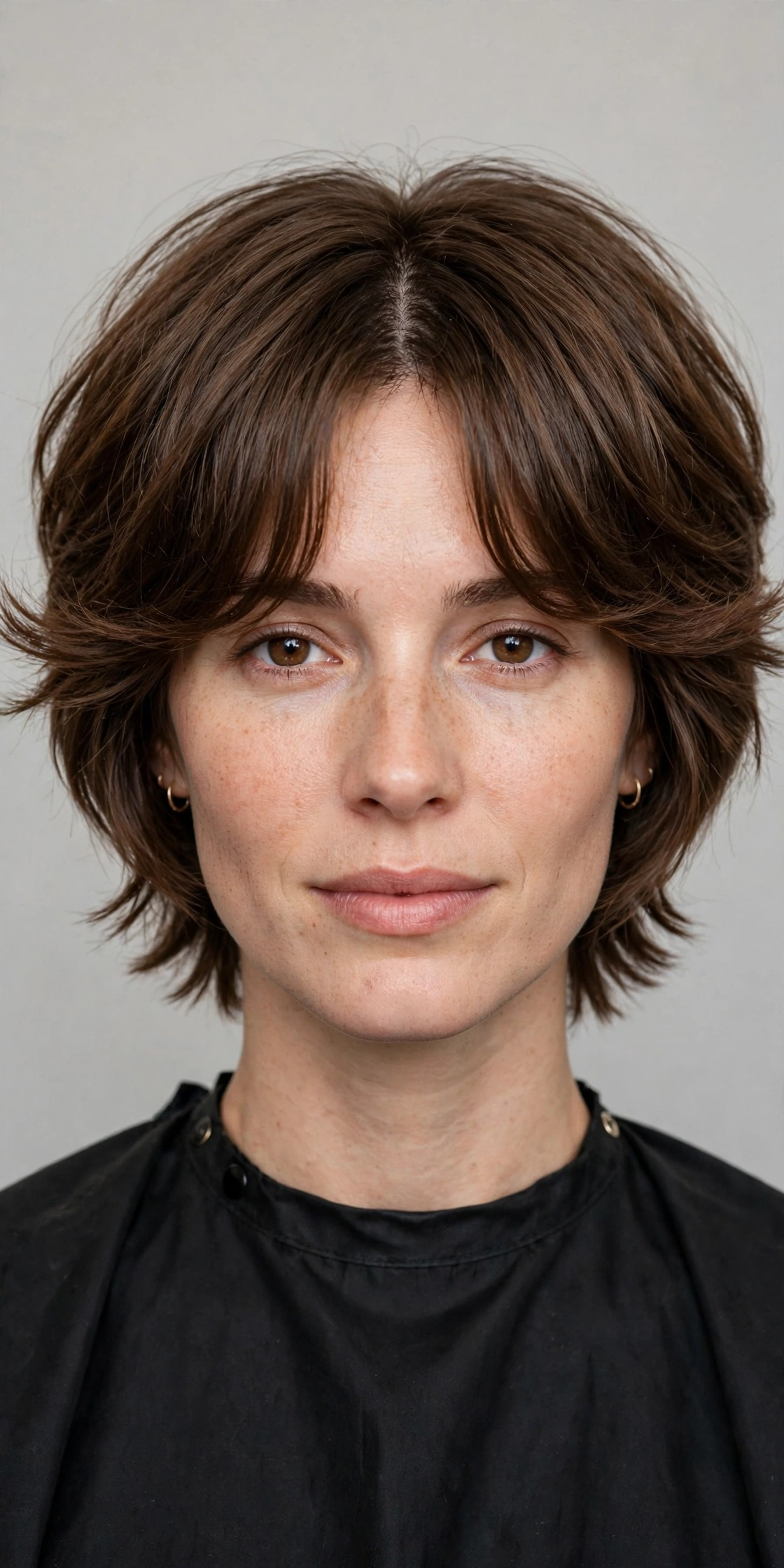
Curtain bangs change a bixie completely: a centre-parted fringe that opens on either side of the forehead draws the eye to the cheekbones and makes the whole cut feel softer and more face-framing. This version suits oval, heart and long faces best, and works on straight or wavy hair of medium density. If you have a very round face, keep the curtain pieces longer, ending at the cheekbones rather than the brows, so they lengthen rather than widen the face.
Maintenance is low to medium. The bangs themselves need a trim every three to four weeks if you want them to stay at brow level, though many people let them grow into face-framing layers between appointments. Style them by blow-drying the fringe forward with a round brush, then splitting it down the middle and flicking each side outward. Ask for a bixie with curtain bangs cut to open from the centre, longest at the cheekbones, with a tapered nape underneath.
7. The Bixie with Wispy Bangs
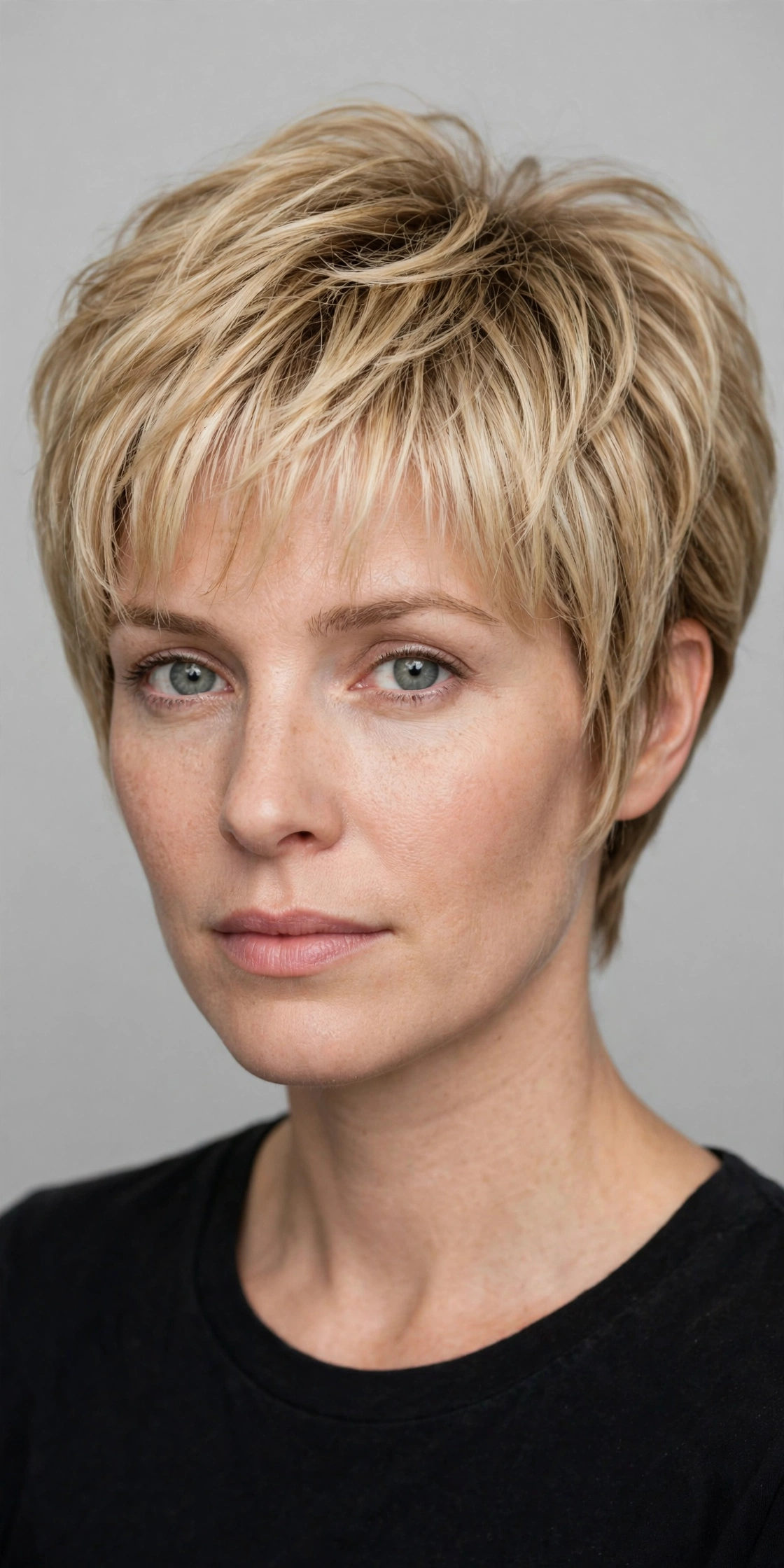
Wispy bangs are the gentle option: a light, feathery, see-through fringe that softens the forehead without hiding it. Paired with a textured bixie, they suit oval, heart and long faces, and they are a good first fringe if you have never had bangs before, because they grow out gracefully and can be swept to the side on lazy days. They work best on fine to medium, straight or slightly wavy hair; very thick hair needs the fringe thinned so it does not sit as a solid block.
Styling takes about a minute: blow-dry the fringe forward with your fingers, or let it air-dry and separate the pieces with a tiny amount of texture paste. The fringe will need a quick trim every three to four weeks to stay wispy rather than heavy. Ask for a bixie with a wispy, point-cut fringe that sits just above the brows, plus a layered crown and tapered nape.
8. The Bixie with Blunt Micro Bangs

Blunt micro bangs are the boldest fringe you can pair with a bixie: a short, straight fringe cut well above the eyebrows, set against choppy, textured sides. The contrast is the whole point, and it suits oval, heart and long faces with strong brows and cheekbones. It is best on straight, medium-density hair, because curls and waves will not hold a crisp blunt line without daily straightening.
This is a higher-maintenance bixie. Micro bangs need trimming every two to three weeks to keep their length, and they need a quick flat-iron pass most mornings to stay straight. If that sounds like too much, this is not the version for you — and that is useful to know before the cut. Ask for a bixie with a blunt micro fringe cut straight across above the brows, textured layers through the sides, and a tapered nape.
9. The Side-Swept Bixie
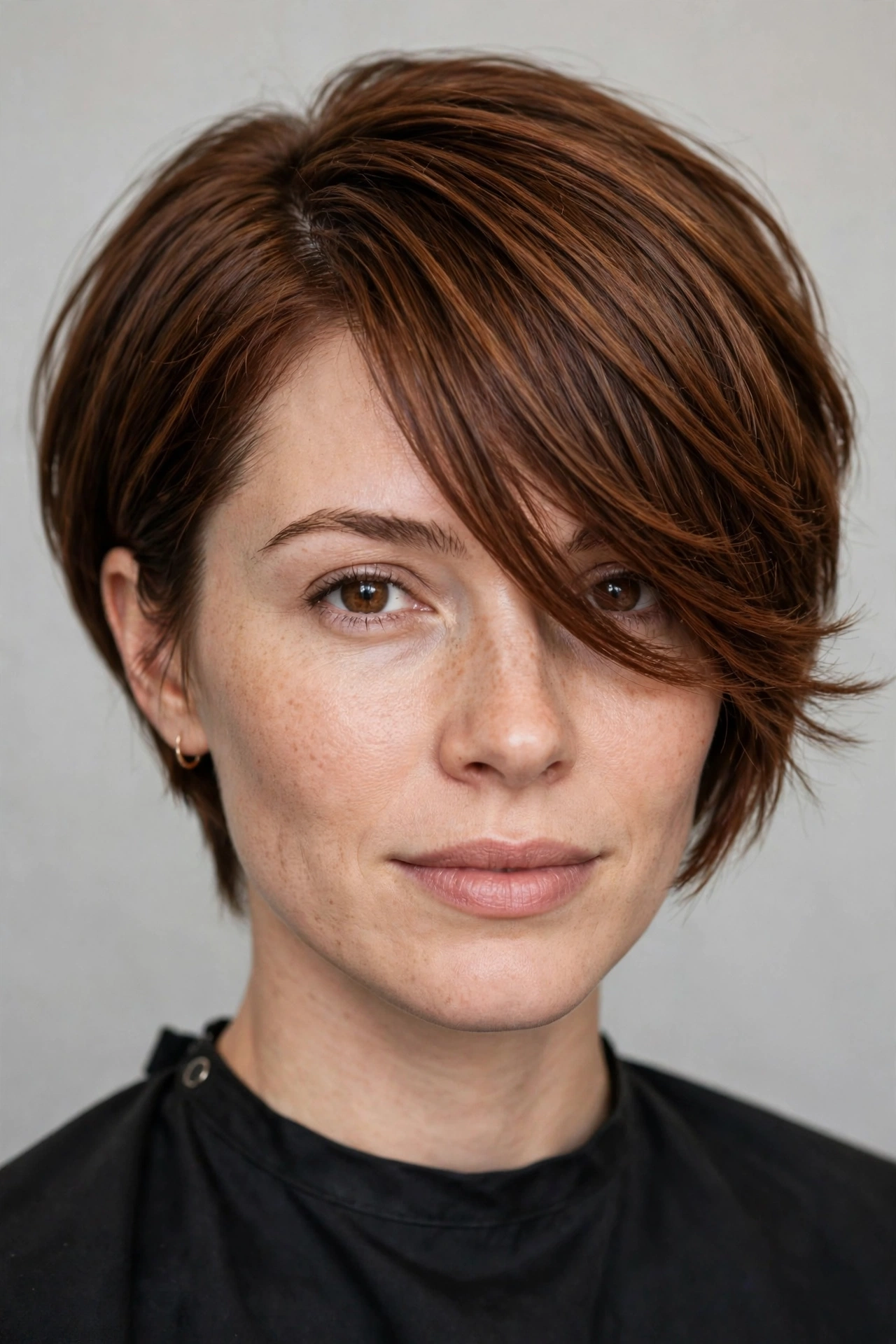
A deep side part and a long fringe swept across the forehead give this bixie instant drama and asymmetry without an asymmetric cut. It suits round, square and heart faces particularly well, because the diagonal line across the forehead breaks up symmetry and draws attention to the eyes. It works on straight, wavy and thick hair, and the longer fringe gives you something to play with — sweep it, pin it, or let it fall forward.
Maintenance is low. The fringe needs a trim every four to six weeks to stay out of your eyes, and styling is mostly about the part: blow-dry the fringe in the direction you want it to fall, then set it with a light-hold spray. If your hair naturally parts in the middle, it may take a week of training the part to the side. Ask for a bixie with a deep side part, a long side-swept fringe that ends at the cheekbone, and a tapered nape.
10. The Asymmetric Bixie

In an asymmetric bixie, one side of the cut is deliberately longer than the other — often chin-skimming on one side and ear-length on the other. The imbalance makes the cut look modern and intentional, and it suits oval, heart and square faces, especially if you like wearing one side tucked behind the ear to show off the difference. It works best on straight or slightly wavy hair, where the length difference reads clearly rather than getting lost in curl.
Styling is simple but the cut itself needs commitment: the shorter side grows out faster in appearance, so book trims every five to six weeks to keep the asymmetry sharp. Blow-dry the longer side smooth so the contrast stays visible, and use a little serum on the ends. Ask for an asymmetric bixie with a clear length difference between the sides — agree the exact lengths with your stylist before the first cut — and a tapered nape.
11. The Undercut Bixie

An undercut bixie hides a closely clipped section underneath longer layers on top, so you can show it off or cover it depending on how you part and tuck your hair. It is the edgiest bixie on this list, and it suits oval, heart and square faces and medium to thick hair — the undercut removes bulk exactly where thick hair tends to puff out. It is also a practical choice if you run hot or wear your hair up often, because the clipped section keeps the nape cool.
Maintenance is the trade-off: the undercut needs re-clipping every three to four weeks or it grows into a fuzzy, uneven layer. The top layers, though, can go six to eight weeks between trims. Style by blow-drying the top forward or to one side so the undercut peeks out, and use a matte paste for texture. Ask for a bixie with a hidden undercut on one side or at the nape, longer textured layers over the top, and a clear plan for how often you will come back for the clipper work.
12. The Shaggy Bixie
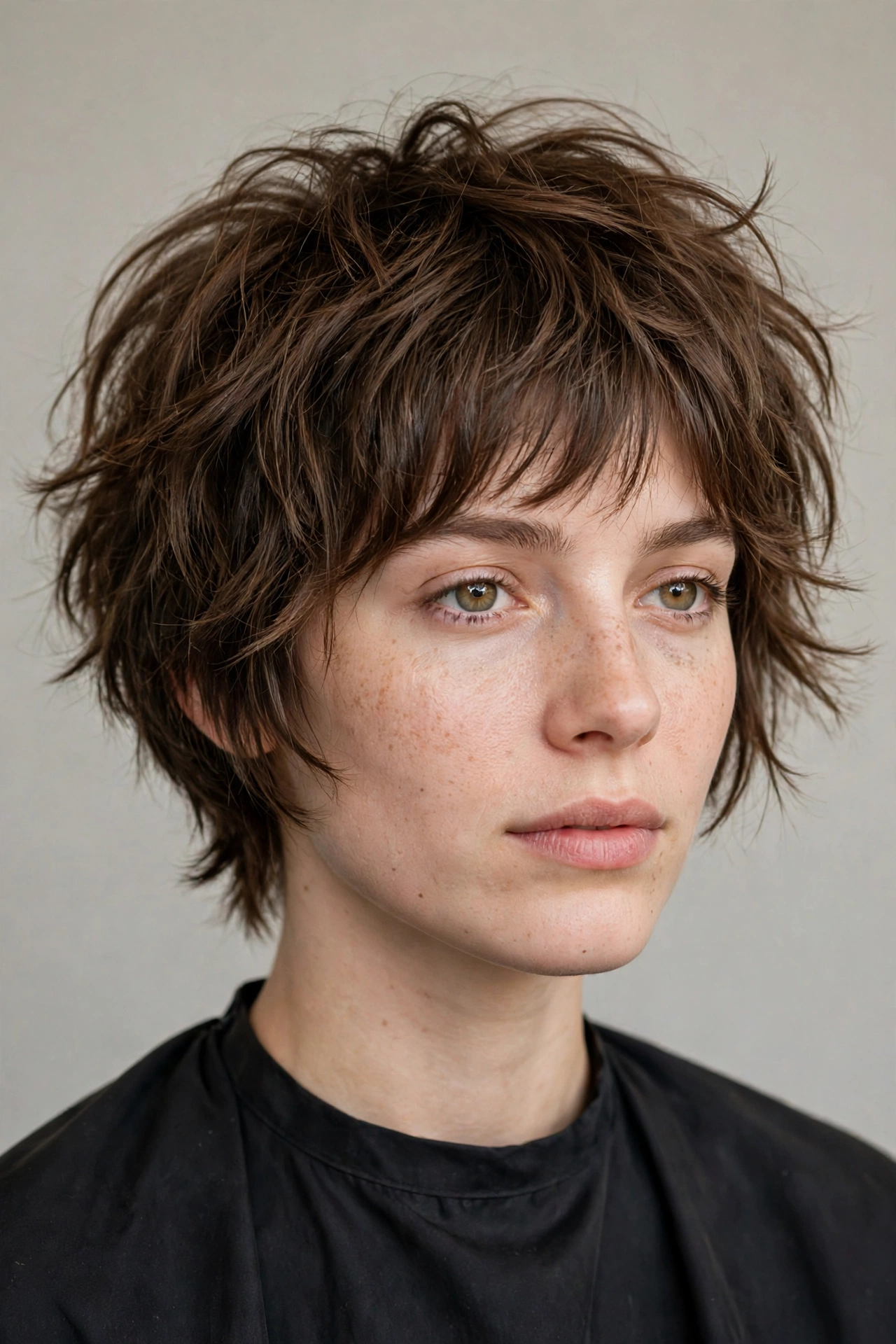
The shaggy bixie borrows from the shag: disconnected layers, flicked-out ends and a deliberately messy outline, but kept short enough that it stays a bixie rather than growing into a wolf cut. It suits wavy and straight hair with medium density, and oval, round and heart faces, because the flicked layers add movement around the face without adding weight. If your hair is very fine, the shaggy layers can make it look thinner, so ask for fewer, longer layers in that case.
This is a wash-and-go cut in the best sense. Work mousse or texture spray through damp hair, scrunch, and let it dry naturally — trying to smooth a shaggy bixie defeats the purpose. Trims every seven to eight weeks keep the flicked ends from turning ragged. Ask for a shaggy bixie with disconnected, point-cut layers, flicked-out ends, and a tapered nape, and tell your stylist you want to keep the messy finish.
13. The Feathered Bixie
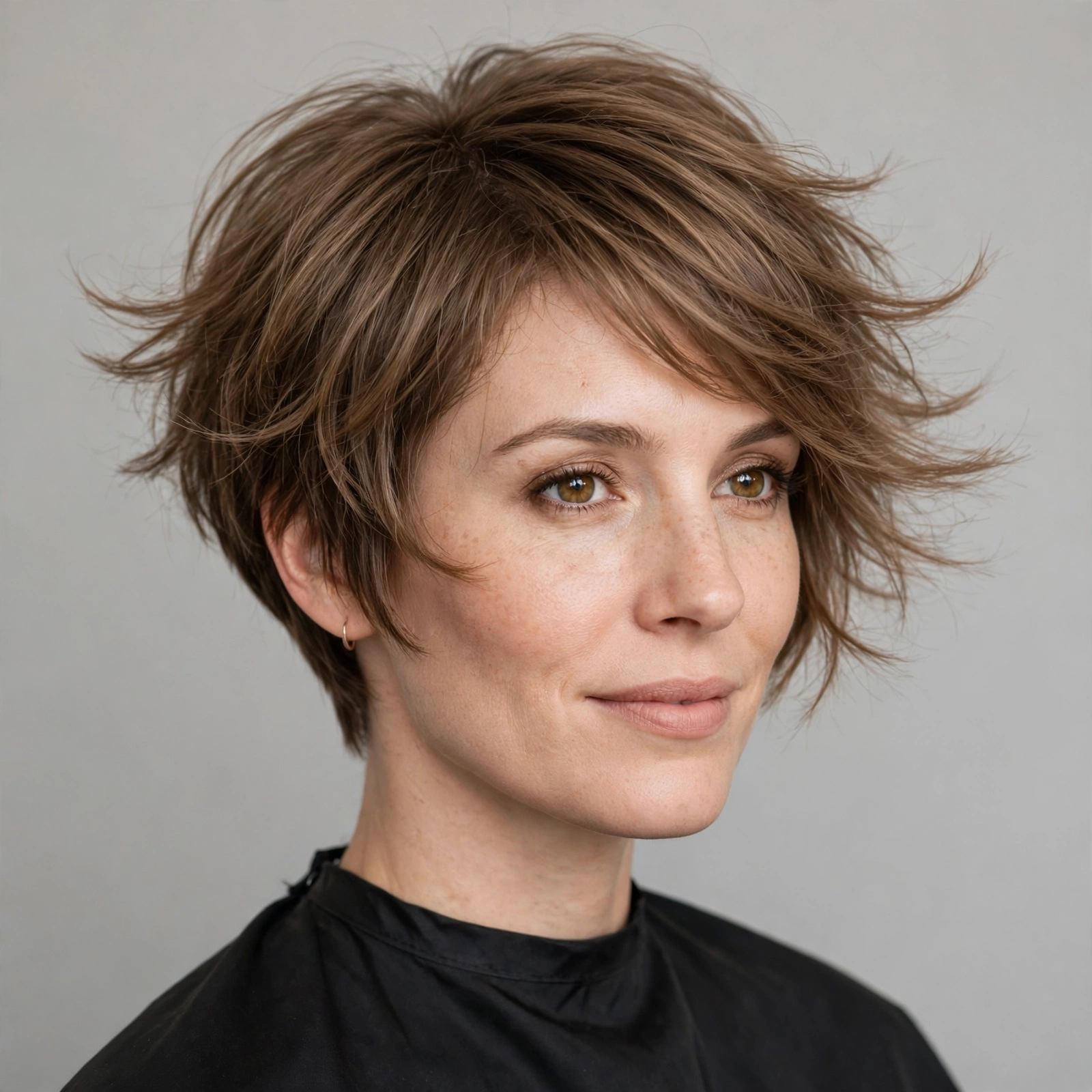
Feathering is a cutting technique where the ends are sliced so they fall in soft, airy wisps that flick away from the face, and on a bixie it creates a light, almost floating outline. It suits fine to medium, straight or slightly wavy hair, and oval, heart and long faces, because the feathered pieces open up the face instead of closing it in. It is a lovely option if you want a short cut that still feels soft and feminine rather than sharp.
Styling is light: blow-dry with a round brush, turning the brush outward at the ends to encourage the feathered flick, and finish with a light-hold spray. Heavy products will weigh the feathers down. Trims every six weeks keep the feathered ends from splitting into a blunt line. Ask for a feathered bixie with sliced, feathered layers around the face, a layered crown and a tapered nape.
14. The Tapered-Nape Bixie
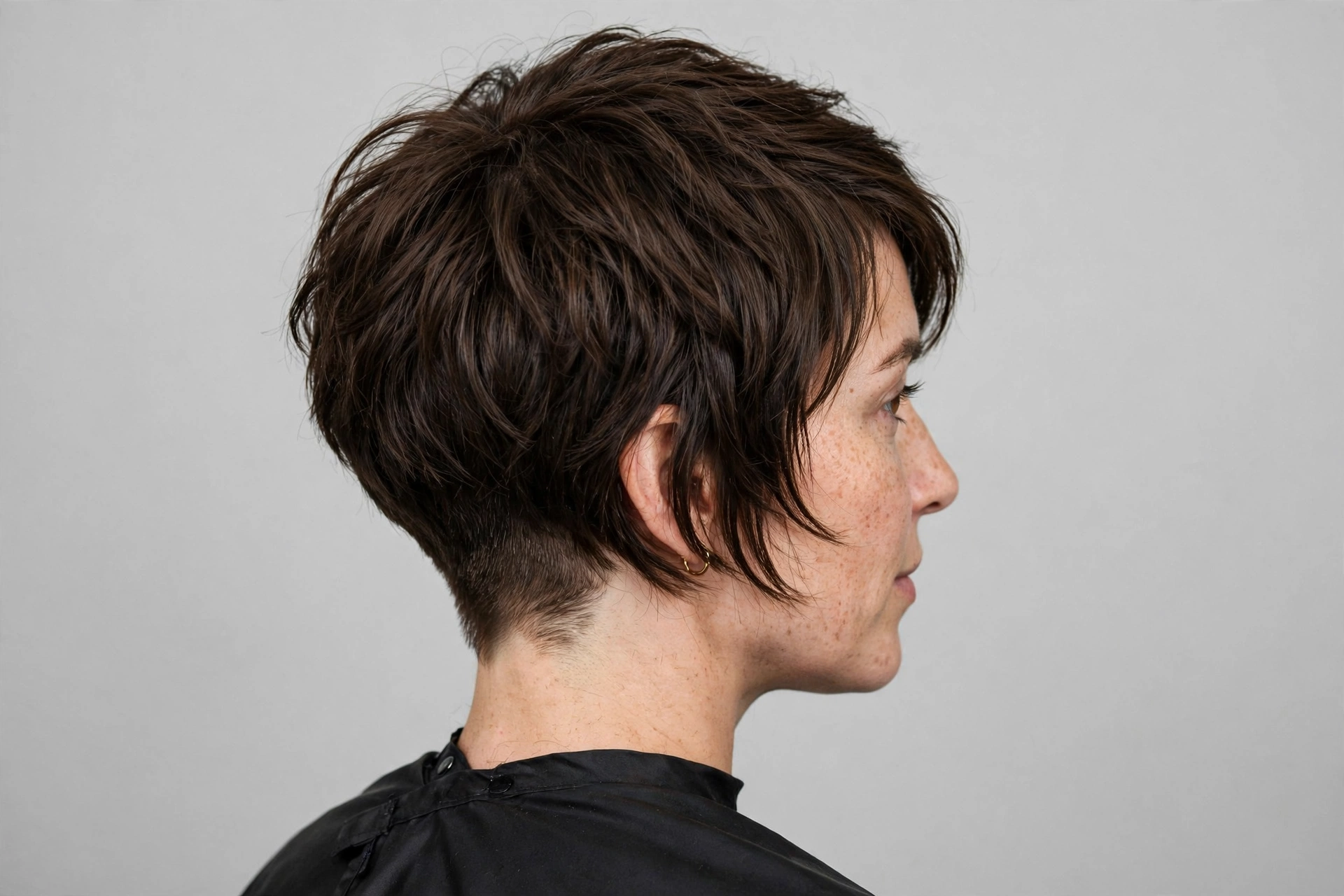
Every bixie has some kind of nape, but this version makes the taper the feature: the hair at the back of the neck is cut close and graduated upward into longer layers, giving a clean, sculpted neckline that looks neat from every angle. It suits all face shapes, because the face-framing front does the flattering work while the nape does the tidying, and it works on straight, wavy and thick hair. It is also the bixie that grows out most gracefully, since the taper softens rather than collapsing.
The catch is upkeep at the back: the taper needs a tidy-up every four to five weeks or the neckline starts to look fuzzy, especially if your hair grows fast. Day to day, though, it is easy — the shape is built into the cut, so a rough-dry and a little texture cream are enough. Ask for a bixie with a closely tapered nape that graduates into longer crown layers, and front pieces long enough to tuck behind the ears.
15. The Voluminous Crown Bixie

If your hair falls flat on top, this bixie builds the volume in structurally: shorter layers are stacked at the crown so the top lifts naturally, while the sides are kept closer to the head. It suits fine and medium hair, oval, long and heart faces, and anyone whose main complaint about short hair is that it goes limp by lunchtime. Thick hair can wear it too, but the crown layers need thinning or the volume becomes width.
Styling is where this cut earns its keep. Blow-dry the crown upward with a round brush, or use a root-lifting spray and backcomb very gently at the roots, then smooth the top layer over. A volumising mousse on damp hair helps the lift last. Trims every six weeks keep the stacked layers from growing heavy. Ask for a bixie with stacked, shorter layers at the crown for lift, closer sides, and a tapered nape.
16. The Fine-Hair Bixie
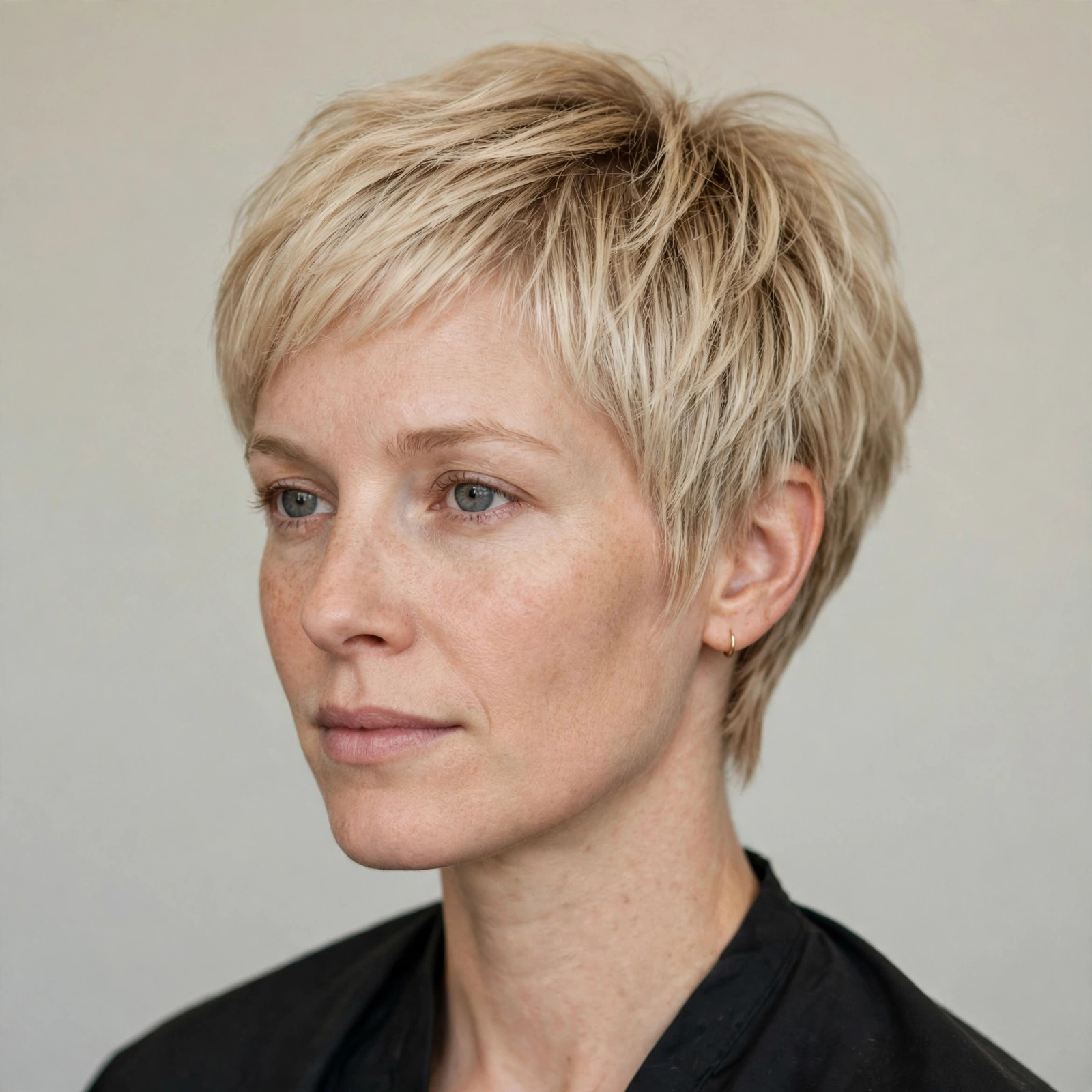
Fine hair is often told to avoid layers, but the right bixie proves the opposite: short, stacked layers at the back and crown create the illusion of density, while piecey ends stop the cut from looking like a helmet. This version suits oval, heart and square faces and fine, straight or slightly wavy hair. The key is keeping the layers short and close together rather than long and disconnected, which would expose how little hair there is.
Maintenance is low, but product choice matters more than usual. Use a lightweight volumising mousse and avoid heavy oils and creams, which flatten fine hair within hours. A trim every six weeks keeps the stacked shape crisp. Ask for a bixie designed for fine hair: stacked layers at the back and crown, a tapered nape, and textured ends — and specifically ask your stylist not to thin the hair further.
17. The Thick-Hair Bixie
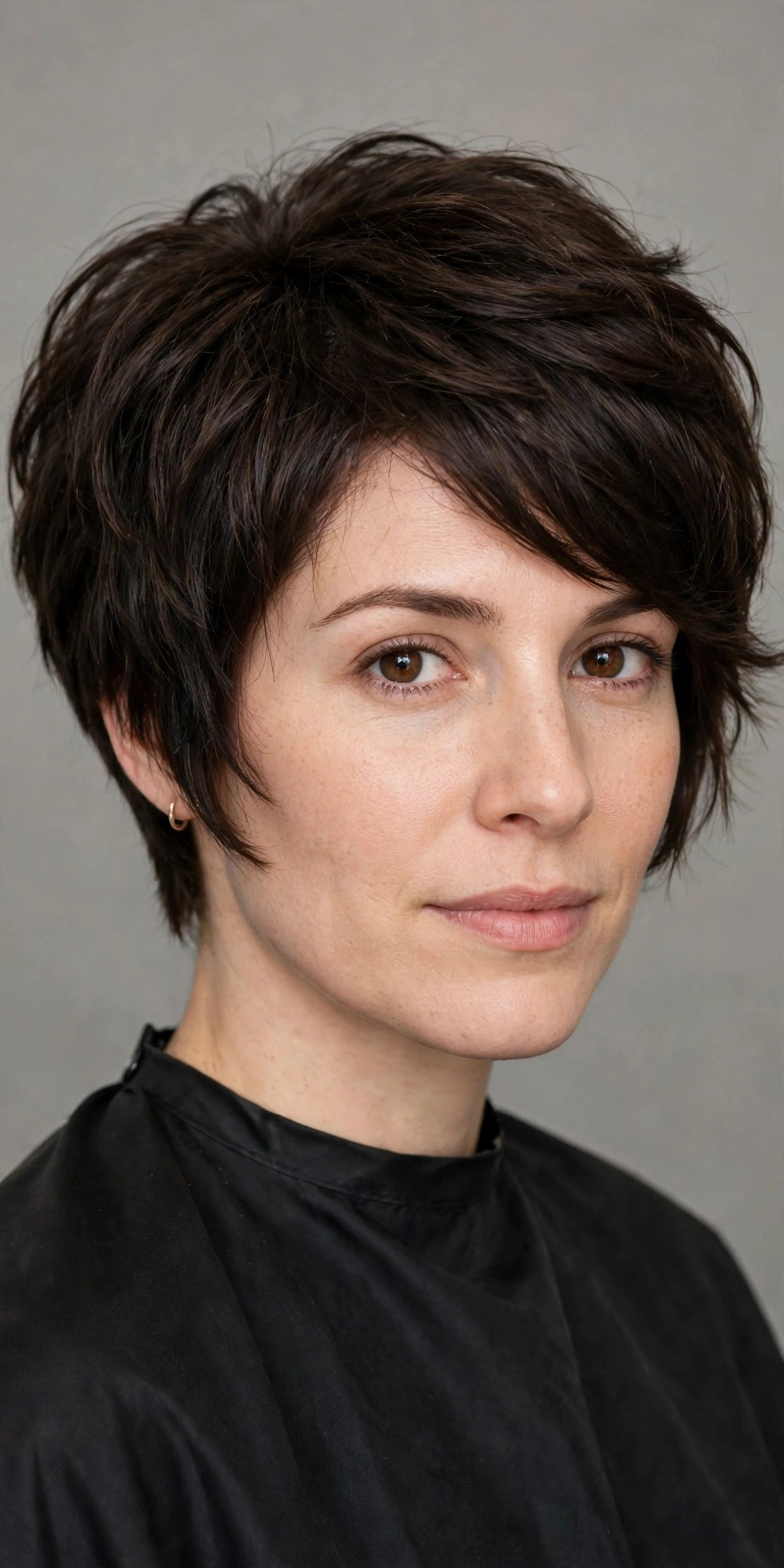
Thick hair can make a bixie look like a triangle if the bulk is not dealt with, so this version uses internal, hidden layers to remove weight without shortening the outside shape. The result is a bixie that moves and lies close to the head instead of puffing outward. It suits oval, round and square faces and thick, straight or wavy hair, and it is the version to ask for if previous short cuts have left you feeling like your head looks bigger than it is.
Styling is easier than most people expect once the weight is out: a smoothing cream on damp hair, a quick blow-dry, and the cut mostly behaves. The internal layers need refreshing every six to eight weeks, or the bulk creeps back. Ask for a bixie with internal thinning layers to remove bulk, a tapered nape, and longer face-framing pieces — and be clear that you want the weight out but the length kept.
18. The Jaw-Length Bixie
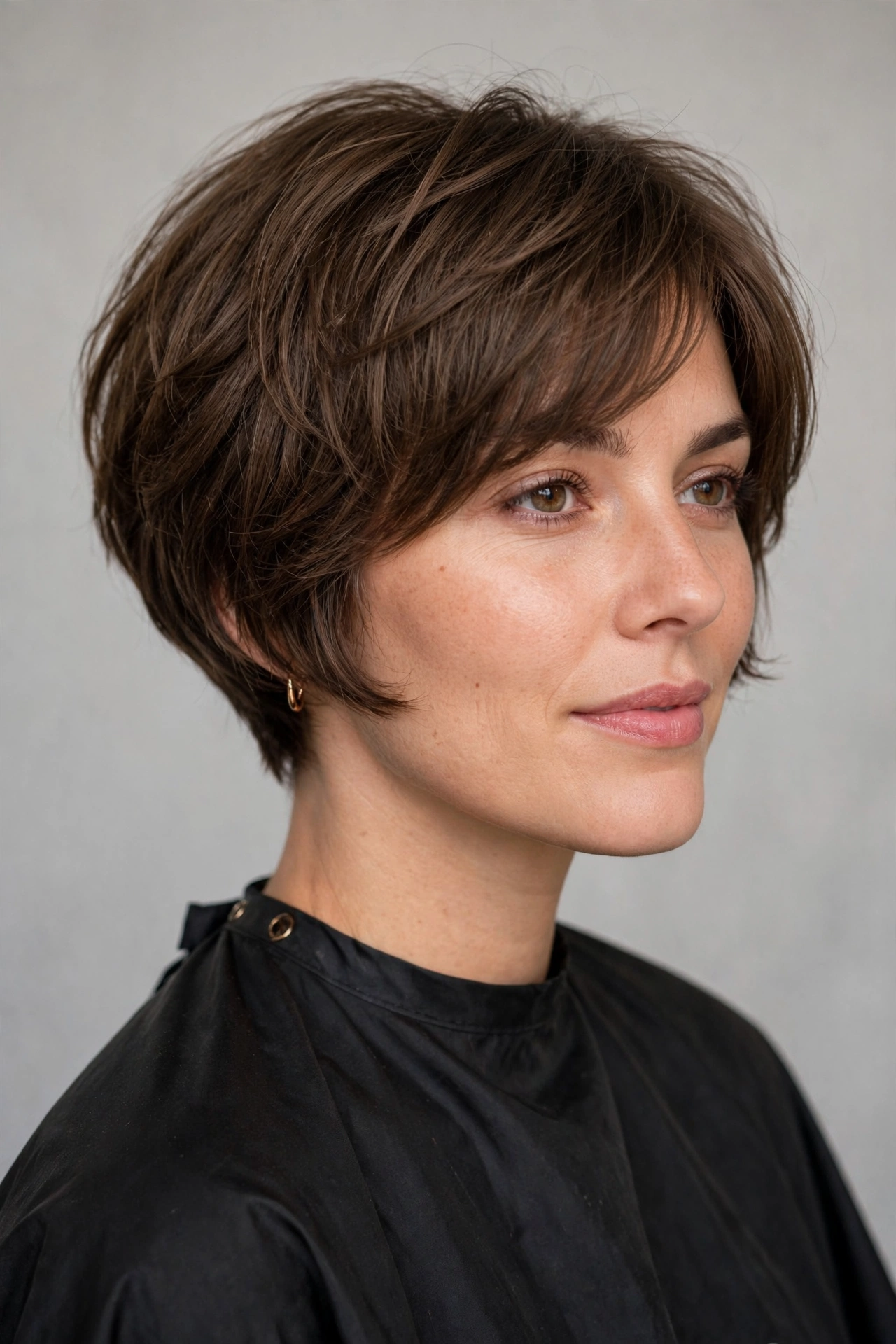
The jaw-length bixie sits at the longest end of the bixie range: the front pieces end right at the jawline, while the back stays short and tapered like a pixie. It is the safest bixie for anyone nervous about going short, and it suits round, oval and heart faces, because the jaw-length pieces frame the face without hiding it. It works on straight, wavy and medium-density hair, and it is one of the few bixies that can be pulled into a tiny half-up style.
Maintenance is genuinely low, with trims every seven to eight weeks. Styling options are wide: wear it smooth, tuck it, wave it, or pin one side back. The main thing to watch is the back growing out — once the nape passes the jaw-length front, the cut starts reading as a bob. Ask for a jaw-length bixie with a short tapered back, layered crown, and front pieces ending exactly at the jaw.
19. The Ear-Length Pixie-Leaning Bixie
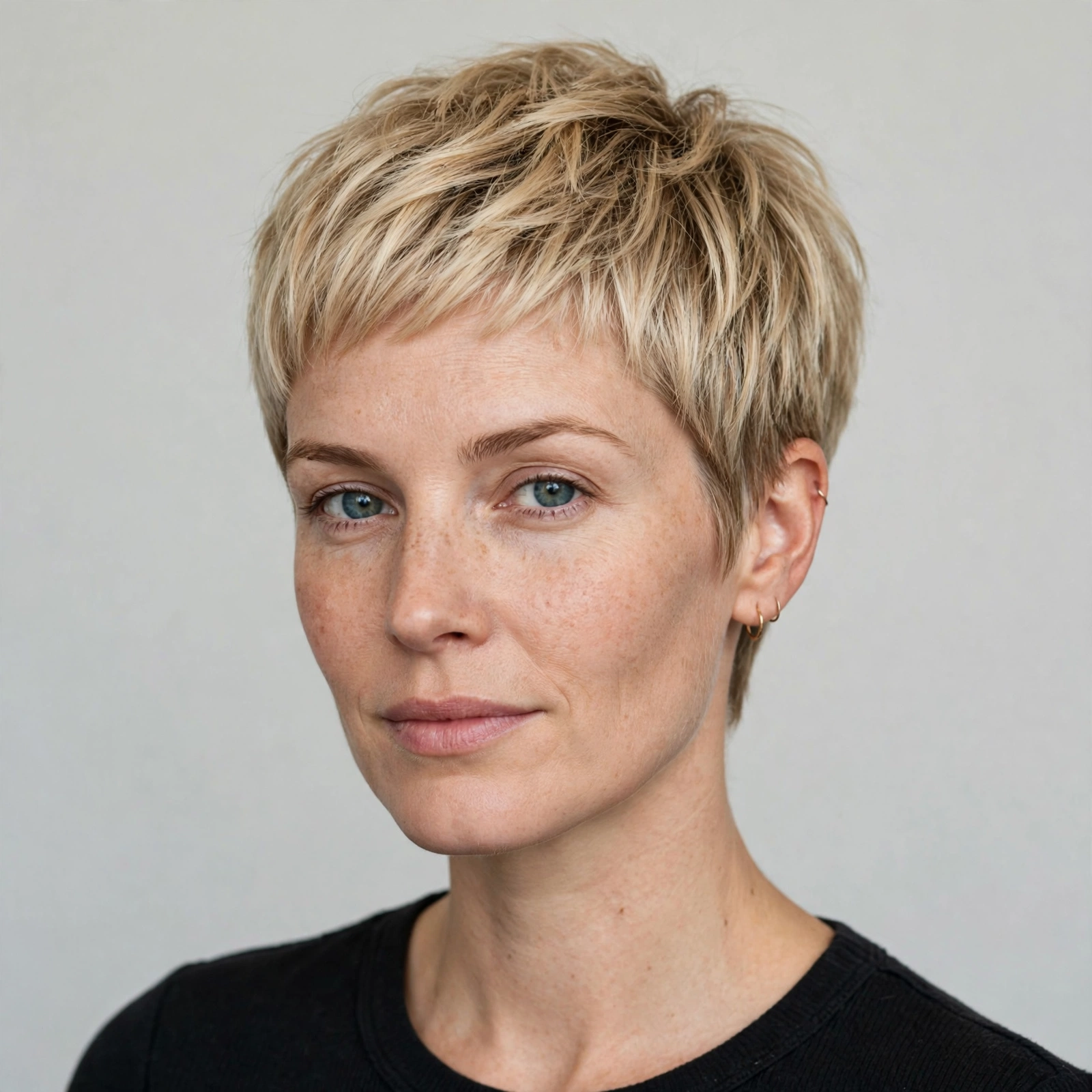
This is the bixie for people who almost want a pixie but are not quite ready: cropped close around the ears, with longer textured pieces on top that keep it from being a true pixie. It suits oval, heart and square faces, and fine to medium, straight or wavy hair. Because so much hair is removed around the ears and neck, it shows off earrings, glasses and bone structure beautifully — and it also means there is nowhere to hide a bad cut, so choose your stylist well.
Maintenance is higher than average: the close sides need a tidy every four to five weeks. Styling, though, is fast — a dab of paste through the top layers, a quick tousle, and you are done. Ask for a pixie-leaning bixie with close-cropped sides around the ears, longer textured layers on top, and a tapered nape, and agree how much top length you want to keep.
20. The Chin-Length Bob-Leaning Bixie
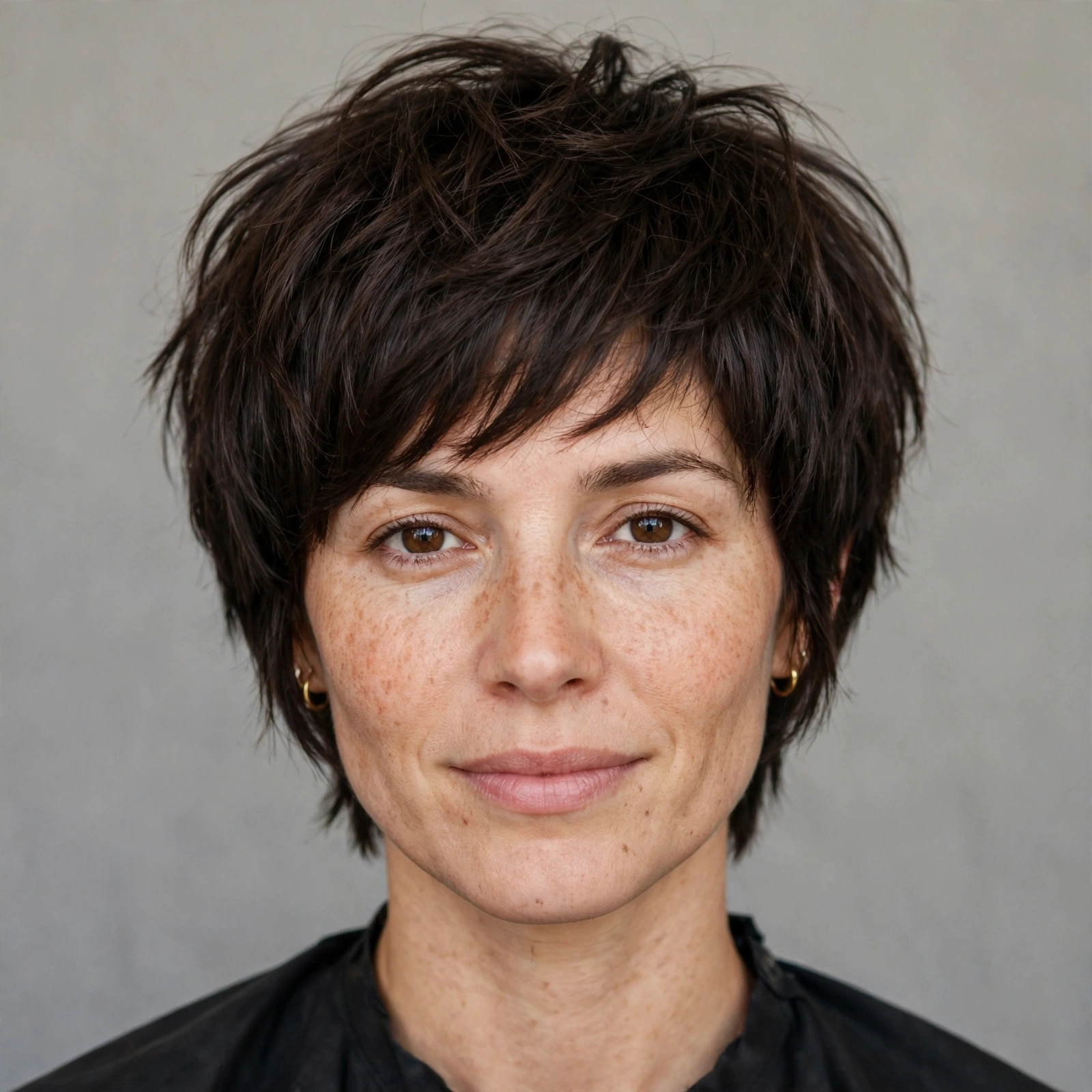
At the other end of the range, the bob-leaning bixie keeps chin-length sides like a bob but adds pixie-style choppy layers on top and a tapered nape underneath. It suits oval, round and heart faces and straight, wavy or thick hair, and it is the best bixie for anyone growing out a pixie or cutting down from a bob — it meets both journeys in the middle. The chin length also means it can be tucked, pinned and accessorised more than shorter bixies.
Trims every six to eight weeks keep the balance between the bob length and the pixie layers. Style it smooth for a polished look, or scrunch texture cream through the top layers for a choppier finish — the cut supports both. Ask for a chin-length bixie with pixie layers through the crown, a tapered nape underneath, and clean chin-length sides.
21. The Face-Framing Highlight Bixie

Sometimes the cut is only half the story. This bixie pairs a textured, tapered cut with lighter highlights placed only on the face-framing pieces, so the eye is drawn to the cheekbones and eyes while the darker base keeps the shape grounded. It suits all face shapes, because the highlight placement can be adjusted — higher and brighter for oval faces, lower and softer for round faces — and it works on medium to thick, straight or wavy hair where the colour contrast shows clearly.
Maintenance splits in two: the cut needs a trim every six to eight weeks, and the highlights need a refresh every eight to twelve weeks, or the face-framing pieces grow out with an obvious line. Use a colour-safe shampoo and a gloss treatment between appointments to keep the highlights from going brassy. Ask for a textured bixie with face-framing highlights two to three shades lighter than your base, concentrated around the forehead and cheekbones.
22. The Copper Bixie
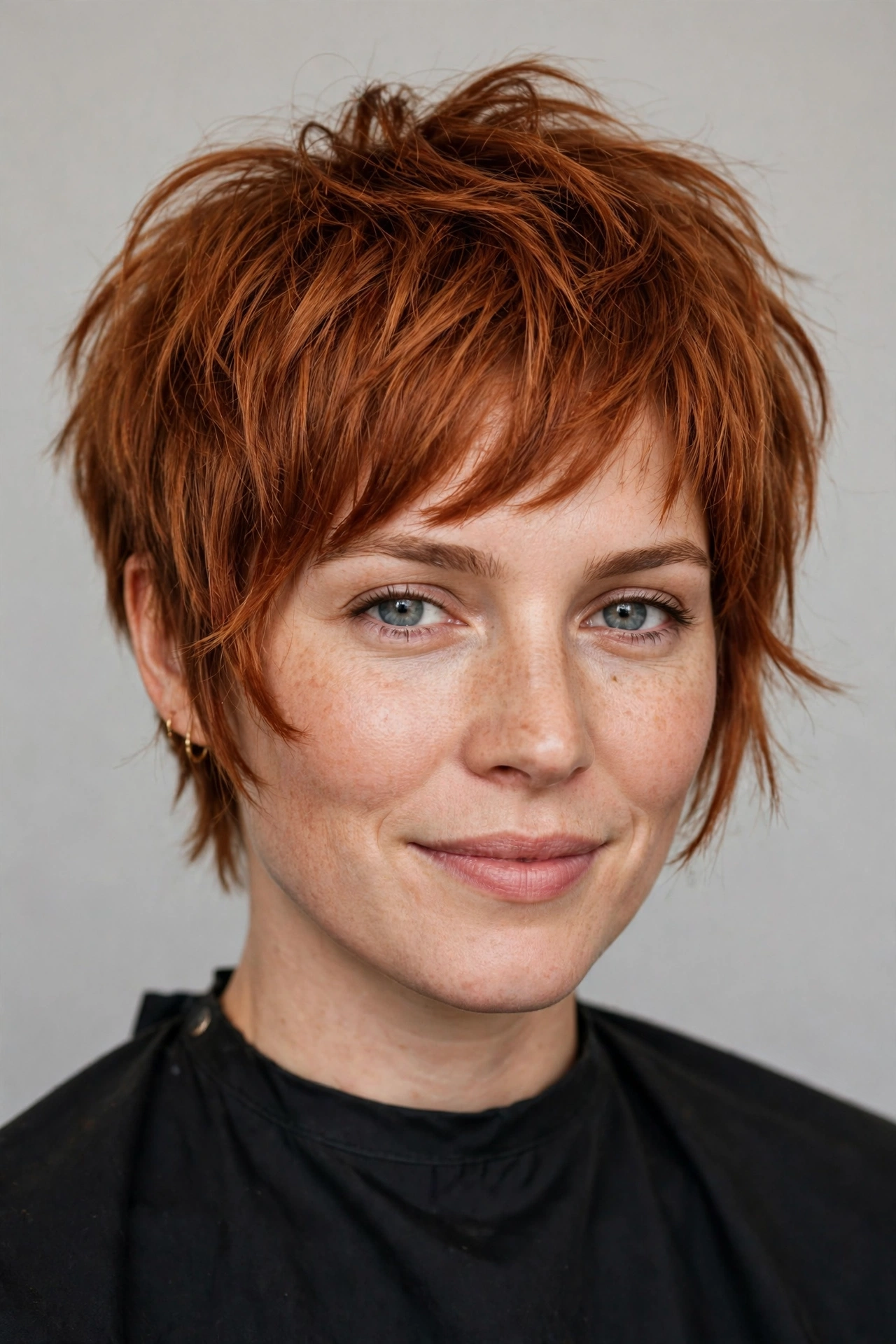
Copper and a bixie are a natural pairing: the warm, reflective colour makes every choppy layer and flicked end visible, so the texture of the cut shows up even in a photograph. It suits fair to medium skin tones with warm undertones, and oval, heart and square faces, and it works on straight, wavy and medium-density hair. If your skin is very cool-toned, a deeper, more auburn copper will usually suit you better than a bright orange-copper.
Copper is the highest-maintenance colour on this list: it fades faster than any other shade, so expect a gloss or toner refresh every four to six weeks and a colour-safe, sulfate-free wash routine at home. The cut itself is low-maintenance, with trims every six to eight weeks. Ask for a choppy, textured bixie in a warm copper shade, and ask your colourist how they plan to keep the copper from washing out between visits.
23. The Platinum Blonde Bixie
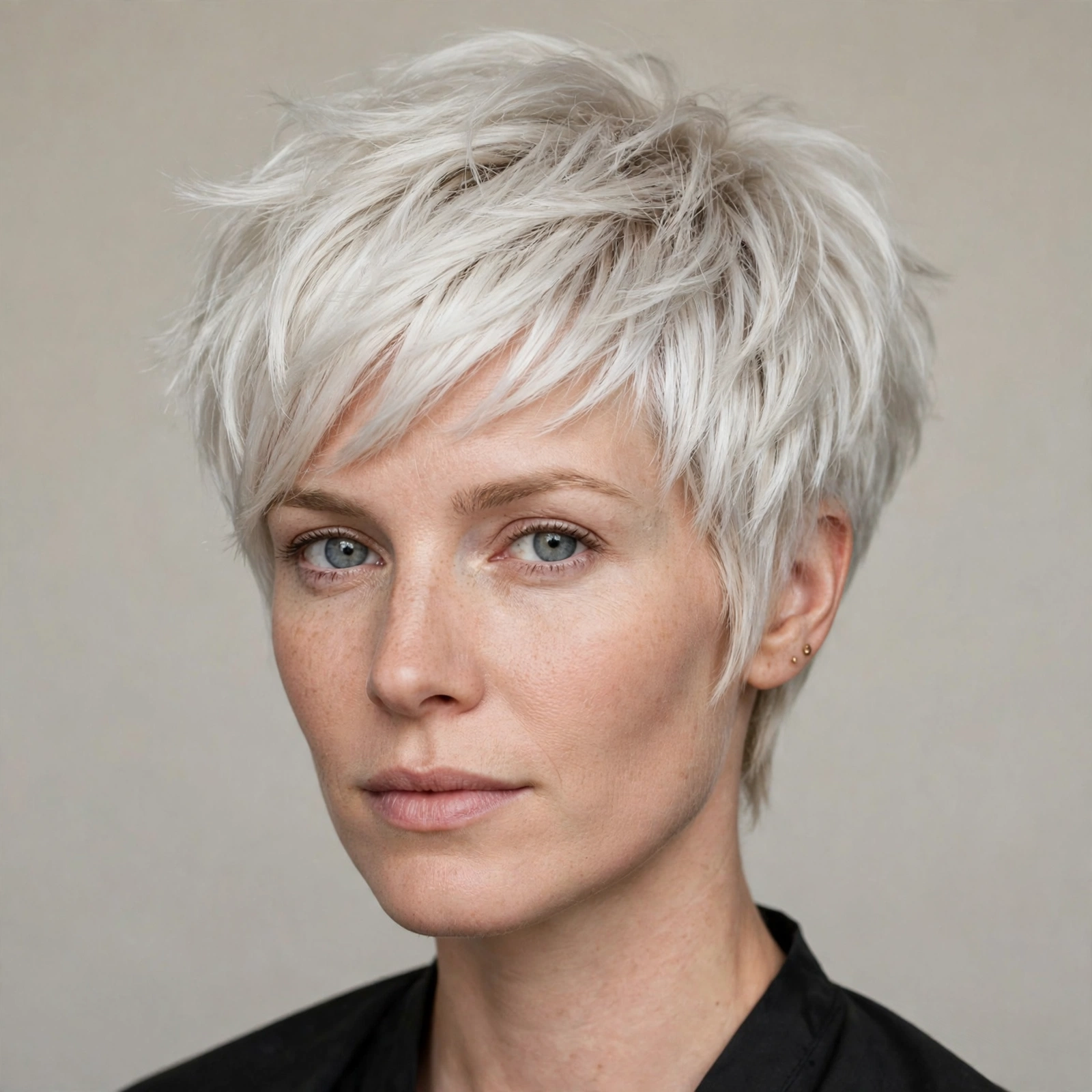
A platinum bixie is all contrast: icy, almost-white hair against a short, piecey, edgy shape. It suits oval, heart and square faces and cool skin tones, and it looks best on straight or slightly wavy hair, where the piecey layers catch the light. Because platinum requires lifting the hair to its palest level, it is best suited to hair that is already light or that has not been heavily coloured before — dark, previously coloured hair may need several sessions.
Maintenance is serious: root touch-ups every four to six weeks, purple shampoo to fight brassiness, and regular conditioning treatments, because bleached hair is more fragile and a bixie shows damage quickly at the ends. Trims every six weeks keep the fragile ends healthy. Ask for a textured bixie in platinum blonde, and have an honest conversation with your colourist about how many sessions your hair needs to get there safely.
24. The Dark Brunette Glossy Bixie

Dark brunette hair makes a bixie look expensive: the deep, glossy colour gives the cut weight and shine, and the smooth layers reflect light in a way that lighter, choppier colours cannot. It suits all skin tones and oval, heart and long faces, and it is ideal for straight or slightly wavy, medium-density hair. If your hair is naturally dark, this version is also the lowest-maintenance colour option here, because there is no root contrast to chase.
Styling is about shine: a smoothing serum on damp hair, a blow-dry with a round brush, and a gloss spray to finish. A clear gloss treatment at the salon every eight weeks keeps the colour looking rich rather than flat. Trims every six weeks keep the shape crisp. Ask for a smooth, layered bixie in a dark chocolate brunette with a glossy finish, a tapered nape, and enough front length to tuck behind the ears.
25. The Silver Grey Bixie

A silver grey bixie turns natural grey into a style statement instead of something to cover up. The soft, textured layers and tapered nape keep the cut modern, while the silver colour adds brightness around the face. It suits all face shapes and all skin tones — silver is surprisingly neutral — and it works on straight, wavy and medium-density hair. It is especially flattering if your grey is coming in unevenly, because the layered cut and a silver toner can even the tone out.
Maintenance is moderate: a silver or purple shampoo once a week keeps yellowing away, and a toner refresh every eight to ten weeks keeps the silver bright. The cut needs a trim every six to eight weeks. Style it with a light cream for softness, not heavy wax, which can dull silver hair. Ask for a textured bixie that works with your natural grey, with a silver toner to even the tone, and a tapered nape.
26. The Round-Face Flattering Bixie

This bixie is cut with one job in mind: lengthening a round face. Height at the crown draws the eye upward, longer pieces fall past the cheekbones instead of ending at them, and the sides are kept close so no extra width is added at the widest point of the face. It works on straight, wavy and medium-density hair, and it is the version to show your stylist if you have been told short hair does not suit a round face — that advice is usually about the wrong short cut, not short hair itself.
Styling should protect the vertical line: blow-dry the crown upward for lift, keep the front pieces falling forward past the cheeks, and avoid curling the sides outward, which adds width. Trims every six weeks keep the crown height and the long front pieces in proportion. Ask for a bixie with crown height, close sides, a tapered nape, and front pieces that fall below the cheekbones.
27. The Long Side-Part Bixie
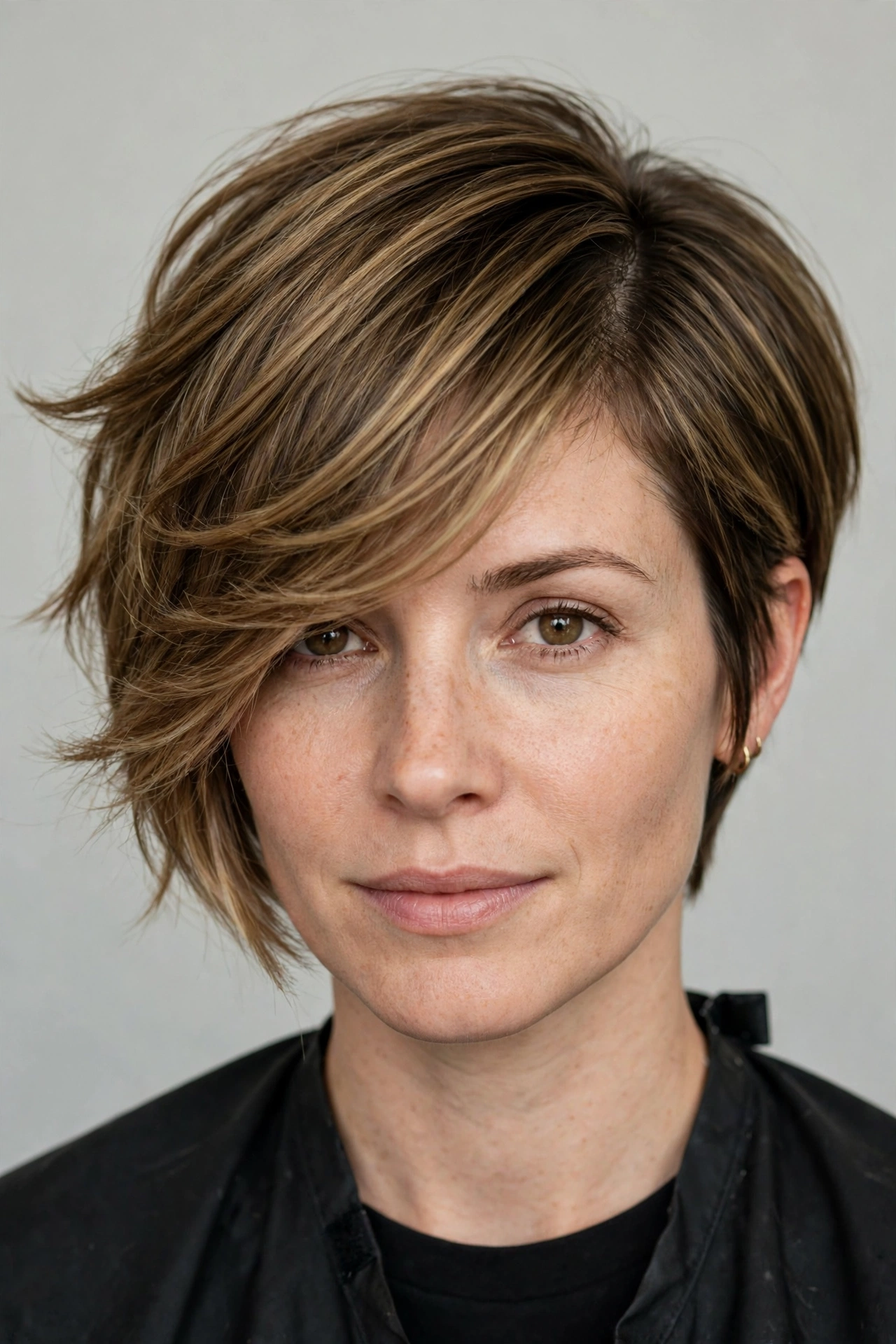
The long side-part bixie takes the side-swept idea further: the part is deep, one side is kept long enough to sweep across the whole forehead, and the opposite side is cut shorter and tapered. The result is dramatic from the front and neat from the side, and it suits oval, heart and square faces and straight or slightly wavy, medium-density hair. It is a good choice if you like a statement cut but still want the option of sweeping everything to one side on a bad hair day.
Maintenance is low to medium: the long side needs a trim every five to six weeks to stay out of your eyes, and the part needs to be blow-dried into place while the hair is wet, or it will drift back to the middle. A light-hold spray keeps the sweep in place without stiffness. Ask for a bixie with a deep side part, a long swept section on one side, a shorter tapered opposite side, and a tapered nape.
28. The Messy Bedhead Bixie

The bedhead bixie is the cut for people who hate looking "done": tousled texture, separated ends and a deliberately undone outline that looks like you just woke up with great hair. It suits oval, heart and square faces and straight to wavy, medium-density hair — very fine hair can look thinner in this style, and very curly hair will read as a curly bixie rather than a bedhead one. The trick is that the mess is cut in, not just styled in, with short layers that fall in different directions on their own.
Styling is almost nothing: a little texture spray on dry hair, a quick scrunch, and stop. The mistake people make with this cut is over-styling it. Trims every six to seven weeks keep the layers messy rather than ragged. Ask for a bixie with short, uneven layers designed to fall tousled, a tapered nape, and a finish that is meant to look undone.
29. The Wet-Look Slicked Bixie

The wet-look bixie is a styling version rather than a different cut: a textured bixie is slicked back and to the side with gel for a high-shine, evening-ready finish. It suits oval, heart and square faces and straight or slightly wavy hair, and it is the best bixie for events, because it transforms a daytime cut into something that looks deliberately dressed up. It also shows off the cut's shape — the tapered nape and layered crown become visible in a way that tousled styling hides.
This is an occasion style, not an everyday one: work gel through damp hair, comb it into place, and let it set without touching it. Too much gel looks greasy rather than glossy, so start with less than you think you need. The underlying cut needs its usual trim every six to eight weeks. Ask for a textured bixie that can be slicked back, with a tapered nape and enough top length to comb to the side.
30. The Grown-Out Bixie

Every bixie becomes this one eventually, and that is a selling point, not a problem: as a bixie grows out, the layers soften, the front reaches the jaw, and the shape relaxes into something between a bixie and a short bob. It suits all face shapes, because the extra length is forgiving, and all hair types, because the grown-out layers have had time to settle into your natural texture. If you are deciding between a bixie and a bob, the grown-out stage is proof that you do not have to choose permanently.
Maintenance at this stage is about shaping, not starting over: a trim every eight to ten weeks to tidy the nape and re-establish the layers keeps it looking intentional rather than neglected. Style it as you would a short bob — smooth, wavy or tucked — and enjoy the extra styling options the length gives you. Ask your stylist for a bixie that is designed to grow out well, with a tapered nape and layered crown that will soften gracefully over two to three months.
Frequently Asked Questions
What is a bixie cut?
A bixie cut is a hybrid of a bob and a pixie: longer and softer than a pixie, but shorter, more layered and lighter than a bob. It usually has a tapered nape, layered crown and face-framing pieces around the ears and cheeks that are long enough to tuck behind the ear.
How do I know if a bixie will suit my face shape?
Most face shapes can wear a bixie because the layers and fringe can be adjusted to suit you. Oval faces suit almost every version, round faces benefit from crown height and longer front pieces, square faces suit soft face-framing layers, and long faces suit bangs or extra width at the sides. Bring photos of bixies on people with a similar face shape to your appointment.
How often does a bixie need trimming?
It depends on the version. Close-cropped sides, undercuts and micro bangs need a tidy every three to five weeks, while softer, longer bixies can go six to eight weeks, and a grown-out bixie can stretch to ten weeks. Your stylist can set a schedule based on how fast your hair grows and how sharp you want the shape to stay.
Is a bixie low maintenance?
Most bixies are low maintenance day to day — many are wash-and-go with a little texture cream — but they are not low maintenance in the salon chair. Short, layered cuts lose their shape faster than long hair, so regular trims matter more than daily styling. If you want the lowest overall effort, choose a softer, longer bixie rather than an undercut or micro-bang version.
What should I ask for at the salon?
Do not just say "bixie" and hope for the best, because stylists interpret the term differently. Bring two or three reference photos, say how short you want the nape and sides, whether you want bangs, and how much texture you like. The phrases in each section above — tapered nape, layered crown, face-framing pieces, choppy or feathered layers — give your stylist concrete details to work from.
Conclusion
The bixie works because it refuses to be just one cut: it can be sleek or shaggy, bold or soft, low-effort or high-drama, all from the same bob-pixie starting point. Pick the version that matches your hair type, your face shape and the mornings you actually live, take its "what to ask for" line to your stylist, and you will leave the salon with a short cut that still feels like you.