40 French Bob Hairstyles for 2026
Introduction
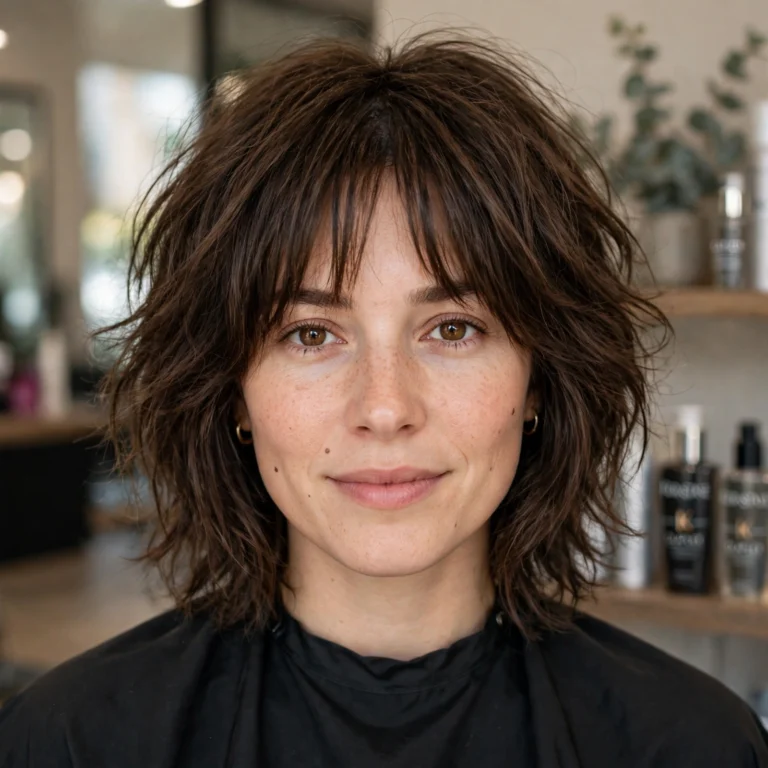
A French bob is a short haircut that usually ends at or just above the chin, with blunt or softly textured ends and a relaxed, lived-in finish. It grew out of 1920s Paris, when short hair was a bold, modern choice, and it has stayed in style because it does something few cuts do: it looks polished without looking overdone. The shape frames the jaw and cheekbones, opens up the neck, and lets your natural texture do much of the work.
The reason there are so many versions of this cut is that a few small changes completely change the result. A blunt edge reads sharp and chic, a textured edge reads soft and casual, bangs change the balance of the whole face, and an extra half inch can turn a cheekbone-grazing cut into a jaw-skimming one. This guide covers 40 distinct French bob variations, with honest notes on who each one suits, how much upkeep it really needs, and exactly what to ask for at the salon, so you can take a clear reference to your stylist instead of a vague idea.
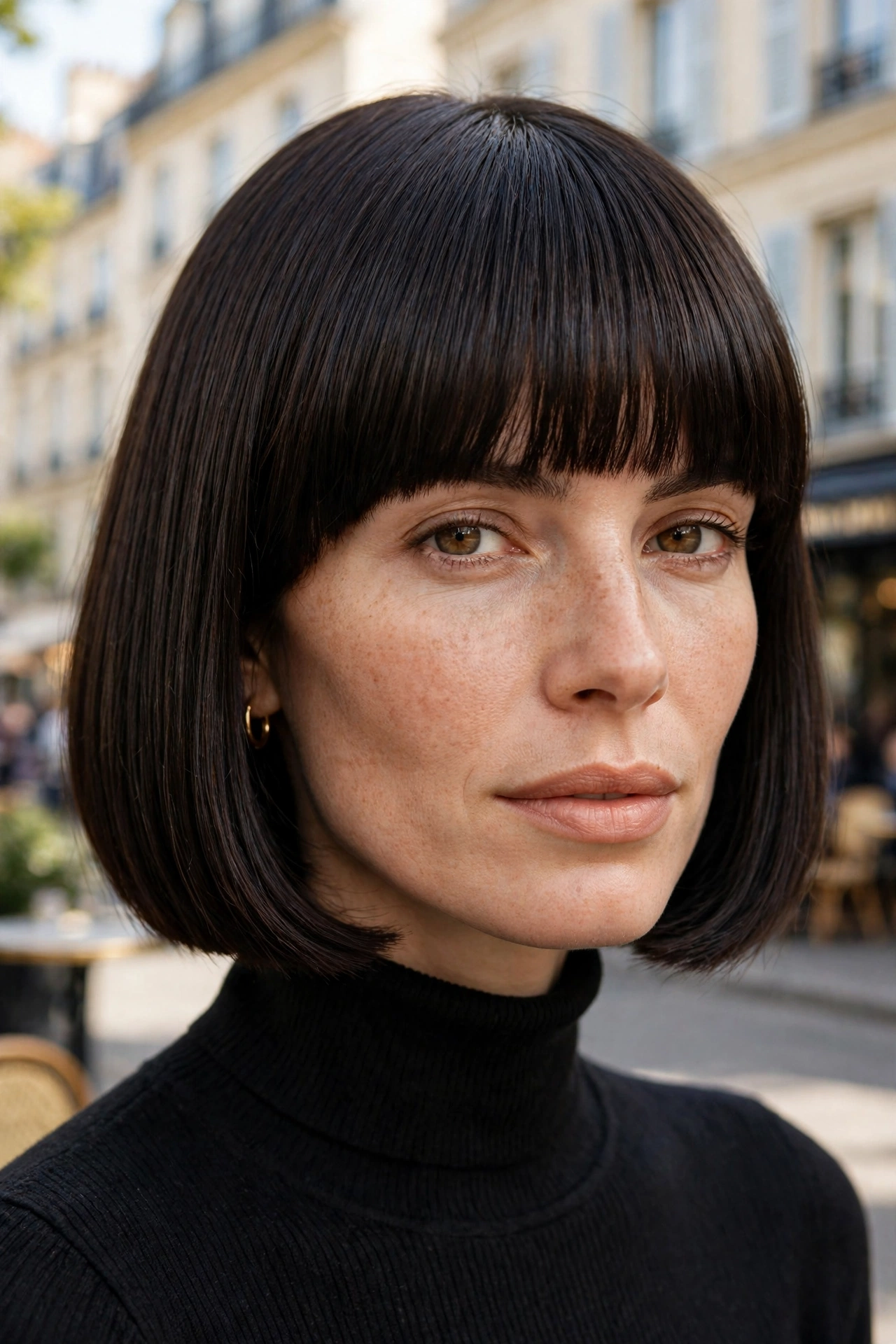
1. Classic Blunt French Bob
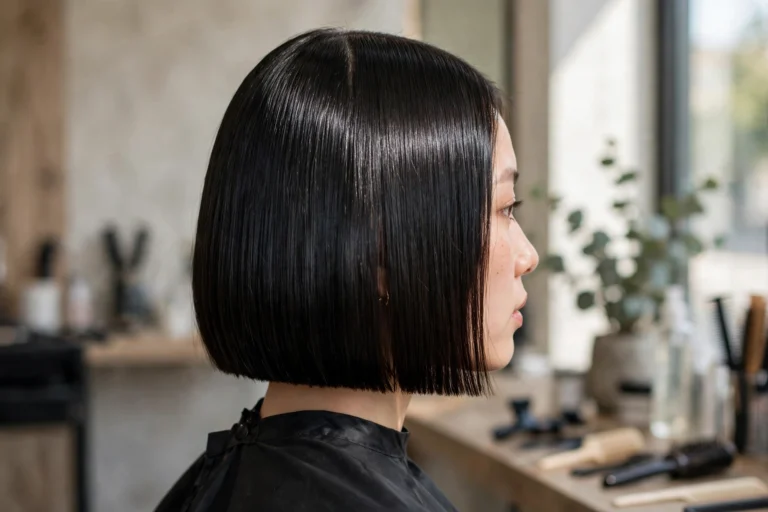
The classic blunt French bob is cut to one even length at the chin, with a clean, straight-across edge and very little layering. It suits oval, heart and square faces especially well, because the strong horizontal line draws attention to the cheekbones and jaw, and it works best on straight or slightly wavy hair with medium density. Fine hair looks noticeably thicker with this cut, since no length is thinned away at the ends.
Maintenance is low to medium: the shape itself is simple, but the blunt line shows regrowth and split ends quickly, so plan a trim every six to eight weeks. To style it, blow-dry smooth with a paddle brush, tuck the ends slightly under with a round brush or flat iron, and finish with a light shine serum rather than heavy oil. At the salon, ask for a one-length chin bob with a blunt perimeter and no layers, and show where you want the length to sit when your hair is dry.
2. Textured Tousled French Bob
The textured tousled French bob keeps the chin length of the classic cut but breaks up the ends with point cutting, so the hair falls in soft, separated pieces instead of a solid line. It is a great match for wavy hair, medium to thick density, and oval or long faces, because the airy texture stops the cut from looking heavy or boxy. It also forgives a bad hair day better than any sleek bob, which makes it ideal if you rarely heat-style.
This is a genuinely low-maintenance cut: air-drying with a little texture spray is often enough, and it grows out gracefully because there is no hard line to lose. To style it, scrunch a pea-sized amount of texture cream into damp hair, let it dry naturally or diffuse on low heat, then shake the roots with your fingers. Ask your stylist for a chin-length bob with point-cut, textured ends and light internal texture, and specifically say you want movement, not a blunt edge.

3. French Bob with Full Bangs
This version pairs a chin-length bob with a full, brow-skimming fringe cut straight across, giving the most recognisably Parisian silhouette of all. It suits long and oval faces best, since the fringe shortens the forehead visually, and it works on straight or gently wavy hair; very curly hair will need daily smoothing if you want the fringe to sit flat. Medium density is ideal, because a very thick fringe can feel heavy on the forehead.
Maintenance is medium: the fringe itself needs a trim every three to four weeks, even if the bob can wait longer, and it needs a quick blow-dry to avoid parting in the middle. Style the fringe first, while it is still damp, brushing it down and slightly under with a small round brush, then dry the bob smooth. At the salon, ask for a chin-length bob with a full fringe ending just at or above the brows, cut dry if possible so the length is exact.

4. Wavy French Bob
The wavy French bob leans into natural wave instead of fighting it, with chin-length hair and soft, loose bends through the mid-lengths and ends. It flatters almost every face shape, but it is especially kind to round and square faces, where the waves break up strong lines, and it is the easiest French bob for naturally wavy or wavy-curly hair. Straight hair can wear it too, but it will need a curling wand to create the bend.
Upkeep is low: a trim every eight weeks keeps the shape, and the waves hide uneven growth well. To style it, apply a wave-enhancing cream to damp hair, twist a few large sections away from the face, and either air-dry or diffuse; finish by gently separating the waves with your fingers, never a brush. Ask for a chin-length bob with minimal layers and soft, lived-in waves, and tell your stylist whether you want the wave to start at the roots or only from the ears down.

5. French Bob with Curtain Bangs
Curtain bangs part in the middle and sweep to each side, framing the forehead and cheekbones like a curtain, and paired with a chin-length bob they soften the whole cut. This version suits round, square and heart faces particularly well, because the longer side pieces slim the cheeks and draw the eye downward, and it works on straight, wavy and lightly curly hair. It is also a good first step into bangs, since the pieces are longer and easier to grow out than a full fringe.
Maintenance is low to medium: the curtain pieces need trimming every five to six weeks to keep their shape, but they can be pinned back on lazy days. Style them by blow-drying the fringe forward with a round brush, then flicking each side outward, or simply parting damp hair in the middle and letting it fall naturally. Ask for a chin-length bob with curtain bangs that start at the cheekbones and blend into the front layers, with the shortest piece near the centre.

6. Flipped Ends French Bob
Flipped ends turn the ends of a chin-length bob outward, giving a playful, retro bounce that lifts the whole haircut. It suits oval and heart faces, fine to medium hair that holds a flick easily, and anyone who finds a tucked-under bob a little too serious. Thick, heavy hair may resist the flip unless the ends are thinned, so this is one to discuss honestly with your stylist if your hair is very dense.
Styling takes a few extra minutes but no special skill: blow-dry with a round brush, rolling the ends outward instead of under, or run a flat iron through the last inch with an outward flick. A light-hold hairspray keeps the flip in place without stiffness. Maintenance is low, with trims every six to eight weeks. Ask for a chin-length bob with light, flickable ends and wispy bangs, and say you want the ends to flip out rather than curl under.

7. French Bob with Wispy Bangs
Wispy bangs are a thin, see-through fringe that lets skin show through, which makes this bob feel lighter and more delicate than the full-fringe version. It suits round and square faces, fine to medium hair, and anyone who wants bangs without the commitment of a heavy fringe, because wispy bangs are easier to sweep aside or grow out. They also suit a smaller forehead, where a thick fringe might overwhelm the face.
Upkeep is low to medium: the fringe needs a light trim every four weeks, but it does not need perfect styling — a little unevenness is part of the charm. Blow-dry the bangs with your fingers, pushing them gently from side to side so they do not clump, and use almost no product. Ask for a chin-length bob with a wispy, feathered fringe cut with point-cutting, and tell your stylist you want to see forehead through the bangs.

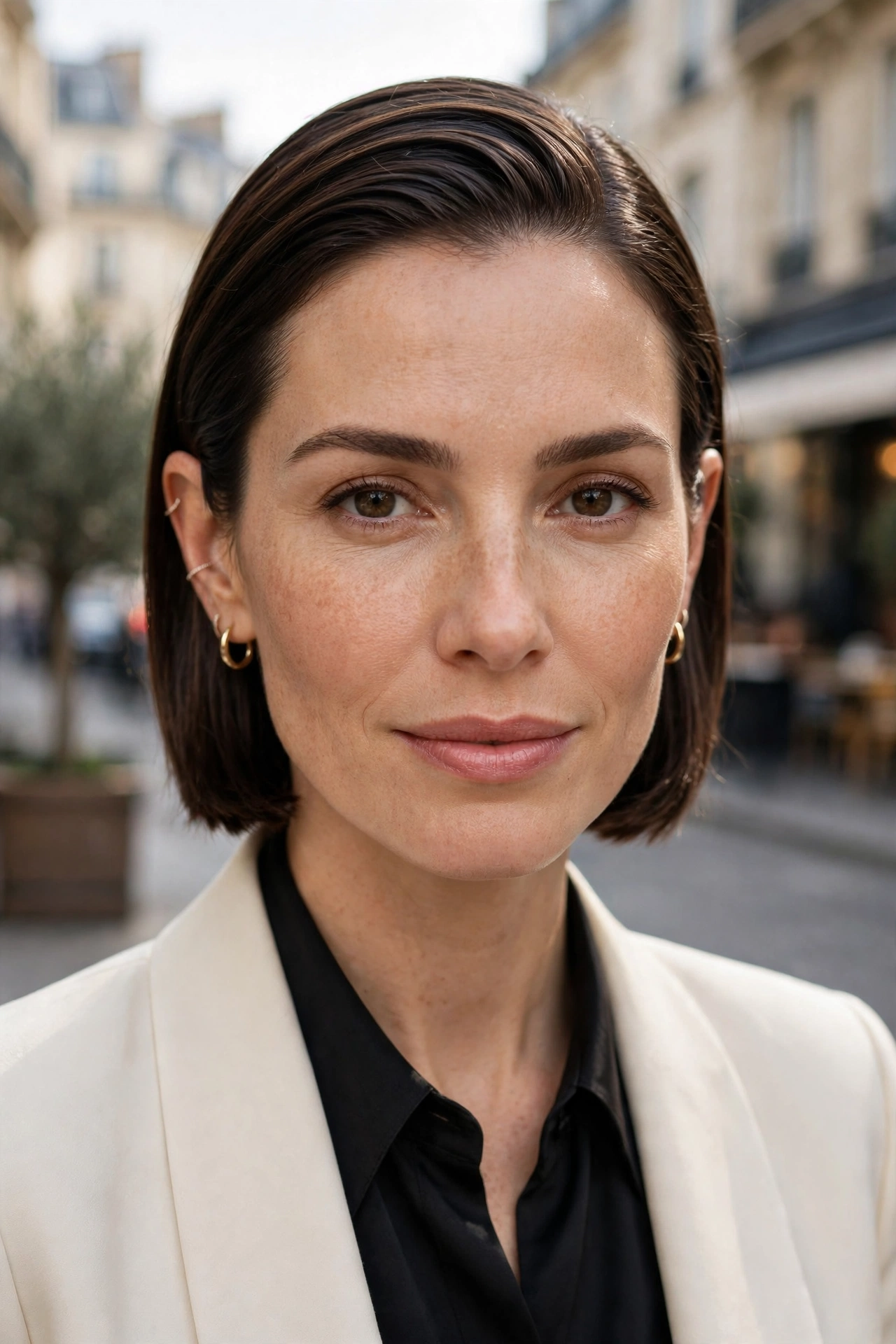
8. Sleek Straight French Bob
The sleek straight French bob is blow-dried or flat-ironed completely smooth, with a glossy, tucked-behind-the-ears finish and no visible texture. It suits oval and long faces, straight hair, and medium to thick density, and it looks especially sharp with a strong jawline or bold makeup. Curly or very wavy hair can wear it, but be honest about the daily straightening time before you commit.
Maintenance is medium to high in daily effort, though salon visits stay at six to eight weeks: this cut only reads as sleek when the hair is smooth and the ends are healthy. Use a heat protectant, flat iron in small sections, and finish with a shine spray, keeping oil away from the roots. Ask for a one-length chin bob with a clean perimeter and no layers, and explain that you will wear it sleek, so your stylist cuts it to sit perfectly straight.
9. Curly French Bob
A curly French bob is cut to sit at the chin once the curls are dry, which means it is cut longer when wet, because curls spring up as they dry. It suits oval, heart and long faces, and naturally curly or coily hair of medium density; very fine curls may need extra shaping to avoid a flat top. The rounded silhouette is joyful and full, and it frames the face in a way no straight bob can match.
Maintenance is medium: curly hair at this length needs a cut every eight to ten weeks, ideally by a stylist who cuts curls dry, and a good curl cream or gel is essential. Style by applying product to soaking wet hair, scrunching upward, and diffusing or air-drying without touching the curls until fully dry. Ask for a dry cut, chin-length when dry, with shaping that keeps volume at the sides rather than only at the crown.

10. French Bob with Side Part
A deep side part changes a chin-length bob completely, sweeping most of the hair across the forehead and giving instant volume at the roots. It suits round and square faces, because the diagonal line breaks up symmetry and lengthens the face, and it works on straight, wavy and thick hair. Fine hair also benefits, since the side sweep creates the illusion of more volume on top.
This is a low-maintenance version: there is no fringe to trim, and the part itself does the styling work. Blow-dry with the part in place, lifting the roots on the heavier side with a round brush, and use a little root powder if your hair falls flat by afternoon. Ask for a chin-length bob cut to be worn with a deep side part, and have your stylist check the balance from both sides, since a side part makes uneven lengths more visible.
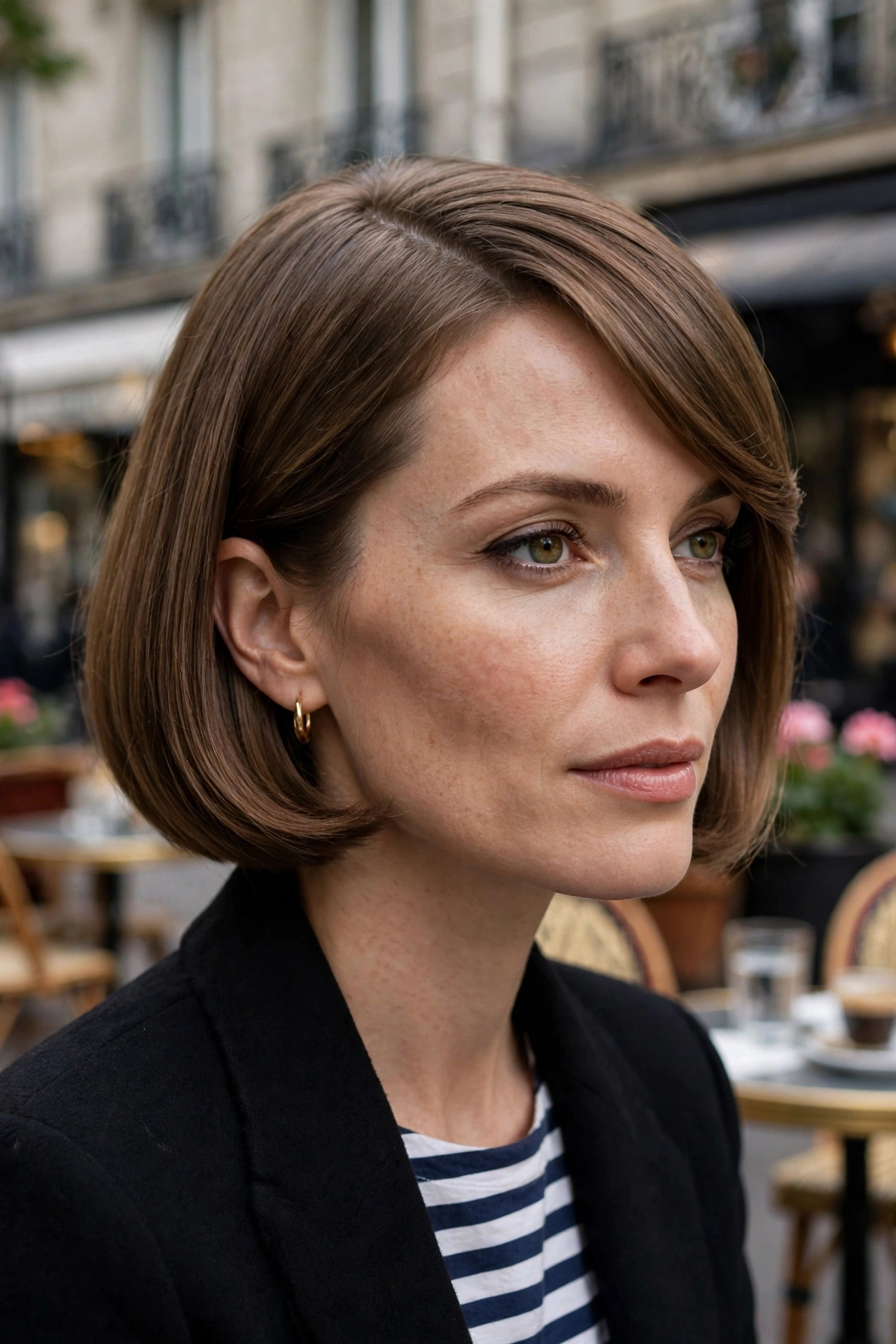
11. Choppy French Bob
The choppy French bob uses short, uneven layers and jagged ends to create an edgy, modern shape at chin length. It suits oval and heart faces, straight to wavy hair, and medium to thick density, because the choppiness removes weight and stops thick hair from looking like a helmet. It is a confident choice if you like a bit of attitude and do not want a soft, pretty bob.
Maintenance is low to medium: the choppy texture hides growth well, but the ends need tidying every six to eight weeks or the shape turns shaggy. Style with a matte texture paste, pinching small sections at the ends to define the pieces, and avoid over-brushing, which softens the chop. Ask for a chin-length bob with choppy, disconnected layers and piecey ends, and be clear about how edgy you want it — “choppy” means different things to different stylists.

12. French Bob with Micro Bangs
Micro bangs end well above the eyebrows, sometimes mid-forehead, and give a chin-length bob a bold, fashion-forward edge. They suit oval and long faces with a higher forehead, straight hair, and anyone comfortable with a statement look, because there is nowhere for micro bangs to hide. They are less forgiving on very round faces or very curly hair, where the short fringe can sit unevenly.
Maintenance is high for the fringe, which needs trimming every two to three weeks to stay micro, though the bob itself is low upkeep. Style the bangs by blow-drying them straight down with a small brush, and keep them off your forehead on humid days with a light setting spray. Ask for a chin-length bob with a short, straight micro fringe, and have it cut dry so the length is precise — wet micro bangs always look longer than they will dry.

13. Layered French Bob
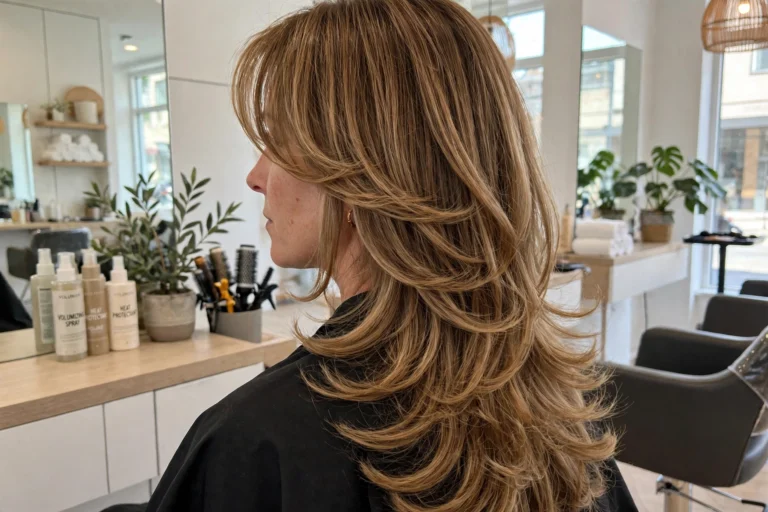
A layered French bob adds soft internal layers through the body of the cut while keeping the chin-length outline, so the hair moves more freely than a one-length bob. It suits thick hair that needs weight removed, wavy hair that needs shape, and round or square faces, where the layers prevent a heavy, boxy outline. Fine hair can wear it too, but only with long, subtle layers, or the ends will look thin.
Upkeep is low to medium, with trims every seven to eight weeks. Style by blow-drying with a round brush and letting the layers fall naturally, or scrunching for a wavy finish; avoid heavy straightening, which hides the layers you paid for. Ask for a chin-length bob with soft, internal layers and a textured perimeter, and say whether you want the layers to be visible or just felt as movement.

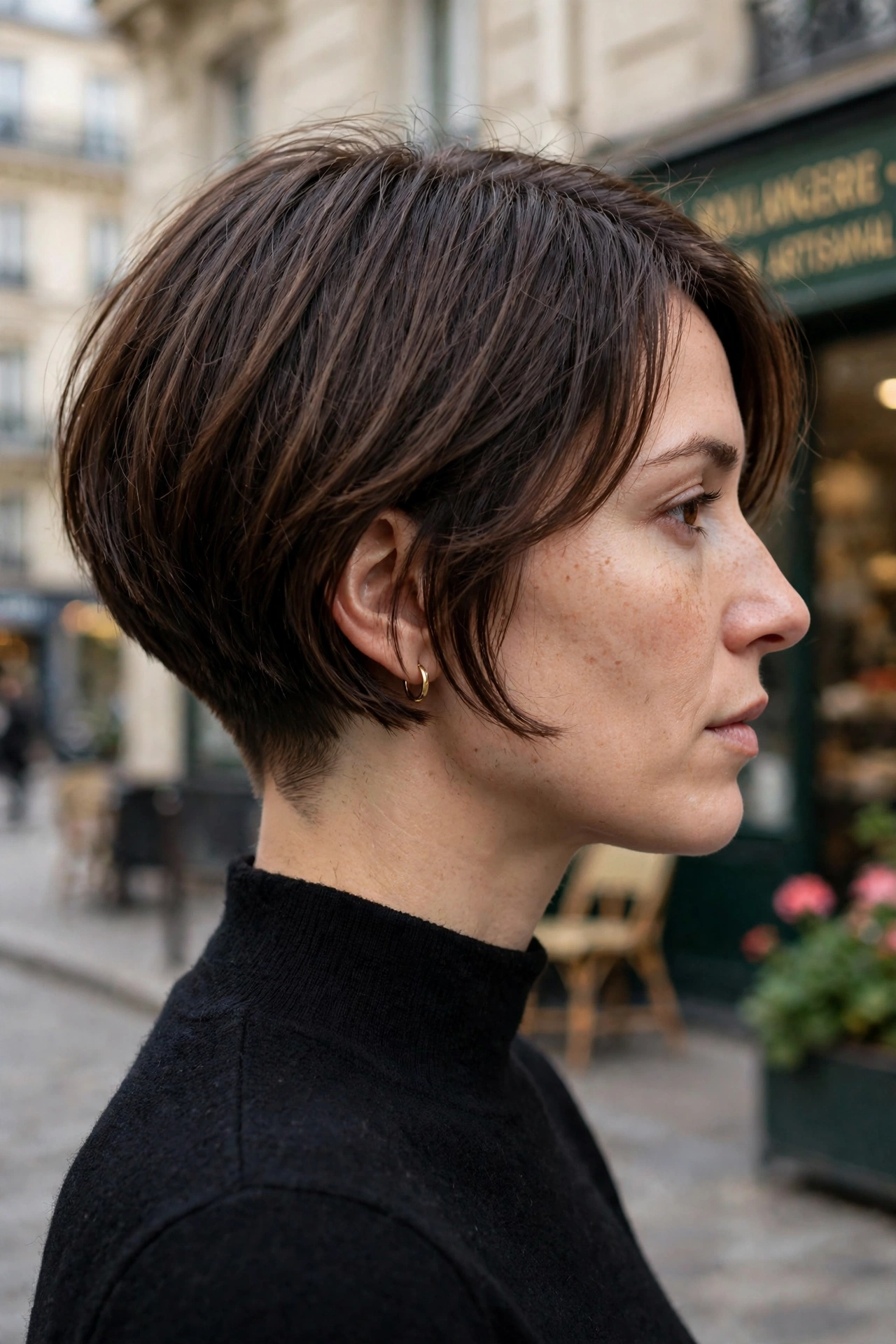
14. French Bob with Undercut Nape
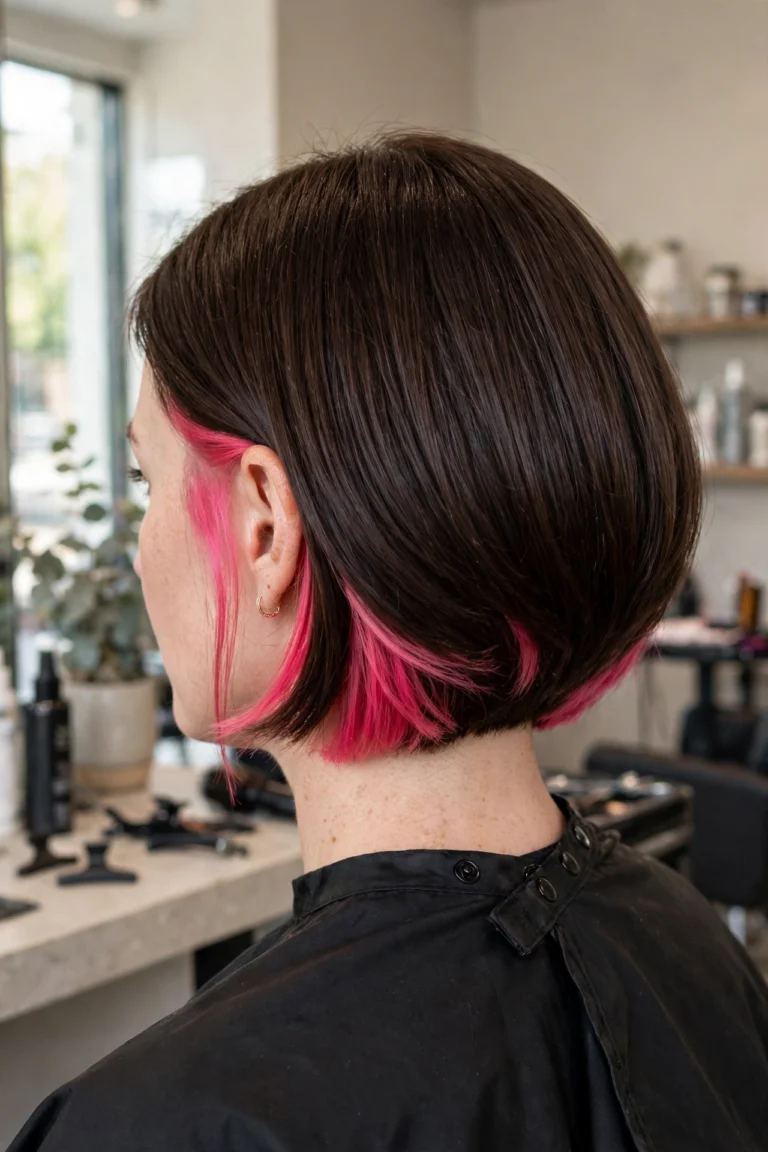
This version keeps a full chin-length bob on top but tapers or closely clips the hair at the nape, underneath the bob, so the neck feels lighter and the shape sits closer to the head. It suits thick, heavy hair that tends to puff out at the back, warm climates, and anyone who wants a bob that dries faster and feels cooler. It is also a practical choice if you wear your hair tucked behind your ears, since the bulk at the back is gone.
Maintenance is medium: the undercut nape grows out faster than the bob and needs tidying every four to five weeks to keep its neatness, though it stays hidden under the top layers in between. Style the top as usual — smooth or wavy — and the nape needs nothing. Ask for a chin-length bob with a tapered, undercut nape, and make clear you want it hidden, not a visible shaved design, unless you do want that detail.
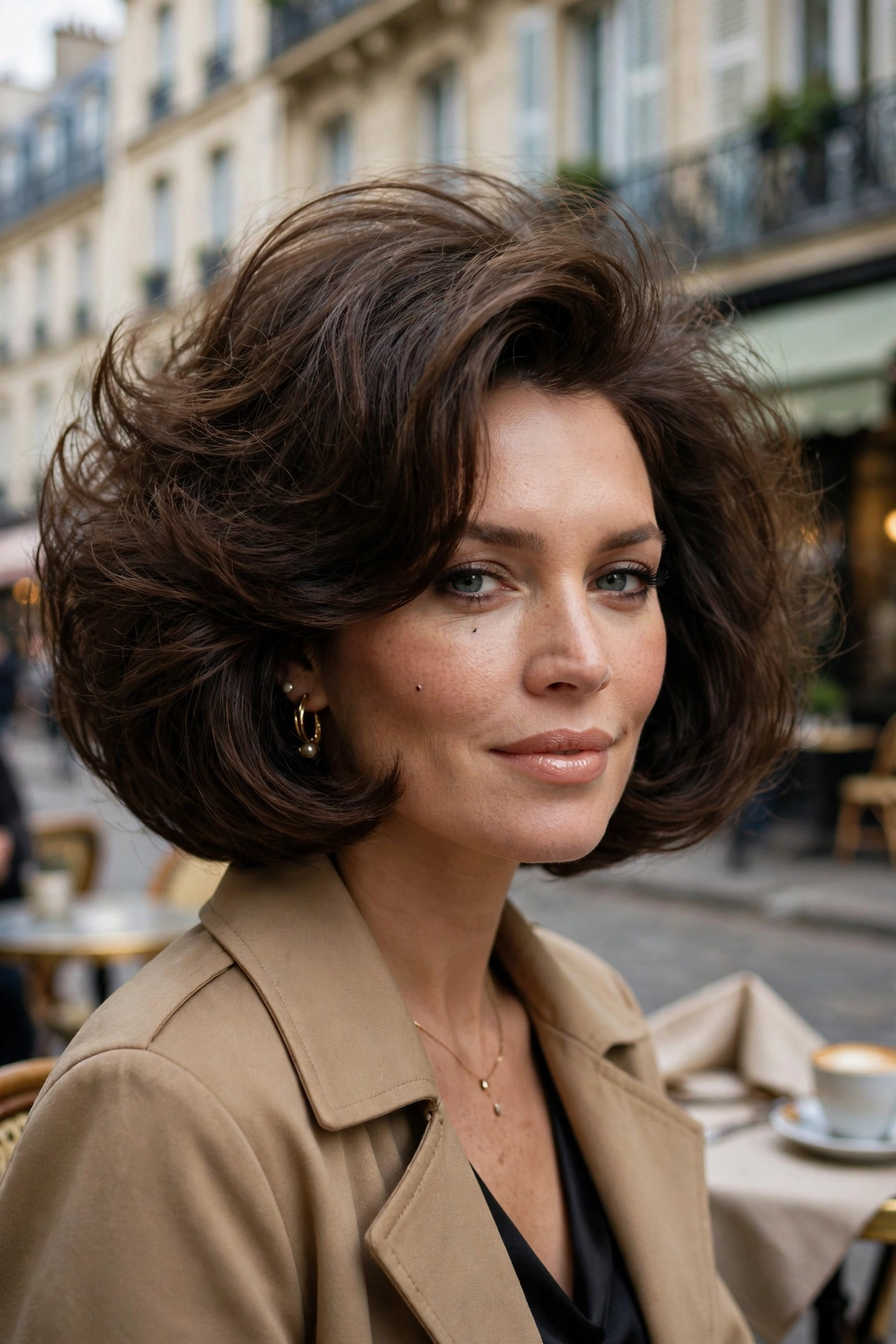
15. Voluminous French Bob
The voluminous French bob is blow-dried big, with a rounded, bouncy shape and plenty of body from root to end at chin length. It suits fine to medium hair that needs lift, oval and long faces, and special occasions or anyone who loves a glamorous finish. Very thick hair may already have enough volume, so this version works best when the cut includes some internal layering to shape the fullness.
Daily styling takes ten to fifteen minutes: blow-dry with a large round brush, lifting each section at the root, and set the shape with a light volumising mousse applied before drying. A trim every six weeks keeps the rounded outline. Ask for a chin-length bob with layers that support volume and a slightly rounded perimeter, and tell your stylist you plan to blow-dry it big, so the cut is shaped for that finish.
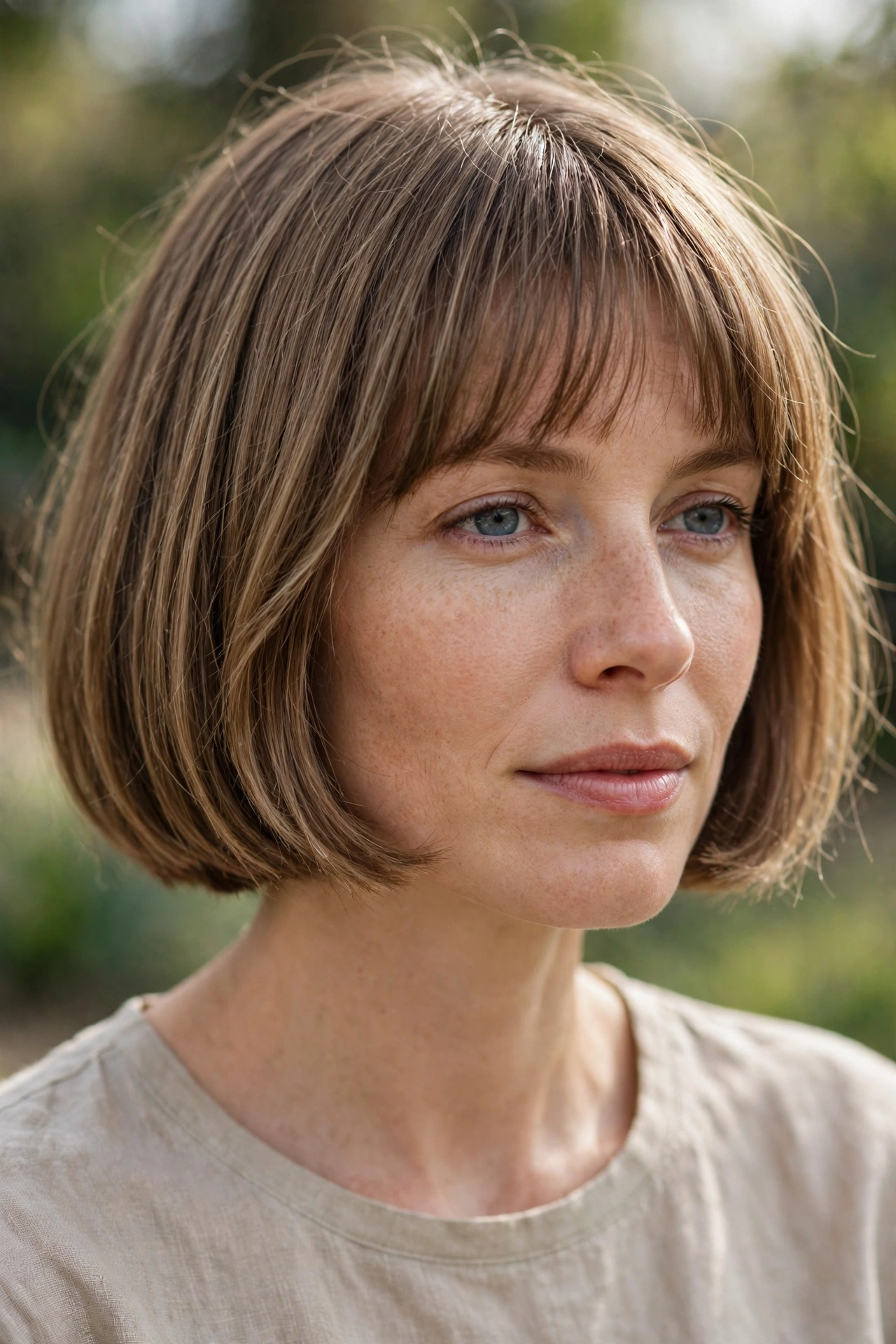
16. French Bob for Fine Hair
This bob is designed specifically for fine hair: a blunt, one-length cut at the chin with almost no thinning, so every strand counts toward the thickness of the edge. It suits fine, straight or slightly wavy hair and oval, heart and long faces, and it is one of the most flattering short cuts for hair that goes flat at longer lengths. The short length itself makes fine hair look fuller, because the ends are not weighed down.
Maintenance is low: wash, blow-dry smooth or tousle lightly, and trim every six to eight weeks to keep the blunt edge thick. Avoid heavy oils and thick conditioners on the lengths, which flatten fine hair, and use a lightweight volumising spray at the roots instead. Ask for a blunt chin-length bob with no thinning shears and no layers, and resist the urge to ask for texture — on fine hair, texture often reads as thinness.
17. French Bob for Thick Hair
Thick hair in a French bob needs weight taken out, or the chin-length shape turns into a triangle, so this version uses internal thinning and textured ends while keeping the French outline. It suits thick, straight or wavy hair and oval, round or square faces, and it is the version to choose if past bobs have felt heavy, hot or hard to dry. The goal is a bob that moves, not one that sits like a block.
Maintenance is medium, with trims every six to seven weeks, because thick hair grows out visibly and the shape can widen quickly. Style by blow-drying in sections with a round brush, or air-drying with a smoothing cream if your texture allows it. Ask for a chin-length bob with internal layers, thinned ends and a slightly tapered outline, and tell your stylist your main problem with past bobs — bulk, puffiness or drying time — so they remove weight in the right places.

18. Asymmetrical French Bob
An asymmetrical French bob is cut slightly longer on one side than the other, usually by about an inch, while staying around chin length overall. It suits oval and heart faces, straight or gently wavy hair, and anyone who wants a modern twist without leaving the French bob family. The asymmetry draws the eye diagonally, which can balance a face that feels very symmetrical or soften a strong jaw on the longer side.
Upkeep is medium: the difference in length becomes more obvious as hair grows, so trims every five to six weeks keep the asymmetry intentional rather than accidental. Style it sleek to show off the line, or tousle it for a softer take, and part it so the longer side is visible. Ask for a chin-length bob with one side about an inch longer, and decide with your stylist which side suits your parting and your face before any hair is cut.
19. French Bob with Face-Framing Layers
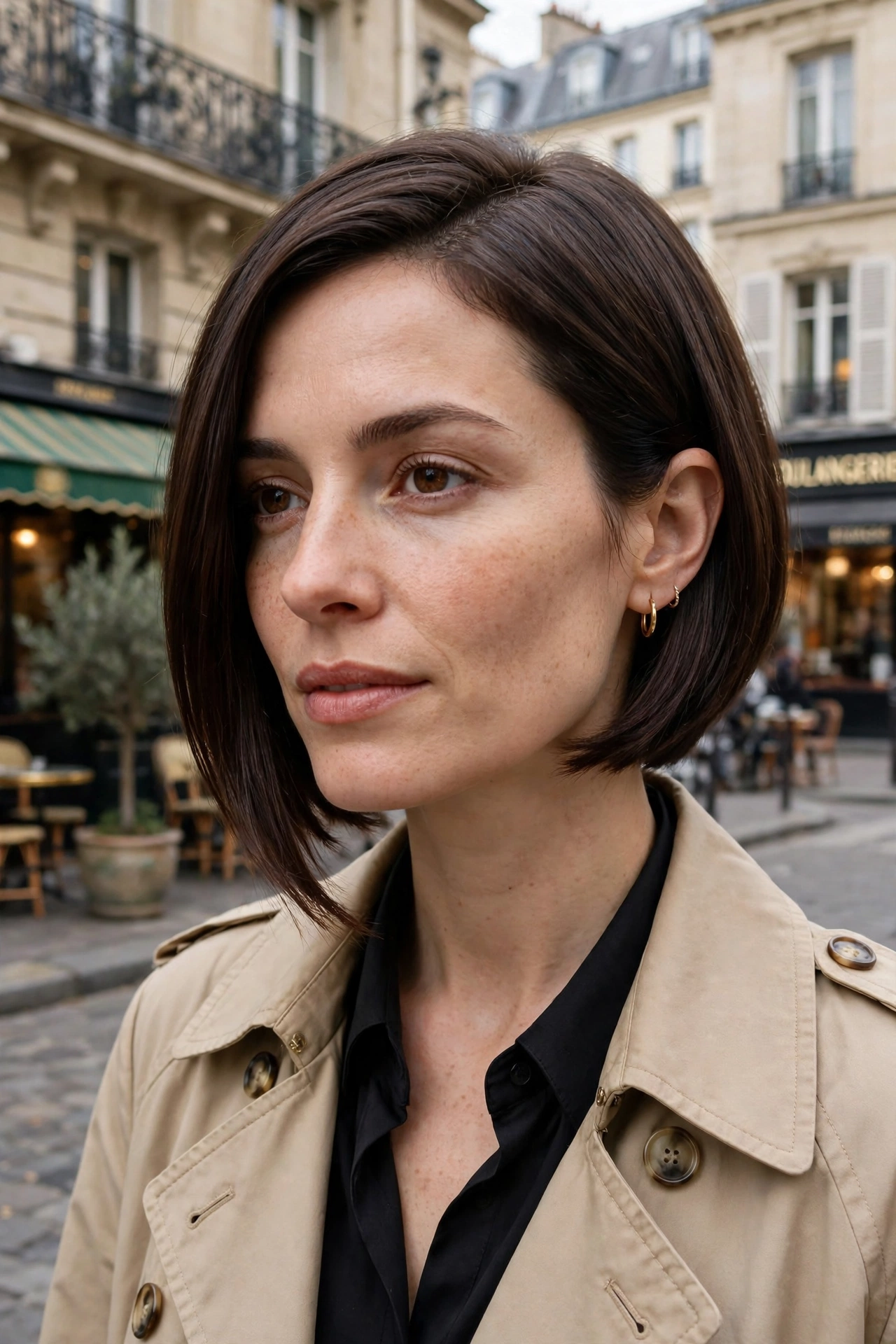
Face-framing layers are shorter pieces cut around the cheeks and jaw that blend into a chin-length bob, opening up the face without adding a fringe. This version suits round, square and heart faces especially well, because the layers create vertical lines that slim and soften, and it works on straight, wavy and thick hair. It is also a gentle way to try layers if you have always had one-length hair.
Maintenance is low to medium, with trims every seven weeks to keep the framing pieces at the right length. Style by blow-drying the front pieces away from the face with a round brush, or letting them fall naturally if your hair is wavy. Ask for a chin-length bob with face-framing layers starting at the cheekbones and blending into the ends, and say how short you are willing to go at the front — cheekbone is the usual starting point.
20. Jaw-Length French Bob
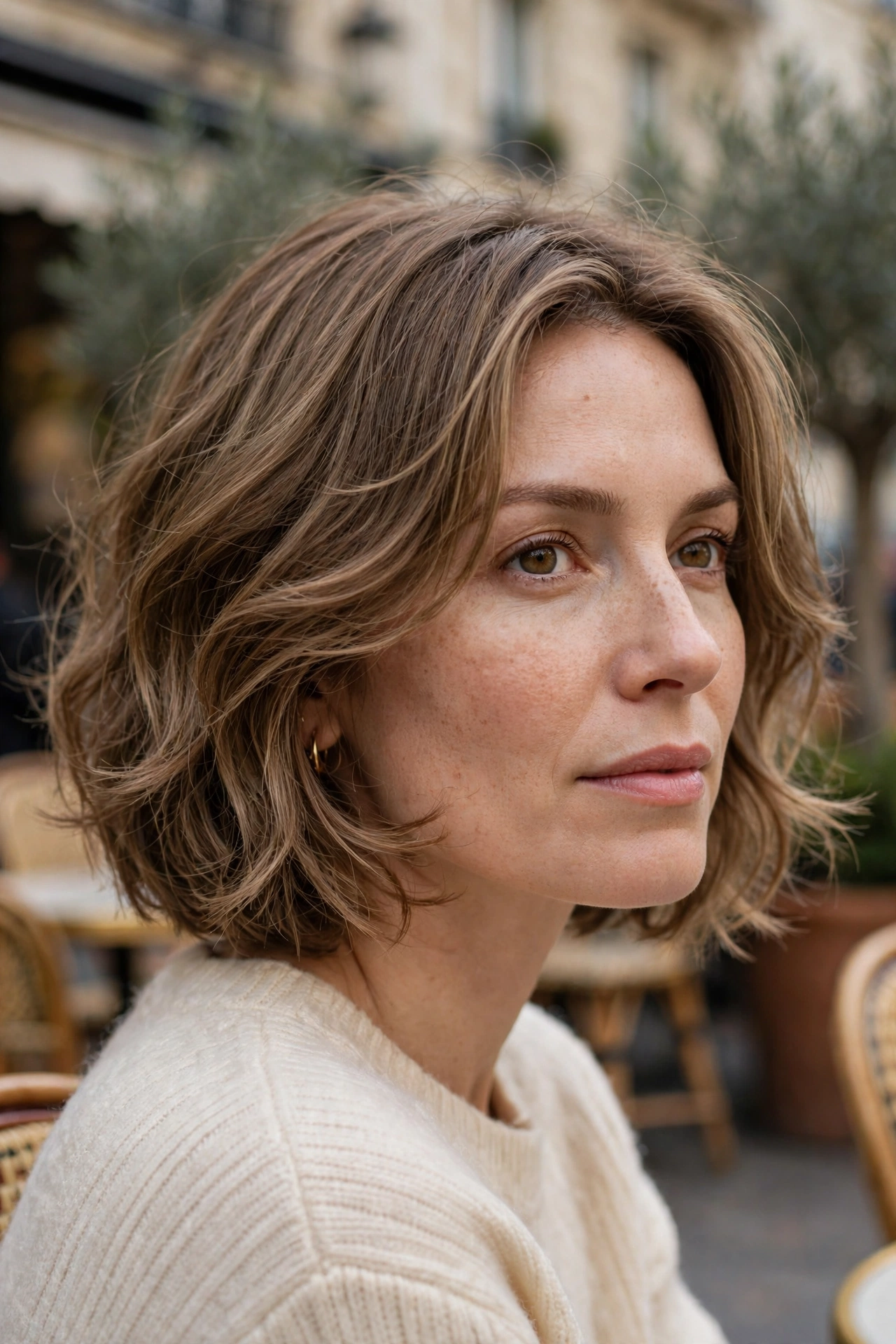
The jaw-length French bob ends exactly at the jawline, a touch longer than the cheekbone version and a touch shorter than a classic chin bob, giving a crisp, defined outline. It suits oval, heart and square faces, straight or slightly wavy hair, and medium density, and it is a good middle ground if a full chin bob feels too long and a cheekbone bob feels too daring. The jawline length also shows off earrings and a strong neckline beautifully.
Maintenance is low to medium: the precise length needs a trim every six weeks, and the ends should be kept healthy or the line will look ragged. Blow-dry smooth and tuck the ends under slightly, or wear it with a centre part for a clean, graphic finish. Ask for a bob ending exactly at the jawbone, with a blunt or lightly textured perimeter, and check the length while sitting upright, since head position changes where the jawline falls.

21. Cheekbone-Length French Bob
The cheekbone-length French bob is the shortest version in this guide, ending just below the cheekbones and well above the jaw. It suits oval and long faces, fine to medium hair, and confident wearers who love a bold, editorial look, because there is very little hair to hide behind. It highlights the cheekbones dramatically and pairs beautifully with a short fringe or no fringe at all.
Maintenance is medium to high: at this length, even a centimetre of growth changes the shape, so plan trims every four to five weeks. Styling is quick, since there is so little hair — a fast blow-dry or a scrunch with texture cream is usually enough. Ask for a bob ending at the cheekbone, cut dry if possible, and be sure you are comfortable with the length before you commit, because there is no easy way to grow it out in a week.
22. French Bob with Highlights
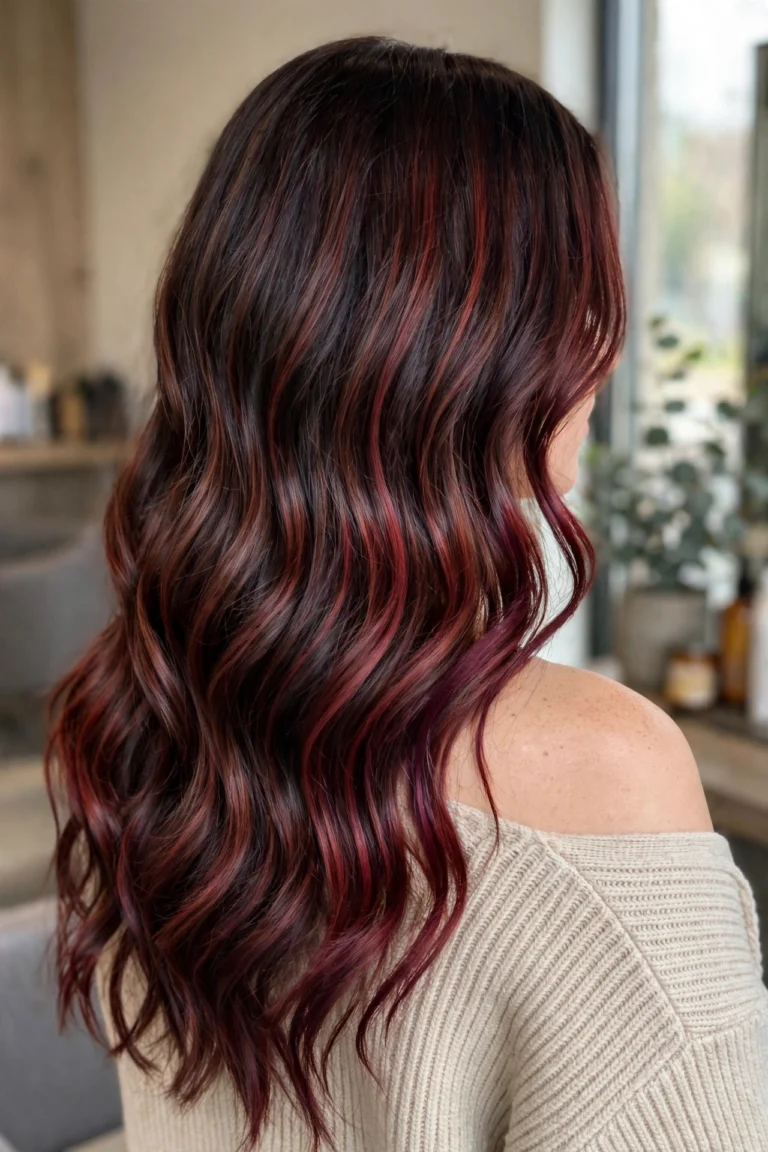
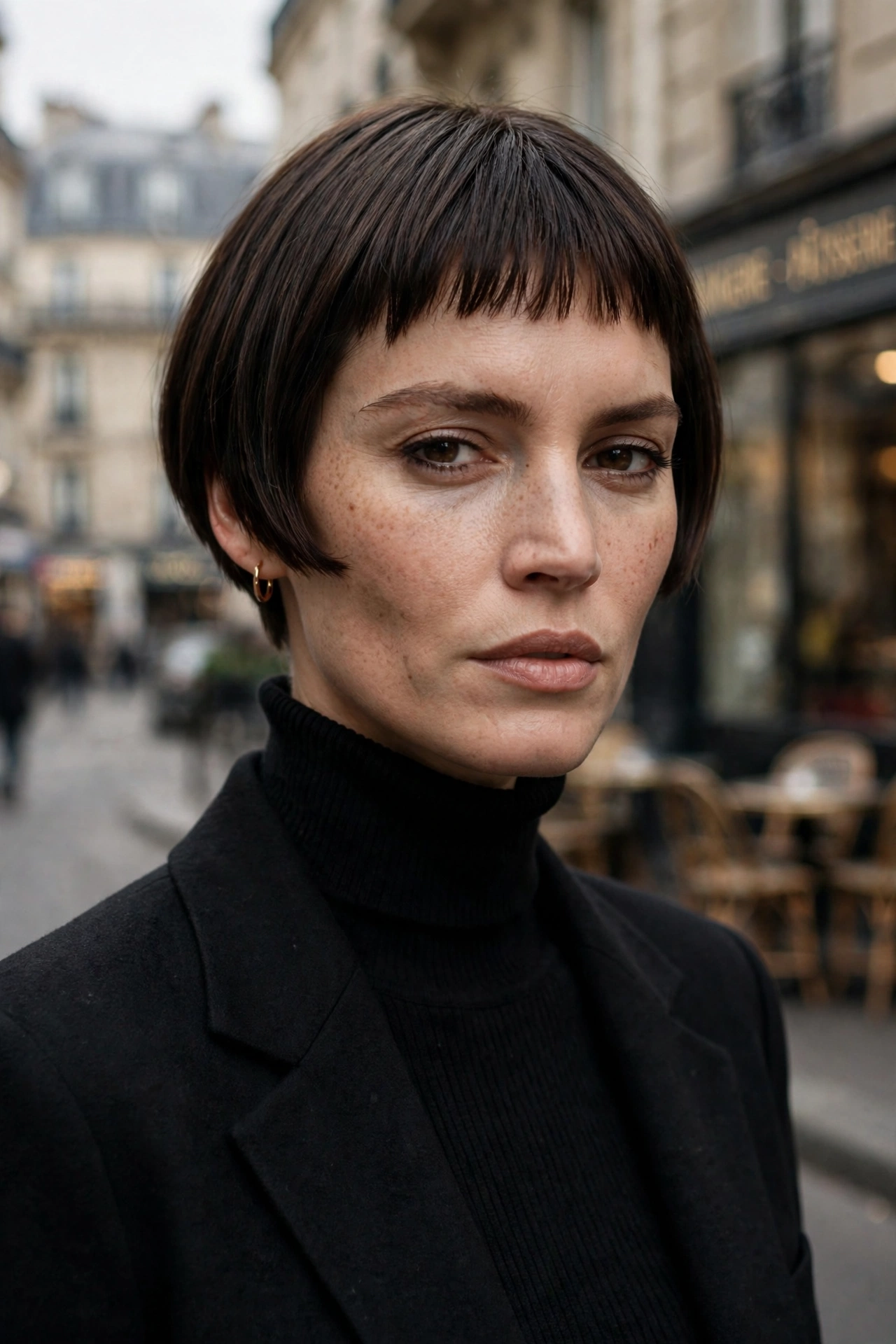
Highlights add dimension to a chin-length bob, with lighter pieces woven through the hair so the cut does not look flat or one-dimensional. This version suits medium to thick hair, straight or wavy textures, and any face shape, because the placement can be customised — face-framing highlights brighten the features, while scattered highlights add movement through the body. It is especially useful on dark hair, where a solid bob can look heavy.
Maintenance is medium to high: highlights need refreshing every eight to twelve weeks, and coloured hair needs colour-safe shampoo and regular conditioning to stay healthy. Style as you would any French bob, and the highlights will do the visual work. Ask for a chin-length bob with soft, blended highlights — babylights for subtlety or a few face-framing pieces for impact — and bring a photo of the lightness level you want, since "highlights" alone is too vague.
23. Brunette French Bob
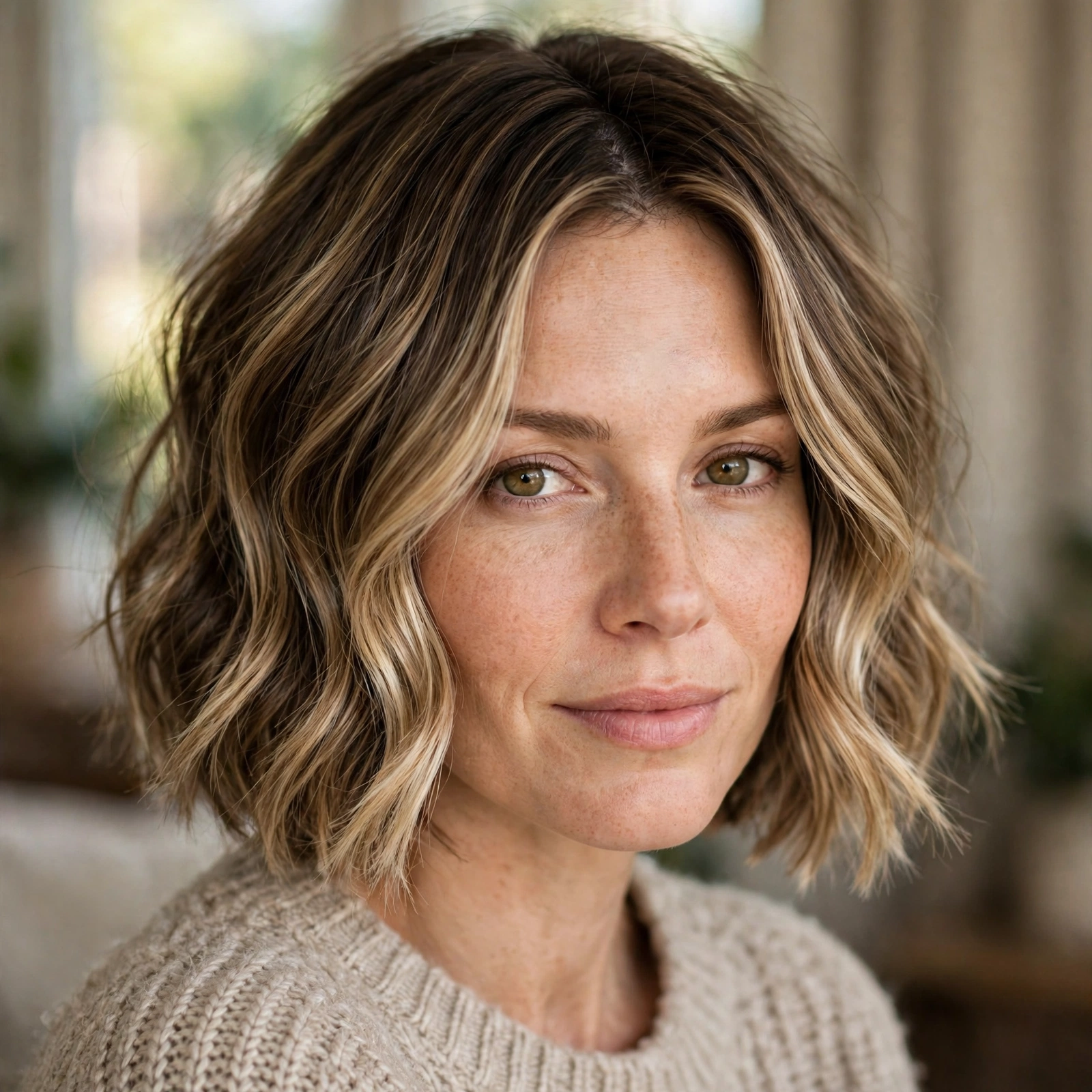
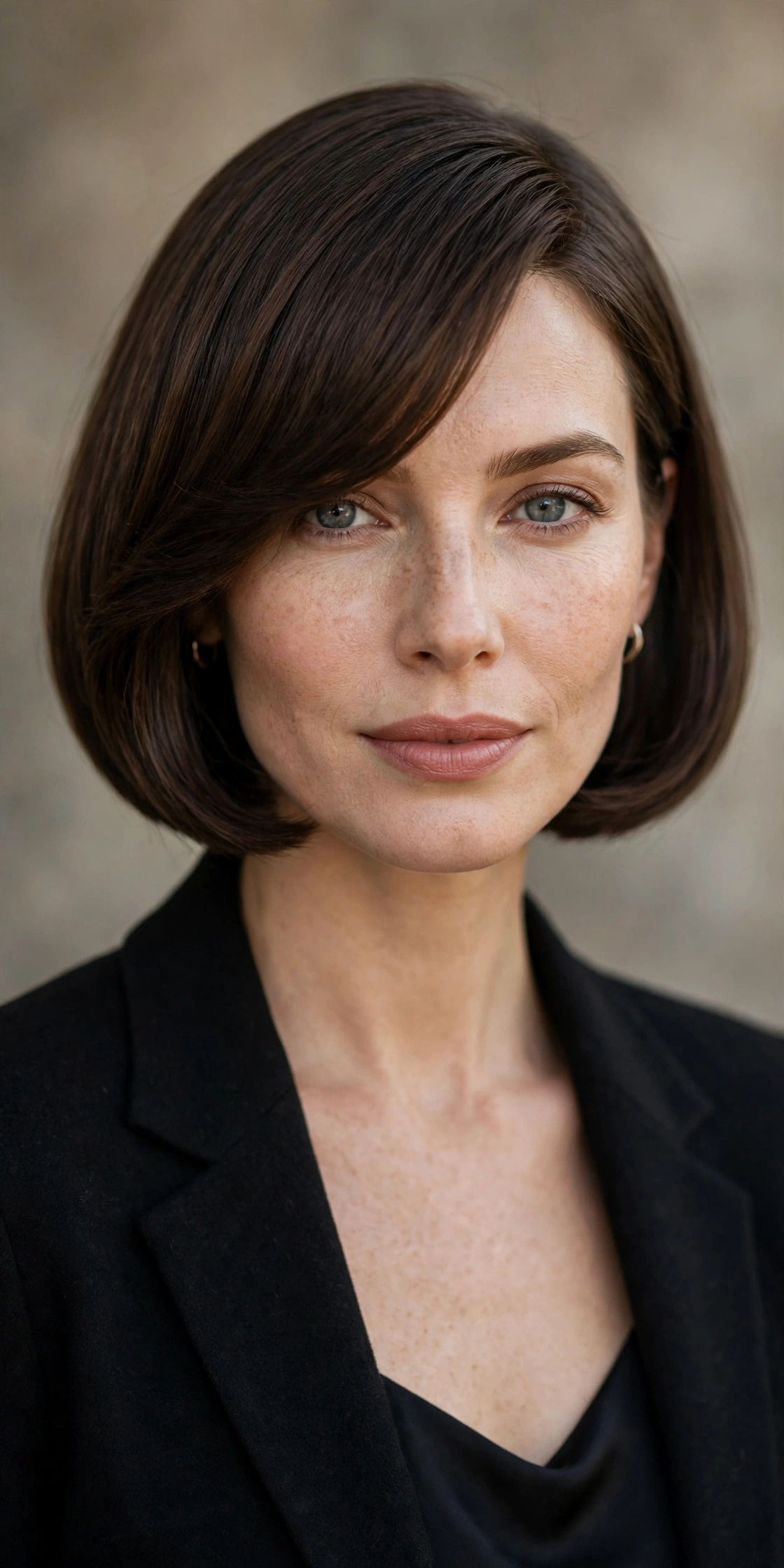
A rich brunette French bob uses deep chocolate, espresso or warm brown tones to give a chin-length cut depth and shine. It suits all face shapes, straight or wavy hair, and medium to thick density, and dark hair shows off a blunt bob line better than any other colour, because the edge reads clearly. It is a timeless, low-drama choice if you want the cut, not the colour, to be the focus.
Upkeep is low to medium: dark colour fades less obviously than blonde, but a gloss treatment every eight weeks keeps the shine and richness. Style sleek for maximum gloss, or tousled for a softer, everyday finish, and use a colour-protecting shampoo to slow fading. Ask for a chin-length bob in a rich brunette tone, and discuss whether you want warm, neutral or cool brown, since that choice changes how the colour looks in daylight.

24. Blonde French Bob
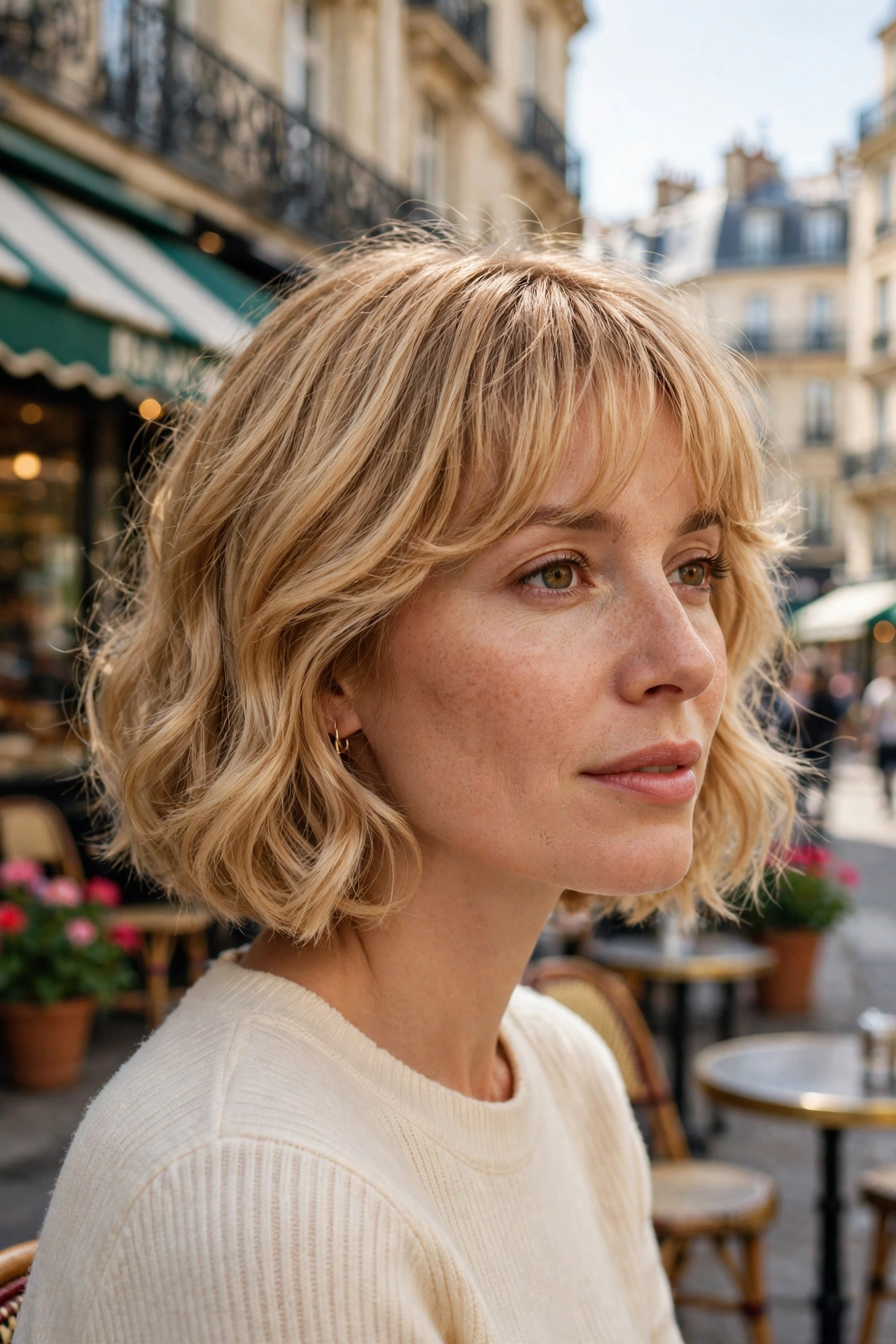
A blonde French bob, in honey, golden or soft buttery tones, gives a chin-length cut brightness and a sunny, approachable feel. It suits fair to medium skin tones, fine to medium hair, and oval or heart faces, and blonde hair naturally shows texture and layers well, so this version works beautifully tousled or wavy. Very dark natural hair will need more upkeep to stay blonde, so factor that in before choosing this version.
Maintenance is medium to high: roots need touching up every six to eight weeks, and blonde hair needs purple shampoo occasionally plus deep conditioning to avoid brassiness and dryness. Style with texture spray for a beachy finish, or blow-dry smooth for a polished blonde bob. Ask for a chin-length bob with a warm, dimensional blonde — not a single flat shade — and be honest about how often you will visit the salon for root work.
25. Copper French Bob
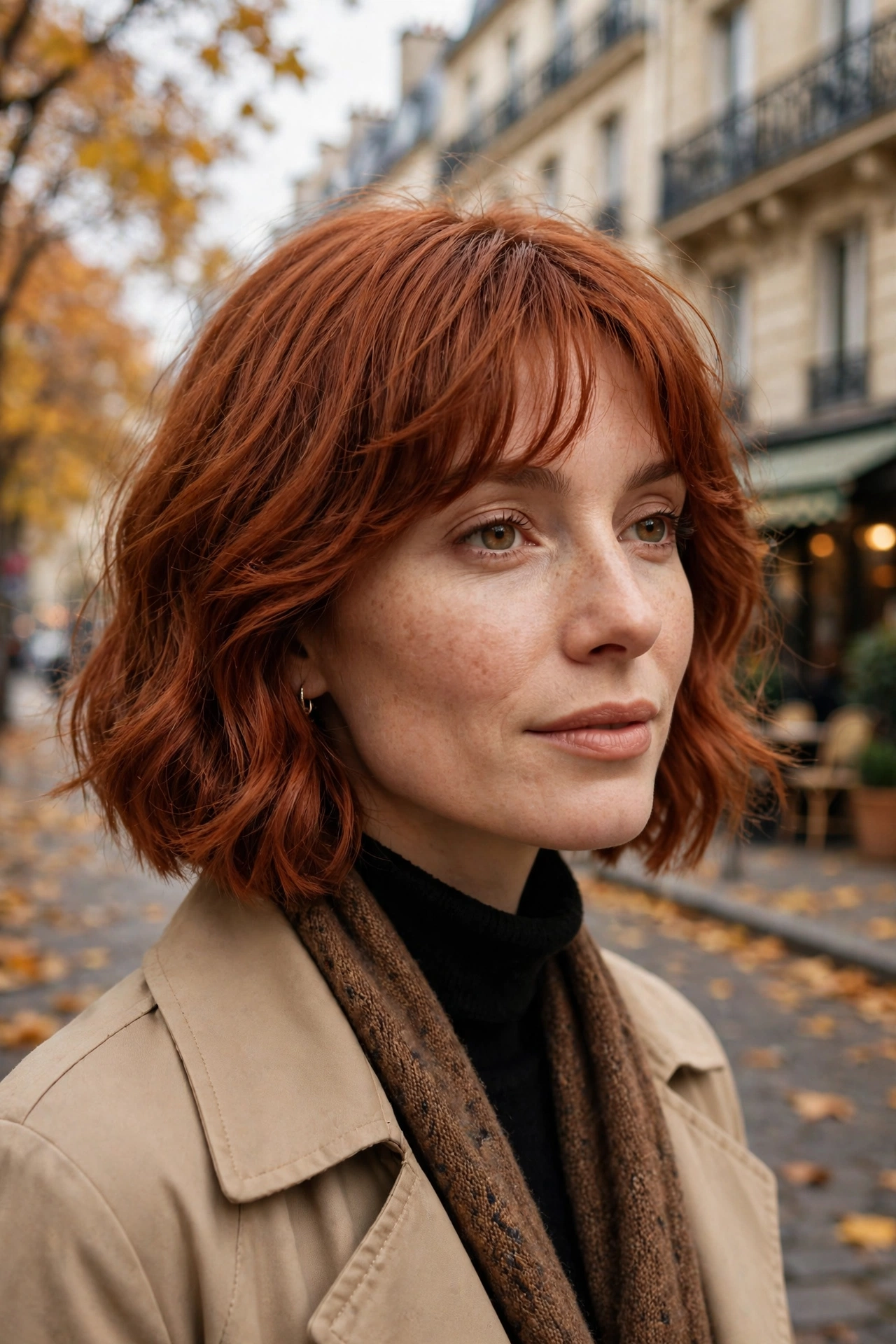
A copper French bob brings warm auburn, ginger or copper tones to a chin-length cut, giving it warmth and personality that stands out without being extreme. It suits fair and light-medium skin tones, straight or wavy hair, and oval or heart faces, and copper catches the light beautifully in waves, so this version is lovely worn tousled. It also pairs naturally with freckles and warm-toned makeup.
Upkeep is medium to high, because copper fades faster than most colours and needs a gloss or refresh every six to eight weeks, plus colour-safe care at home. Style it wavy to show off the colour dimension, and avoid very hot water when washing, which strips copper quickly. Ask for a chin-length bob in a copper or auburn tone, and look at swatches in natural light, since copper looks very different under salon lighting.
26. French Bob with Balayage
Balayage on a French bob means hand-painted colour that is darker at the roots and lighter toward the ends, giving a sun-kissed, grown-out look even on chin-length hair. It suits medium to thick hair, wavy or textured bobs, and any face shape, because the lighter ends draw the eye down and add movement. It is the lowest-maintenance colour option in this guide, since there is no harsh root line to maintain.
Maintenance is low to medium: balayage can go ten to fourteen weeks between appointments, though a toner refresh keeps the tone from turning brassy. Style wavy or tousled to show the colour gradient, and use a colour-safe, moisturising routine. Ask for a chin-length bob with soft balayage, darker at the roots and lighter at the ends, and say how much contrast you want — subtle and natural, or bold and noticeable.

27. French Bob with Side-Swept Bangs
Side-swept bangs are a long fringe brushed diagonally across the forehead, paired here with a chin-length bob for a soft, grown-up finish. This version suits round, square and heart faces, because the diagonal line breaks up width and softens a strong forehead, and it works on straight or wavy hair of medium density. It is also the easiest fringe to grow out, since it can simply be swept further to the side over time.
Upkeep is low to medium: the bangs need a trim every five to six weeks, but they can be pinned back or blended into the sides on off days. Blow-dry the fringe to the side with a round brush, directing it away from the face, and set it with a light spray. Ask for a chin-length bob with long side-swept bangs that start at the brow and blend into the front layers, and show which side you naturally sweep toward.
28. Messy Bedhead French Bob
The messy bedhead French bob is deliberately undone: chin-length hair with tousled texture, uneven bends and a just-woke-up finish that still looks intentional. It suits wavy or textured hair, oval and heart faces, and anyone who hates precise styling, because this cut is designed to look good slightly messy. Straight, very fine hair may need texture spray and a few waves added to hold the look.
Maintenance is genuinely low: trims every eight weeks are enough, and the mess hides growth. Style by applying texture spray to damp hair, scrunching, and air-drying, then shaking the hair out and leaving it alone — over-styling ruins this look. Ask for a chin-length bob with lots of texture and piecey ends, and tell your stylist you want a bedhead finish, not a polished one, so they cut for movement rather than a clean line.

29. Polished Parisian French Bob
The polished Parisian French bob is the dressier side of the French bob: chin-length, smooth, shiny, with ends gently tucked under and a neat, tailored finish. It suits oval and long faces, straight or slightly wavy hair, and medium density, and it is the version to choose for work, weddings or any occasion where you want to look put-together. It reads more formal than the tousled versions, without losing the French character.
Daily styling takes a little longer — a smooth blow-dry with a round brush, a pass with a flat iron if needed, and a shine serum — but the result lasts well through the day. Trims every six weeks keep the tucked-under shape crisp. Ask for a one-length chin bob with a clean perimeter and ends shaped to tuck under, and explain that you will wear it polished, so your stylist does not add texture you do not want.
30. French Bob with Middle Part
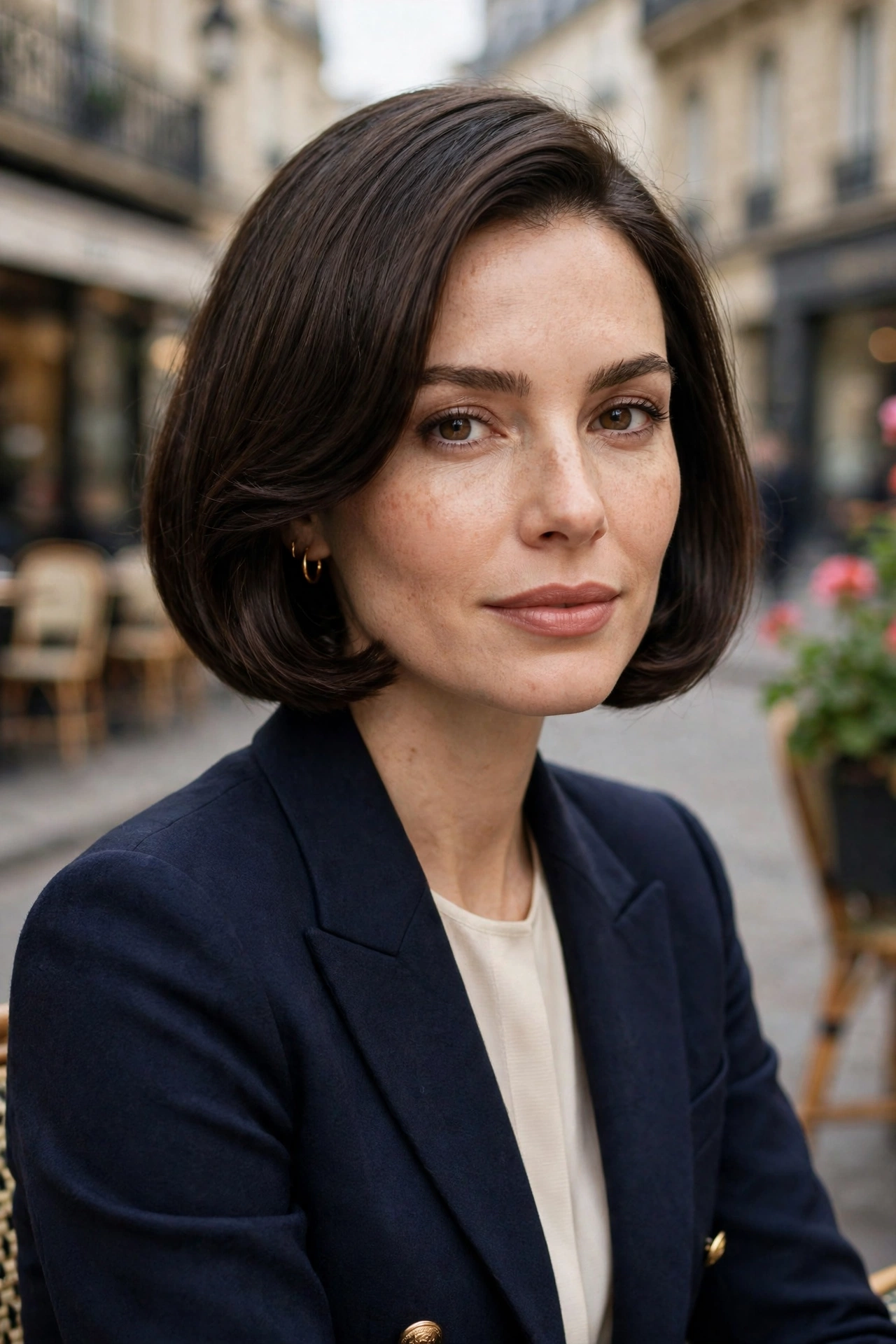
A middle part gives a chin-length bob perfect symmetry, with equal hair falling on both sides of the face and a clean centre line. It suits oval and heart faces best, straight or gently wavy hair, and medium density, and it looks modern and minimal, especially worn sleek or with soft waves. Round faces can wear it too, but a slightly longer front piece helps avoid emphasising width.
Maintenance is low: no fringe to trim, and the part itself keeps the style looking intentional. Blow-dry with the part set from the front hairline back, using a tail comb for precision, and keep the roots smooth so the part stays visible. Ask for a chin-length bob cut to be worn with a centre part, and have your stylist check the symmetry from the front, since a middle part reveals any unevenness immediately.
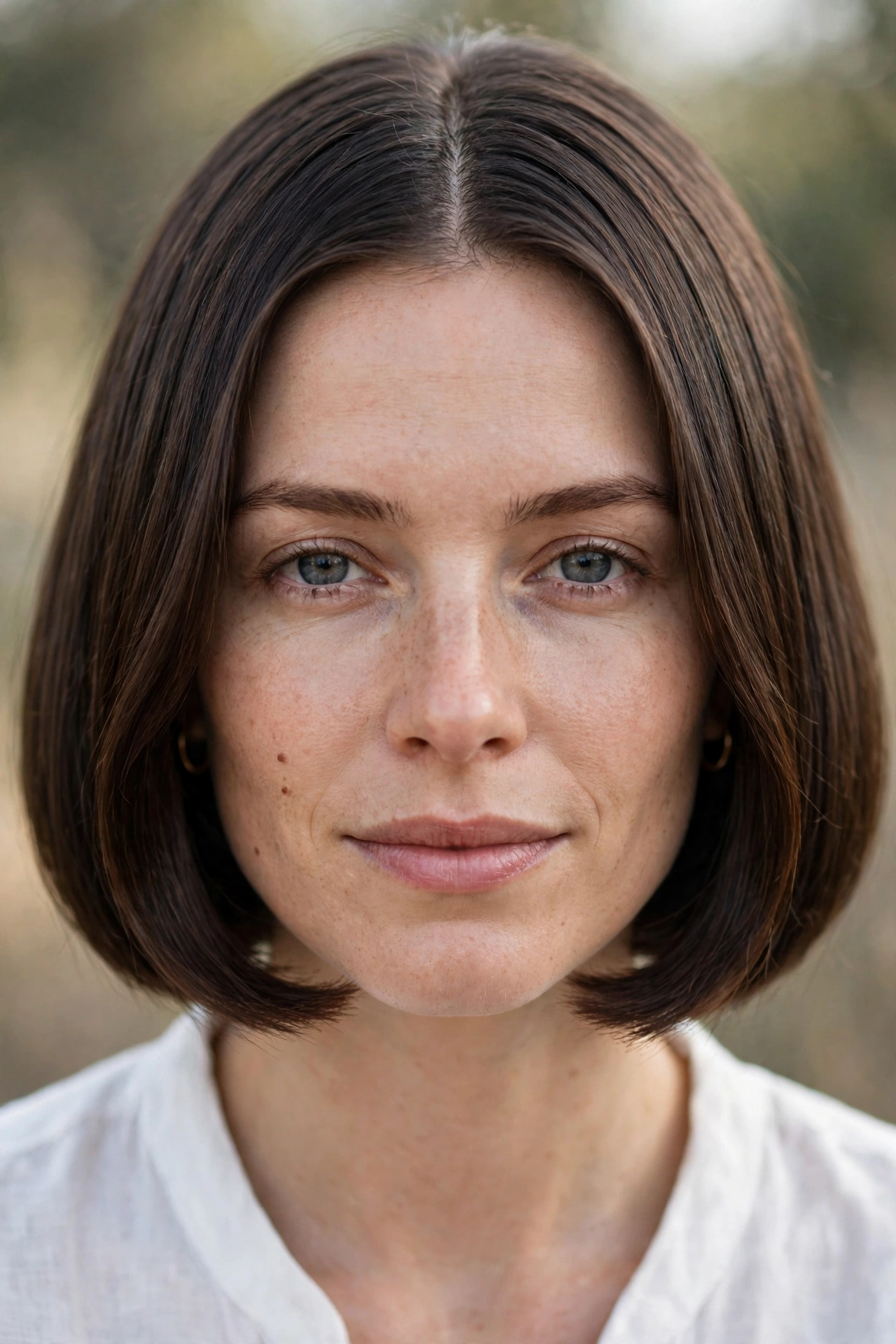
31. French Bob for Round Faces
A French bob for a round face is adjusted to add length and slim the cheeks: slightly longer front pieces, a side part, and texture that falls past the widest part of the face. It suits round faces with straight, wavy or thick hair, and the key is avoiding a blunt line that ends exactly at the widest point of the cheeks, which can make the face look wider. A little asymmetry or a side sweep does a lot of work here.
Maintenance is low to medium, with trims every six to eight weeks to keep the front pieces at the right length. Style with a side part and soft waves or a smooth finish, keeping some hair in front of the cheeks rather than tucking it all behind the ears. Ask for a chin-length bob with longer front sections, a side part, and soft layers, and tell your stylist your goal is to lengthen the face, not to add width at the cheeks.

32. French Bob for Oval Faces
Oval faces can wear almost any French bob, so this version is the classic, balanced cut: chin length, full or wispy bangs, and a clean outline that shows off the natural proportions of the face. It suits oval faces with any hair type, from fine to thick and straight to curly, because there is no feature that needs correcting — the cut simply frames what is already balanced. This is the version to choose if you want the pure, textbook French bob.
Upkeep depends on the fringe you choose: no fringe means low maintenance, while a full fringe needs trimming every three to four weeks. Style it any way you like — sleek, wavy or tousled — and it will look right, which is the luxury of an oval face. Ask for a classic chin-length French bob and choose your fringe based on your lifestyle rather than your face shape, since the shape itself needs no correction.

33. French Bob for Square Faces
A French bob for a square face softens a strong jaw with rounded ends, soft waves and wispy or curtain bangs, rather than a hard blunt line that echoes the jaw. It suits square faces with straight, wavy or medium-density hair, and the goal is to add curves where the face has angles. A slightly longer length, ending just below the jaw rather than exactly at it, also helps soften the outline.
Maintenance is low to medium, with trims every six to eight weeks. Style with soft waves or a rounded blow-dry, and keep the ends curved rather than pin-straight, which can emphasise squareness. Ask for a chin-length bob with rounded, textured ends and soft bangs, and specifically say you want to soften the jaw, so your stylist avoids a severe, geometric line.

34. French Bob for Heart Faces
A heart face is wider at the forehead and narrower at the chin, so this French bob adds volume at the ends to balance the proportions, with side-swept bangs to soften the forehead. It suits heart faces with straight, wavy or fine-to-medium hair, and the chin-length volume at the bottom of the cut is what makes the difference — a flat, tucked-under bob can make the chin look even narrower by comparison.
Upkeep is low to medium, with trims every six to eight weeks. Style by adding a little volume at the ends — a round-brush blow-dry or soft waves — and sweeping the bangs to the side. Ask for a chin-length bob with fullness at the ends, side-swept bangs, and light layers through the body, and explain that you want the bottom of the cut to feel as full as the top.

35. French Bob with Curls and Bangs
This version combines a curly chin-length bob with curly bangs, so the curls continue across the forehead instead of stopping at the hairline. It suits naturally curly hair, oval and heart faces, and medium density, and it gives a joyful, full silhouette that is unmistakably French in spirit — relaxed, textured and confident. The bangs need to be cut with the curl pattern in mind, or they will spring up shorter than expected.
Maintenance is medium: a dry cut every eight to ten weeks, curl cream on wet hair, and diffusing or air-drying without touching the curls. Style the bangs by scrunching them with the rest of the hair while wet, and do not straighten them — the charm is in the curl. Ask for a dry-cut curly bob at chin length when dry, with curly bangs cut longer than they will sit, to allow for shrinkage.

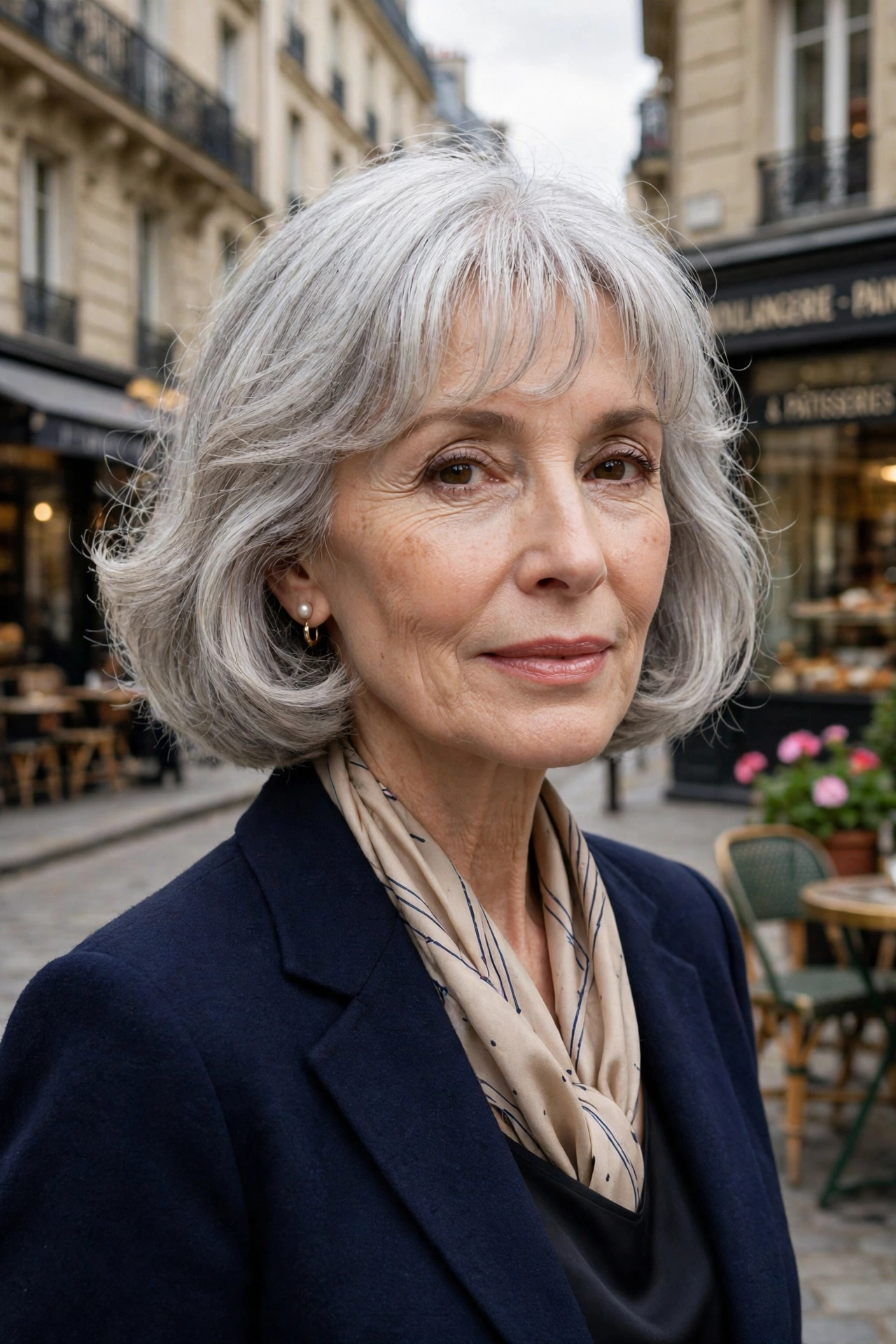
36. French Bob for Older Women
A French bob for older women is a soft, flattering chin-length cut with gentle waves, light bangs and a shape that lifts the face without looking severe. It suits women over fifty with fine, thinning or grey hair, and any face shape, because the short length adds fullness and the soft fringe draws attention to the eyes. Silver or grey hair looks particularly elegant in this cut, since the shape is classic rather than trendy.
Maintenance is low to medium: trims every six to eight weeks, a volumising mousse at the roots if hair has thinned, and a purple shampoo if you want to keep silver bright. Style with a soft blow-dry and light waves, avoiding heavy product that can make fine hair look flat. Ask for a chin-length bob with soft layers, wispy bangs and a rounded shape, and tell your stylist you want lift and softness, not a sharp, geometric line.
37. French Bob with Wet Look Finish
The wet look French bob is styled with a glossy, slick finish that looks freshly wet, giving a chin-length cut an evening, editorial edge. It suits oval and heart faces, straight or wavy hair, and medium density, and it is best as an occasional styling choice rather than an everyday look, since the product load is heavier than usual. It photographs beautifully and pairs well with bold makeup or a simple outfit.
Styling is the whole point here: apply a wet-look gel or gloss cream to damp hair, comb it back or to the side, and let it set without blow-drying it fluffy. The cut itself needs no special shaping, just a clean chin-length bob. Ask for a classic chin-length bob, and at home, use gel rather than oil, which can look greasy instead of glossy, and wash it out fully the next day to avoid build-up.

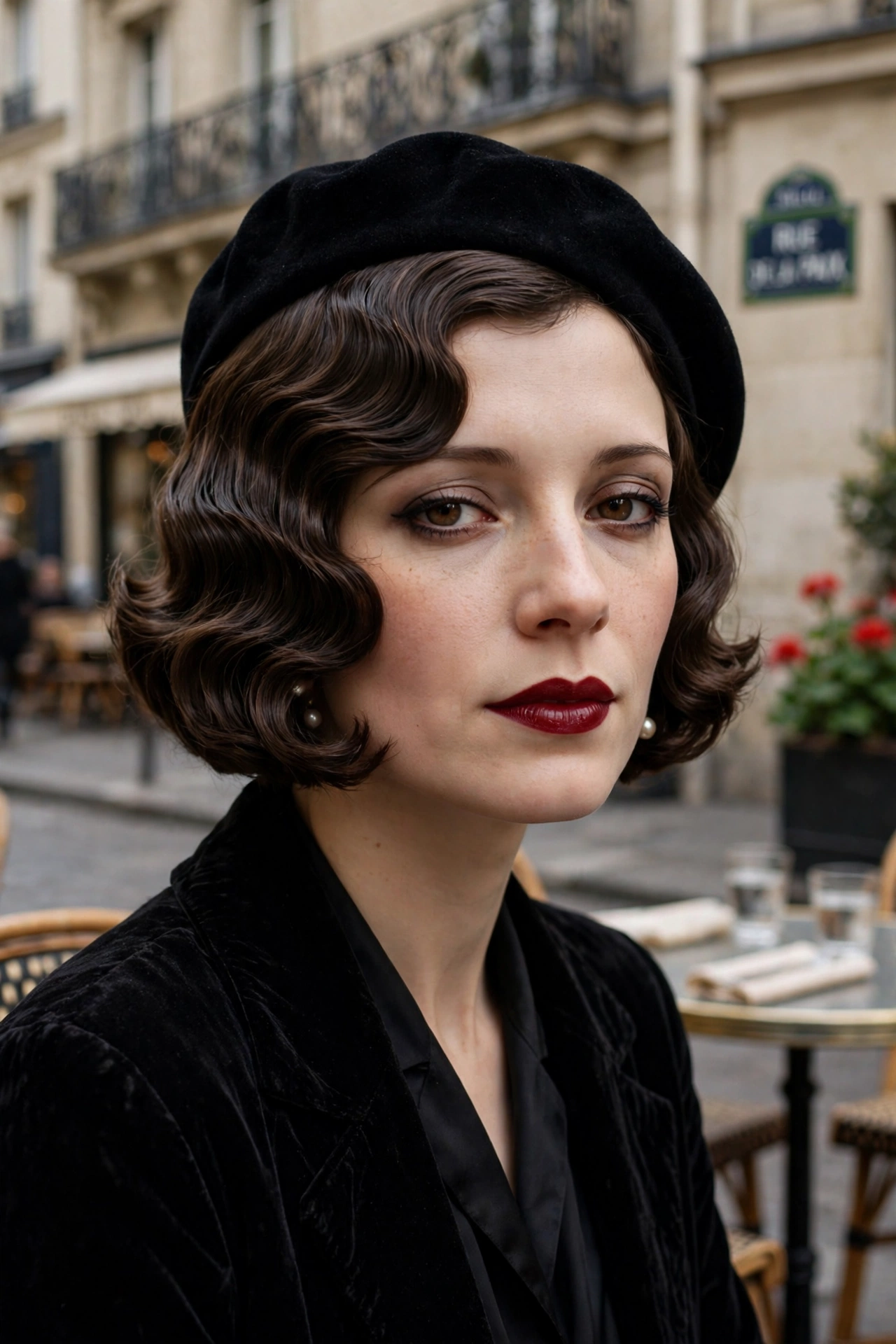
38. French Bob with Vintage Waves
Vintage waves bring a 1920s-inspired, sculpted wave to a chin-length bob, with smooth, defined S-shaped bends rather than loose, modern tousles. This version suits oval and heart faces, straight or wavy hair that holds a wave, and special occasions, because the sculpted finish is more formal than an everyday French bob. It is a beautiful nod to the era when the French bob was born.
Styling takes time and practice: set the waves with a curling wand or pin curls, brush them out gently into smooth S-waves, and set with a flexible hairspray. A trim every six weeks keeps the outline crisp. Ask for a one-length chin bob with a clean perimeter, since vintage waves need an even base to sit on, and tell your stylist you plan to wear it in sculpted waves, so they do not add texture that would break the wave pattern.
39. French Bob with Textured Ends
Textured ends are created by point-cutting only the last inch of a chin-length bob, leaving the body smooth and the tips airy and feathered. This version suits thick hair that needs the ends lightened, straight or wavy hair, and oval or long faces, because the feathered tips stop the cut from looking heavy while keeping the overall shape clean. It is subtler than a fully textured bob, and a good choice if you like a polished look with soft movement.
Maintenance is low to medium, with trims every seven weeks to refresh the feathered tips. Style smooth with a round brush, or tousle just the ends with texture spray, and avoid heavy straightening, which can make textured ends look frayed. Ask for a chin-length bob with a smooth body and point-cut, textured ends only, and be clear that you want the texture at the tips, not throughout the cut.

40. French Bob with No Bangs
The no-bangs French bob is the most modern, minimal version: chin length, open forehead, and all the interest in the cut and texture rather than a fringe. It suits oval and long faces, straight, wavy or curly hair, and anyone who dislikes fringe upkeep or wants maximum styling flexibility, since it can be parted in the middle, on the side, or swept back. It also suits a smaller forehead, where bangs might feel crowded.
Maintenance is the lowest of all the versions here: no fringe to trim, and trims every seven to eight weeks for the bob itself. Style it with a centre or side part, smooth or wavy, and add a hair accessory or a tuck behind one ear to change the look without cutting anything. Ask for a chin-length bob with no fringe and a clean, versatile outline, and decide your usual parting before the cut, since it affects how the front falls.

Frequently Asked Questions
What is a French bob haircut?
A French bob is a short haircut that ends at or just above the chin, usually with blunt or softly textured ends and a relaxed, lived-in finish. It is often paired with bangs, though no-bang versions are now just as popular, and it is shorter and softer than a classic bob, with an emphasis on natural movement rather than a rigid, geometric shape.
Who suits a French bob?
Most face shapes can wear a French bob, but the details matter: oval faces suit almost every version, round faces benefit from longer front pieces and a side part, square faces look softer with rounded ends and waves, and heart faces are balanced by volume at the ends. Fine hair looks thicker in a blunt French bob, while thick hair needs internal layers to avoid a heavy, triangular shape.
How often does a French bob need trimming?
The bob itself usually needs a trim every six to eight weeks to keep its chin-length shape, while a fringe needs attention sooner — every three to four weeks for a full fringe, and every two to three weeks for micro bangs. Very short versions, like a cheekbone-length bob, also need trimming every four to five weeks, since even a little growth changes the outline.
Is a French bob low maintenance?
It can be, if you choose the right version for your natural texture. A textured, wavy or curly French bob often needs little more than air-drying with a texture or curl cream, while a sleek or polished French bob needs regular blow-drying or straightening. The lowest-maintenance versions are textured, messy and no-bangs bobs; the highest are micro bangs, sleek finishes and coloured versions that need root work.
How do I ask for a French bob at the salon?
Bring two or three photos of the exact version you want, and be specific about length (cheekbone, jaw or chin), ends (blunt or textured), fringe (full, wispy, curtain, side-swept or none) and how you will style it day to day. Ask your stylist to check the length when your hair is dry, especially for curly hair, which springs up as it dries, and say whether you want a polished or tousled finish, since that changes how the cut is shaped.
Conclusion
The French bob earns its lasting popularity because it is not one haircut but a family of them, and the right version depends on your face shape, hair texture and how much time you honestly want to spend styling. Start with the version that matches your natural hair, take a clear photo to your stylist, and remember that a trim every six to eight weeks is what keeps a short cut looking intentional rather than grown out.