39 Fulani Braids & Tribal Braid Ideas for 2026 — Beads, Cuffs, Cornrows & More
Introduction
Fulani braids are one of the most beautiful and culturally rich hairstyles in the world. Named after the Fulani people of West Africa, this style is built on neat cornrows at the front and sides, a signature plait down the centre, and long braids that fall freely at the back. What makes it so special is how personal it is: beads, cowrie shells, gold cuffs, rings and coloured thread turn the same foundation into a look that is entirely your own. It is protective, practical and endlessly versatile, which is why it has stayed popular for generations and keeps trending on Pinterest year after year.
Tribal braids take that same cornrow craft and push the pattern further. Zigzag partings, geometric shapes, stars, curves and criss-cross designs turn the scalp into a canvas, while the braids themselves can be long or short, thick or fine, natural or coloured. Whether you want a bold festival look, a neat everyday style, a wedding updo or a gentle protective style for a child, there is a tribal braid idea here that fits. Every design in this guide comes with its own original photo and practical styling advice, so you can show your braider exactly what you want or try a simpler version at home.
Before you sit in the braiding chair, a little preparation goes a long way. Wash and deep-condition your hair, detangle it fully, and stretch it with a blow-dry or braiding it damp so the cornrows sit smooth. Bring reference photos, decide on your beads and accessories in advance, and be honest about how much time you have, because a full head of fine Fulani braids can take several hours. With clean, moisturised hair and a clear picture of the finished look, your braids will last longer, feel more comfortable and look their very best.
1. Classic Fulani Braids with Beads
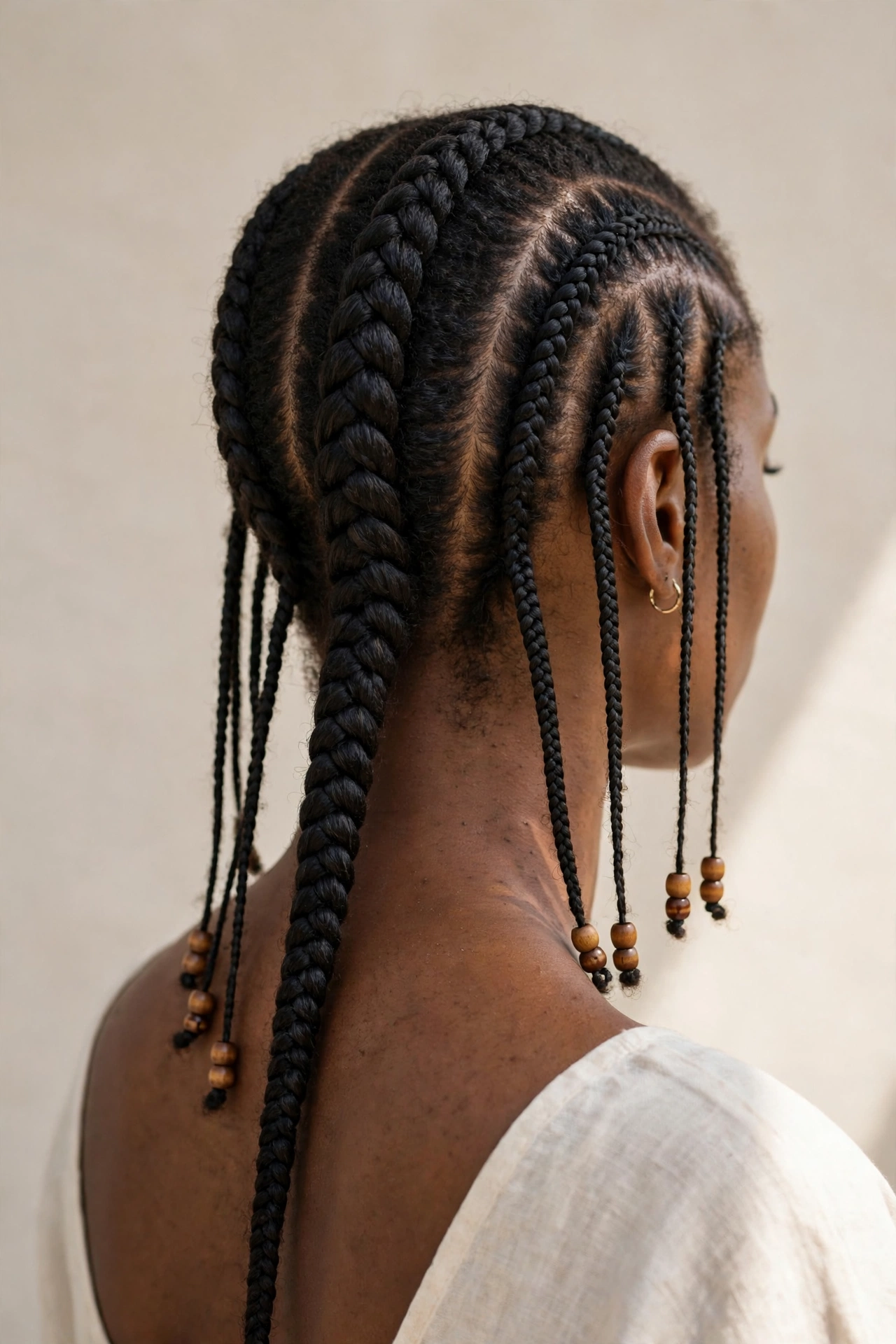
The classic Fulani braid is where it all begins: a centre cornrow plait running from the forehead to the nape, slim cornrows fanning out on either side, and long free-hanging braids finished with beads. It is the most recognisable version of the style, and it suits every face shape and hair length. The beads add movement and a gentle sound as you walk, and they catch the light beautifully in photos. This is the look to choose if you want something timeless rather than trendy.
To get it right, ask your braider for a clean centre parting and even, medium-sized cornrows that are not pulled too tight at the hairline. The beads usually go on the last few inches of each braid, secured with a small elastic or a knot so they do not slip off. Wooden beads give a warm, natural feel, while clear or metallic beads look more polished. Moisturise your scalp with a light oil every few days, and tie the braids up in a silk scarf at night to keep the style neat for three to four weeks.
2. Fulani Braids with Gold Cuffs
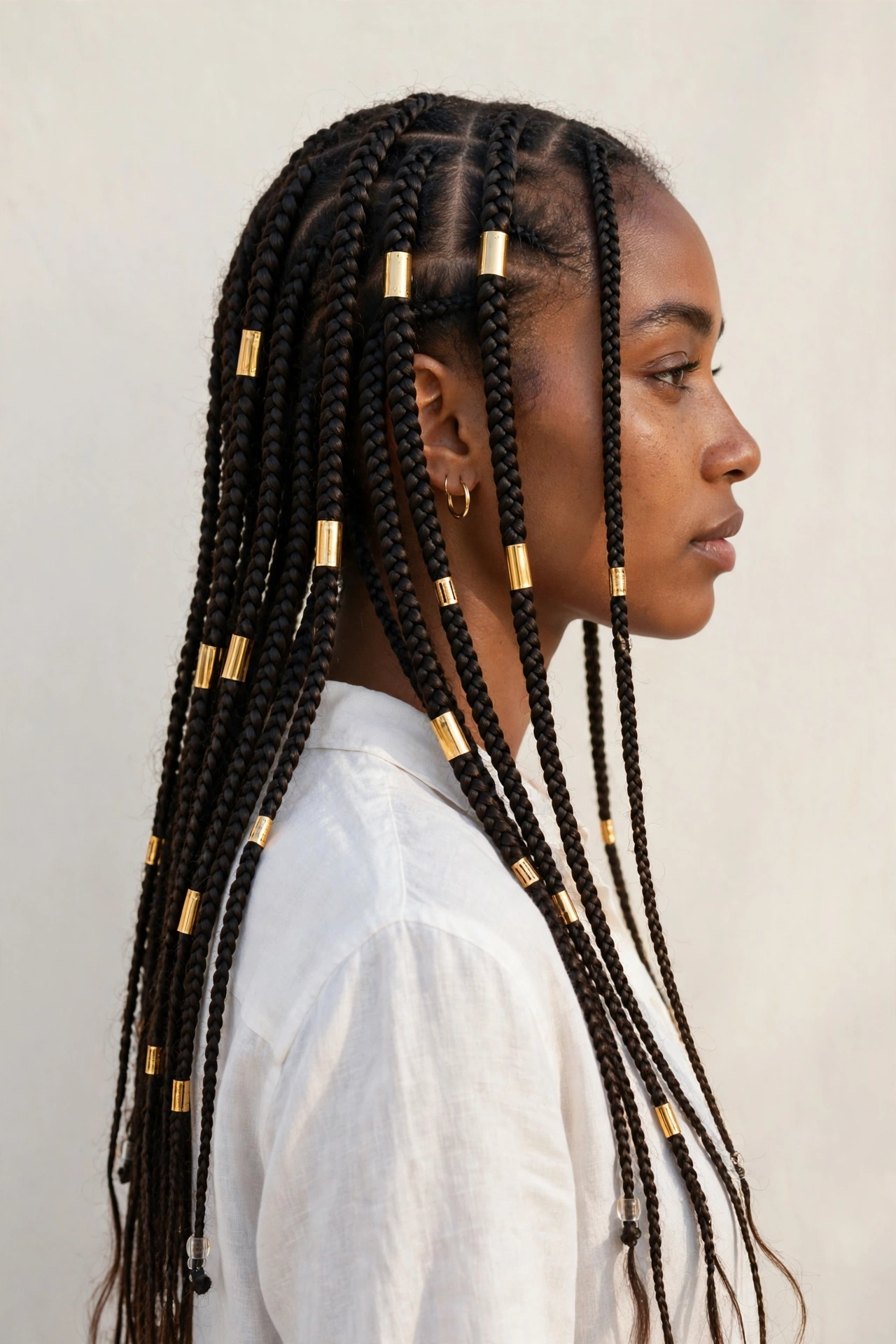
Gold cuffs turn simple Fulani braids into a statement. Small metal tubes slide onto individual braids and sit at different heights, catching the light every time you move your head. The effect is regal and elegant without needing any colour or extra length, which makes it a favourite for weddings, parties and special occasions. Gold works beautifully against dark hair, and it pairs just as well with braided updos as it does with braids worn loose.
Placement matters more than quantity with cuffs. A few cuffs near the face and one or two on the longer braids at the back usually look better than covering every braid. Choose cuffs that clip or slide on easily so you can move them around, and take them off before washing your hair so they do not tarnish. If you want a softer version, mix gold cuffs with a few wooden beads, or use rose-gold cuffs for a warmer tone. Keep the rest of your jewellery simple so the braids stay the star of the look.
3. Fulani Braids with Cowrie Shells
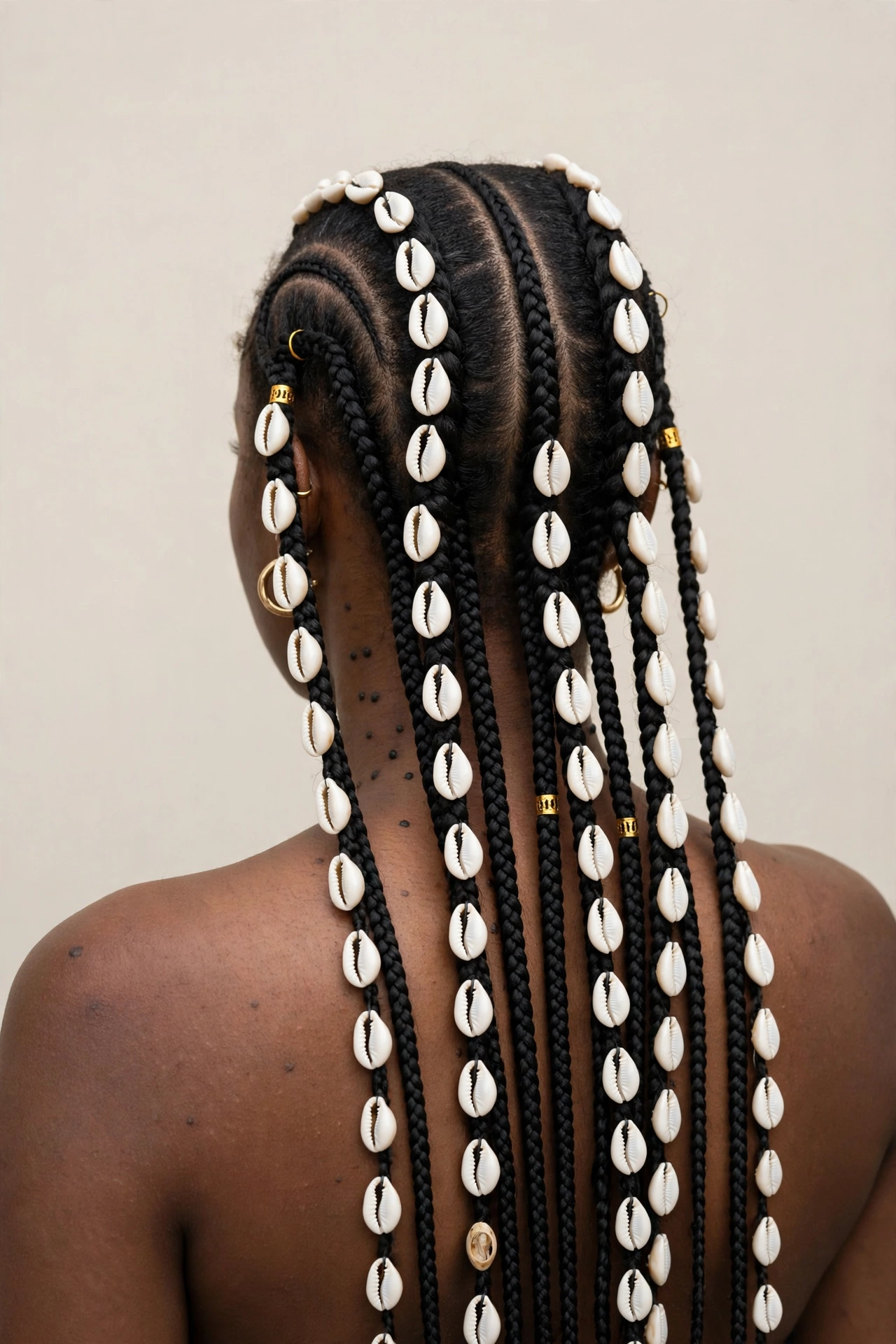
Cowrie shells have deep cultural meaning in West African tradition, where they were once used as currency and worn as symbols of prosperity and protection. Woven into Fulani braids, they give the style a proud, heritage feel that no other accessory can match. The creamy white shells stand out against dark braids and look stunning in festival photos, holiday pictures and cultural celebrations. This is a look with a story behind it, and it wears that story beautifully.
Shells are usually threaded onto the ends of braids or attached with small rings and wire, so ask your braider to secure them firmly if you plan to be active. Keep the shells to the longer braids at the back and sides so they do not tap against your face, and choose smaller shells if you want the style to feel light. A few shells go a long way, so you do not need one on every braid. Pair them with a simple outfit and let the shells do the talking.
4. Fulani Braid Crown with Centre Plait
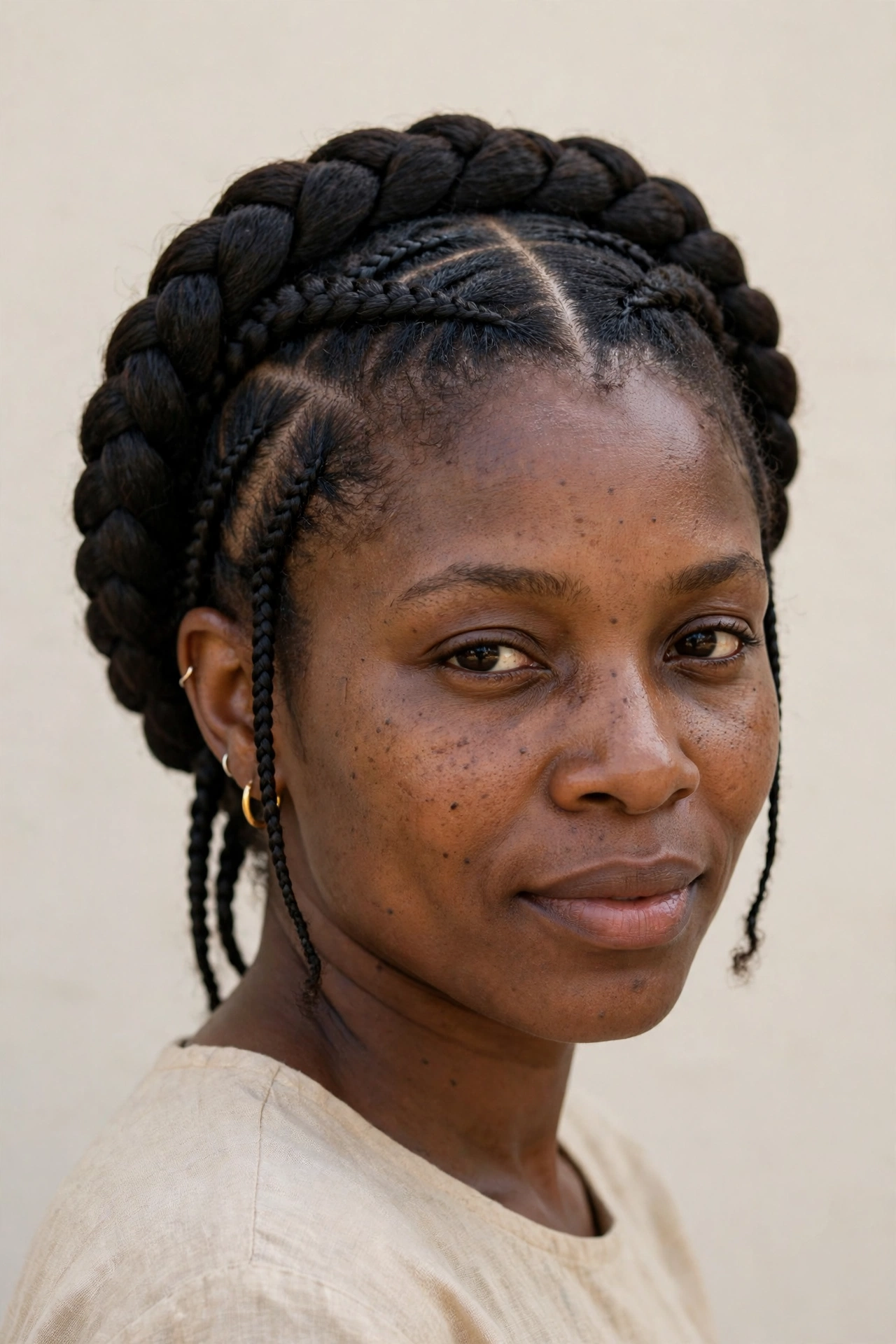
The Fulani braid crown takes the classic centre plait and wraps the braiding around the head like a halo, framing the face on every side. It is elegant, polished and completely practical, because it keeps every strand off the face and neck. Brides love it, and it works just as well for formal dinners, job interviews and hot summer days when you want your hair up but still want it to look special. The crown shape also photographs beautifully from the front, which is rare for a braided style.
Building a crown takes skill, so look for a braider who is confident with curved cornrows. The braid should follow the hairline smoothly without pulling too tight at the temples, and the tail should be tucked and pinned so the join is invisible. Loosen two thin strands at the front for a softer finish, and add a few small gold cuffs or pearls if you want a dressier version. Because the hair is held close to the head, this style usually lasts well and grows out gracefully.
5. Side-Swept Fulani Braids
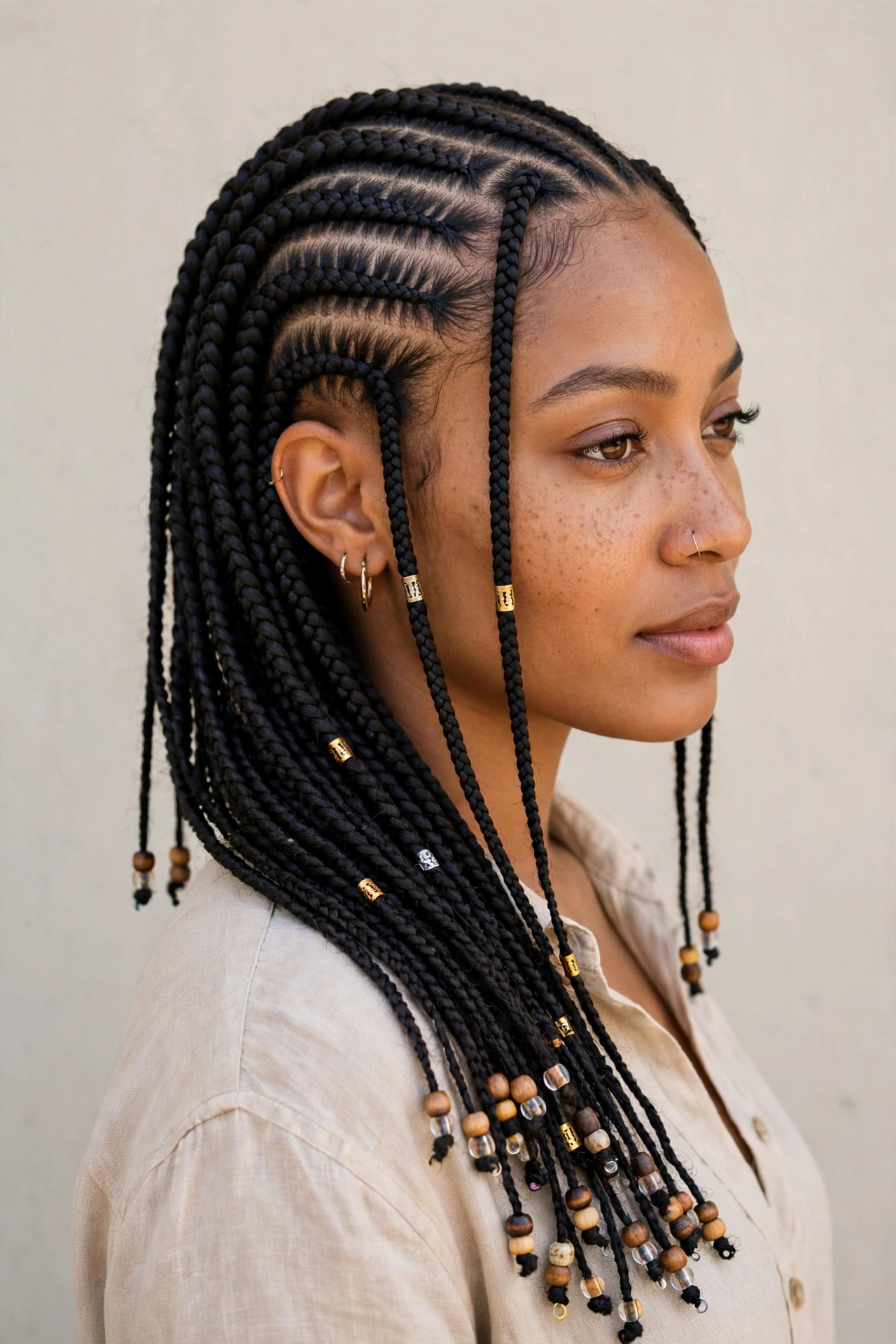
Side-swept Fulani braids are all about drama and movement. Instead of falling evenly down the back, every braid is directed over one shoulder, creating a thick, sweeping curtain of hair that frames one side of the face. It is a glamorous, red-carpet feel that works brilliantly for evenings out, date nights and photoshoots, and it suits anyone who likes their hair to make an entrance. The asymmetry also flatters round and square face shapes.
The trick is in the parting: a deep side part sets the direction, and the cornrows should all flow the same way so the sweep looks deliberate rather than accidental. Add small beads at the ends for weight and movement, and use a light edge-control product to keep the hairline smooth. This style is easy to refresh each morning by re-sweeping the braids and re-tying them loosely, and it pairs beautifully with statement earrings on the exposed side.
6. Fulani Braids with Beaded Fringe
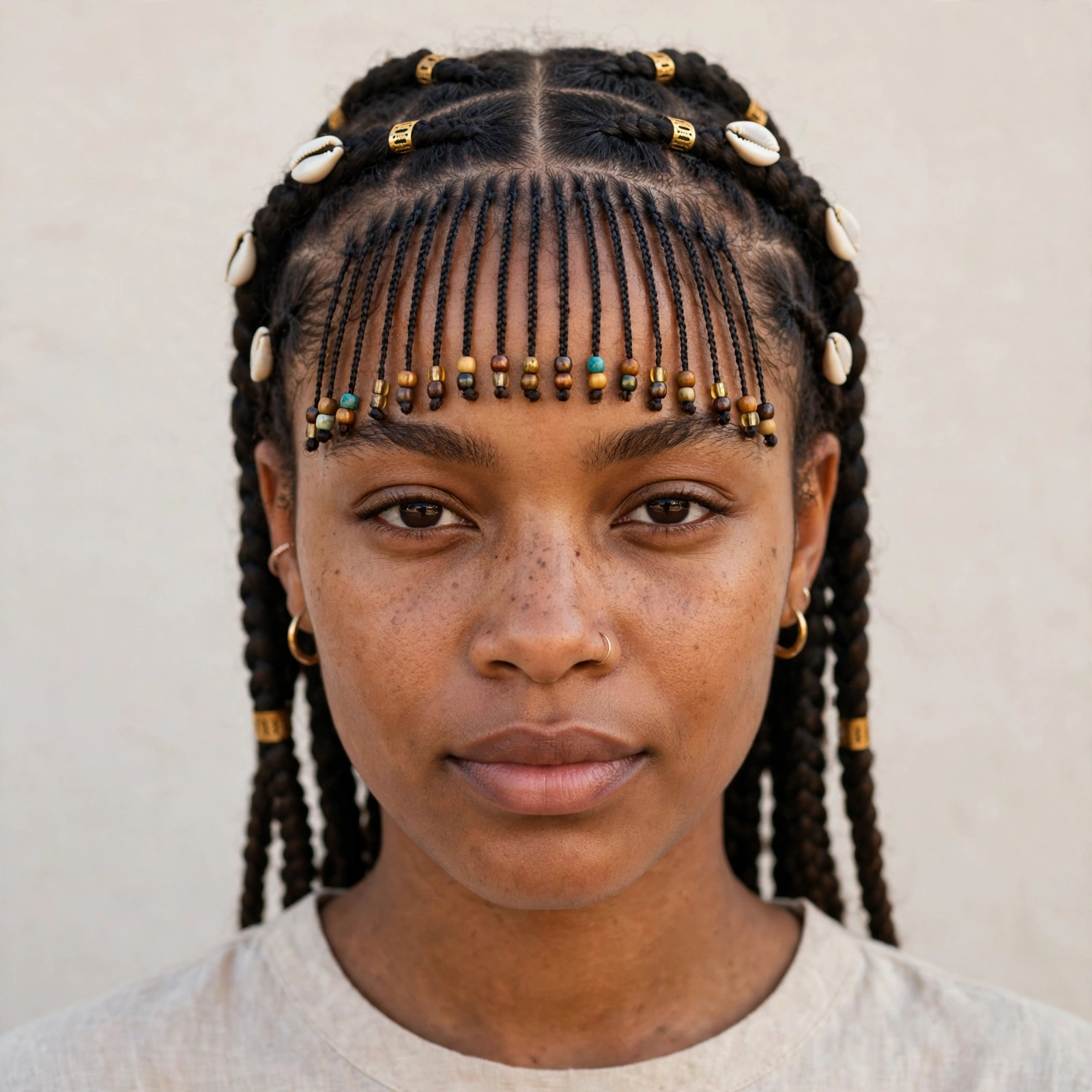
A beaded fringe is a playful twist on the classic Fulani style. Short, thin braids fall across the forehead like a fringe, each one finished with a tiny bead, while the rest of the hair is braided back in the usual Fulani pattern. It frames the eyes, softens the forehead and gives the whole look a youthful, festival-ready energy. It is a great choice if you like the idea of a fringe but do not want to cut your own hair.
Keep the fringe braids short and light so they do not feel heavy on the forehead, and choose small, lightweight beads so they sit comfortably. The fringe can be swept to one side or worn straight across, and it works with both long and short braids at the back. If the beads bother you while sleeping, tie the fringe back with a silk scarf at night. This is one of the easiest Fulani variations to personalise, because changing the bead colours changes the whole mood.
7. Fulani Braids into High Ponytail
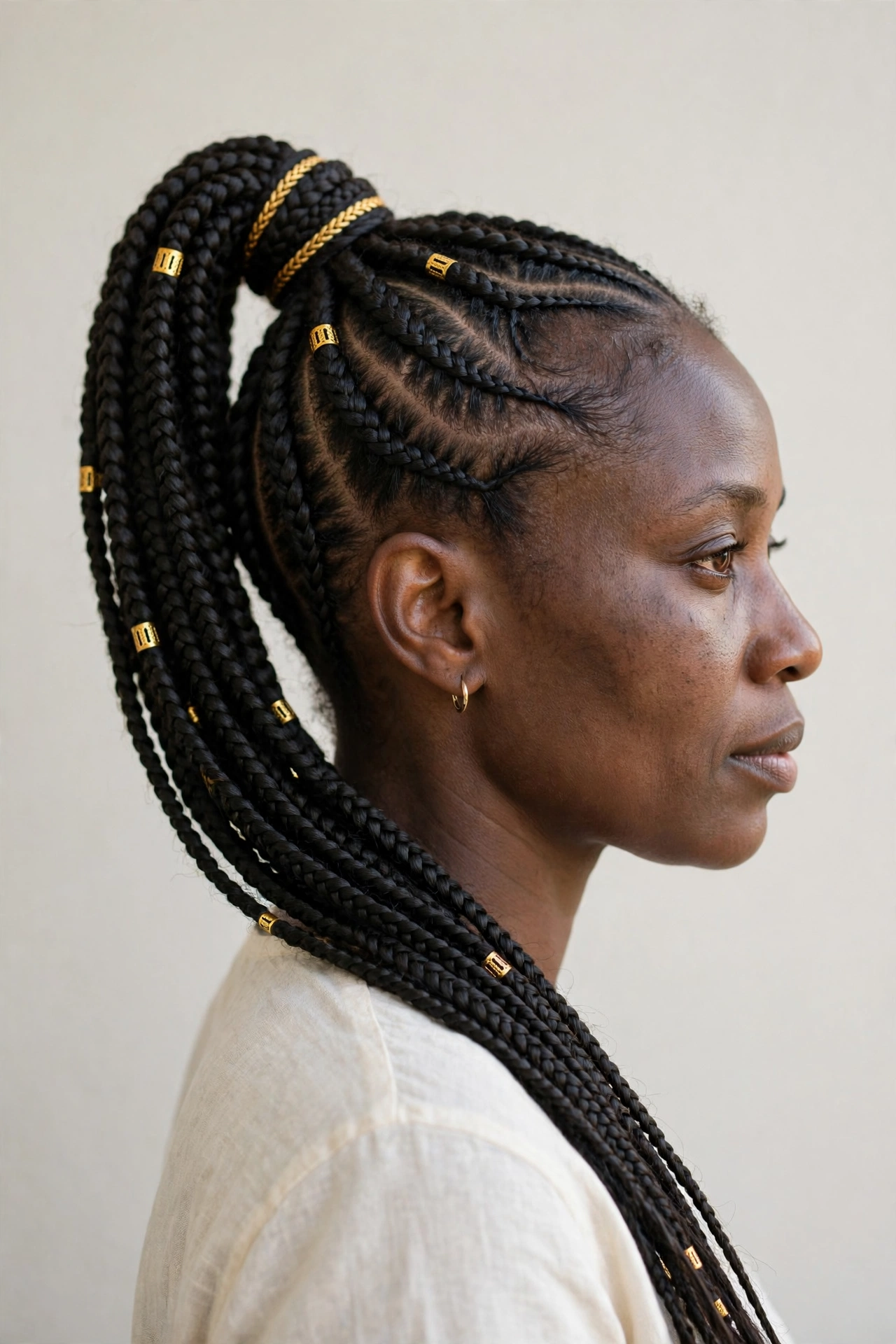
A high ponytail turns Fulani braids into a bold, sporty statement. The cornrows lead up to the crown, where the braids gather into a long, swinging ponytail that shows off the neatness of the braiding from every angle. It is perfect for the gym, dancing, holidays and any day when you want your hair completely out of the way without giving up on style. The height also adds instant lift to the face.
To keep the ponytail comfortable, make sure the cornrows are not pulled too tight at the front, and use a strong, snag-free tie or a wrap of braiding hair around the base to hide the elastic. You can add cuffs or beads to the ponytail itself, or wrap a strand of braid around the base for a polished finish. At night, take the ponytail down and re-tie it loosely so the roots do not get stressed, and your style will stay fresh for weeks.
8. Fulani Braids with Curly Ends
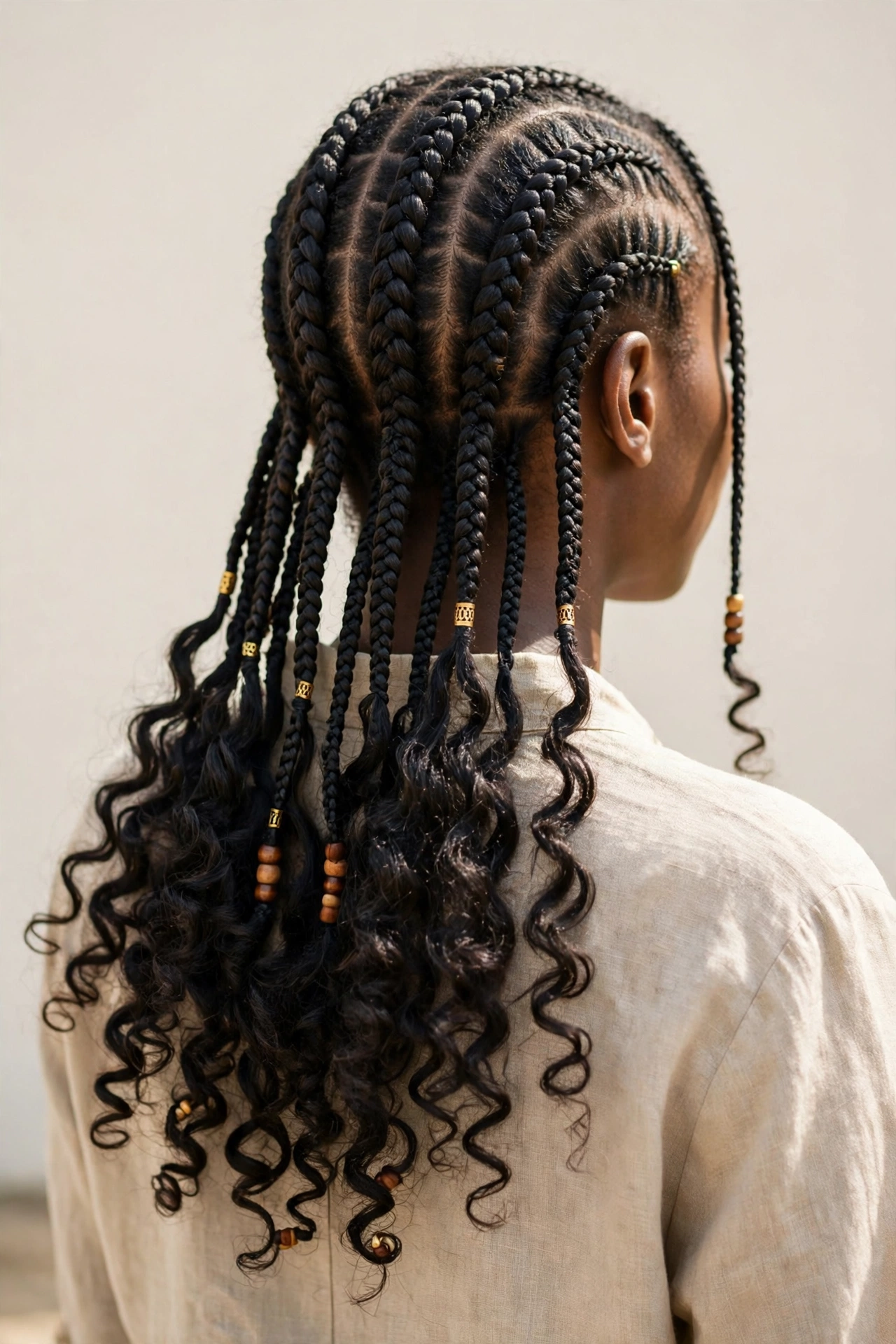
Curly ends soften Fulani braids and give them a romantic, feminine finish. The braids stop a few inches short, and the remaining hair is left loose and curled, so the style moves from structured cornrows at the top to soft, bouncy curls at the bottom. It is a lovely middle ground between a fully braided look and a curly hairstyle, and it works beautifully for weddings, holidays and everyday wear. The contrast in texture also makes the braids look thicker and fuller.
You can create the curls with flexi rods, perm rods or by braiding the ends and unravelling them, and a little curl cream keeps them defined without making them stiff. Keep the curly sections moisturised, because loose ends dry out faster than braided hair, and sleep with the curls loosely pinned up in a silk bonnet. If you want extra volume, ask for a few curly pieces to be left out between the braids as well as at the ends.
9. Fulani Braids with Colourful Beads
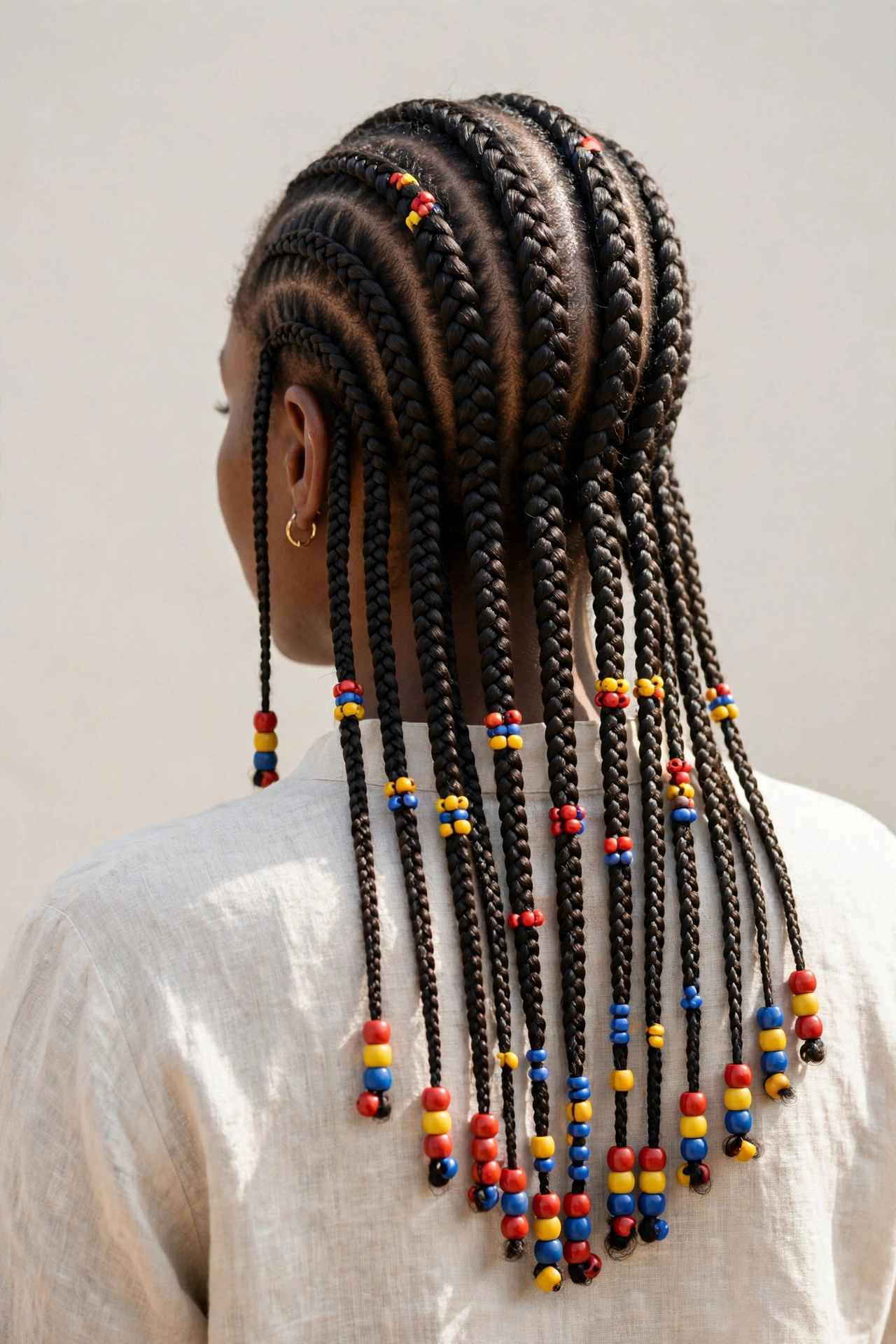
Colourful beads are the easiest way to make Fulani braids feel fun and personal. Red, yellow, blue, green and pink beads mixed along the ends of the braids turn a classic protective style into a joyful, eye-catching look that suits festivals, holidays and summer days. Children love this version, but it works just as well for adults who want their hair to reflect their personality. The colours also photograph brilliantly against dark braids.
The key is to pick a colour story rather than using every colour at once. Two or three shades that match your wardrobe will look more polished than a random mix, and you can change the beads halfway through the life of the style for a fresh look without re-braiding. Use lightweight plastic or wooden beads so the ends do not feel heavy, and secure each bead with a small elastic. This is also a wonderful way to introduce kids to braided styles, because they can help choose their own bead colours.
10. Fulani Braids with Copper Cuffs
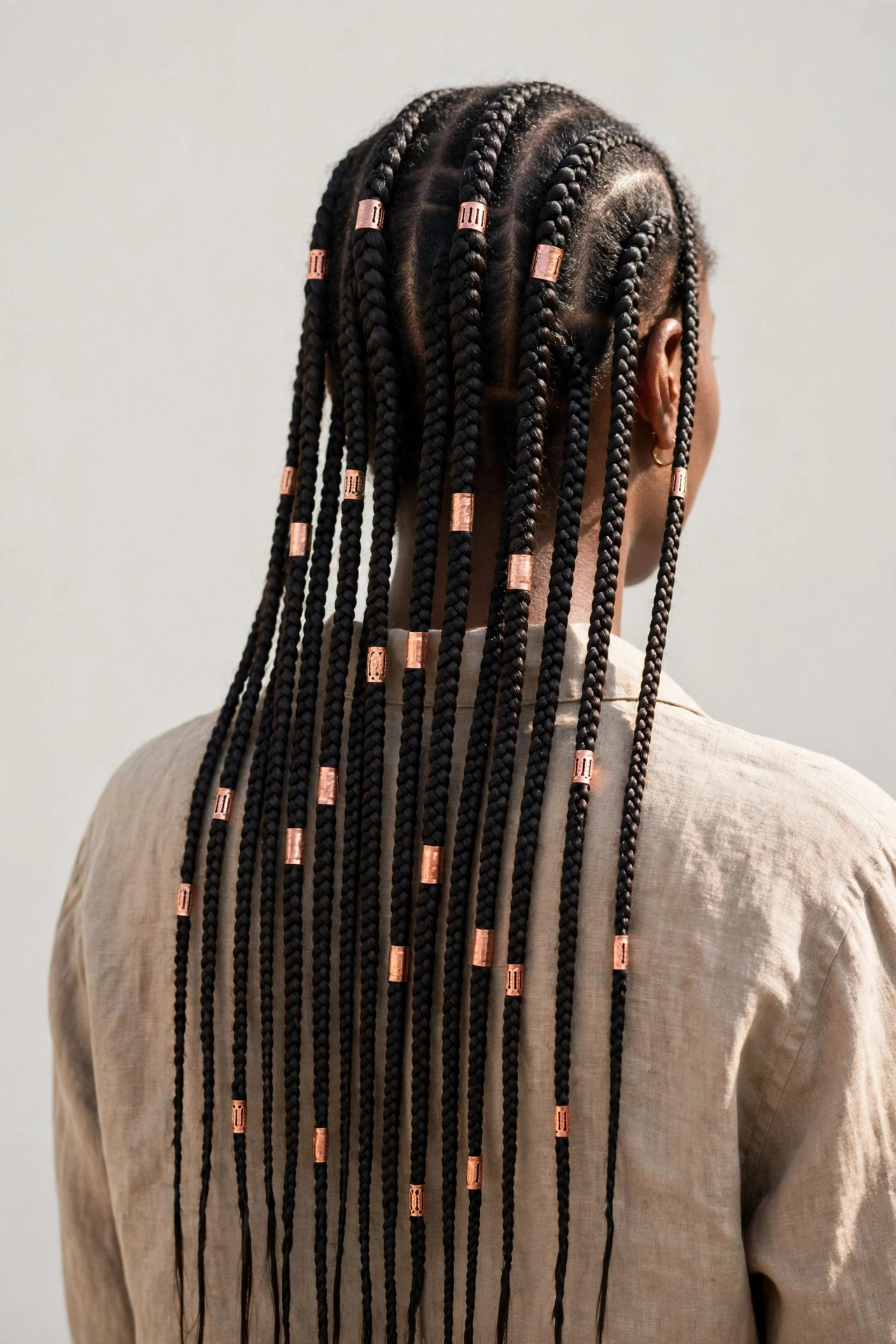
Copper cuffs give Fulani braids a warm, earthy glow that sits beautifully between gold and rose gold. The reddish metal flatters warm skin tones and dark hair, and it feels a little more unusual than standard gold, so your style stands out without shouting. Cuffs can be spaced along the braids or clustered near the ends, and they look just as good on long, flowing braids as they do on a braided updo. This is a sophisticated choice for anyone who wants metallic shine with a softer edge.
Mix copper cuffs with a few wooden beads for a natural, bohemian feel, or keep the cuffs alone for a cleaner, more modern finish. Because copper can tarnish, take the cuffs off before swimming or washing your hair, and wipe them dry if they get wet. Choose cuffs that open and close easily so you can reuse them on your next braided style, and keep the number modest: five or six well-placed cuffs usually look better than twenty.
11. Fulani Braids and Box Braids Combo
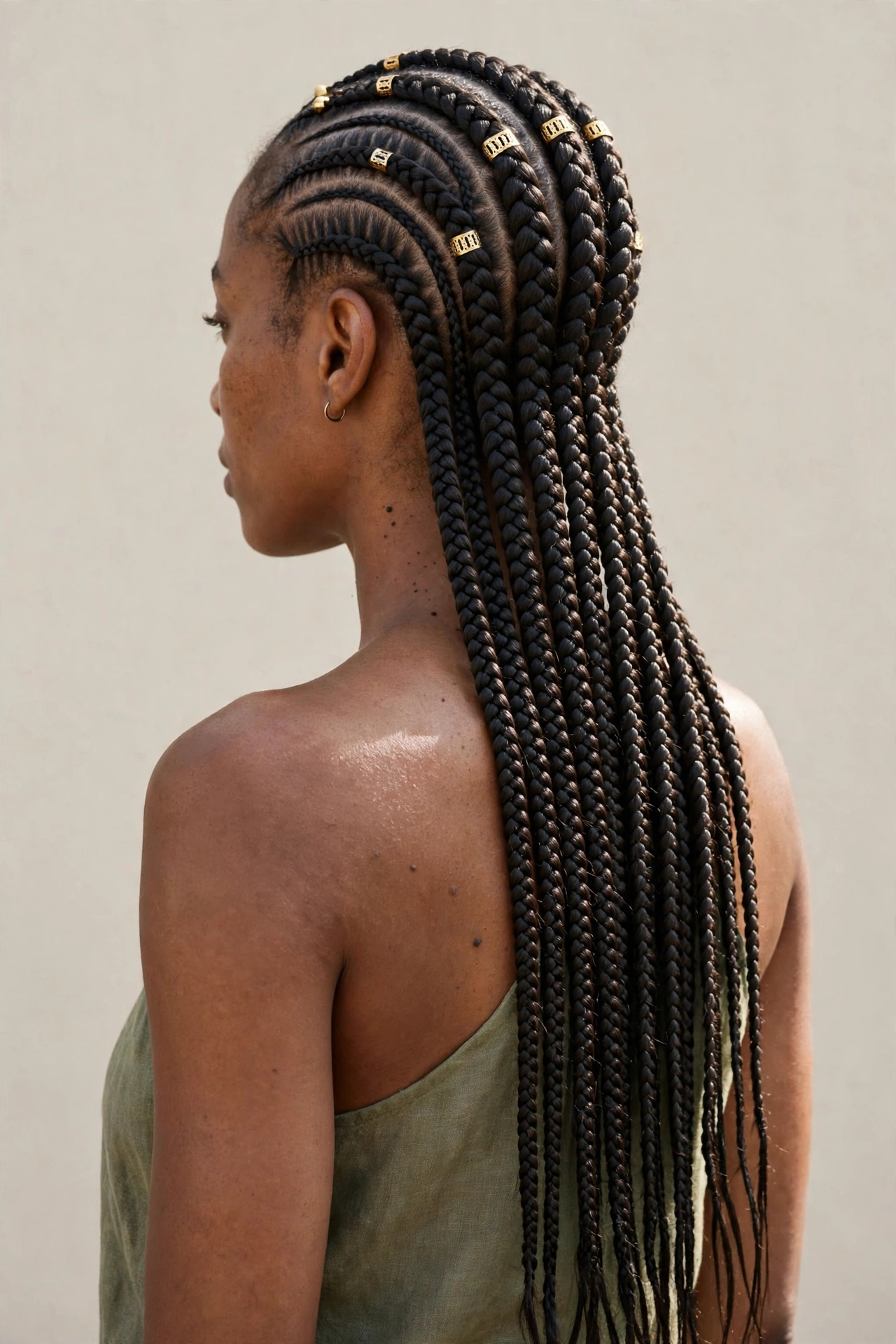
This combo style gives you the best of both worlds: neat Fulani cornrows at the front and full, free-hanging box braids at the back. The cornrows keep the hairline smooth and show off the Fulani pattern, while the box braids add volume, length and movement. It is a practical protective style that lasts for weeks, and it is one of the most popular braided looks on Pinterest because it photographs so well from every angle.
Ask your braider to blend the transition smoothly so the cornrows flow into the box braids without a visible break, and choose a box-braid size that matches the cornrows: medium braids usually balance best. You can add beads or cuffs to the box braids, or leave them plain for a clean look. Because the front is cornrowed, the style grows out more gracefully than full box braids, and you can restyle the back into a ponytail or bun without disturbing the front.
12. Fulani Braids with Bantu Knots
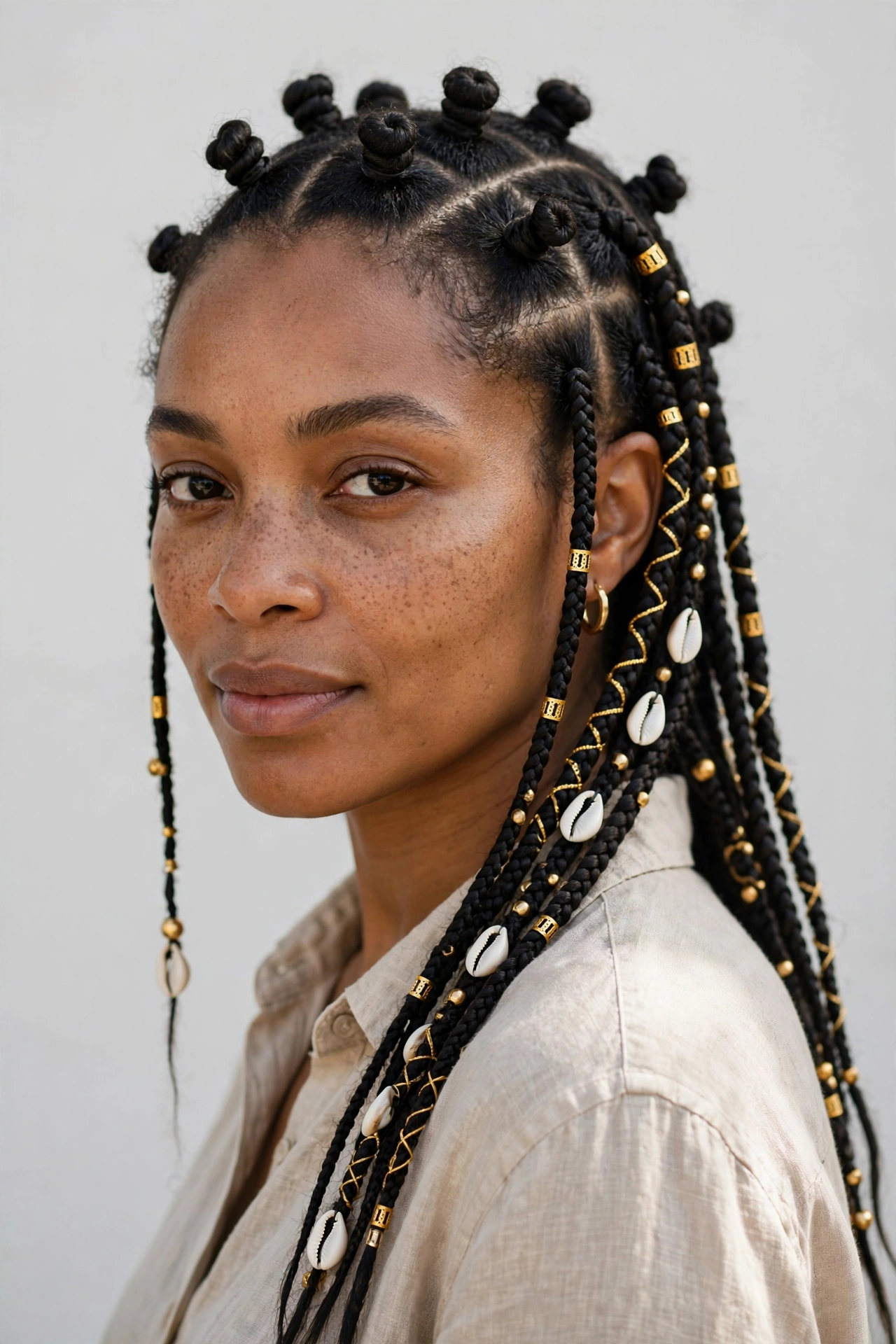
Bantu knots add a sculptural, statement-making twist to Fulani braids. The braids are gathered into small coiled knots on top of the head, creating a crown of texture that is bold, artistic and full of cultural pride. It is a look that turns heads at festivals, photoshoots and celebrations, and it doubles as a heat-free way to create curls: take the knots down after a few days and the braids fall into soft waves. Few styles are this versatile.
Keep the knots small and evenly spaced so the style feels balanced, and do not wind them too tightly or they will pull at the roots. A little edge control smooths the hairline, and gold cuffs on the braids leading into the knots add extra polish. This style works best on medium to long braids, and it is worth booking extra time with your braider, because neat knots take patience. When you are ready for a change, unravel the knots for a second look without any extra work.
13. Fulani Braids with Tribal Zigzag Parting
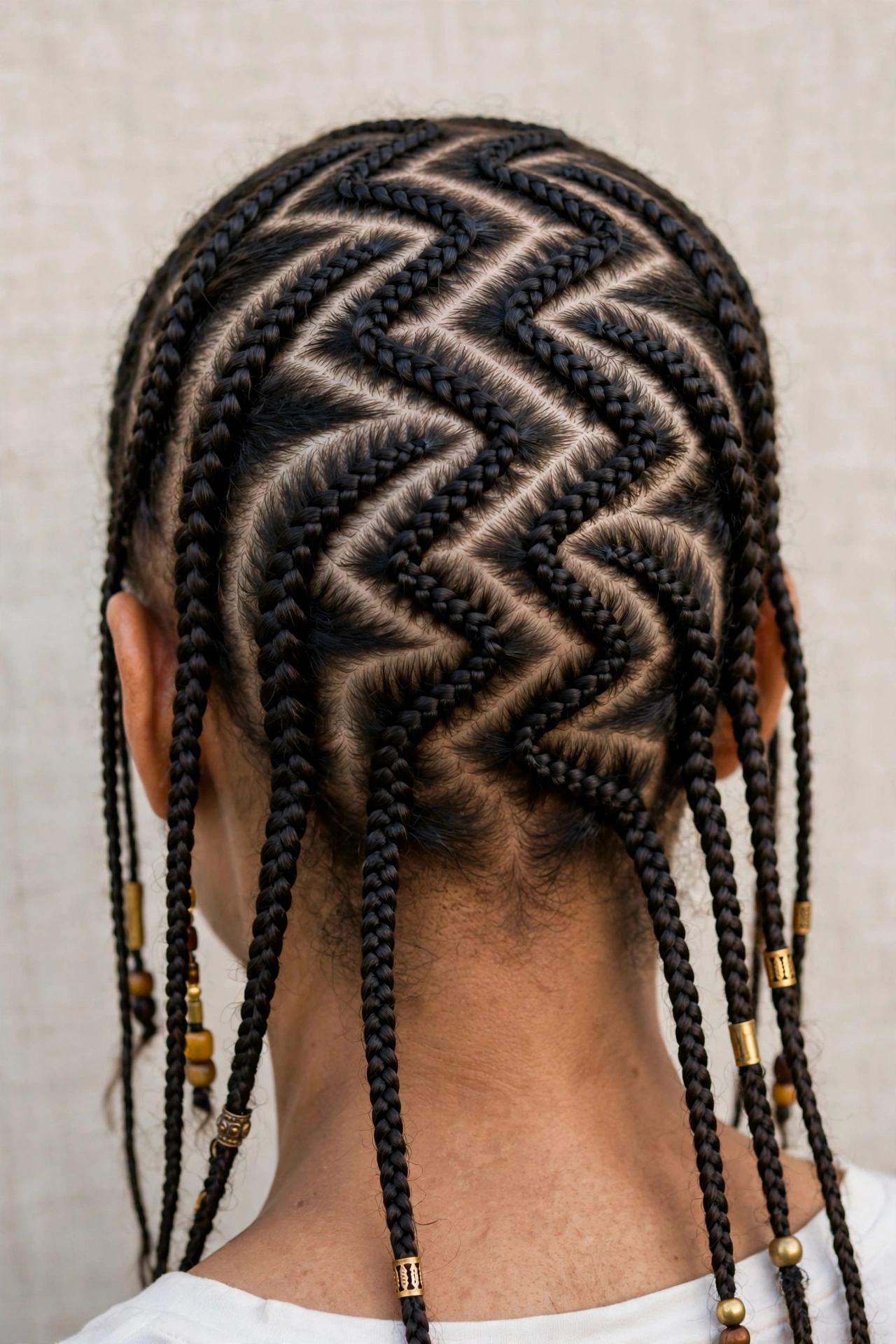
A zigzag parting turns the scalp into a work of art. Instead of straight lines, the cornrows follow sharp zigzag partings that create a striking geometric pattern before the braids even begin. It is a bold tribal look that stands out in photos and at festivals, and it shows off your braider's skill beautifully. The zigzags also add visual interest to the simplest braid lengths, so you do not need beads or colour to make a statement.
Precision is everything here, so choose a braider who is confident with detailed partings and bring a reference photo of the exact zigzag shape you want. The partings should be clean and even, with no stray hairs crossing the lines, and a little edge control keeps them crisp. Because the pattern is the star, keep accessories minimal: a few small beads at the ends are enough. This style looks best with the braids worn down so the full pattern stays visible.
14. Fulani Braids for Short Hair
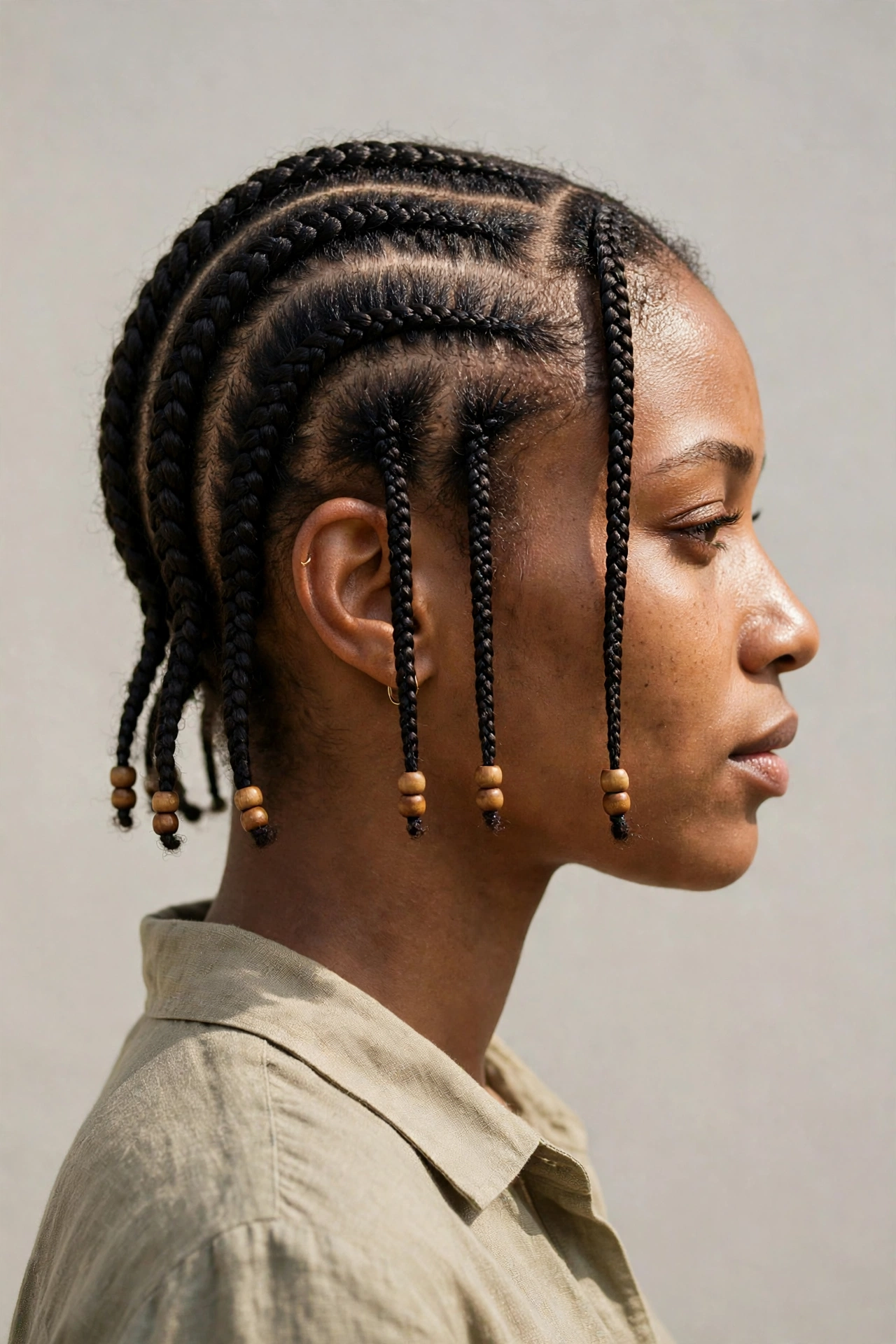
Short hair suits Fulani braids beautifully. Chin-length or shoulder-length braids keep the classic cornrow pattern and centre plait, but the shorter length makes the style lighter, quicker to install and easier to manage day to day. It is a great first Fulani style if you are trying braids for the first time, and it works wonderfully for work, school and hot weather. The shorter braids also show off beads and cuffs really well, because nothing gets lost in length.
Ask for slim to medium cornrows so the pattern stays visible on a shorter head of hair, and add small beads at the ends for a finished look. Short Fulani braids grow out gracefully and are easy to restyle into a half-up look or a small bun. Keep the scalp moisturised and the edges smooth, and you will get three to four weeks of wear from a style that takes far less time in the chair than waist-length braids.
15. Long Fulani Braids with Beaded Ends
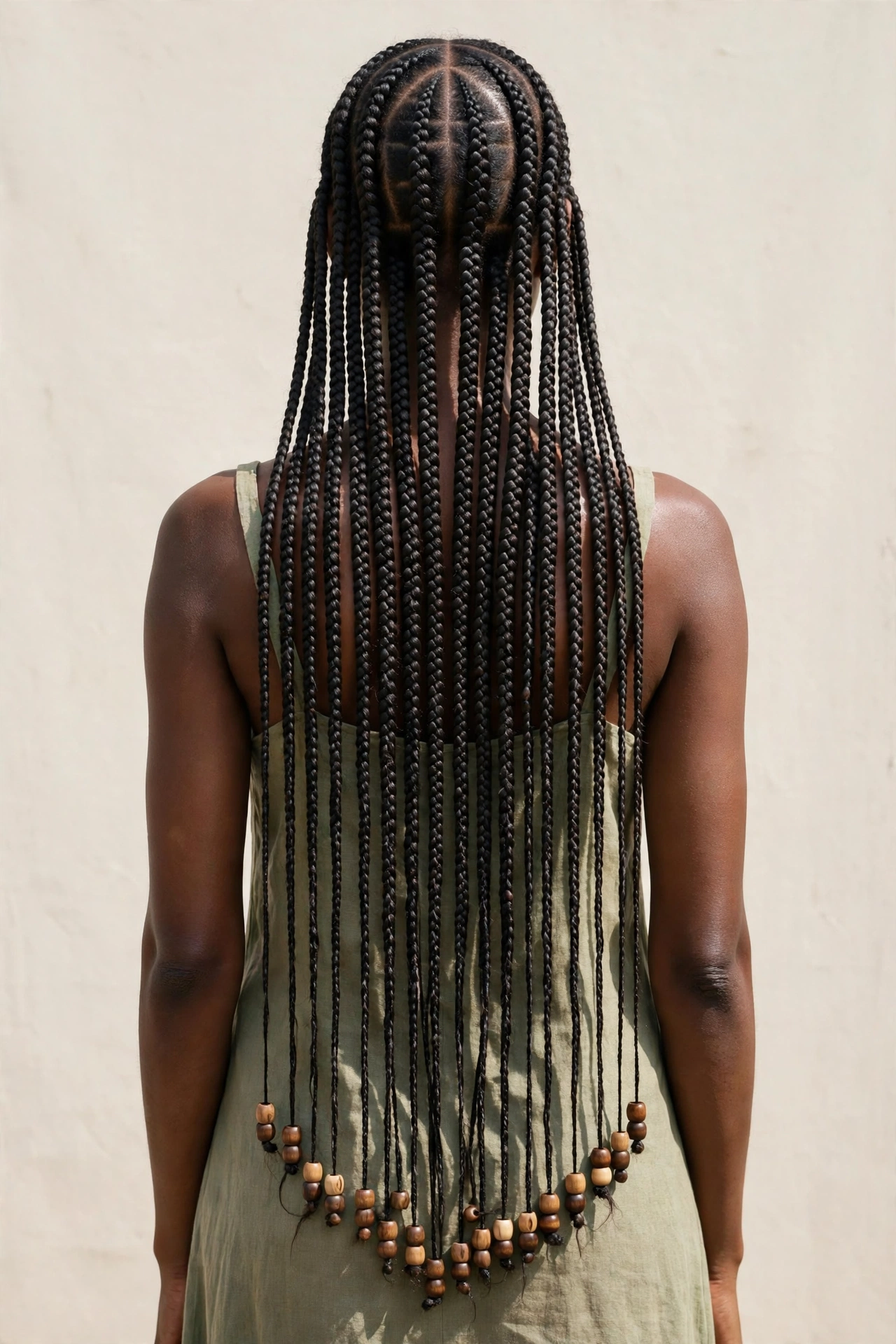
Waist-length Fulani braids with beaded ends are pure drama. The long braids move beautifully when you walk, the beads add weight and rhythm, and the overall effect is glamorous and unforgettable. This is the style for holidays, weddings, photoshoots and anyone who has always wanted Rapunzel-length hair without waiting years to grow it. Extensions make the length possible on any natural hair, and the beads keep the ends looking intentional rather than straggly.
Long braids need a little more care than short ones. Tie them up loosely at night, keep the ends moisturised, and avoid letting the beads catch on clothing or bag straps. Choose lightweight beads so the style does not pull on your neck, and consider a half-up style on days when you want the length out of your face. With good care, long Fulani braids can last four to six weeks and give you endless styling options in between.
16. Fulani Braids with Layered Lengths
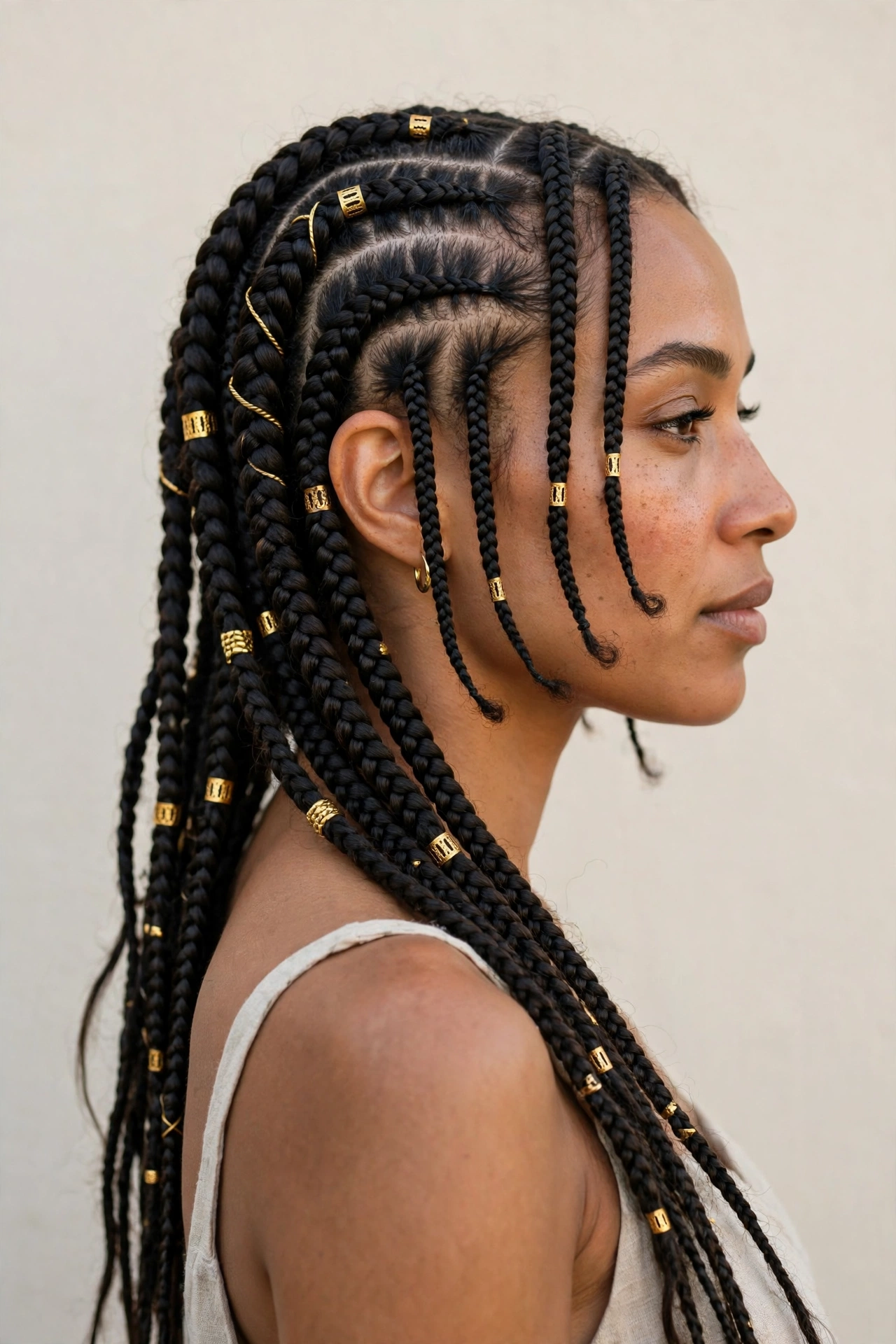
Layered lengths give Fulani braids a soft, salon-finished shape. Shorter braids frame the face, medium braids sit at the shoulders, and the longest braids fall down the back, creating a graduated silhouette that flatters almost every face shape. It is a clever way to get the movement of long braids without the weight, and it looks particularly good with curls or beads at the ends. The layers also make the style easier to tie up, because there is less bulk at the nape.
Tell your braider where you want the shortest layer to fall: cheekbone length frames the face, while jaw length feels more dramatic. The layers should be blended, not stepped, so the shape looks natural from the side. Add a few beads to the longest layer only, and keep the face-framing braids plain so they do not distract from your features. This is a flattering, low-maintenance option that grows out beautifully.
17. Fulani Braids with Goddess Curls
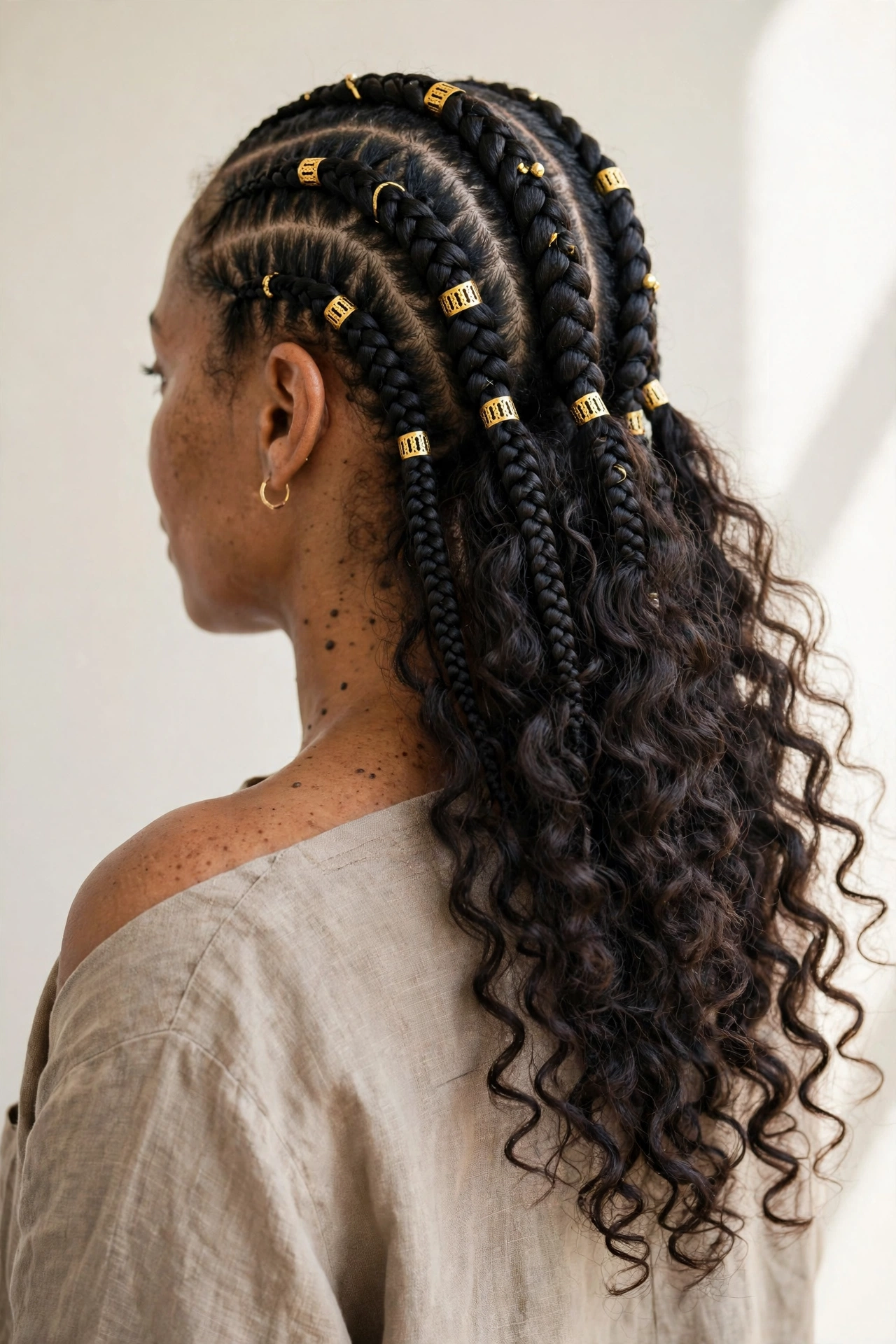
Goddess curls bring softness and romance to Fulani braids. Loose, flowing curls are woven between the braids and left free at the ends, so the structured cornrows at the front melt into a cloud of curls at the back. It is a dreamy, feminine look that is perfect for weddings, holidays and date nights, and it photographs like a dream. The mix of textures also makes the hair look much fuller than braids alone.
The curls need regular moisture to stay defined, so use a light curl cream or mousse and avoid heavy oils that weigh them down. Sleep with the curls loosely gathered in a silk bonnet, and refresh them in the morning with a little water and leave-in conditioner. If you want the curls to last longer, ask your braider to use curly extensions rather than leaving your own hair out, because extensions hold their shape better in humidity.
18. Tribal Braids with Geometric Parting
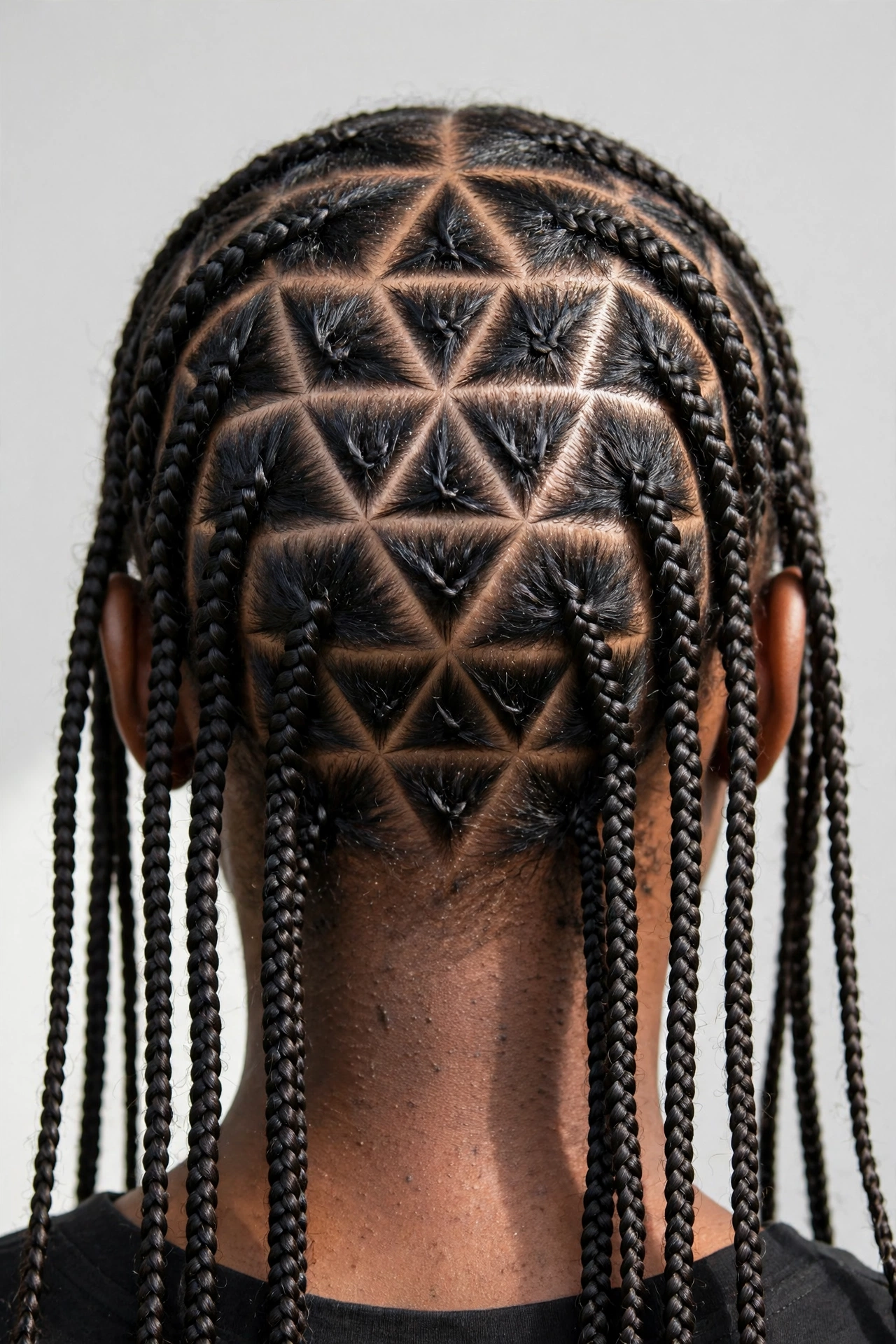
Geometric partings turn tribal braids into wearable art. Triangles, diamonds and straight-edged shapes are carved into the scalp with razor-sharp partings, and the cornrows follow those lines to create a pattern that is bold, modern and impossible to ignore. This is the style to choose when you want your braids to be the main event, and it is a favourite for photoshoots, festivals and anyone who loves graphic, architectural hair.
Bring a clear reference photo, because geometric patterns depend on exact lines, and discuss the shapes with your braider before they start. The partings should be crisp and symmetrical, and the braids should follow the shapes without stray hairs crossing the lines. Keep accessories to a minimum so the pattern stays visible, and wear the braids down or in a low ponytail so the design is not hidden. This style takes longer than a standard Fulani, so book plenty of time.
19. Fulani Braids with Braided Headband
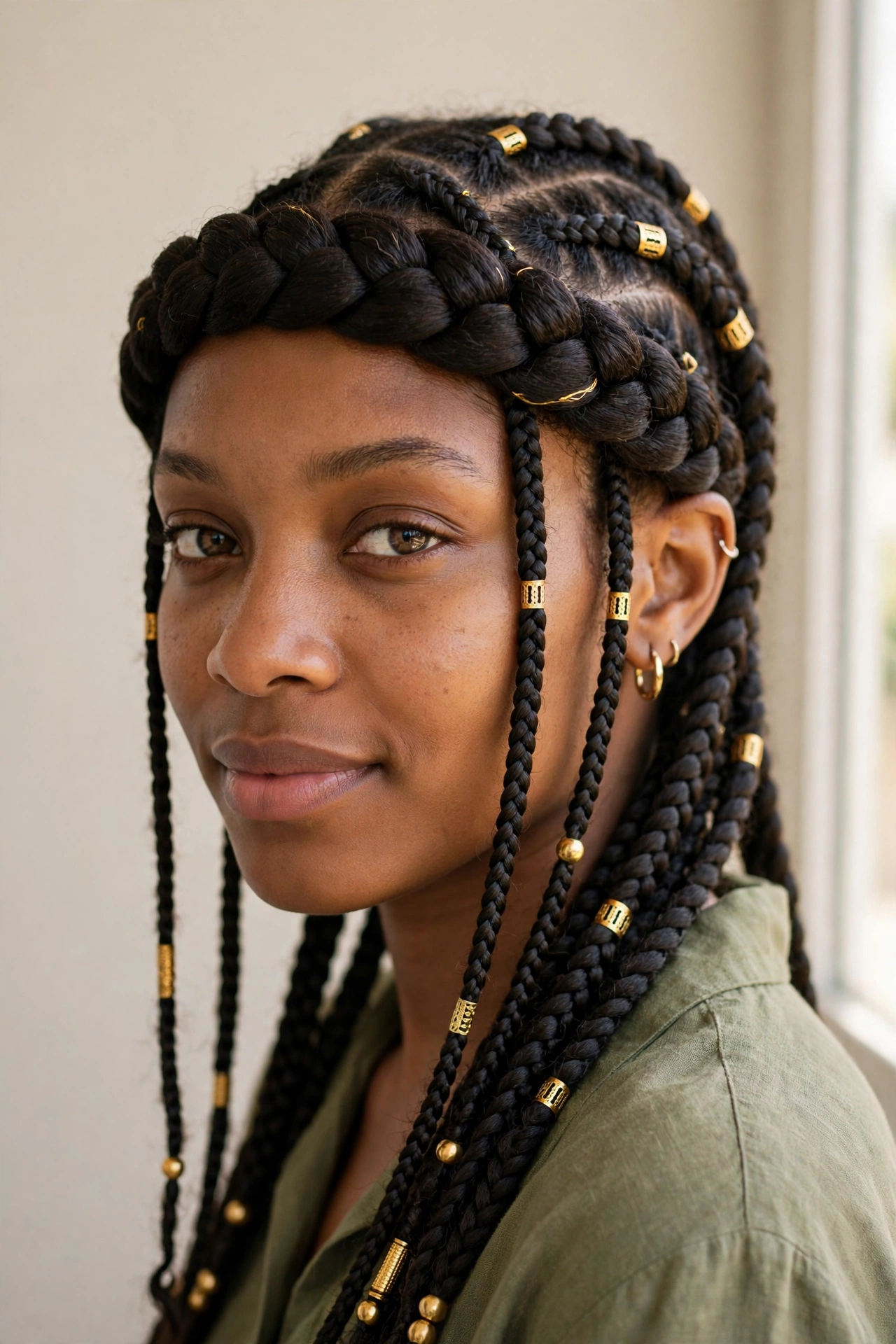
A braided headband is a charming detail that lifts the whole Fulani style. A thick plait runs across the front of the head like a headband, holding the hair back from the face while the rest of the braids fall freely behind. It is neat, feminine and practical, and it works for school, work, weddings and everyday wear. The headband also gives you a built-in accessory, so you do not need extra jewellery in your hair.
The headband braid should sit comfortably, not too tight against the forehead, and it should be pinned securely at both ends so it does not slip. You can decorate it with a few small cuffs or leave it plain for a clean look, and it pairs beautifully with loose curls or beaded ends at the back. If you have a fringe, the headband sits just behind it, and if you do not, it creates the same framing effect on its own. It is a small detail with a big payoff.
20. Fulani Braids Half-Up Half-Down
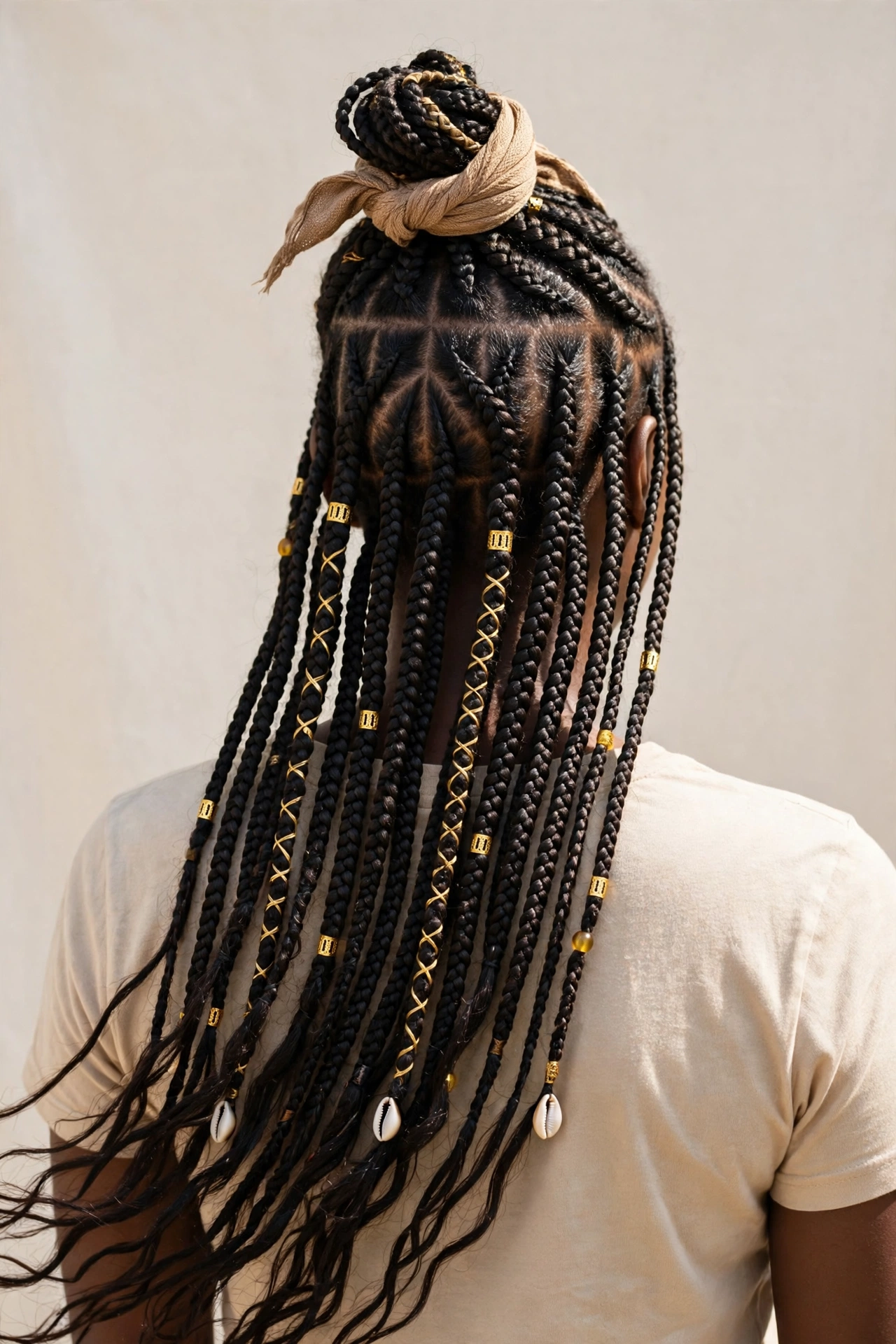
Half-up half-down is the most versatile way to wear Fulani braids. The top section is gathered and tied up, showing off the cornrow pattern and keeping hair out of your face, while the rest of the braids flow freely down your back. It is pretty, practical and easy to change: tie the top into a bun for a dressier look, or into a small ponytail for a casual day. It suits every face shape and works for school, work and parties alike.
Use a snag-free tie or a wrap of braiding hair to secure the top section, and add a cuff or a bead at the tie for a polished finish. The style is easy to refresh each morning, and it is a good way to manage braids as they grow out, because the top section hides new growth. If you want extra height, gently pull the top section forward before tying it, and smooth the hairline with a little edge control.
21. Fulani Braids with Ombre Extensions
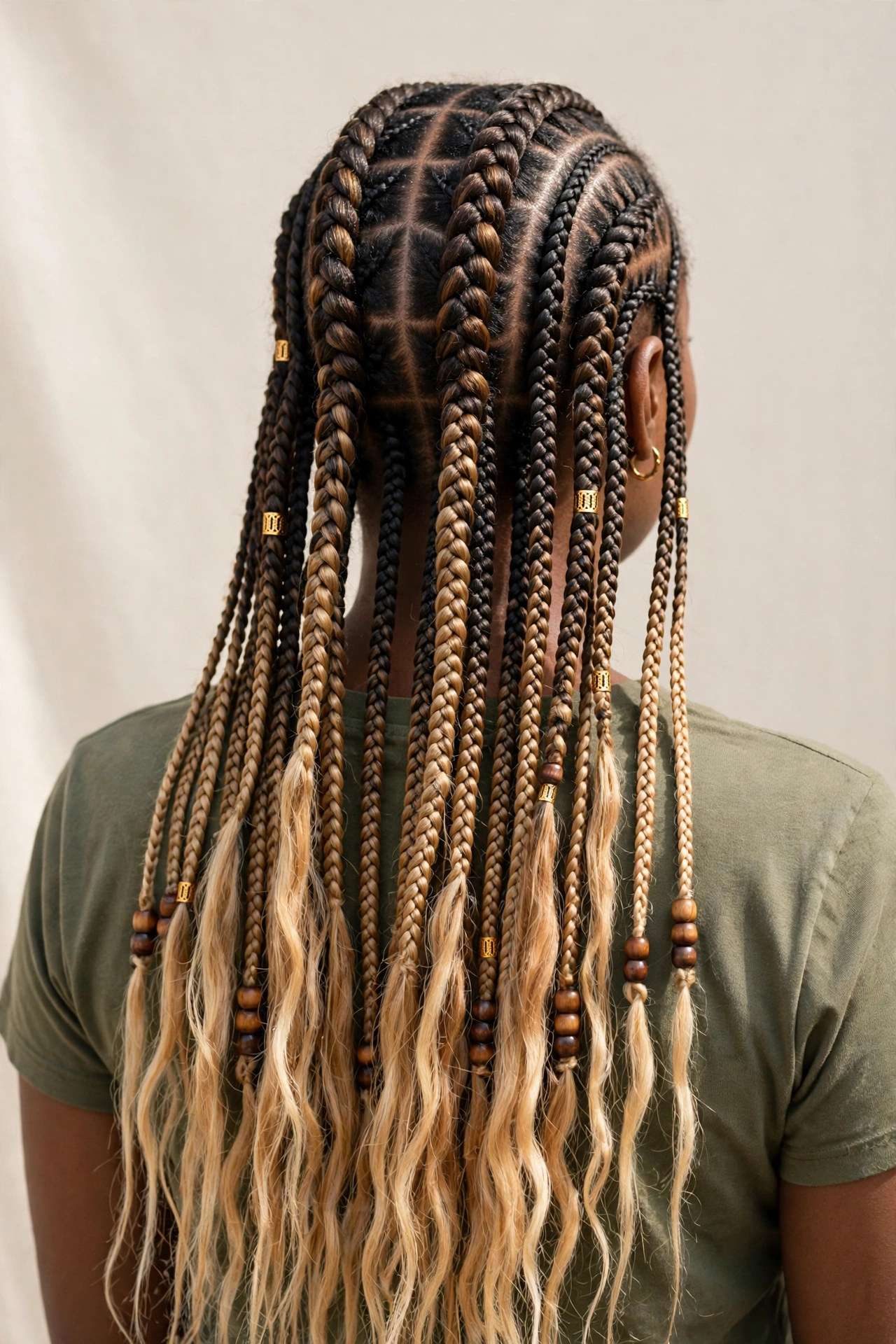
Ombre extensions give Fulani braids a beautiful colour gradient without any dye on your own hair. The braids start dark at the roots and fade gradually to honey blonde, caramel or auburn at the ends, creating a sun-kissed effect that flatters warm skin tones and looks stunning in sunlight. It is a low-commitment way to try colour, because the ombre lives in the extensions, not in your natural hair. This is a popular choice for holidays and summer.
Choose an ombre shade that complements your skin tone: honey blonde suits warm undertones, while caramel and copper suit deeper skin. The gradient should be gradual, not a sharp line, so ask your braider to blend the colours as they feed in the extensions. Keep the coloured ends moisturised, because synthetic hair can dry out, and avoid excessive heat. When you take the braids out, your natural hair is untouched, so you can try a different colour next time.
22. Fulani Braids with Face-Framing Plaits
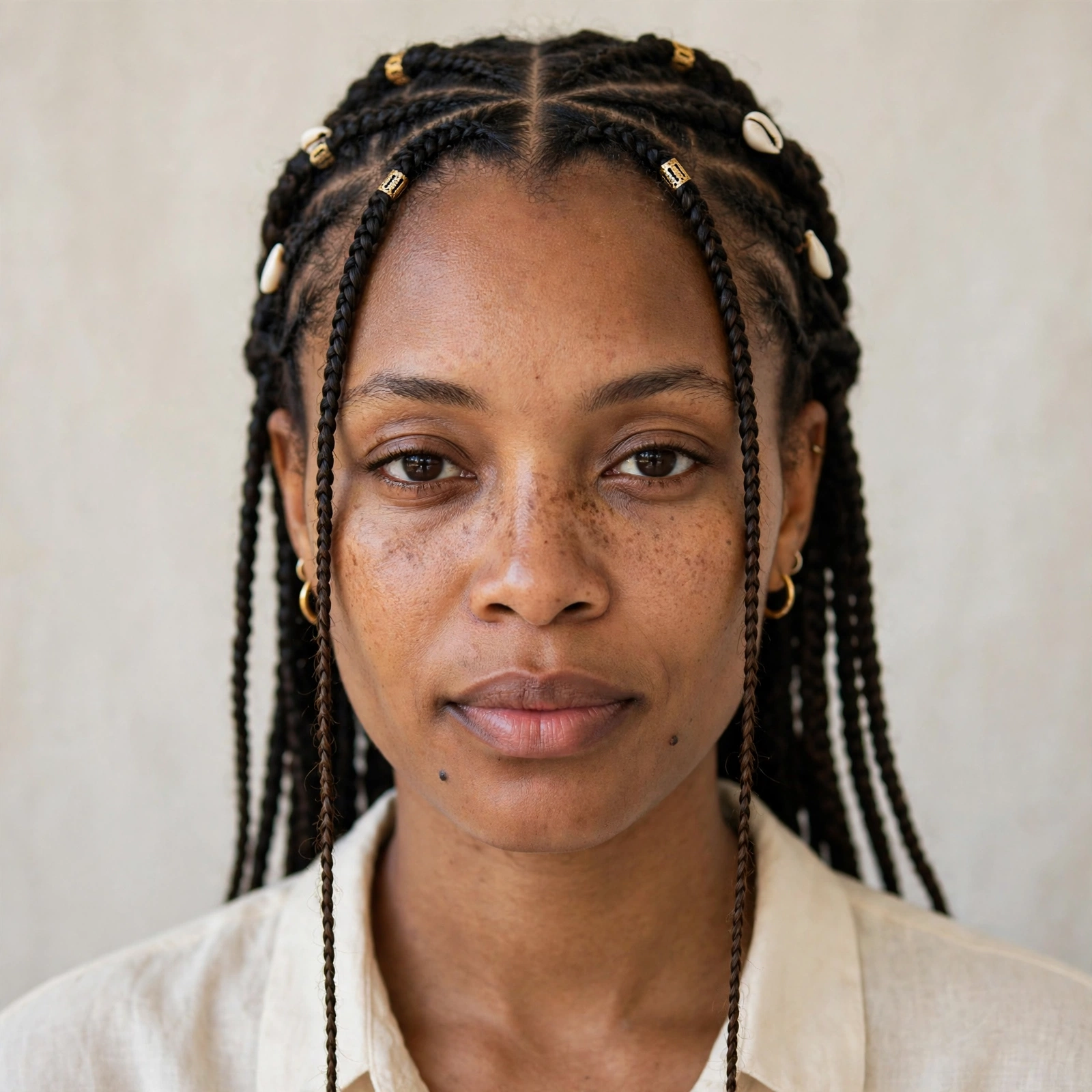
Two thin face-framing plaits are a delicate, romantic detail. While the main Fulani braids fall back, two slim plaits hang beside the cheeks, softening the face and drawing attention to the eyes. It is a subtle look that works for everyday wear, weddings and photos, and it is especially flattering if you usually wear your hair scraped back and want something softer. The plaits can be beaded or left plain, depending on the occasion.
Keep the face-framing plaits thin and light so they do not overwhelm your features, and make them slightly longer than your jawline so they frame rather than cover your face. A tiny bead or cuff at the end of each plait adds a finishing touch, and you can tuck them behind your ears when you want a cleaner look. This detail works with any Fulani length, and it is easy to add to an existing braided style without starting over.
23. Fulani Braids into Low Bun
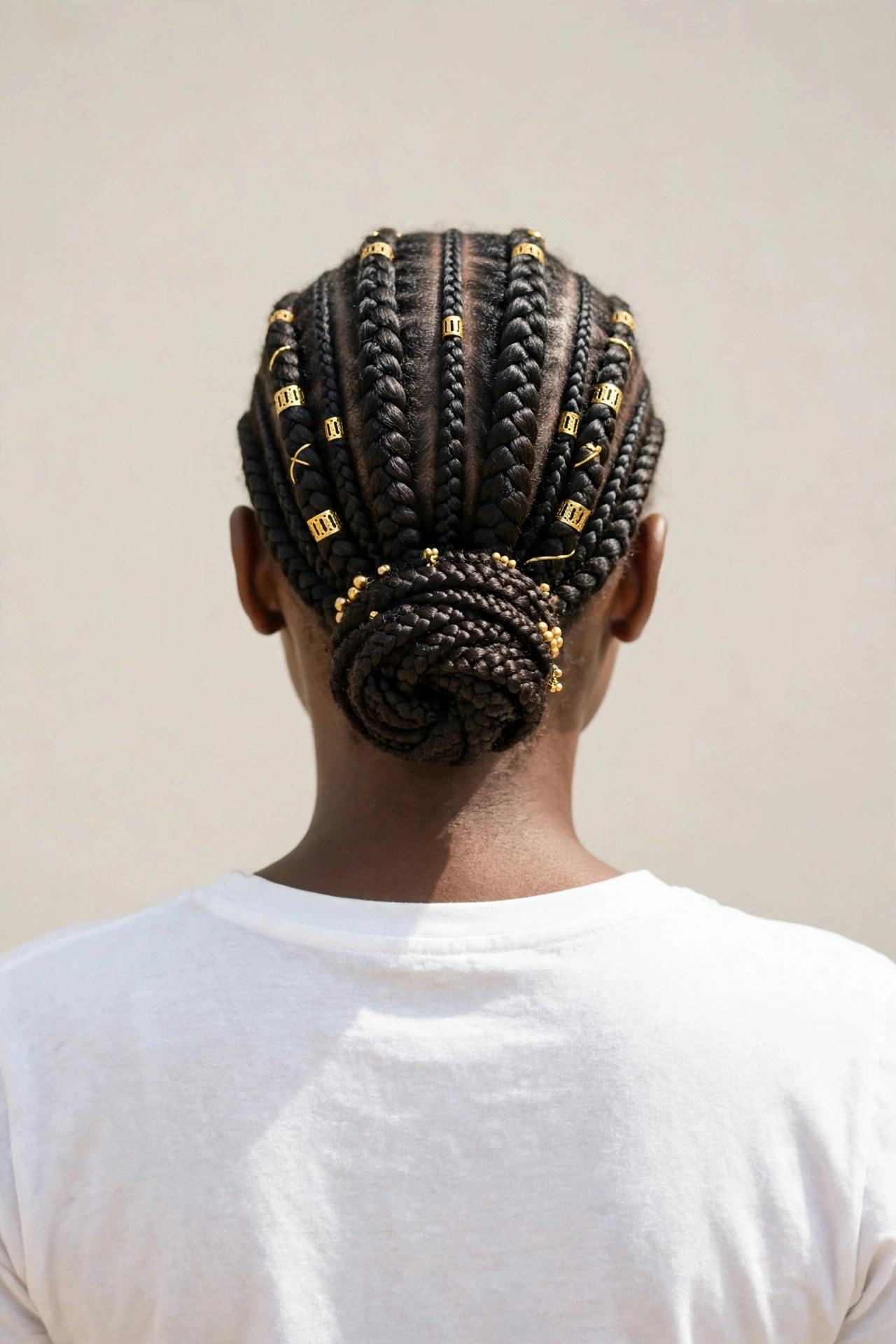
A low bun turns Fulani braids into a polished, elegant updo. The braids gather at the nape into a smooth, neat bun that shows off the cornrow pattern at the front and keeps everything tidy at the back. It is perfect for work, formal events, weddings and hot days, and it is one of the most comfortable braided updos because the weight sits low and balanced. The bun also protects the ends of the braids, which helps the style last longer.
To build the bun, gather the braids loosely and twist them into a coil, pinning securely with large bobby pins. Do not pull the front too tight, or the style will feel uncomfortable by the end of the day. You can wrap a braid around the base to hide the tie, and add a few gold cuffs or pearl pins for a dressier finish. At night, take the bun down and re-tie it loosely so the roots stay relaxed.
24. Fulani Braids with Butterfly Clips
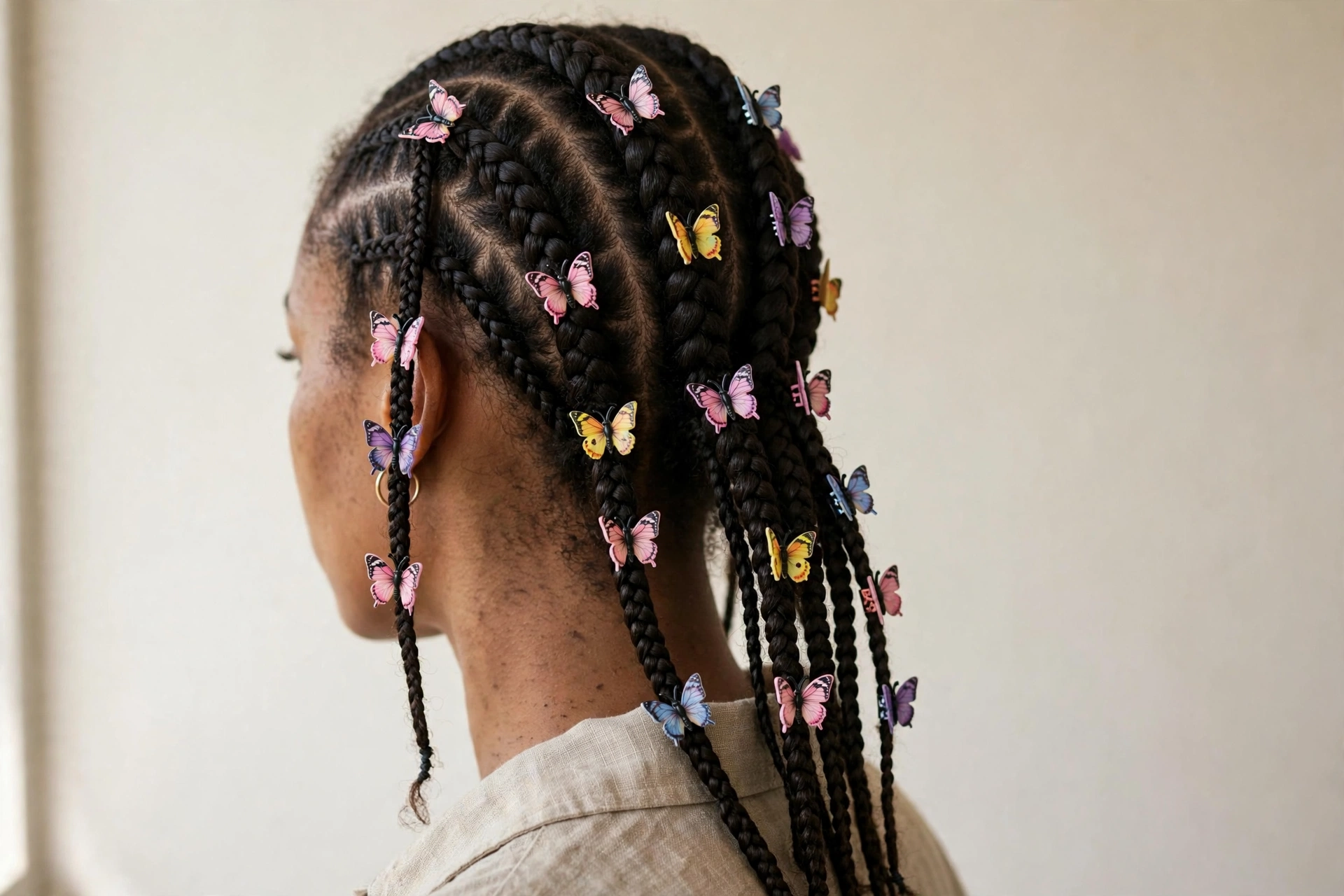
Butterfly clips bring a playful, nostalgic touch to Fulani braids. Small colourful butterflies clipped along the braids add movement, colour and a hint of childhood charm, and they are perfect for festivals, summer parties and anyone who loves a fun, youthful look. The clips are easy to move around, so you can change the style in seconds, and they photograph beautifully. This is one of the easiest ways to refresh braids halfway through their life.
Place the butterflies at different heights along the braids rather than in a straight line, and mix colours that complement your outfit. Choose clips that grip well but do not snag the braids, and take them out before sleeping so they do not pull. You can combine butterfly clips with a few beads for extra detail, or keep the clips as the only accessory for a clean, playful finish. They are inexpensive, reusable and endlessly fun.
25. Tribal Braids with Star Parting
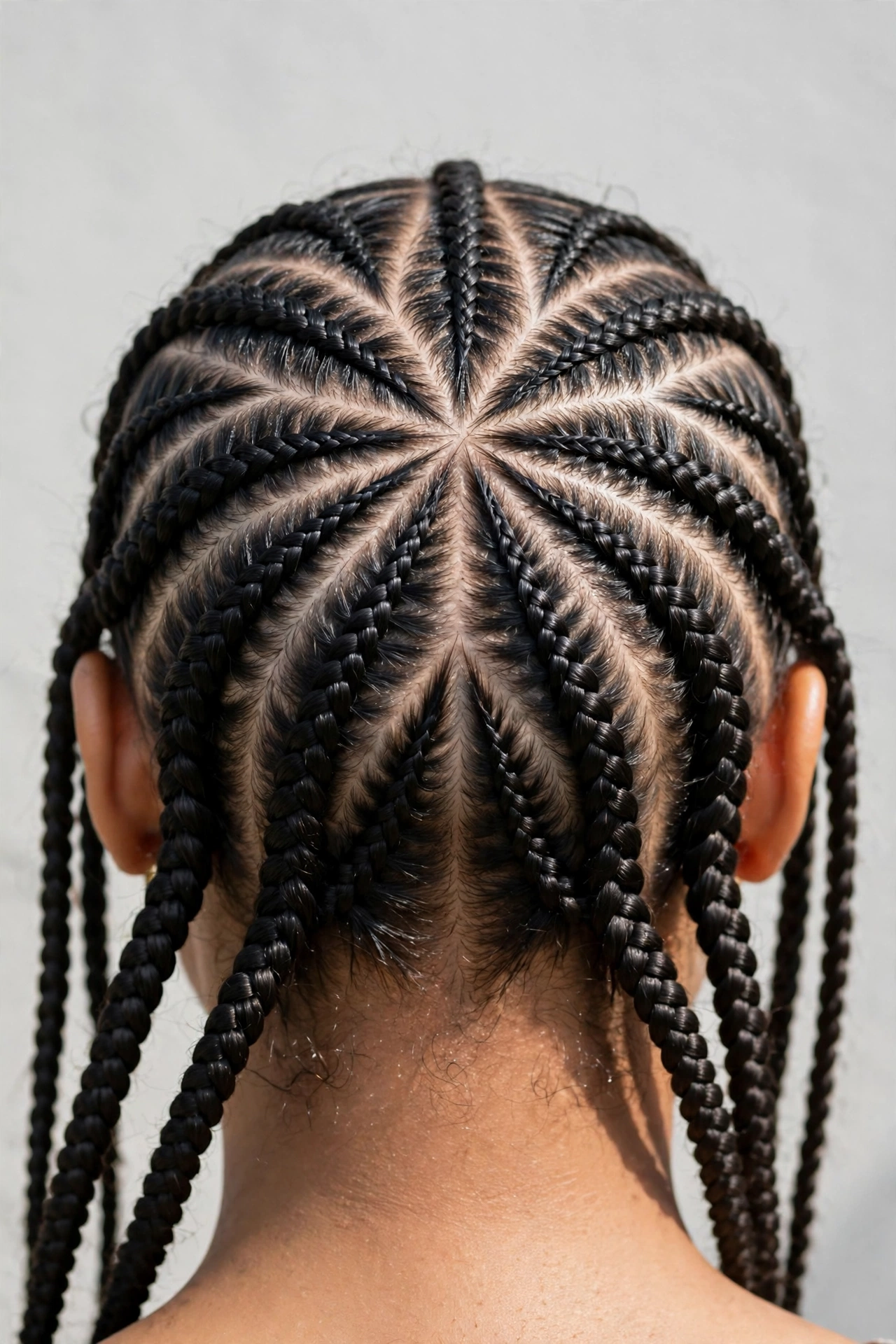
A star parting is one of the most eye-catching tribal braid patterns you can ask for. The cornrows radiate out from a star shape carved into the scalp, creating a design that is bold, artistic and full of personality. It is a festival favourite and a photoshoot dream, and it shows off your braider's precision beautifully. The star can be small and subtle or large and dramatic, depending on how much of a statement you want to make.
The star needs to be symmetrical, so bring a reference photo and let your braider map the shape before they start braiding. The partings should be clean and the braids should radiate evenly from the centre, with no stray hairs crossing the lines. Keep beads and cuffs minimal so the star stays the focus, and wear the braids down or in a low style so the pattern is visible. This is a style that earns compliments everywhere you go.
26. Fulani Braids with Burgundy Highlights
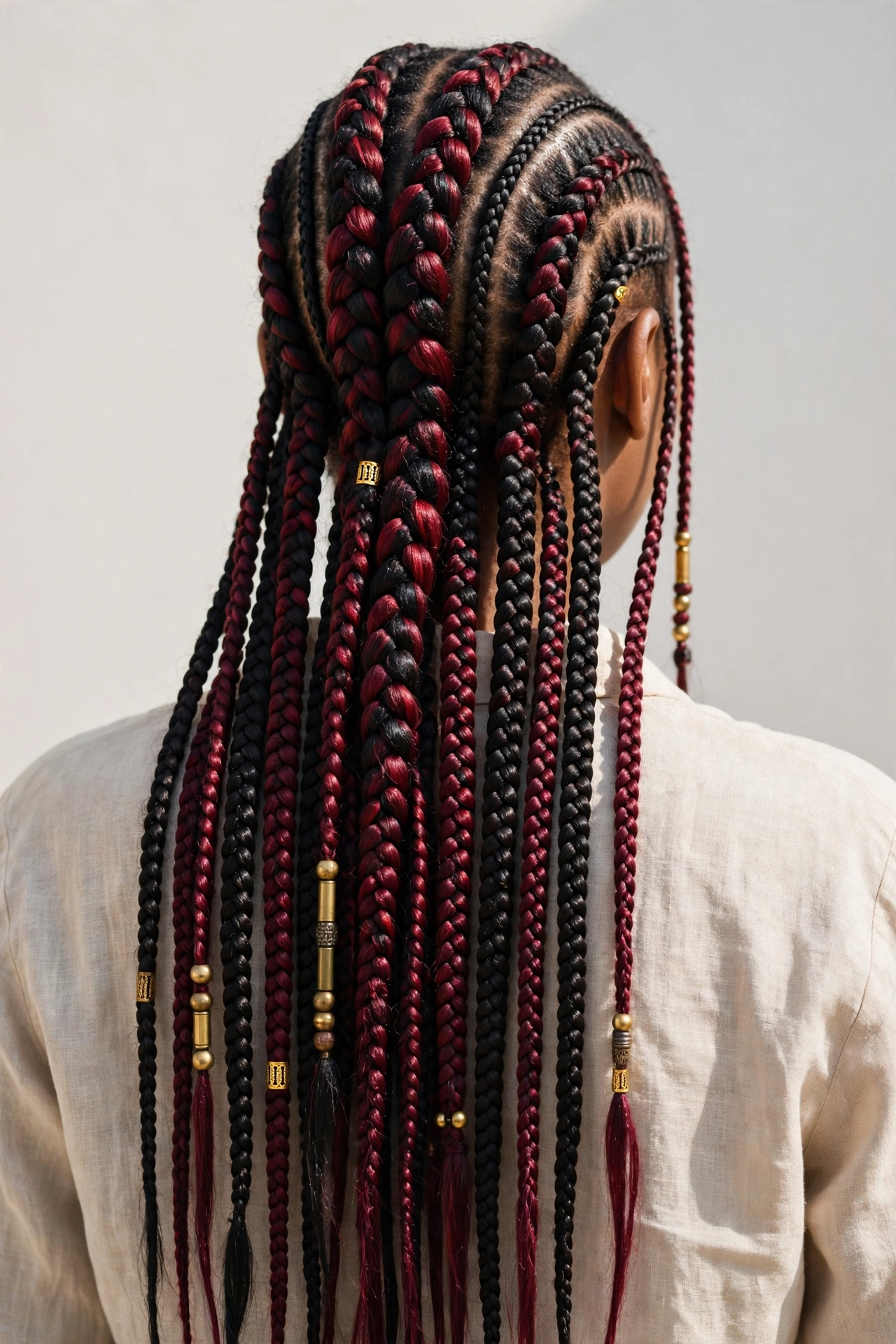
Burgundy highlights add rich, wine-coloured warmth to Fulani braids without overwhelming them. Strands of deep red woven through black braids catch the light and give the style depth and dimension, and the colour flatters most skin tones beautifully. It is a sophisticated way to try colour: bold enough to notice, subtle enough for work, and gorgeous in autumn and winter. Burgundy also pairs beautifully with gold cuffs and wooden beads.
The highlights should be threaded through the braids rather than sitting in one block, so the colour looks blended and natural. Ask your braider to distribute the burgundy evenly, with a few strands near the face for extra warmth. Because the colour lives in the extensions, your natural hair stays untouched, and you can go back to plain black braids next time. Keep the coloured strands moisturised and avoid heavy heat, and the colour will stay rich for the life of the style.
27. Fulani Braids with Jumbo Cornrows
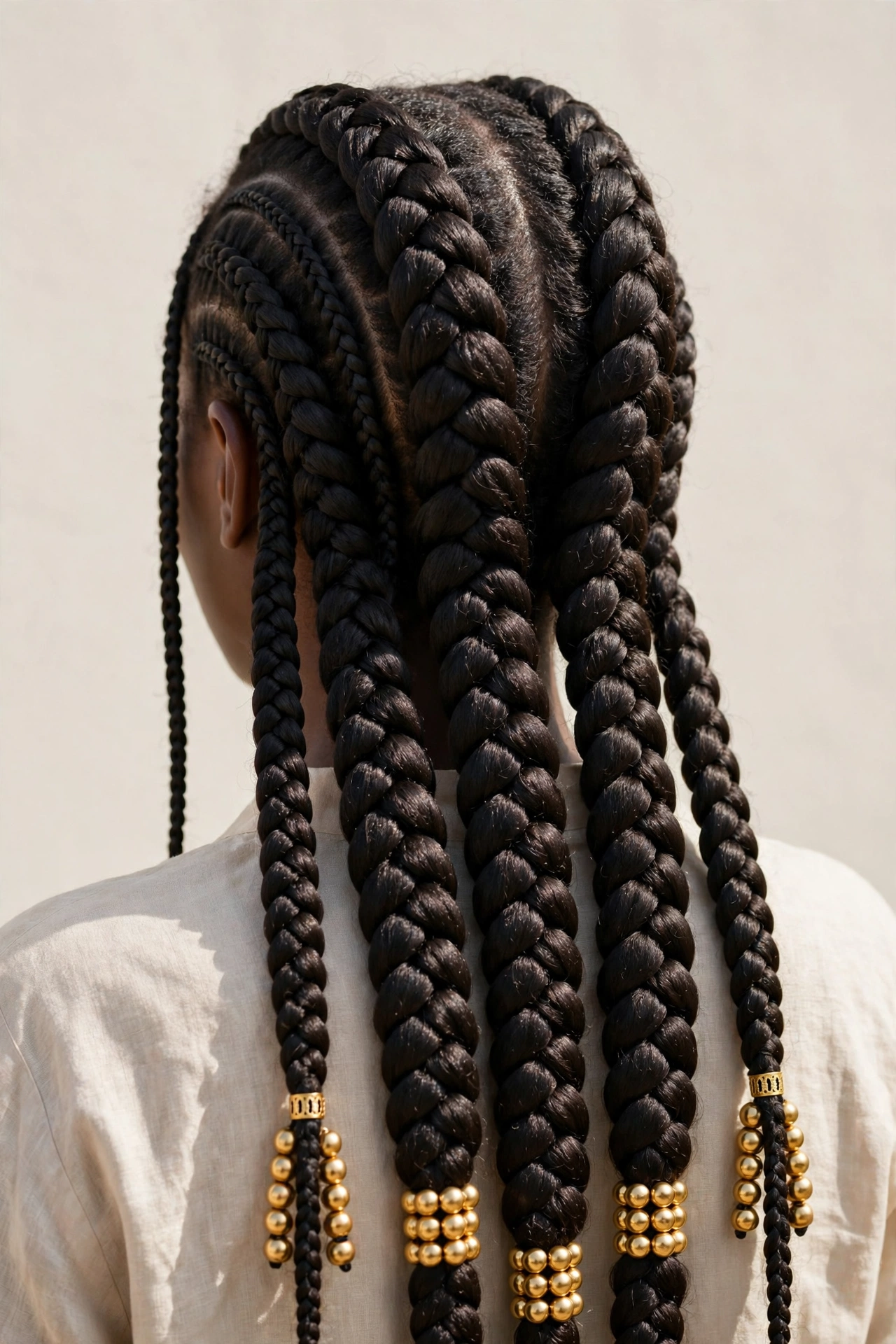
Jumbo cornrows are the bold, low-maintenance version of Fulani braids. A few thick, wide braids replace the usual slim cornrows, which means the style takes far less time to install and feels lighter on the scalp. The chunky braids make a strong graphic statement, and they show off beads and cuffs beautifully because each braid is a canvas of its own. This is a great choice if you are short on time or trying Fulani braids for the first time.
Because there are fewer braids, each one needs to be neat and even, so choose a braider who is confident with large cornrows. Gold beads at the ends add a classic finish, and the style is easy to tie up into a ponytail or bun. Jumbo braids also grow out gracefully, and they are gentle on the hairline because there is less tension overall. If you want the look to last longer, keep the scalp moisturised and the edges smooth.
28. Fulani Braids with Braided Bangs
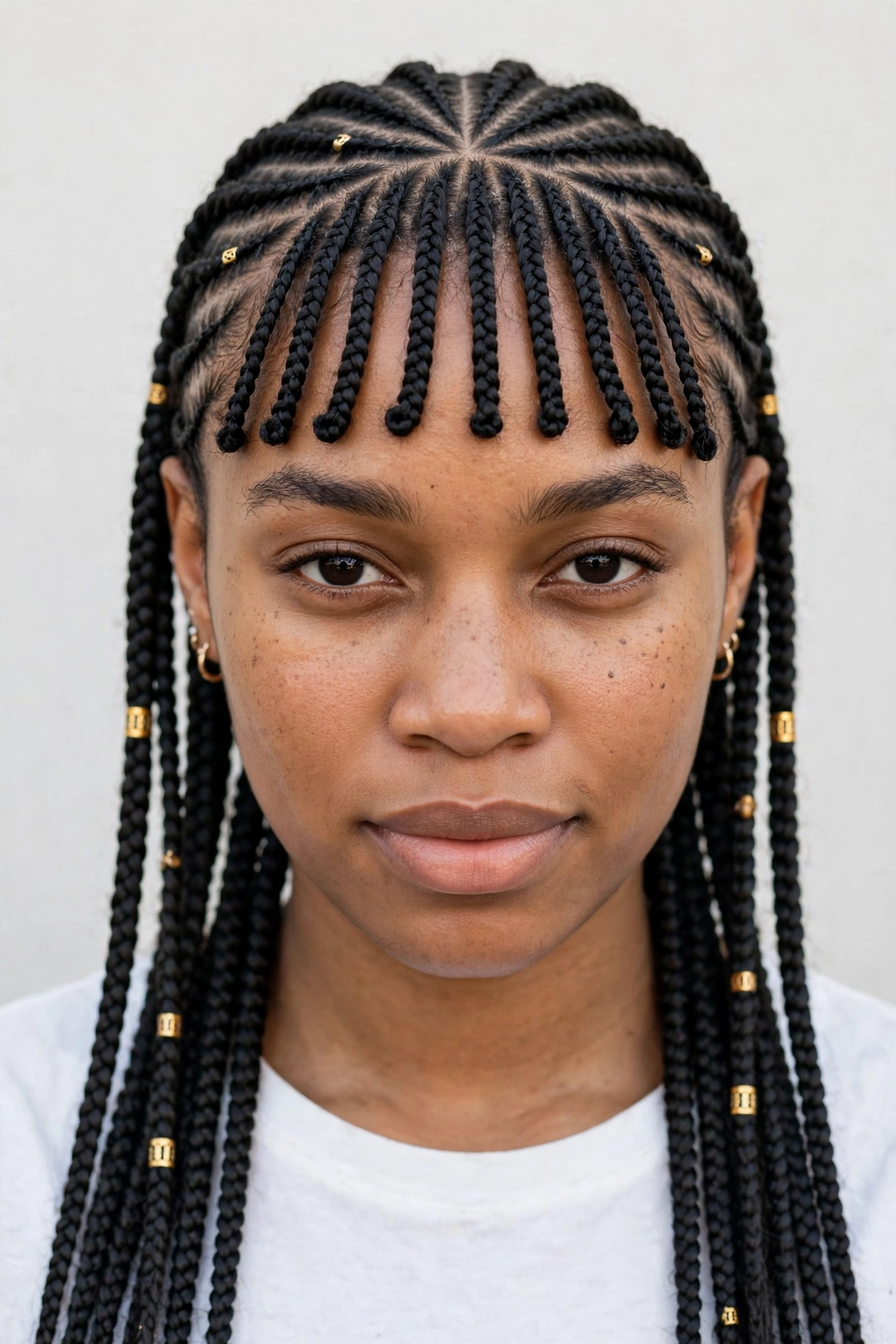
Braided bangs give Fulani braids a fresh, fashion-forward edge. Short braids fall across the forehead like a fringe, framing the eyes and softening the face, while the rest of the hair is braided back in the classic Fulani pattern. It is a striking look that suits photoshoots, nights out and anyone who loves a bold fringe without cutting their own hair. The bangs also draw attention to the eyes and cheekbones.
Keep the bangs short enough to sit above the eyebrows so they do not get in your eyes, and keep them light so they feel comfortable on the forehead. They can be worn straight across or swept to one side, and they work with both long and short braids at the back. If the bangs bother you while sleeping, sweep them to the side with a silk scarf. This is a confident, modern take on a traditional style.
29. Fulani Braids with Pearl Accessories
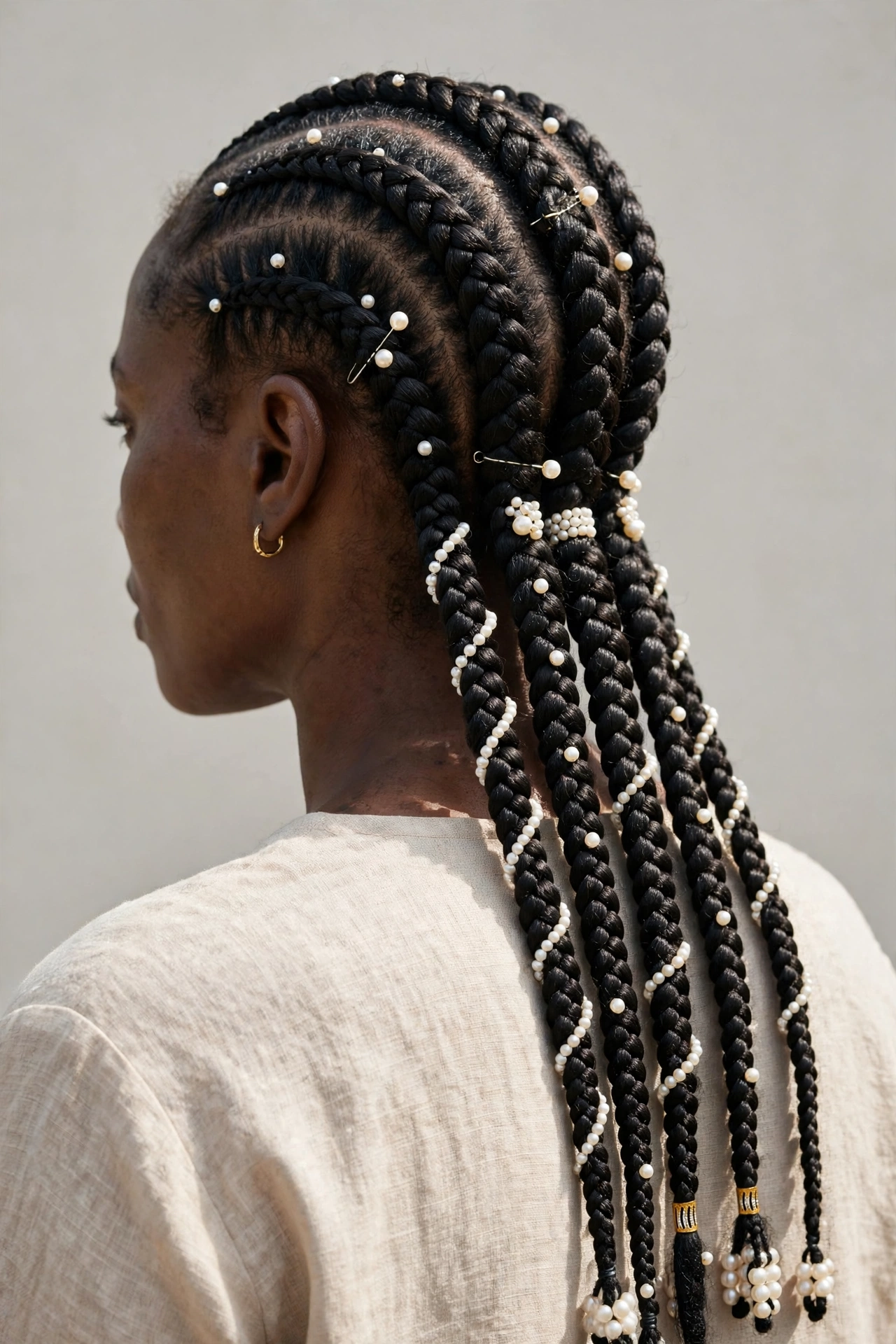
Pearls bring softness and luxury to Fulani braids. Small white pearls threaded onto the braids and pearl pins placed along the cornrows give the style a bridal, romantic feel that is perfect for weddings, engagements and formal occasions. The pearls catch the light gently, and they look beautiful against dark hair and deep skin tones. This is the most elegant accessory choice in the whole Fulani family.
Use pearls sparingly for the most refined effect: a few on the braids near the face and one or two pins at the crown are usually enough. Mix pearl beads with small gold cuffs if you want a warmer finish, or keep the pearls alone for a clean, classic look. Because pearls are delicate, take them off before washing your hair and store them carefully so you can reuse them. Pair the style with simple jewellery and let the pearls shine.
30. Fulani Braids for Kids
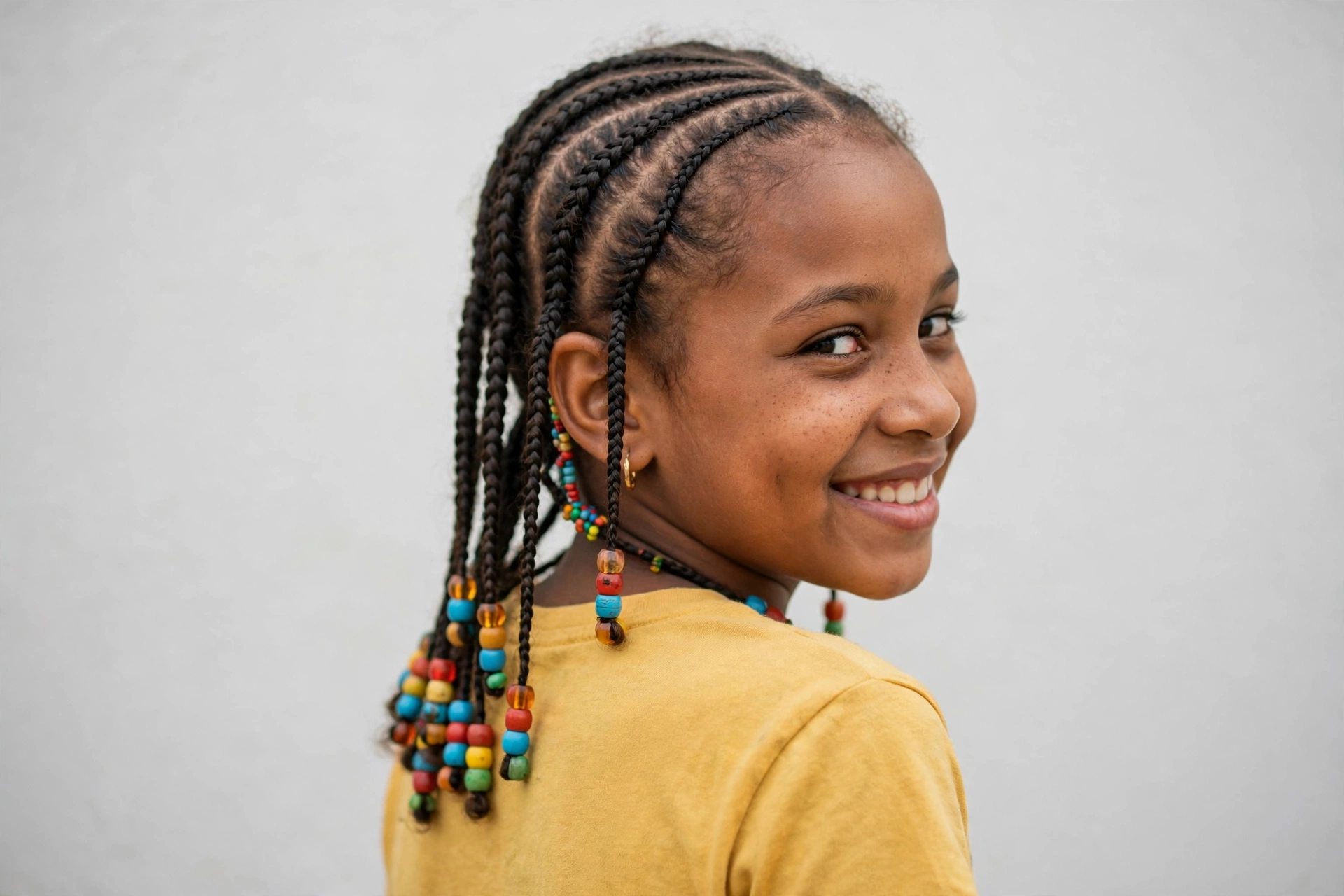
Fulani braids are a wonderful protective style for children. The cornrows keep hair neat and tangle-free for school and play, the beads add colour and fun, and the style lasts for weeks with very little daily maintenance. Kids love choosing their own bead colours, and parents love a style that survives swimming, sports and sleepovers. It is gentle, practical and joyful, all at once.
For children, comfort comes first. Ask for medium-sized braids that are not pulled too tight, especially at the hairline, and choose lightweight beads so the style does not feel heavy. Keep the braids at a manageable length, moisturise the scalp regularly, and let your child help choose the beads and accessories so they feel proud of their hair. With gentle care, kids' Fulani braids can last two to three weeks and make mornings much easier.
31. Fulani Braids with Side Cornrow Design
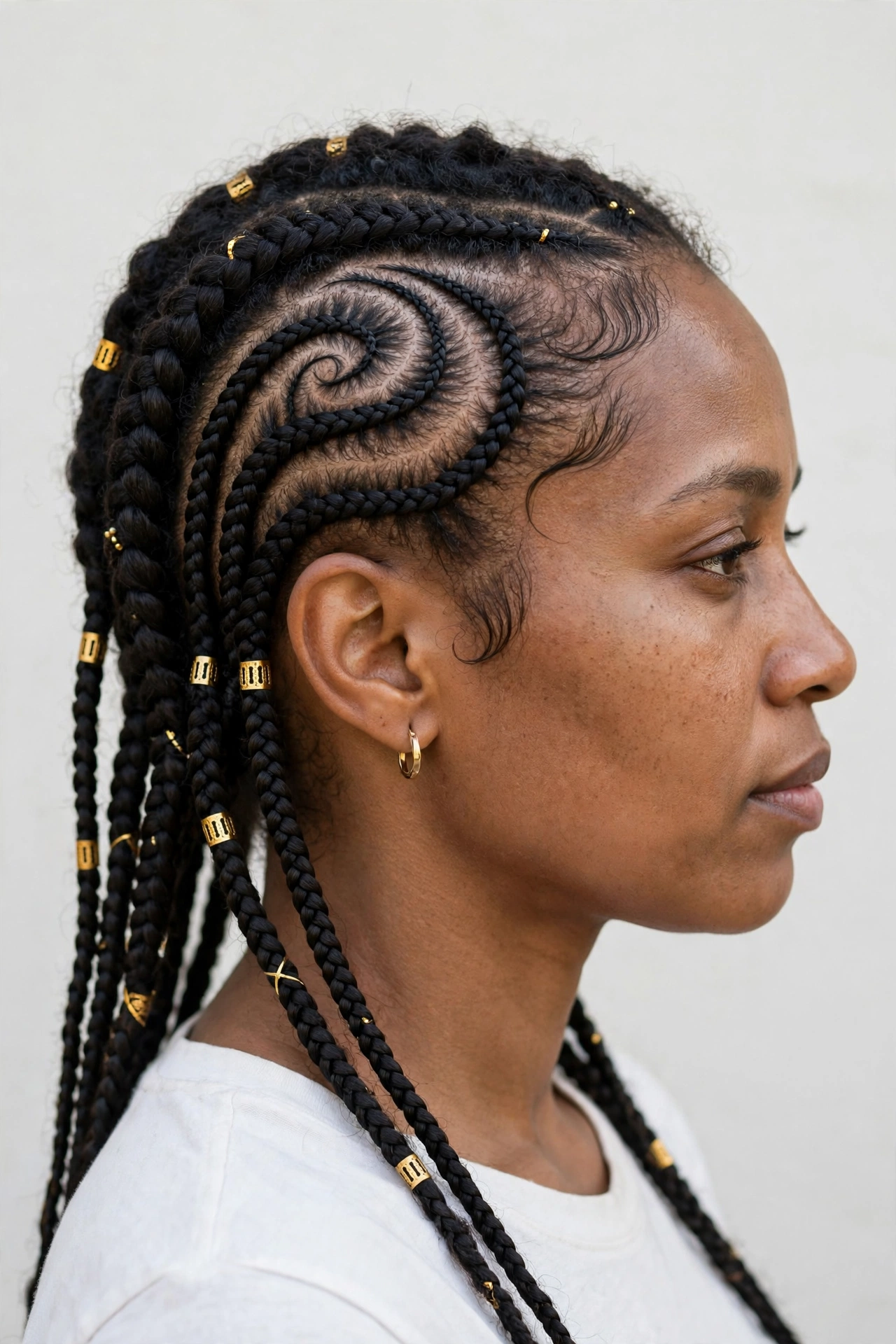
A decorative cornrow design on one side of the head adds artistry to the classic Fulani pattern. Curved, swooping cornrows create a motif on one side while the other side stays in the traditional straight pattern, giving the style an asymmetric, custom-made feel. It is a subtle way to show off your braider's skill, and it looks fantastic in profile photos. This is a great choice if you want something unique without going for a full geometric pattern.
Discuss the design with your braider beforehand and bring a reference photo of the curve or motif you like. The design should flow naturally with the rest of the braids, and the partings should be clean so the motif reads clearly. Keep beads and cuffs on the opposite side minimal so the design stands out, and wear the braids swept to the side that shows the motif. It is a small detail that makes the style feel truly personal.
32. Fulani Braids into Space Buns
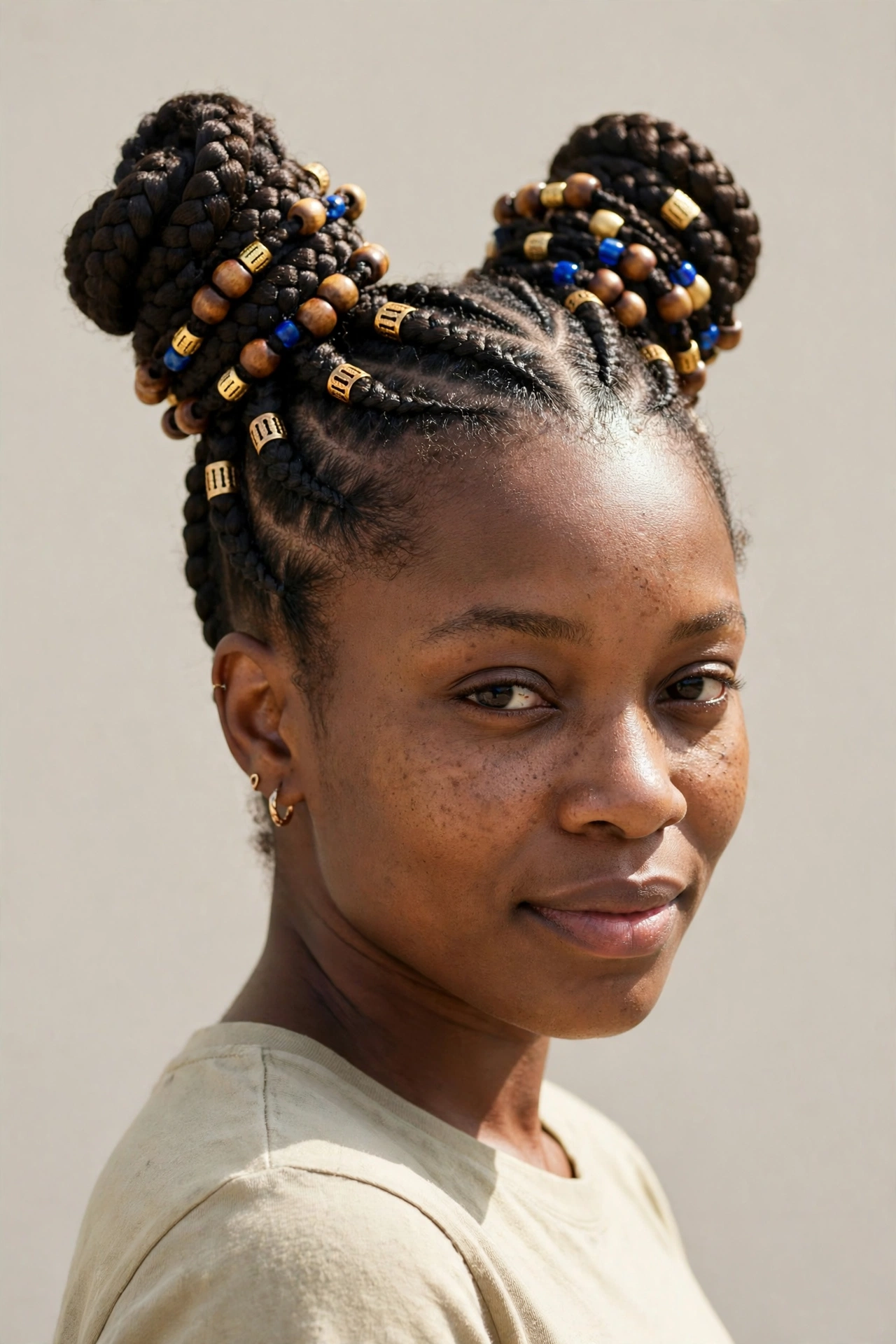
Space buns turn Fulani braids into a fun, youthful festival look. The braids gather into two high buns on top of the head, showing off the cornrow pattern and adding instant playfulness. It is perfect for festivals, concerts, holidays and anyone who loves a bold, cute hairstyle. The buns also keep the hair completely out of the way, which makes them practical for dancing and hot days. Add beads or cuffs for extra detail.
To build the buns, divide the braids evenly and twist each section into a coil, pinning securely. Keep the buns balanced in size and height, and smooth the hairline with edge control for a polished finish. You can leave a few braids loose at the back for a softer look, or tuck everything up for a clean finish. At night, take the buns down and re-tie them loosely so the roots do not get stressed.
33. Fulani Braids with Blonde Streaks
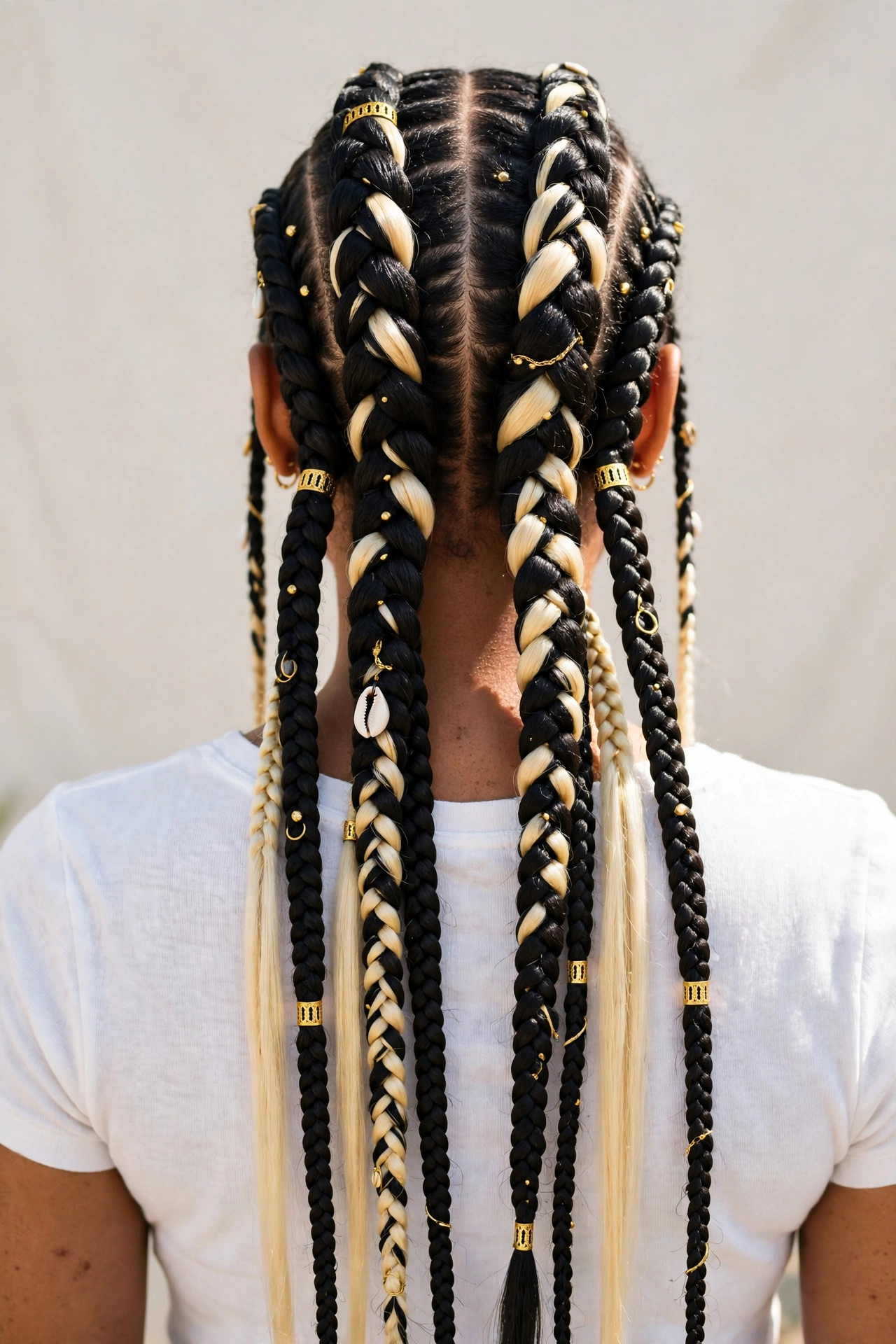
Blonde streaks add bold contrast to Fulani braids. Thick or thin strands of honey blonde woven through black braids create a striking, high-fashion look that catches the light and adds dimension. It is a confident choice for anyone who loves colour contrast, and it works beautifully in summer and on holiday. The streaks can be placed near the face for a face-framing effect, or distributed throughout for an all-over glow.
The key is balance: too many blonde streaks can overwhelm the black braids, so ask your braider to space them evenly and keep some braids plain. Honey blonde suits most skin tones, while platinum is bolder and ash blonde is cooler. Because the colour lives in the extensions, your natural hair is untouched, and you can return to plain braids next time. Keep the blonde strands moisturised, because lighter synthetic hair can dry out faster.
34. Tribal Braids with Curved Cornrows
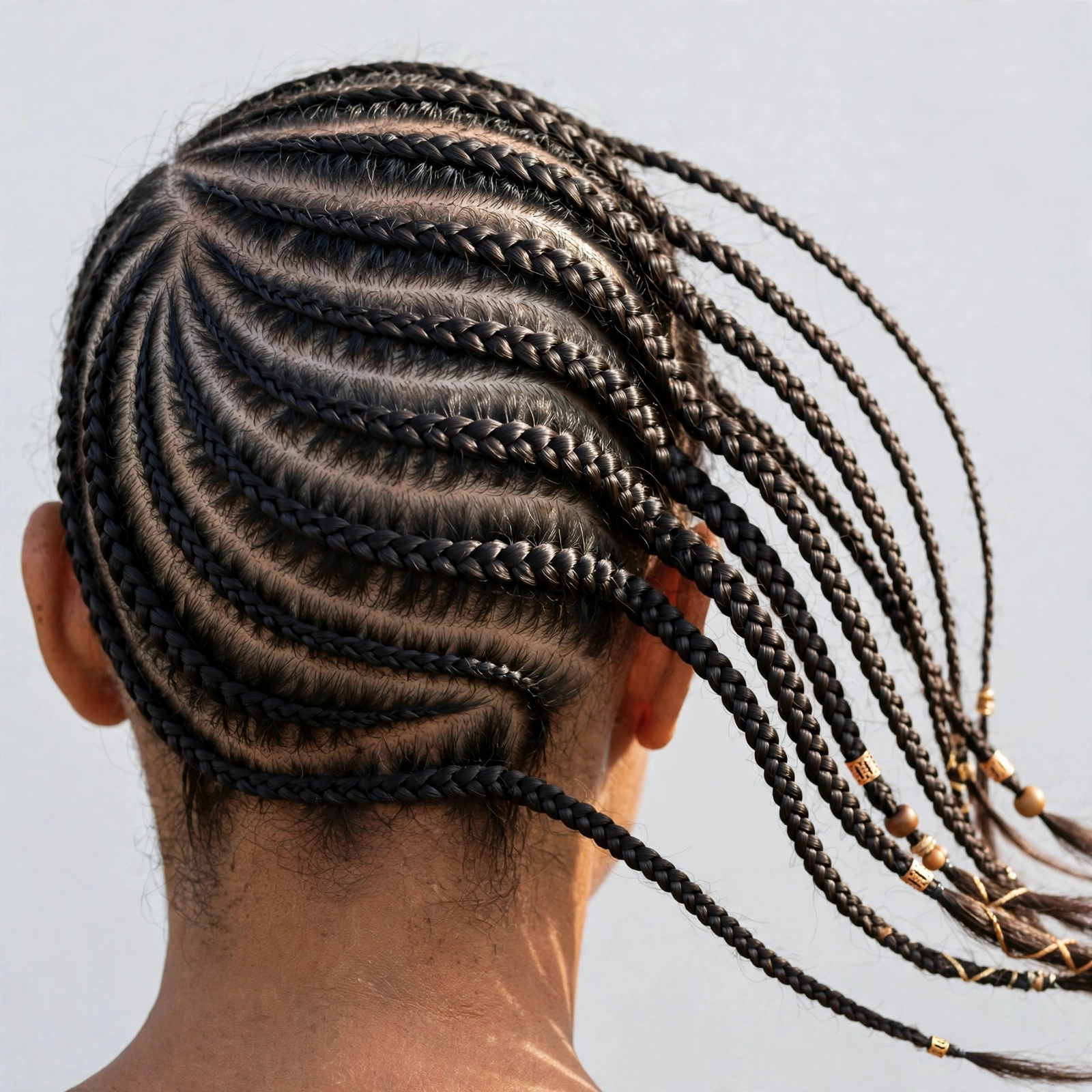
Curved cornrows bring a flowing, organic feel to tribal braids. Instead of straight lines, the braids sweep in graceful curves across the head, creating a sense of movement that straight cornrows cannot match. The curves can flow to one side for a windswept effect, or mirror each other for a symmetrical design. It is an elegant, artistic style that suits weddings, formal events and anyone who loves soft, flowing lines.
Curves are harder to braid than straight lines, so choose a braider who is confident with freehand cornrows. The curves should be smooth and even, with no kinks or wobbles, and the partings should be clean so the design reads clearly. Keep accessories minimal so the curves stay visible, and wear the braids down or in a low ponytail so the full sweep is on show. This is a style that looks effortless but takes real skill.
35. Fulani Braids with Silk Scarf Wrap
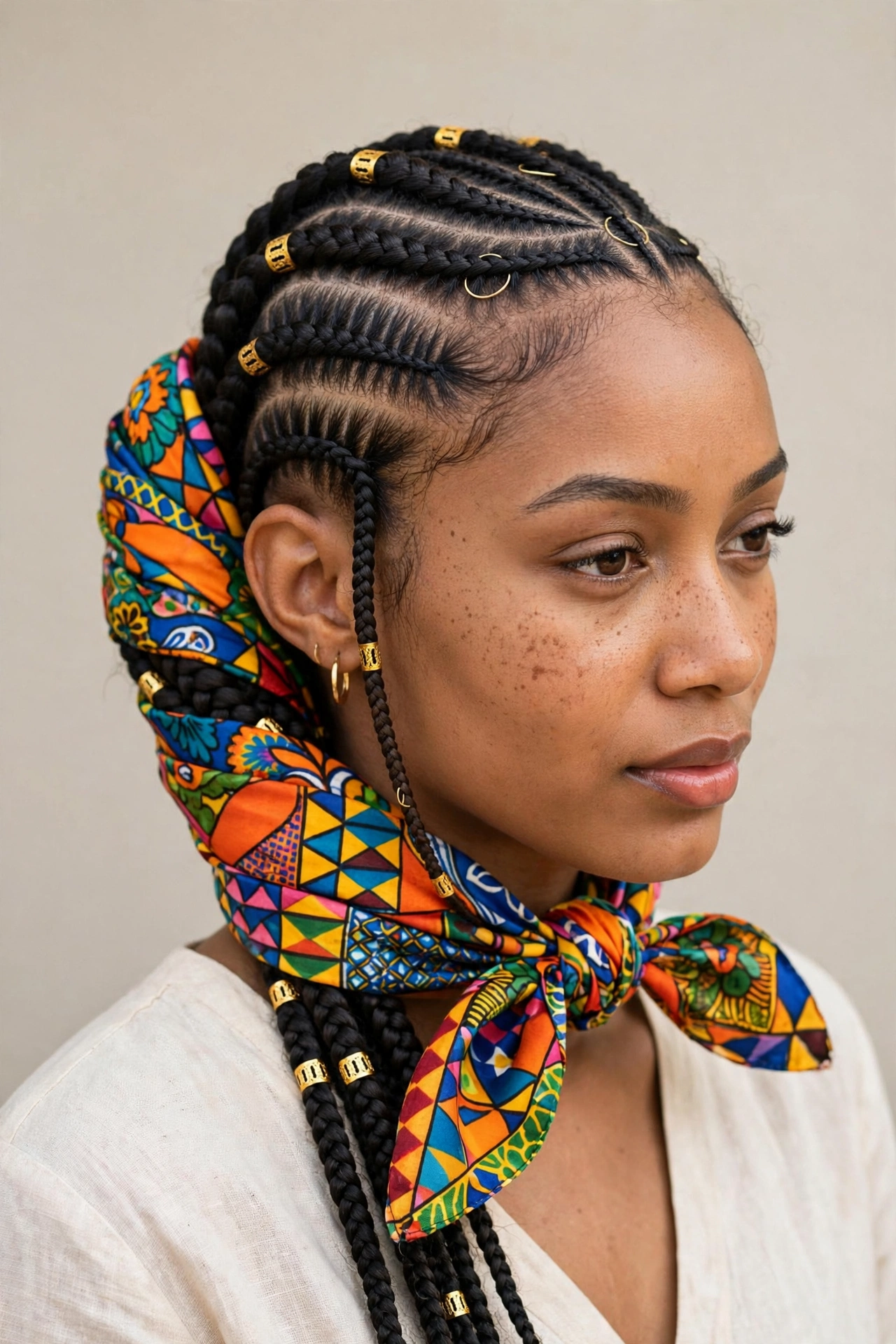
A silk scarf wrap is the easiest way to transform Fulani braids in seconds. A colourful patterned scarf tied around the head, either as a headband or wrapped around a bun, adds colour, pattern and personality while also protecting the hairline and edges. It is perfect for bad hair days, holidays and days when you want a completely different look without re-braiding. Scarves also protect the braids from sun and dust.
Choose a lightweight silk or satin scarf so it does not slip, and tie it securely at the front, side or back depending on the look you want. Bold African prints look stunning with Fulani braids, while plain colours give a more polished finish. You can change the scarf daily to match your outfit, which makes this the most versatile styling trick in the guide. At night, the same scarf can protect your braids while you sleep.
36. Fulani Braids Wedding Style
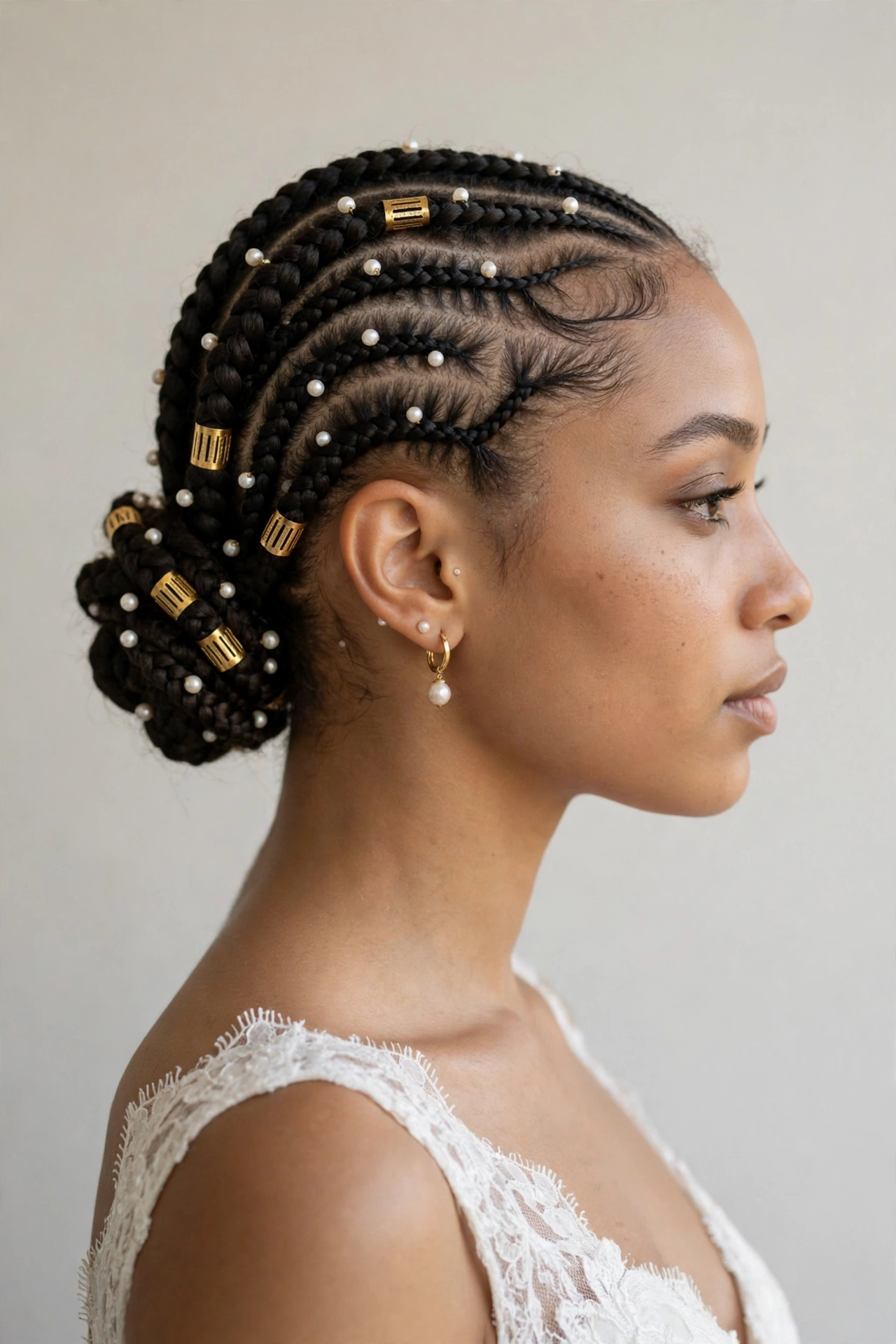
Fulani braids make a breathtaking wedding hairstyle. The cornrows are styled into a low, elegant updo, decorated with pearls, gold cuffs and sometimes fresh flowers or a delicate veil. It is regal, romantic and deeply personal, and it holds up beautifully through a long day of ceremony, photos and dancing. For brides who want a style that honours their heritage and looks stunning in every photo, this is hard to beat.
Book a trial run with your braider before the wedding so you can test the updo, the accessories and how the style feels after several hours. Keep the front smooth and the updo secure but comfortable, and choose accessories that match your dress and jewellery. A few loose, curled tendrils at the front soften the look, and a light mist of hairspray keeps everything in place. This is a once-in-a-lifetime style, so take your time getting it exactly right.
37. Fulani Braids with Knotless Finish
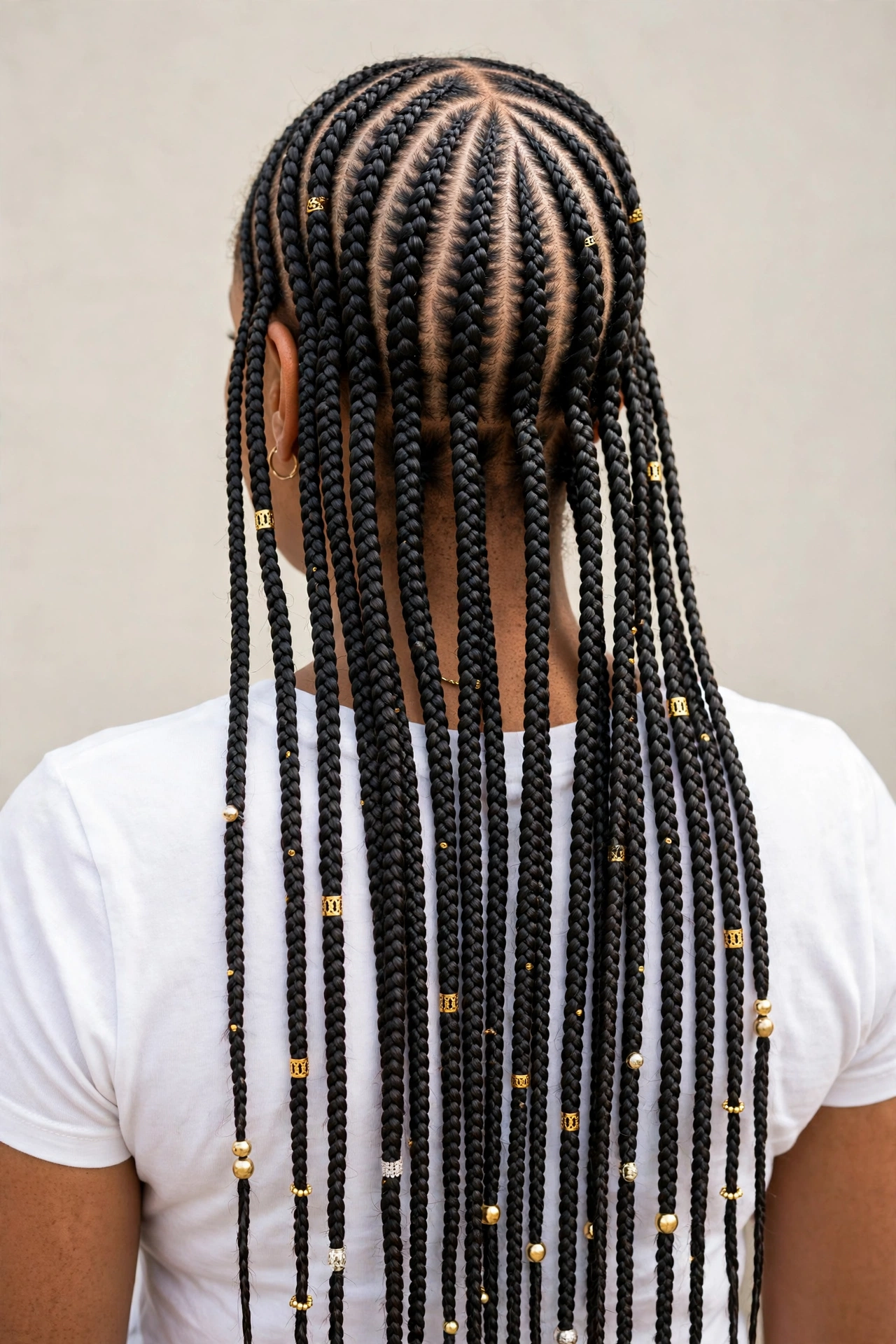
Knotless Fulani braids are the comfortable, modern version of the classic style. Instead of starting each braid with a tight knot at the root, the extensions are fed in gradually, so the braids lie flat, feel lighter and put far less tension on the scalp. The result is a natural-looking finish that is gentle on the hairline and comfortable to wear for weeks. If you have a sensitive scalp or you found traditional braids too tight, knotless is the answer.
Because the braids start flat, they also look more natural at the roots, which makes the style grow out gracefully. Add small gold beads at the ends for a classic finish, and keep the scalp moisturised with a light oil. Knotless braids take a little longer to install, so book extra time, but the comfort is worth it. This is the best choice for anyone who wants beautiful Fulani braids without the tight, sore feeling.
38. Fulani Braids with Criss-Cross Parting
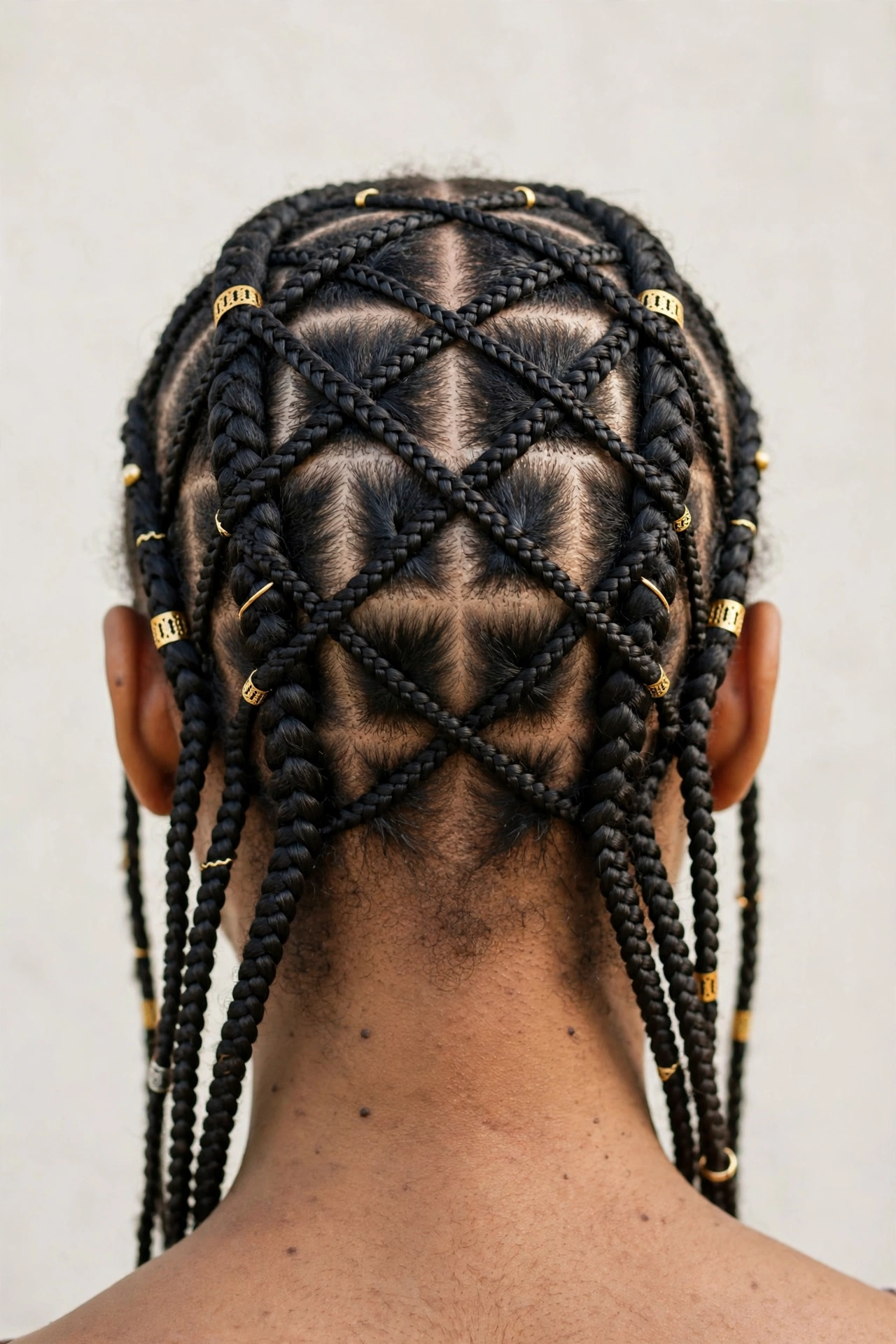
A criss-cross parting creates a lattice effect across the scalp that is bold, graphic and unforgettable. The cornrows cross over each other in a woven pattern, turning the head into a piece of art before the braids even reach the shoulders. It is a show-stopping tribal look that is perfect for festivals, photoshoots and anyone who wants their braids to be a conversation starter. The lattice also adds texture and depth to the style.
This is one of the most technical patterns in the guide, so choose an experienced braider and bring a clear reference photo. The crossing points need to be neat and secure, and the partings should be clean so the lattice reads clearly. Keep beads and cuffs to the ends of the braids so the pattern stays visible, and wear the braids down or in a low style. Expect a longer appointment, and enjoy the compliments.
39. Fulani Braids with Boho Curls and Beads
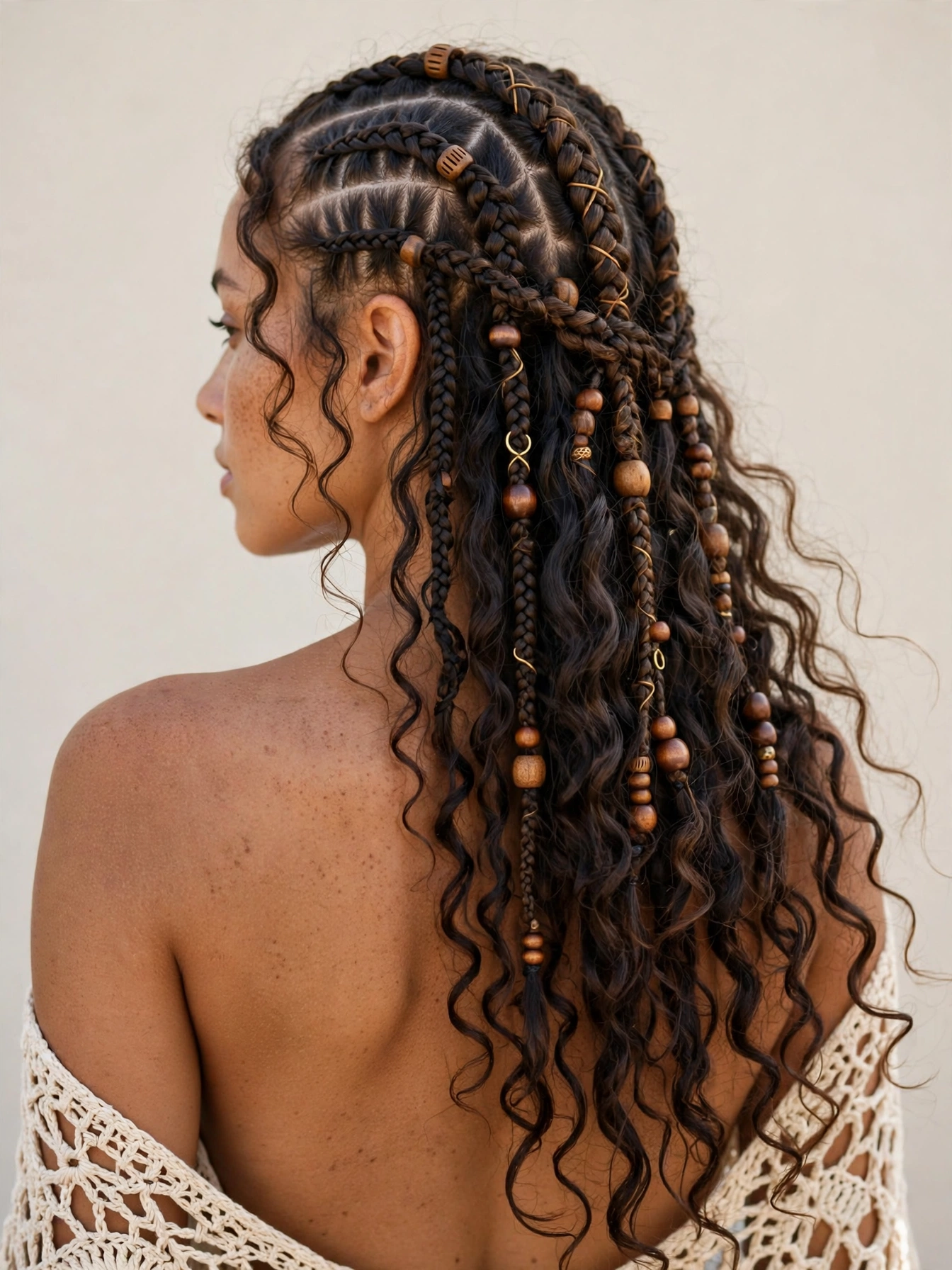
Boho curls and beads are the perfect finishing touch to this guide. Loose, free-flowing curls are mixed through the Fulani braids, wooden beads are scattered along the lengths, and the overall effect is relaxed, romantic and effortlessly cool. It is the ultimate festival and holiday style, and it works just as well for a summer wedding or a weekend away. The mix of textures makes the hair look full and alive.
Keep the curls soft and touchable with a light curl cream, and do not over-style them, because the boho look is meant to feel effortless. Wooden beads add a natural, earthy finish, and you can add a few gold cuffs for extra shine. Sleep with the curls loosely gathered in a silk bonnet, and refresh them in the morning with a little water. This is a joyful, free-spirited way to wear Fulani braids, and a fitting end to the collection.
Conclusion
Fulani braids and tribal braids are so much more than a hairstyle. They carry history, culture and identity, and they offer endless ways to express who you are, from the classic beaded Fulani look to bold geometric partings, romantic goddess curls and elegant wedding updos. Whatever your hair length, your budget or the occasion, there is a design in this guide that fits, and every one of them protects your natural hair while it looks beautiful. The key is to choose a style that suits your life as well as your taste, and to work with a braider who understands the craft.
Take your time choosing, bring reference photos to your appointment, and look after your braids once they are in. Moisturise your scalp, protect your hair at night with silk, and do not leave any braided style in for too long. When you are ready for a change, there are 38 other ideas waiting in this guide. Your next favourite hairstyle is already here, so pick the one that speaks to you and wear it with pride.
Frequently Asked Questions
How long do Fulani braids last?
Fulani braids usually last three to six weeks, depending on how fast your hair grows and how well you look after them. Keep your scalp moisturised, tie your braids up in a silk scarf or bonnet at night, and avoid pulling them into very tight styles. Take them out as soon as you notice heavy frizz or tension at the roots.
Are Fulani braids suitable for all hair types?
Fulani braids work best on textured and curly hair, because the cornrows grip well and hold their shape. They can also be done on straighter hair with the help of extensions and a little braiding gel for grip. A good braider will adjust the braid size and tension to suit your hair type, so always discuss your hair before the appointment.
How much do Fulani braids cost?
The cost varies widely depending on your location, the length and thickness of the braids, and whether you add extensions, beads or colour. A simple short style may cost much less than waist-length braids with accessories, and a detailed tribal pattern usually costs more because it takes longer. Ask your braider for a quote before the appointment so there are no surprises.
Can I wash my hair with Fulani braids?
Yes, you can wash Fulani braids, but do it gently. Use a diluted shampoo on the scalp, massage lightly with your fingertips, and rinse thoroughly without rubbing the braids. Follow with a light leave-in conditioner, and let the braids dry fully before tying them up so they do not develop a smell or mildew.
Do Fulani braids damage your natural hair?
Fulani braids should not damage your hair when they are installed correctly and not left in for too long. The main risks come from braids that are pulled too tight, especially at the hairline, or from leaving a style in for months without a break. Choose an experienced braider, speak up if anything feels painful, and give your hair a rest between styles.