38 Glass Hair & Glossing Ideas for Mirror-Shine Hair
Introduction
Glass hair is not about stiff, helmet-like hair. It is about hair that looks so smooth, healthy and even that light reflects off it in one clean sheet, almost like a mirror. The look starts with a precise cut, usually with blunt ends, and is finished with careful smoothing, a gloss treatment and the right shine care at home. When those pieces come together, even hair that once looked dull or frizzy can look polished without looking fake or overdone.
This guide brings together 38 glass hair and glossing ideas, from classic bobs and long sleek lengths to colour-refresh glossing, at-home routines and shine care for different hair types and face shapes. Each idea explains who it suits, how much upkeep it really needs and exactly what to ask for at the salon, so you can choose a version that fits your hair, your routine and your budget — not just a photo you liked online.
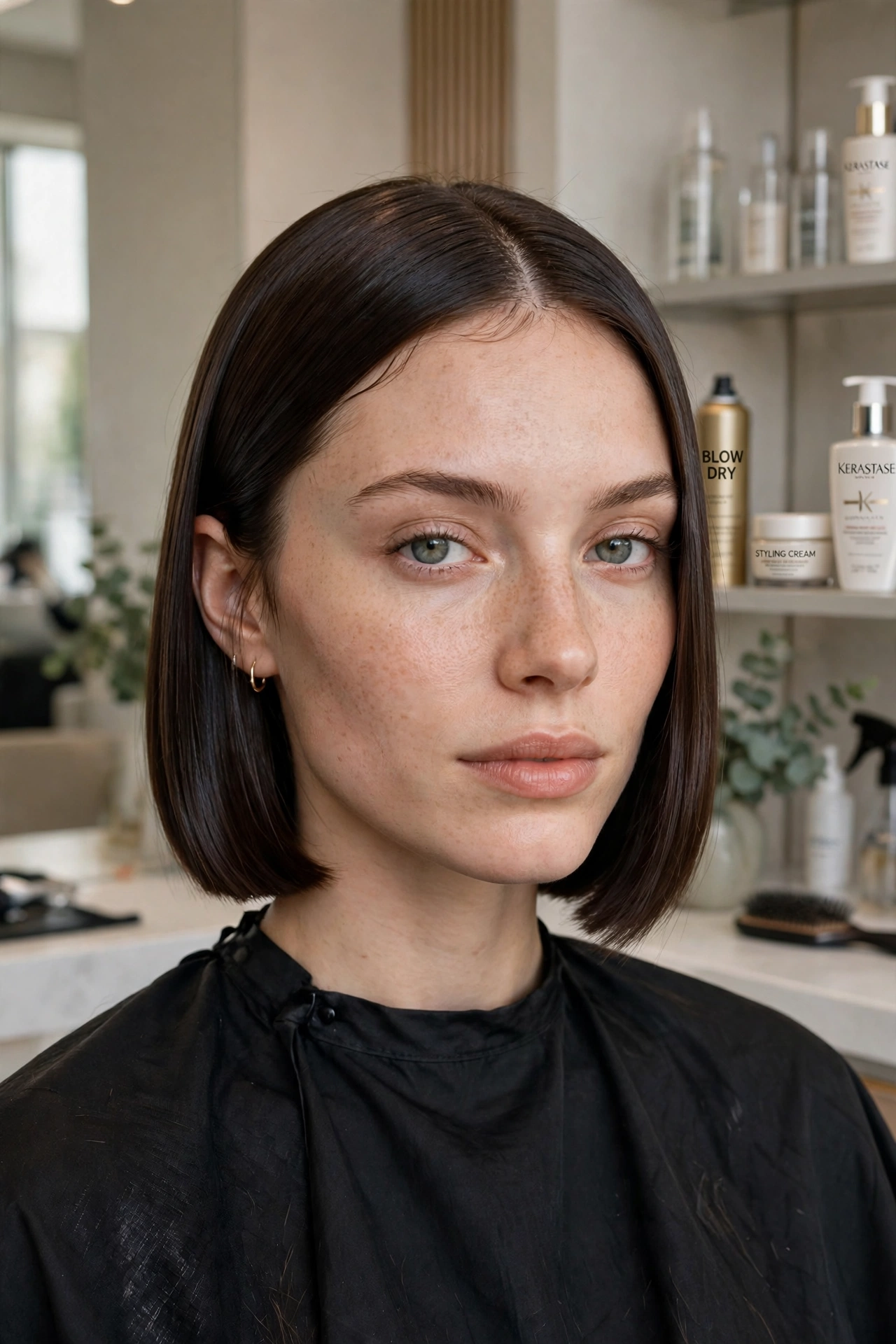
1. Classic Blunt Glass Bob
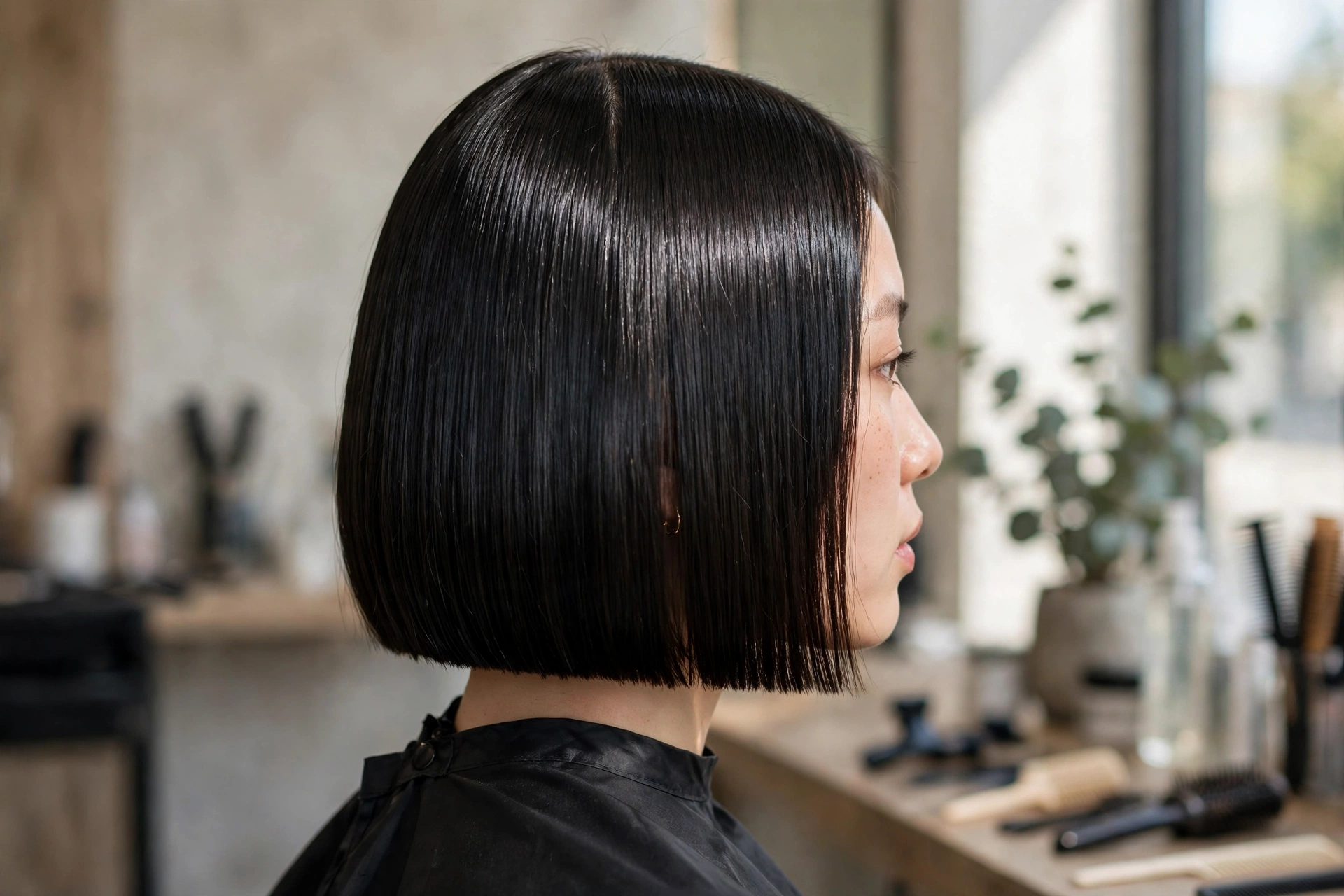
The classic blunt glass bob is the original glass hair cut: chin- to jaw-length, cut straight across with no layers, and smoothed until the surface looks completely even. It suits oval, heart and longer face shapes especially well, and it works best on straight or slightly wavy hair that can be blow-dried smooth. Fine hair often looks thicker in this cut because the blunt ends create a full, solid outline instead of wispy tips.
Upkeep is honest rather than low: you will need a trim every six to eight weeks to keep that sharp line, and a quick pass with a flat iron on most mornings if your hair has any natural wave. At the salon, ask for a blunt bob with no layers, cut dry or checked dry so the ends sit evenly, plus a clear gloss for shine. Use a heat protectant every time you straighten, and finish with just a drop of shine serum on the mid-lengths and ends.
2. Long Glass Hair, Sleek and Straight
Long glass hair is waist-length or longer, straightened section by section until every strand falls in the same direction and reflects light evenly. It suits oval and longer faces beautifully, and it is a strong choice if you already have long, healthy hair and want a dramatic, polished change without cutting length. Thick hair gives this look its weight, while fine hair can still work if the ends are kept blunt and full.
The trade-off is time: long glass hair takes longer to wash, dry and straighten, and split ends will break the mirror effect faster than in a shorter cut. Plan for trims every eight to ten weeks, a smoothing shampoo and conditioner, and a weekly deep-conditioning mask to keep long lengths hydrated. At the salon, ask for a blunt trim with minimal layering and a clear or tonal gloss, and ask your stylist to show you how to straighten in small sections for the smoothest result.
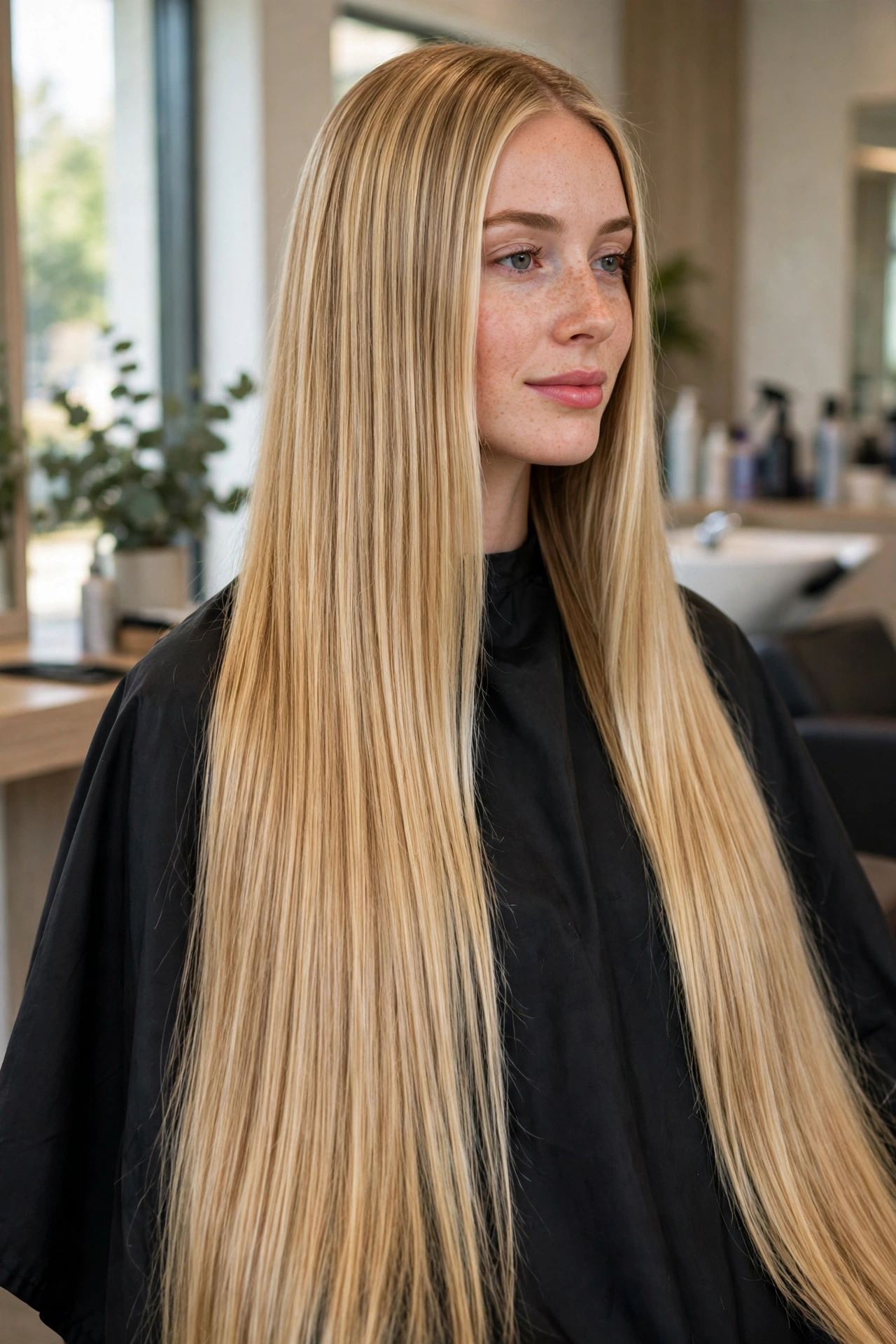
3. Glass Bob with Curtain Bangs
A glass bob with curtain bangs keeps the sleek, blunt bob but softens the front with bangs that part in the middle and sweep to each side of the face. It suits round, square and heart-shaped faces well, because the longer curtain pieces draw attention to the cheekbones and break up the strong horizontal line of the bob. It is also a gentler first step if a full fringe feels too bold.
Upkeep sits in the middle: the bob still needs regular trims, and the curtain bangs need a quick blow-dry with a round brush or a light flat-iron pass to sit correctly. Ask your stylist for a blunt glass bob with curtain bangs that start at cheekbone length and blend softly into the sides, plus a gloss to keep the shine even from roots to ends. At home, keep the bangs light with a small amount of product — heavy serum on the fringe will make it look flat and greasy.
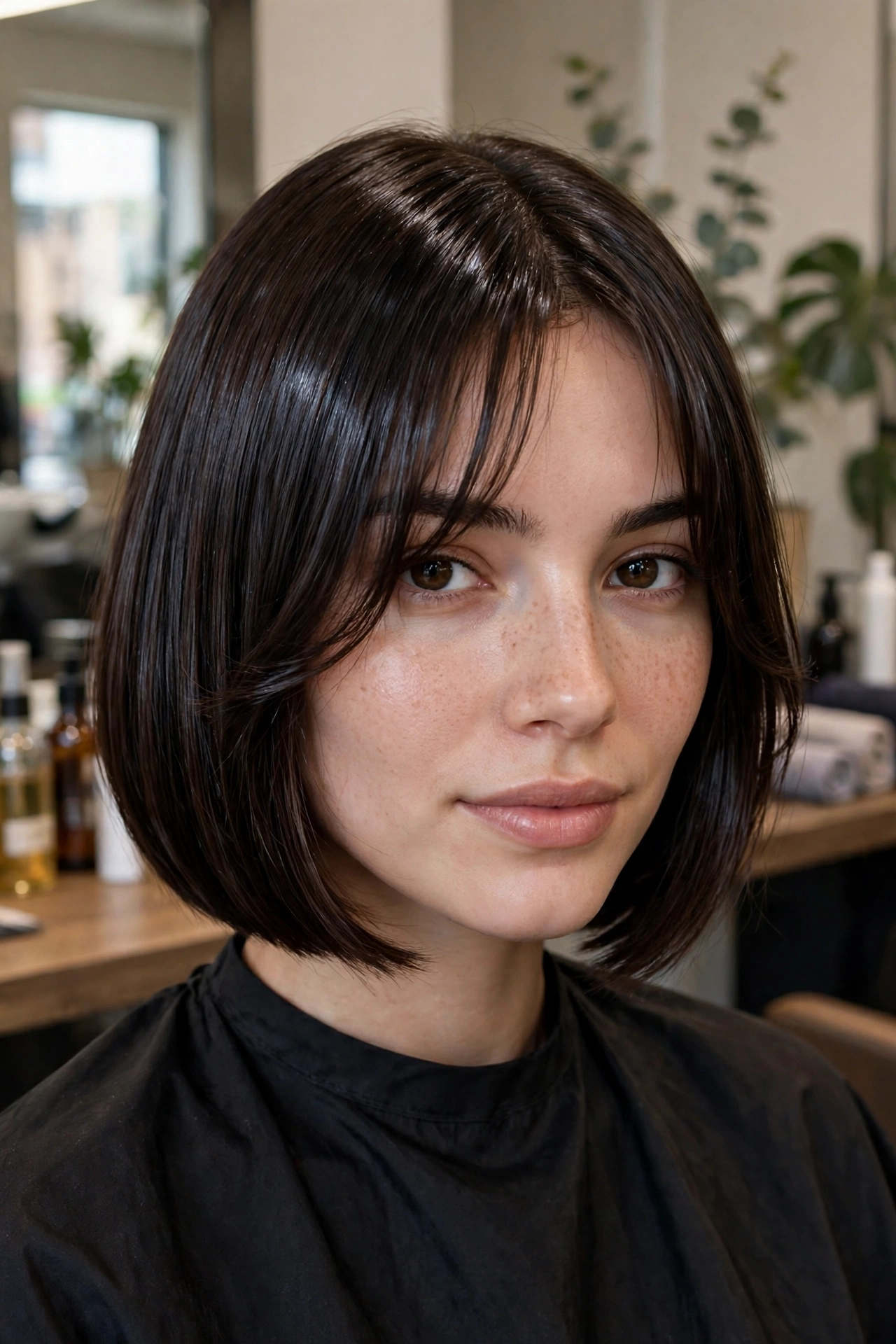
4. Glass Hair with a Full Fringe
Glass hair with a full fringe pairs ultra-sleek lengths with a straight, blunt fringe cut across the forehead. It suits oval and longer faces best, and it works particularly well for anyone who wants a bold, fashion-forward finish rather than a soft, romantic one. Straight, medium-density hair holds this fringe most easily, while very curly hair will need more straightening work each day.
A full fringe is the highest-maintenance part of this look: it needs trimming every three to four weeks, or it will fall into your eyes, and it needs daily smoothing to stay sharp. Ask for a blunt fringe cut just above or at the brows, checked while dry, with sleek glass lengths and a clear gloss. Keep a mini flat iron handy for quick fringe touch-ups, and wash the fringe separately on non-wash days if it gets oily faster than the rest of your hair.
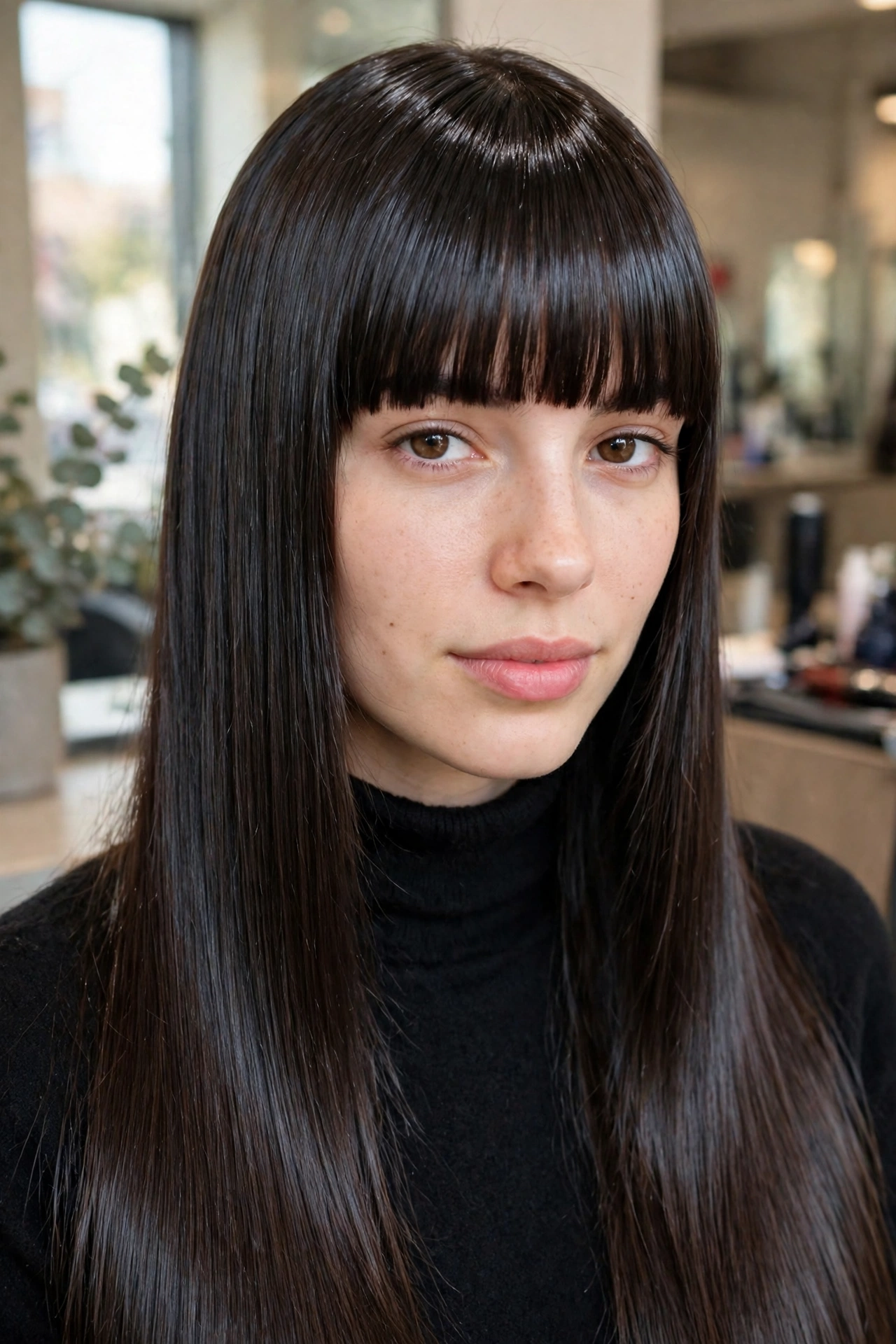
5. Glass Lob with Mirror Shine
The glass lob, or long bob, sits around the shoulders and gives you the mirror-shine finish of glass hair with more styling freedom than a short bob. It suits almost every face shape, which is why it is such a safe first glass haircut, and it flatters straight, wavy and fine hair alike. You can wear it tucked behind the ears, parted in the middle or swept to one side without losing the sleek effect.
Upkeep is manageable: trims every eight weeks keep the ends blunt, and most people can smooth a lob in fifteen to twenty minutes. At the salon, ask for a blunt lob with no visible layers and a gloss treatment to seal the cuticle and boost reflection. Avoid heavy layering at the back, because layers break up the flat, reflective surface that makes glass hair look like glass. A lightweight smoothing cream before blow-drying will help more than a heavy oil.
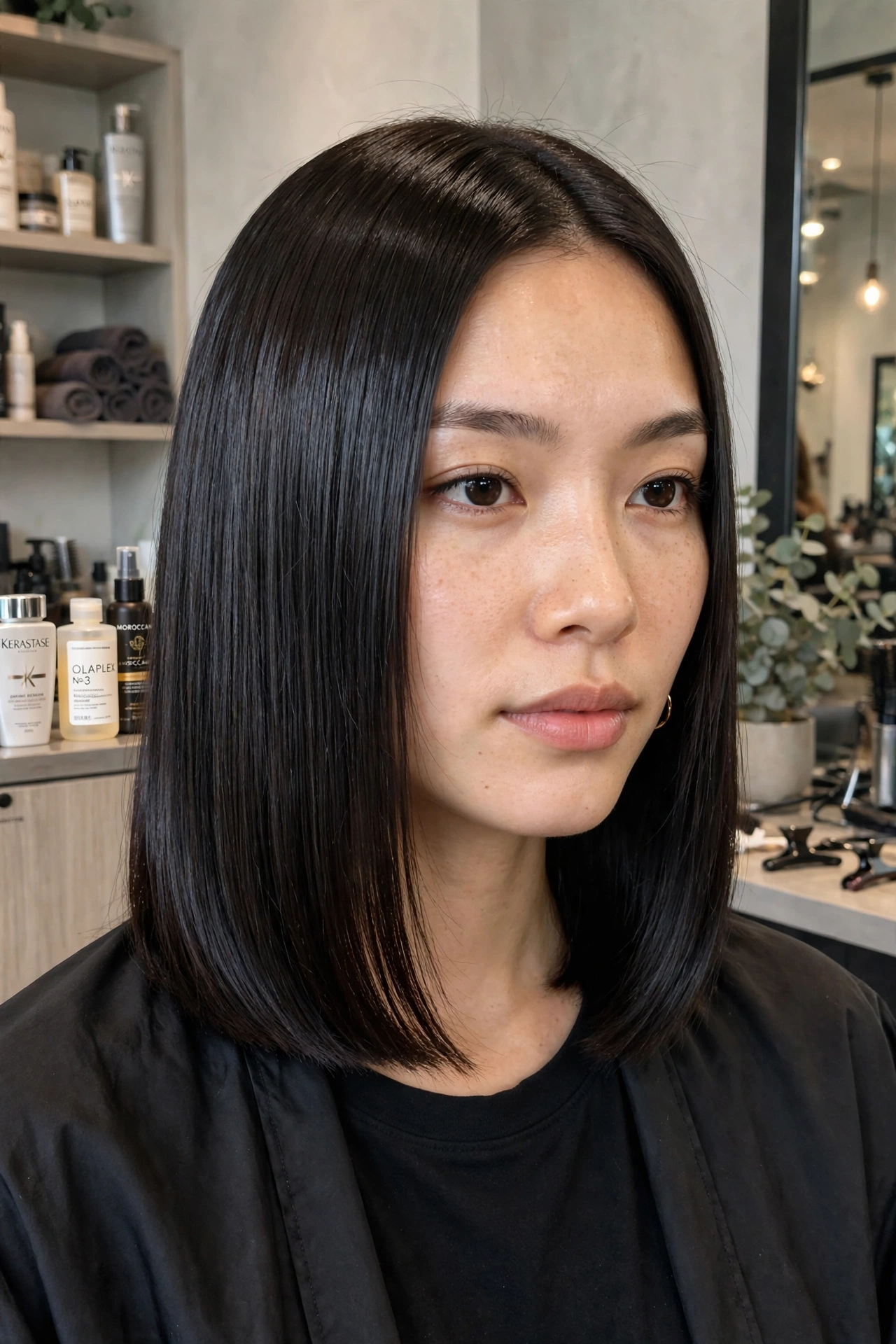
6. Glass Hair with a Centre Parting
A centre parting is the classic glass hair finish: hair divided exactly in the middle so both sides fall evenly and reflect light symmetrically. It suits oval, heart and longer faces, and it shows off a precise blunt cut better than any other parting. If your hairline is uneven, a stylist can adjust the part slightly off-centre while keeping the same sleek effect.
This style needs very little extra product, but it does need precision: a crooked part will be obvious on such smooth hair. Use the end of a tail comb to draw the part, smooth each side separately, and finish with a light shine spray rather than a heavy serum. At the salon, ask for a blunt cut and a clear gloss, and ask your stylist to check the part while your hair is dry and straight, because wet hair can hide an uneven parting.
7. Glass Hair with a Side Parting
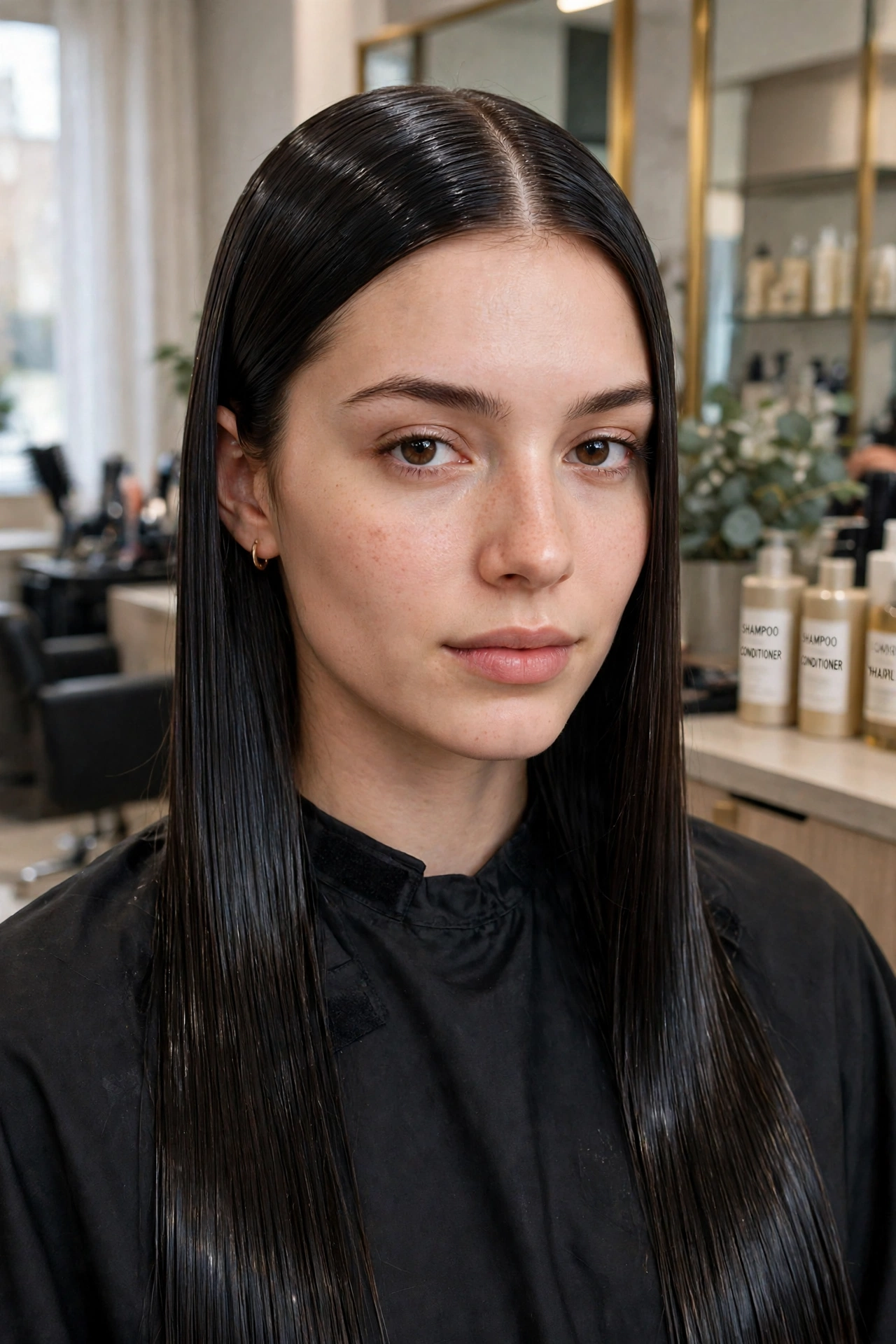
A side parting gives glass hair a softer, more voluminous feel while keeping the same mirror shine. It suits round and square faces especially well, because the deeper part creates asymmetry that lengthens the face and softens a strong jawline. It is also useful if you have a cowlick or a natural part that resists sitting in the middle.
Upkeep is similar to a centre-parted style, with one extra step: you need to train the part by blow-drying the roots in the direction of the part for the first few weeks. Ask for a blunt glass cut with a deep side part and a gloss, and tell your stylist which side you naturally part on so the cut sits correctly. A root-lifting spray on the fuller side will stop the style from falling flat by midday.
8. Chocolate Glass Hair Gloss
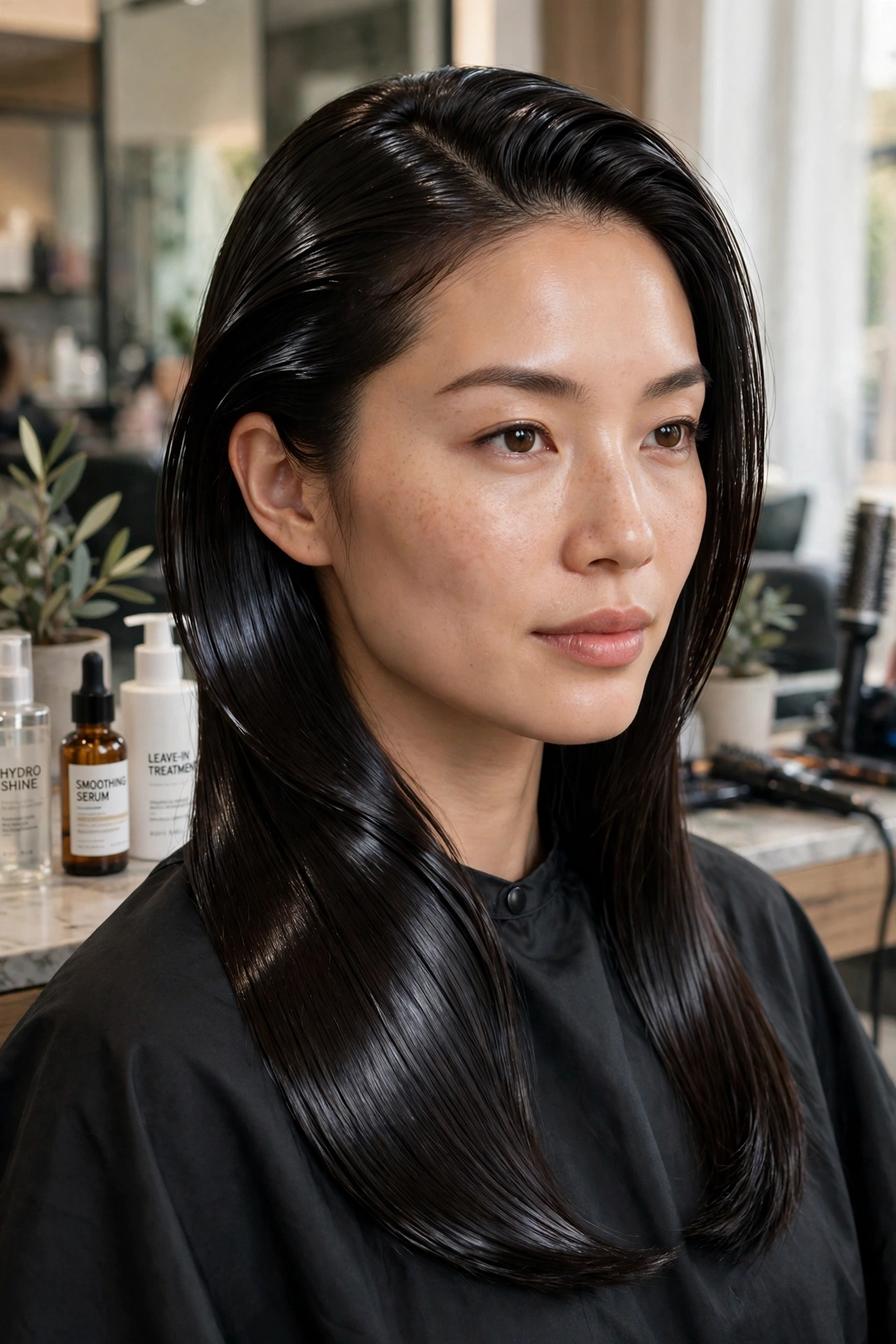
Chocolate glass hair combines a rich, warm brown colour with the sleek glass finish, so the shine reads as deep and dimensional rather than flat. It suits warm and neutral skin tones, and it is a beautiful option for naturally brown hair that has gone dull or faded. The chocolate tone also makes the mirror shine more visible in indoor light, where blonde shine can sometimes wash out.
To keep the colour rich, use a colour-safe shampoo, wash in cooler water, and refresh the tone with a chocolate gloss every six to eight weeks. At the salon, ask for a chocolate gloss over your existing brown, or a chocolate brown colour followed by a clear gloss seal, plus a blunt glass cut. Avoid clarifying shampoos too often, because they strip both colour and shine, and protect the colour from sun fading with a UV-protectant spray in summer.
9. Jet Black Glass Hair
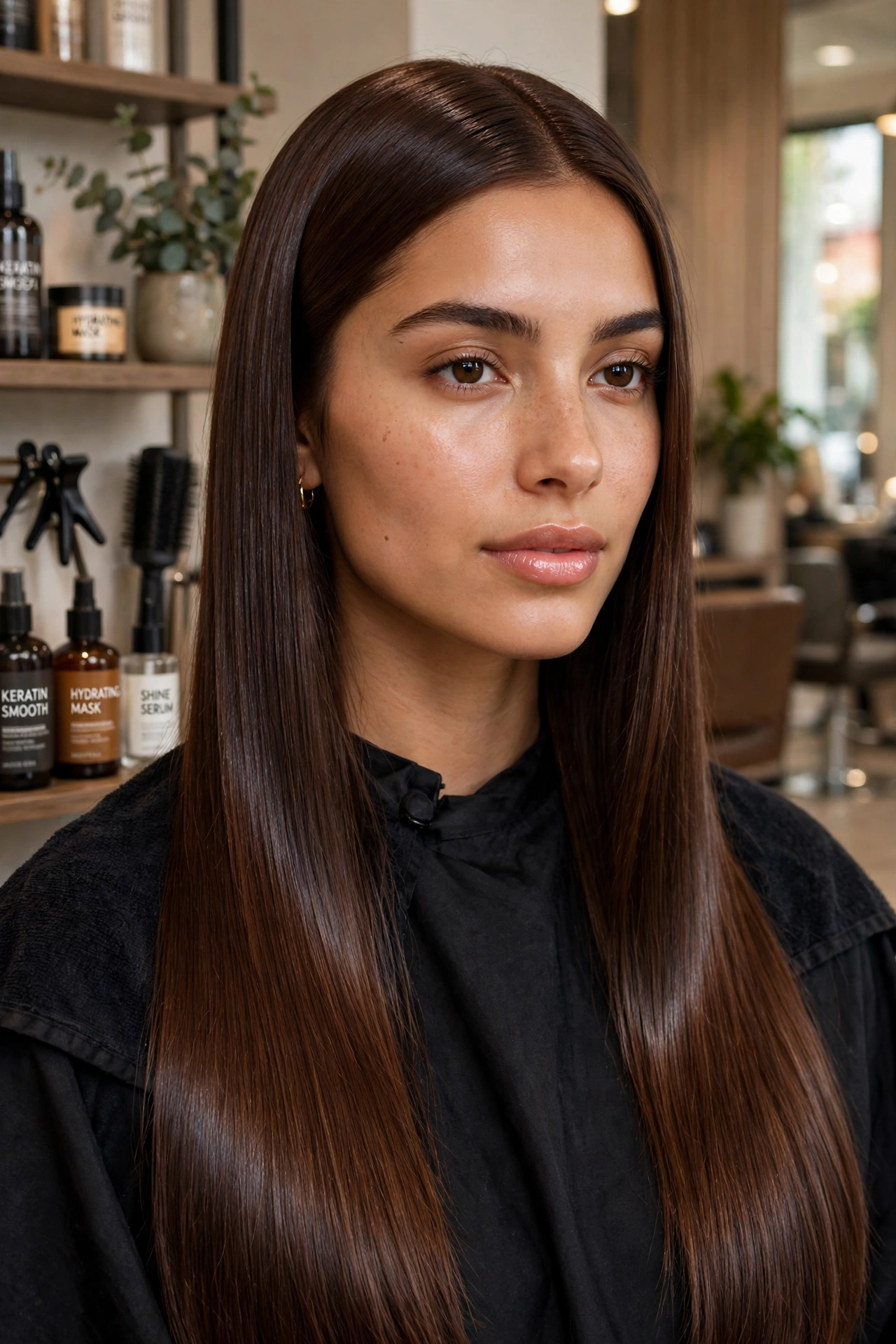
Jet black glass hair is the most dramatic version of the trend: the darkest colour reflects light most strongly, so the mirror effect is at its most obvious. It suits cool and neutral skin tones and oval, heart and longer faces, and it looks striking in both a bob and long lengths. Naturally dark hair is the easiest base, because you will not need heavy lightening to reach this shade.
Upkeep is about health, not colour: black hair shows dryness and split ends very clearly, so regular trims and deep conditioning matter more than frequent colour appointments. Ask for a jet black gloss or a demi-permanent black refresh, plus a blunt glass cut, and be honest about whether you want a blue-black or a softer natural black. Use a shine serum sparingly, because black hair can look greasy quickly if you overload it with product.
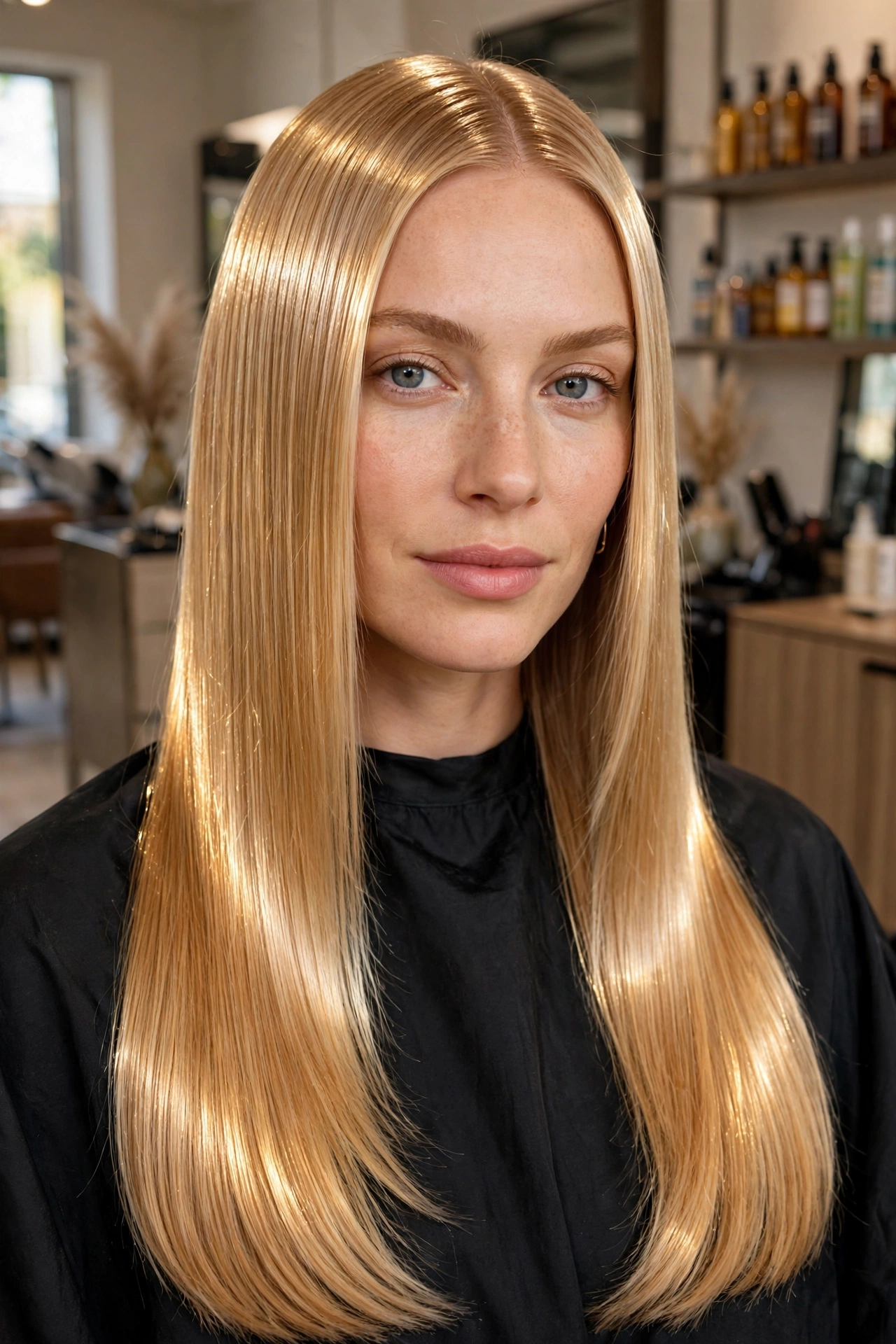
10. Honey Blonde Glass Hair
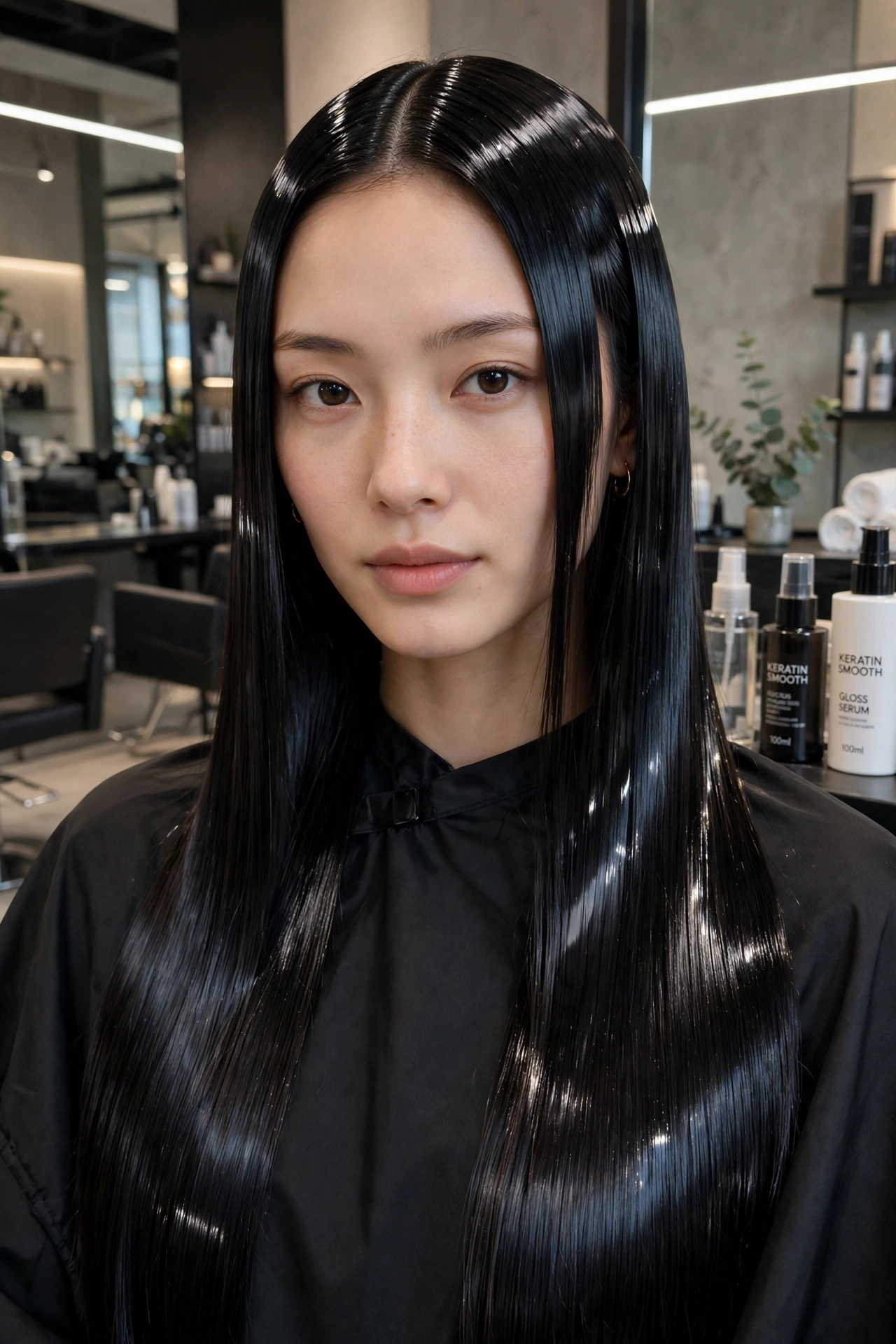
Honey blonde glass hair is warm, golden and sunlit, with a glossy finish that makes blonde look healthy rather than dry or brassy. It suits warm skin tones and oval, round and heart-shaped faces, and it is a good choice if your blonde has started to look flat after highlights or balayage. The warm tone reflects light softly, so the shine looks golden rather than icy.
Blonde hair needs extra care to stay glossy: use a purple shampoo only once a week or as directed, because overuse can dull warm honey tones, and add a hydrating mask weekly to counteract any dryness from lightening. At the salon, ask for a honey blonde gloss to refresh warmth and shine, with a blunt glass cut and minimal layering. Tell your stylist you want shine, not extra lightness, so the gloss is chosen for tone and reflection rather than lift.
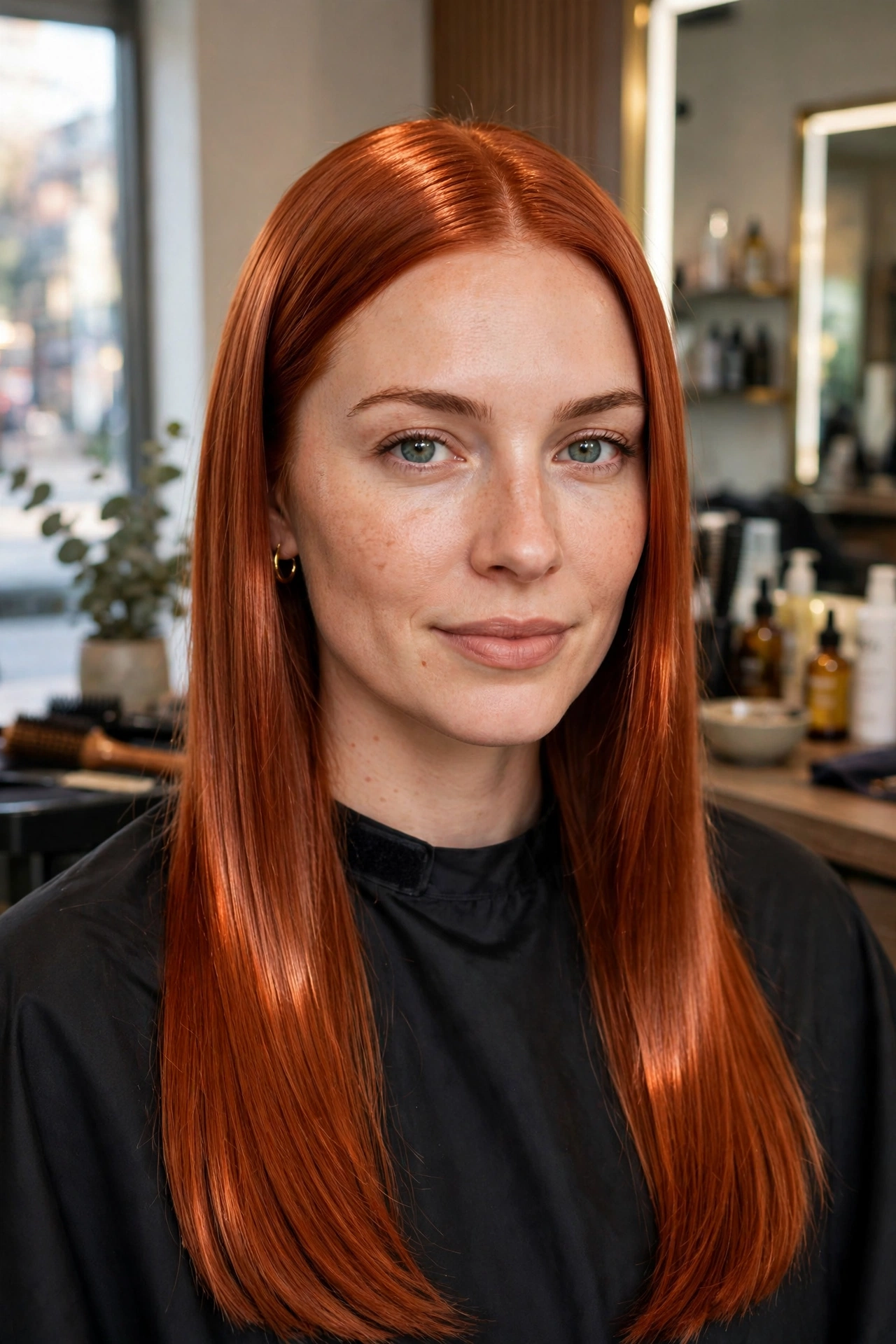
11. Copper Glass Hair Gloss
Copper glass hair is vibrant and warm, with a glossy finish that makes copper tones look lit from within rather than flat or faded. It suits fair to medium skin tones with warm undertones, and it flatters oval and heart-shaped faces, especially in a lob or long length where the colour can show its full range. Copper is one of the fastest-fading colours, so the gloss part of this look is not optional — it is what keeps the shade alive.
Plan for a copper gloss refresh every four to six weeks, wash with cool water and colour-safe products, and avoid hot tools without heat protectant, because heat fades copper quickly. At the salon, ask for a copper gloss in your preferred depth — soft copper, rich auburn or bright copper — over a blunt glass cut. Keep a colour-depositing conditioner at home for between appointments, but use it sparingly so the colour builds evenly rather than in patches.
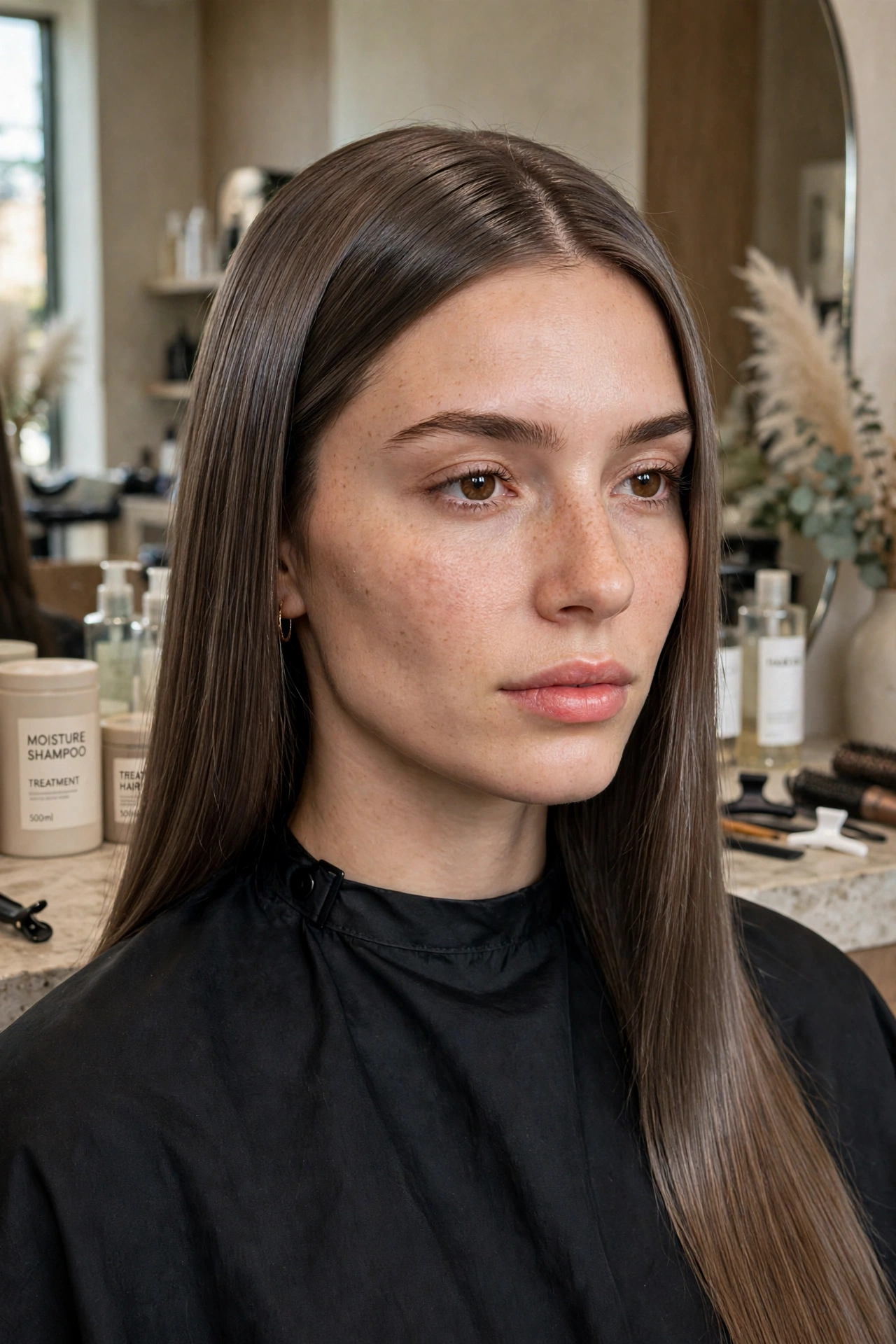
12. Ash Brown Glass Hair
Ash brown glass hair is cool, muted and modern, with a glossy finish that stops cool brown from looking dull or grey. It suits cool and neutral skin tones, and it works well for anyone whose natural brown pulls warm or brassy and wants a more refined, ashy result. The sleek glass finish is especially important here, because ash tones can look flat without shine.
Upkeep involves protecting the cool tone: use a blue or ash-toning shampoo occasionally as your stylist directs, and refresh with an ash brown gloss every six to eight weeks. Ask for an ash brown gloss rather than a permanent colour change if you only want to tone existing brown hair, plus a blunt glass cut. Be realistic if your hair is very warm naturally — ash gloss will cool it, but it will not permanently erase strong warmth without lightening first.
13. Glass Hair for Fine Hair
Glass hair can work beautifully on fine hair, because a blunt cut makes fine ends look fuller and the gloss adds visible shine without weight. It suits oval, heart and longer faces, and a bob or lob is usually more flattering than very long lengths, which can make fine hair look thinner at the ends. The key is keeping the cut blunt and the products light.
Avoid heavy oils and thick masks that weigh fine hair down; choose a lightweight smoothing cream, a volumising blow-dry spray at the roots, and a single drop of shine serum on the ends only. At the salon, ask for a blunt glass bob or lob with no thinning or texturising, plus a clear gloss — and specifically ask the stylist not to thin the ends. Trim every six to eight weeks to keep the outline full, and blow-dry with a paddle brush for the smoothest, fullest finish.
14. Glass Hair for Thick Hair
Thick hair is naturally suited to glass hair, because its density gives the style weight, fullness and a strong reflective surface. It suits most face shapes, and long lengths, lobs and bobs all work, provided the bulk is managed so the hair falls flat rather than puffing out. Thick hair also holds a gloss finish well, because the cuticle is often stronger and less porous than fine, over-processed hair.
The main challenge is drying time and bulk: section the hair carefully when straightening, use a smoothing cream before blow-drying, and consider asking your stylist to remove a small amount of internal bulk without creating visible layers. At the salon, ask for a blunt glass cut, internal weight removal only if needed, and a clear gloss. At home, a good flat iron and a heat protectant are essential, and a weekly mask will keep thick lengths soft rather than heavy and stiff.
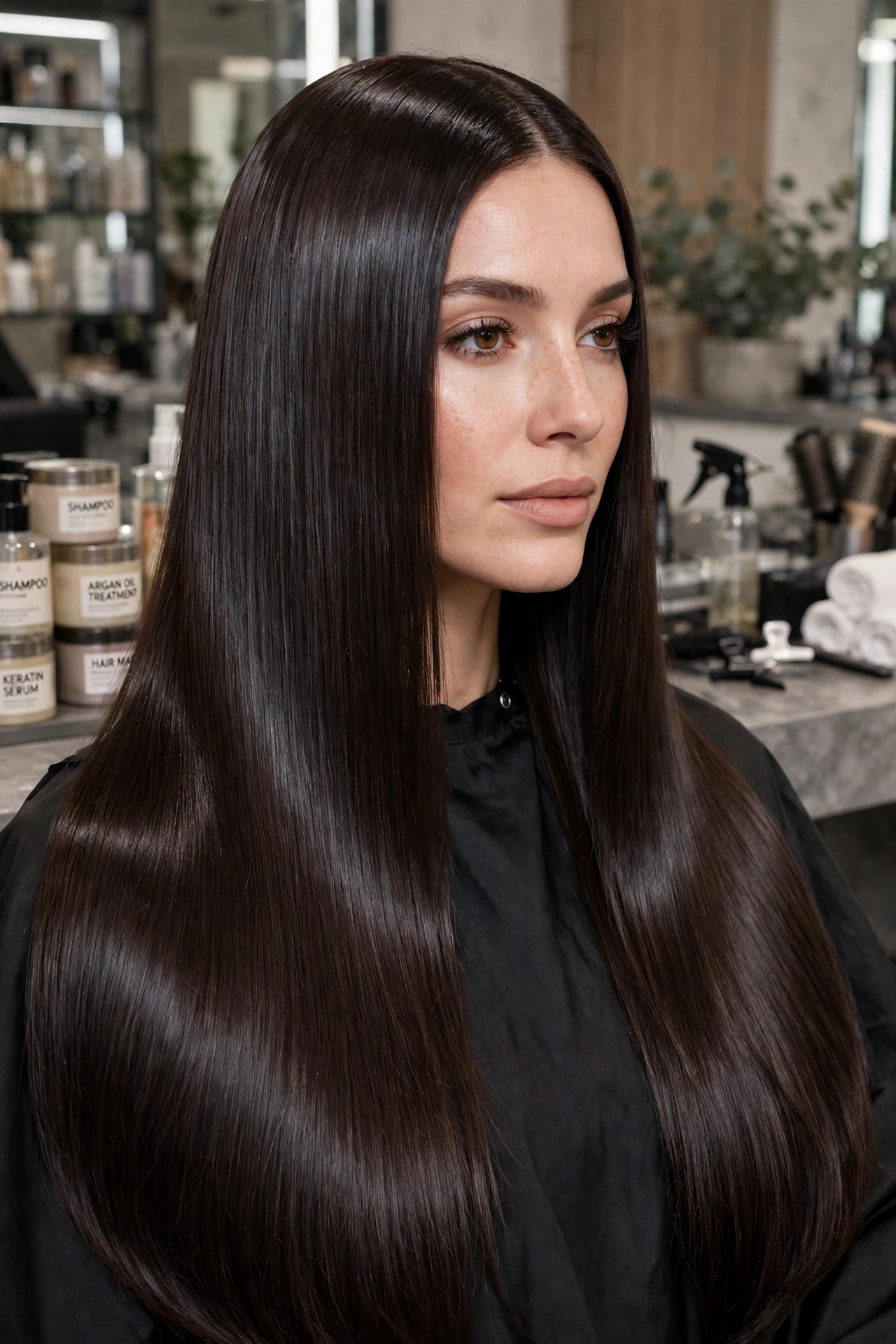
15. Glass Hair for Curly Hair, Straightened
If you have curly hair, glass hair is a straightened style, not a wash-and-go one — and being honest about that will save you disappointment. When curly hair is carefully blow-dried and flat-ironed, it can achieve a stunning glass finish, and the result suits oval, round and heart-shaped faces in a lob or long length. The contrast between your natural curl and the sleek result is part of the appeal.
Upkeep is higher: you will need a heat protectant, a smoothing cream, and a flat iron routine that works in small sections, plus a silk scarf or wrap at night to preserve the straight finish. Ask your stylist for a blunt cut that is checked both curly and straight if you sometimes wear your curls, and a gloss treatment to smooth the cuticle. Do not straighten every day if your hair is fragile — use a blow-dry and a wrap on some days, and always give your hair a heat-free break each week.
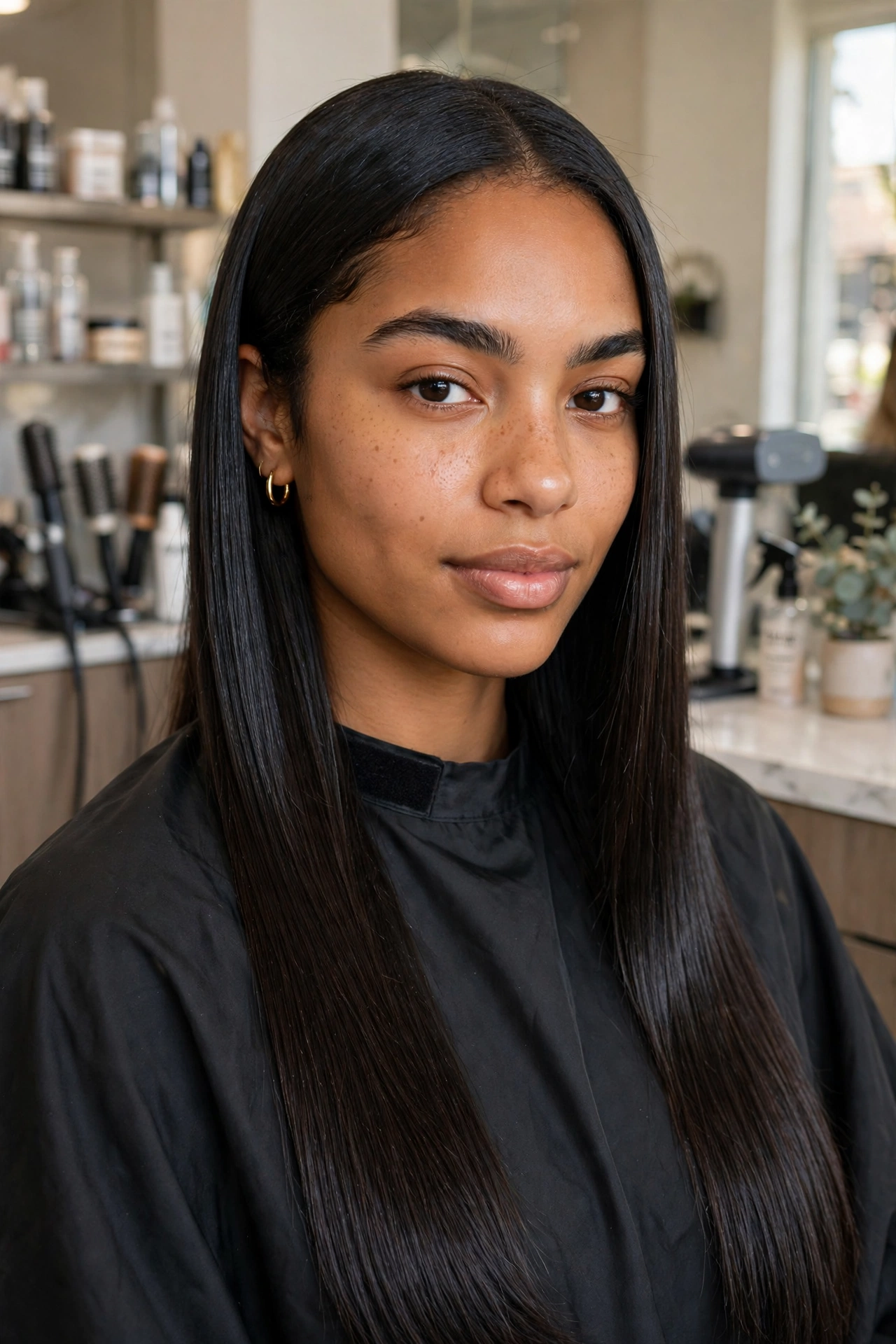
16. Glass Hair for Wavy Hair
Wavy hair sits between straight and curly, so glass hair is very achievable with a good blow-dry, but it will not stay perfectly straight on its own in humidity. It suits oval, square and heart-shaped faces, and a lob is often the easiest length to keep sleek, because it is long enough to weigh the wave down but short enough to smooth quickly. A gloss treatment helps wavy hair enormously, because it seals the cuticle that naturally lifts in waves.
Use a smoothing shampoo and conditioner, blow-dry with a paddle brush in downward sections, and finish with a flat iron only where the wave persists, usually at the ends and around the face. At the salon, ask for a blunt glass cut and a clear gloss, and tell your stylist about your wave pattern so they can cut the ends evenly when dry. On humid days, a light anti-frizz serum is more useful than extra heat, which can cause more frizz once you step outside.
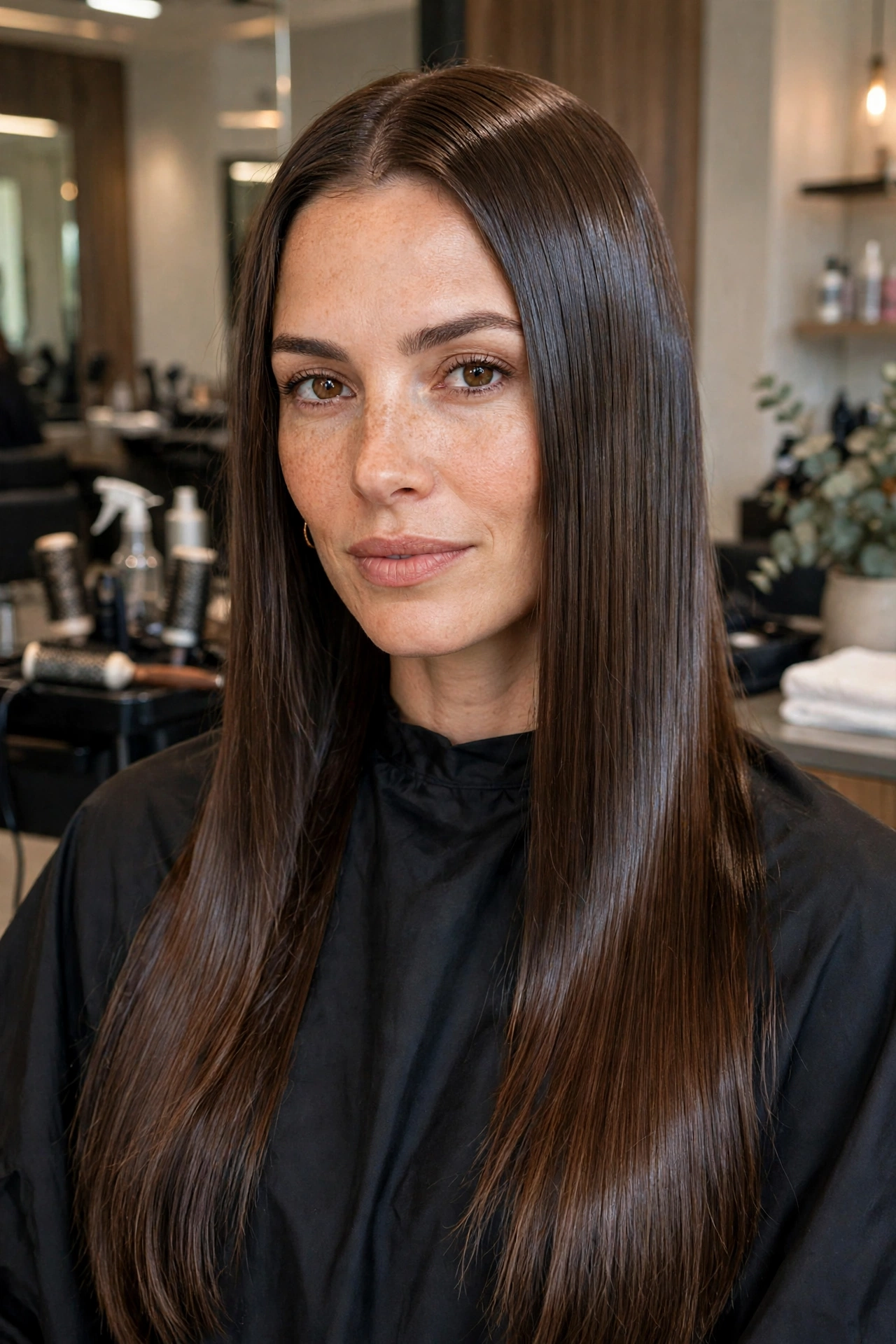
17. Glass Hair with Face-Framing Pieces
Glass hair with face-framing pieces keeps the overall sleek finish but adds slightly shorter, softer pieces around the face that open up the features. It suits square, round and wider faces well, because the framing pieces soften the jawline and cheekbones without breaking the glass effect. It is also a good compromise if a fully blunt cut feels too severe for you.
The framing pieces need a little extra attention when styling: blow-dry them forward and slightly under, or smooth them with a flat iron so they curve gently toward the face. Ask for a blunt glass cut with face-framing pieces starting at chin length or below — not short layers throughout — plus a clear gloss. Keep the rest of the hair blunt and even, because too much layering will turn this into a layered cut rather than a glass cut.
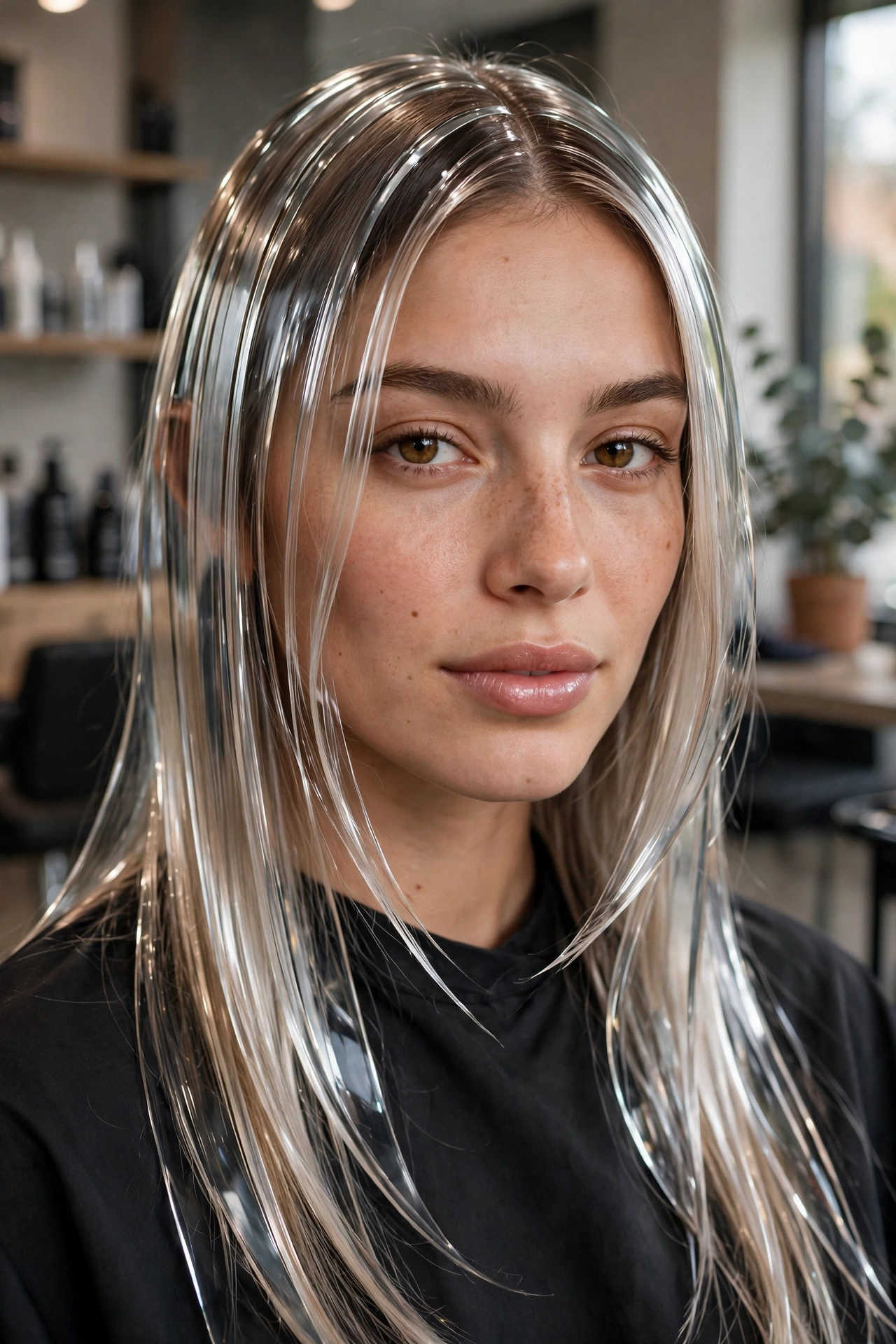
18. Glass Pixie Bob
A glass pixie bob is a short, sleek style that sits between a pixie and a bob, with a smooth, glossy surface and a neat, polished outline. It suits oval, heart and smaller faces, and it is ideal if you want a low-length, high-impact style that still reads as glass hair. Fine to medium hair holds this shape best, while very thick hair may need careful thinning at the nape.
Upkeep is frequent but quick: trims every four to six weeks keep the shape, and daily styling takes only a few minutes with a flat iron and a drop of serum. Ask for a sleek pixie bob with a smooth, glossy finish — not a textured or choppy pixie — and a clear gloss to boost shine. This cut shows the shape of your head and face very clearly, so ask your stylist to check the outline from the back and both sides before you leave.
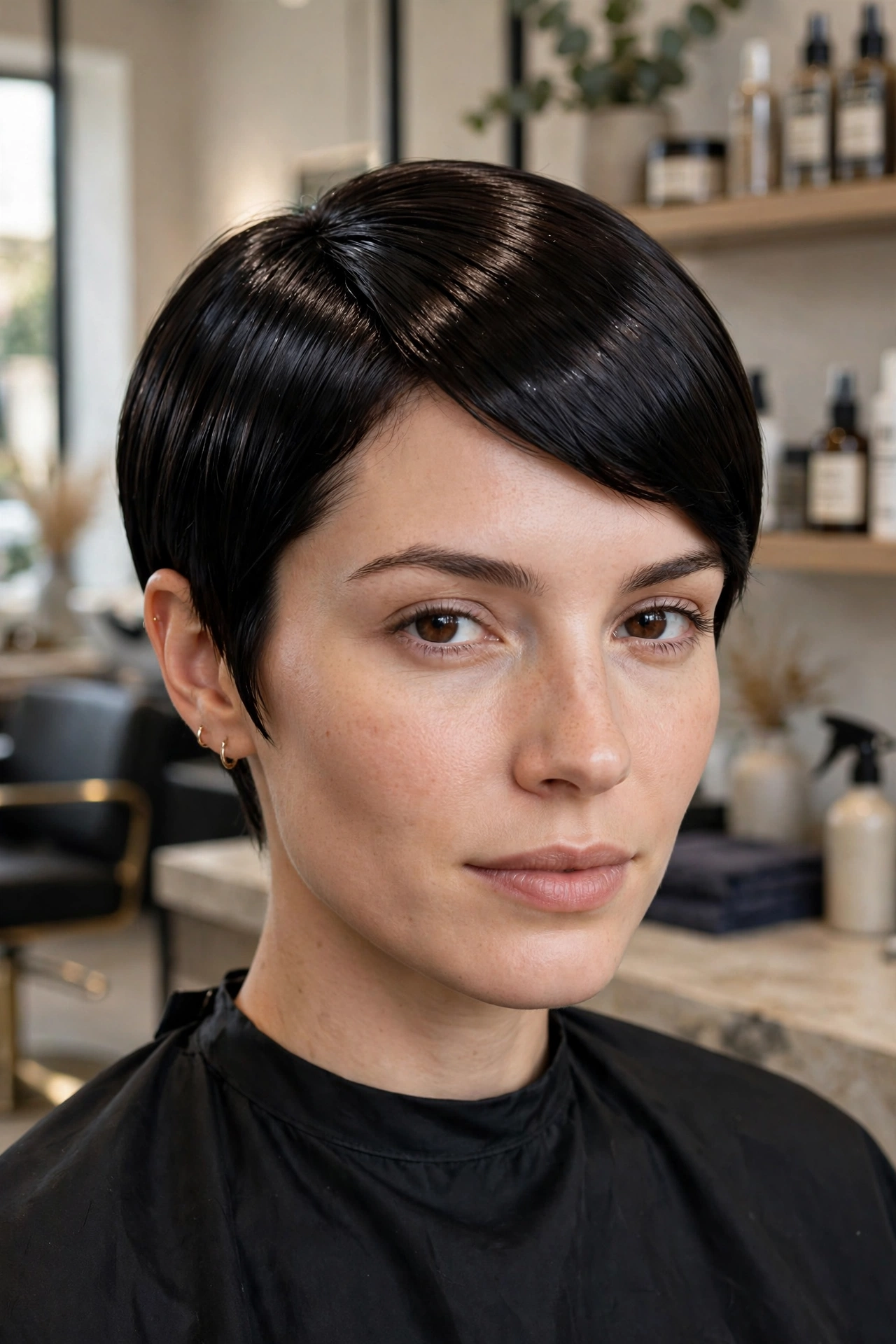
19. Glass Hair with Blunt Ends and a Gloss Treatment
This idea focuses on the two details that make glass hair work: blunt ends and a gloss treatment, rather than a specific length. Blunt ends create the solid, reflective edge, while the gloss seals the cuticle, adds shine and refreshes tone. It suits any face shape and any length, and it is the best starting point if you already like your length and simply want it to look healthier and shinier.
Ask your stylist to cut the ends straight across with no feathering, then apply a clear gloss, and to show you how the ends should look when dry — they should sit in one clean line. At home, protect the ends with regular trims, a leave-in conditioner on the lengths, and minimal heat on the very tips. If your ends are split, no gloss will hide them for long, so a small trim before the gloss will give you a far better result than glossing over damaged ends.
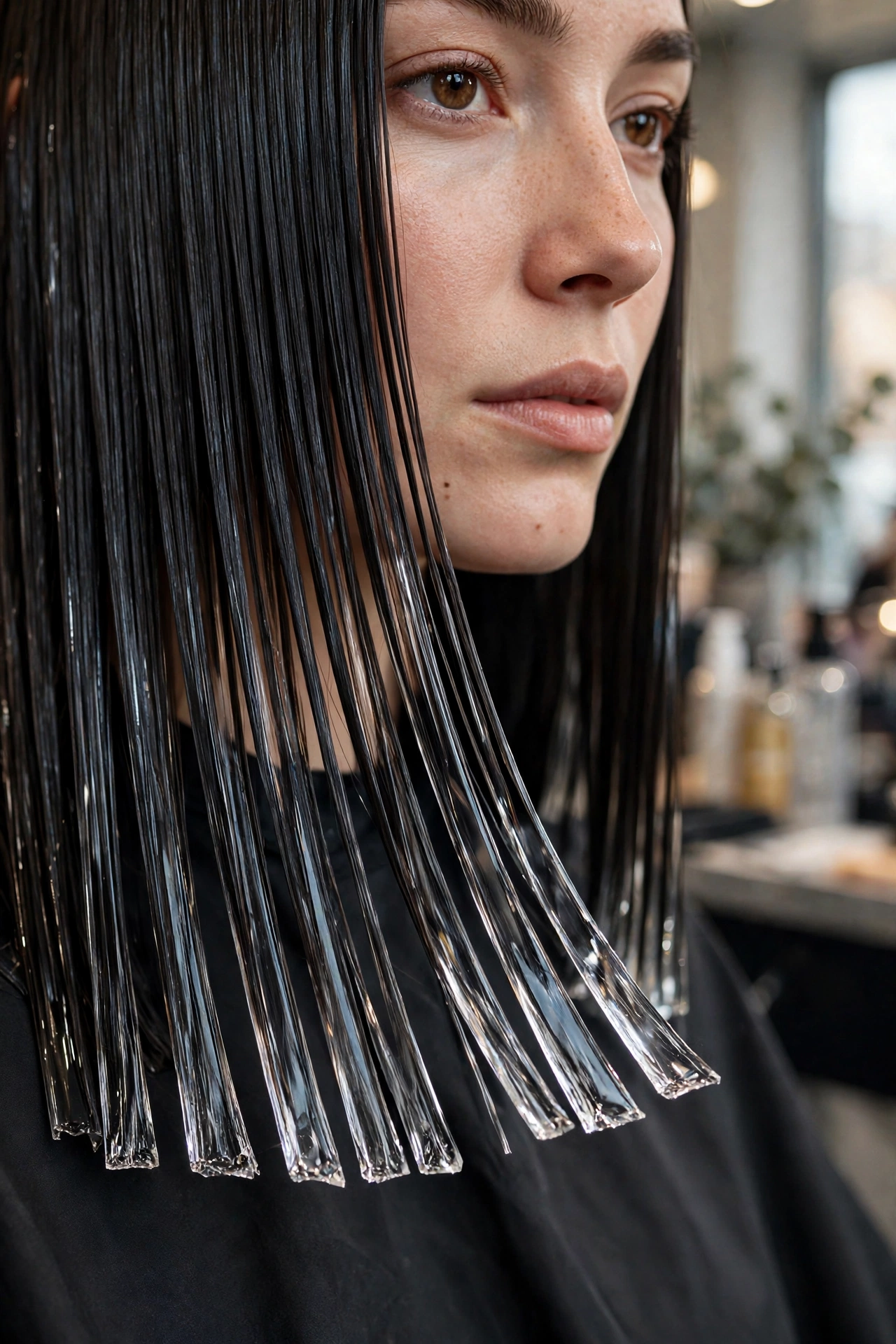
20. At-Home Clear Gloss Routine
An at-home clear gloss routine lets you add shine between salon visits, using a clear gloss product that coats the hair without changing its colour. It suits all hair types and colours, and it is especially useful for busy routines, because most at-home glosses take twenty minutes or less. The result is softer, shinier hair that looks freshly salon-finished, though it will not last as long as a professional gloss.
Follow the product instructions exactly, apply to clean, damp hair from mid-lengths to ends first, and do not leave it on longer than directed in the hope of extra shine — over-processing can make hair feel coated. Use an at-home gloss every three to four weeks, not every wash, and follow with a cool rinse to seal the cuticle. Ask your salon stylist which at-home gloss suits your colour, especially if you have blonde or copper hair, because some clear glosses can slightly shift tone.
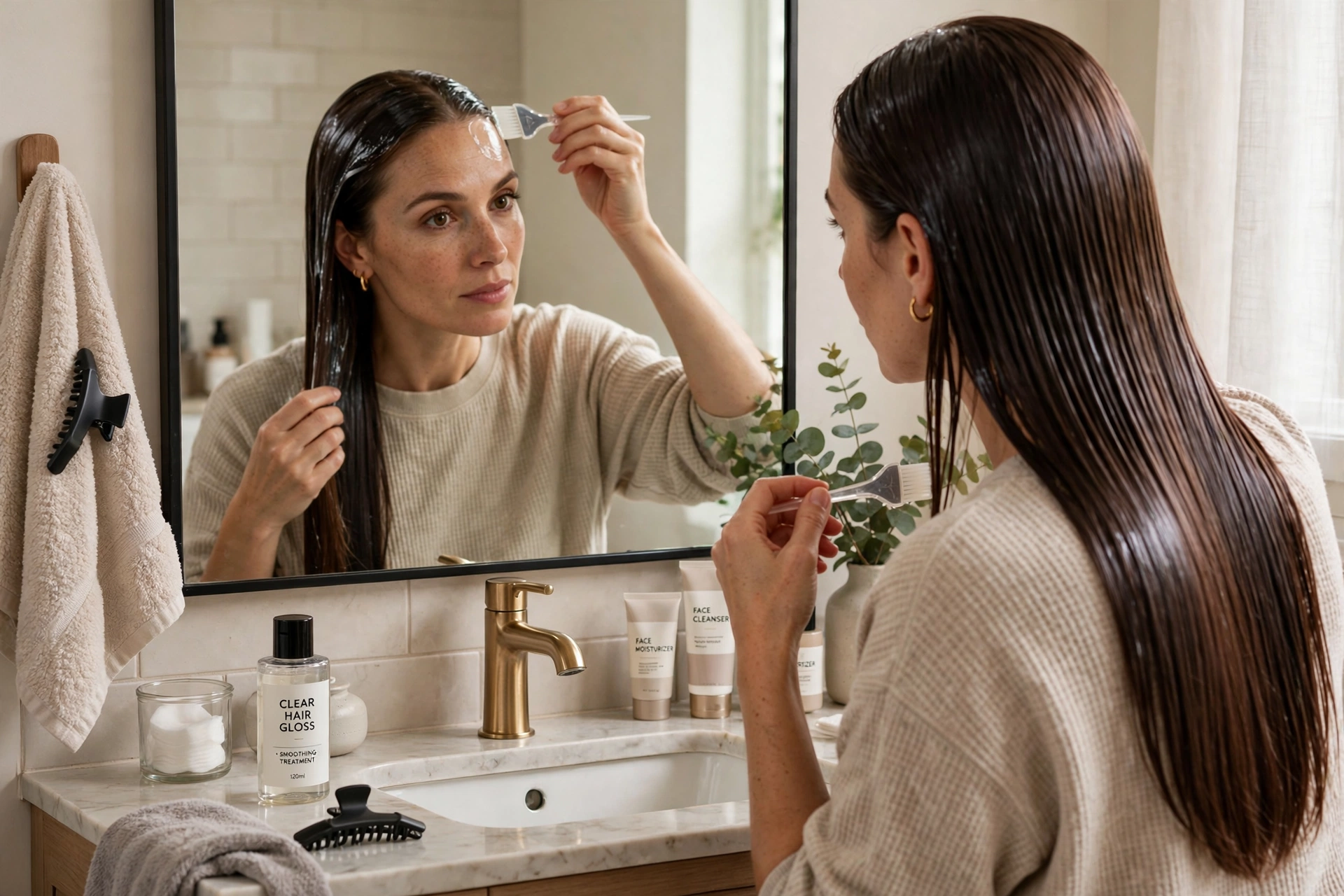
21. Salon Glossing for a Colour Refresh
Salon glossing for a colour refresh is the fastest way to revive faded colour without a full colour appointment. A stylist applies a demi-permanent gloss in your existing shade, or a clear gloss if you only want shine, and the result is richer colour, smoother texture and a mirror-like finish. It suits coloured hair of any shade, and it is ideal four to six weeks after a colour service when the tone starts to fade.
The appointment usually takes under an hour, costs less than a full colour, and causes far less damage than permanent colour, because gloss is deposit-only. At the salon, bring a photo of your colour when it was fresh, and ask for a gloss refresh in that tone plus a blunt trim if the ends need it. At home, protect the refresh with colour-safe shampoo and cool water, and book your next gloss before the fade becomes obvious, so the colour stays even.

22. Glass Hair with Balayage Shine
Glass hair with balayage combines hand-painted, sun-kissed lightness with a sleek, glossy finish, so the shine has dimension rather than one flat tone. It suits oval, round and heart-shaped faces, and it works best in a lob or long length where the balayage can blend gradually from darker roots to lighter ends. The glass finish stops balayage from looking dry or matte, which is a common problem with lightened hair.
Lightened ends need extra moisture, so use a hydrating mask weekly and a heat protectant every time you straighten. At the salon, ask for a soft balayage with a gloss to tone and seal the lighter pieces, plus a blunt glass cut that keeps the ends full. Be clear about how much lightness you want — a subtle balayage will keep the glass look cleaner, while a high-contrast balayage will make the shine more dramatic but need more toning upkeep.
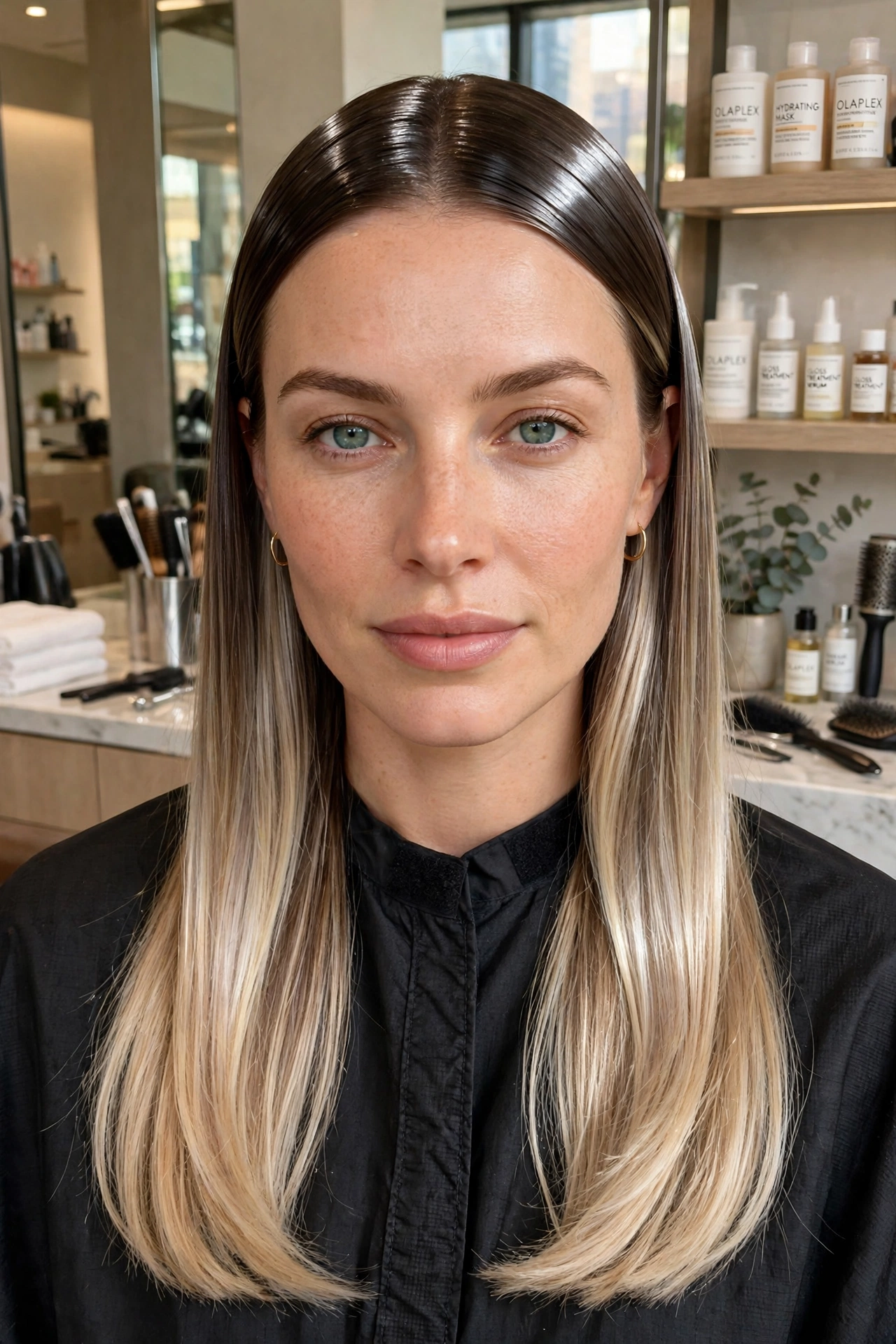
23. Glass Hair with Highlights and Gloss
Glass hair with highlights uses fine, blended highlights to add dimension, then seals everything with a gloss so the highlights shine rather than looking stripey or dry. It suits most face shapes, and it is a good choice if your solid colour feels flat but you do not want a full balayage change. Fine highlights work best for the glass effect, because chunky highlights break up the smooth, reflective surface.
Upkeep means toning every six to eight weeks to keep the highlights from turning brassy, plus regular glossing to maintain shine. Ask for fine, blended highlights with a gloss toner in a tone that complements your base colour, and a blunt glass cut. At home, use a colour-safe, hydrating routine and avoid overusing purple shampoo, which can make highlights look dull if used too often.
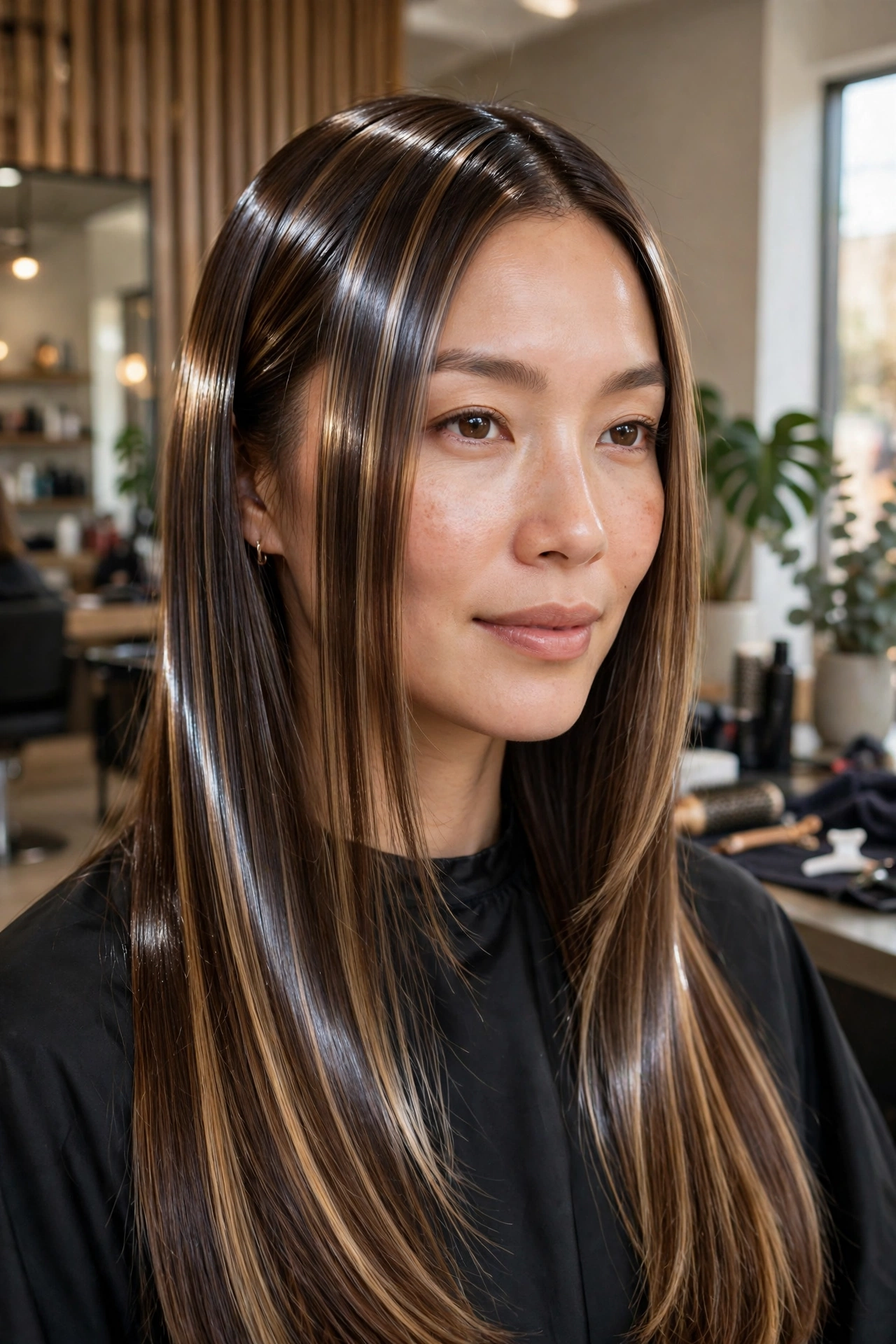
24. Glass Hair for a Round Face
For a round face, the most flattering glass hair is longer than the chin, with a centre or deep side part and sleek lengths that fall past the jawline. This lengthens the face visually, while the sleek finish keeps the look polished rather than puffy. A blunt lob or long glass hair works better than a chin-length bob, which can emphasise roundness by ending at the widest part of the face.
Avoid adding volume at the sides, and keep the roots smooth rather than lifted outward. At the salon, ask for a glass lob or long glass cut with blunt ends, a parting that suits your hairline, and a clear gloss. Style by blow-drying the hair straight down, and tucking one side behind the ear only lightly, so you do not add width at the cheeks.
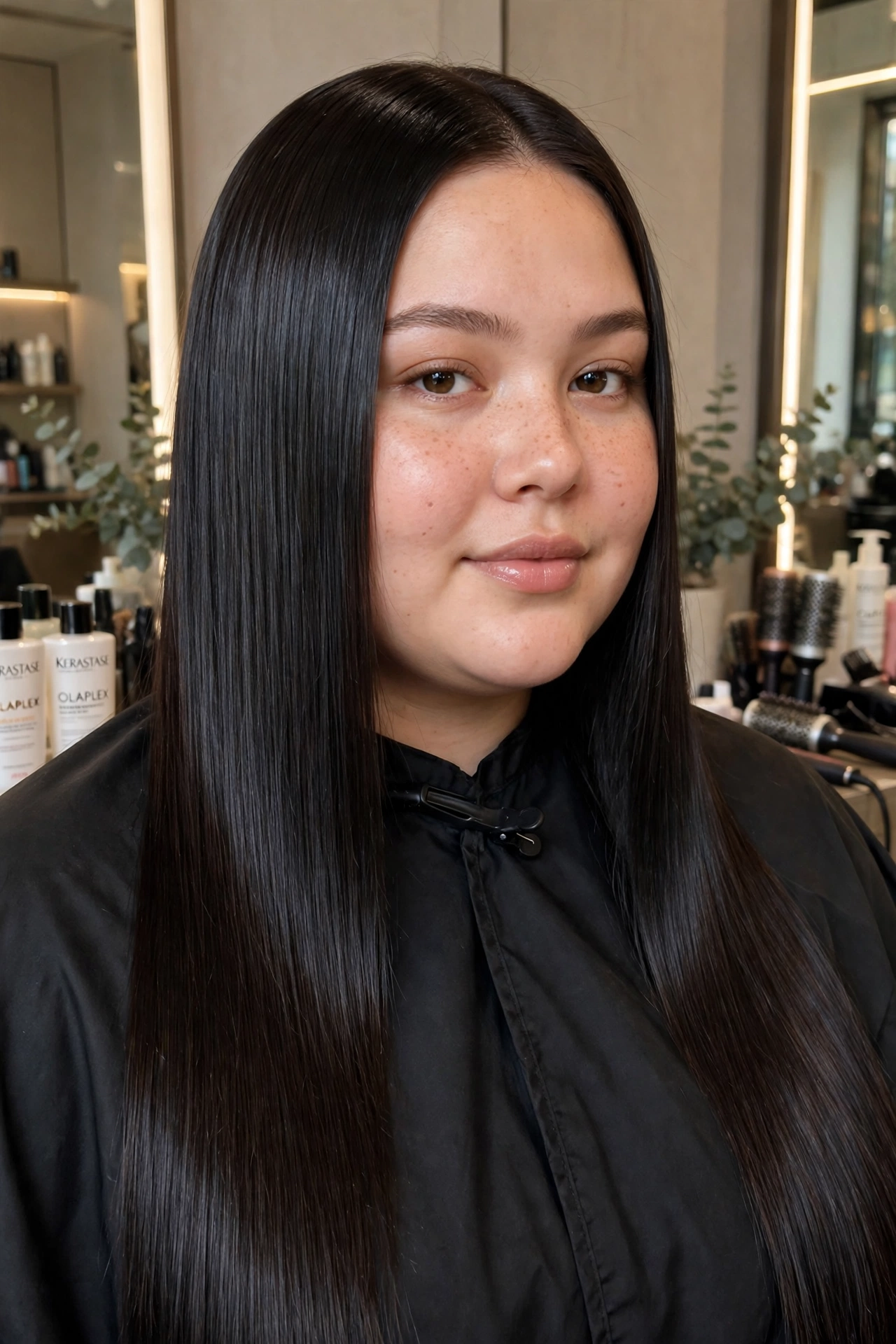
25. Glass Hair for an Oval Face
An oval face is the most versatile for glass hair, because almost any length and parting will sit in proportion. A blunt bob, a lob or long glass hair can all work, so the choice comes down to your hair type, your routine and how bold you want the look to be. This is the face shape where you can try the sharpest, most graphic version — a chin-length blunt bob with a centre part — without worrying about balance.
Upkeep depends on the length you choose, not the face shape: shorter cuts need more frequent trims, longer cuts need more drying time. At the salon, ask for the glass length you prefer with blunt ends and a gloss, and ask your stylist to check the outline from the front, side and back. Because the face shape is so balanced, small details matter more here — a clean parting, even ends and consistent shine will make the whole look feel intentional.
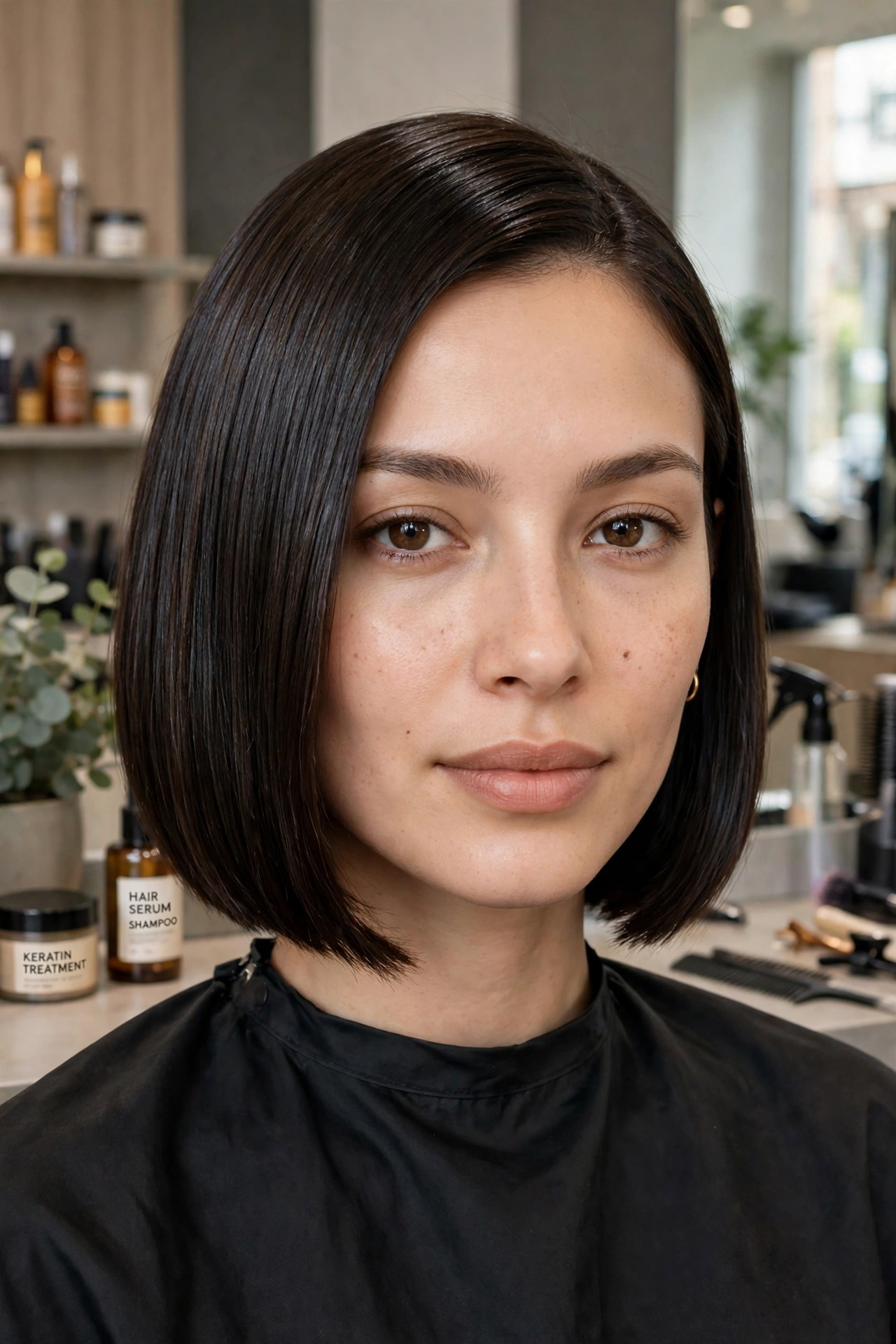
26. Glass Hair for a Square Face
For a square face, glass hair works best when the sleek finish is paired with a softening detail, such as a side part, curtain bangs or face-framing pieces. A lob or long length is usually more flattering than a very short, blunt bob that ends at the jawline, because it draws the eye downward and softens a strong jaw. The shine itself is not the problem — it is the hard horizontal line at the jaw that needs softening.
Ask for a glass lob or long cut with a side part or soft face-framing pieces, plus a gloss, and avoid a blunt bob that stops exactly at the jaw unless you love that graphic look. Style by smoothing the hair straight down and letting the front pieces fall slightly forward around the face. A light shine serum on the ends will keep the finish glossy without adding stiffness around the jaw.
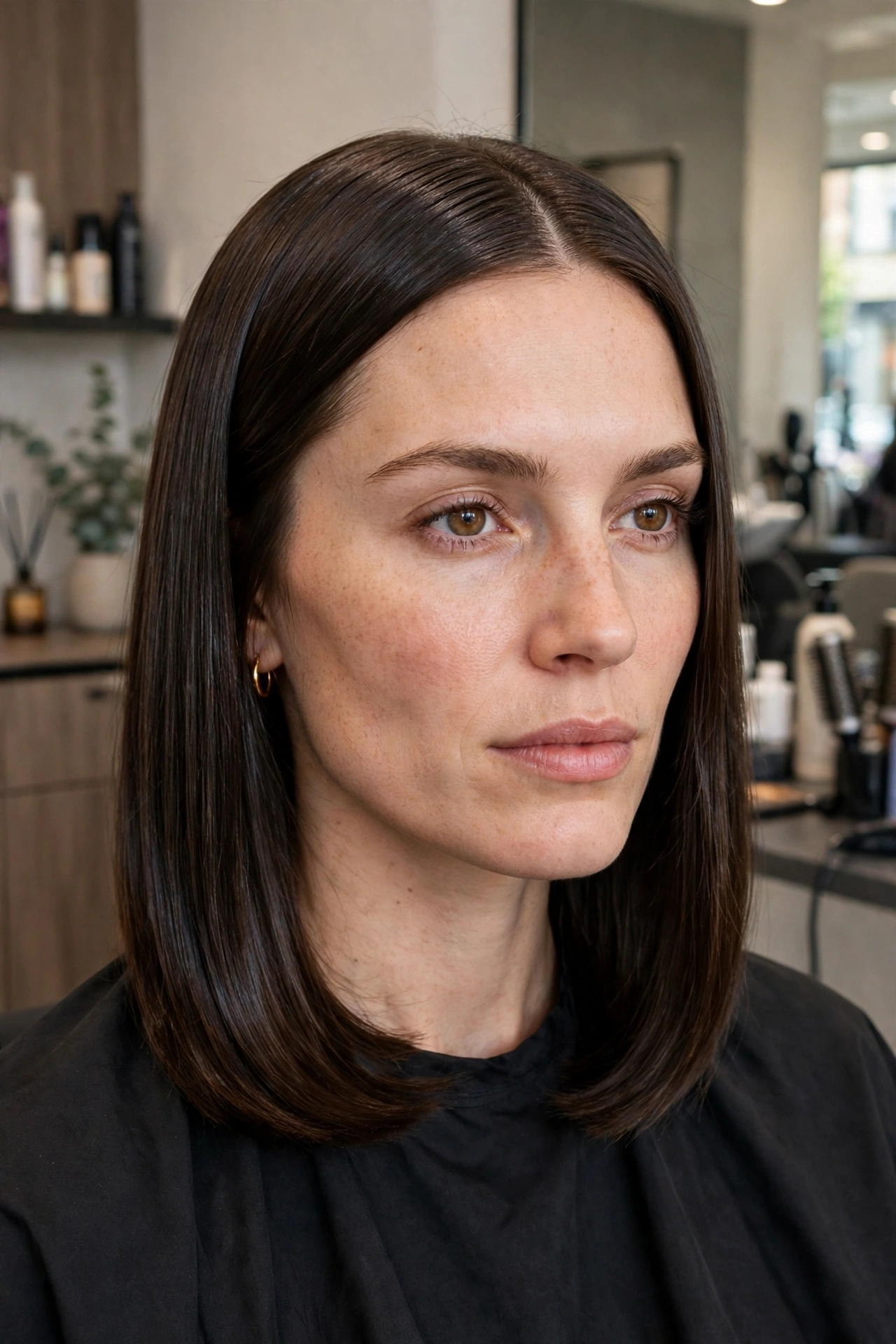
27. Glass Hair for a Heart Face
A heart-shaped face, with a wider forehead and a narrower chin, suits glass hair with curtain bangs or face-framing pieces that balance the forehead and add softness around the chin. A lob is often ideal, because it adds weight lower down and balances the proportions, while a very short bob can emphasise the forehead. Long glass hair also works, especially with a centre part and soft front pieces.
Ask for a glass lob or long cut with curtain bangs or face-framing layers at cheekbone length, plus a clear gloss. Avoid a full, heavy fringe that covers the forehead completely if you want to keep the face open, and keep the ends blunt for the glass effect. Style the front pieces slightly forward so they frame the face, and finish with a light shine spray rather than a heavy serum at the roots.
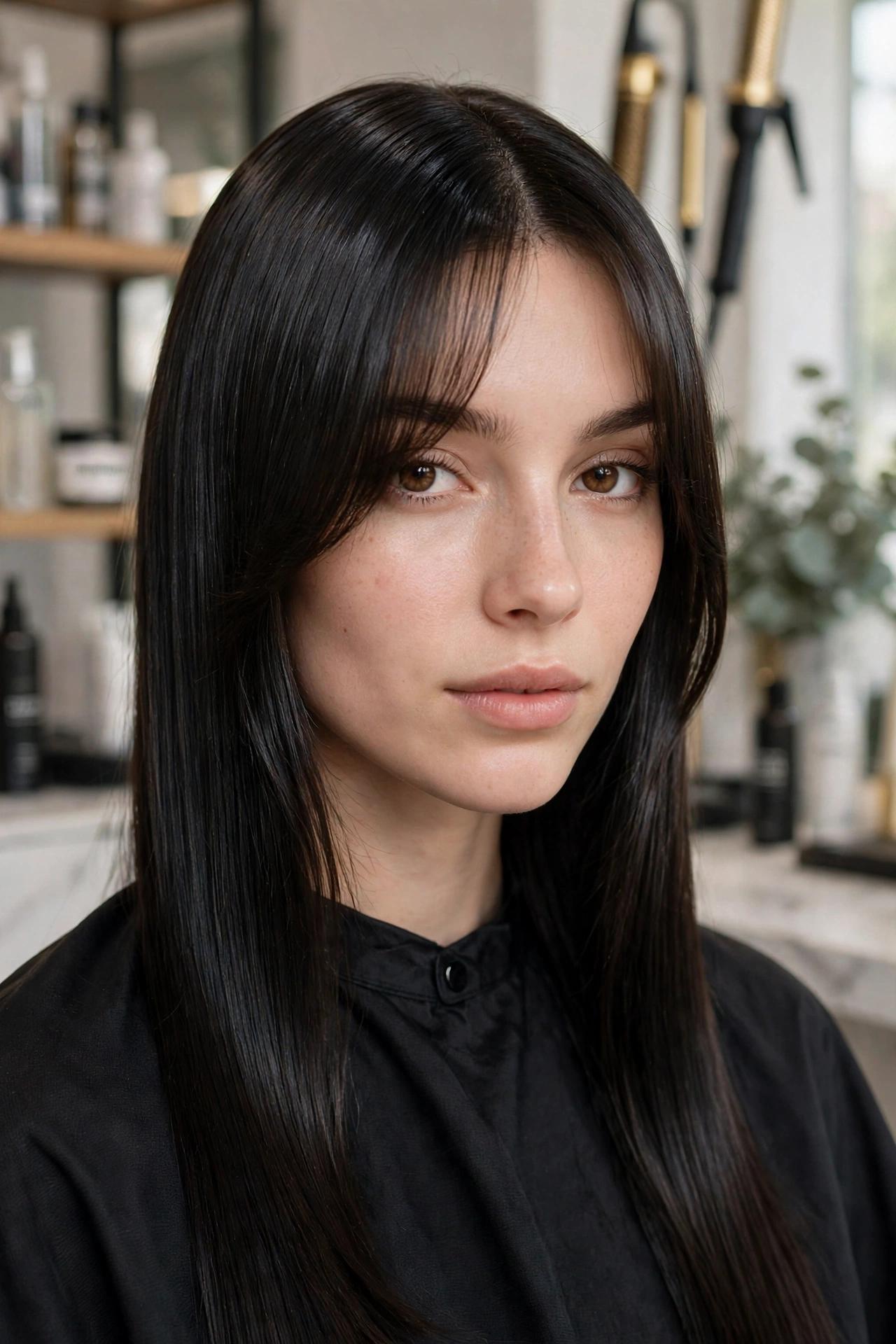
28. Glass Hair for a Wedding, Sleek and Elegant
Glass hair for a wedding is sleek, polished and photograph-friendly, because the mirror shine catches light beautifully in photos without needing elaborate styling. It suits brides who want a modern, minimalist look, and it works in long lengths worn down, or smoothed into a sleek ponytail or low bun. The key is a trial run well before the day, so you know exactly how the shine holds up over many hours.
Book a gloss treatment one to two weeks before the wedding, not the day before, so the shine settles and any tone adjustment can be corrected. At the trial, ask for a sleek glass finish with a gloss, and test it with your veil, headpiece and dress neckline. On the day, use a light anti-frizz serum and a flexible-hold spray, and carry a small smoothing brush for touch-ups — heavy hairspray will dull the glass finish.
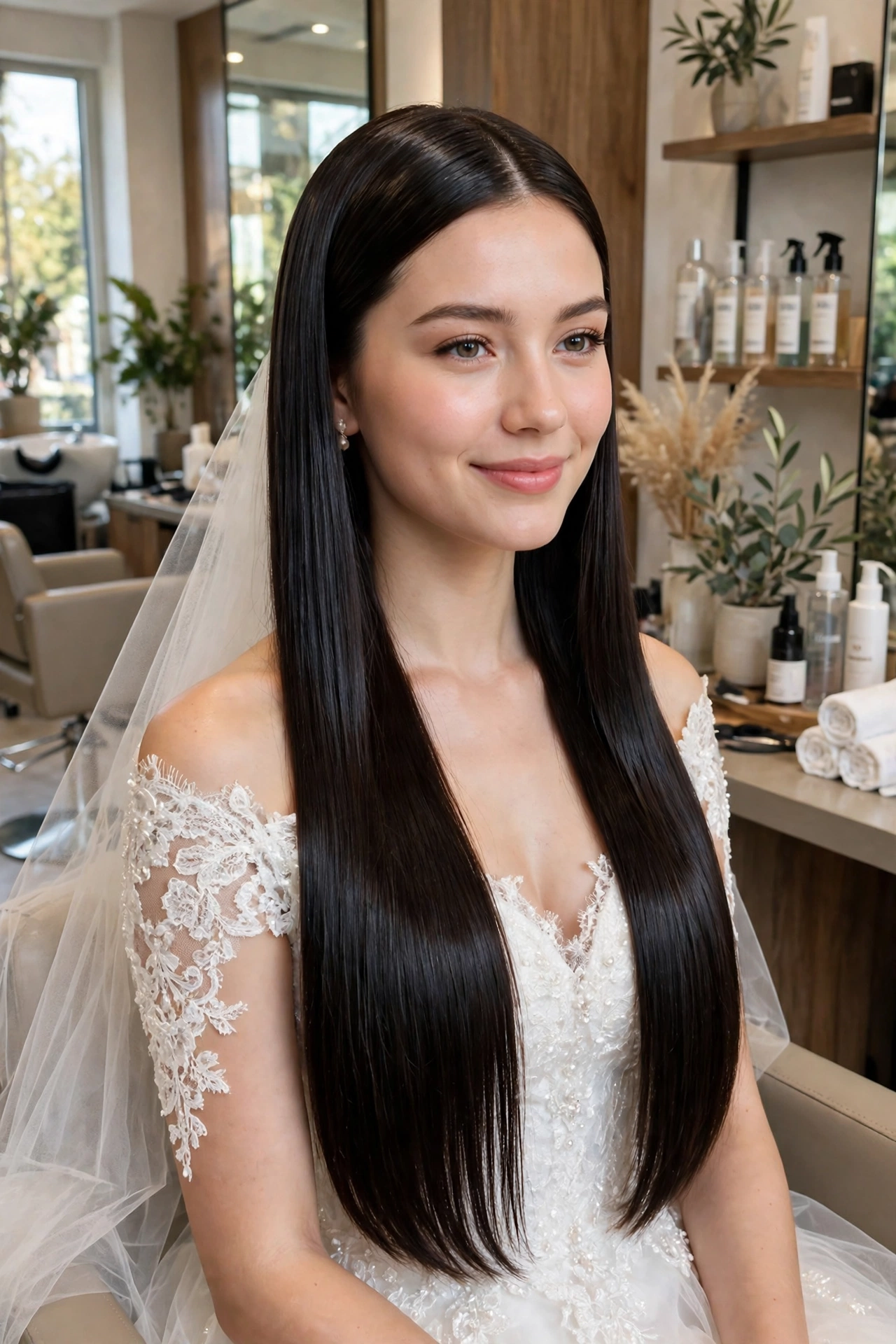
29. Glass Hair Sleek Ponytail
A glass hair ponytail takes the sleek, mirror-shine finish and pulls it into a high, polished ponytail that looks intentional rather than like a gym style. It suits oval, heart and longer faces, and it is perfect for work, events and hot days when you want hair off your face without losing polish. Medium to thick hair gives the ponytail the most fullness, but fine hair can work with a wrapped base and a little backcombing at the crown.
Smooth the hair with a brush and a smoothing cream, secure the ponytail high or at mid-height, wrap a small section of hair around the elastic, and smooth the tail with a flat iron. At the salon, ask for a blunt glass cut and a gloss, and tell your stylist you plan to wear ponytails often, so the cut sits evenly when pulled back. Use a snag-free elastic and avoid pulling too tightly every day, because constant tension can break hair around the hairline.
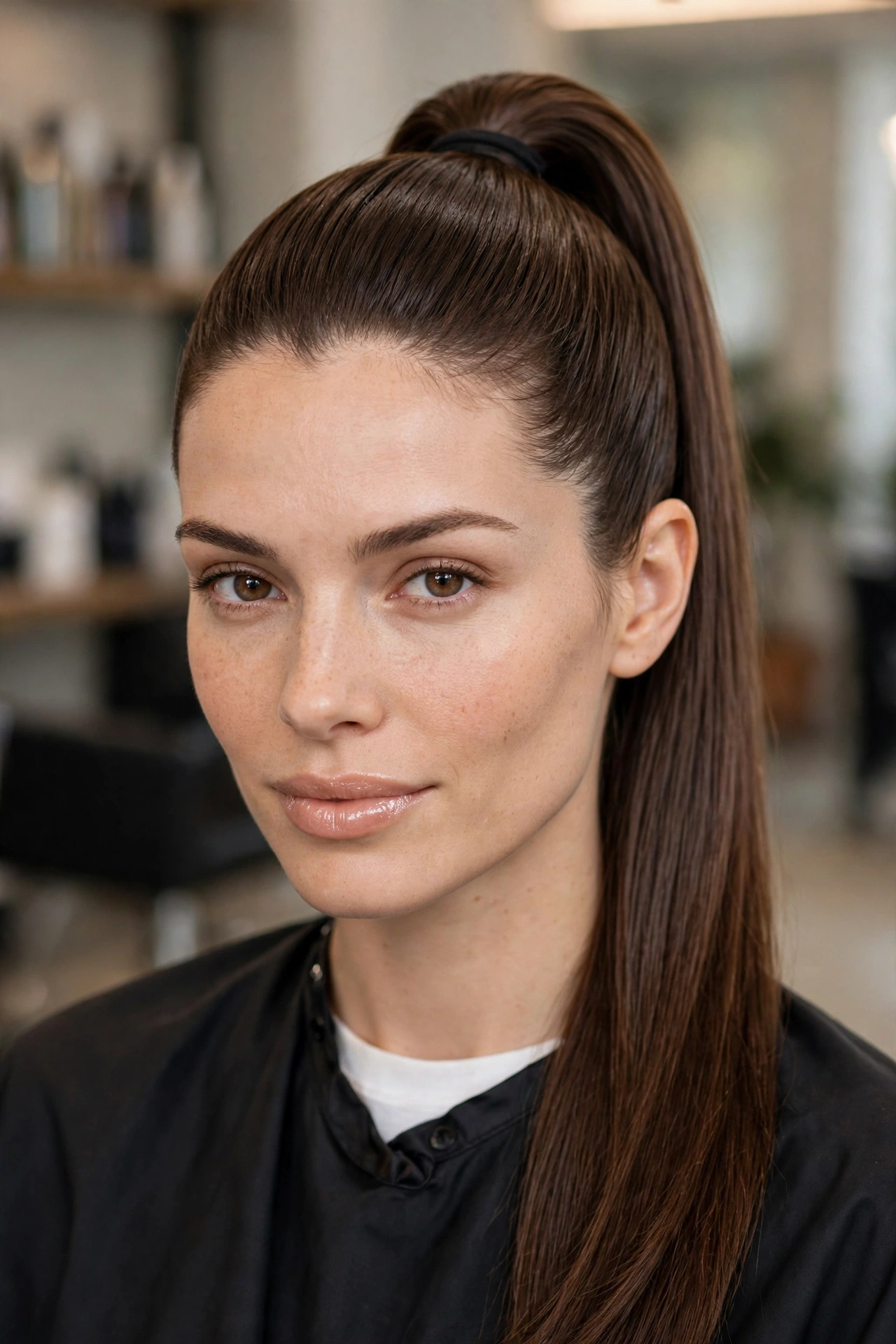
30. Glass Hair Low Bun
A glass hair low bun is the most elegant way to wear glass hair up: smooth, glossy hair gathered at the nape into a neat, polished bun with no flyaways. It suits most face shapes, and it is ideal for formal events, work and weddings where you want a refined finish that lasts all day. The glass finish is what separates this from a casual bun — every strand is smoothed before it is gathered.
Start with sleek, straightened hair, brush it back with a smoothing cream, twist it into a low bun and secure it with pins that match your hair colour. At the salon, ask for a blunt glass cut and a gloss, so the bun has a smooth base and the hair around the face sits cleanly. Finish with a light shine spray and a flexible-hold spray, and smooth any flyaways with a toothbrush sprayed lightly with hairspray — a trick stylists use for a flawless finish.
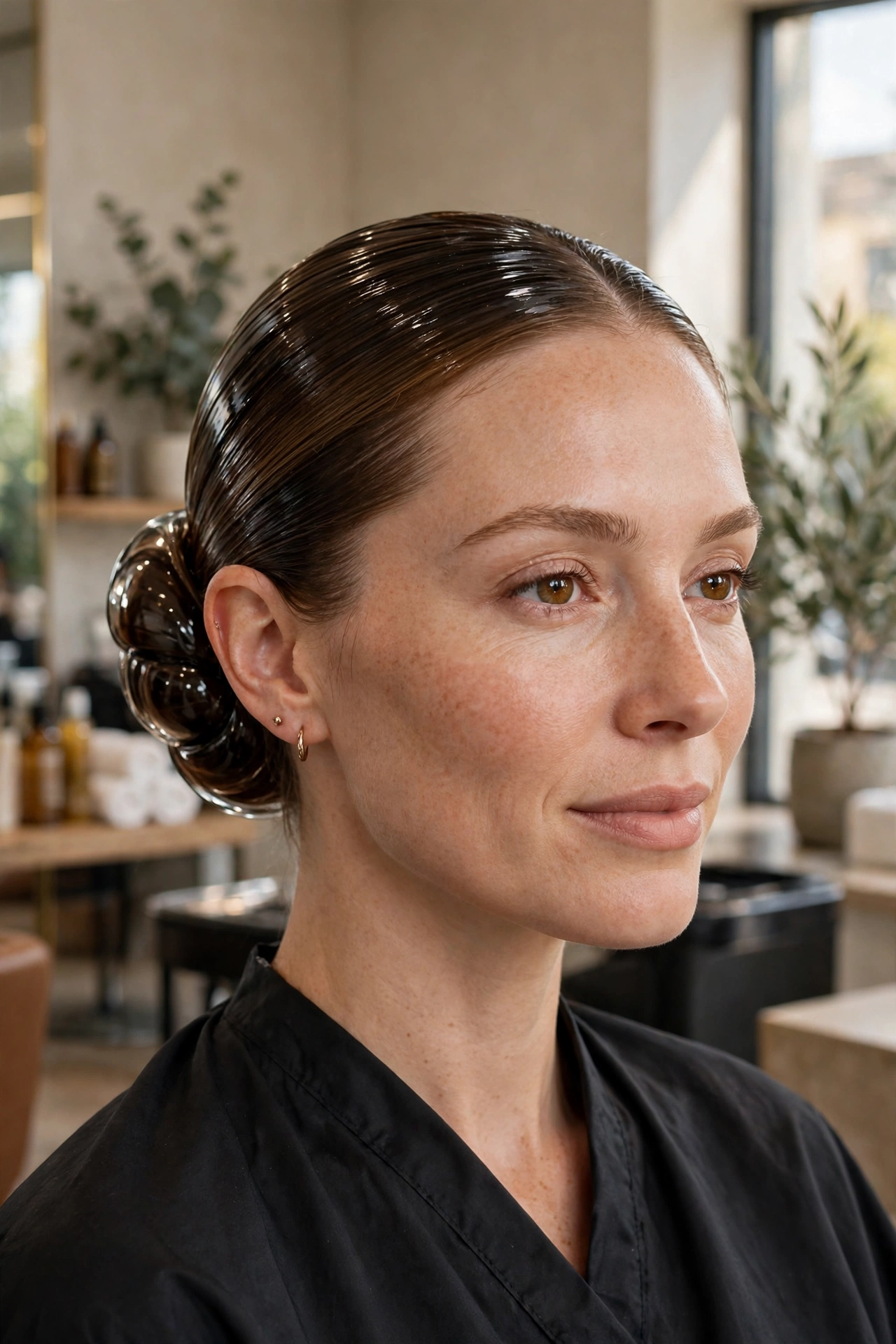
31. Glass Hair with a Shine Serum Finish
A shine serum finish is the final step that turns smooth hair into glass hair, but it only works if you use the right amount in the right place. A pea-sized amount, warmed between your palms and smoothed over the mid-lengths and ends, will add reflection without greasiness. It suits all hair types, provided you adjust the amount: fine hair needs a single drop, while thick hair can handle a little more.
The common mistake is applying serum to the roots or using too much, which makes hair look oily and flat within hours. Apply serum to damp hair before blow-drying for a smoother base, then add a tiny amount to dry hair only where you see dullness, usually the ends. Ask your stylist to recommend a serum for your hair type — lightweight for fine hair, richer for thick or dry hair — and to show you how much to use, because most people use three times more than they need.
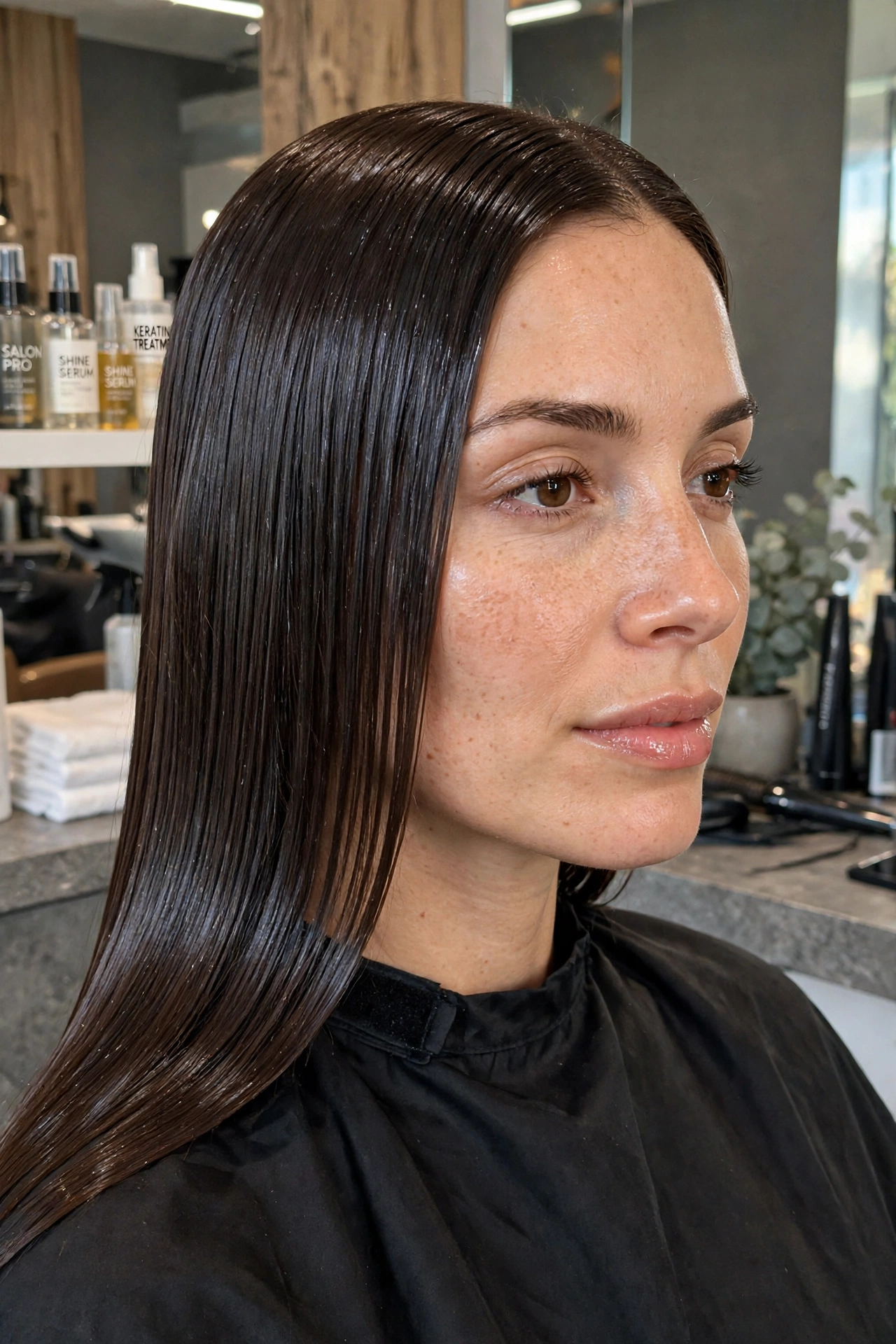
32. Glass Hair After a Keratin Gloss
A keratin gloss, or keratin smoothing treatment with a gloss finish, is a salon service that smooths frizz, seals the cuticle and leaves hair with a glass-like shine that lasts for weeks. It suits wavy, frizzy or unruly hair that is hard to keep sleek with styling alone, and it is especially helpful in humid climates. The result is not permanently straight hair, but hair that is far easier to blow-dry smooth.
Be honest about the commitment: keratin treatments cost more than a standard gloss, take several hours, and usually require sulphate-free shampoo afterwards to make the result last. At the salon, ask whether a keratin gloss or a standard gloss suits your hair better, how long the result should last for your hair type, and what aftercare you need to follow. If you have very fine or damaged hair, ask about a gentler smoothing option first, because strong keratin treatments are not right for every hair type.
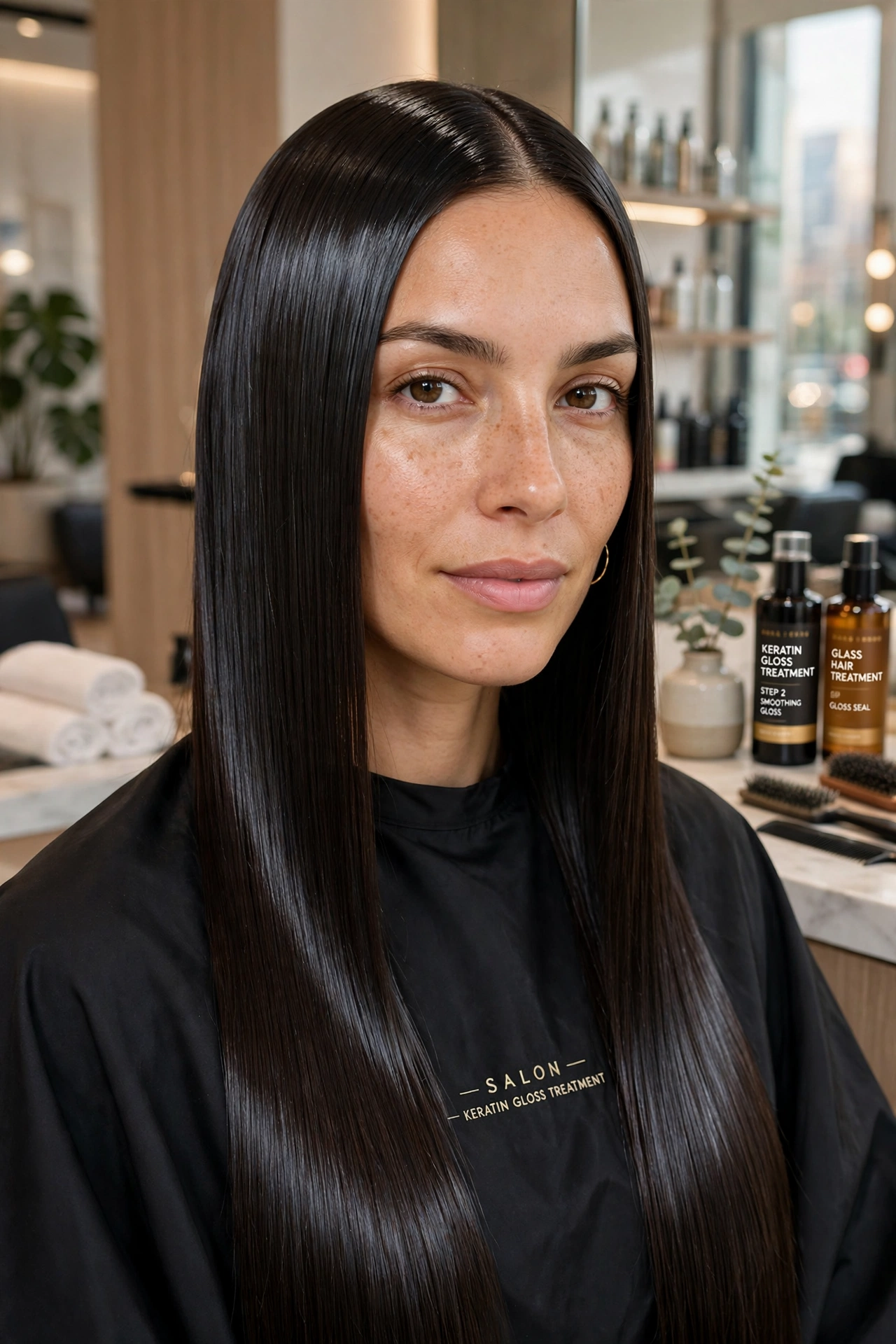
33. Glass Hair with a Middle Part, Tucked Behind the Ears
Tucking glass hair behind the ears with a middle part is a clean, minimalist style that shows off earrings, cheekbones and a precise blunt cut. It suits oval and heart-shaped faces, and it works best in a bob or lob, where the tucked sections sit neatly without bulk behind the ears. The style looks effortless, but it does need smooth, frizz-free hair to stay in place.
Use a smoothing cream and a flat iron to keep the tucked sections flat, and secure them lightly behind the ears if they slip — a small, discreet pin on each side will hold the style without breaking the sleek line. At the salon, ask for a blunt glass bob or lob with a middle part and a clear gloss. This style shows the ears and jawline clearly, so it is worth asking your stylist to check that both sides sit evenly when tucked.
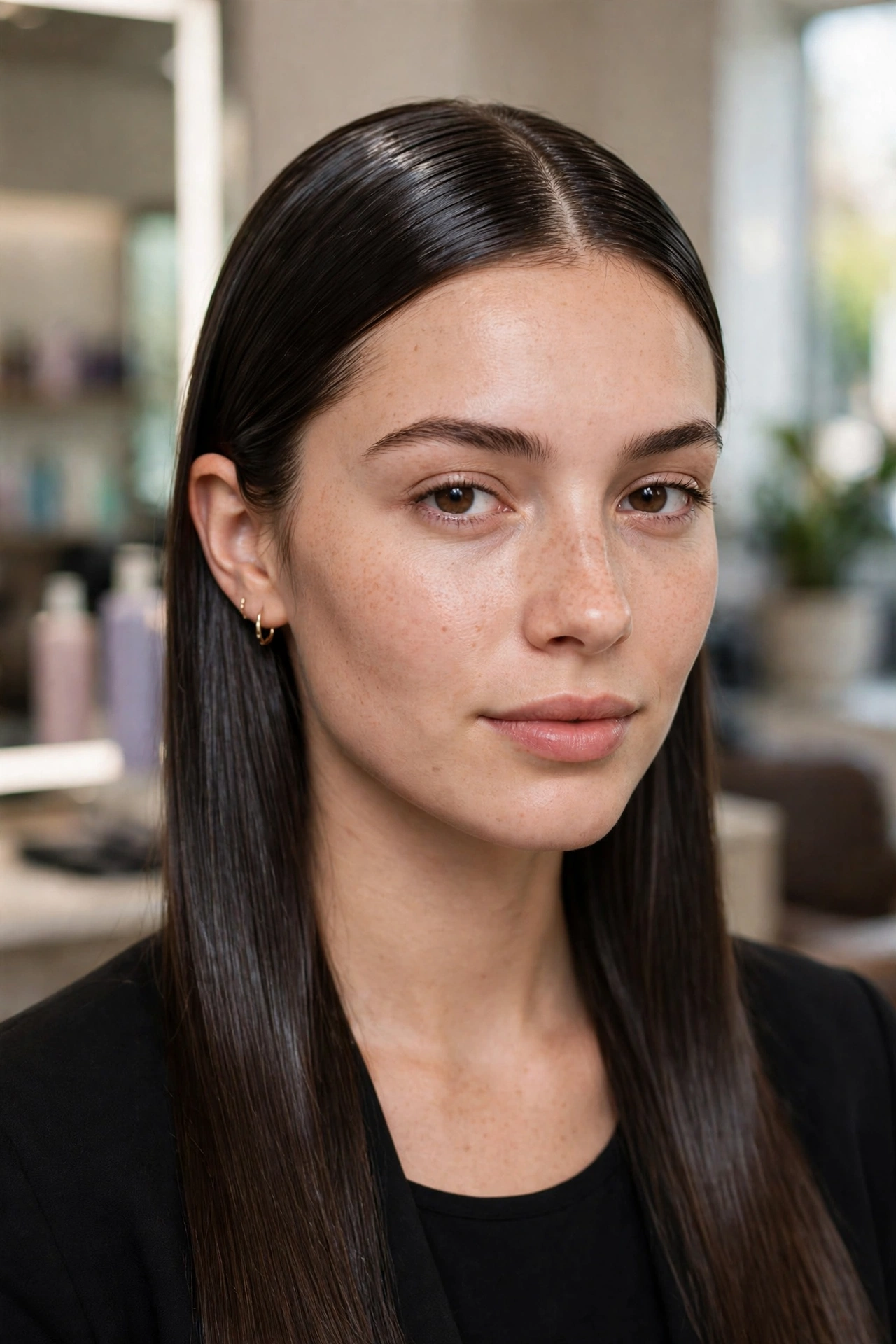
34. Glass Hair with Wispy Bangs
Glass hair with wispy bangs pairs a sleek, glossy length with a light, airy fringe that softens the forehead without hiding it. It suits round, square and heart-shaped faces, and it is a good choice if a full fringe feels too heavy but you still want face-framing softness. Wispy bangs also grow out more gracefully than a blunt fringe, so the upkeep is a little more forgiving.
Style the bangs with a small round brush or a flat iron, using almost no product, because heavy serum will clump wispy bangs together. Ask for wispy bangs that are cut with a feathered, light technique — not a blunt fringe thinned out afterwards — plus a blunt glass cut and a clear gloss. Trim the bangs every four to five weeks to keep them light, and wash them separately on oily days so they stay airy.
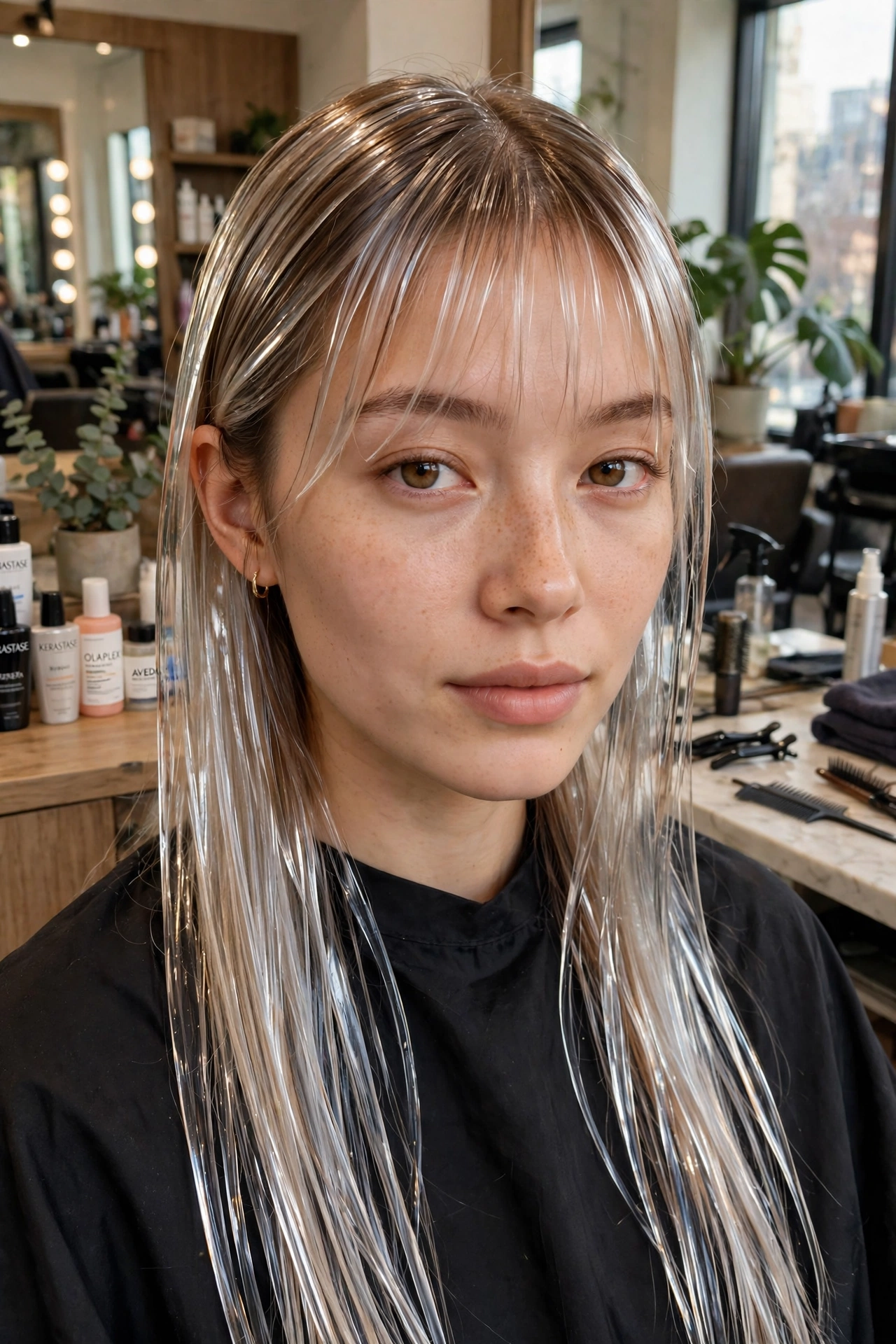
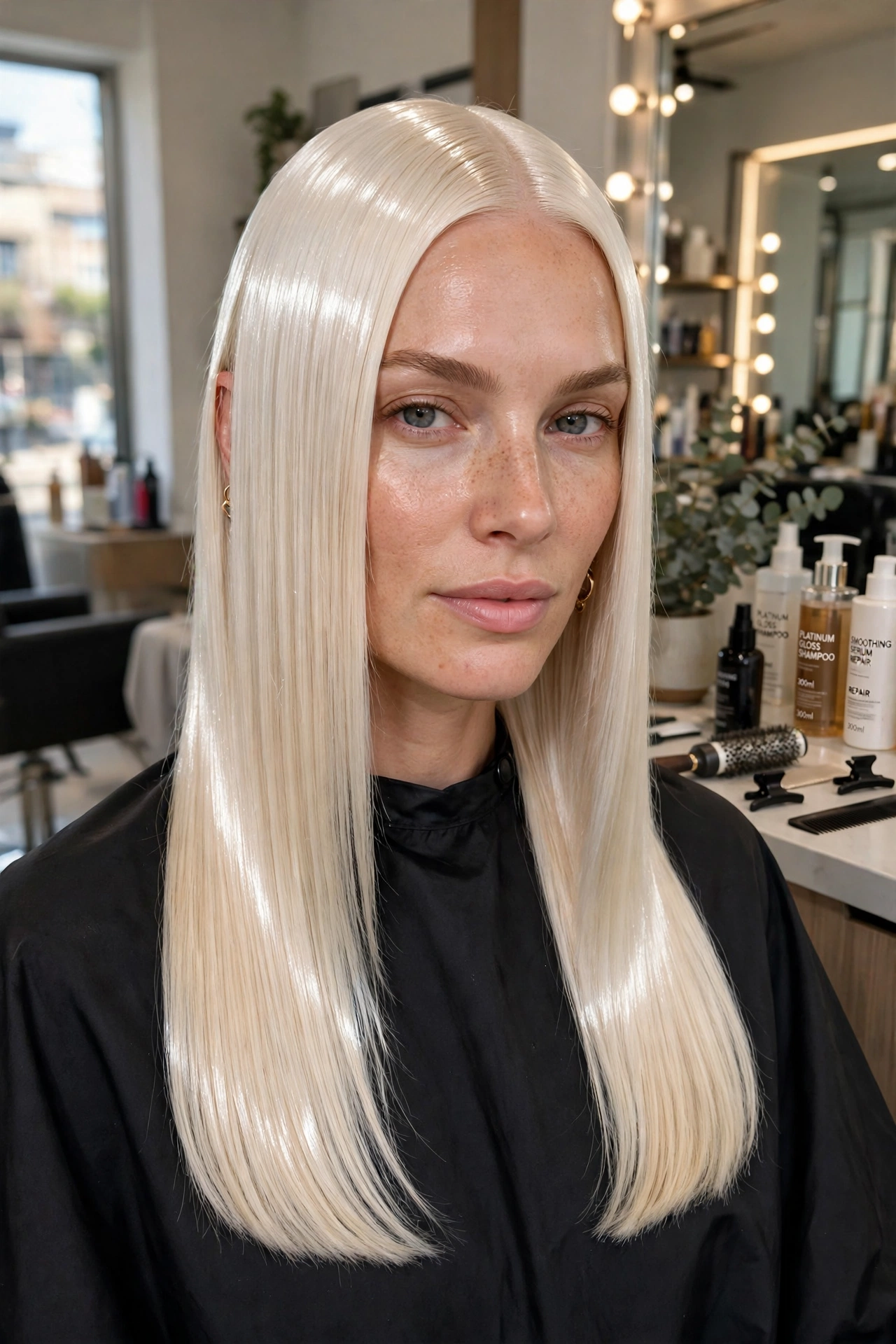
35. Platinum Glass Hair
Platinum glass hair is icy, bright and high-shine, with a sleek finish that makes platinum look expensive rather than dry or straw-like. It suits cool skin tones and oval, heart and longer faces, and it is most striking in a lob or long length where the icy tone can reflect light evenly. Platinum is the most demanding colour in this guide, so honesty about upkeep is essential.
Platinum requires lightening, regular toning every four to six weeks, purple shampoo as directed, and intensive hydration with masks and bond-building treatments. At the salon, ask for platinum with a gloss toner to seal the cuticle and add shine, plus a blunt glass cut — and discuss honestly whether your hair is healthy enough for platinum, and how many sessions it may take. Never try to reach platinum at home in one session if your hair is dark or previously coloured, because the damage will destroy the glass finish you are aiming for.
36. Rose Gold Glass Hair Gloss
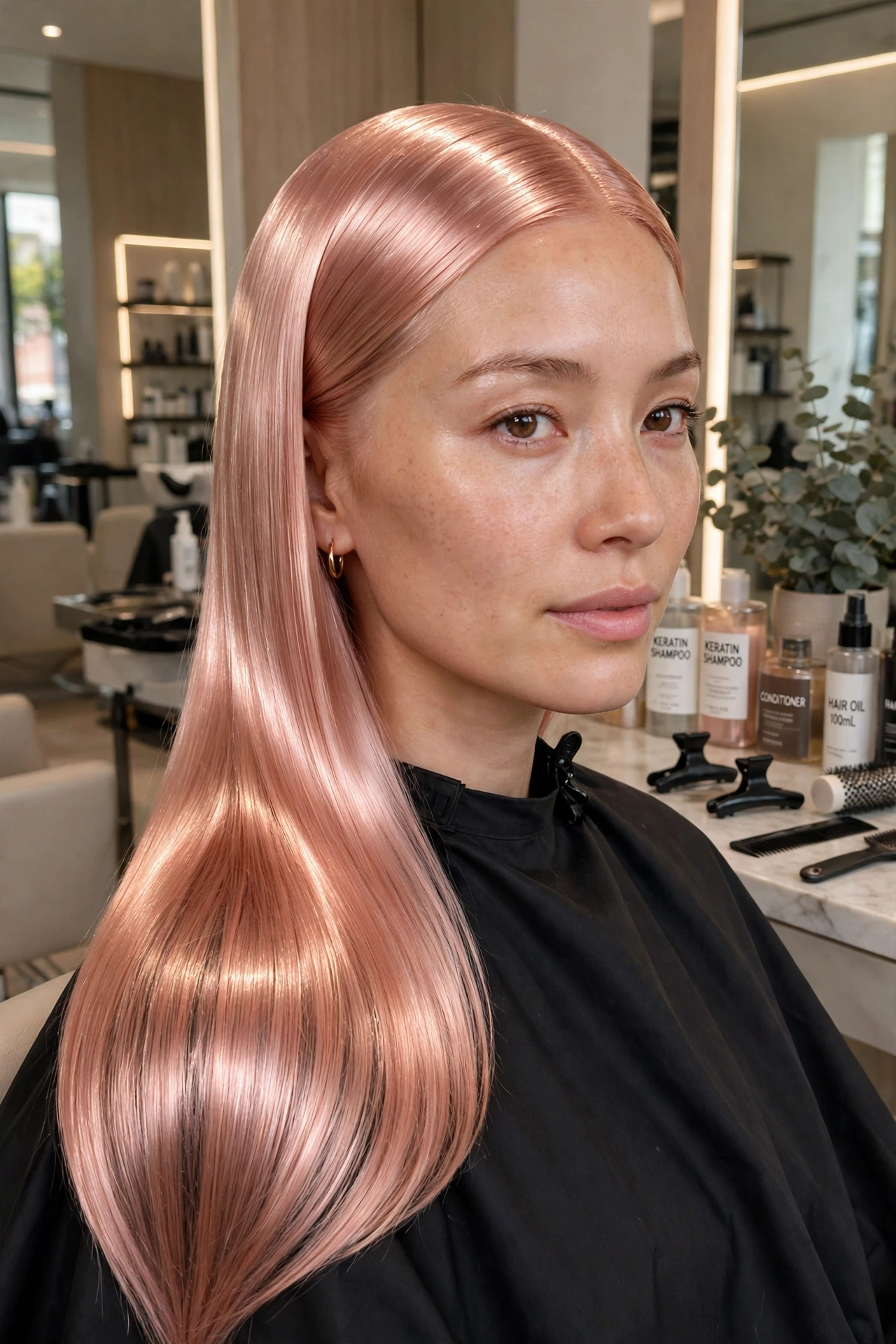
Rose gold glass hair is soft, pink-gold and romantic, with a glossy finish that makes the pink tone glow rather than look flat or faded. It suits fair to medium skin tones with cool or neutral undertones, and it flatters oval, round and heart-shaped faces in a lob or long length. Rose gold is a fashion colour, so it will fade faster than a natural shade, and the gloss is what keeps it looking fresh.
Plan for a rose gold gloss refresh every four to six weeks, wash in cool water with colour-safe shampoo, and avoid hot water and excessive heat styling, which fade pink tones quickly. At the salon, ask for a rose gold gloss in your preferred depth — soft blush or deeper rose gold — over a lightened base, plus a blunt glass cut. If your hair is dark, discuss lightening first, because rose gold will not show clearly on dark hair without a lighter base.
37. Glass Hair for Mature Women
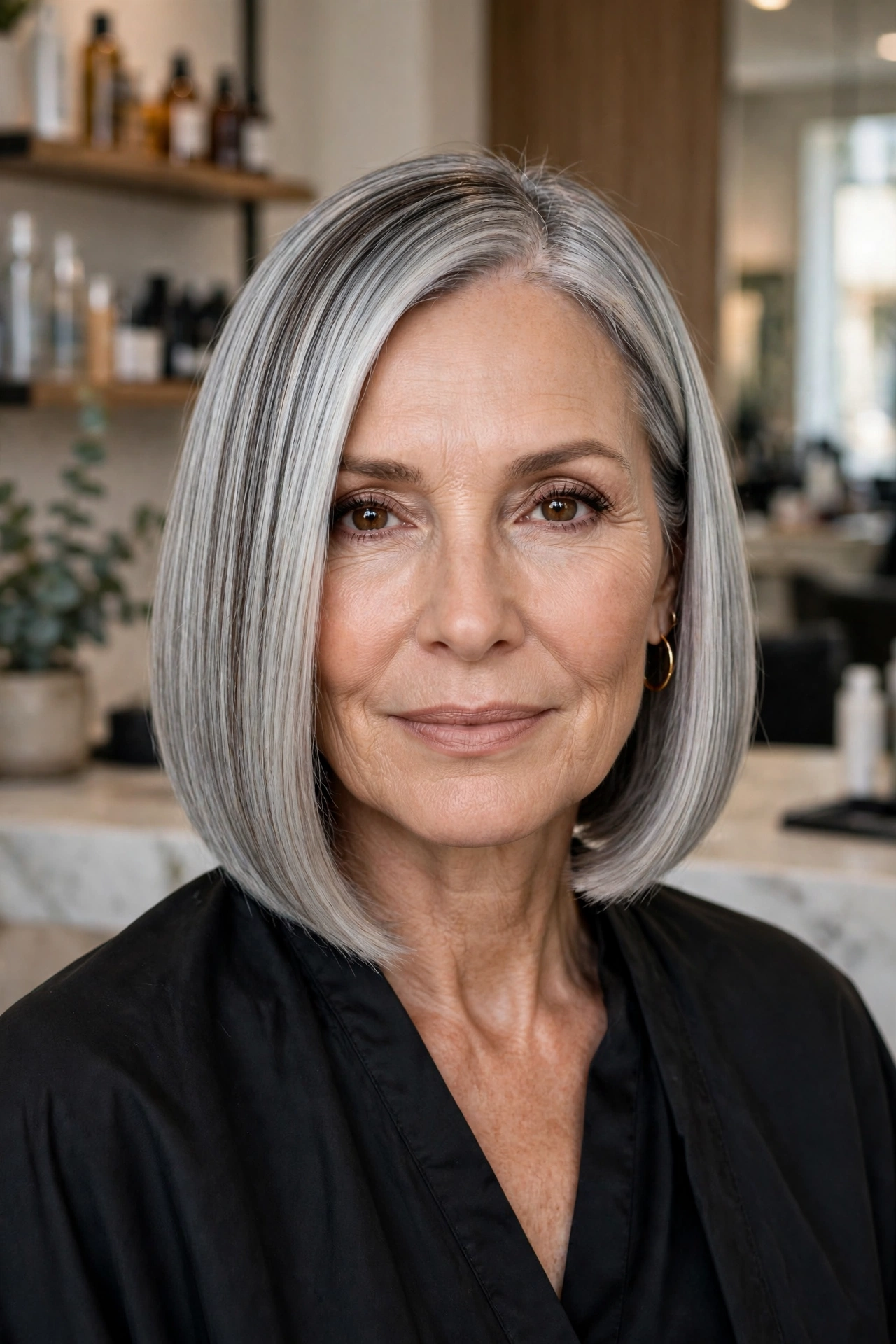
Glass hair for mature women is elegant, polished and age-appropriate without being boring: a sleek bob or lob with a glossy finish, often with a gloss that blends grey softly rather than covering it harshly. It suits most face shapes, and a bob or lob is usually more flattering than very long lengths, which can drag the features down. The shine itself is age-defying, because dull hair can make anyone look tired, while glossy hair looks healthy at any age.
If you have grey hair, ask about a silver-blending gloss that softens the contrast between grey and your natural colour, rather than a harsh permanent dye. At the salon, ask for a blunt glass bob or lob, a gloss that suits your grey pattern, and a cut that is checked dry so it sits well with your natural texture. Use a hydrating mask regularly, because mature hair is often drier, and keep the style simple — the polish comes from the shine and the clean cut, not from complicated styling.
38. Glass Hair Weekly Shine Routine
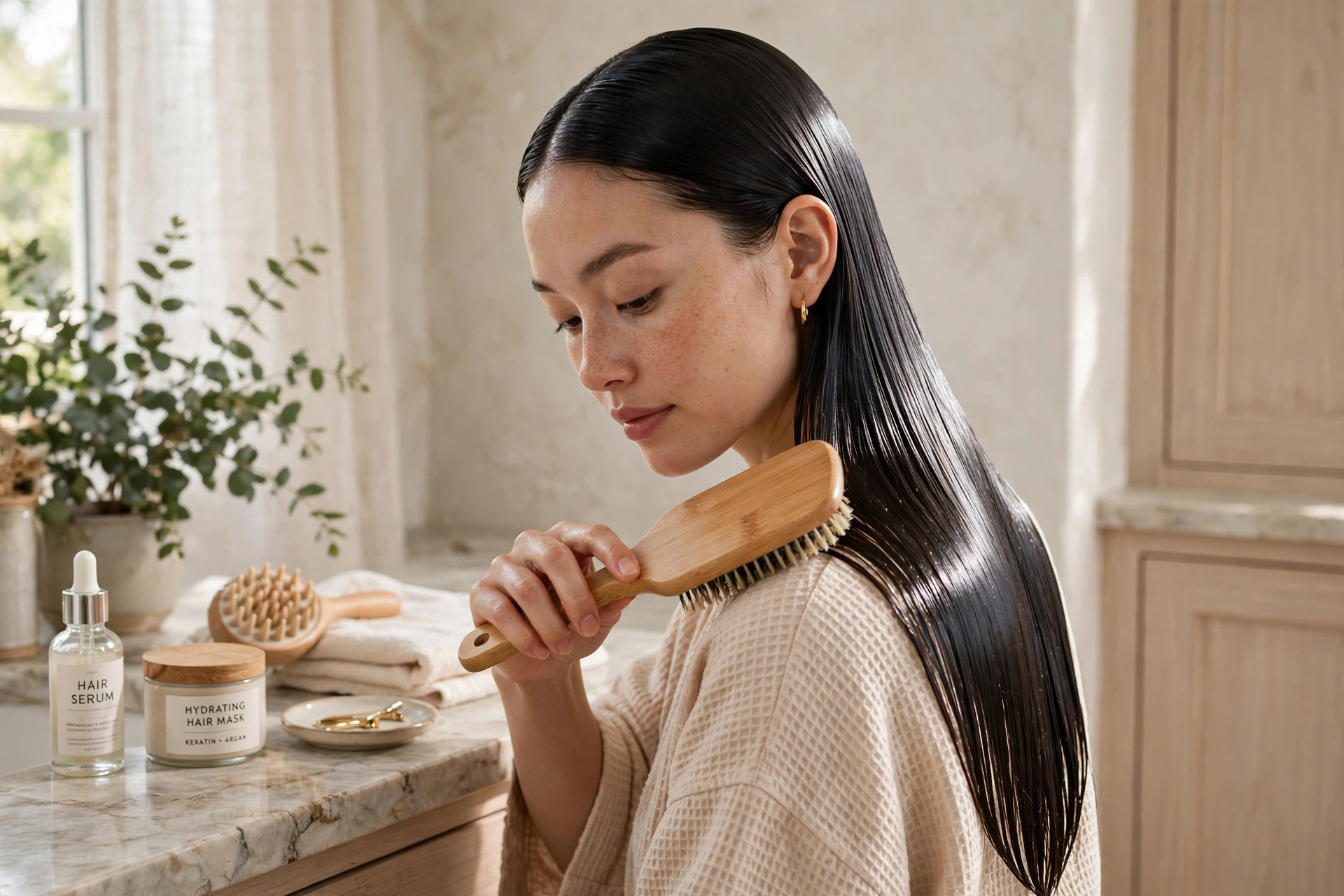
A weekly shine routine is what keeps glass hair looking like glass hair between salon visits, and it is simpler than most people expect. Once a week, use a clarifying rinse or a gentle clarifying shampoo to remove build-up, follow with a hydrating mask, rinse with cool water, and finish with a heat protectant and a drop of shine serum when you style. This routine suits all hair types, with adjustments for fine hair, which needs lighter products, and thick hair, which needs more moisture.
The rest of the week, protect the shine: sleep on a silk or satin pillowcase to reduce friction, avoid over-washing, and use a heat protectant every time you use hot tools. At the salon, ask for a clear gloss every six to eight weeks to top up the shine, plus a blunt trim to keep the ends clean. Consistency matters more than expensive products — a simple weekly routine done every week will beat an elaborate routine done once a month.
Frequently Asked Questions
What is glass hair?
Glass hair is a hairstyle where the hair is cut bluntly, smoothed completely and finished with a gloss so that it reflects light evenly, like a mirror. The look depends on three things working together: a precise, blunt cut with no straggly ends, a smoothing routine with heat protectant and careful straightening, and a gloss treatment that seals the cuticle and adds shine.
How long does a hair gloss treatment last?
A salon gloss usually lasts four to six weeks, depending on how often you wash your hair, the water temperature and the products you use. At-home glosses typically last two to four weeks. You can make any gloss last longer by washing with cool water, using colour-safe, sulphate-free shampoo, and avoiding clarifying shampoos and excessive heat styling.
Can I get glass hair at home without a salon visit?
You can get close at home if your hair is already in good condition: get a blunt trim, use a smoothing shampoo and conditioner, blow-dry in sections with a paddle brush, straighten carefully with heat protectant, and finish with an at-home clear gloss and a drop of shine serum. A salon gloss and a precise blunt cut will still give a smoother, longer-lasting result, especially if your hair is damaged, very curly or colour-treated.
Does glass hair work on curly or wavy hair?
Yes, but with honest expectations: glass hair on curly or wavy hair is a straightened style, so it needs blow-drying and flat-ironing, and it will not stay perfectly sleek in high humidity without anti-frizz care. A keratin smoothing treatment or a salon gloss can make the style much easier to maintain, and a silk wrap or scarf at night will help preserve the straight finish for several days.
How do I keep glass hair shiny between salon visits?
Keep glass hair shiny by trimming the ends regularly, using a weekly hydrating mask, rinsing with cool water, sleeping on silk or satin, and using a heat protectant every time you style. Add a weekly shine routine with a gentle clarifying step to remove build-up, and use only a small amount of shine serum on the mid-lengths and ends — too much product will make hair look greasy rather than glossy.
Conclusion
Glass hair is not a single haircut, but a combination of a clean, blunt cut, a gloss treatment and consistent shine care — and that is good news, because it means there is a version for almost every hair type, face shape and routine. Whether you choose a classic blunt bob, long sleek lengths, a colour-refresh gloss or a simple at-home routine, the principles stay the same: keep the ends blunt, seal the cuticle with gloss, protect your hair from heat and build-up, and be realistic about the upkeep your chosen style needs.
Start with the idea that fits your hair and your life, take the salon wording from that section to your appointment, and give the style a few weeks of consistent care before judging it. With the right cut, the right gloss and a simple weekly routine, mirror-shine hair is not just a trend photo — it is a polished, healthy-looking style you can actually maintain.