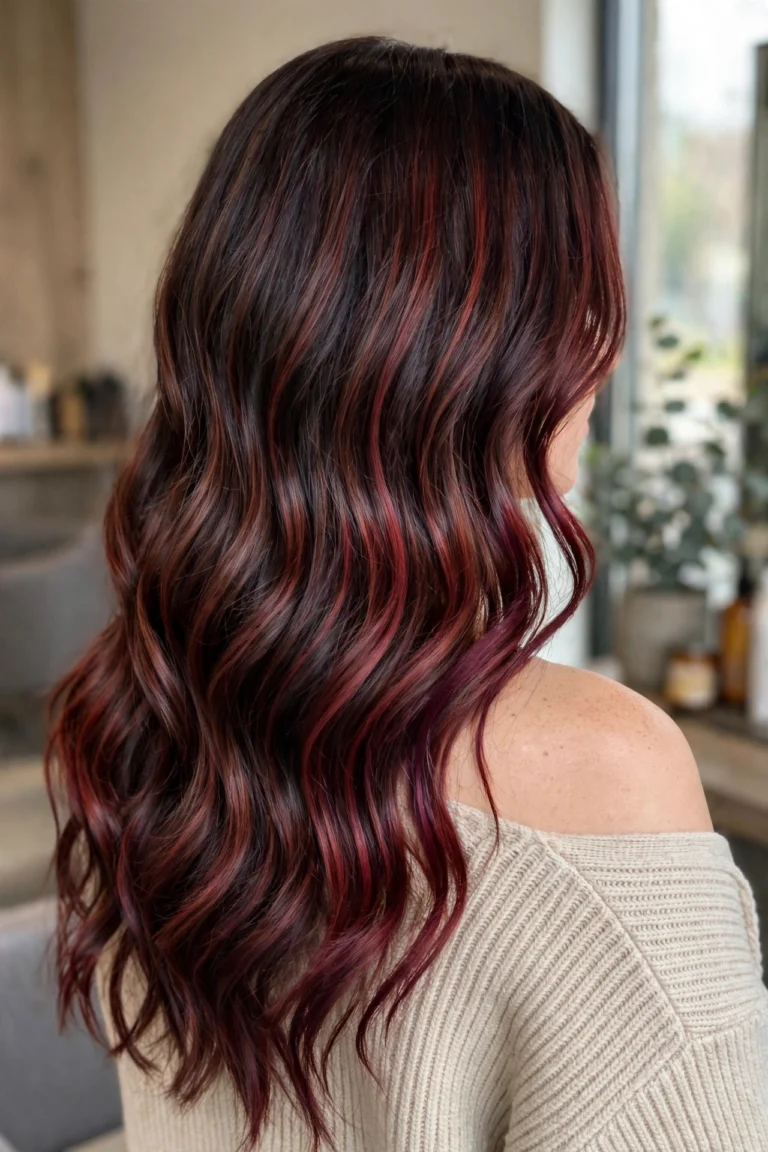
35 Butterfly Haircut Ideas for 2026
Introduction
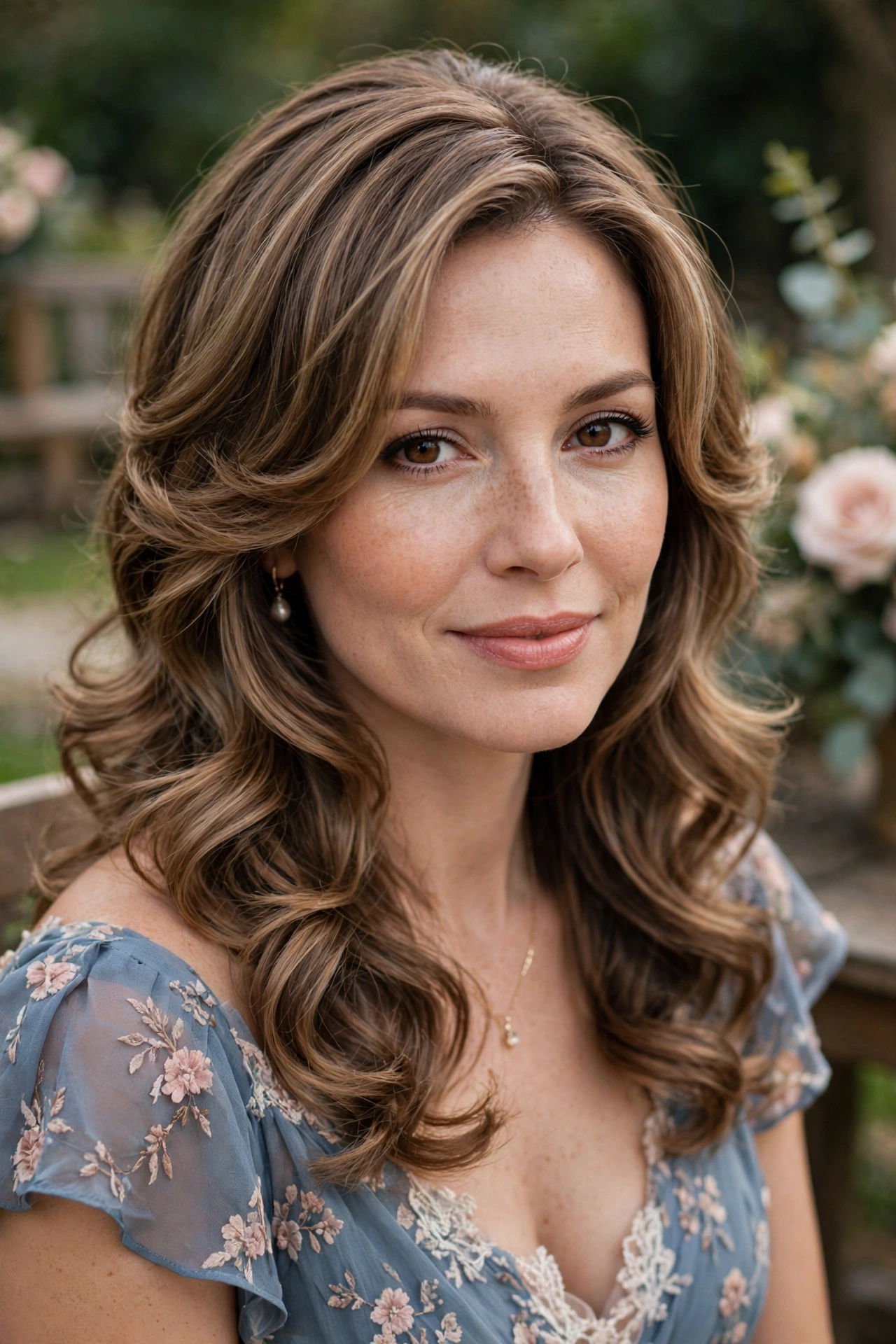
A butterfly haircut is built on a simple, clever contrast: short layers around the face that look like a much shorter cut when your hair is pulled forward, and long layers underneath that keep your length when it falls back. That two-length effect is why it photographs so well and why it suits so many people — you get movement and shape around the face without giving up the long hair you spent months growing.
The trick is not to ask for "a butterfly cut" and hope for the best. The shortest layer, where the long layers start, and how much texture is cut into the ends all change the result completely, especially on fine, thick, curly or wavy hair. The 35 ideas below are organised so you can find your version: by length, by fringe, by texture, by face shape and by colour. Take the photo and the "what to ask for" notes to your stylist, and be honest about how much time you actually want to spend styling it each morning.
1. Classic Long Butterfly Cut
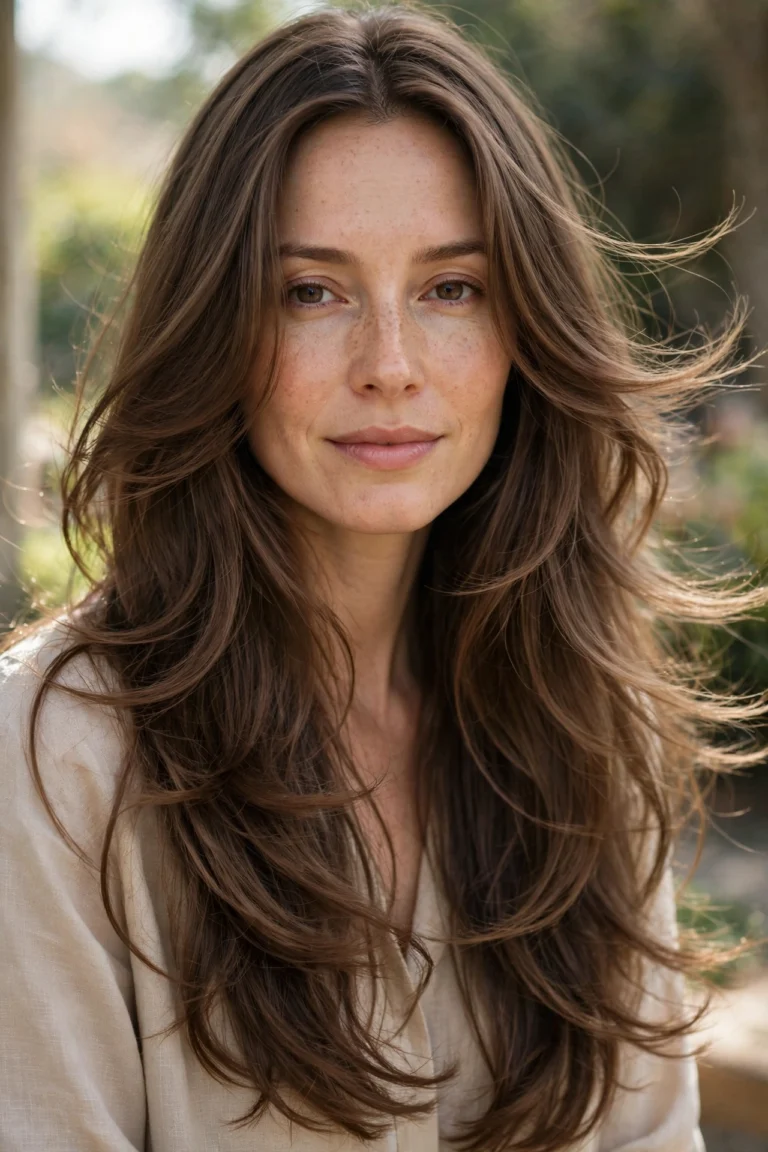
This is the original version most people picture: hair well past the shoulders, with the shortest face-framing layer starting around the chin and the longest layer left almost untouched at the back. It suits medium to thick straight or slightly wavy hair best, and it flatters oval, round and heart-shaped faces because the shorter front pieces open up the face instead of hiding it. If your hair is very fine, ask for fewer, longer layers so the ends do not look wispy.
Maintenance is moderate. The cut itself grows out gracefully for eight to ten weeks, but the blowout is what sells it, so expect to spend ten to fifteen minutes with a round brush or a hot-air brush on wash days. At the salon, say: "Keep my full length at the back, start the shortest face layer at my chin, and connect it with long layers only — no short layers through the back." Finish with a light volumising spray at the roots and a smoothing cream just on the ends.
2. Soft Face-Framing Butterfly Layers
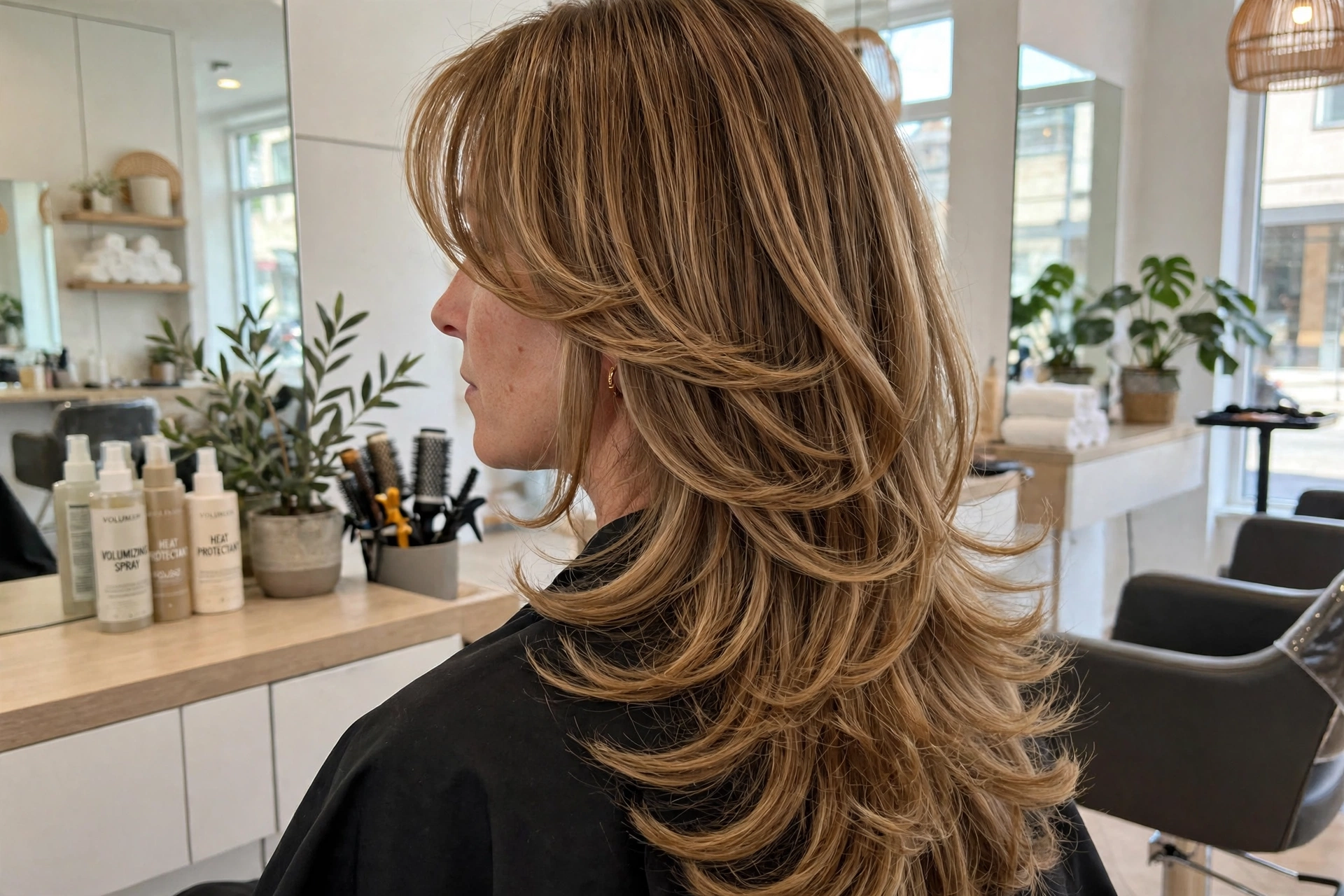
This softer take keeps the layering gentle and blended, with no hard steps between the short front and the long back. It is a good first butterfly cut if you are nervous about short layers, and it works particularly well on medium-density straight or wavy hair and on longer faces, where a harsh short layer can make the face look even longer. The softness also means it does not demand a perfect blowout to look finished.
Styling is low effort: rough-dry with your fingers, then wrap just the two front sections around a large round brush, flicking them away from the face. Ask your stylist for "soft, blended face-framing layers starting at the cheekbones, with no visible ledges," and bring a photo showing the blend you like. A trim every eight weeks keeps the front pieces from growing into your eyes, but the back can go longer between cuts.
3. Butterfly Cut with Curtain Bangs
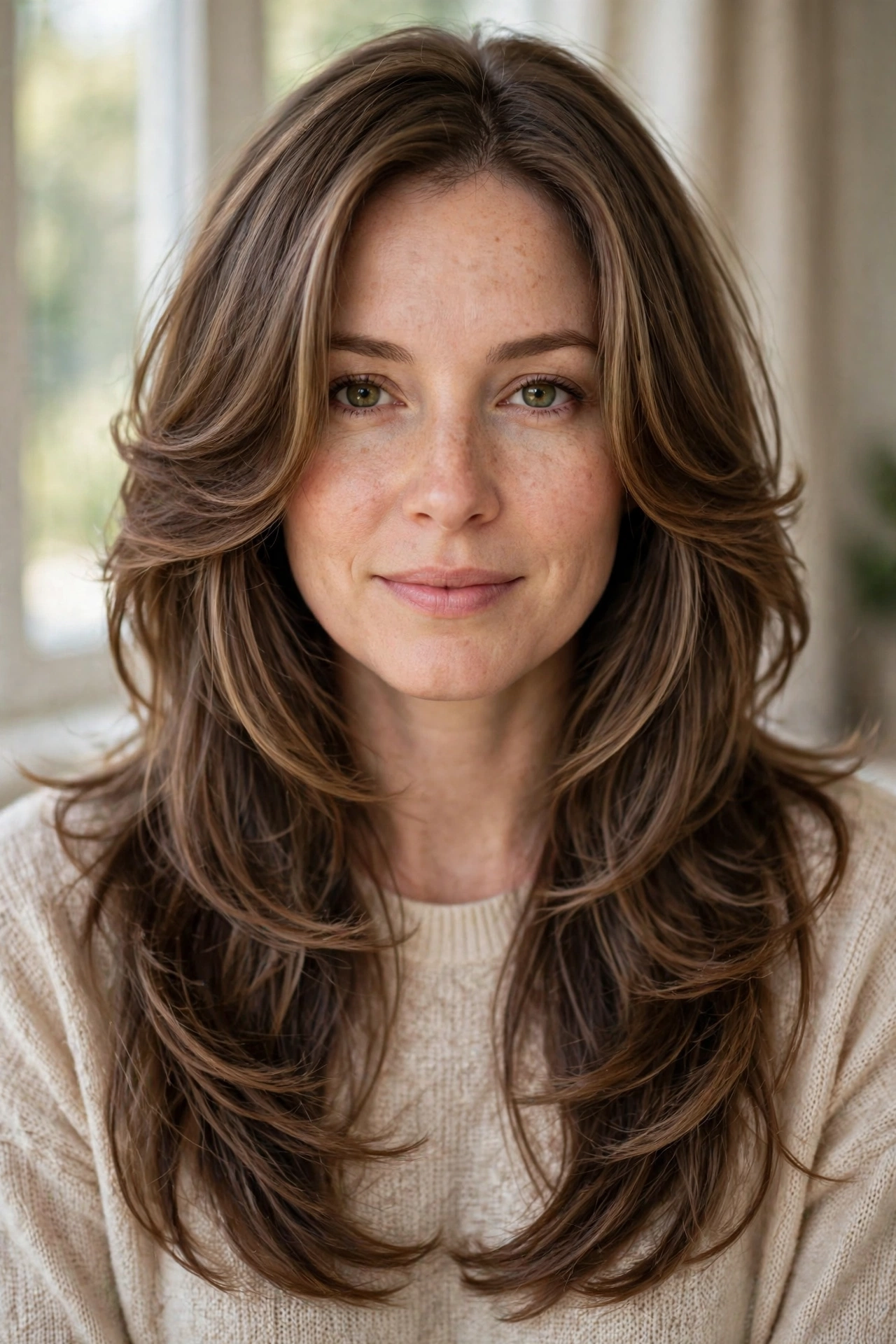
Curtain bangs are the natural partner for a butterfly cut because they are really just the shortest face layer, parted in the middle and swept open to each side. This version suits most face shapes, especially round and square faces, because the open centre draws the eye up and the longer sides slim the cheeks. It works best on straight to wavy hair with at least medium density; very curly hair will need the bangs cut longer to allow for shrinkage.
The trade-off is daily fringe care. Curtain bangs need a quick blow-dry or a large roller while they cool, or they will split awkwardly, and they grow out fast, so plan a fringe trim every three to four weeks between full cuts. Ask for "curtain bangs that start at the cheekbones, not at the eyebrows, blending into the butterfly layers," and practise the blow-dry at home before committing — if you hate styling a fringe, choose a longer, cheekbone-starting version instead.
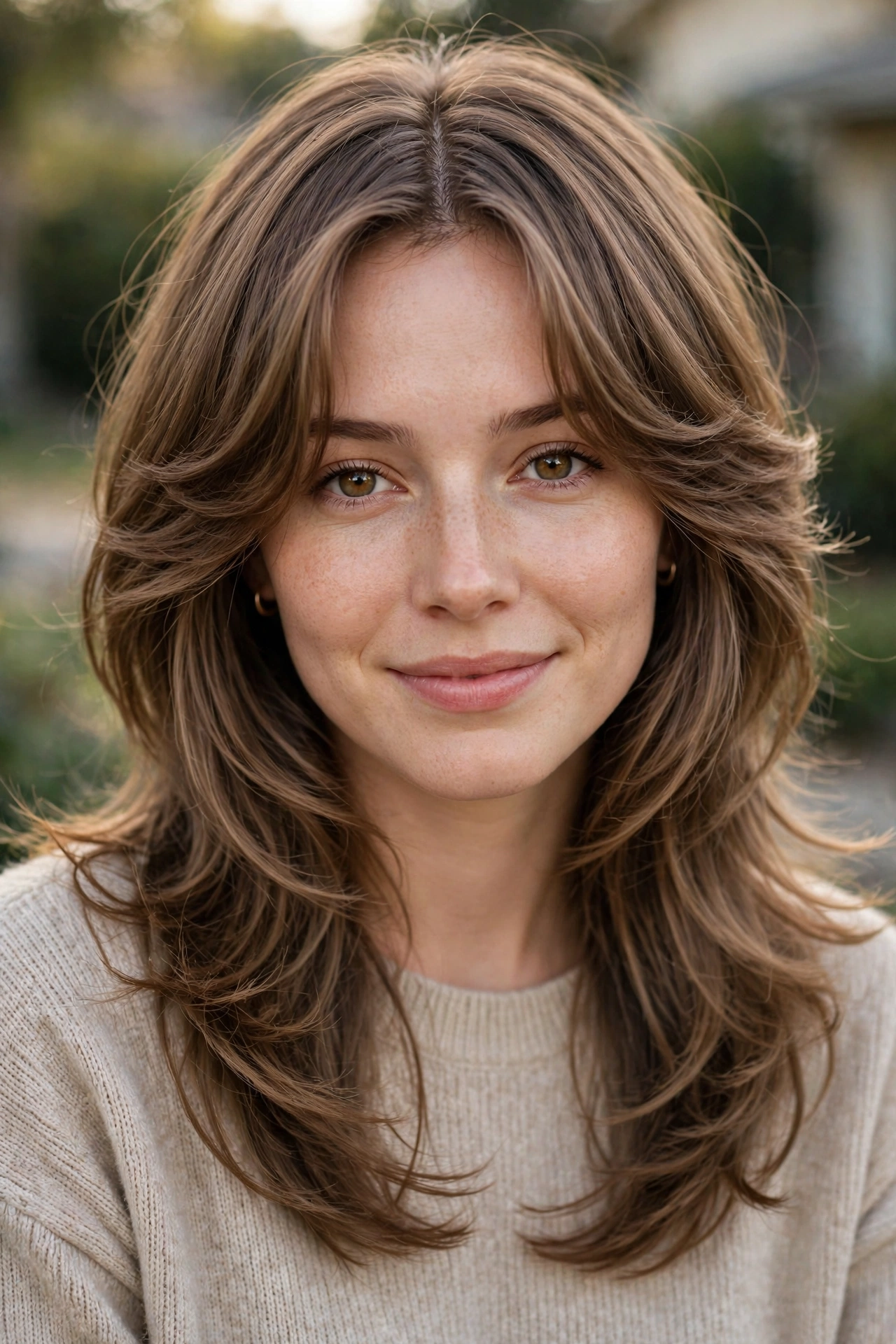
4. Short Butterfly Bob
A butterfly bob proves the cut is not only for long hair: the top layers are cut short and feathered to create the illusion of a short cut, while the underneath length sits at the jaw or neck. It suits fine to medium hair that needs the appearance of fullness, and it is especially flattering on oval and heart-shaped faces and on anyone who wants a bob without the heaviness of a one-length bob. Very thick hair will need internal thinning or it can turn triangular.
This is a higher-maintenance short cut in one sense — it needs a trim every five to six weeks to keep its shape — but a lower-maintenance daily style, since a quick blow-dry with a small round brush gives it its bounce. Ask for "a bob base with short butterfly layers on top, feathered around the face, and the underneath kept just long enough to tuck behind the ears." A pea-sized amount of texturising cream scrunched into the ends stops it looking too neat.
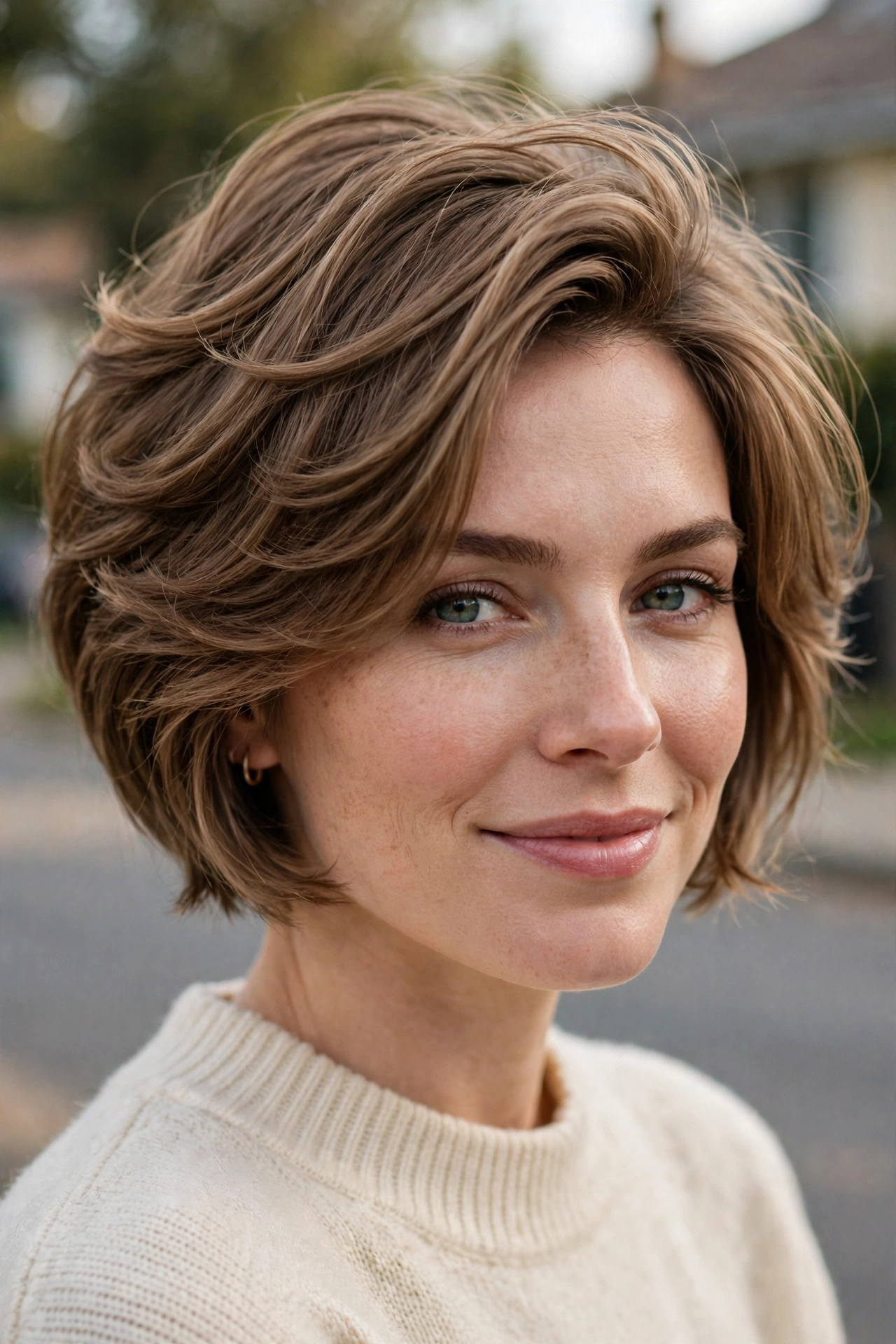
5. Medium Butterfly Shag
The medium butterfly shag sits between a classic butterfly cut and a shag, with more texture and a choppier outline at shoulder to collarbone length. It is ideal for wavy or slightly unruly hair that needs shape rather than weight, and for people who like a lived-in, undone finish. It suits oval, long and heart-shaped faces well; on a round face, keep the shortest layer below the chin so the width does not sit at cheek level.
Maintenance is genuinely low if you like texture. Wash, scrunch in a salt spray or curl cream, and let it dry naturally, then piece out the ends with a little wax. At the salon, ask for "a medium butterfly cut with choppy, textured ends and a soft shag feel, but without a heavy fringe." The risk to flag is over-thinning: if your stylist razors too much, the ends can look frayed within weeks, so ask for point-cut texture rather than heavy razor work.
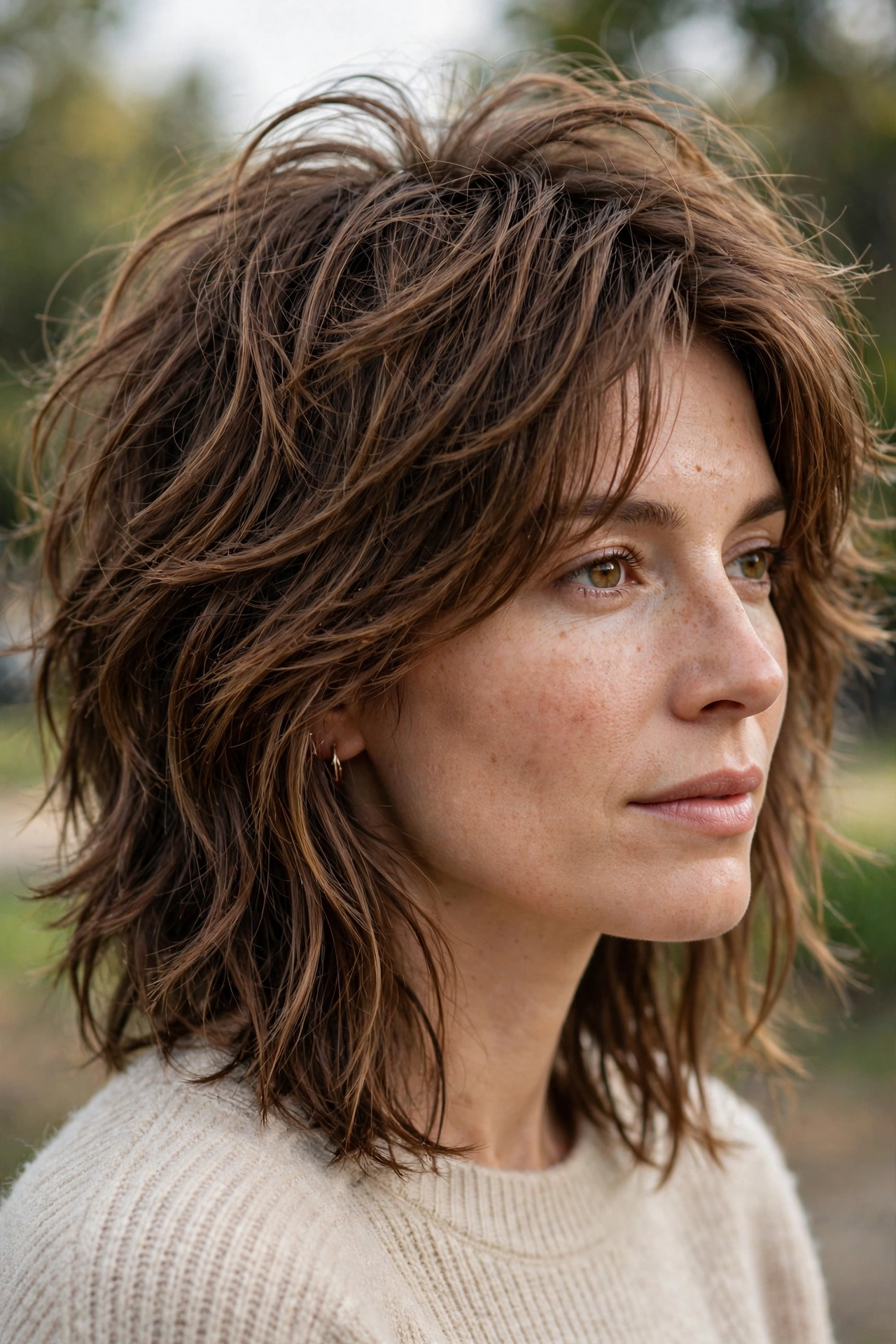
6. Butterfly Cut for Thick Hair
Thick hair is where the butterfly cut earns its keep, because the short top layers remove bulk from around the face while the long layers underneath keep the weight that stops thick hair from puffing out. This version suits anyone whose hair takes forever to dry, feels heavy at the neck, or turns into a triangle when it is cut in one length. It works on straight, wavy and loose curly thick hair, and on most face shapes, since the stylist can adjust where the volume sits.
Expect a longer appointment — thick hair takes time to layer properly — and be clear that you want internal layers and weight removal, not just shorter front pieces. Ask for "long internal layers through the back to remove bulk, with face-framing layers starting at the chin, keeping the outline long." At home, a smoothing serum and section-by-section blow-drying will keep it sleek; if you air-dry thick hair, use a leave-in cream so the layers do not frizz apart.
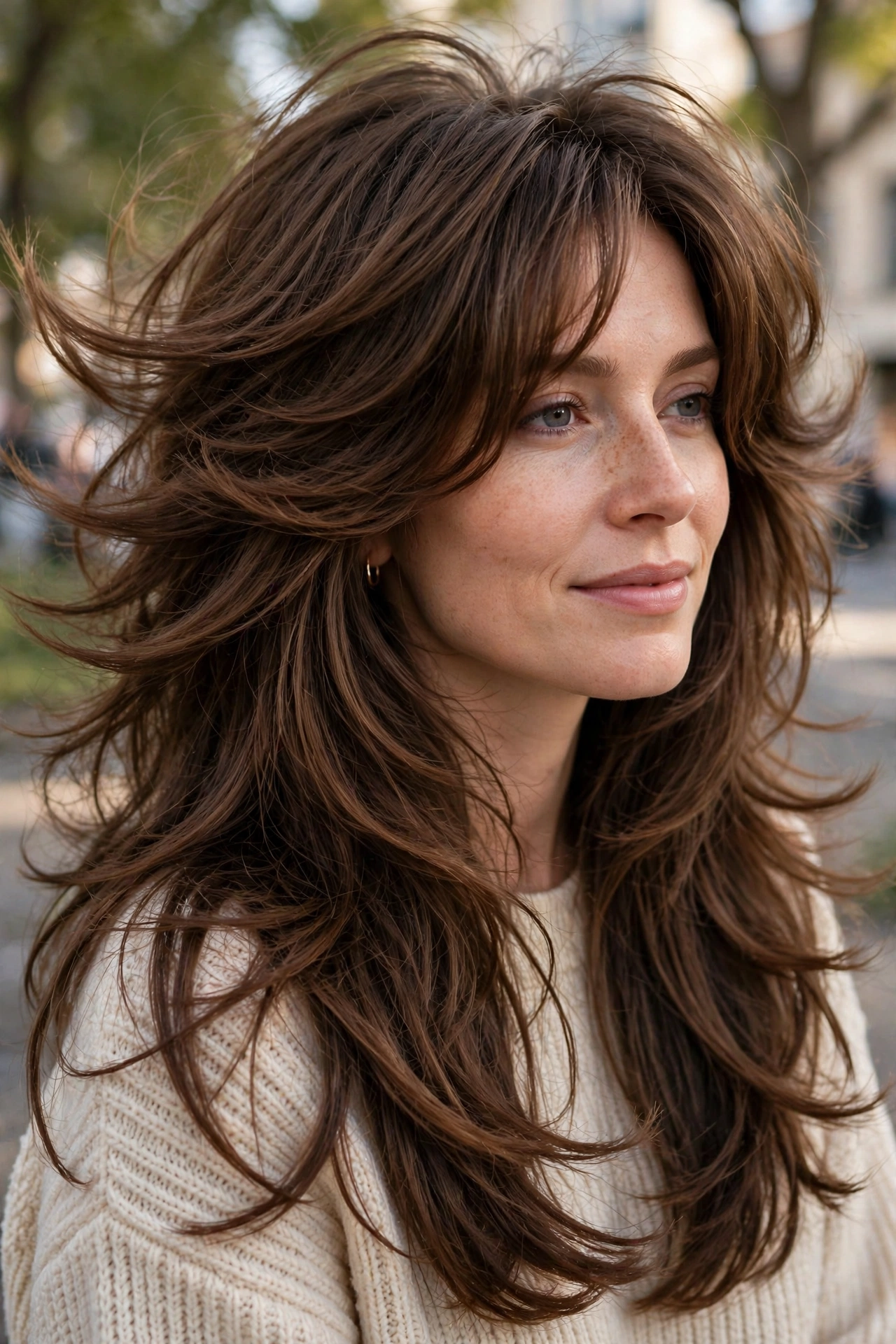
7. Butterfly Cut for Fine Hair
Fine hair needs the opposite approach: fewer layers, longer gaps between them, and blunt-ish ends so the hair still looks thick. This version keeps the butterfly idea — short pieces around the face for movement — but limits the short layers to the front only, leaving the back long and fairly solid. It suits fine, straight or slightly wavy hair and oval, heart-shaped and long faces, where the front layers add shape without sacrificing the ends.
Styling should focus on the roots, not the ends. Blow-dry upside down or use a root-lifting spray, then smooth the front layers outward with a large brush; avoid heavy oils, which flatten fine hair instantly. Ask for "face-framing butterfly layers only at the front, with long, minimal layers at the back and blunt ends to keep thickness." Be wary of any stylist who wants to add lots of short layers through the back — on fine hair, that is how you end up with see-through ends.
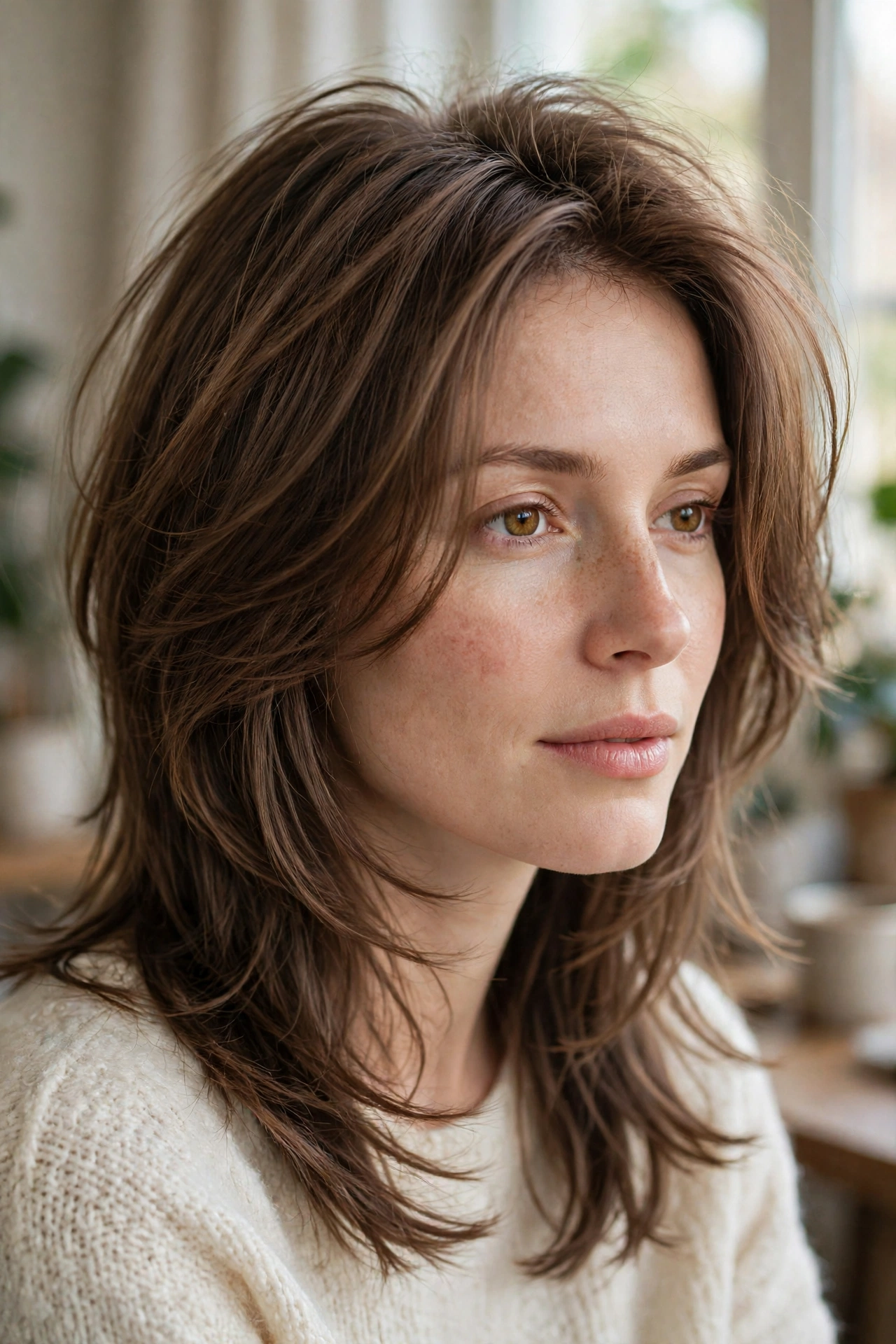
8. Feathered-End Butterfly Cut
Feathering means the ends of each layer are thinned and tapered so they flick softly instead of sitting in a heavy line. This version is best for medium to thick straight hair that can look blunt or helmet-like in a regular layered cut, and for anyone who loves that airy, 1970s-inspired movement. It flatters round and square faces because the flicked ends draw the eye outward rather than down, but it is less ideal for very fine hair, where feathering can make ends look thinner.
The feathered finish needs a blow-dry to show properly: use a medium round brush and flick each layer outward, or use large rollers on the top sections. Ask for "feathered, tapered ends on the butterfly layers, with the shortest layer at the cheekbones." Maintenance is moderate — the feathering grows out in about six to eight weeks and starts to look ragged, so do not stretch trims too far if you want to keep the flick.
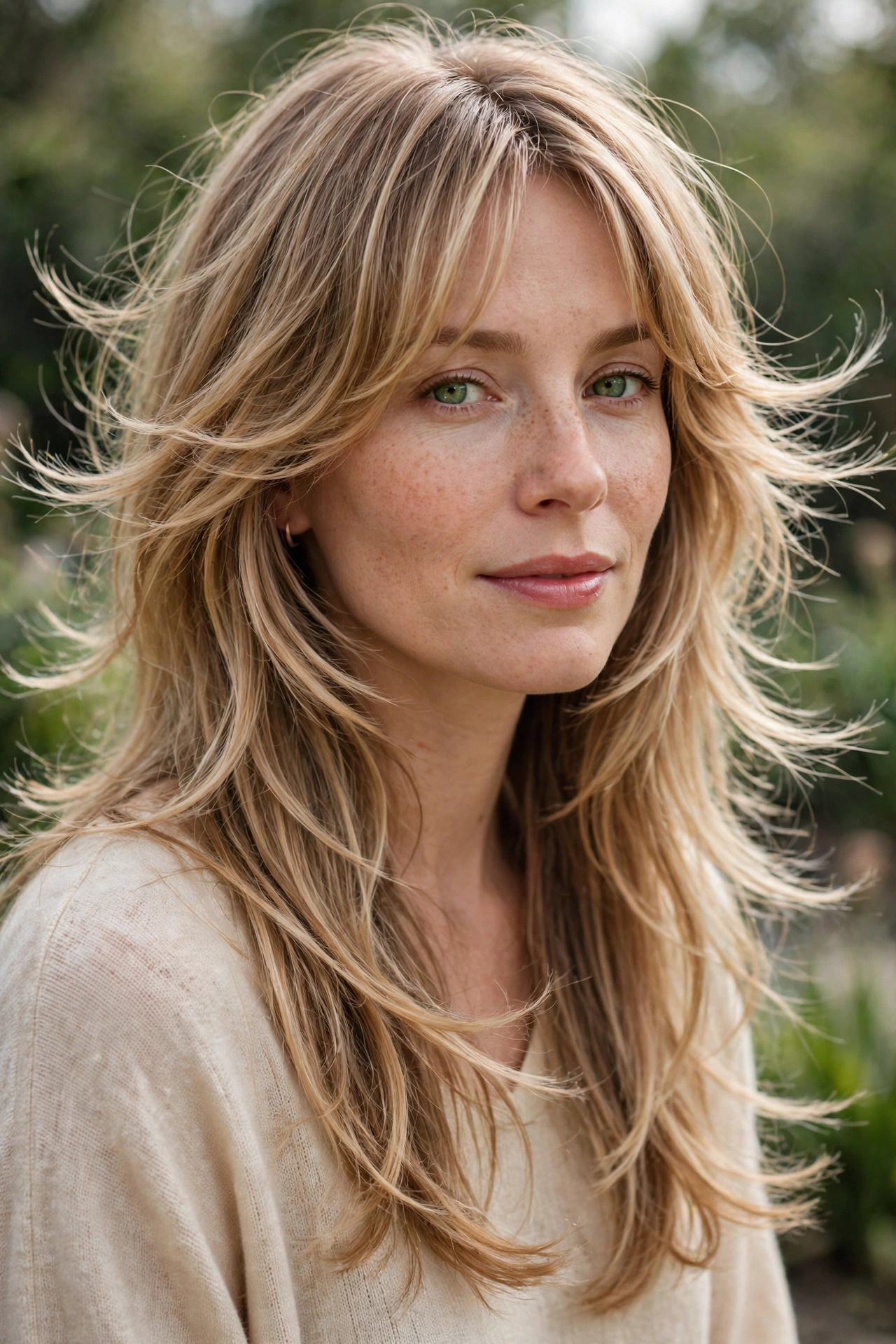
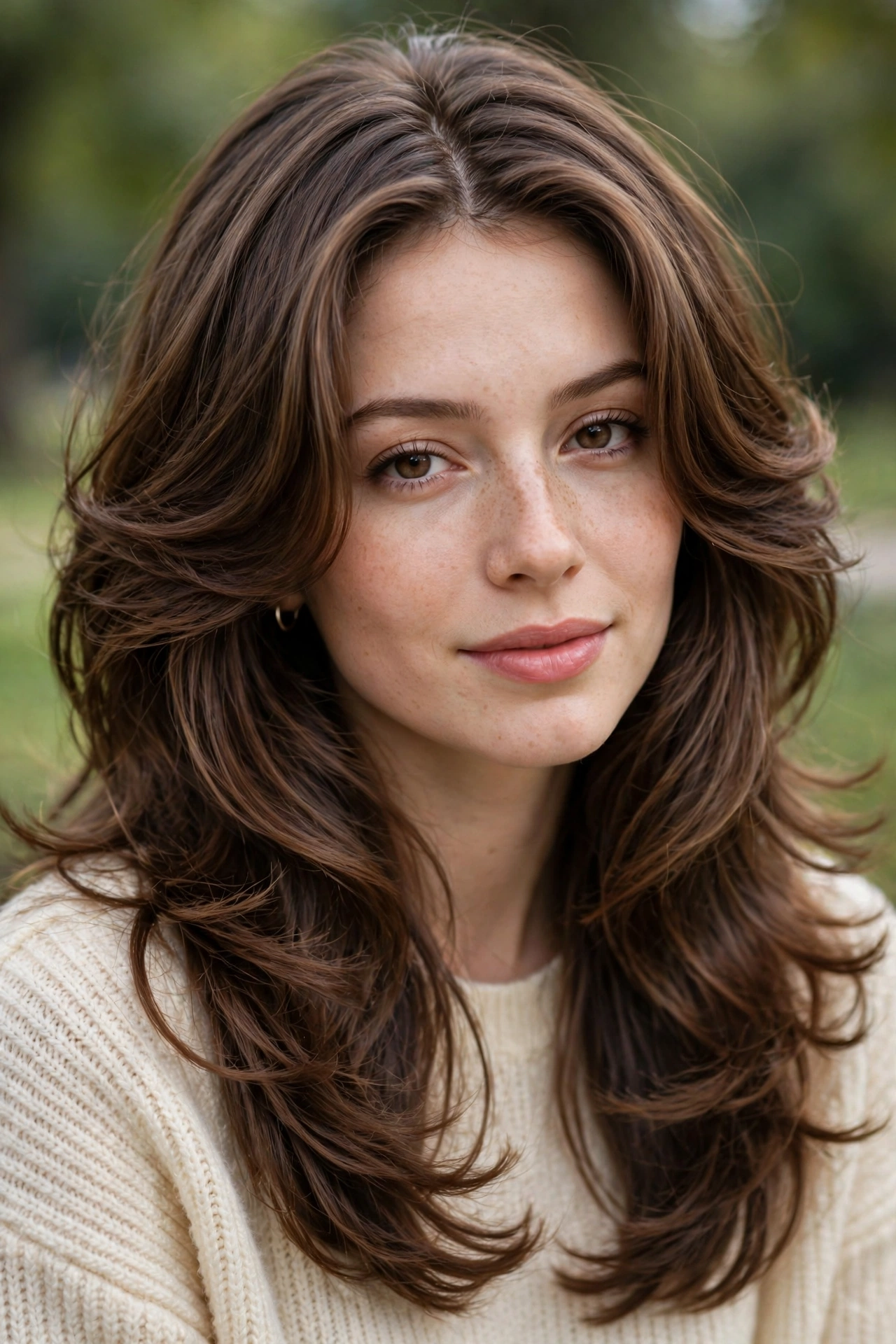
9. Wavy Butterfly Cut
On naturally wavy hair, a butterfly cut stops waves from clumping into one heavy curtain and instead lets each wave layer sit separately, which gives more bounce and a better shape when it air-dries. This version suits loose to medium waves, medium density, and most face shapes; the key adjustment is cutting the shortest layer a little longer than you think, because waves spring up when dry. It is a good choice if you rarely heat-style and want a cut that works with your texture, not against it.
Styling is refreshingly simple: apply curl cream or a light mousse to damp hair, scrunch, and either diffuse or air-dry, then shake out the roots once fully dry. Ask your stylist to cut it dry or damp, not soaking wet and pulled straight, and say "wavy butterfly layers, with the shortest front layer below the chin when dry." Avoid brushing dry waves, which turns the layers into frizz; finger-comb or use a wide-tooth comb instead.
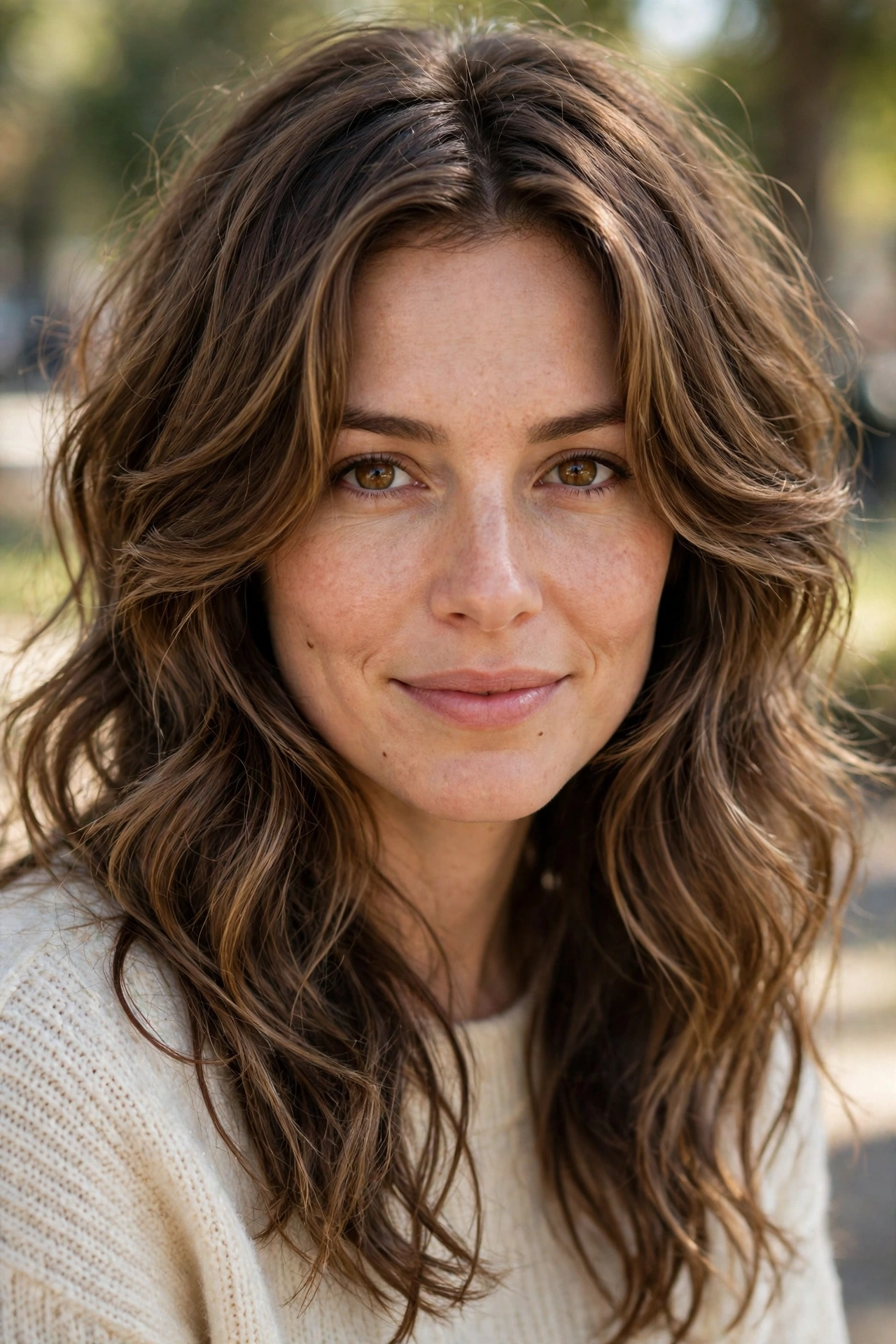
10. Curly Butterfly Cut
A curly butterfly cut uses the same two-length principle — shorter curls framing the face, longer curls below — but it must be cut curl by curl, on dry hair, to account for shrinkage. It suits medium to tight curls and coily textures that tend to form a pyramid shape when cut in one length, and it gives round faces a longer-looking outline because the volume sits higher and the longer curls fall past the jaw. The face-framing curls also soften a strong jaw or forehead without a fringe.
Maintenance is about moisture, not heat: a good curl cream, a diffuser on low heat, and a satin pillowcase or bonnet will do more than any blowout. Ask for "a dry curly cut with short face-framing curl layers and long layers underneath, cut to my natural curl pattern, no straightening first." Be prepared for trims every eight to twelve weeks, and never let anyone thin curly hair with thinning shears all over — that creates frizz that no product can fix.
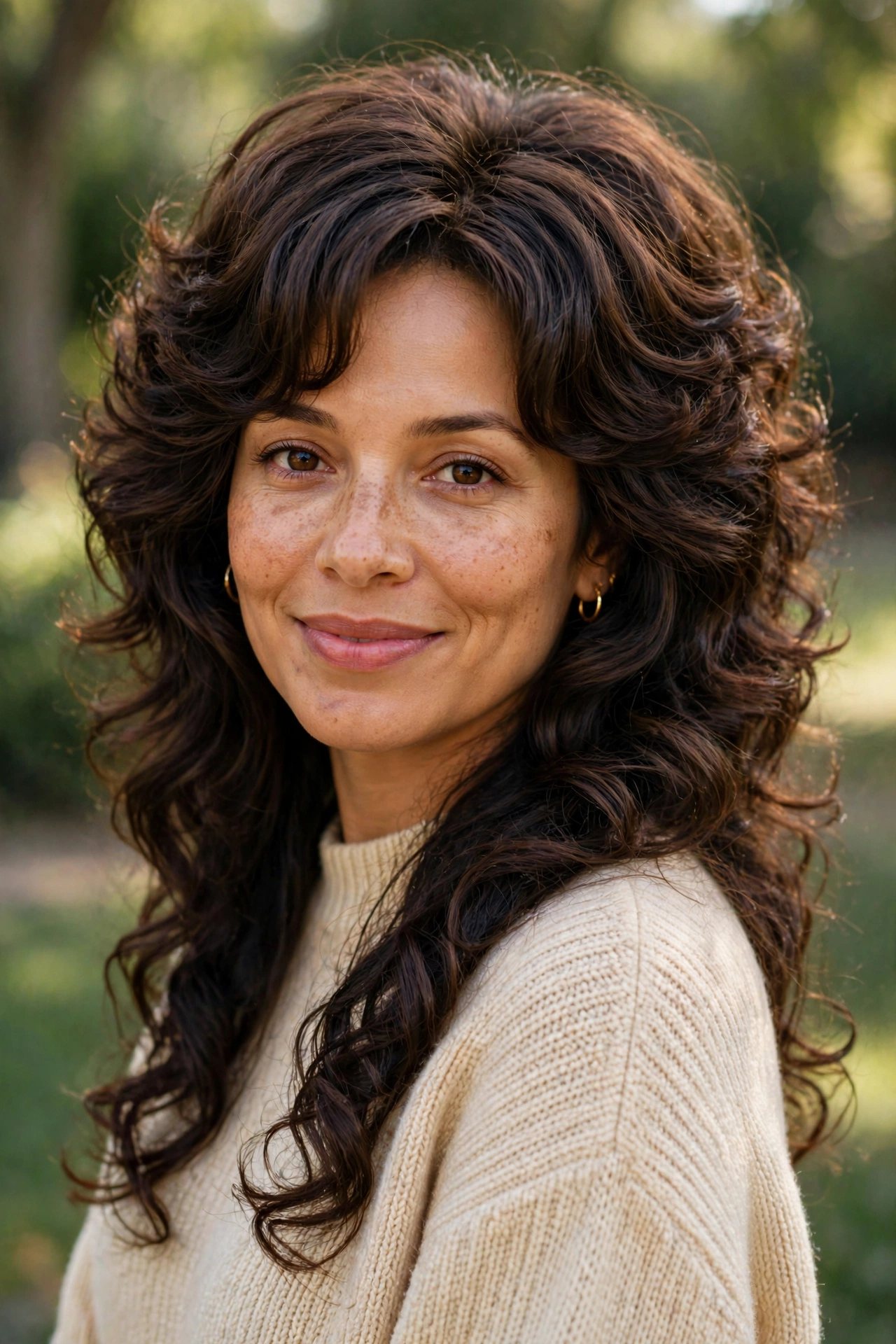
11. Butterfly Cut with Wispy Bangs
Wispy bangs are a sheer, see-through fringe that sits lightly on the forehead and blends straight into the butterfly layers at the sides. This is the gentlest fringe option and suits people who want a fringe without committing to a heavy one, especially those with smaller foreheads, oval faces, or fine hair that cannot support a thick fringe. It also works well if you wear your hair up often, since the wisps soften the hairline when the rest is tied back.
The daily effort is minimal but regular: wispy bangs need a quick blow-dry or a tiny round brush after washing, or they clump, and they need trimming every three weeks to stay wispy rather than growing into curtain bangs. Ask for "a light, wispy fringe with gaps, cut to eyebrow length, blending into the face-framing layers." If your hair is very oily at the roots, keep dry shampoo handy, because a wispy fringe shows grease faster than any other fringe style.
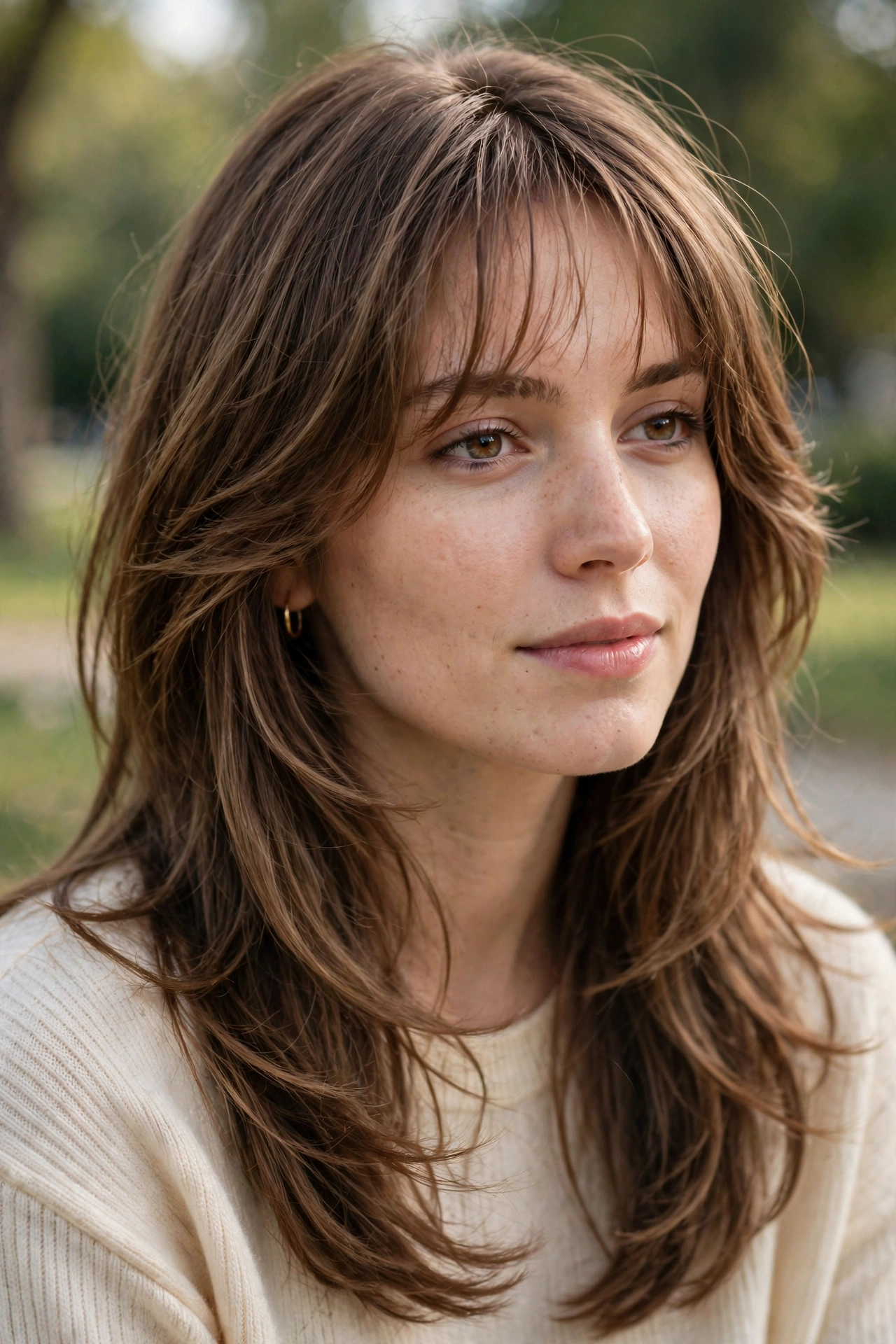
12. Butterfly Cut with Side-Swept Bangs
Side-swept bangs give the butterfly cut a more polished, grown-up feel: a long fringe swept diagonally across the forehead, merging into the short face layers on one side. This suits square and heart-shaped faces particularly well, because the diagonal line softens a strong jaw and balances a wider forehead, and it works on straight and wavy hair of medium density. It is also the easiest fringe to grow out, since it simply becomes a longer face layer.
Styling takes two minutes: blow-dry the fringe to the side you part it on, using a medium round brush to curve it slightly under, then let the butterfly layers fall naturally. Ask for "a long side-swept fringe ending at the cheekbone on one side, connected to the butterfly face layers." Choose the side you naturally part on — fighting your natural part every morning is the fastest way to hate a fringe — and tell your stylist which side that is before they start cutting.
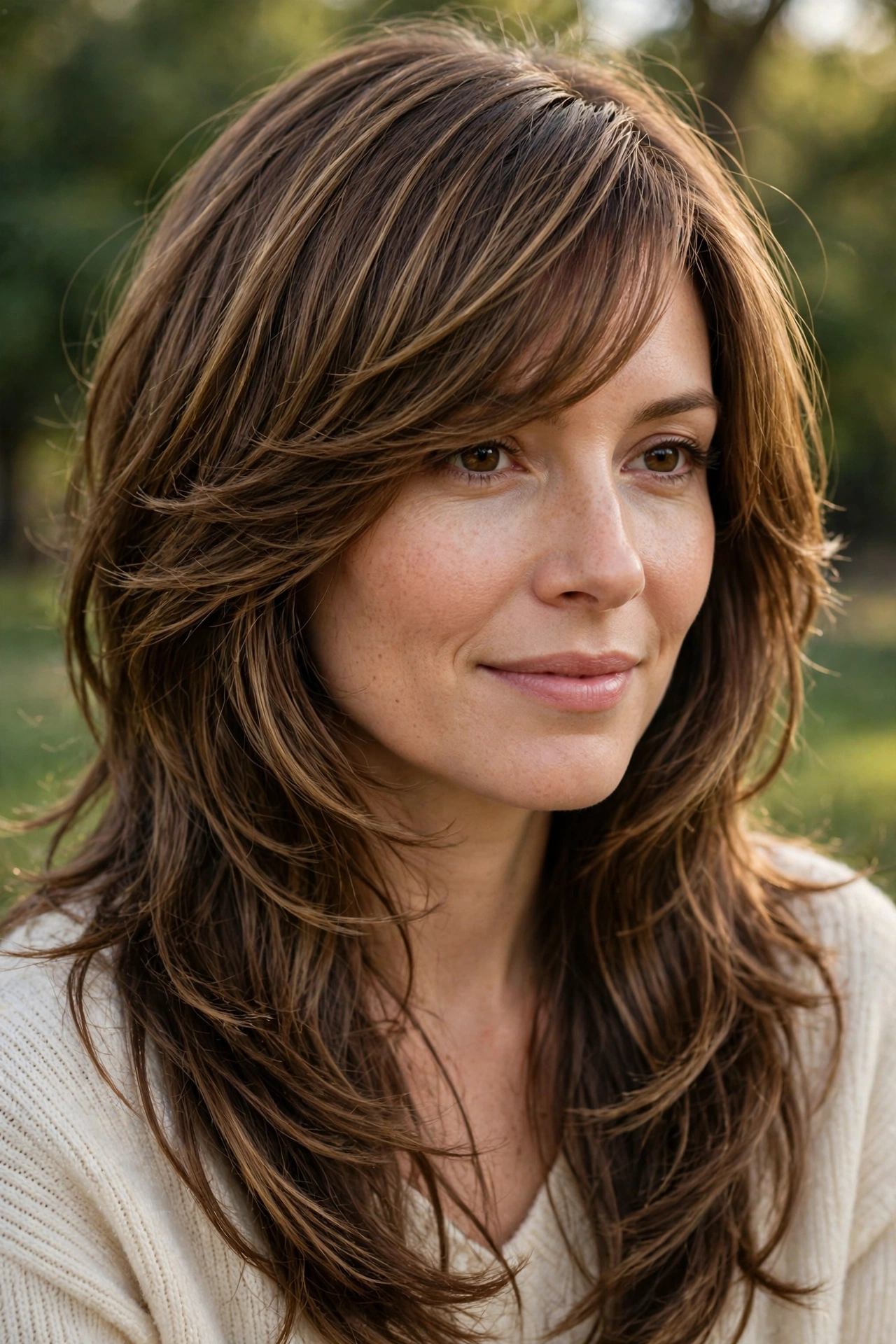
13. Blonde Balayage Butterfly Cut
Balayage and butterfly layers were made for each other: the painterly colour sits on the shorter face layers and the long layers below, so the movement of the cut shows up as movement in the colour too. This version suits anyone going lighter from a darker base who wants a softer grow-out than full highlights, and it flatters most skin tones if the blonde is matched to your undertone — warm honey for warm skin, cooler ash for cool skin. It works best on medium to thick hair, where there is enough hair for the colour to graduate through.
Maintenance is the real consideration here, not the cut. Balayage needs a toner refresh every eight to twelve weeks and purple shampoo at home to stop brassiness, plus regular conditioning because lightened ends dry out faster. Ask your colourist for "a soft balayage concentrated on the face-framing and top butterfly layers, with the roots left natural," and get the cut and colour planned together so the lightest pieces land exactly on the shortest layers.
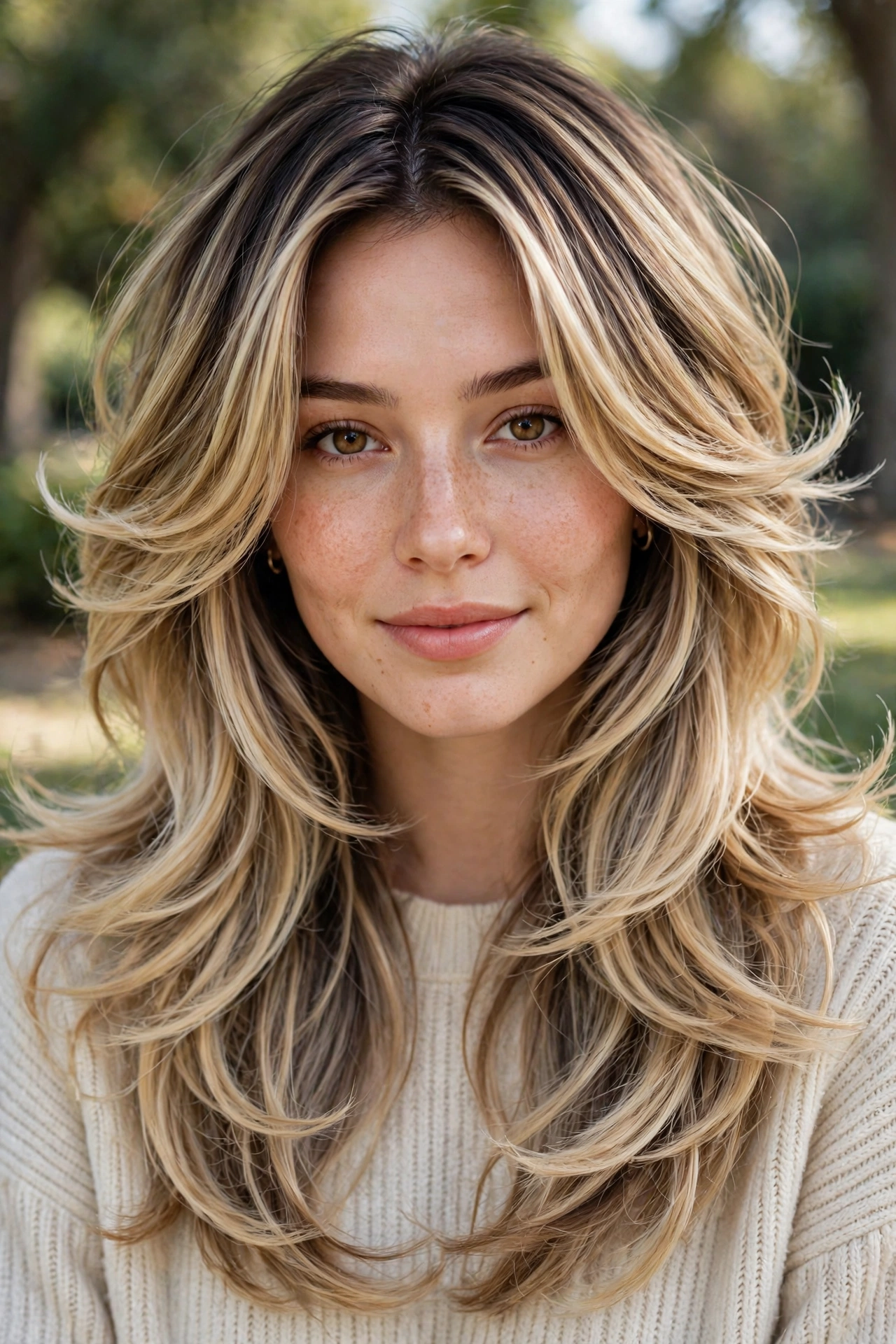
14. Butterfly Cut for Round Faces
For a round face, the goal is length and vertical lines: the shortest layer should start below the chin, not at the cheekbones, so the eye travels down rather than across. This version keeps the butterfly structure but shifts it lower, with long face-framing pieces that fall past the jaw and a centre or slightly off-centre part. It suits straight, wavy and loose curly hair, and it is the safest butterfly variation if you have ever felt a layered cut made your face look wider.
Style it by blow-drying the front layers straight down or slightly outward, never tucked behind the ears, which removes the slimming frame. Ask for "butterfly layers with the shortest front piece below the chin, long layers through the back, and no volume at cheek level." Avoid very short, bouncy layers at the sides and heavy, blunt fringes, both of which add width exactly where a round face does not need it.
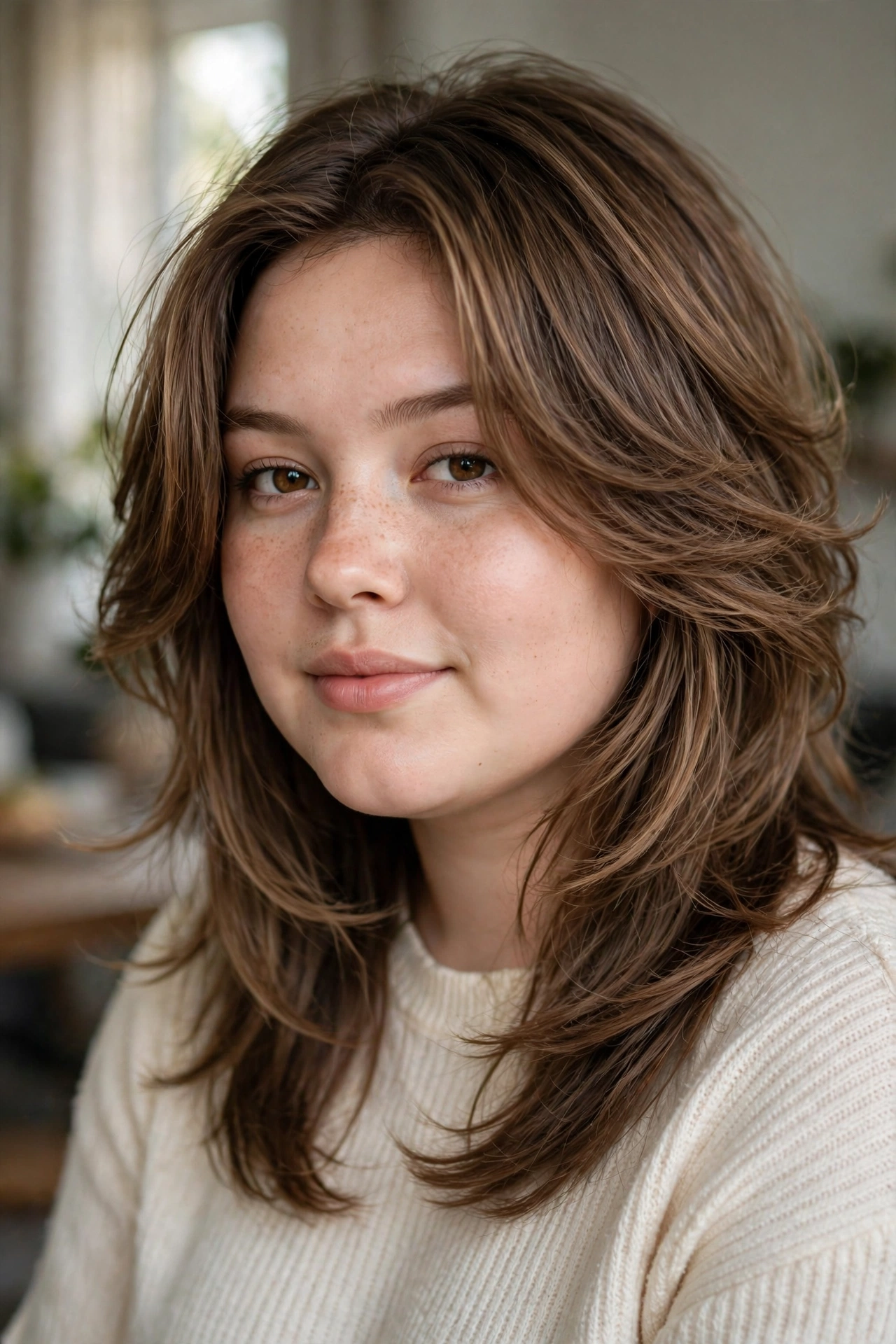
15. Butterfly Cut for Oval Faces
An oval face can carry almost any butterfly variation, so this version is about balance rather than correction: cheekbone-length short layers, long layers below, and a centre part that shows off the symmetry. It suits straight, wavy and curly hair alike, and it is the version to choose if you have an oval face and simply want the most classic, photogenic butterfly shape without worrying about slimming or widening anything.
Because the face shape does the work, you can focus on texture: a bouncy blowout for a polished look, or loose waves for an everyday version. Ask for "classic butterfly layers starting at the cheekbones, with long layers and a centre part." Maintenance is average — a trim every eight weeks — and the only real pitfall is going too short at the front out of enthusiasm, which can make even an oval face look top-heavy, so agree the shortest length before cutting.
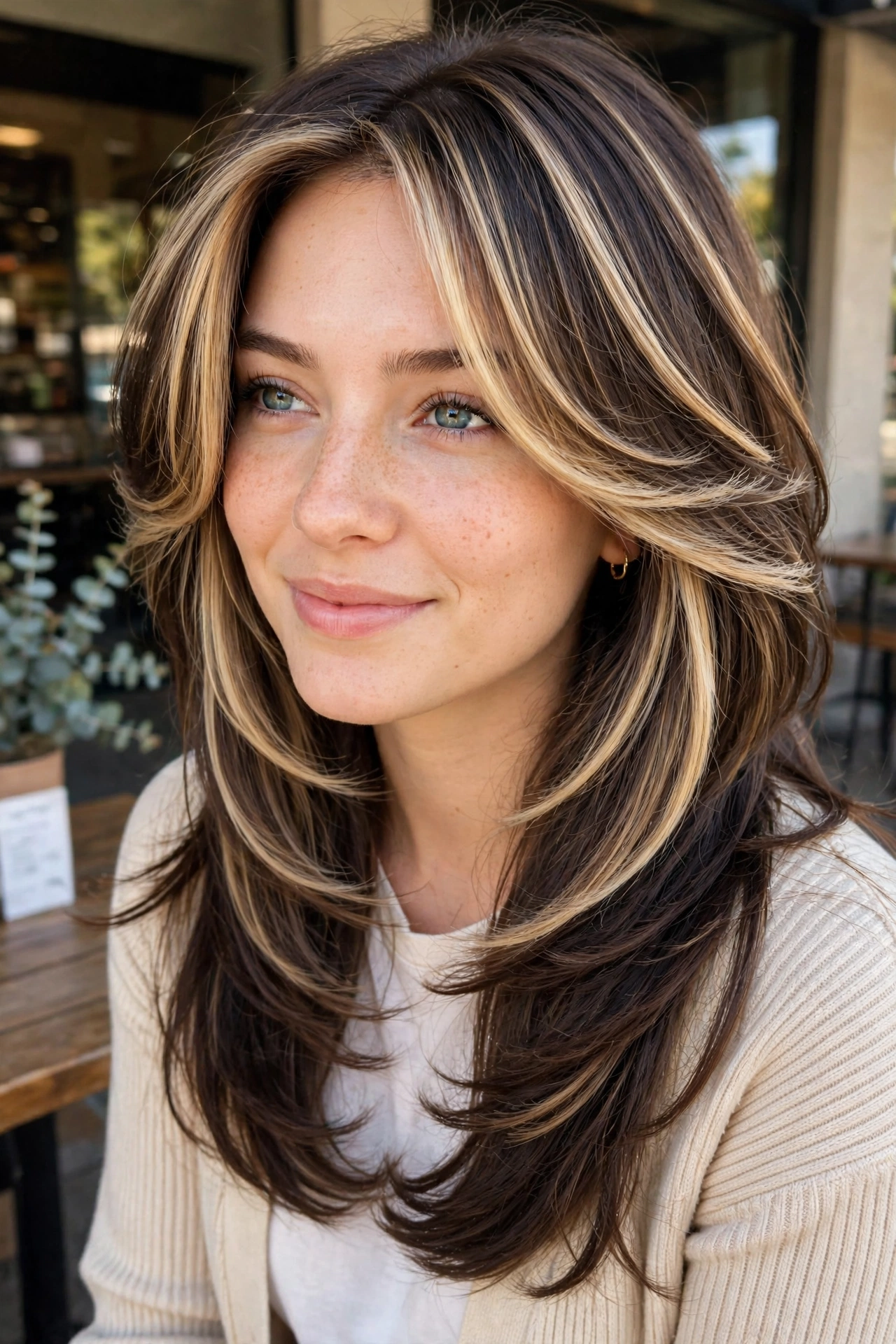
16. Face-Framing Highlight Butterfly Cut
Unlike full balayage, this version puts highlights only on the face-framing layers, so the colour frames your face like a halo while the rest of the hair stays darker and lower-maintenance. It suits dark to medium brown hair, most face shapes, and anyone who wants brightness without a full colour appointment or a dramatic change. The contrast also makes the butterfly layers much more visible in photos, which is why it performs so well on Pinterest and Instagram.
Upkeep is lighter than balayage but not zero: the front highlights will need a refresh every ten to twelve weeks, and a gloss or toner keeps them from turning brassy. Ask for "fine highlights placed only through the face-framing butterfly layers, one to two shades lighter than my base." At home, use a colour-safe shampoo and a weekly mask on the highlighted pieces, which dry out faster than the uncoloured hair behind them.
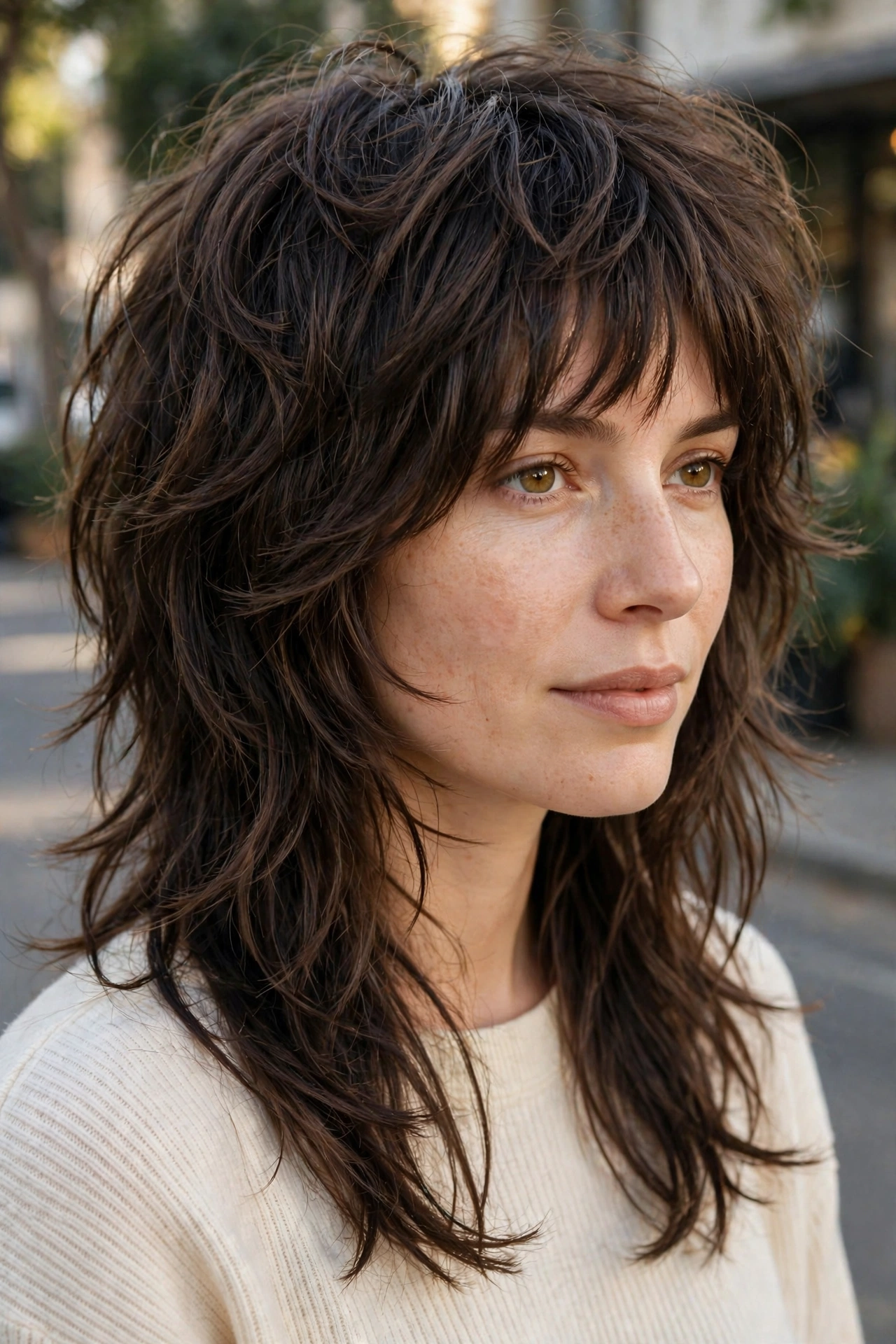
17. Choppy Textured Butterfly Cut
This is the edgiest butterfly variation, with piecey, deliberately uneven layers that give a rock-inspired, undone texture. It suits medium to thick straight or wavy hair, younger or more fashion-forward wearers, and oval or long faces, where the choppiness adds character without overwhelming the features. It is less suited to very fine hair, where choppy ends can look thin, or to formal workplaces that require a very polished finish.
Styling is intentionally messy: work a small amount of texturising paste or wax through the mid-lengths and ends, twist a few pieces apart with your fingers, and do not brush it smooth. Ask for "a butterfly cut with choppy, point-cut texture through the layers and piecey ends, not a smooth blended finish." Trims every six to eight weeks keep the choppiness looking deliberate rather than grown-out, and this is one cut where second-day hair usually looks better than freshly washed hair.
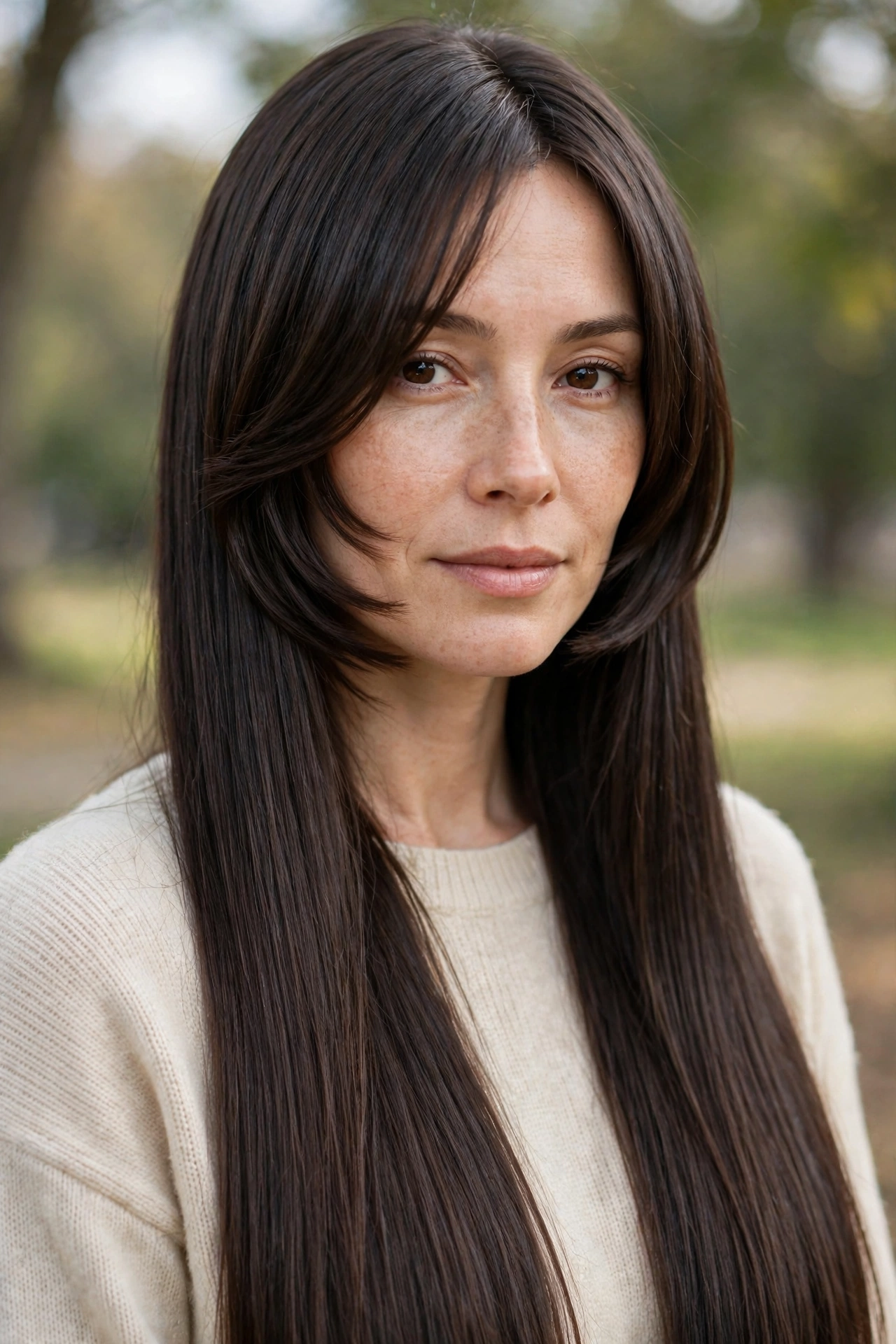
18. Sleek Straight Butterfly Cut
A sleek straight butterfly cut proves layers do not have to mean volume: here the layers are cut cleanly and styled pin-straight, so the face-framing pieces fall like a smooth frame and the long layers move as one glossy sheet. It suits naturally straight, medium to thick hair and oval, long and heart-shaped faces, and it is a strong choice for anyone who straightens their hair daily anyway. On wavy or curly hair, it will only stay sleek with significant heat styling, so be honest about that commitment.
The routine is straightforward but non-negotiable: heat protectant, straighteners or a straightening blow-dry, and a smoothing serum on the ends. Ask for "clean, straight butterfly layers with no texturising, the shortest layer at the jaw, and a blunt-ish long outline." To keep it healthy, limit straightening to two or three times a week, use a lower heat setting on fine sections, and book a trim every eight weeks so the straight ends do not split and catch.
19. Bouncy Blowout Butterfly Cut
This is the salon-finish version: the butterfly cut styled with maximum bounce, rounded volume, and flicked-out face layers, the way it looks right after a professional blow-dry. It suits medium to thick straight or slightly wavy hair, special occasions, and anyone who loves a polished, high-volume look. It flatters most face shapes because the volume is distributed all around the head rather than sitting at one level, but it is not a wash-and-go style.
Recreating it at home takes practice and tools: a large round brush or hot-air styler, volumising mousse on damp roots, and large rollers left in while the hair cools. Ask your stylist to show you the blow-dry section by section before you leave, and ask for "butterfly layers cut to support a bouncy blowout, with the face layers long enough to flick outward." On non-blowout days, the same cut still works worn wavy or loosely tied back, so you are not locked into the full routine every day.
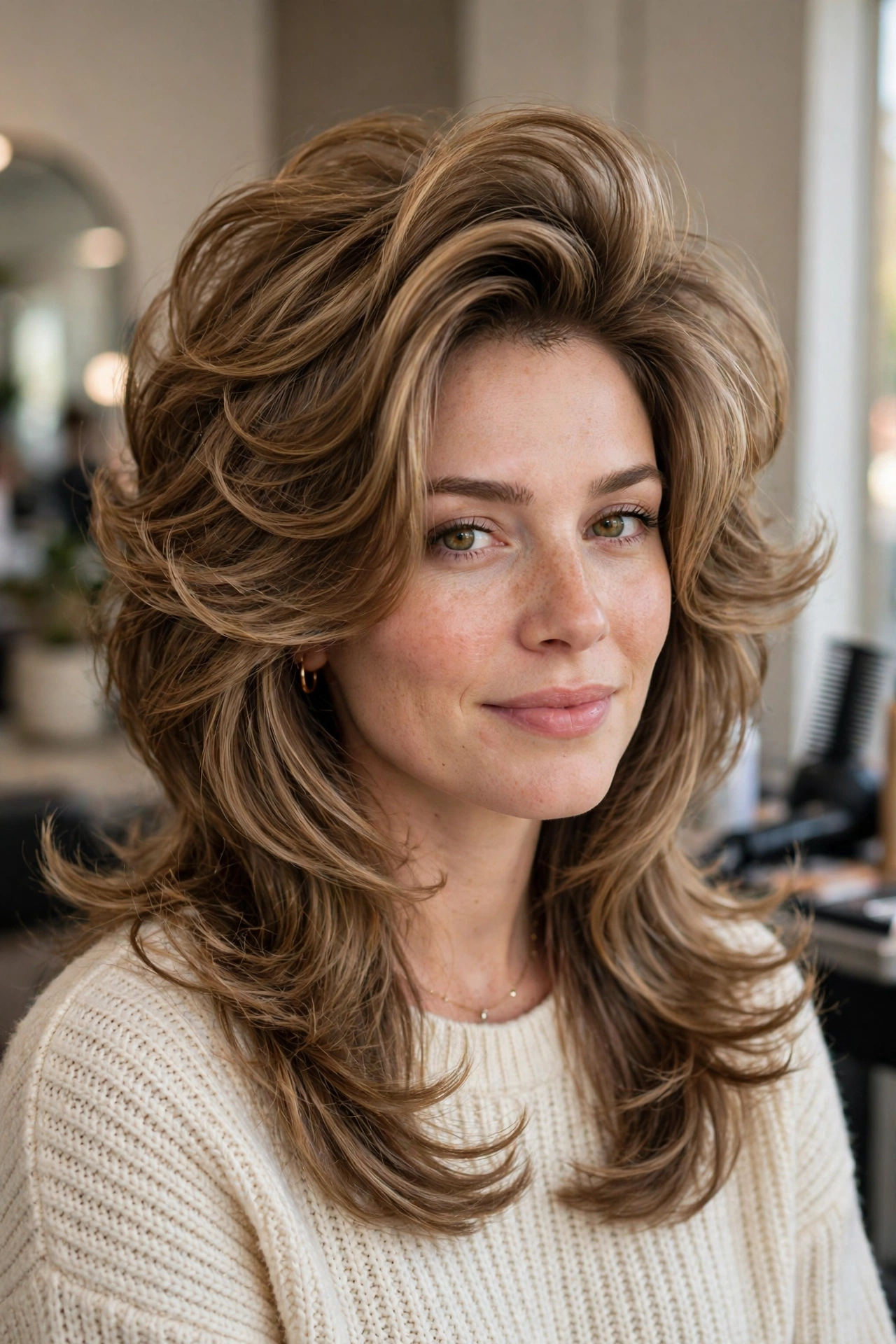
20. Shoulder-Length Butterfly Cut
Shoulder length is the sweet spot for a butterfly cut if you want shape without the weight and drying time of long hair. The short layers frame the face at the cheekbones or jaw, and the longest layer just brushes the shoulders, which keeps the cut light and easy to style. It suits fine to medium hair, oval, round and heart-shaped faces, and anyone growing out a bob or cutting long hair shorter for the first time.
Daily styling is quick: a ten-minute blow-dry with a medium round brush, or air-drying with a little wave cream for a softer finish. Ask for "a shoulder-length butterfly cut, with the shortest face layer at the cheekbones and the back ending at the shoulders, not below." The one watch-out is that shoulder-length layers can flick outward at the ends when they hit a collar or jacket, so keep a smoothing cream handy in winter and check the back in a mirror before leaving the house.
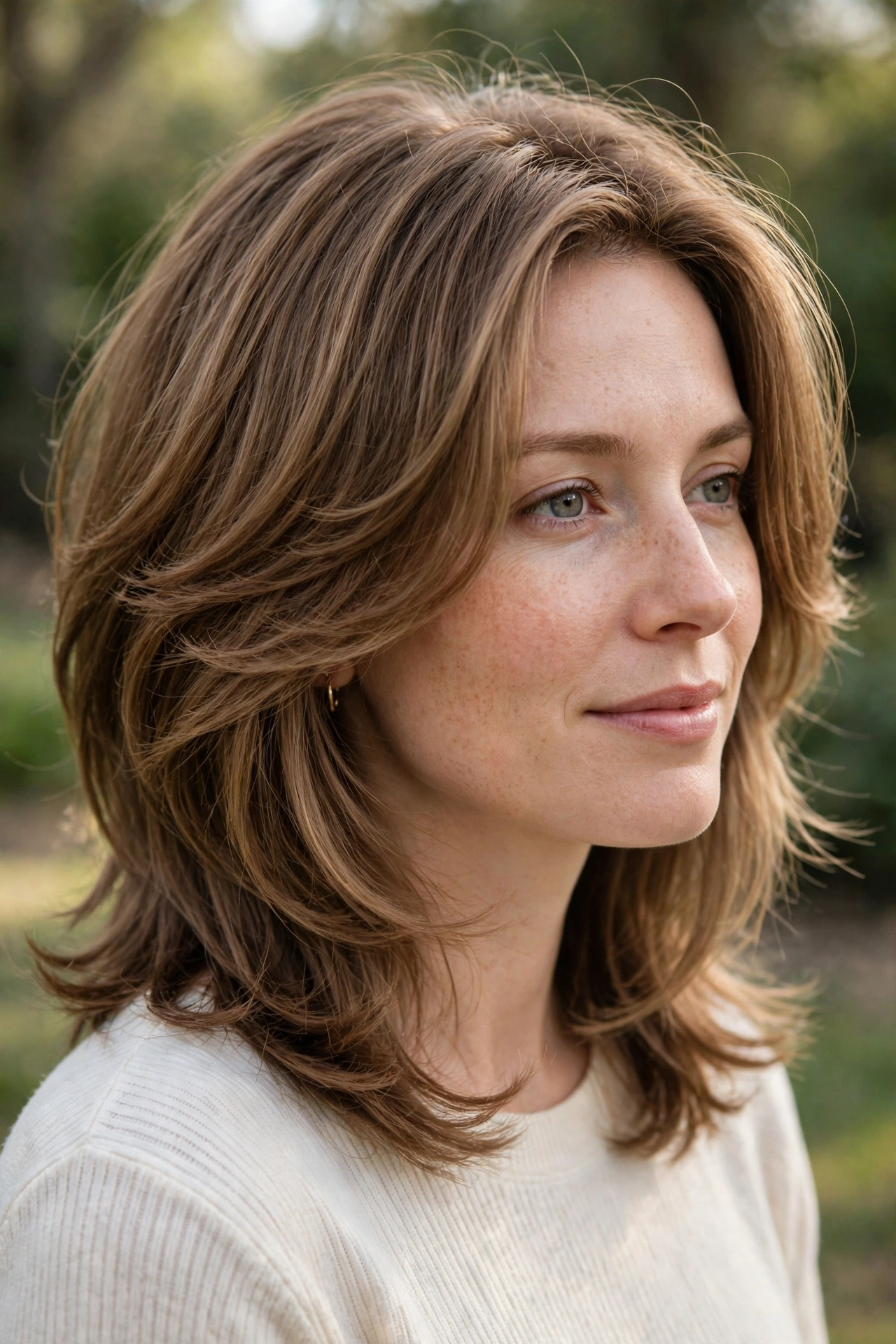
21. Bottleneck Bang Butterfly Cut
Bottleneck bangs are narrow at the centre of the forehead and widen toward the cheekbones, like the neck of a bottle, before melting into the butterfly layers. This fringe suits high foreheads, long faces and oval faces especially well, because it breaks up the forehead without covering it completely, and it works on straight and wavy hair with medium density. It is a more fashion-forward choice than curtain bangs, but it is also more forgiving, since the longer sides blend into the cut if you decide to grow it out.
Styling is a daily two-minute job: blow-dry the centre section forward and the sides outward, or use a small round brush to shape the bottleneck curve. Ask for "bottleneck bangs — short in the middle, longer at the cheekbones — connected to the butterfly face layers." Plan fringe trims every three to four weeks, and avoid cutting them yourself between appointments unless you are confident, because an uneven bottleneck fringe is very hard to hide.
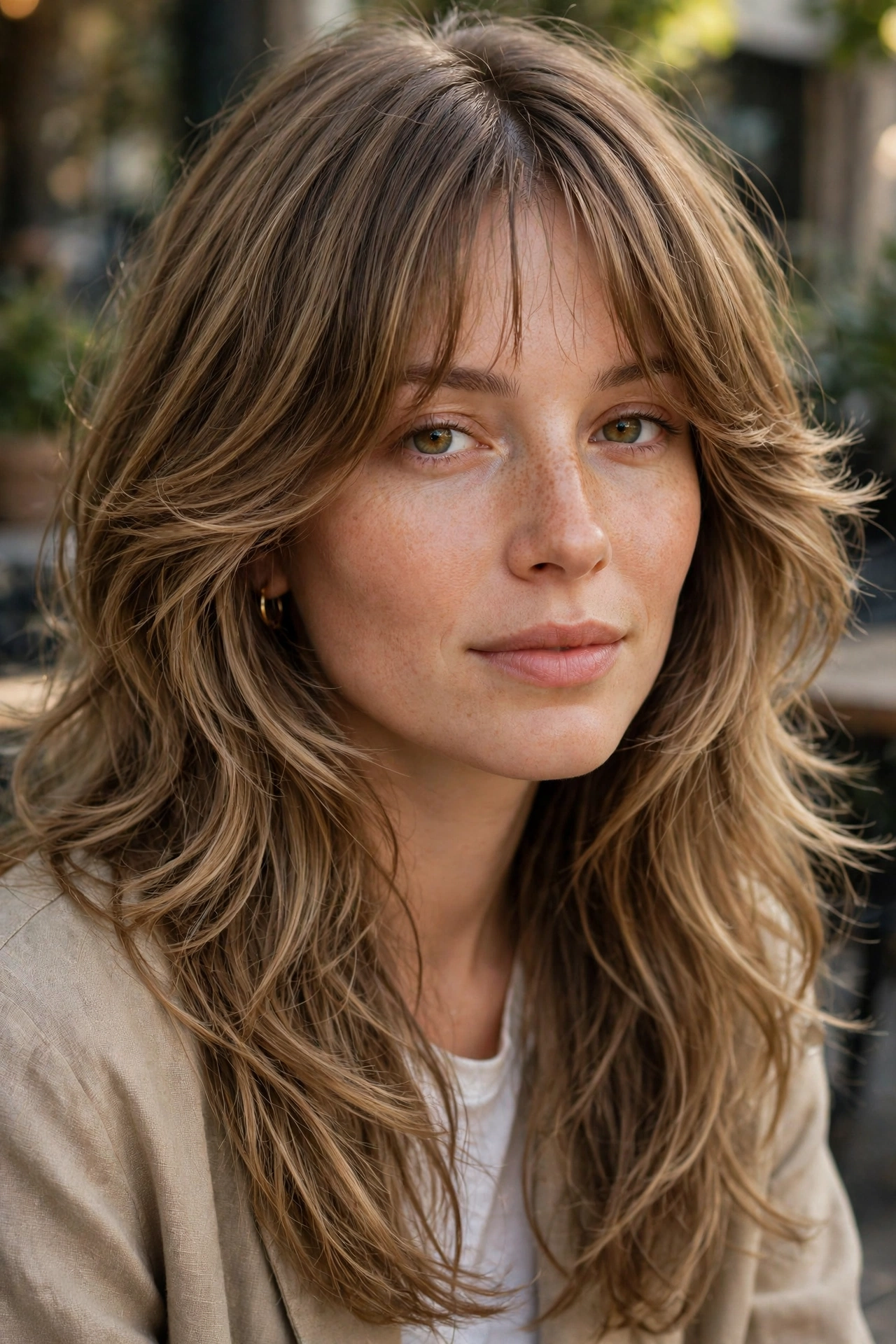
22. Copper Butterfly Cut
Copper transforms a butterfly cut because the warm, reflective colour catches the light on every layer, making the movement of the cut visible even in a still photo. This version suits fair to medium skin with warm or neutral undertones best, and it works on straight, wavy and loose curly hair. If your skin is very cool-toned, ask your colourist about a cooler, more auburn-leaning copper rather than a bright orange copper, which can clash.
The hard truth about copper is fading: it washes out faster than almost any other colour, so expect a gloss refresh every four to six weeks and colour-safe, lukewarm washing at home. Ask for "an all-over copper with the butterfly layers cut first, so the colour sits evenly through the layers," and use a copper-depositing conditioner between salon visits. The cut itself is classic butterfly — chin-length face layers, long layers below — so the colour, not a complicated shape, does the talking.
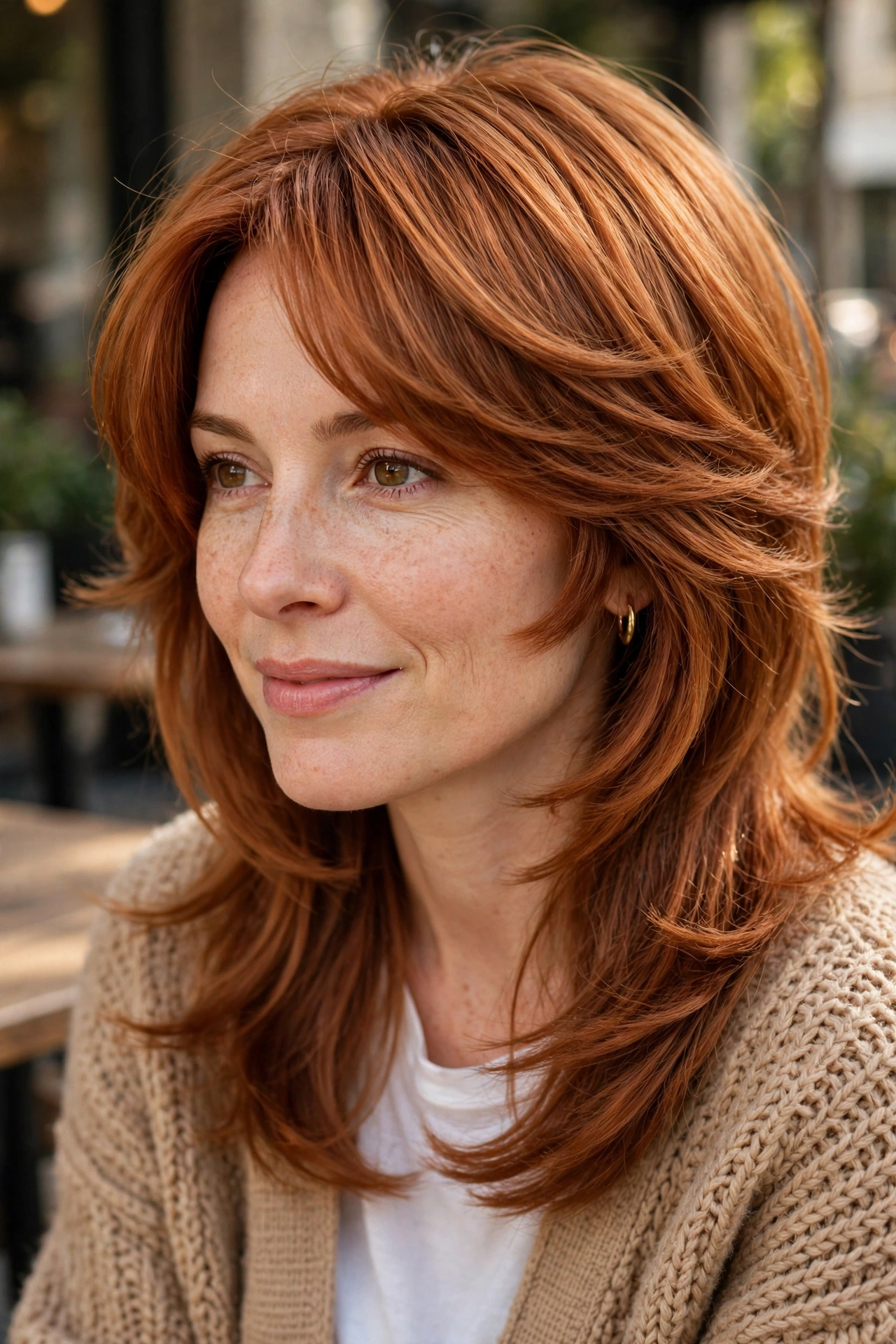
23. Brunette Dimensional Butterfly Cut
Dimensional brunette colour uses several close shades of brown — a darker base with slightly lighter ribbons through the layers — to give depth without an obvious highlighted look. This version suits anyone who wants richer, more expensive-looking brown hair, and it flatters most skin tones because the dimension can be kept subtle or made warmer or cooler to match. It works beautifully on medium to thick hair, where the layers give the colour room to show.
Maintenance is refreshingly low for coloured hair: a gloss every eight to ten weeks revives the dimension, and there is no harsh root line as it grows out. Ask for "dimensional brunette colour with soft ribbons through the butterfly layers, no more than two shades lighter than my base." Style it with a smooth blowout or loose waves, both of which reveal the dimension, and use a shine serum on the ends — dimensional brown hair looks its best when it is glossy, not matte.
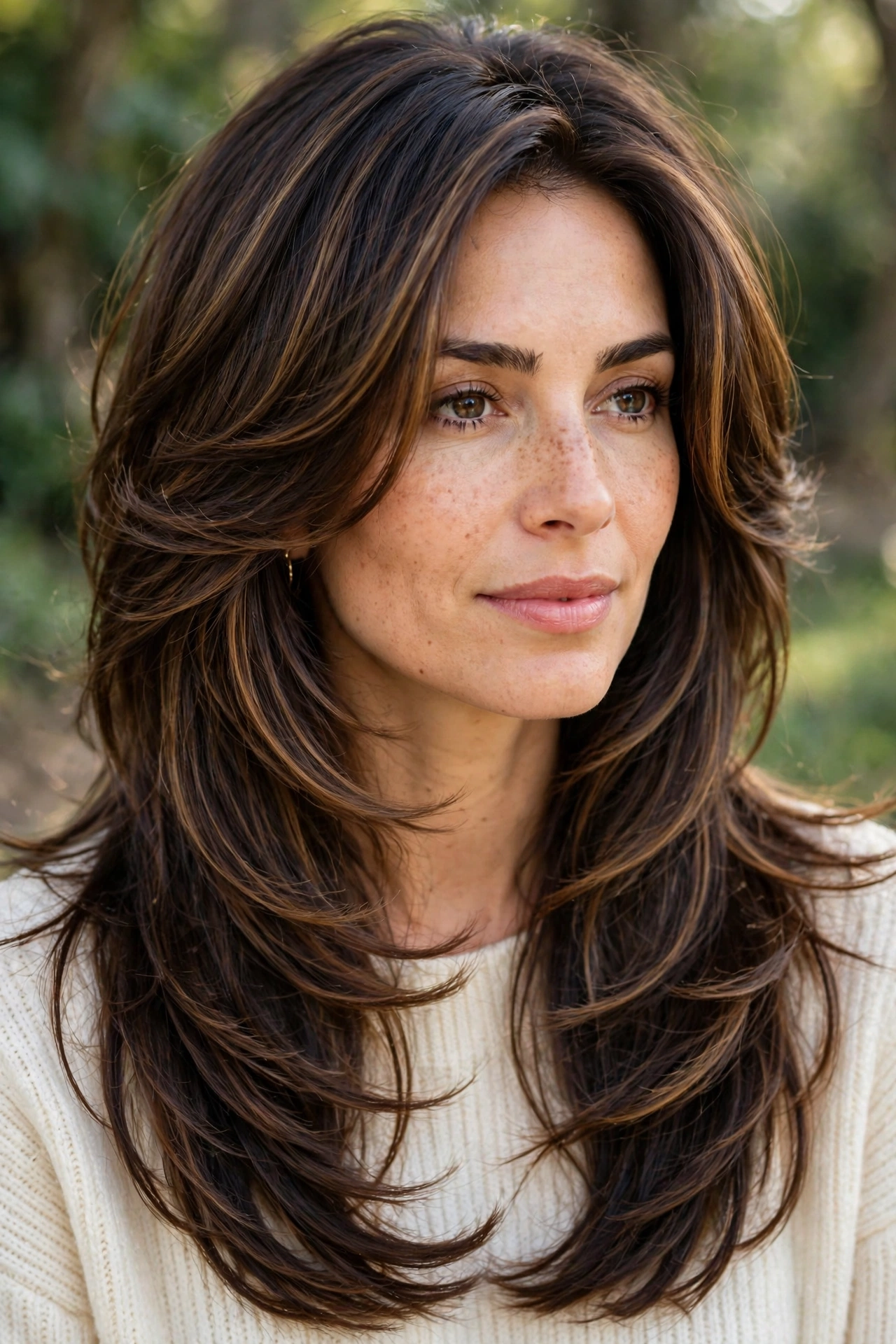
24. Money-Piece Butterfly Cut
The money piece is a bold, bright section at the very front of the hair, framing the face against a darker base, and it pairs naturally with butterfly layers because the brightest hair is exactly where the shortest layers sit. This version suits dark hair, oval, round and heart-shaped faces, and anyone who wants a high-impact change without colouring all their hair. It is a confident, fashion-led look rather than a subtle one, so it is best if you are comfortable with contrast.
Upkeep is focused on that front section: it will need toning every six to eight weeks to stay bright and not turn yellow, and it is more fragile than the rest of your hair because it is lightened the most. Ask for "a bright money piece through the front butterfly layers only, with the rest of the hair left dark." At home, use purple shampoo sparingly — once a week is enough — and a bond-building treatment on the lightened pieces to keep them from snapping.
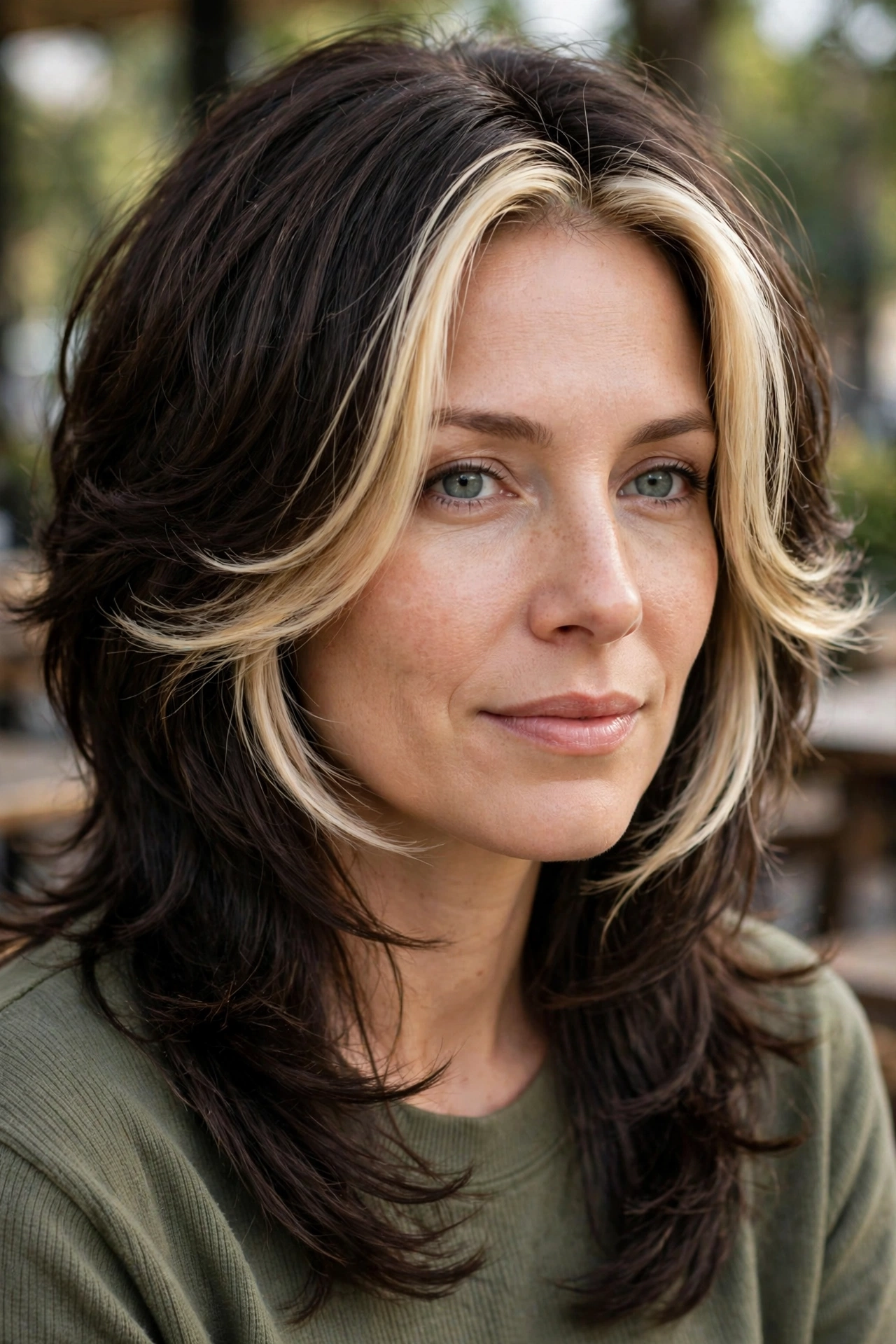
25. Centre-Part Long-Layer Butterfly Cut
This is the most minimal, elegant butterfly variation: a strict centre part, very long hair, and long, widely spaced layers that only reveal themselves when the hair moves. It suits very long, straight or slightly wavy hair, oval and heart-shaped faces, and anyone who wants a refined, low-drama version of the trend rather than a bouncy, obvious one. It is less suited to fine hair, where widely spaced layers can make the ends look sparse, or to very curly hair, where a centre part and long layers can create a heavy curtain effect.
Styling is simple and quick: part it cleanly in the centre, smooth the front layers back with a brush, and let the length do the work. Ask for "a centre-part butterfly cut with long, minimal layers — the shortest face layer at the jaw, and no short layers through the back." Because the layers are subtle, this cut grows out beautifully and can go ten to twelve weeks between trims, making it one of the lowest-maintenance butterfly options here.
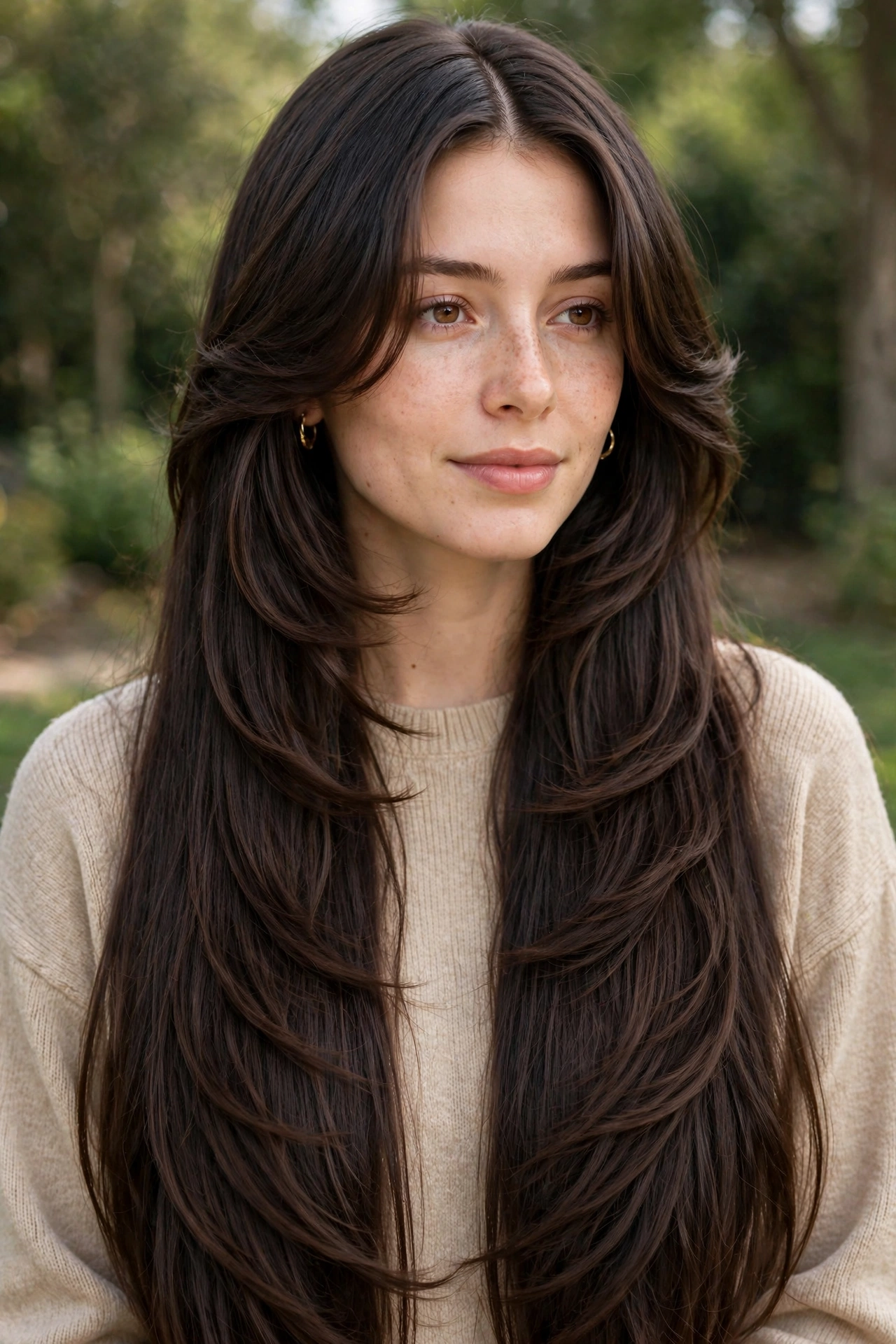
26. Butterfly Cut for Heart-Shaped Faces
A heart-shaped face — wider forehead, narrower chin — needs width lower down to balance the top, and this butterfly version delivers it by keeping volume around the jaw and chin. The short layers start at the cheekbones but are styled outward, and the long layers are left full around the jaw rather than thinned. It suits straight, wavy and loose curly hair, and it is particularly flattering if you have ever felt a short, voluminous top made your forehead look wider.
Style the front layers with a round brush flicked outward at jaw level, and avoid adding too much root volume at the crown, which emphasises the forehead. Ask for "butterfly layers that add fullness at the jaw and chin, with the shortest layer at the cheekbones, and a side part if I want to soften the forehead." A side part is worth trying here: it breaks up the width of the forehead in a way a centre part does not, and it costs nothing to test at home first.
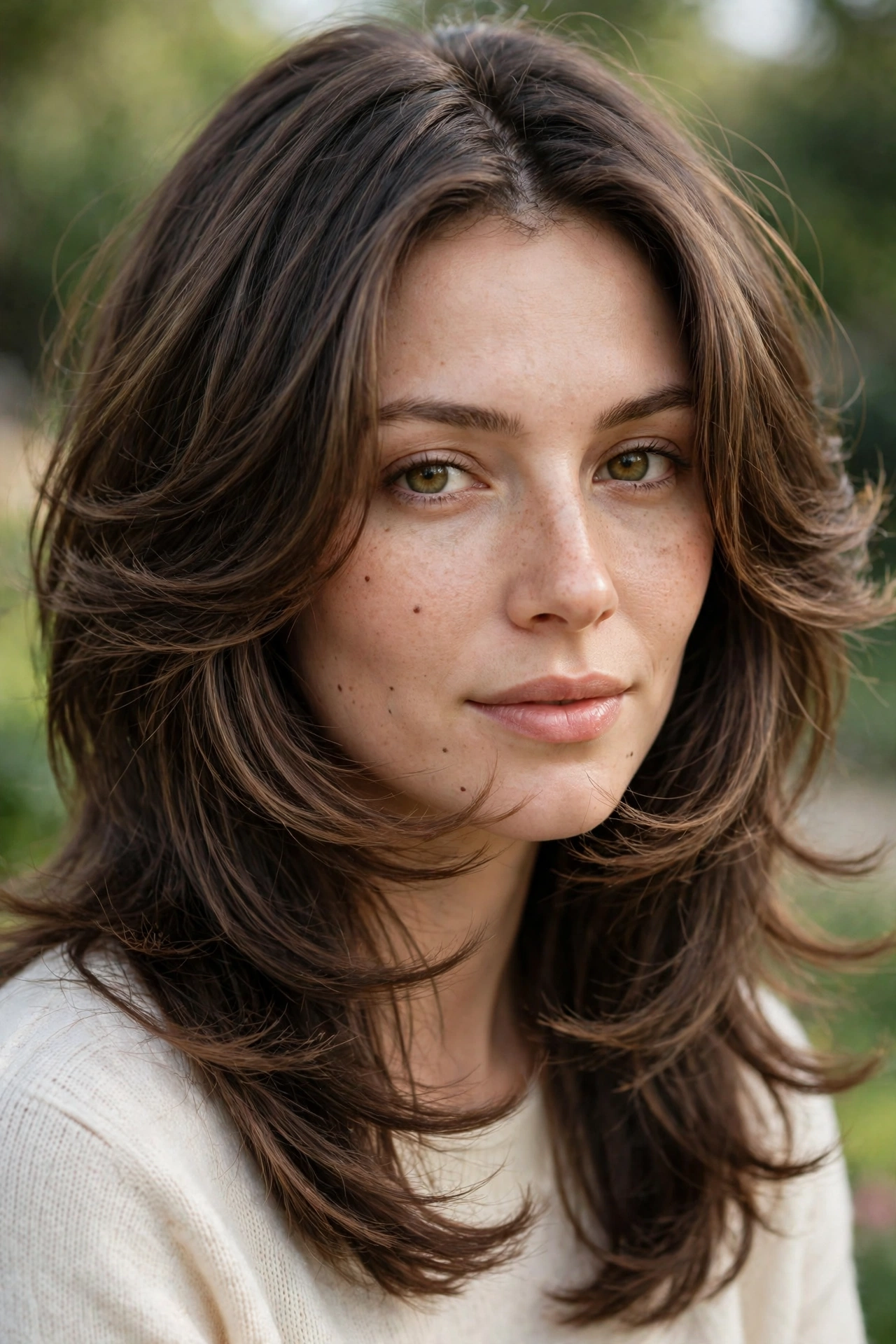
27. Butterfly Cut for Square Faces
For a square face, the butterfly cut should soften, not sharpen: curved, rounded layers around the jaw replace straight lines and hard angles. This version uses softly curved face-framing layers that end below the jaw, a slightly off-centre part, and long layers with rounded ends. It suits straight and wavy hair of medium density, and it is the version to choose if blunt cuts and sharp bobs have ever made your jaw look stronger than you wanted.
Blow-dry the front layers with a curve — under at the ends, not flicked sharply outward — and keep the overall outline soft rather than geometric. Ask for "soft, curved butterfly layers around the jaw, with no blunt lines at jaw level and rounded ends throughout." Avoid a heavy blunt fringe and a jaw-length blunt bob base with this face shape; both create a horizontal line exactly at the jaw, which is the opposite of softening.
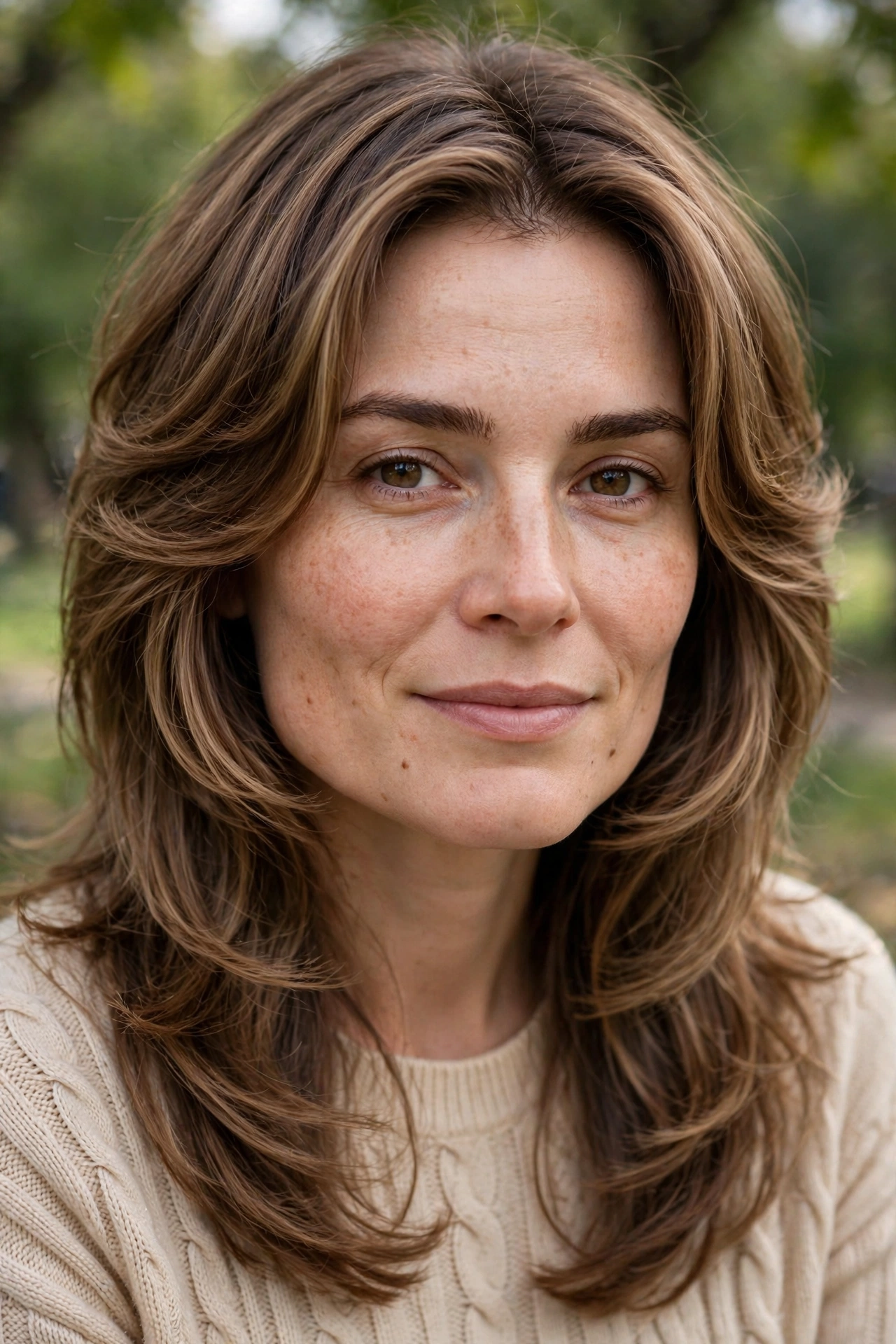
28. Butterfly Cut with Beach Waves
Beach waves give the butterfly cut a relaxed, holiday feel: loose, tousled waves through the long layers, with the short face layers waving naturally around the face. This version suits naturally wavy hair best, but it also works on straight hair if you are willing to use a large-barrel tong or braids overnight. It flatters most face shapes, and it is ideal for summer, holidays, and anyone who prefers texture over a polished blowout.
The styling is deliberately imperfect: apply salt spray or wave mousse to damp hair, twist large sections loosely, and either diffuse or air-dry, then shake out — do not brush. Ask for "butterfly layers cut to support loose waves, with the shortest layer below the chin so the waves do not spring too short." On straight hair, the waves will drop by evening, so use a light-hold spray and accept that second-day waves, refreshed with a little spray, often look better than first-day ones.
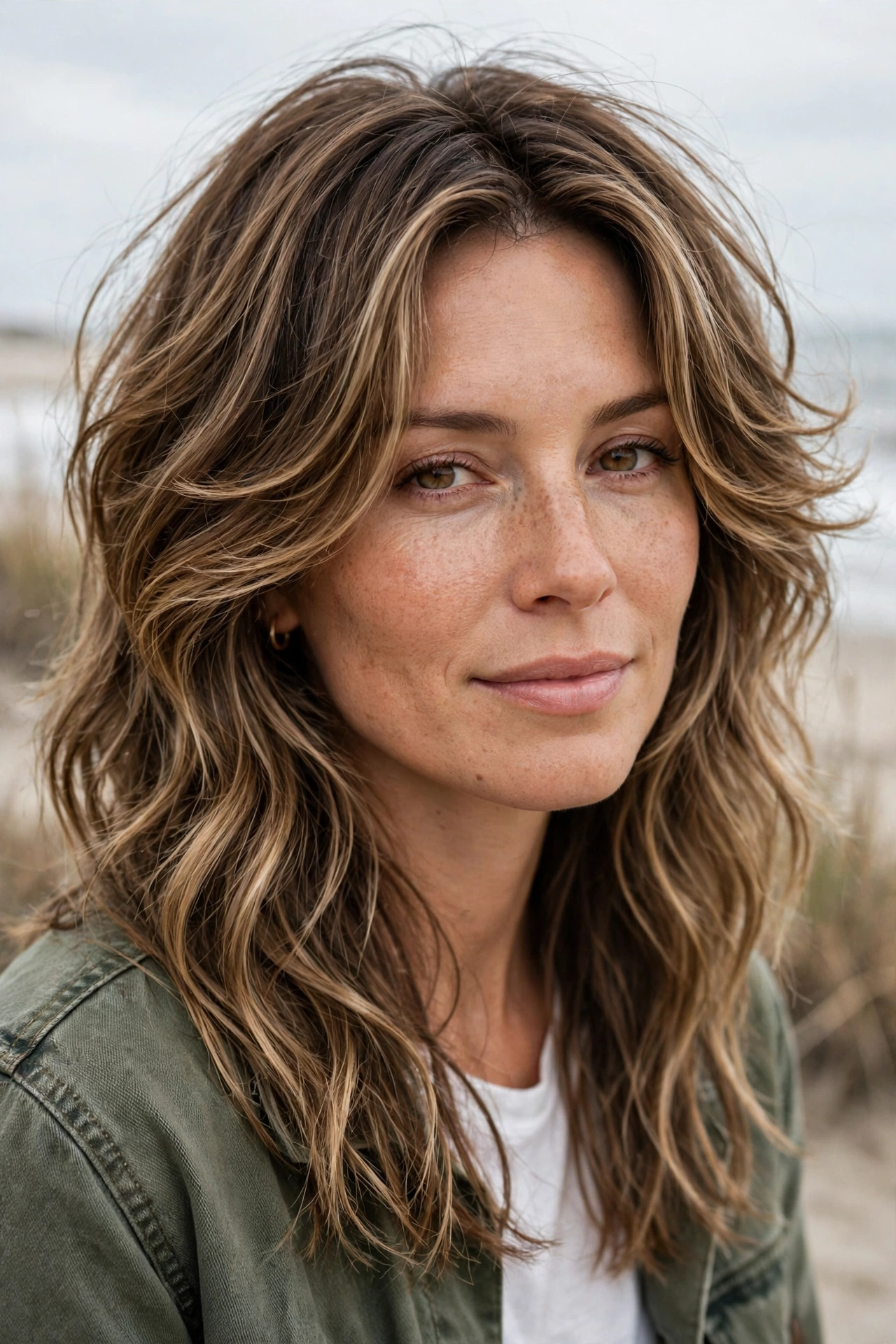
29. Butterfly Cut with Air-Dried Natural Texture
This is the honest, everyday version: a butterfly cut designed to look good with no heat at all, letting your natural texture — straight, wavy or loosely curly — dictate the finish. It suits busy mornings, people who are trying to cut down on heat damage, and any hair type, provided the stylist cuts it to your natural pattern rather than to a blow-dried ideal. The key is that the layers are placed so they fall well when dry, not just when blow-dried smooth in the salon.
Your routine is wash, apply a leave-in or curl cream suited to your texture, and leave it alone until dry — the less you touch it, the better the layers sit. Ask for "a butterfly cut that works air-dried, cut to my natural texture, with the shortest layer checked when dry." This is the version where a dry cut or a cut-and-check appointment matters most, because a cut that only looks right blow-dried will disappoint you every wash day if you never blow-dry.
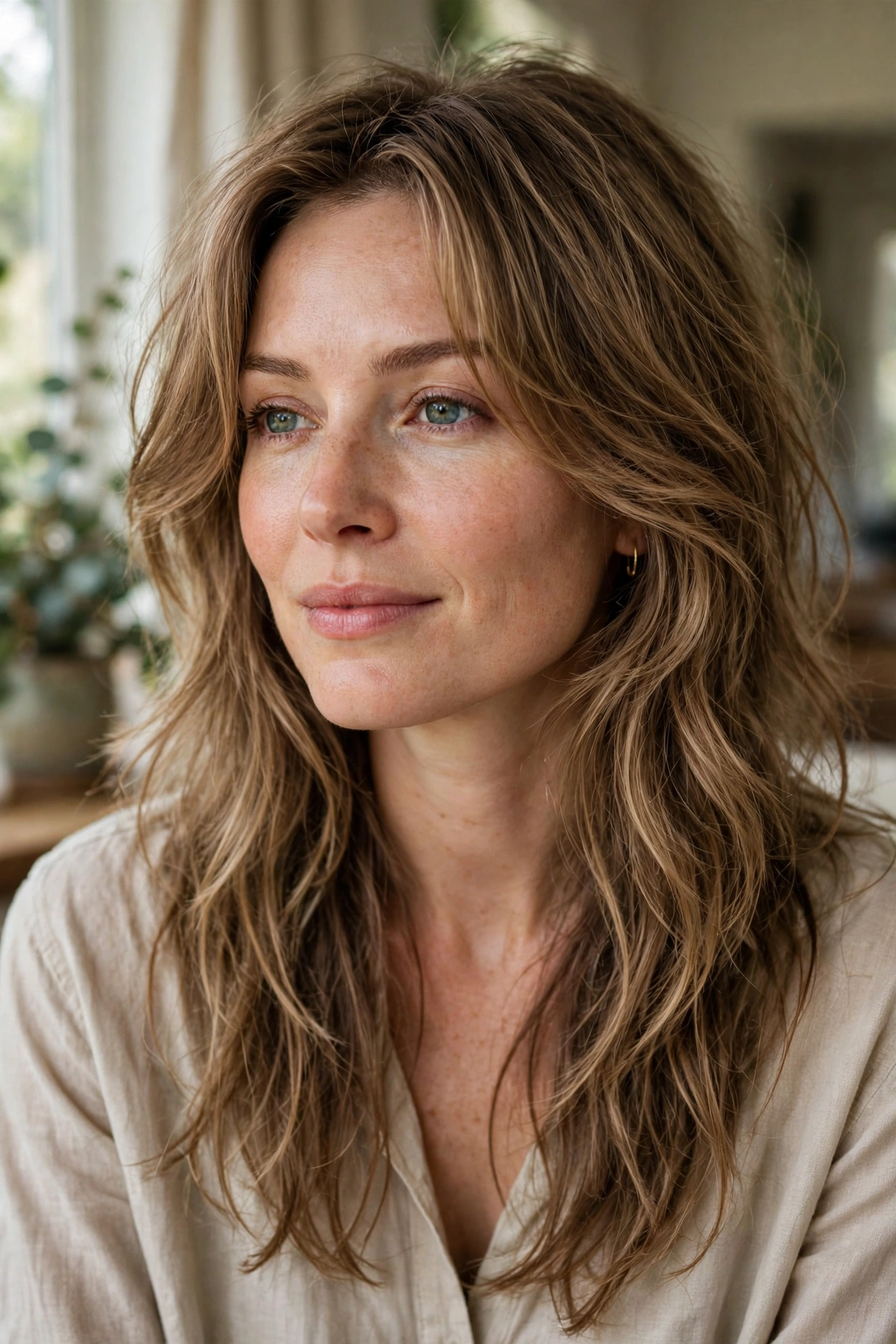
30. Butterfly Cut for Coily Hair
Coily hair benefits enormously from a layered butterfly shape, because without layers it can grow outward into a single heavy mass with no definition at the face. This version uses shorter coils around the face to open up the features and longer coils below for length, all cut dry and coil by coil. It suits tight curls and coils, medium to high density, and most face shapes, though the shortest layer must be agreed when dry, since coils shrink dramatically — sometimes by half — when they dry.
Care is about hydration and gentle handling: wash in sections, use a rich leave-in and a defining cream, and twist or shingle the face-framing coils so they fall the way you want. Ask for "a dry, coil-by-coil butterfly cut with short face-framing coils and long layers below, no thinning shears, and the shape checked from the front and the back." Trims every ten to twelve weeks keep the shape, and protective styles between cuts — twists, braids, or a loose puff — work well because the layers give the style movement when it is taken down.
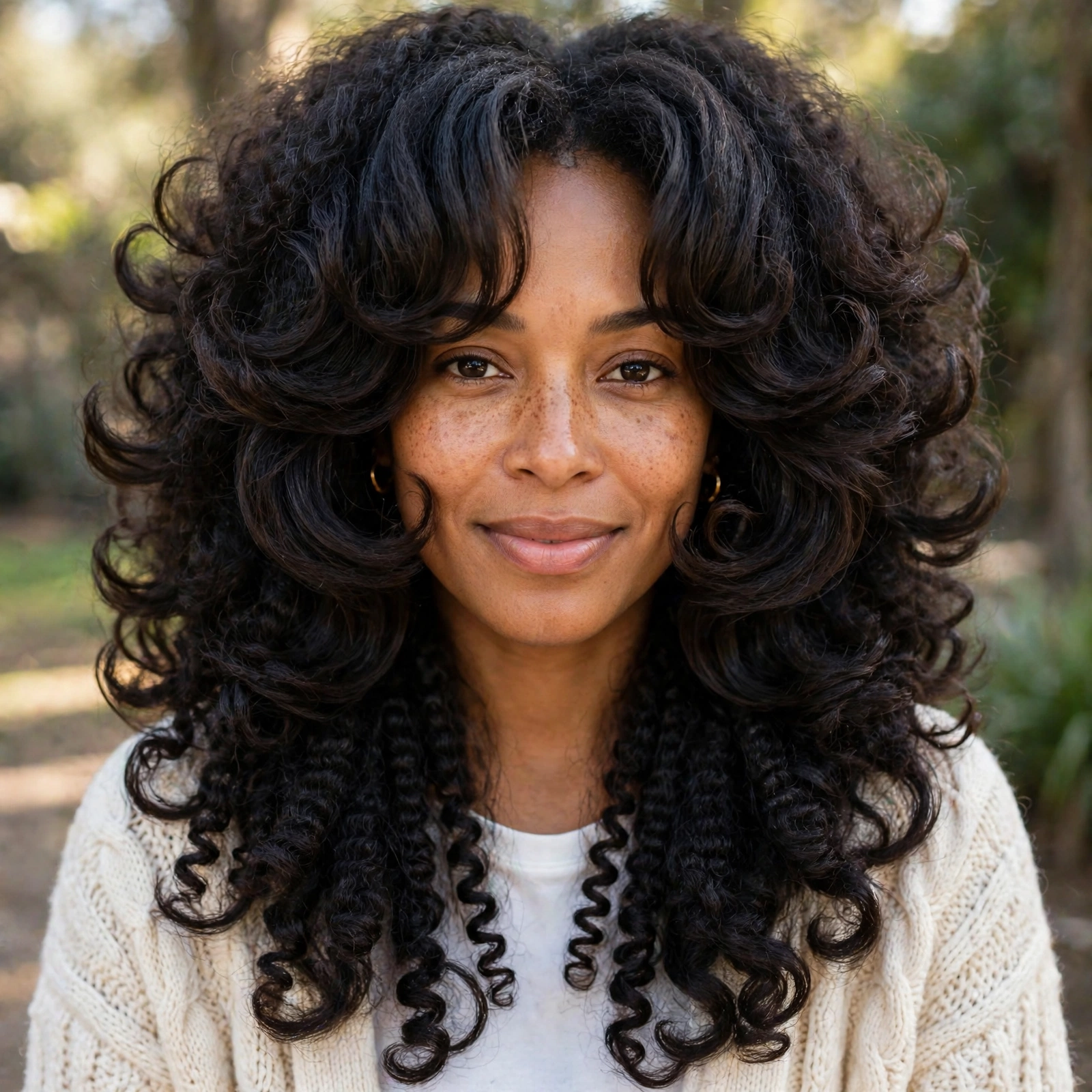
31. Butterfly Cut with Flipped-Out Ends
Flipped-out ends are a retro twist on the butterfly cut: every layer, from the short face pieces to the long back layers, is flicked outward, giving a playful, 1960s-inspired silhouette. This version suits medium to thick straight or slightly wavy hair and oval, heart-shaped and long faces, and it is a fun choice for parties, retro-themed events, or anyone bored of layers that only curve under. It is less practical on very curly hair, where flipping the ends outward requires straightening first.
The flip is easy with the right tool: a round brush or a hot-air brush, flicking each section outward as you dry, plus a light-hold spray to hold the shape. Ask for "butterfly layers with ends cut to flip outward easily, the shortest layer at the cheekbones." The style lasts best on second-day hair with a little dry shampoo at the roots, and it pairs well with a headband or a side clip, which emphasise the retro feel without any extra effort.
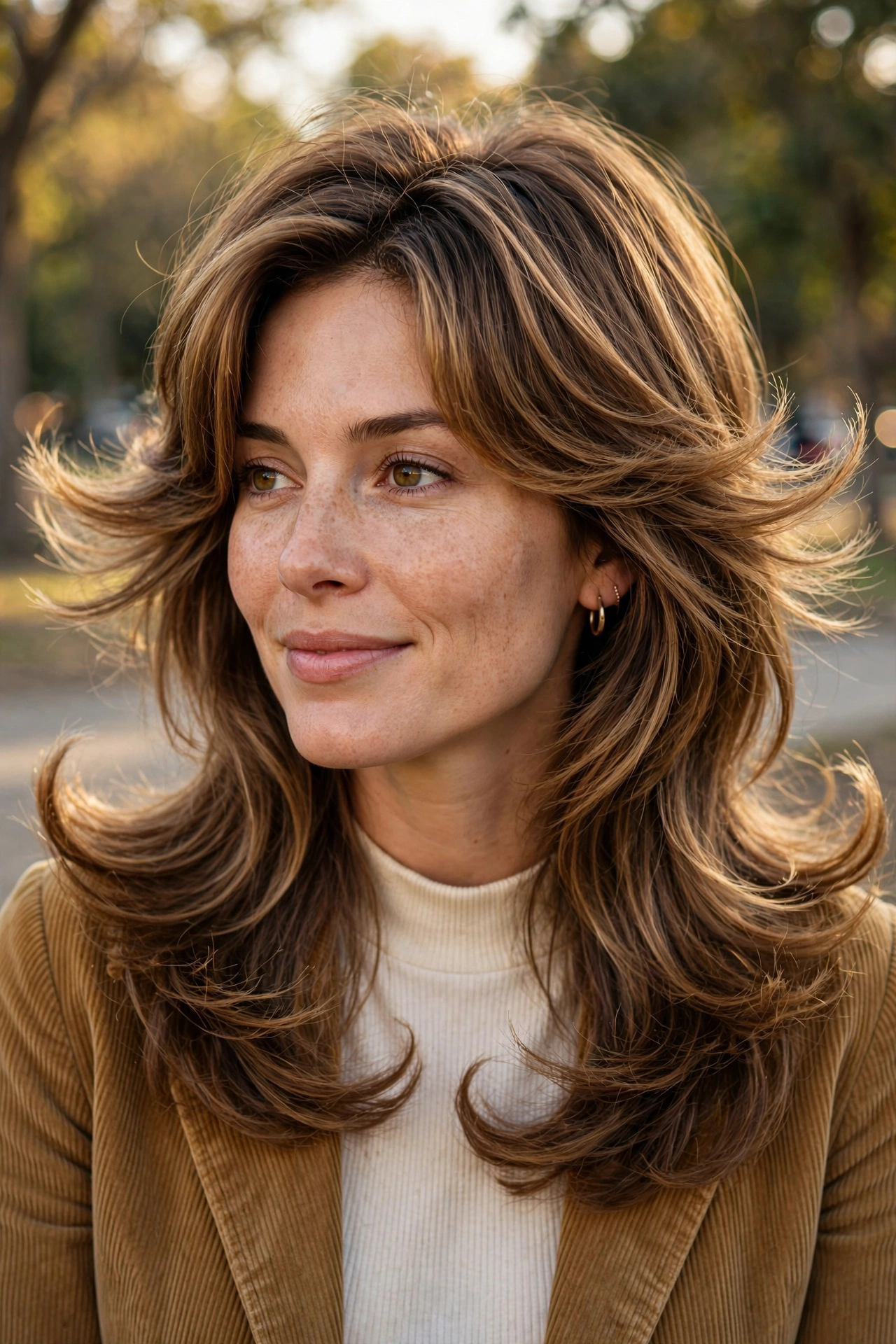
32. Butterfly Cut for Long Faces
A long face needs width, not length, so this butterfly version keeps the layers shorter and fuller at the sides, adds volume at the cheekbones, and avoids extra length at the back that would drag the face down. The shortest layer sits at the cheekbones, the layers are kept fairly full through the sides, and a fringe — curtain, wispy or bottleneck — is a helpful addition. It suits straight, wavy and loose curly hair, and it is the version to choose if long, straight, one-length hair has ever made your face look longer.
Style it with side volume: blow-dry the side layers outward, use rollers at the crown sides, and avoid a severe centre part with flat roots. Ask for "a butterfly cut with fullness at the sides, the shortest layer at the cheekbones, and no extra length added at the back." If you love very long hair, keep the length but add the side fullness anyway — it is the width, not the length alone, that balances a long face.
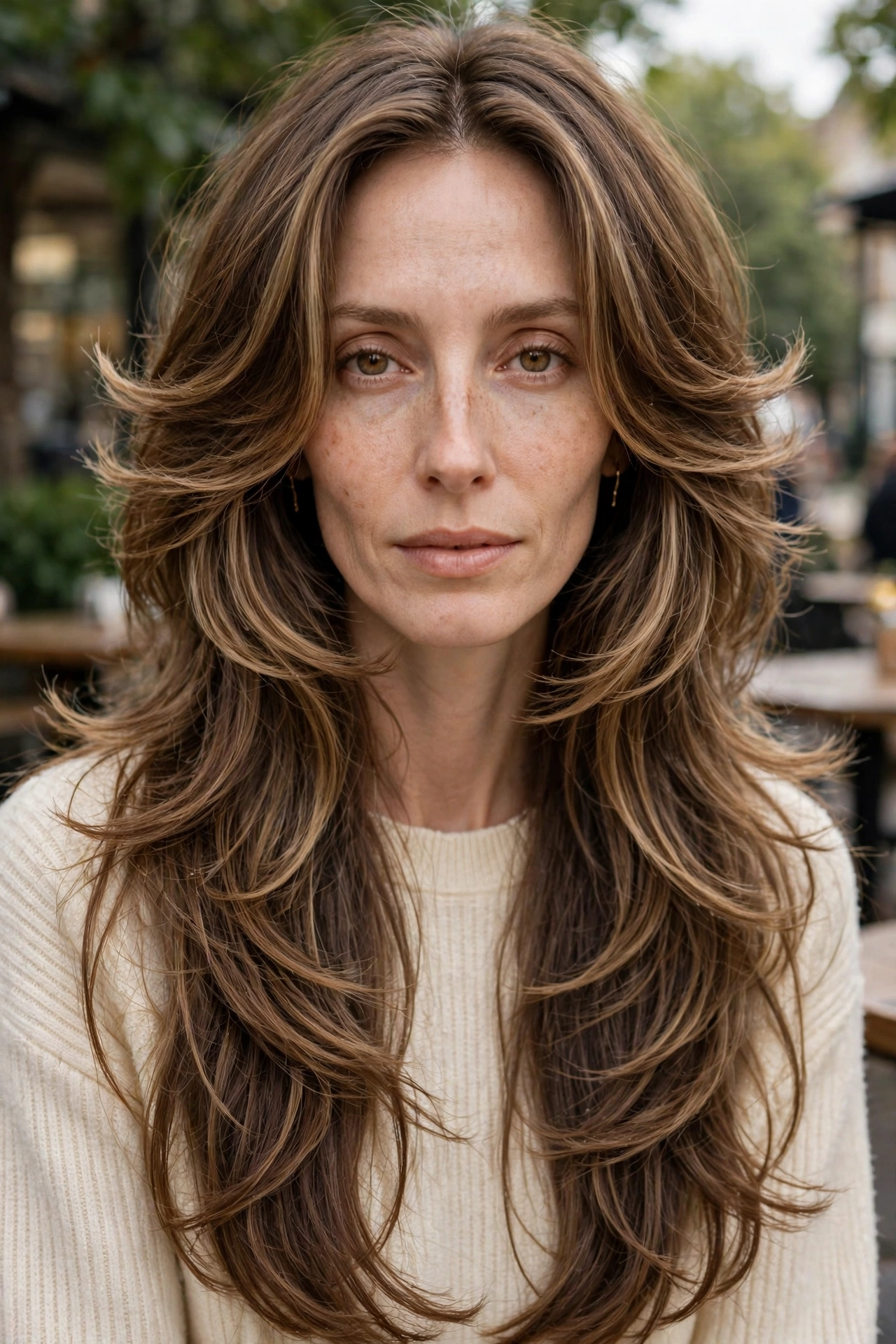
33. Butterfly Cut with Voluminous Crown Layers
This version doubles down on the top section of the butterfly cut, with extra-short layers at the crown that create height and lift even on hair that normally falls flat. It suits fine to medium hair that lacks root volume, oval and heart-shaped faces, and anyone whose hair goes limp by midday. It is less suited to very thick hair, where crown volume can quickly become too much, or to very curly hair, where crown layers can create a halo of frizz if not moisturised.
The lift comes from the cut plus a little styling: root-lifting spray, blow-drying the crown sections upward, and a light backcomb or volumising powder if needed. Ask for "short crown layers for volume, blended into the butterfly face layers, with the back kept long." Be specific about how much height you want — "a little lift" and "big volume" are very different cuts — and show a photo of the crown height you like, because crown layers are hard to undo once cut short.
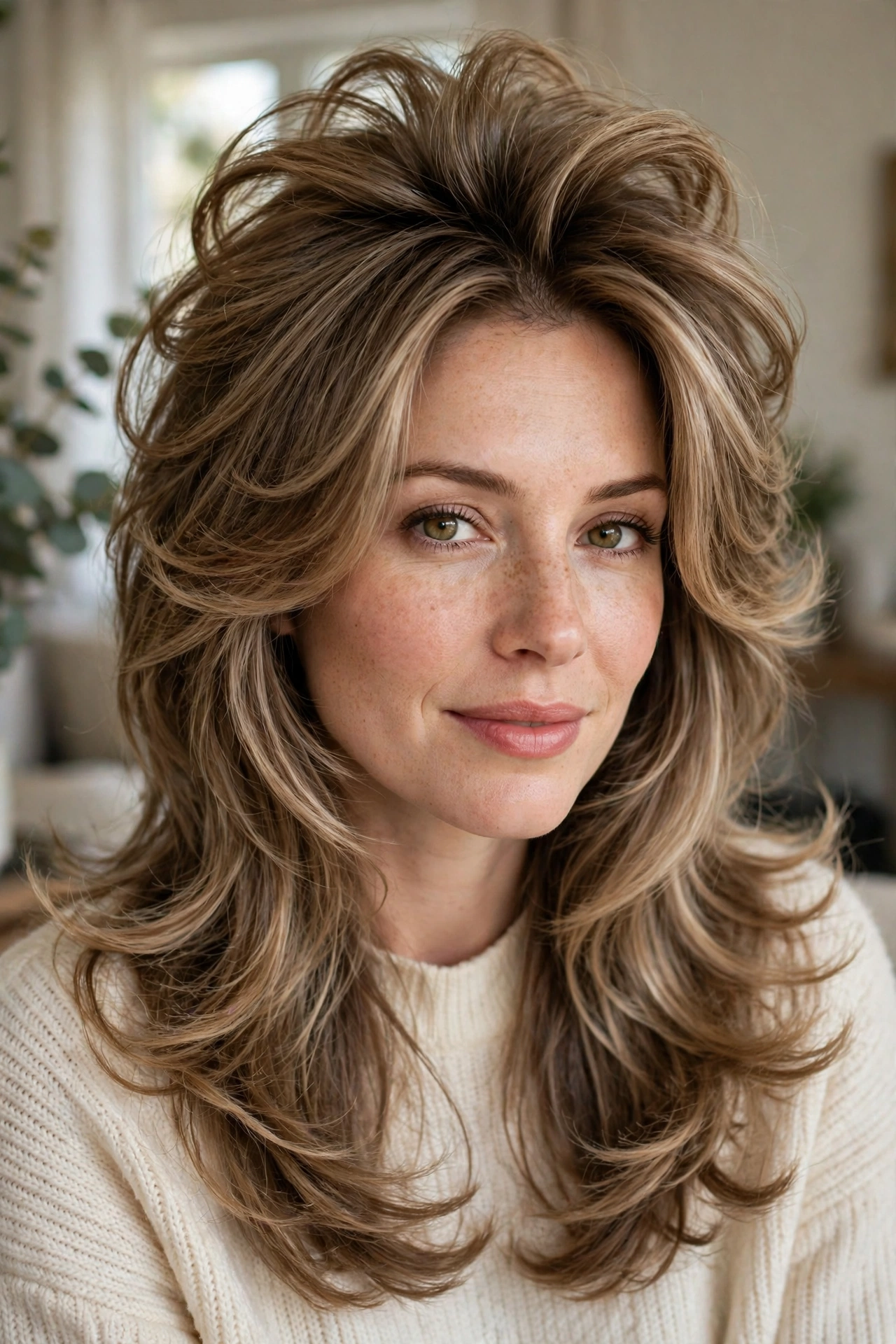
34. Butterfly Cut for Growing Out a Bob
Growing out a bob is the awkward stage every short-haired person dreads, and a butterfly cut is the kindest way through it: the short top layers disguise the old bob shape while the underneath grows, so you never have that shapeless in-between length. This version suits anyone at shoulder length or just below, with fine to medium hair, and any face shape, since the stylist can keep the face layers at whatever length flatters you while the back catches up.
The strategy is patience plus regular shaping: a light trim every eight weeks to tidy the bob outline and refresh the layers, without cutting the growing length. Ask for "butterfly layers over my growing bob, keeping the back length, with the shortest face layer at the jaw." Style it with a soft blow-dry or loose waves, which hide uneven growth better than a sleek straight finish, and resist the urge to cut it all back to a bob on a bad hair day — the in-between stage passes faster than it feels like it will.
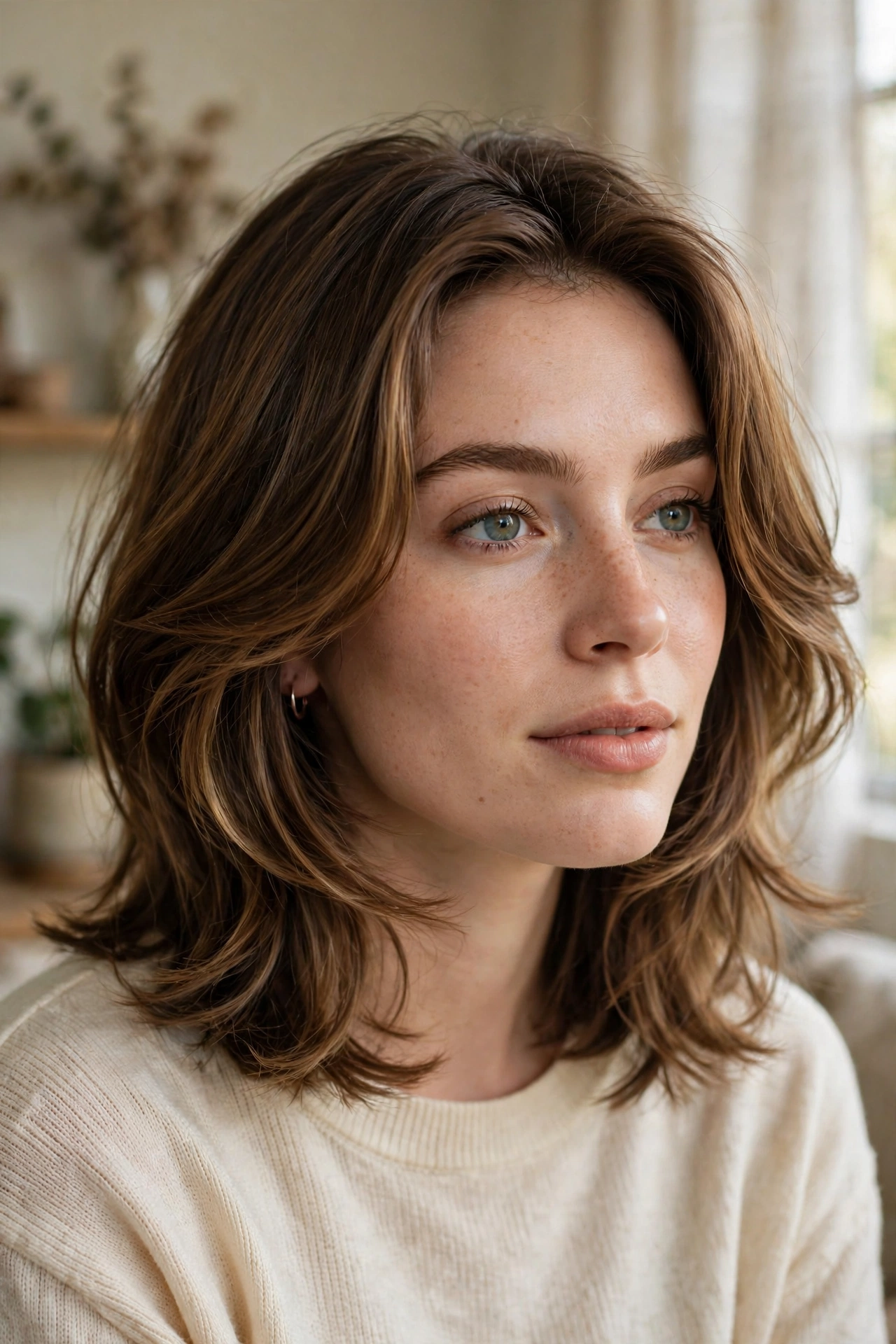
35. Wedding Guest Butterfly Cut with Soft Curls
The wedding-guest version is a butterfly cut styled, not cut, differently: the layers are there, but the finish is polished soft curls that hold through a long day of photos, dancing and humidity. It suits medium to long hair, most face shapes, and anyone who wants to look dressed-up without an updo. The butterfly layers are what make the curls look effortless rather than uniform, because each layer curls to a slightly different length and falls naturally around the face.
For the event itself, curl with a medium-barrel tong, alternating directions, let the curls cool completely before brushing them out softly, and finish with a flexible-hold spray. Ask your stylist for "butterfly layers that curl well, with the face layers long enough to frame the face when curled, not spring above the chin." Do a trial run a week before the wedding if it matters — curls behave differently on freshly washed versus day-old hair, and you want to know which works for you before the day.
Frequently Asked Questions
What is a butterfly haircut?
A butterfly haircut combines short layers around the face with long layers underneath. When the hair is pulled forward, the short layers make it look like a short cut; when it falls back, the long layers keep your length. It gives movement and shape around the face without a major chop.
Does a butterfly haircut suit thin hair?
Yes, but with a careful version of the cut. On thin or fine hair, the short layers should be kept to the front only, with long, minimal layers at the back and fairly blunt ends, so the hair still looks thick. Lots of short layers through the back will make fine hair look thinner, not fuller.
How often does a butterfly haircut need trimming?
Most butterfly cuts need a trim every eight to ten weeks to keep the face layers in shape. Short versions, like a butterfly bob, need trimming every five to six weeks, and any fringe paired with the cut — curtain, wispy or bottleneck bangs — needs a fringe trim every three to four weeks between full cuts.
Can I get a butterfly haircut with curly hair?
Yes, and it often works very well on curly and coily hair, because the layers stop curls forming one heavy shape. The important point is to have it cut dry, curl by curl, to allow for shrinkage, and to avoid thinning shears, which create frizz on curly hair.
What should I ask for at the salon for a butterfly haircut?
Tell your stylist three things: where you want the shortest layer to start (chin, cheekbones or jaw), whether you want to keep your full length at the back, and how much styling time you will actually do at home. Bring a photo of the exact version you want from this list, and point out the layer length and the finish, not just the overall look.
Conclusion
The butterfly haircut lasts because it is not one cut but a framework — short layers at the front, long layers behind — that can be adjusted for your hair type, face shape, length and lifestyle. Pick the version that matches how you actually wear your hair on an ordinary Tuesday, take its photo and salon notes with you, and you will get the movement and shape that made you want the cut in the first place, without losing the length you worked hard to grow.