50 Knotless Braids Ideas for Every Length and Style
Introduction
Knotless braids have earned their place as one of the most-loved protective hairstyles because they start with your own hair and feed braiding hair in gradually, instead of anchoring each braid with a tight knot at the root. The result is a flatter, more natural-looking start, less pulling on the scalp, and a style that moves more freely from the very first day. Whether you want a short bob, waist-length braids, soft boho curls or a polished updo, there is a knotless version that fits your routine, your face shape and your budget.
This guide brings together 50 knotless braids ideas across lengths, sizes, colours and styling options, with honest advice on who each style suits best, how to look after it, and exactly what to ask your braider for. Use it to plan your appointment, choose a length you can realistically maintain, and keep your natural hair healthy underneath the braids. Every style below works as a protective style only when it is installed without pain and cared for properly, so listen to your scalp and never accept braids that hurt.
1. Classic Mid-Back Knotless Box Braids
The classic mid-back knotless box braid is the style most people picture when they think of knotless braids, and for good reason. Medium-sized braids fall just past the shoulders to the middle of the back, giving you enough length to wear them loose, in a ponytail or in a bun without the weight and drying time of waist-length hair. The feed-in start keeps the hairline soft, and the neat box partings make the style look polished for work, school and special occasions alike.
This length suits almost every face shape and is a smart first choice if you are trying knotless braids for the first time. At the salon, ask for medium knotless box braids in a mid-back length, with clean box parts and no tension at the edges. For upkeep, tie your hair in a silk scarf or bonnet at night, oil your scalp two to three times a week, and keep the style for six to eight weeks at most before taking it out and giving your hair a proper wash and rest.
2. Waist-Length Knotless Braids
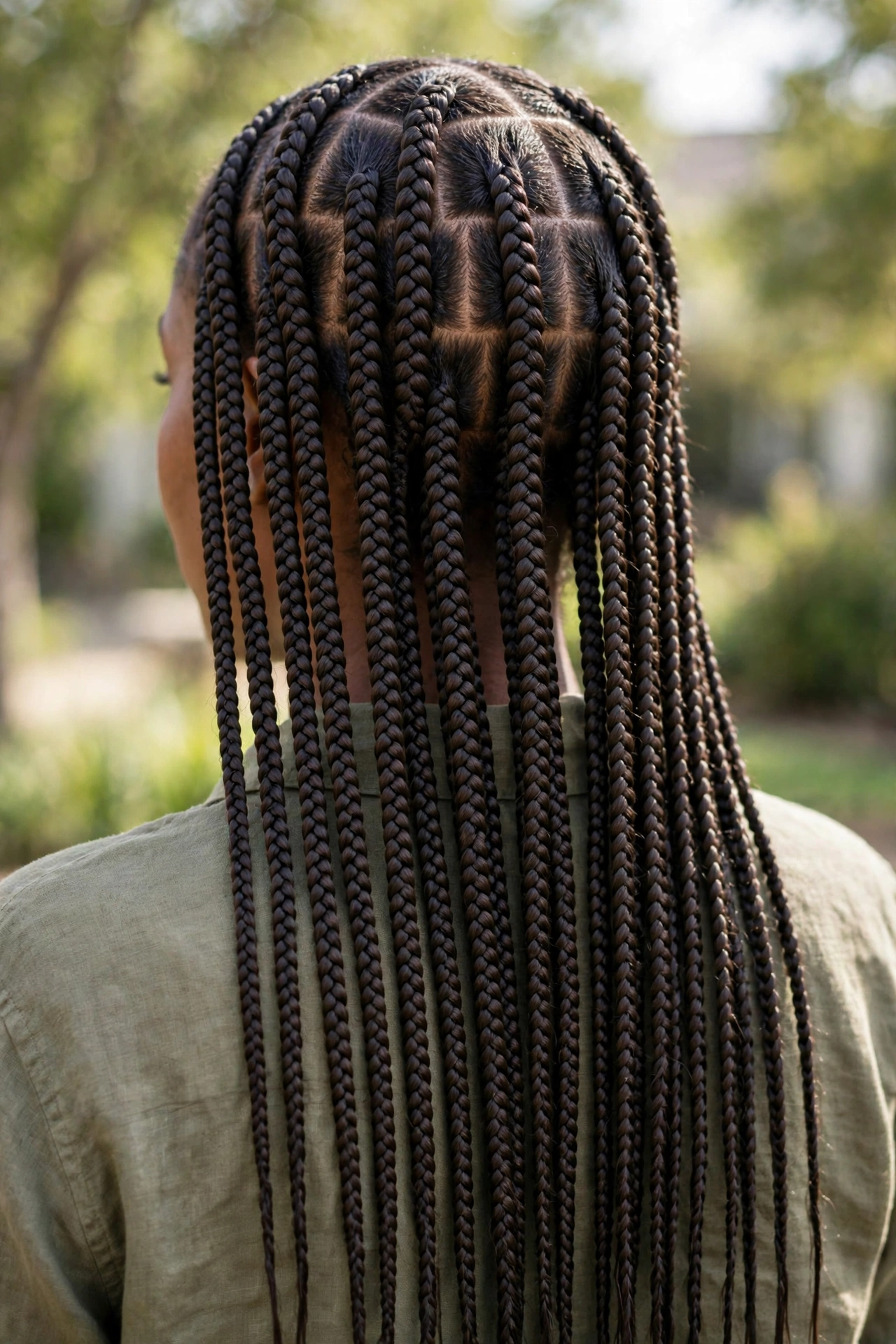
Waist-length knotless braids make a dramatic statement and open up endless styling options, from long ponytails to thick buns and side sweeps. The extra length photographs beautifully and gives the braids a luxurious, flowing finish, especially when the ends are sealed neatly. Because the braids are knotless at the root, even this longer style sits flatter and feels more comfortable than traditional waist-length box braids.
Long braids suit people who enjoy styling their hair daily and do not mind extra washing and drying time. Be honest about the weight: if you have fine hair or a sensitive scalp, ask your braider to use a medium size rather than very small braids, so the overall weight stays manageable. At the salon, ask for waist-length knotless braids with a lightweight braiding hair, and at home, dry the braids fully after washing, sleep with them loosely braided or in a bun, and avoid pulling them into very tight high styles every day.
3. Bob Knotless Braids
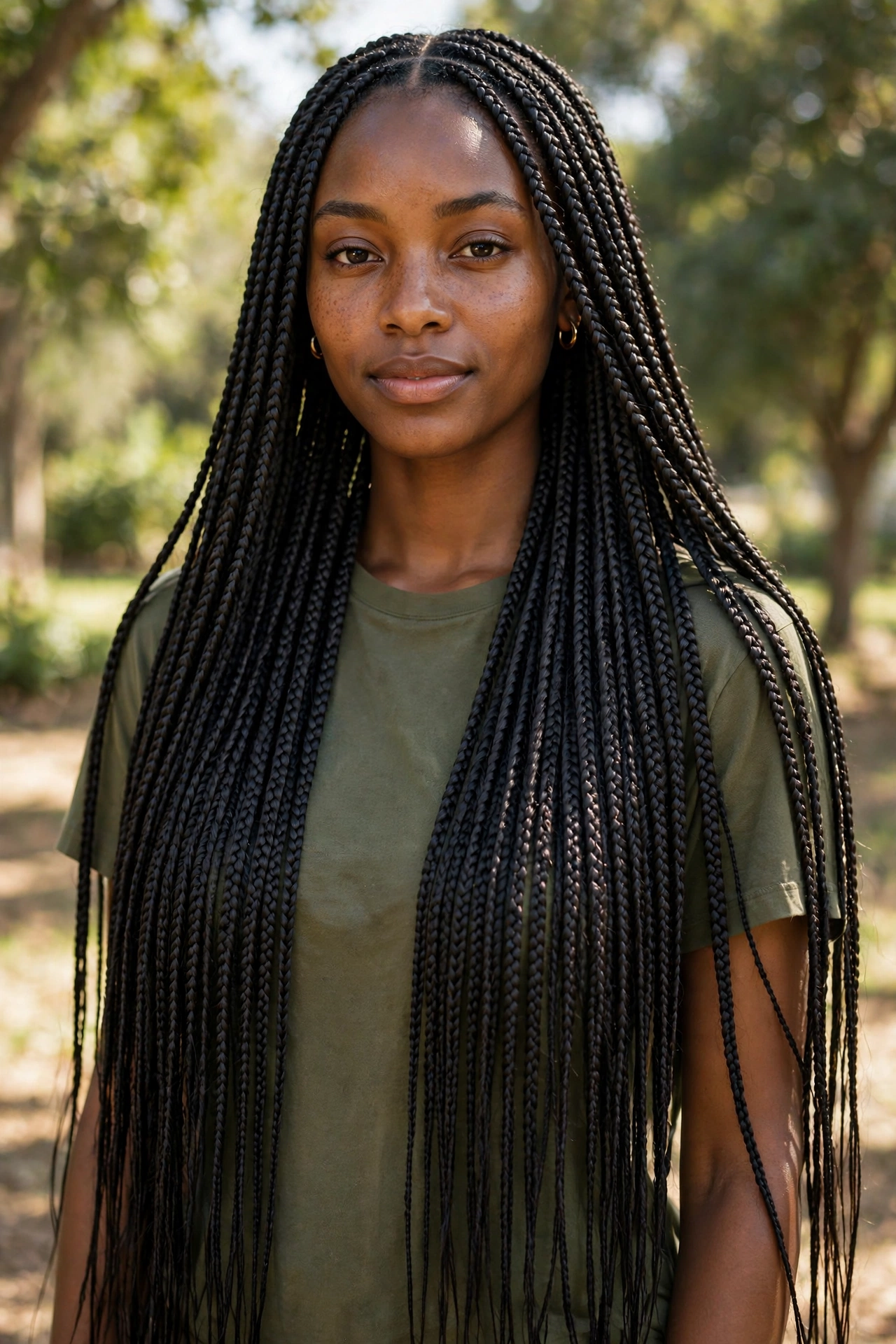
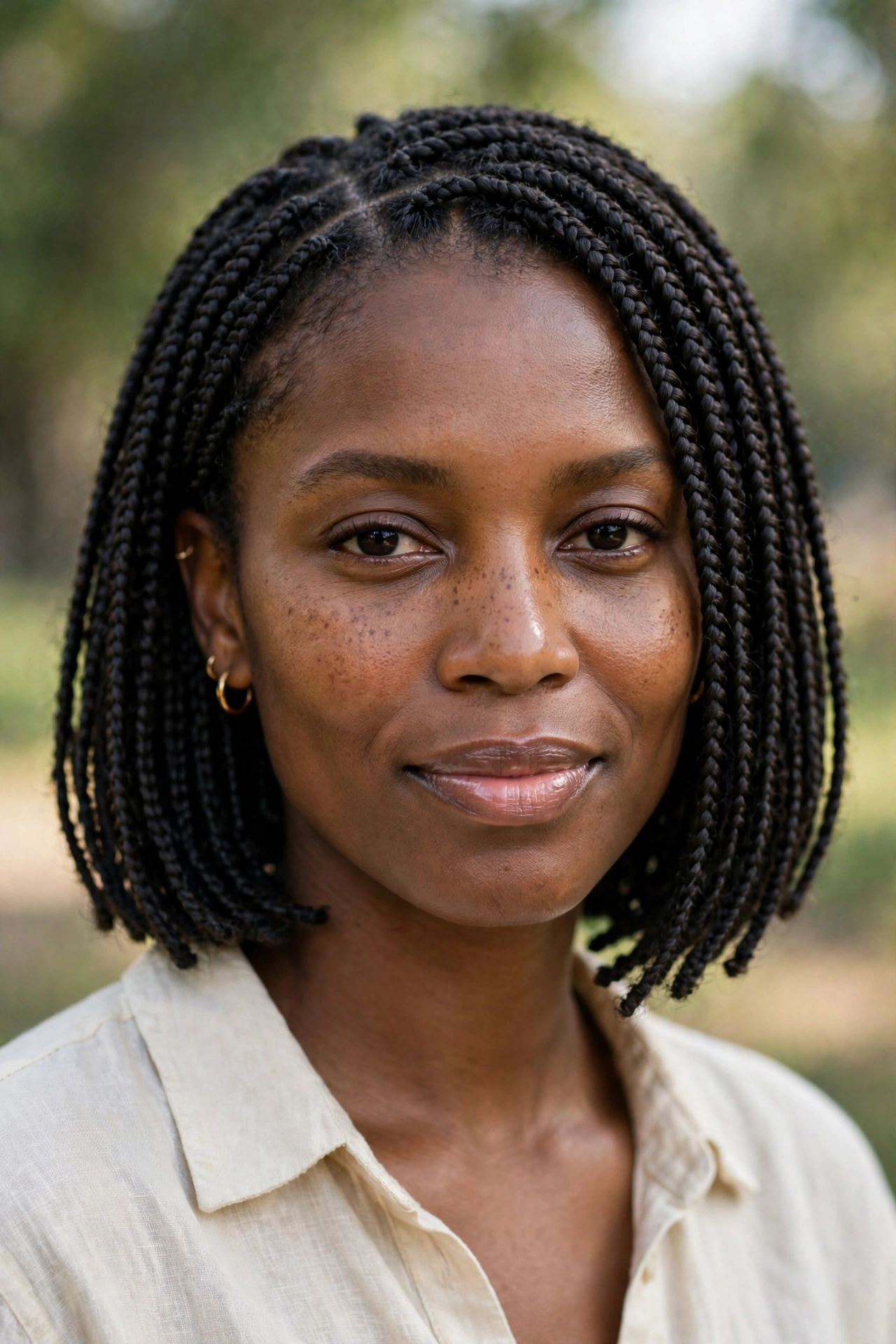
A bob knotless braid is the low-maintenance hero of this list. The braids end around the chin or just above the shoulders, so they dry quickly, weigh very little, and swing with a playful movement that longer braids cannot match. This style is ideal for summer, for the gym, and for anyone who wants a protective style without committing to long hair.
Bob braids suit round, oval and heart-shaped faces particularly well, because the shorter length frames the face instead of pulling attention downwards. Ask your braider for a bob-length knotless style with a blunt or slightly layered finish, depending on whether you prefer a sharp shape or softer movement. Upkeep is simple: a light scalp oil, a satin bonnet at night, and a quick refresh of the edges will keep the bob looking sharp for four to six weeks.
4. Jumbo Knotless Braids
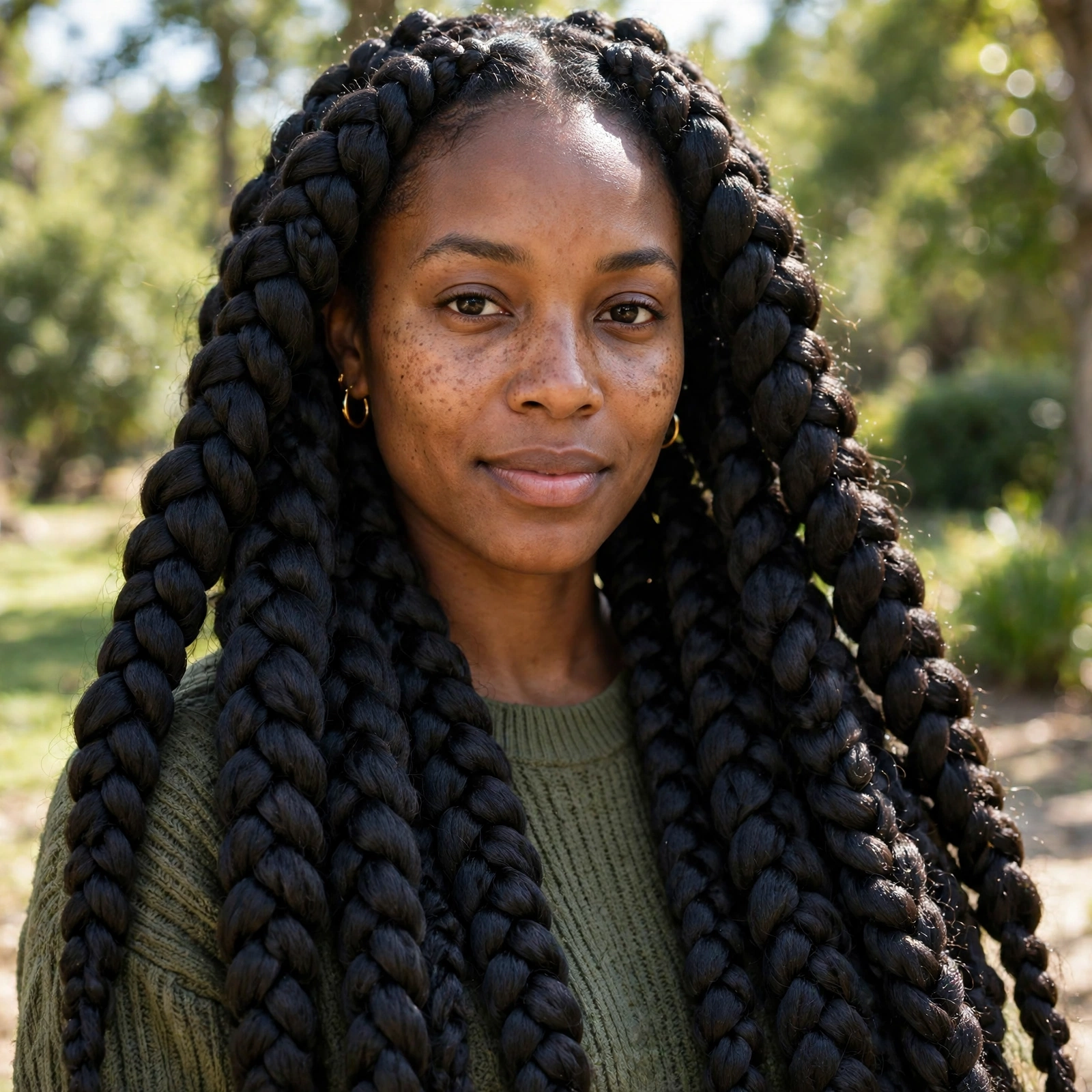
Jumbo knotless braids use large sections and thick braids, which means a much faster appointment and a bold, confident look. They are a great choice if you dislike sitting for many hours, or if you want a statement style that still feels comfortable because the knotless start avoids the heavy pulling that jumbo traditional braids can cause.
This size suits thicker hair and anyone who likes volume, but it is less ideal if you want many different updos, because fewer, thicker braids limit some intricate styles. Ask for jumbo knotless braids with large, even parts and a length that balances the thickness, such as shoulder or mid-back length. Keep the scalp moisturised, because larger parts expose more scalp, and avoid leaving jumbo braids in for too long, as the weight of each braid can stress the roots over time.
5. Small Knotless Braids
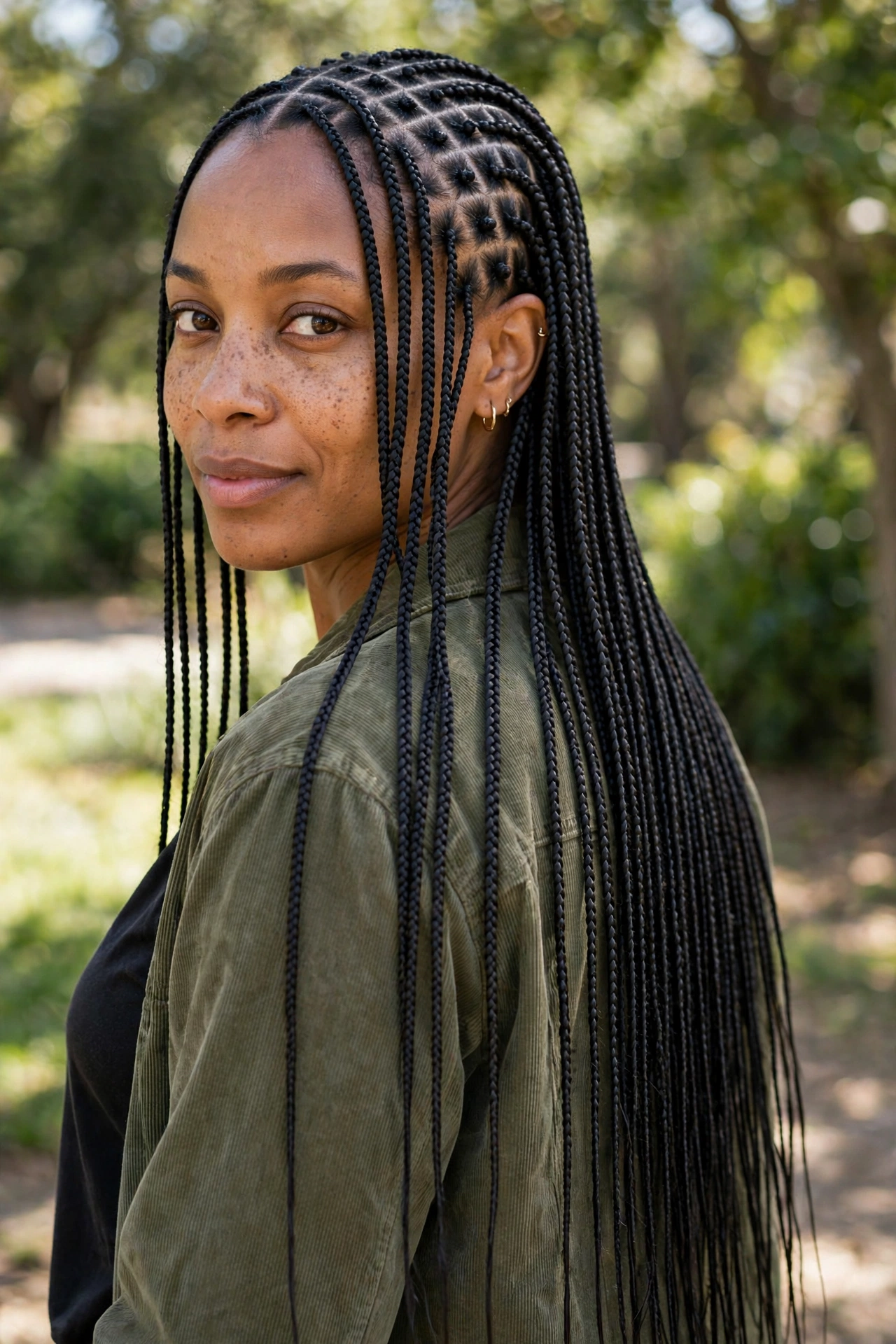
Small knotless braids are fine, detailed and incredibly versatile. The many thin braids move almost like loose hair, so you can part them in different ways, create intricate updos, and enjoy a very natural, lightweight feel despite the high braid count. They are also the closest knotless option to a full, flowing hairstyle.
The trade-off is time: small braids take the longest to install, often six hours or more, and they cost more for that reason. They suit people who plan to keep the style for a full six to eight weeks and want maximum styling freedom. Ask for small knotless braids with neat, consistent sizing and a comfortable tension, and be prepared to protect the fine braids at night with a bonnet so they do not frizz. Wash gently and dilute your shampoo so product does not build up between the many braids.
6. Medium Knotless Braids
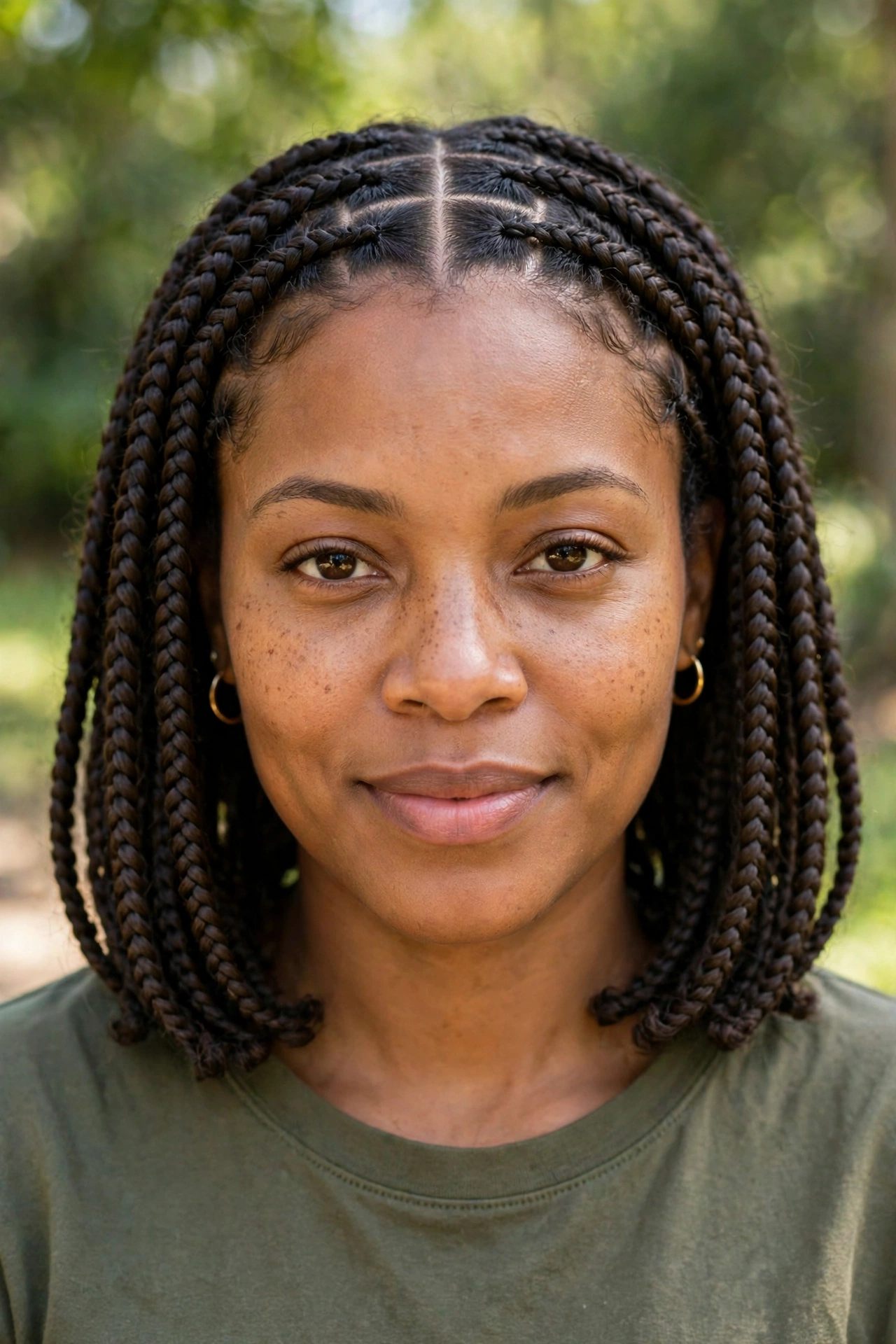
Medium knotless braids sit in the sweet spot between jumbo and small: they install faster than small braids, look fuller than jumbo braids, and still allow most updos and ponytails. For many people, this is the default size to choose when they are unsure, because it balances comfort, cost, styling options and appointment time so well.
Medium braids suit all hair types and work at almost any length, from a bob to waist length. At the salon, simply ask for medium knotless box braids and agree the length before starting, since length changes the time and the amount of hair needed more than size does. For care, follow the usual protective routine: moisturise the scalp, protect the braids at night, wash every two to three weeks if needed, and remove the style before frizz and new growth make take-down difficult.
7. Boho Knotless Braids with Curly Ends
Boho knotless braids with curly ends keep the braided top neat while leaving the last few inches unbraided and curly, giving a soft, romantic finish. The curls add movement and texture, so the style looks less structured and more effortless, and it is a lovely choice for holidays, weddings and everyday wear alike.
This style suits anyone who loves texture but still wants the neatness of braids at the roots. Ask your braider to leave the ends out and curl them, using wavy or curly braiding hair for the loose pieces, and confirm how much length you want left curly. The curly ends need a little more care than sealed braid ends: use a light curl cream or mousse, detangle gently with your fingers, and sleep with the ends loosely gathered so they do not tangle overnight.
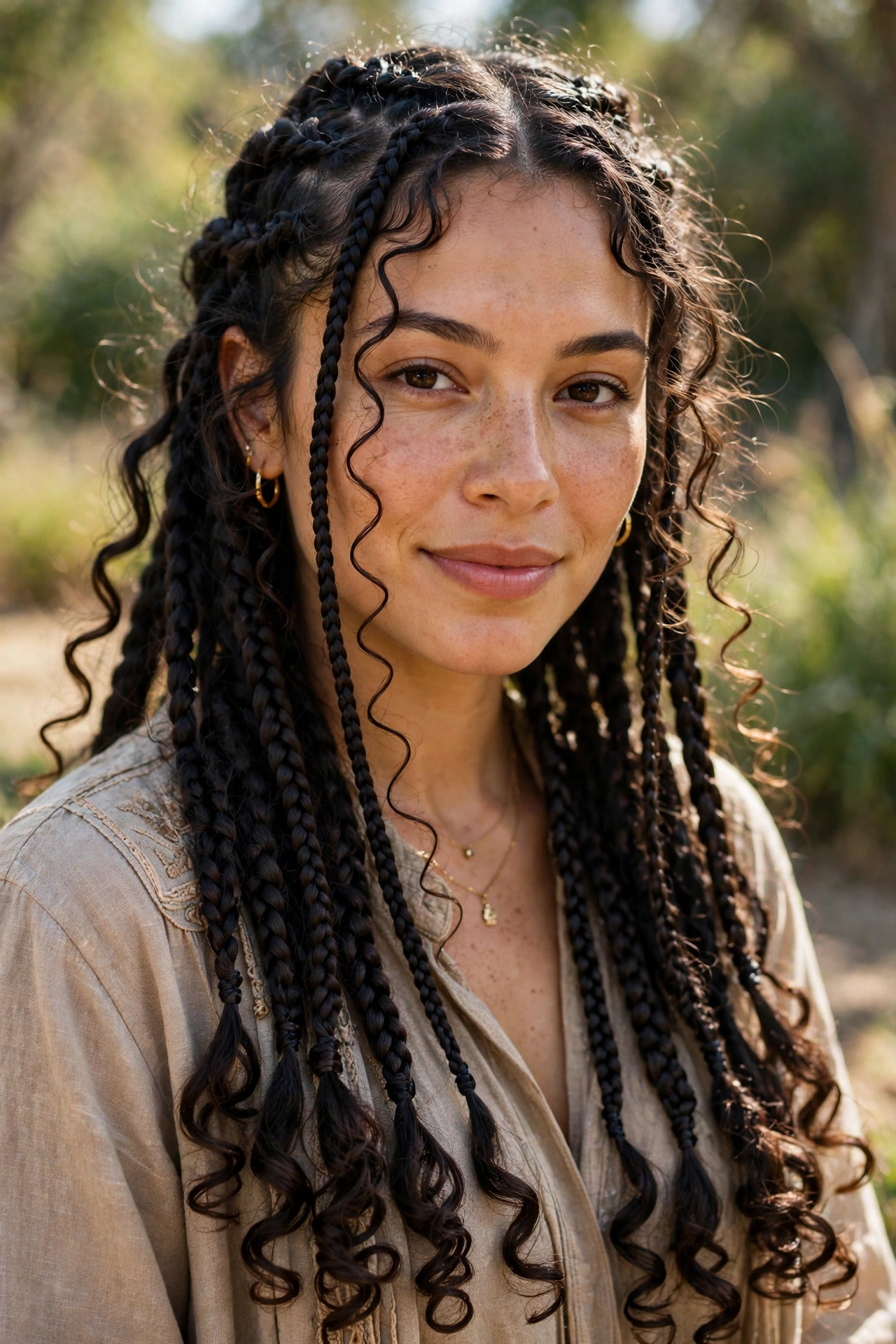
8. Boho Knotless Braids with Curls Throughout
For a fuller boho effect, curls are left out at intervals throughout the braids, not just at the ends, creating a voluminous, textured style full of movement. The result is softer and wilder than classic knotless braids, with curly pieces framing the face and peeking out from the braided lengths.
This look suits people who want volume and do not mind a little extra daily care, because loose curls need gentle handling to stay defined. Ask for boho knotless braids with curls throughout, and discuss how many curly pieces you want: more curls mean more volume and more maintenance. Use a light leave-in spray on the curly sections, avoid heavy oils that weigh curls down, and finger-detangle rather than brushing, so the curls keep their shape for the life of the style.
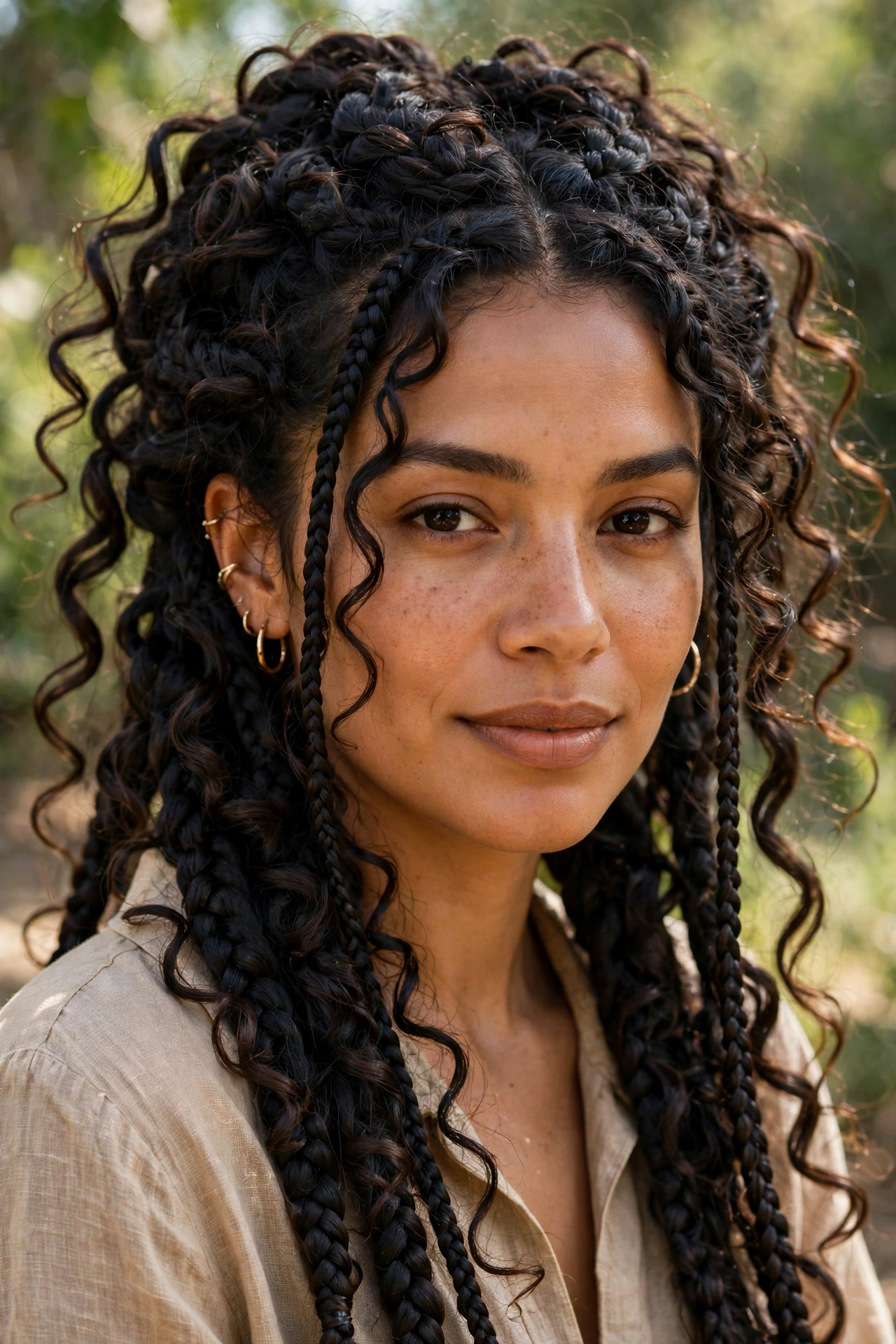
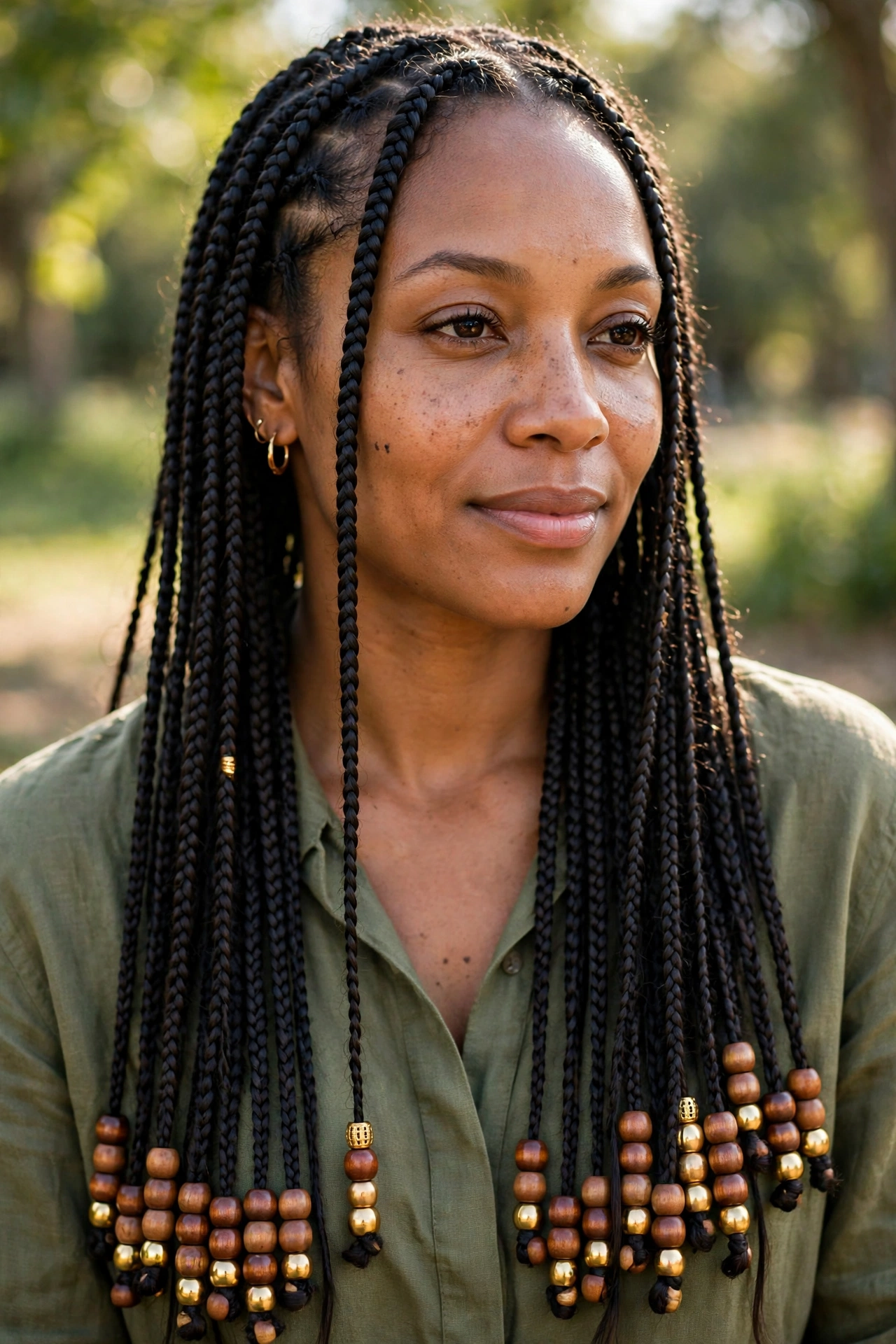
9. Knotless Braids with Beads
Beads instantly change the character of knotless braids, adding colour, shine and personality to the ends or to a few feature braids. Wooden beads give a natural, earthy feel, while gold or clear beads feel more polished, and bright beads are perfect for festivals, holidays and children's styles.
Beaded braids suit almost everyone, but the weight matters: keep beads to the ends or to a limited number of braids if you have fine hair or a sensitive scalp. Ask your braider to secure the beads with small elastics or knots so they do not slip off, and choose beads that are smooth inside so they do not snag the hair. At home, be gentle when tying beaded braids up, and remove any bead that starts to pull or catch, rather than letting it damage the braid.
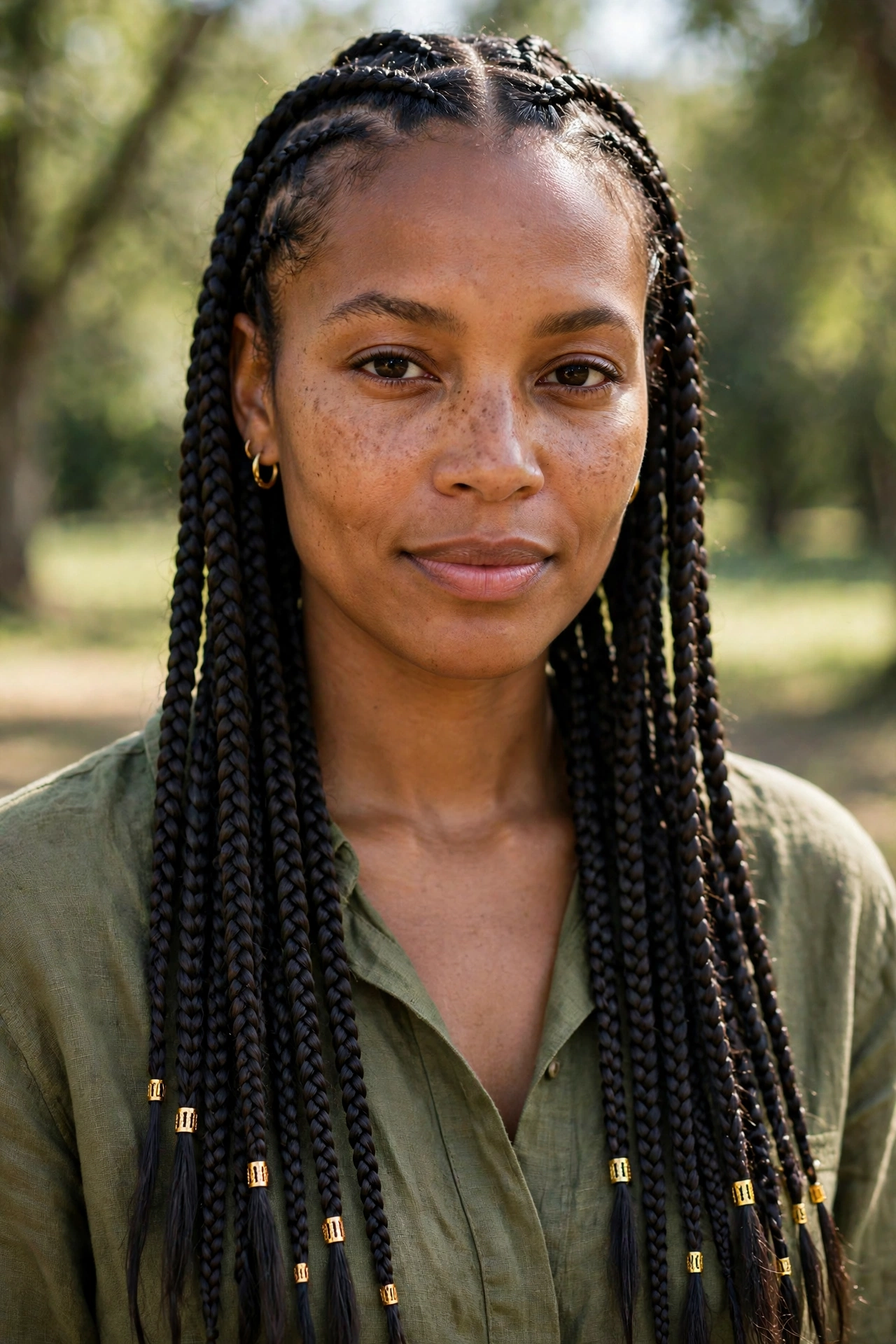
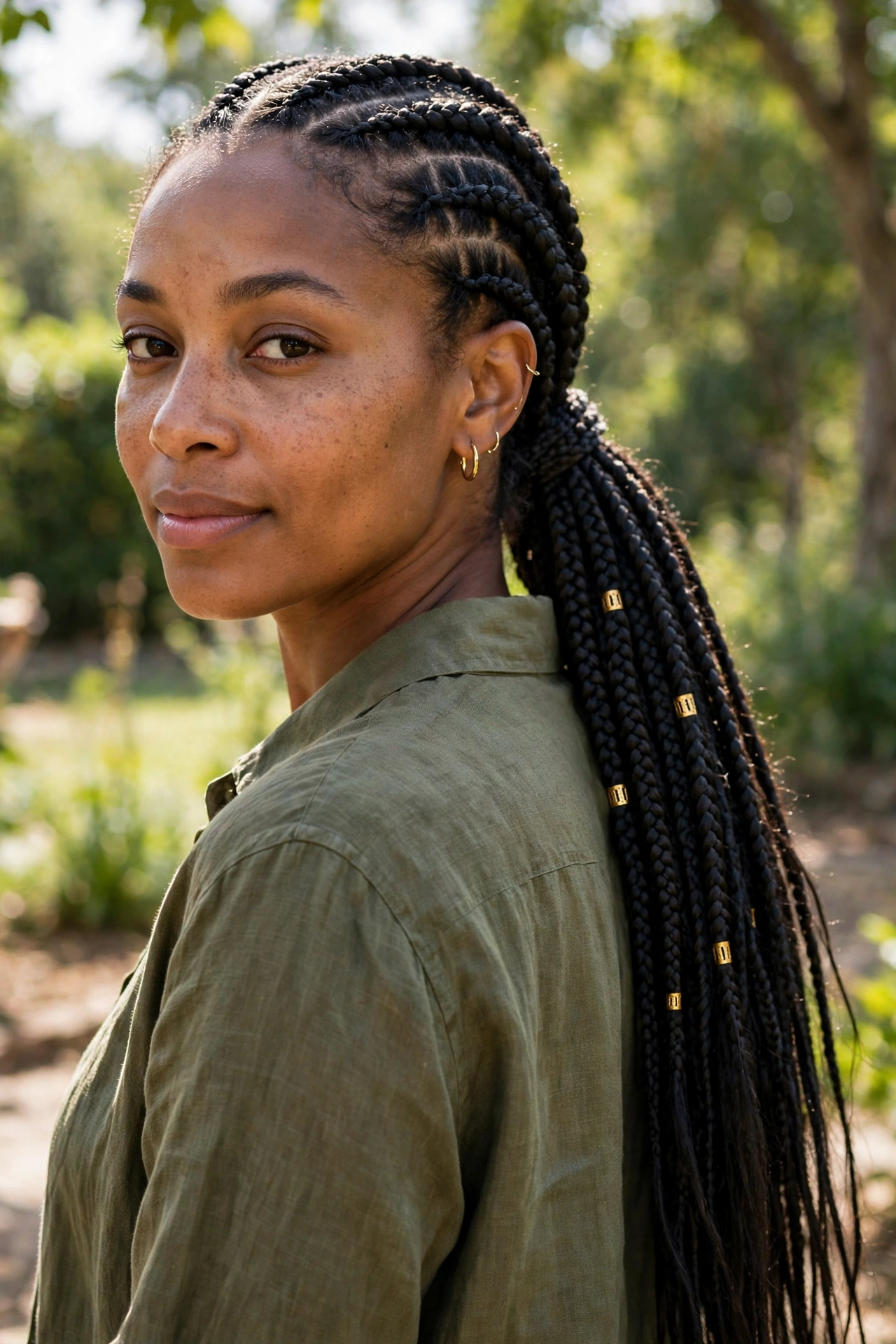
10. Knotless Braids with Gold Cuffs
Gold cuffs are a subtle, elegant way to dress up knotless braids without adding much weight. Small metal cuffs clipped near the ends, or scattered through a few braids, catch the light and make even a simple down style look occasion-ready. They are easy to add, remove and reuse, which makes them a practical accessory.
This detail suits formal events, weddings and work looks where beads might feel too casual. Ask your braider to place cuffs after styling, or add them yourself at home by sliding them onto the braid and gently pinching them closed. Choose cuffs that fit your braid size so they sit snugly without squeezing the hair, and take them off before washing so they do not tarnish or snag. A few cuffs go a long way, so start with three to five and add more only if you like the effect.
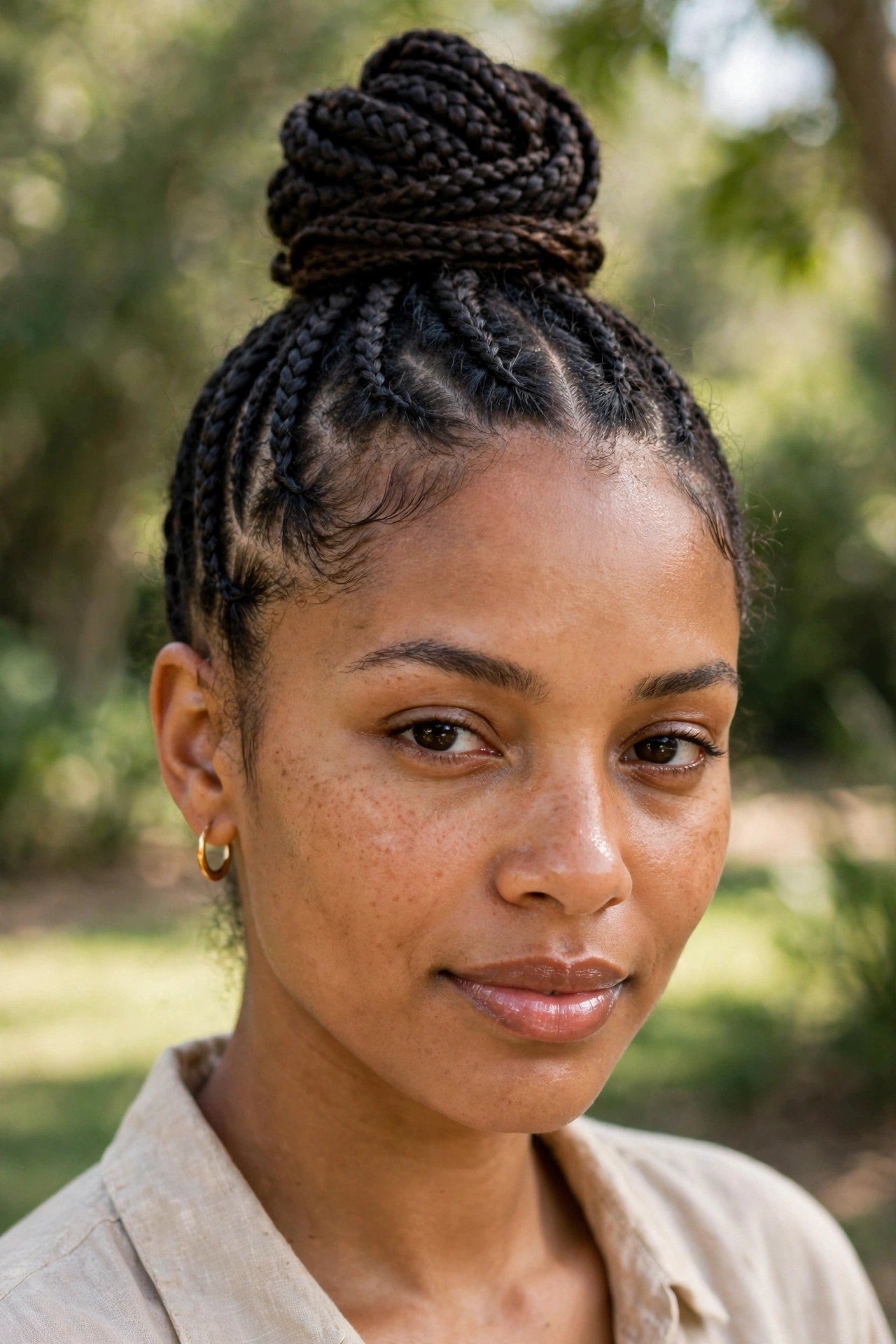
11. Knotless Braids in a High Bun
A high bun turns knotless braids into a clean, elegant style in minutes. Gathering the braids to the crown lifts the face, keeps hair off the neck in warm weather, and works beautifully for work, workouts and evenings out. Because knotless braids start flat, the bun sits neatly without the bulky base that traditional braids can create.
This updo suits oval, round and square faces, and it is especially flattering when a few face-framing braids are left loose. Ask your braider for a length that can comfortably reach a high bun, usually mid-back or longer, and avoid braiding the edges too tightly in preparation for updos. For upkeep, do not wear the bun pulled very tight every day, as constant tension can thin the edges; alternate with loose styles, and wrap the bun in a silk scarf at night to prevent frizz.
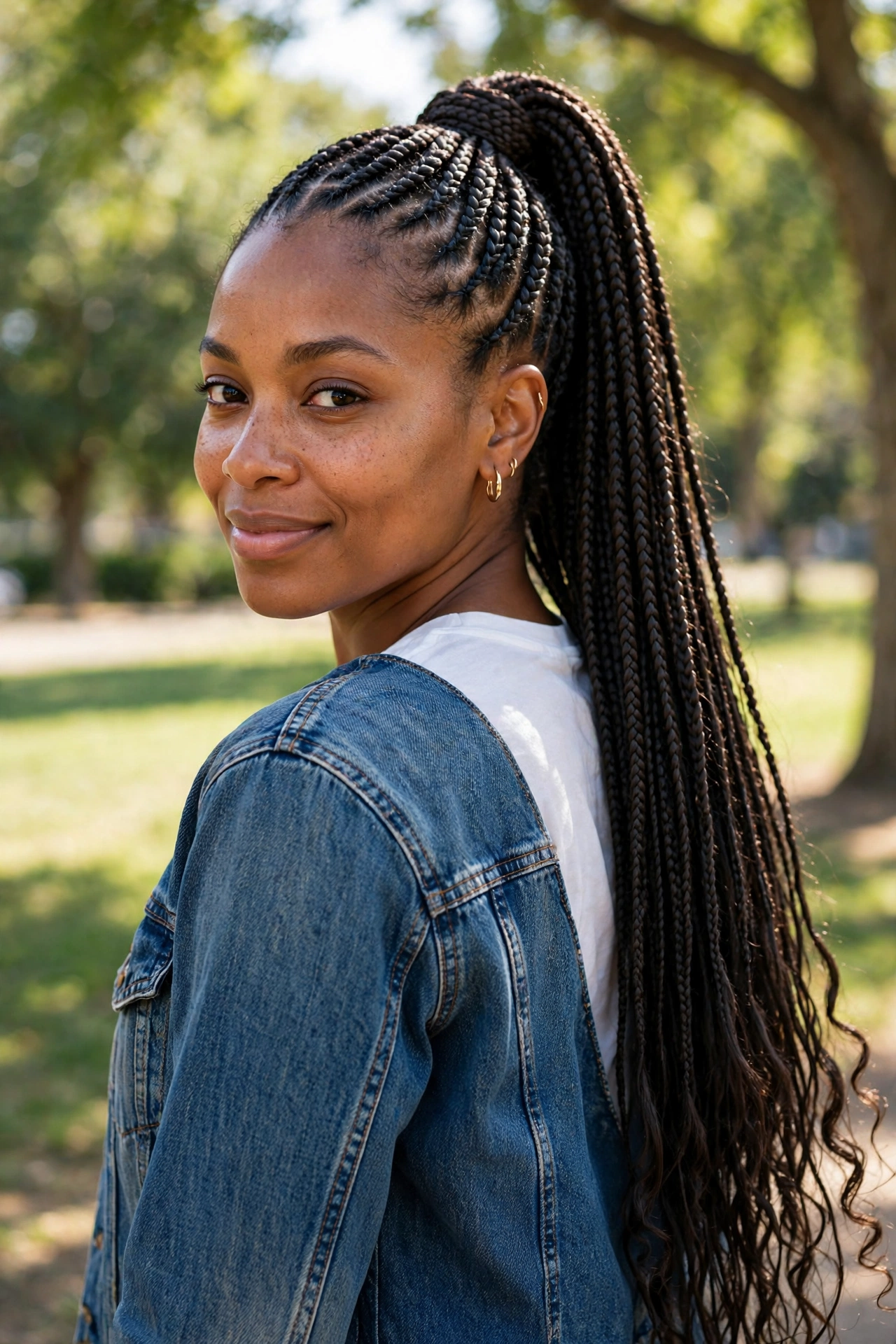
12. Knotless Braids in a High Ponytail
A high ponytail is the most versatile way to wear long knotless braids. It shows off the length, keeps hair out of the face, and can be sleek for a polished look or slightly loose for a softer, more casual finish. Adding a braid wrapped around the base hides the hair tie and gives the ponytail a salon-finished look.
High ponytails suit most face shapes, but they do put some tension on the hairline, so they should not be worn tightly every single day. Ask your braider for braids long enough to gather comfortably at the crown, and use a soft scrunchie or a snag-free tie rather than a tight elastic. At night, take the ponytail down and sleep with the braids loose under a bonnet, and give your edges a break with down styles between ponytail days.
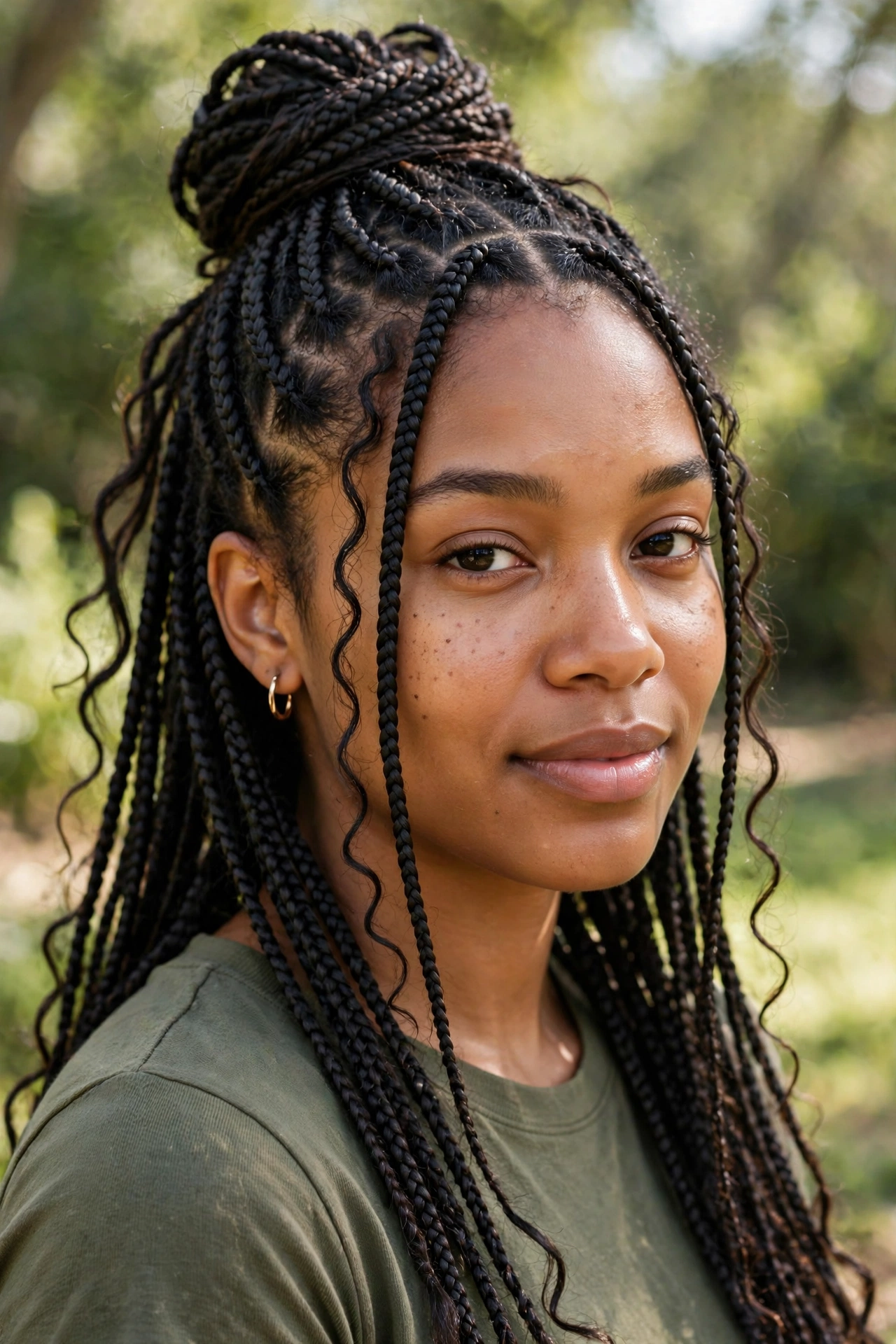
13. Half-Up Half-Down Knotless Braids
Half-up half-down is the perfect compromise when you cannot decide between wearing braids up or down. The top section is gathered into a bun or ponytail, which lifts the face and keeps hair out of the eyes, while the rest falls freely over the shoulders. It feels relaxed, youthful and easy, yet still looks deliberately styled.
This style suits every face shape and works at mid-back length and longer. Ask your braider for even, medium braids so the top section gathers neatly, and style it at home by taking the front sections back loosely rather than pulling them tight. Keep the loose braids moisturised and protected at night, and refresh the top section with a little edge control if needed. It is also a good way to extend the life of a style, because the top can be restyled even when the lengths start to look a little older.
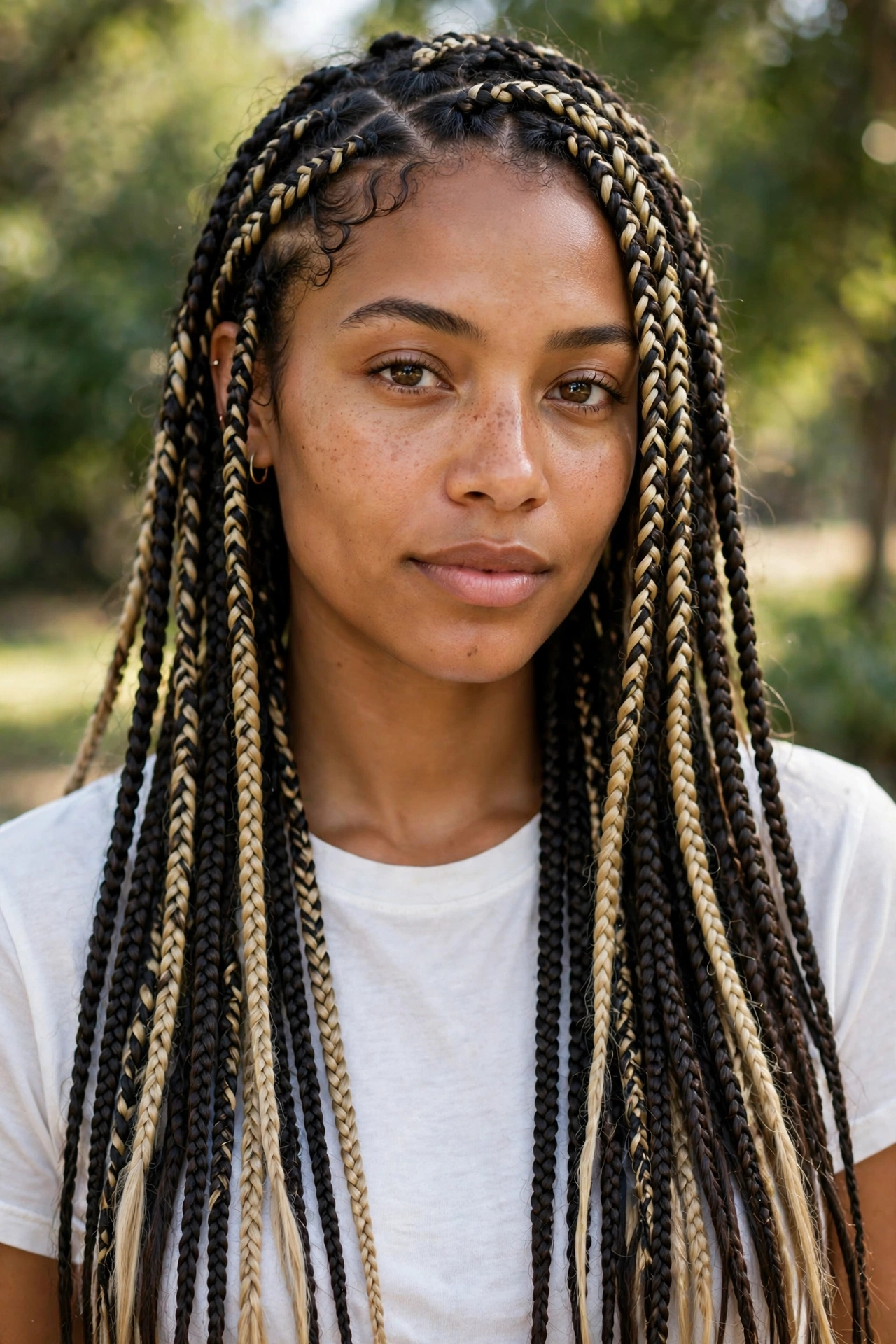
14. Knotless Braids with Blonde Highlights
Blonde highlights woven through dark knotless braids add dimension without the commitment or damage of lightening your own hair. A few blonde braids scattered through the style catch the light, frame the face and make the whole look brighter, while the majority of braids stay dark for a natural balance.
This colour suits warm and neutral skin tones particularly well, and it is a gentle first step into coloured braids. Ask your braider for blonde highlight braids placed mainly around the face and through the top layers, using a honey or golden blonde rather than a very pale shade for the most natural result. Protect the coloured braiding hair from excessive heat, wash with lukewarm water, and avoid heavy products that can dull the blonde over time.
15. Honey Blonde Knotless Braids
Full honey blonde knotless braids are warm, glowing and unmistakably eye-catching. The golden tone suits many skin tones, looks beautiful in sunlight, and gives braids a softer, more dimensional finish than a flat dark colour. It is a popular choice for summer, holidays and anyone ready for a bold colour change without touching their natural hair.
Honey blonde suits warm undertones best, but a slightly deeper honey works well on a wide range of complexions. Ask your braider for a honey blonde braiding hair in your chosen length and size, and be aware that lighter braiding hair can show frizz more easily, so a bonnet at night is essential. Use a light oil to keep the braids shiny, avoid dark-coloured scarves that can transfer dye in the first days, and wash gently so the colour stays bright.
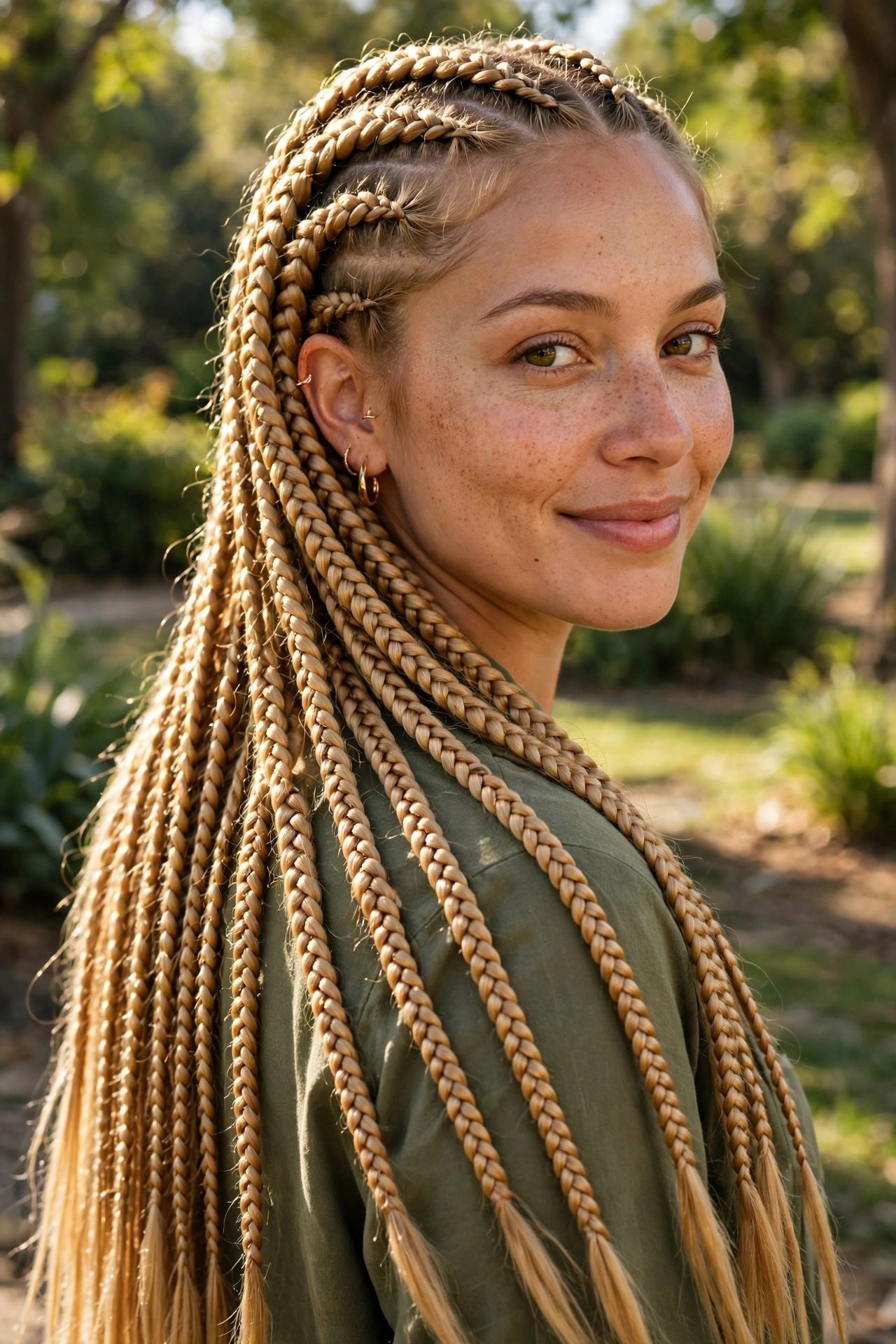
16. Burgundy Knotless Braids
Burgundy knotless braids offer rich, wine-toned colour that feels both bold and wearable. The deep red shade adds warmth and depth, flatters many skin tones, and looks striking against both casual and formal outfits. Unlike brighter reds, burgundy is easy to wear every day and does not demand a full wardrobe change.
This colour suits cool and warm undertones alike, depending on whether you choose a more purple-leaning or red-leaning burgundy. Ask your braider to show you the exact shade before starting, because burgundy varies a lot between brands, and confirm whether you want a full burgundy style or burgundy mixed with black for a subtler effect. Wash burgundy braids separately the first time, use cool water, and protect light-coloured clothing and pillowcases until you are sure the colour has settled.
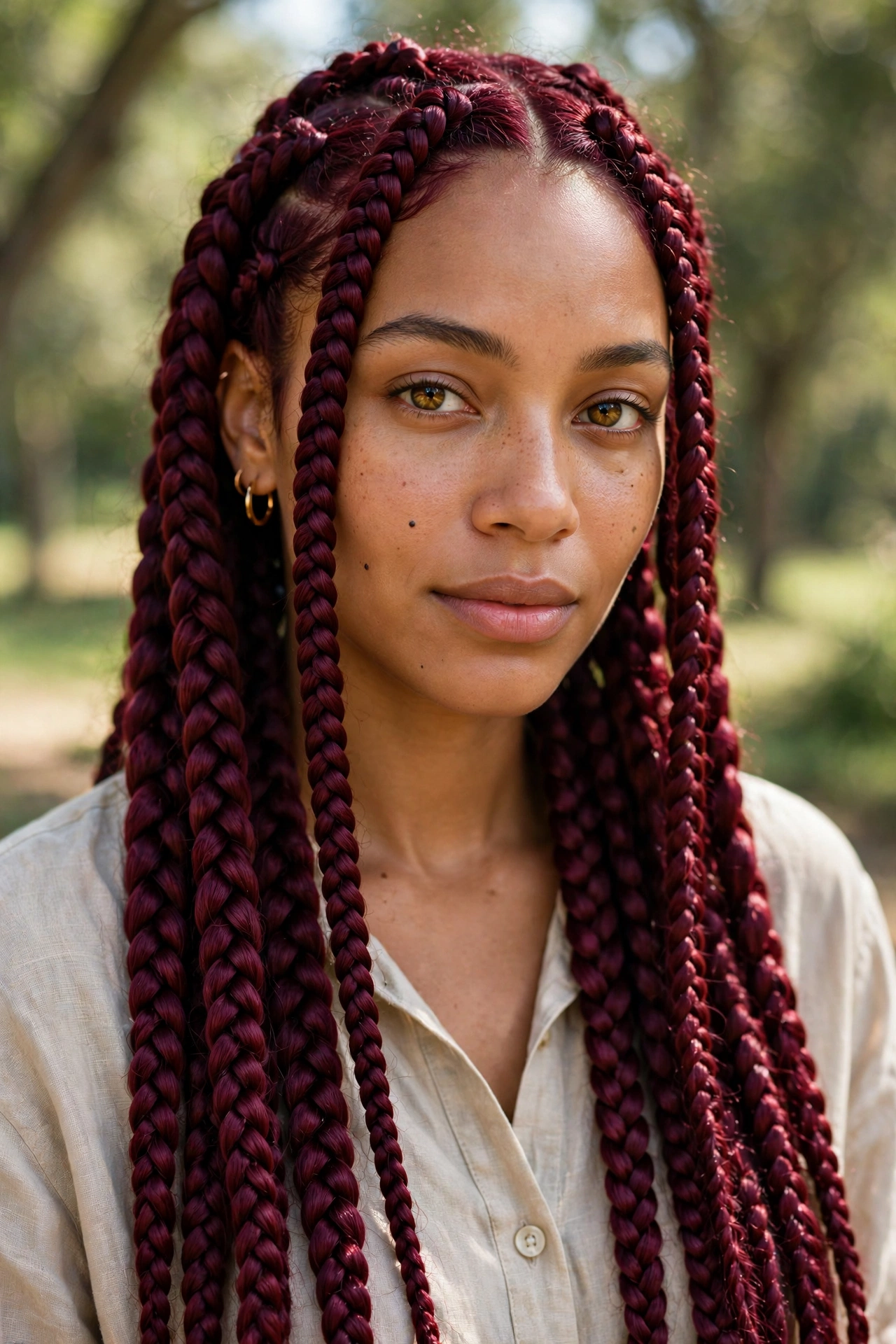
17. Copper Knotless Braids
Copper knotless braids bring a warm, ginger glow that stands out beautifully, especially in autumn and in natural light. The shade ranges from soft auburn to vivid copper, so you can choose a tone that feels natural for you or one that makes a real statement. Copper also pairs beautifully with gold jewellery and warm-toned makeup.
Copper suits fair to medium skin tones with warm undertones especially well, but a deeper copper can flatter darker skin beautifully too. Ask your braider for the exact copper shade you want and consider a mix of copper and dark brown if you want the colour to feel more blended. Keep copper braids shiny with a light oil, avoid over-washing, and store a spare pack of the same hair in case a braid needs replacing, since matching copper shades later can be difficult.
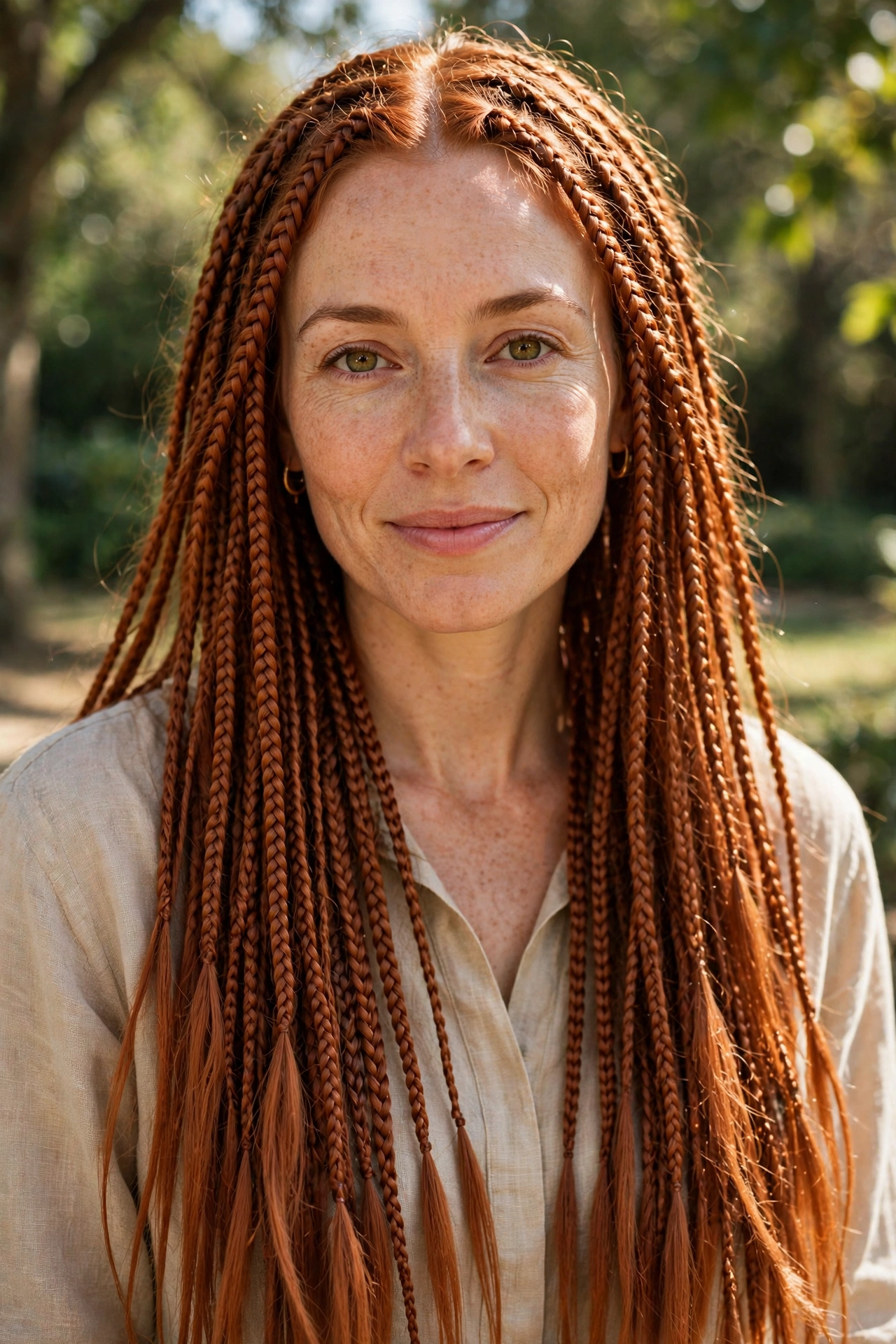
18. Ombre Knotless Braids
Ombre knotless braids blend from dark roots to lighter ends, giving you a salon-colour effect with no bleach on your own hair. The gradient adds depth and movement, makes long braids look even longer, and softens the transition between your natural root colour and the braiding hair. Blonde ombre is the classic choice, but brown, burgundy and even pastel ombres work the same way.
This style suits long braids best, because the gradient needs length to show properly. Ask your braider for pre-blended ombre braiding hair, and check the transition point before installation so the colour change sits where you want it. Ombre braids need the same care as other knotless styles, with extra attention to the lighter ends, which can look dry sooner; a light oil on the ends and a silk bonnet at night will keep them looking fresh.
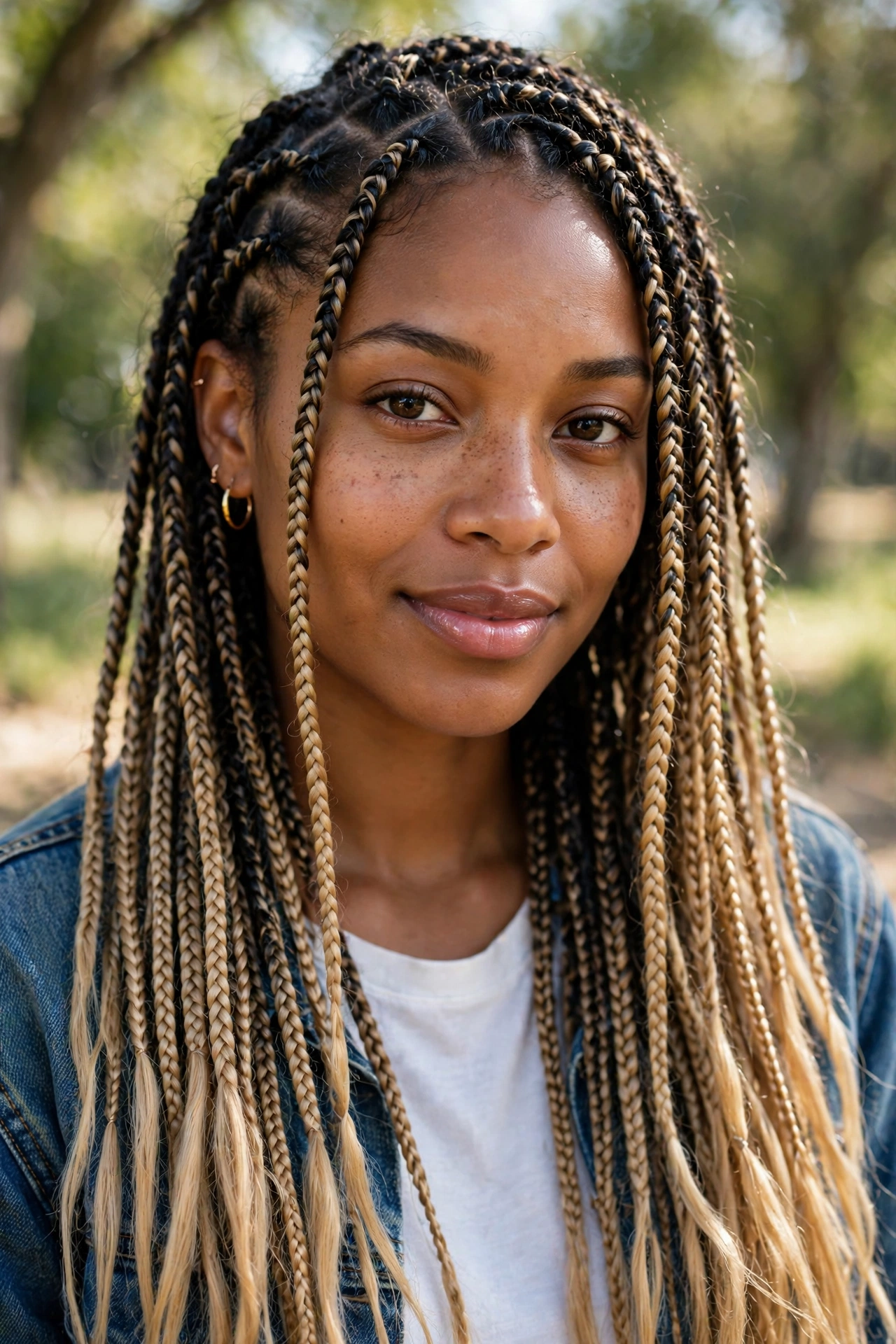
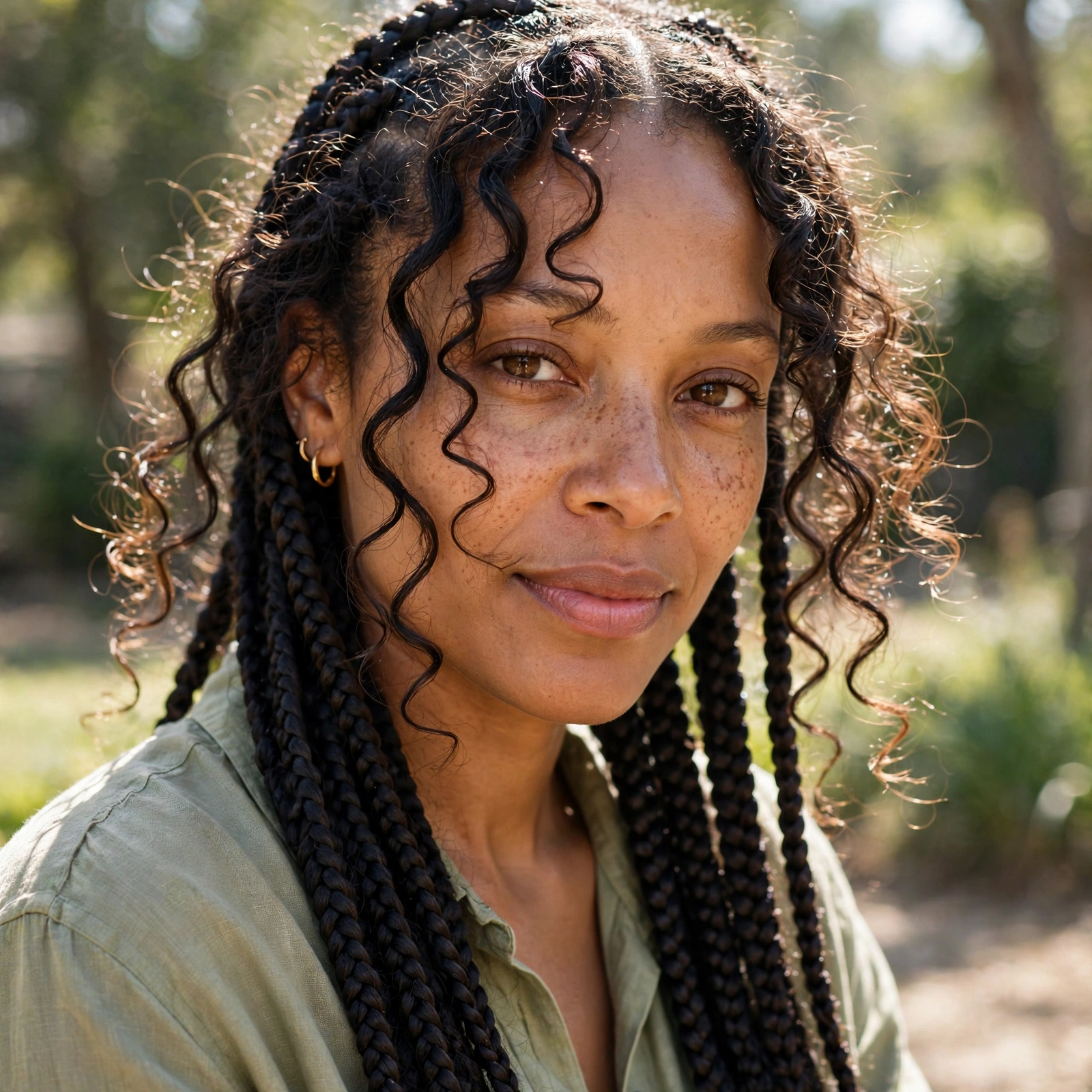
19. Knotless Braids with Curls at the Front
Leaving a few curly pieces at the front softens knotless braids instantly and frames the face beautifully. The curls can be short and bouncy or longer and wavy, and they break up the neatness of the braids with a romantic, face-framing finish that photographs wonderfully.
This detail suits people who find fully braided styles a little severe, and it works particularly well on round and square faces, where softness around the cheeks is flattering. Ask your braider to leave two or three curly pieces out at each side of the face, using curly braiding hair that matches your braid colour. Keep the front curls defined with a light curl cream, finger-detangle them gently, and avoid pulling them back tightly, which defeats the softening effect.
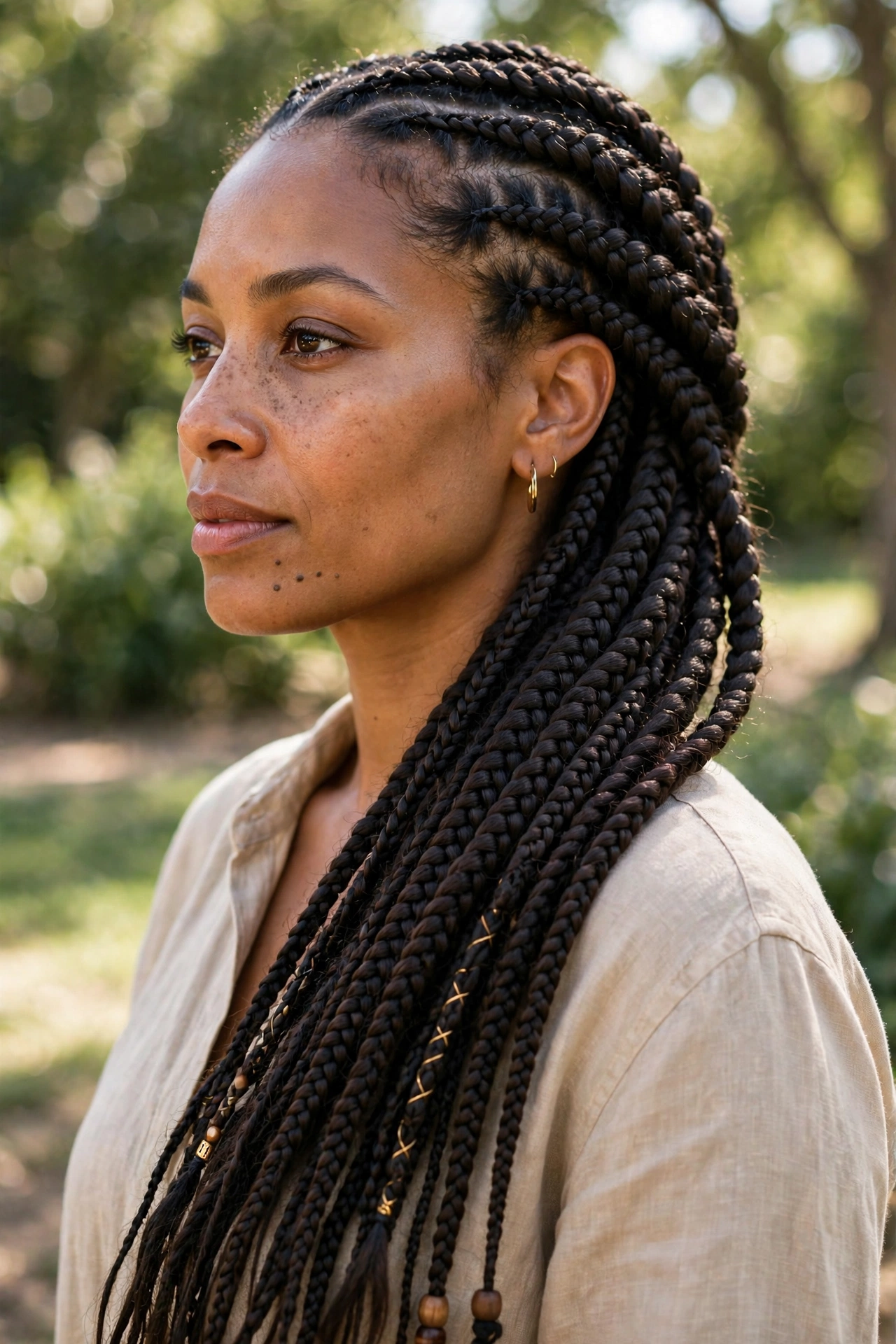
20. Side-Swept Knotless Braids
Sweeping long knotless braids over one shoulder creates an elegant, asymmetric look that suits formal occasions and everyday glamour alike. The style shows off the length and shine of the braids, keeps hair off one side of the face, and pairs beautifully with statement earrings and off-shoulder outfits.
Side-swept braids suit long and medium lengths and work well with a deep side part. Ask your braider for a side part or a flexible parting that allows you to sweep the braids easily, and use a light holding spray or a decorative pin to keep the sweep in place if it slips. Avoid wearing all the weight on the same side every day for many weeks, as this can strain one side of the scalp; alternate sides or wear the braids down on rest days.
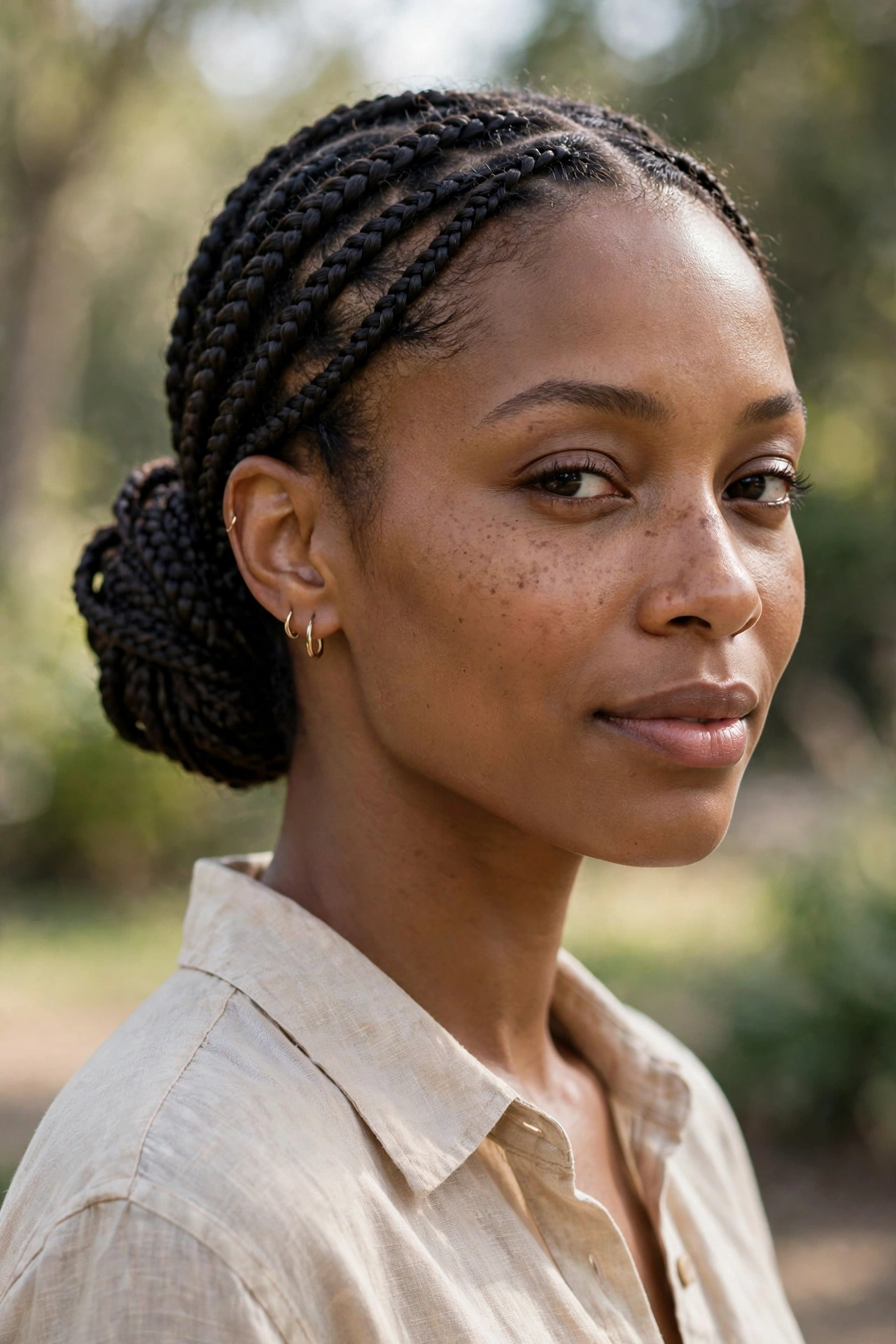
21. Knotless Braids in a Low Bun
A low bun is the most understated and professional way to wear knotless braids. Gathered at the nape, it looks neat and polished, keeps hair completely out of the way, and works for offices, interviews, weddings and formal events. Because the braids are knotless, the bun sits smoothly without a bulky, painful base.
This style suits all face shapes and is especially kind to the hairline, since a low bun pulls far less than a high one. Ask your braider for a length that reaches a low bun comfortably, and style it loosely rather than wrapping it very tightly. For upkeep, alternate the bun with down styles, use a silk scarf over the bun at night if you want to keep it for the next day, and moisturise the nape area, which can dry out when hair is always gathered there.
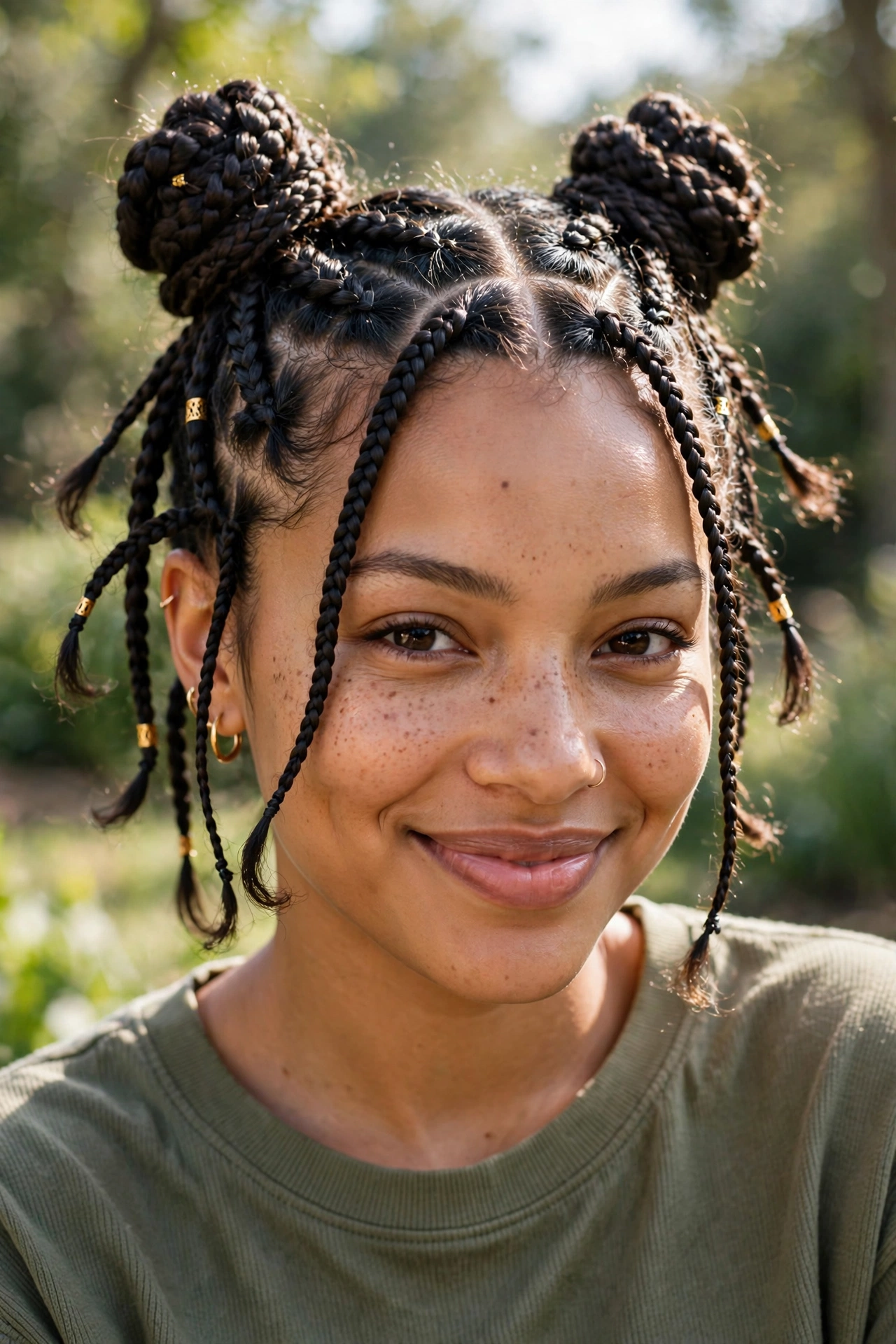
22. Knotless Braids in Space Buns
Space buns turn knotless braids into a fun, youthful style that is perfect for festivals, parties and playful everyday looks. The braids are divided into two sections and twisted into two buns on top of the head, giving a bold, balanced shape that shows off the braid texture beautifully.
Space buns suit younger wearers and anyone with a playful style, and they work best at mid-back length or longer, so there is enough hair for two full buns. Ask your braider for even partings and a centre part if you want symmetrical buns, and secure each bun with soft ties and pins rather than tight elastics. Keep the style loose at the roots to protect your edges, and do not wear space buns pulled tight every day, as the double tension can be hard on the hairline.
23. Knotless Braids with a Middle Part
A clean middle part gives knotless braids a symmetrical, polished finish that suits almost everyone. The braids fall evenly on both sides of the face, which balances features, frames the face neatly, and makes the style easy to wear down, in a low ponytail or in a low bun without restyling the part.
Middle parts suit oval, round and heart-shaped faces particularly well. Ask your braider for a straight centre part and consistent braid sizes on both sides, so the symmetry holds as the style grows out. For care, keep the part clean by wiping it gently with a damp cloth or diluted shampoo between washes, and oil the exposed scalp along the part to prevent dryness. A middle part also makes it easy to check new growth and decide when it is time to take the braids out.
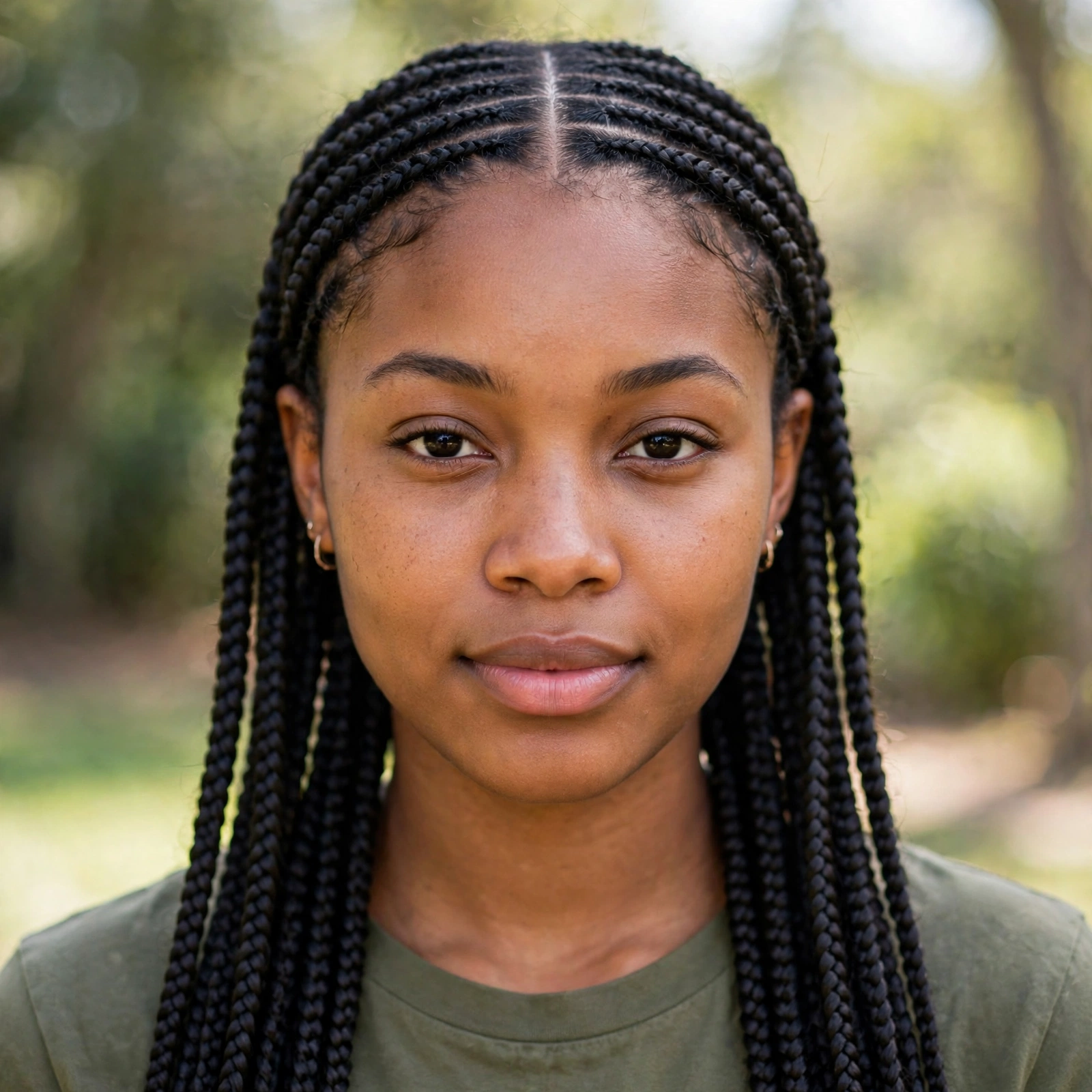
24. Knotless Braids with a Side Part
A deep side part adds instant volume and drama to knotless braids. More hair falls to one side, creating a fuller, more glamorous silhouette, and the part itself gives the style a deliberately styled feel even when the braids are simply worn down. It is a great choice for special occasions and for anyone who finds a middle part too plain.
Side parts suit most face shapes and are especially flattering on longer faces, where the extra side volume balances the length. Ask your braider for a deep side part placed where your hair naturally falls, rather than forcing a part against your growth pattern. Keep the part moisturised, as a deep part exposes more scalp, and be aware that the heavier side may need a pin or a light spray to stay in place in windy weather.
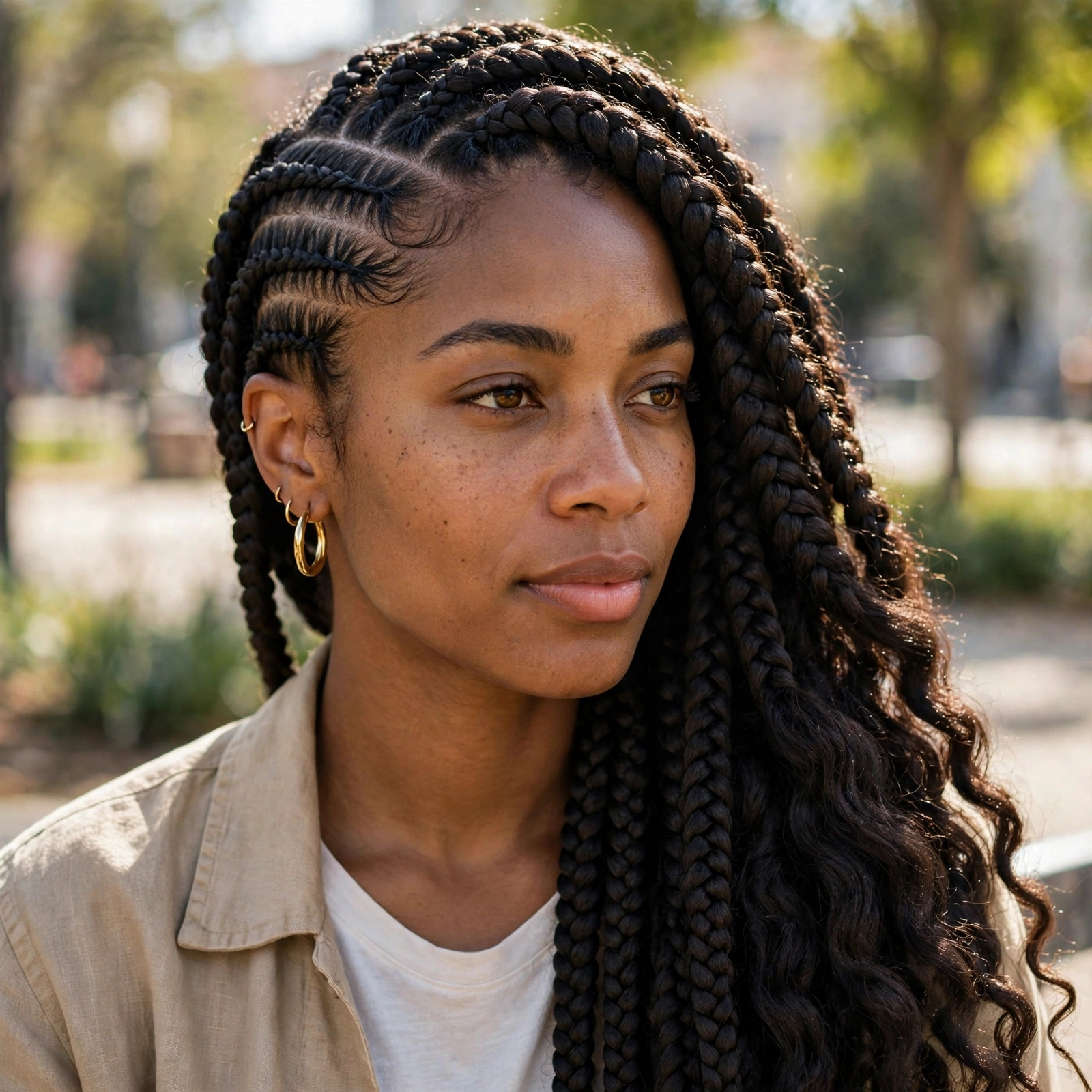
25. Triangle Part Knotless Braids
Triangle partings replace the usual square boxes with neat triangles at the scalp, giving knotless braids a distinctive, detailed look. The geometric pattern is visible when the braids are worn up or parted, and it adds a designer finish that sets the style apart from standard box braids without changing the comfort of the knotless start.
This parting suits people who enjoy detail and want their braids to look interesting even in a simple down style. Ask your braider specifically for triangle parts and check the pattern at the front before they continue, because triangle parting takes extra care to keep even. Upkeep is the same as for box parts, with a little extra attention to keeping the triangular sections clean and moisturised, since the pattern shows more scalp.
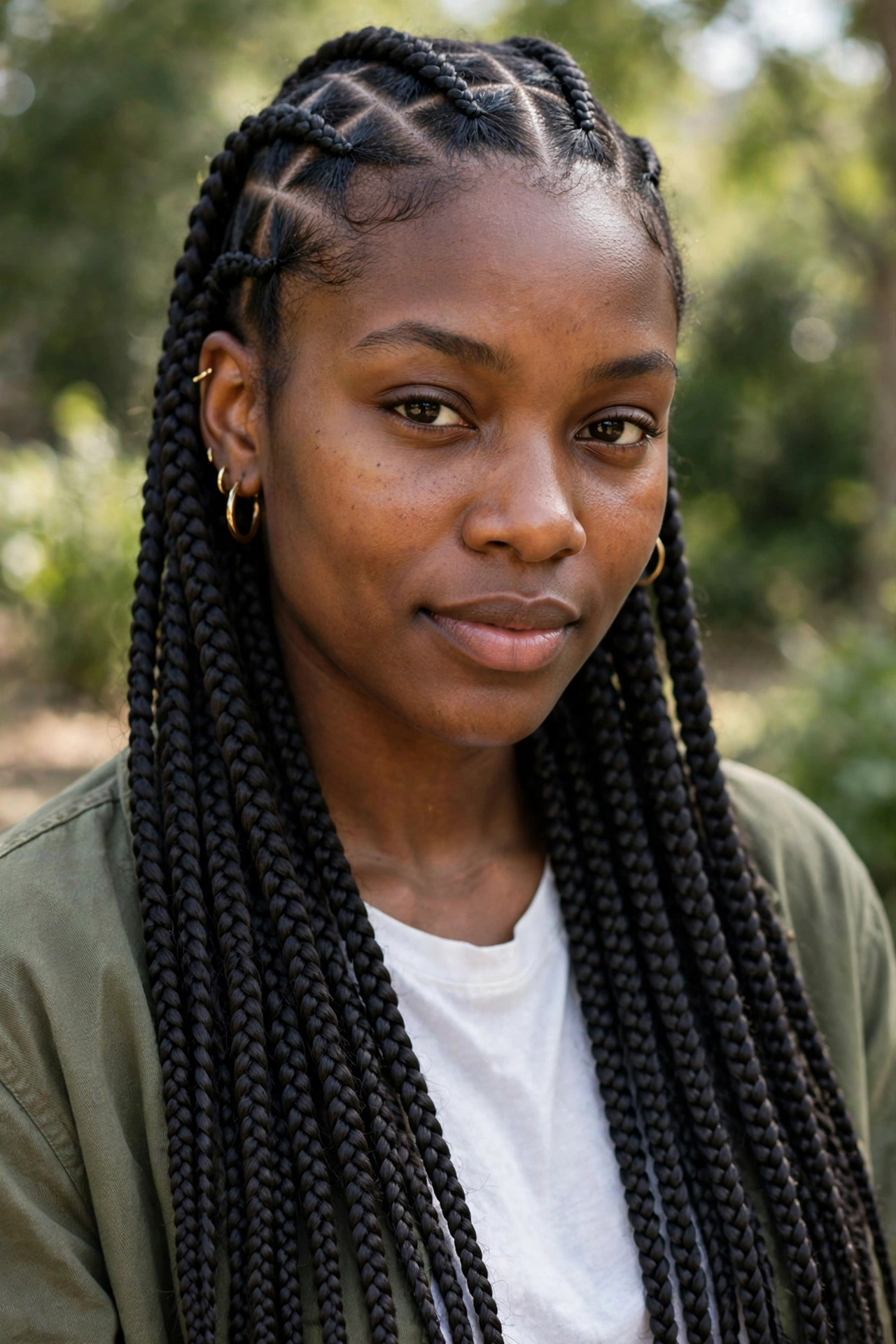
26. Knotless Braids with Baby Hairs
Softly styled baby hairs along the hairline give knotless braids a finished, polished edge. The wispy hairs are smoothed into gentle swoops, which soften the hairline and make the whole style look intentional and salon-fresh. This detail is especially popular for photos, events and occasions when you want a flawless finish.
Baby hairs suit most people, but they should be styled gently and never pulled tight, as the fine hairs at the edge are the most fragile. Ask your braider to leave the baby hairs out rather than braiding them in, and style them at home with a small amount of edge control and a soft brush. Avoid using edge control every day, wash it out regularly so it does not build up, and give your edges rest days with no product at all.
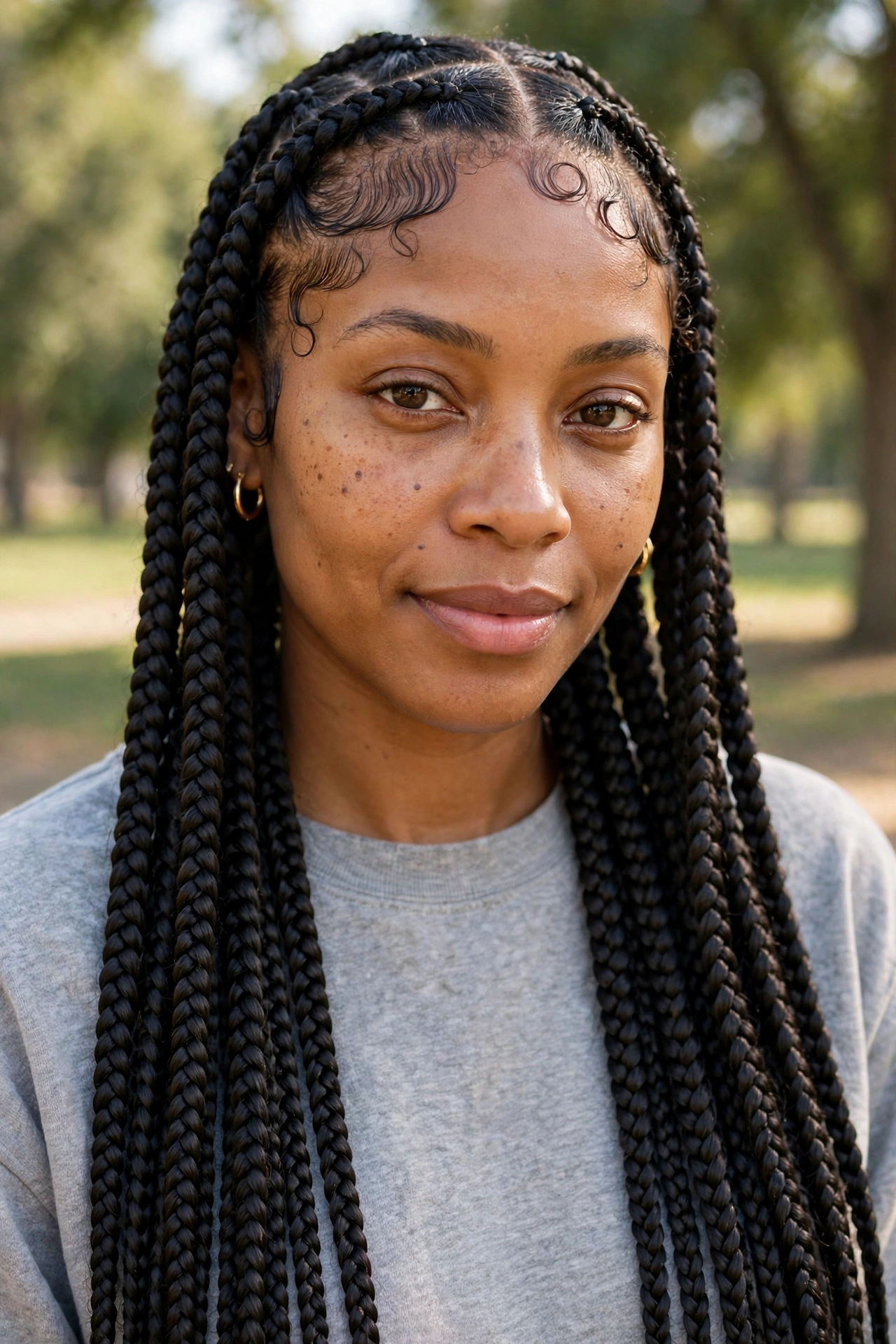
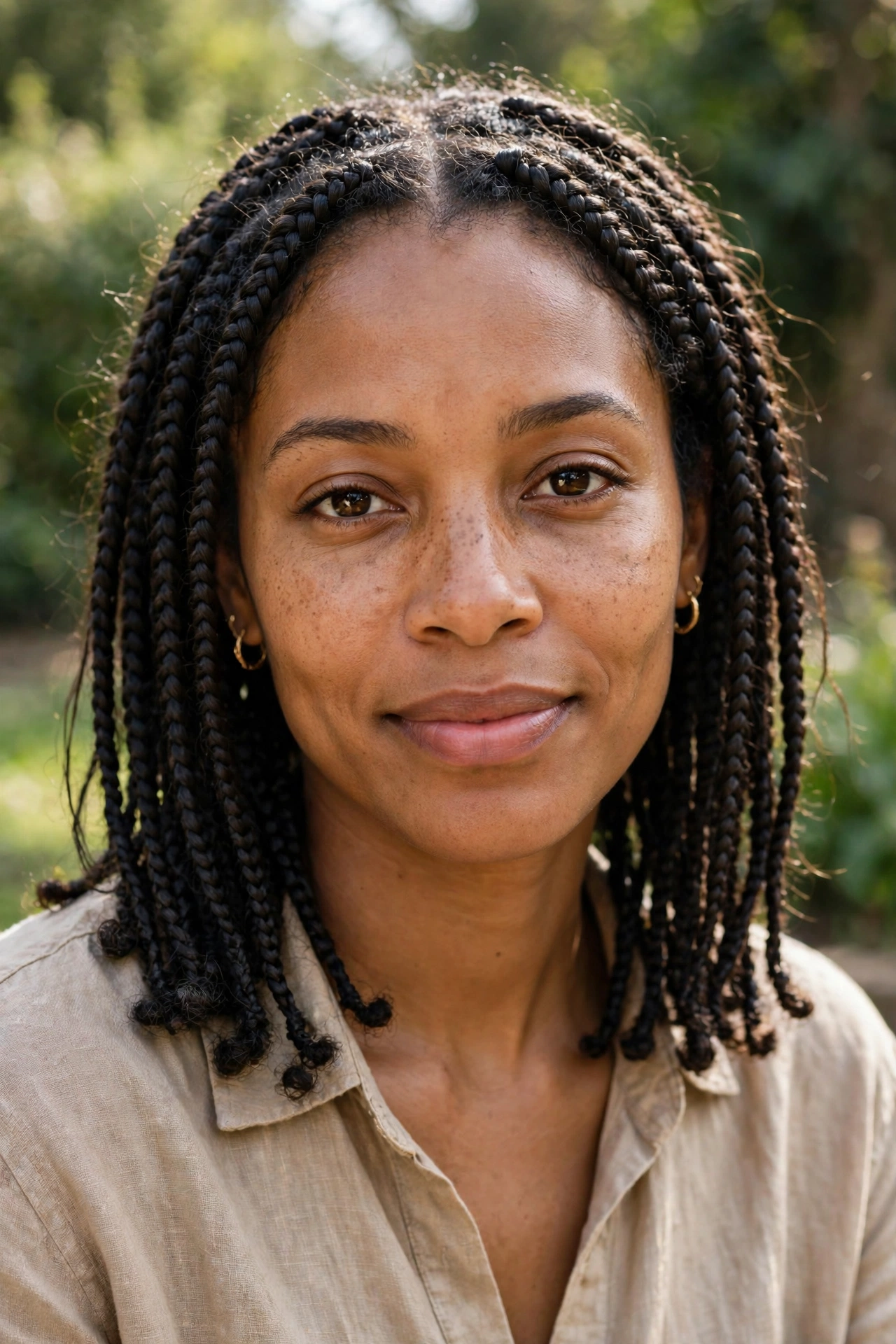
27. Shoulder-Length Knotless Braids
Shoulder-length knotless braids are the practical middle ground between a bob and mid-back length. They are long enough to tie into a small ponytail or bun, yet short enough to dry quickly, weigh little, and stay out of the way during daily life. This length is a strong choice for first-time braid wearers and for busy routines.
This length suits all face shapes and works well in professional settings, where very long braids can sometimes feel impractical. Ask your braider for shoulder-length knotless braids with a clean finish at the ends, and choose a medium size for the best balance of fullness and manageability. Upkeep is straightforward: a bonnet at night, scalp oil a few times a week, and gentle washing will keep shoulder-length braids looking neat for five to seven weeks.
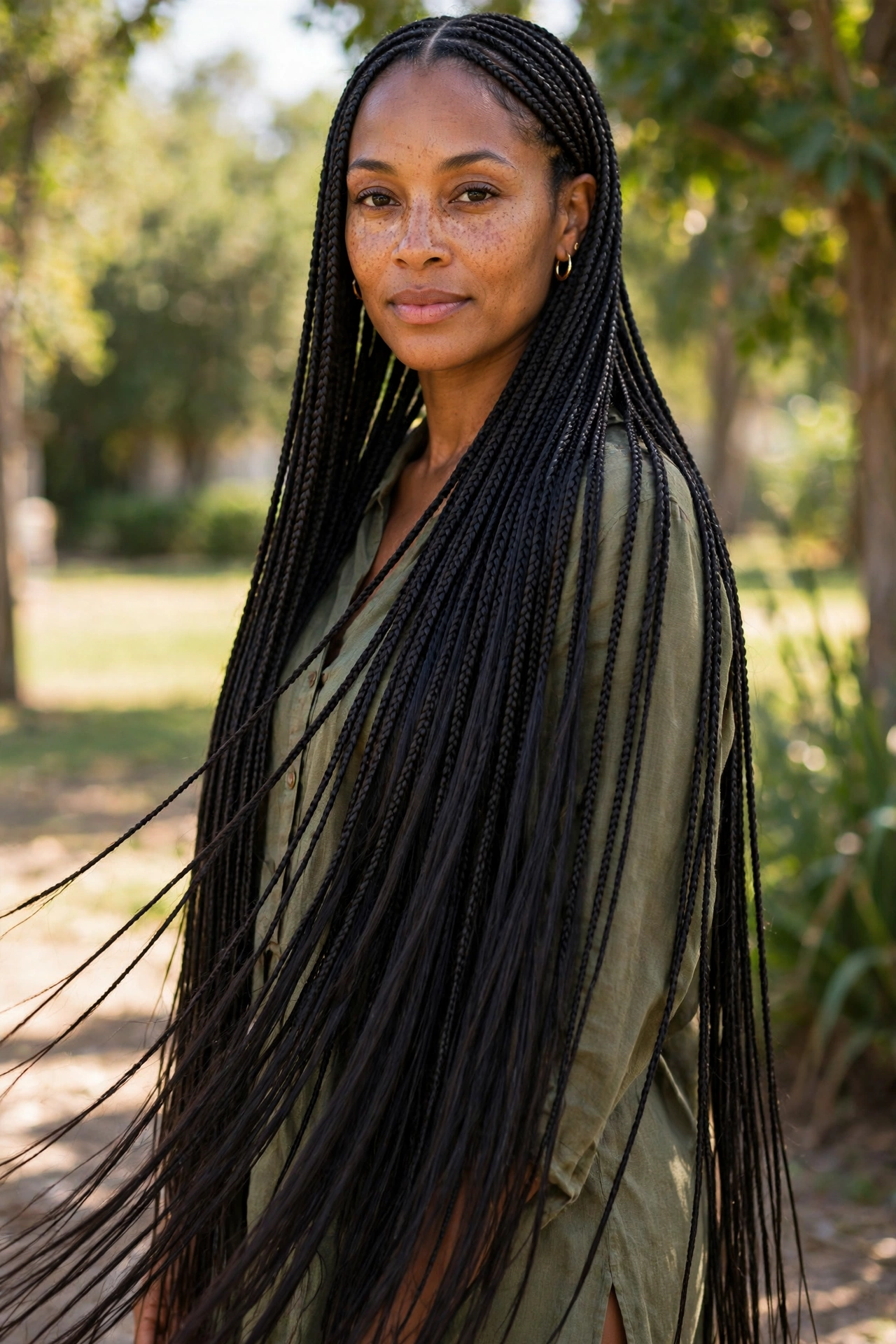
28. Knee-Length Knotless Braids
Knee-length knotless braids, sometimes called extra-long braids, are the ultimate statement length. The braids fall far past the waist, creating a dramatic, flowing look that turns heads and offers endless styling possibilities. Because they start knotless, even this extreme length sits more comfortably at the scalp than traditional extra-long braids.
This length is best for experienced braid wearers who are prepared for the time, cost and care involved. The weight is significant, so ask your braider to keep the braids medium-sized rather than small, and to use lightweight braiding hair. At home, you must dry the braids completely after washing, avoid sitting on them or catching them in bags and car doors, and sleep with them in a loose braid or bun. If you notice scalp soreness or headaches, take the style out sooner rather than pushing through discomfort.
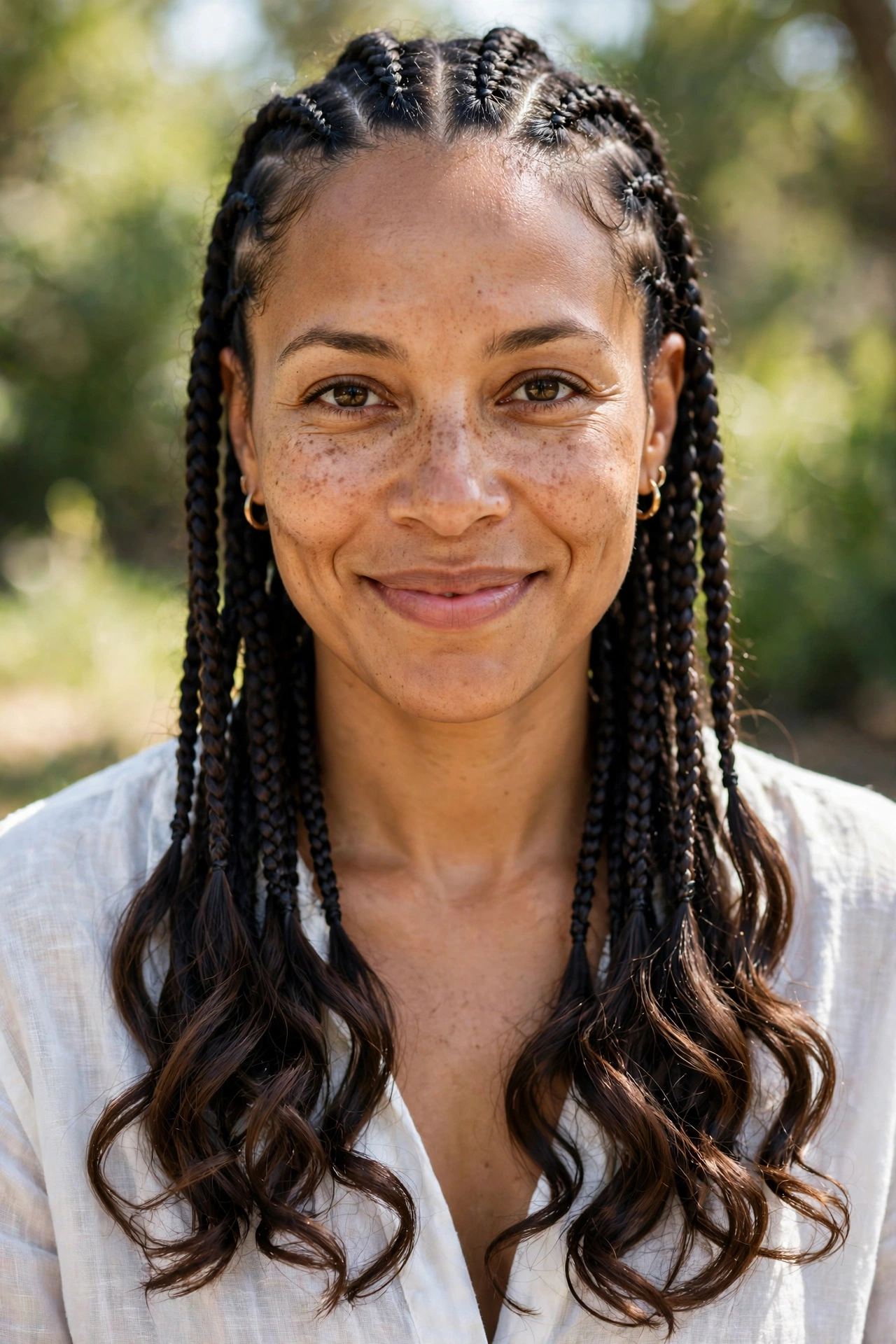
29. Knotless Braids with Wavy Ends
Wavy ends give knotless braids a soft, beachy finish that sits between straight sealed ends and full curls. The last section of each braid is left wavy, adding gentle movement and a relaxed texture that makes the style feel less formal and more effortless.
This finish suits anyone who likes texture but does not want the extra detangling that full curls require. Ask your braider to finish the braids with wavy ends, using wavy braiding hair or a gentle curl on the ends, and agree how much of the end should stay wavy. Keep the waves defined with a light mousse or curl cream, finger-detangle rather than brushing, and gather the ends loosely at night so the waves do not tangle into knots.
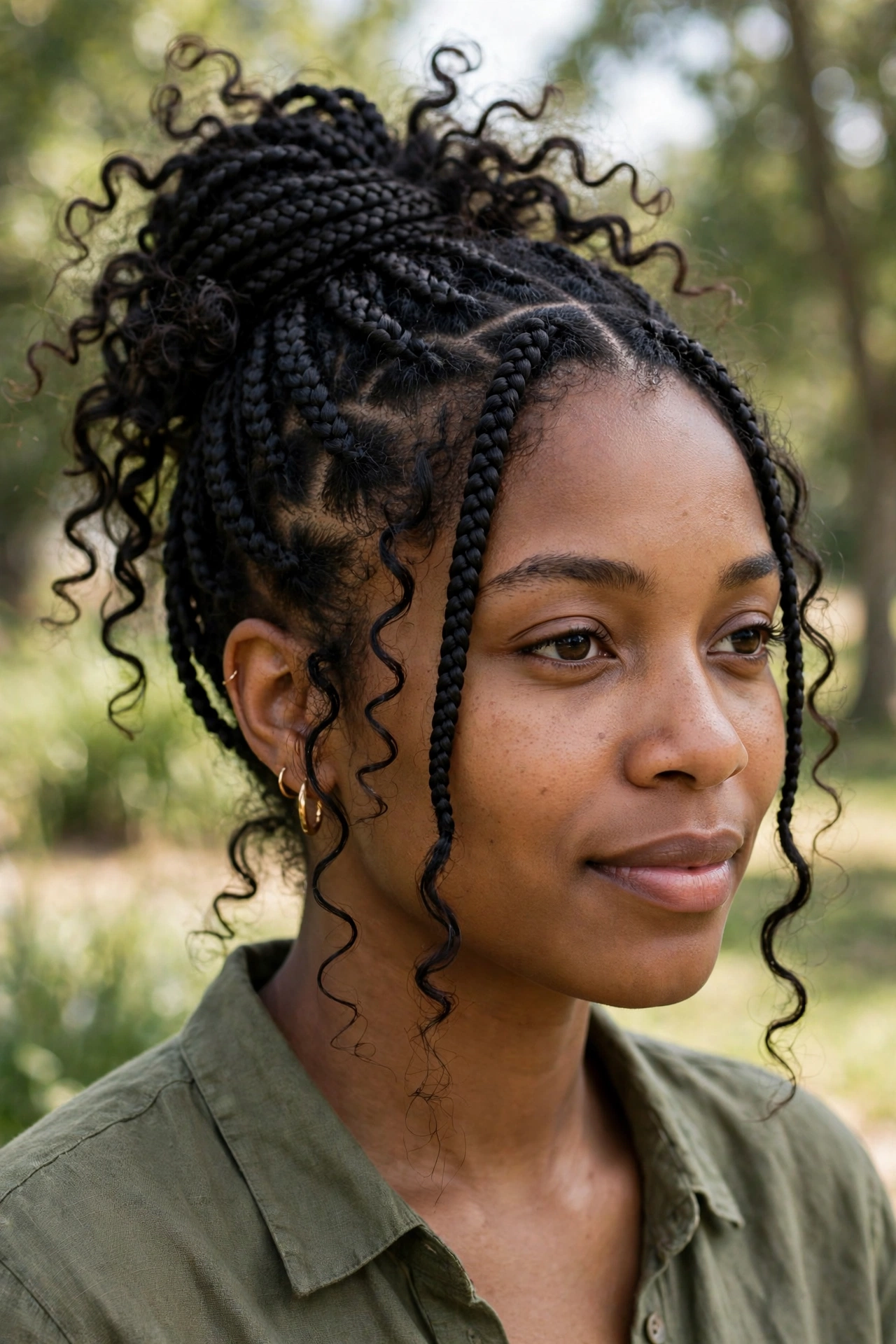
30. Knotless Braids with a Curly Bun
A curly bun combines the neatness of a braided bun with the softness of loose curls, making it a beautiful choice for weddings, parties and romantic everyday looks. The braids are gathered into a bun while curly pieces are left loose around it, so the updo looks textured and full rather than severe.
This style suits special occasions and anyone who wants an updo with movement. Ask your braider for boho-style braids with curls, or add clip-in curly pieces at home, and gather the braids loosely so the curls can fall naturally around the bun. Secure the bun with pins rather than a very tight tie, refresh the curls with a light spray, and take the style down at night so the curls do not mat against the bun.
31. Peekaboo Colour Knotless Braids
Peekaboo colour hides bright braids underneath a darker top layer, so the colour appears only when the hair moves, is parted, or is worn up. It is a playful, low-commitment way to try a bold colour, because the bright shade is not visible in every view, and it can be covered completely for work if needed.
This style suits anyone who wants colour without a full-colour commitment, and it works with almost any bright shade, from pink to blue to blonde. Ask your braider to place the coloured braids in the underlayers and at the nape, keeping the top and front braids dark. The coloured braids need the same care as the rest, with gentle washing to keep the colour bright, and a bonnet at night to prevent the underlayer from frizzing unnoticed.
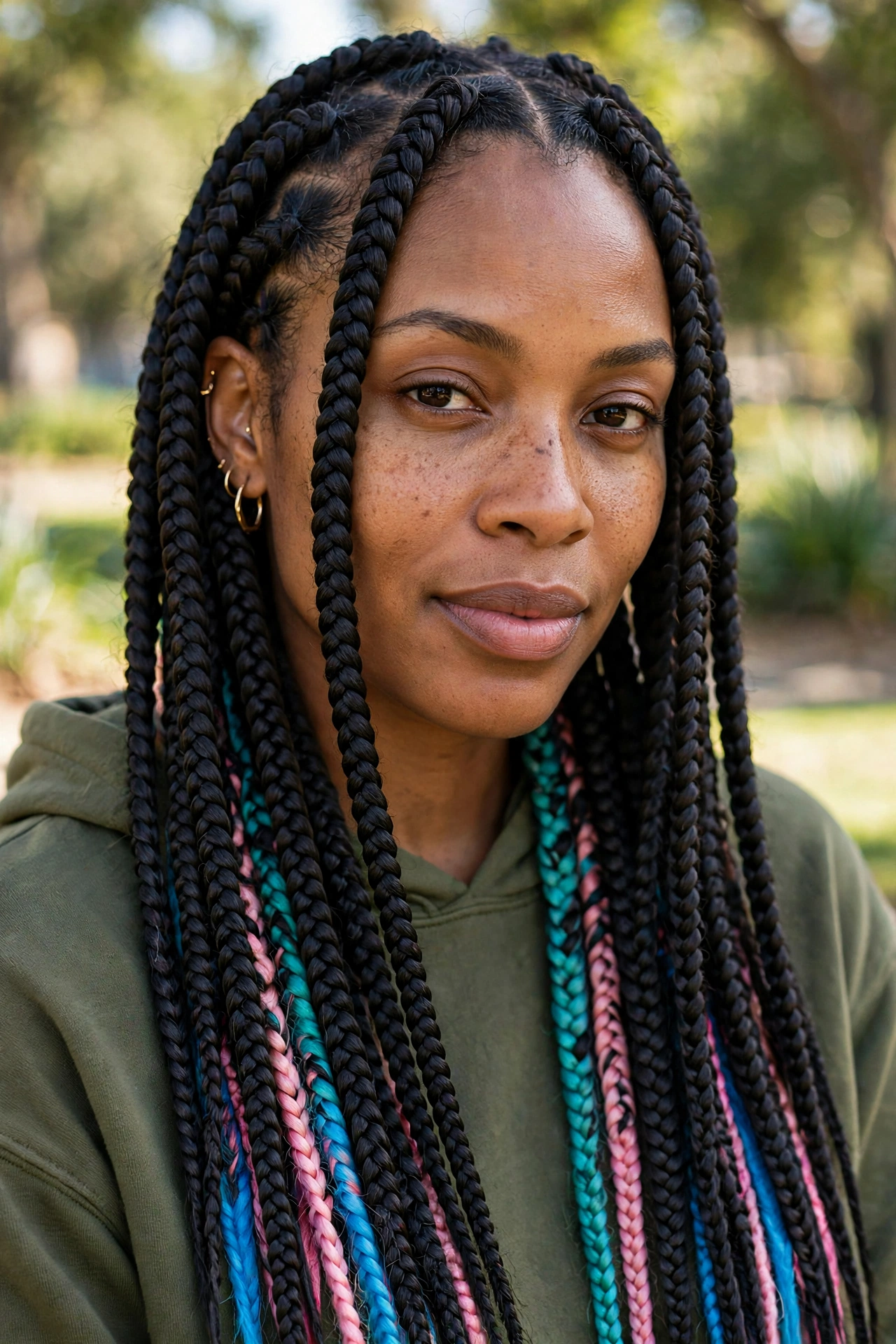
32. Jet Black Knotless Braids
Jet black knotless braids are timeless, glossy and endlessly versatile. The deep black shade gives braids a sleek, healthy shine, matches every outfit, and never looks dated. It is also the easiest colour to maintain, because it does not fade noticeably and does not show frizz as much as lighter shades.
This colour suits everyone and is the safest choice if you are unsure about colour. Ask your braider for jet black braiding hair, sometimes labelled as colour 1, and choose a length and size that suit your routine rather than worrying about the shade. Keep jet black braids shiny with a light oil or braid spray, protect them at night with a satin bonnet, and wash gently so the shine lasts for the full life of the style.
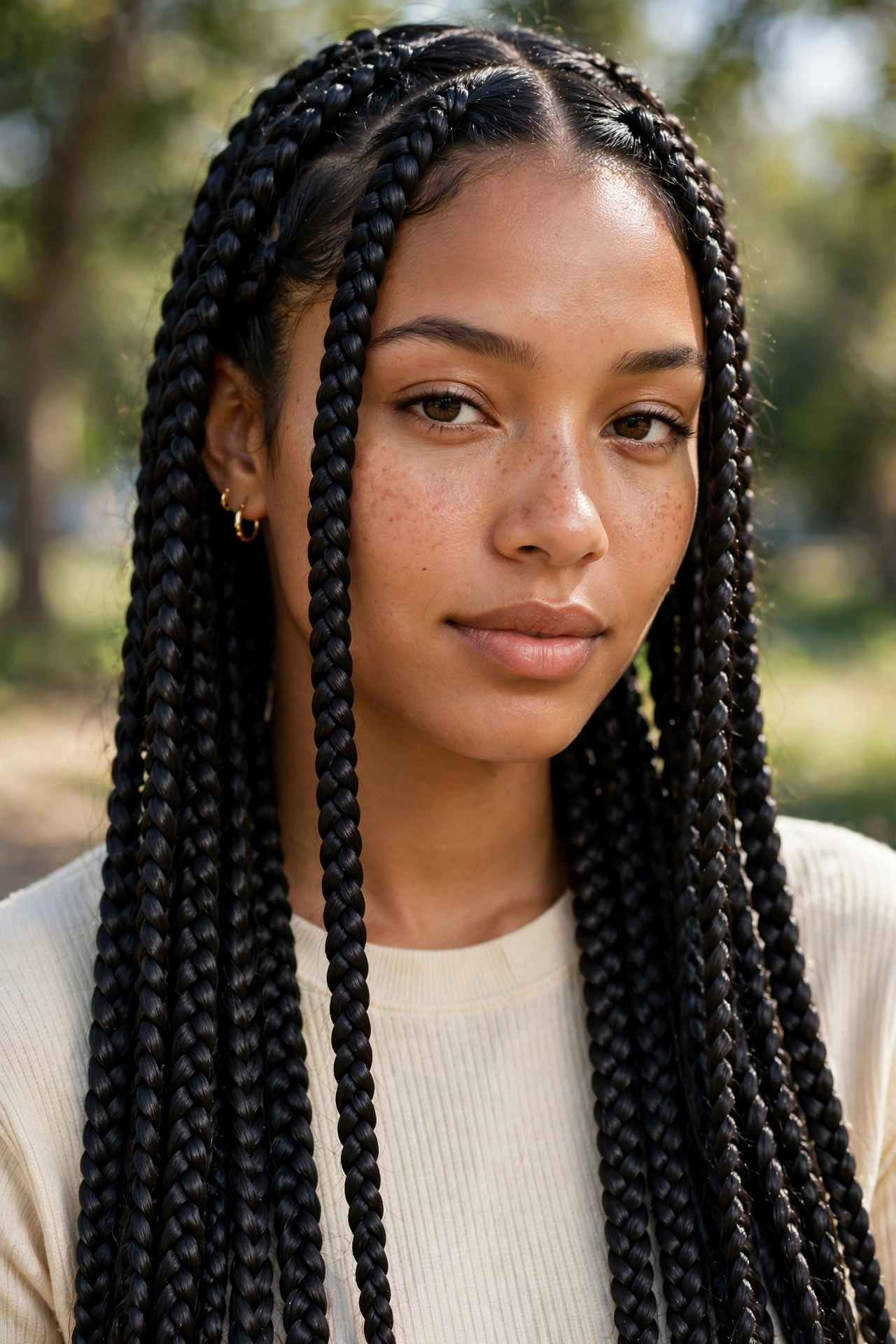
33. Knotless Braids with a Scarf Wrap
Wrapping a silk scarf around the hairline turns knotless braids into a stylish, headwrap-inspired look while also protecting the edges. A colourful scarf adds a fashion statement, covers new growth between appointments, and gives you a completely different look without restyling the braids themselves.
Scarf wraps suit everyone and are especially useful on days when the edges need a break or the roots are starting to look grown out. Choose a silk or satin scarf to avoid friction, and wrap it loosely rather than tying it very tightly, so it does not pull on the hairline. At home, keep a few scarves in different colours to match outfits, and wash the scarf regularly so it does not transfer product or dirt onto the braids.
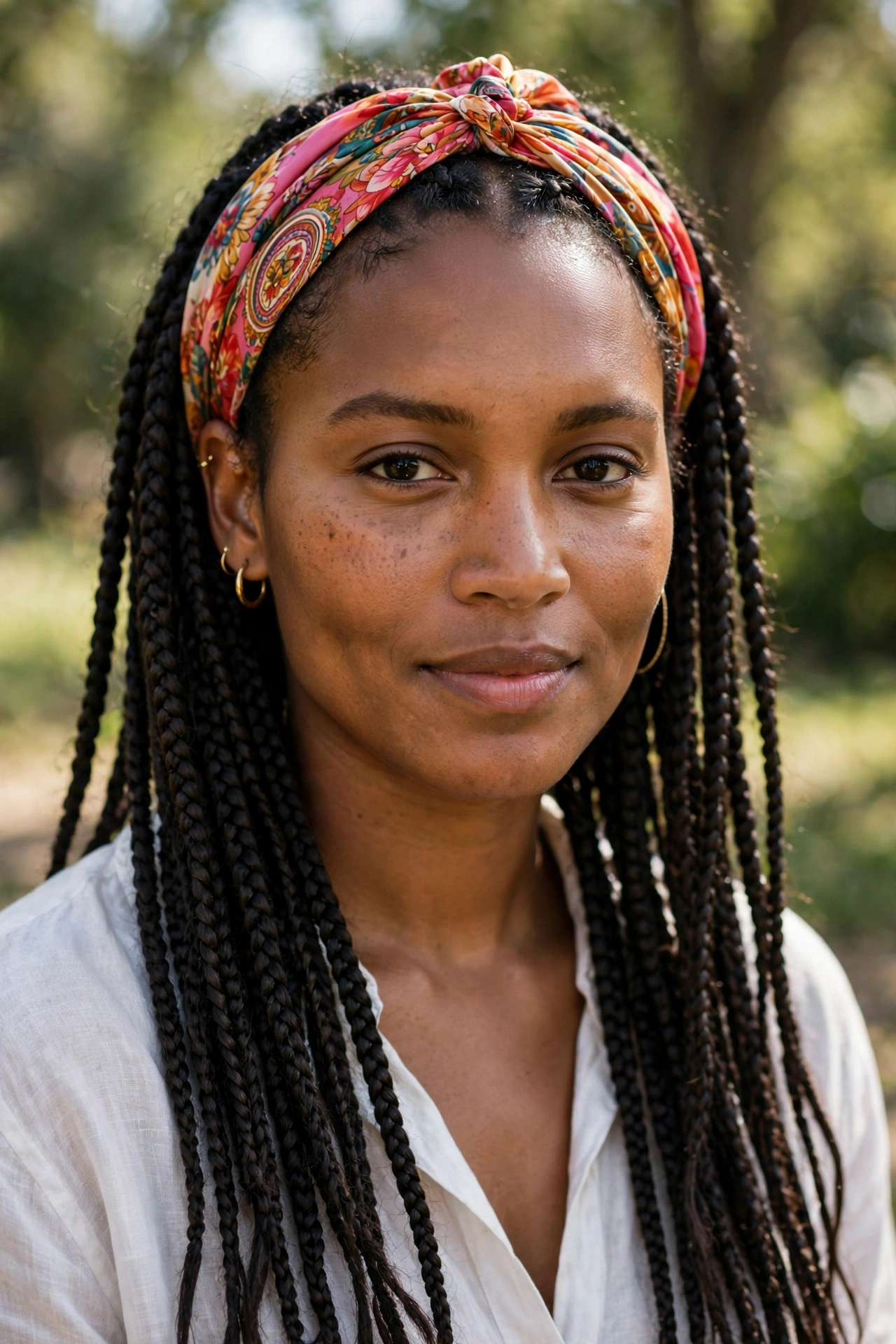
34. Knotless Braids with a Cornrow Front
Combining small cornrows at the front with knotless braids at the back creates a detailed, interesting style with two textures in one look. The cornrows lie flat against the scalp and lead into the flowing braids, giving a polished, intricate finish that looks like it took far more effort than it did.
This combination suits people who like detailed styles and want something different from all-over braids. Ask your braider for cornrows at the front hairline, in a pattern you like, transitioning into knotless braids behind them, and agree the cornrow design before starting. Cornrows can feel tighter than knotless braids, so speak up immediately if they hurt, and moisturise the cornrowed scalp well, since flat braids can dry the scalp faster.
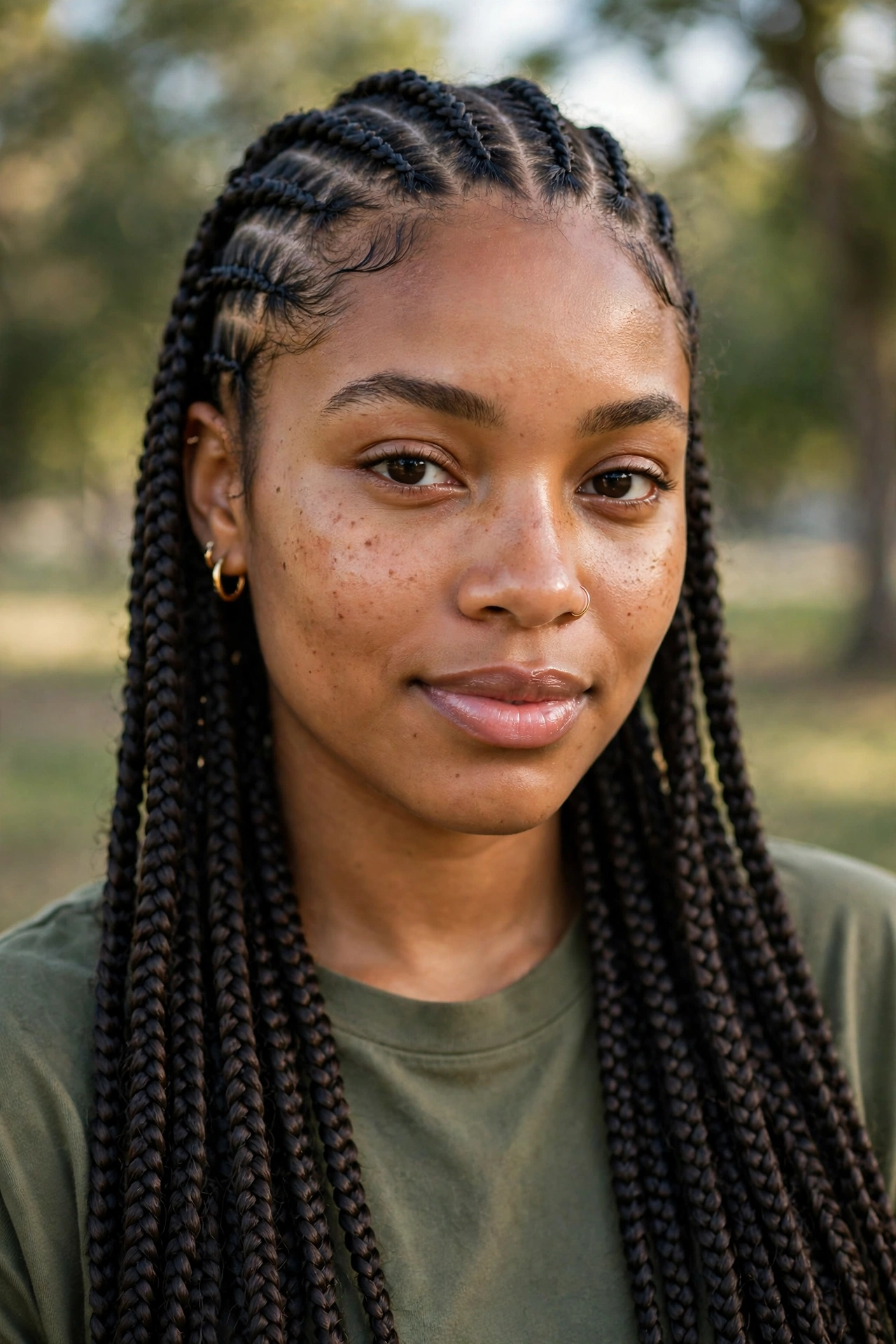
35. Knotless Braids in a Low Ponytail
A low ponytail is the relaxed, elegant cousin of the high ponytail. Gathered at the nape, it looks polished without pulling on the hairline, keeps braids tidy for work and formal occasions, and shows off the length of the braids down the back. It is also one of the kindest updos for your edges.
Low ponytails suit all face shapes and work at mid-back length and longer. Ask your braider for braids long enough to gather at the nape without tension, and use a soft scrunchie to secure the ponytail. Alternate low ponytails with down styles so the same section of hair is not always under tension, and wrap the ponytail loosely at night if you want to keep it for the next day.
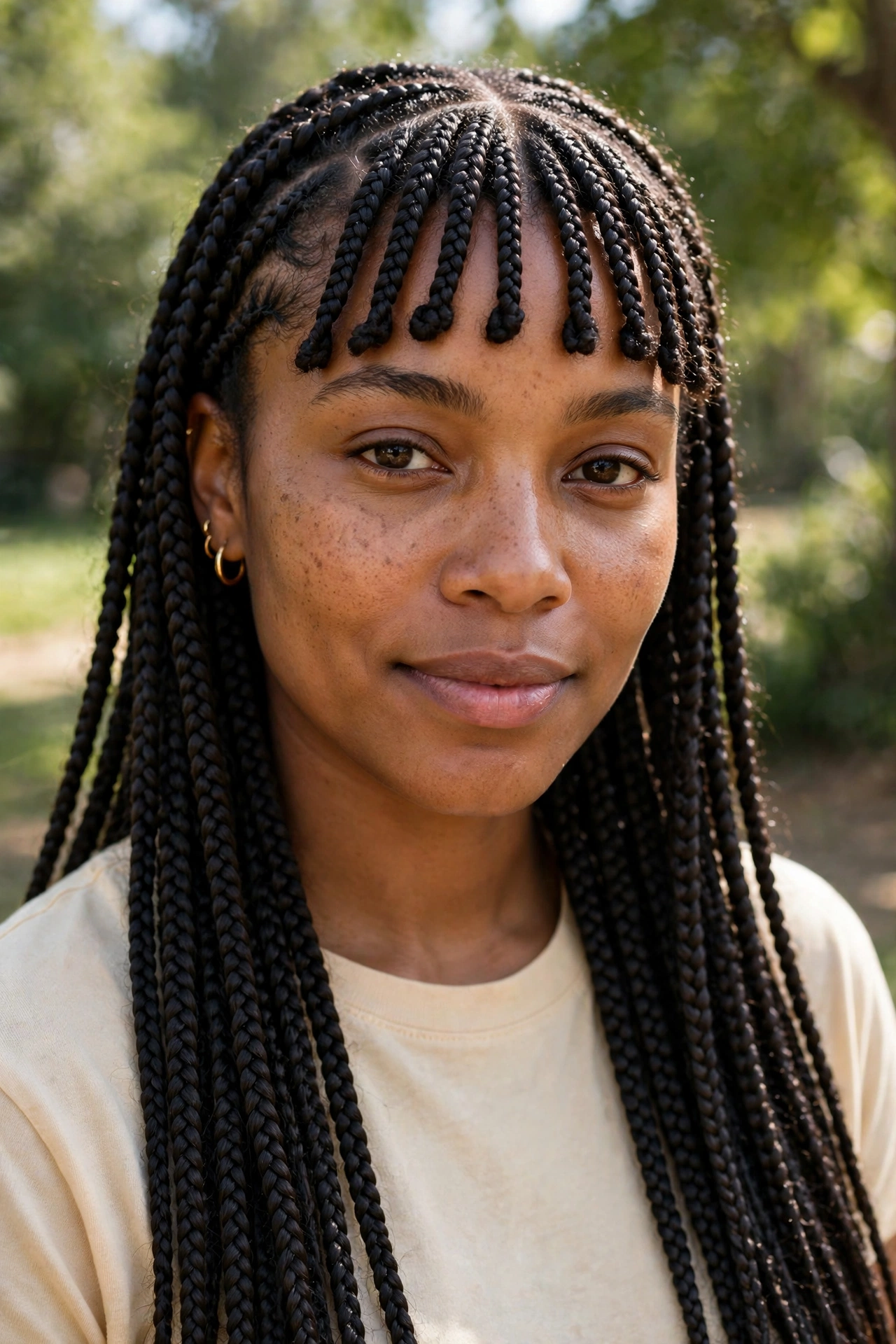
36. Knotless Braids with Bangs
Braided bangs give knotless braids a distinctive, fashion-forward finish. Shorter braids across the forehead frame the eyes and eyebrows, soften the face, and turn a standard braid style into something that looks deliberately designed. Bangs can be blunt, side-swept or wispy, depending on the effect you want.
This style suits oval and longer faces particularly well, because bangs shorten the appearance of the forehead, but it can work on most faces with the right length. Ask your braider to cut or finish the front braids at bang length, and be clear about whether you want a blunt bang or a softer, feathered finish. Keep bangs out of your eyes with a light pin if needed, wash them gently as they sit against the skin, and avoid heavy edge control on the bang area, which can look greasy quickly.
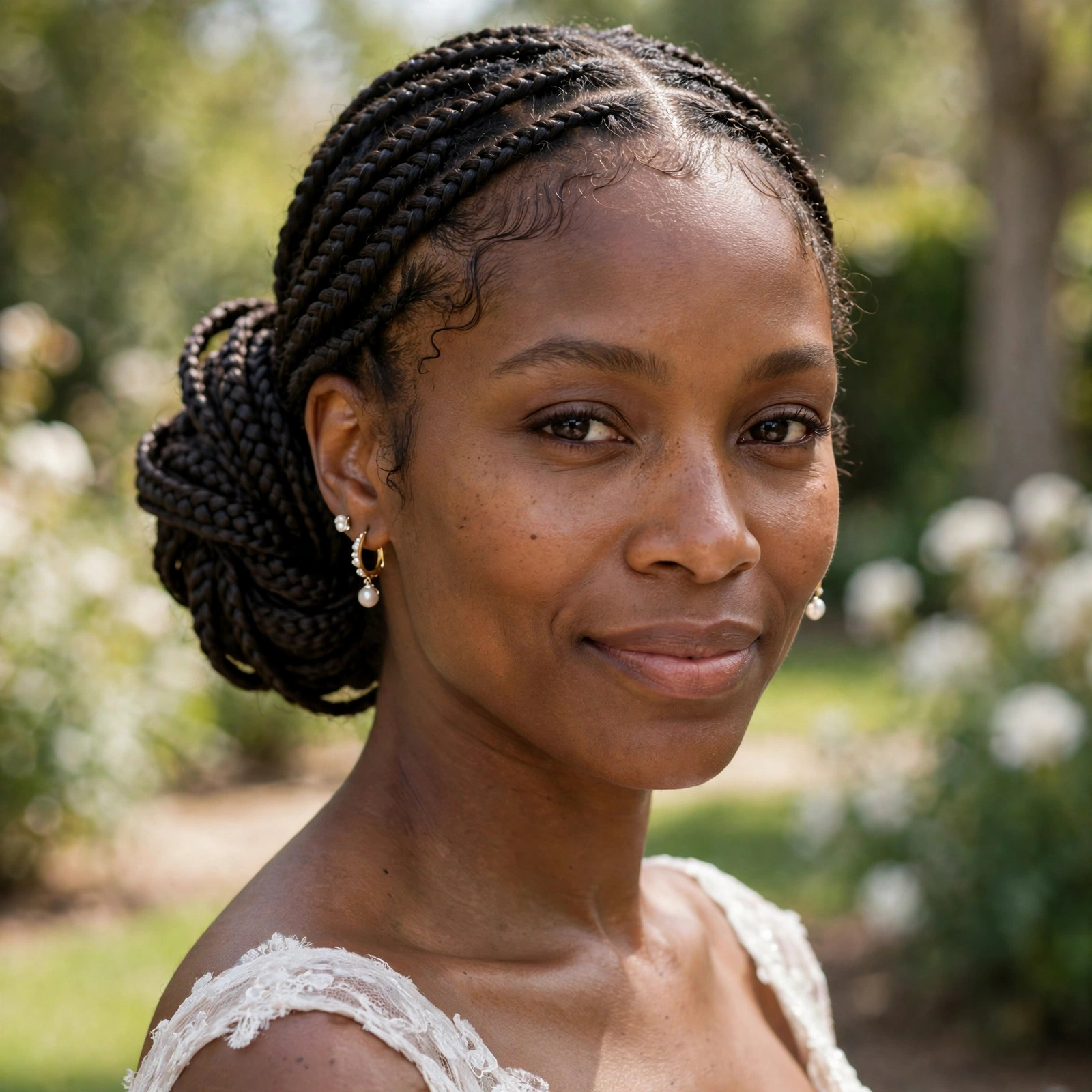
37. Knotless Braids Wedding Updo
A knotless braids wedding updo is an elegant, long-lasting choice for brides and wedding guests. The braids are twisted and pinned into a low, sculpted bun or an intricate updo, often with a few soft pieces left loose to frame the face, creating a formal style that holds all day without constant fixing.
This updo suits weddings, galas and any formal event where hair must look perfect for many hours. Ask your braider or stylist for a braided updo trial before the big day, bring photos of the style you want, and discuss whether you want accessories such as pins, cuffs or flowers added. On the day, use a light holding spray rather than heavy gel, and pin the updo securely but not painfully, so you can enjoy the event without scalp discomfort.
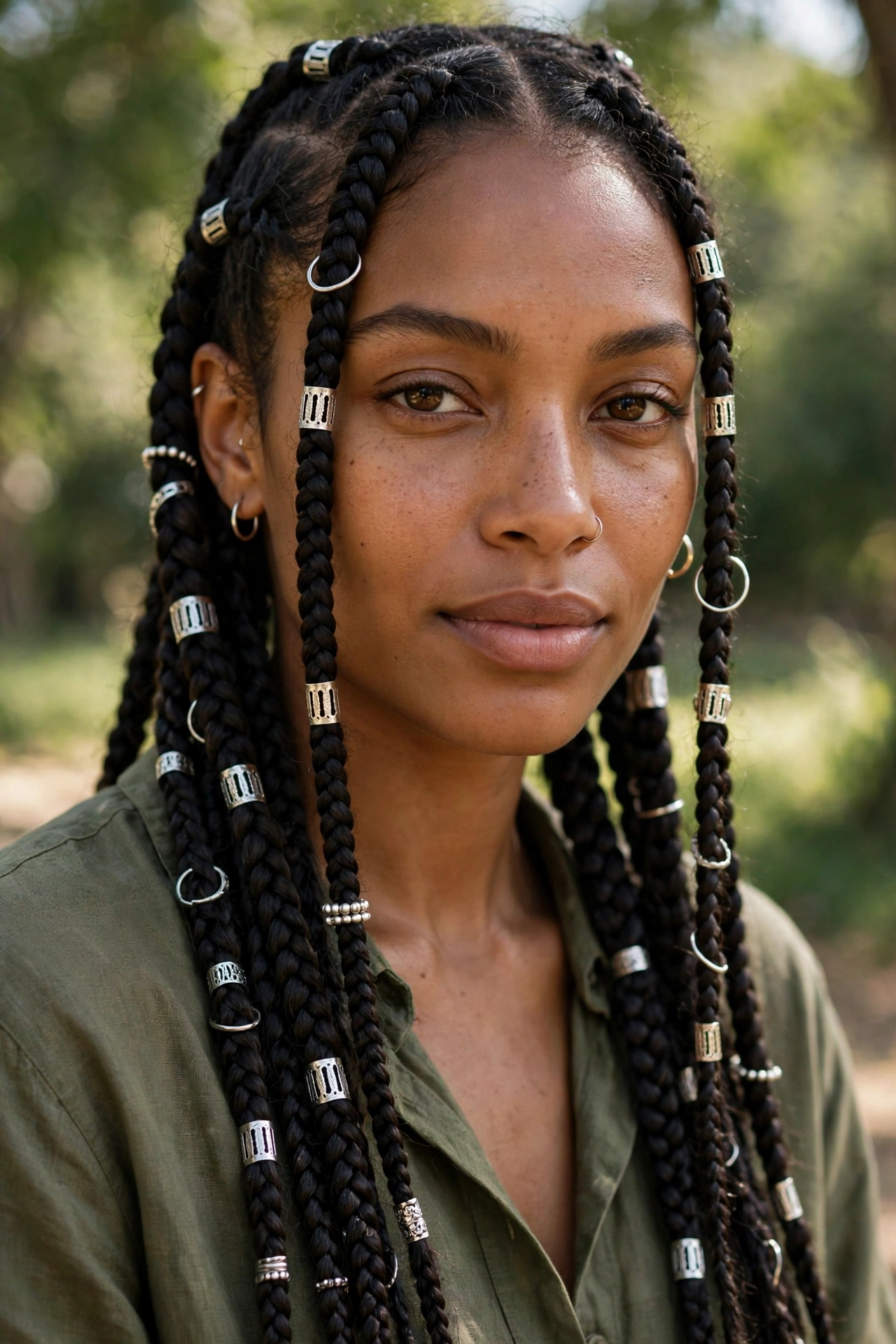
38. Knotless Braids with Silver Cuffs
Silver cuffs offer a cooler, more modern alternative to gold, and they suit braids in black, blonde and pastel shades alike. Small silver rings and cuffs scattered through the braids add shine and detail without the weight of beads, and they are easy to add or remove to change the look.
This detail suits formal and everyday wear, and it pairs beautifully with silver jewellery. Ask your braider to add silver cuffs after styling, or add them yourself by sliding them onto selected braids and pinching them gently closed. Choose cuffs that fit your braid size, remove them before washing to prevent tarnishing, and keep the number modest, as too many cuffs can make the style look busy and add unnecessary weight.
39. Asymmetric Knotless Bob
An asymmetric bob takes the classic braid bob and cuts it longer on one side than the other, creating a bold, fashion-forward shape. The uneven length adds drama and movement, frames the face asymmetrically, and makes a short braid style feel far more distinctive than a standard bob.
This style suits confident wearers and works best on oval, round and heart-shaped faces, where the longer side can balance features. Ask your braider for an asymmetric bob with a clear length difference between the sides, and decide which side should be longer based on your parting and the side you usually wear your hair. Upkeep is the same as for a regular bob, with a little extra care to keep the longer side smooth and the shape visible as the style grows out.
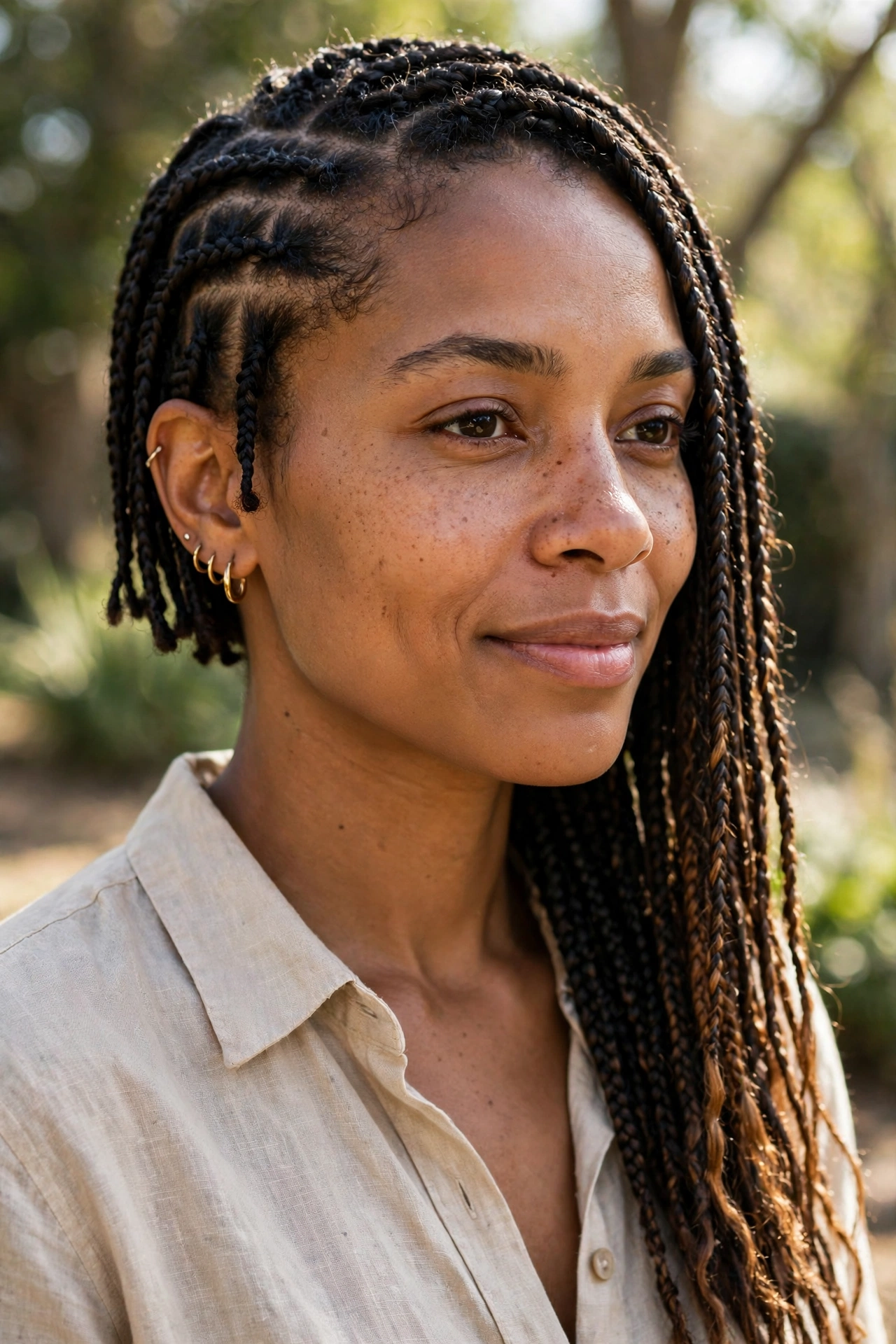
40. Knotless Braids with Twisted Ends
Twisted ends finish knotless braids with a neat, rope-like twist instead of a straight sealed end, adding subtle texture and preventing the ends from looking blunt. The twists are light, flexible and less likely to unravel than loose ends, and they give the whole style a hand-finished feel.
This finish suits people who want a small detail that sets their braids apart without changing the overall look. Ask your braider to twist the last few inches of each braid and seal them lightly, rather than leaving them straight. Twisted ends need little extra care, but avoid pulling them apart or brushing them, which can undo the twist, and keep the ends moisturised so they do not dry out and frizz.
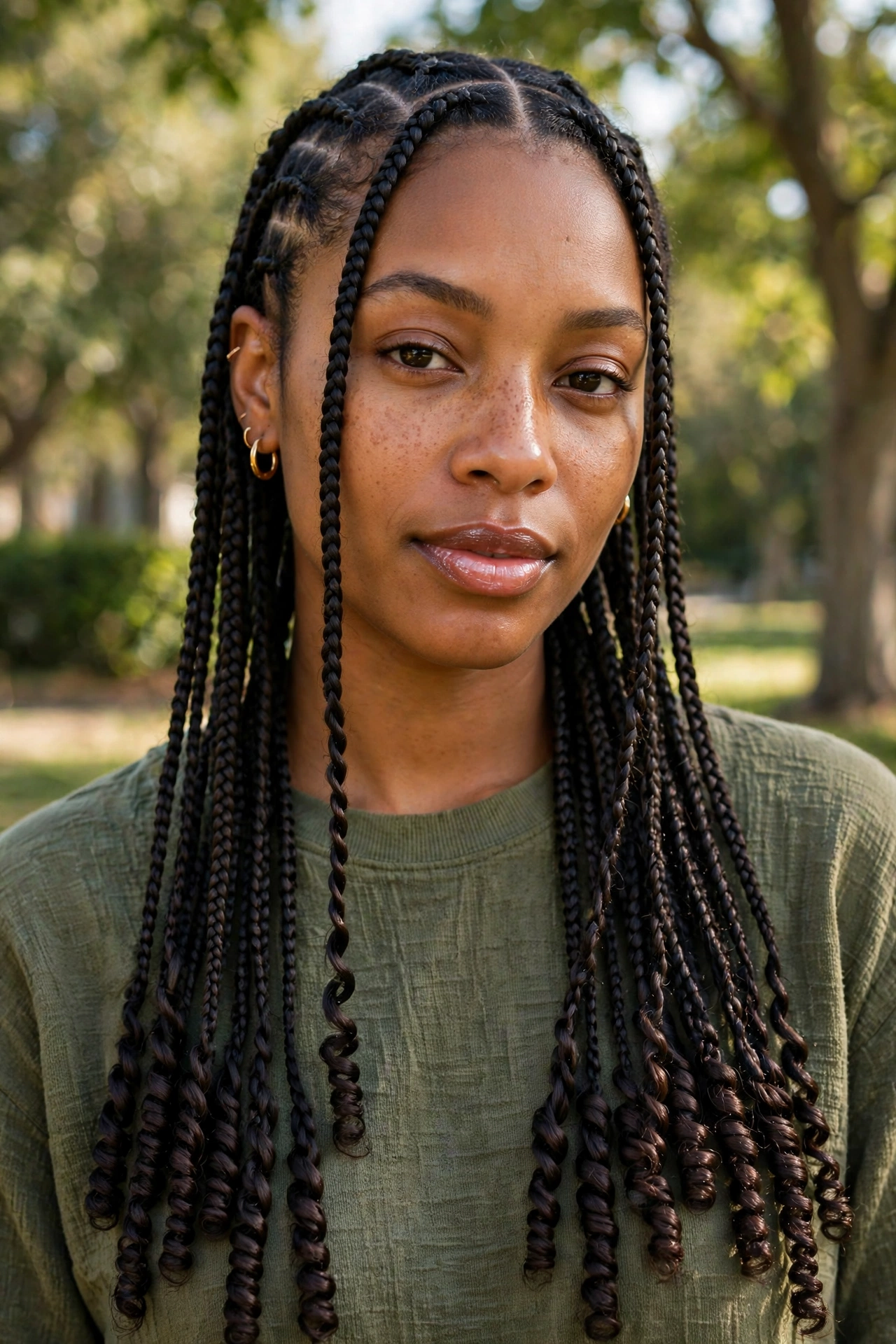
41. Knotless Braids with Colourful Beads
Colourful beads turn knotless braids into a joyful, expressive style, especially popular for children, festivals and summer holidays. Bright beads in rainbow shades, pastels or neon colours add fun and personality, and they can be mixed and matched to suit outfits or moods.
This style suits playful personalities and younger wearers, but anyone can enjoy colourful beads. Ask your braider to add beads securely to the ends, and choose lightweight plastic beads for children so the style does not feel heavy. Keep the beads clean by wiping them occasionally, remove any that crack or develop sharp edges, and let children help choose their colours to make the style feel personal.
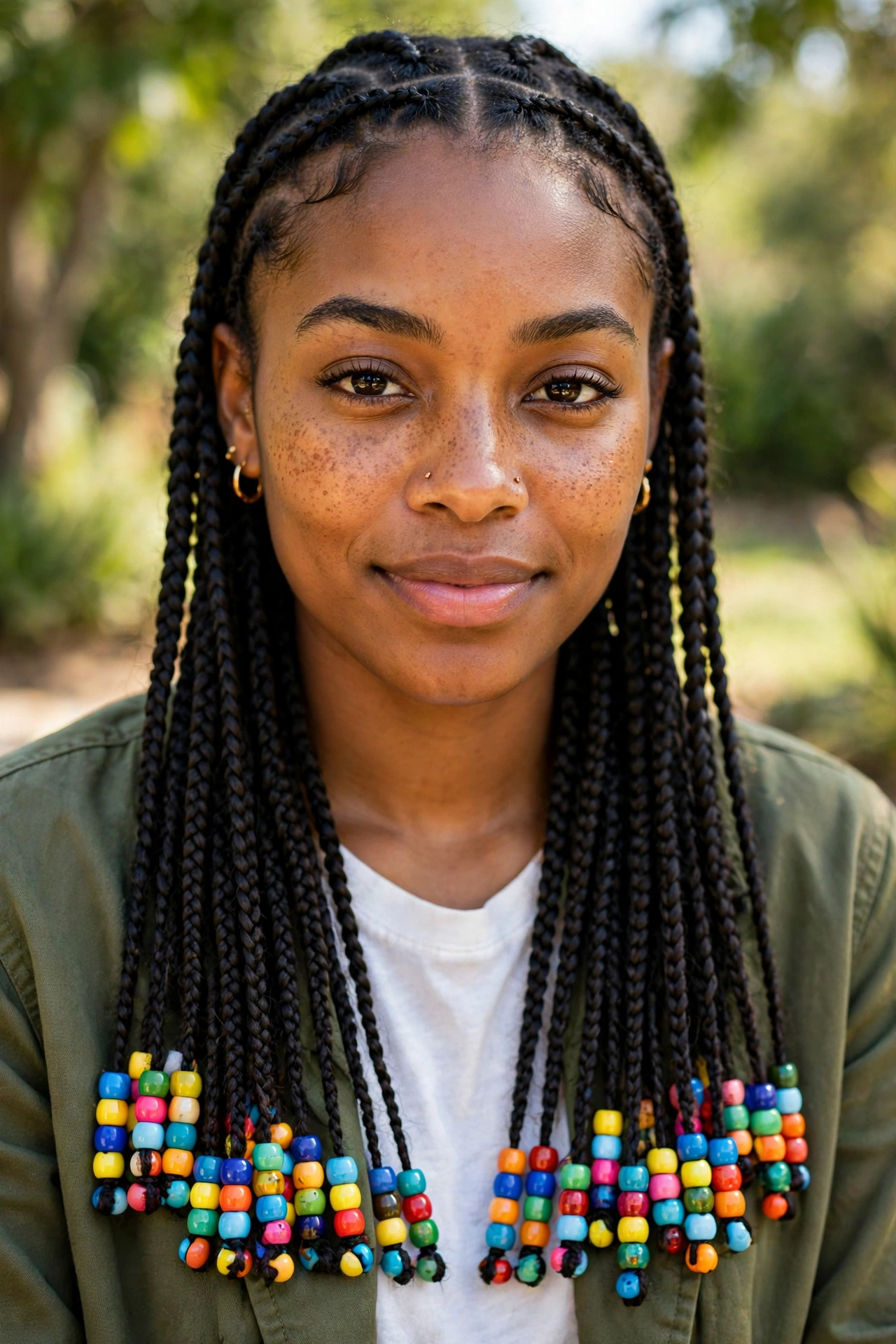
42. Pastel Pink Knotless Braids
Pastel pink knotless braids are soft, dreamy and unmistakably fun. The light pink shade gives braids a candy-coloured finish that suits festivals, spring and anyone who loves playful colour, while the pastel tone keeps it softer and more wearable than a hot pink.
This colour suits fair to medium skin tones especially well, but it can work on deeper skin as a striking contrast too. Ask your braider for pastel pink braiding hair and be aware that pastel shades can fade or look dull if over-washed, so wash gently and not too often. Protect the colour from heavy oils that can darken pastels, use a silk bonnet at night, and enjoy the compliments, because pastel braids always attract attention.
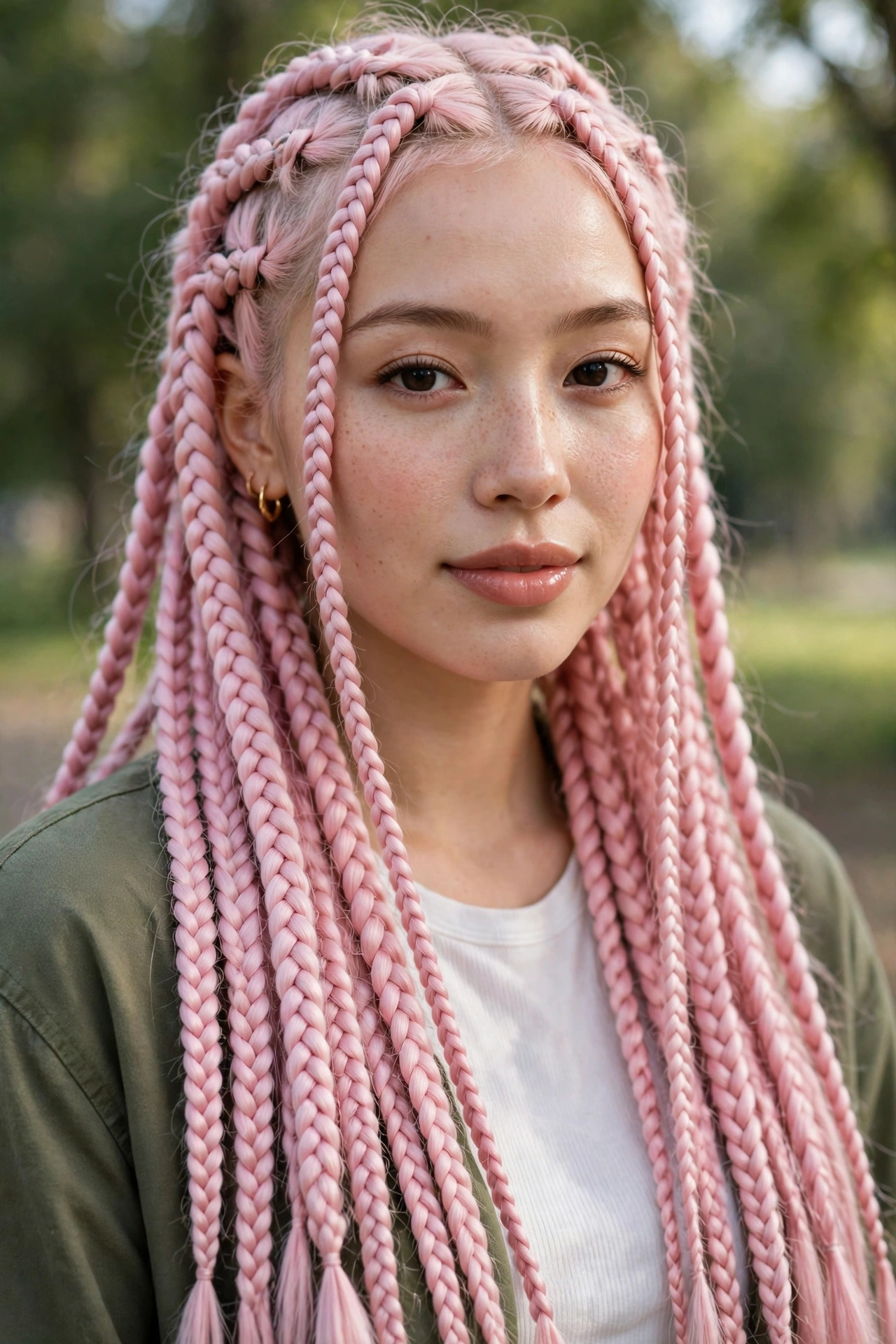
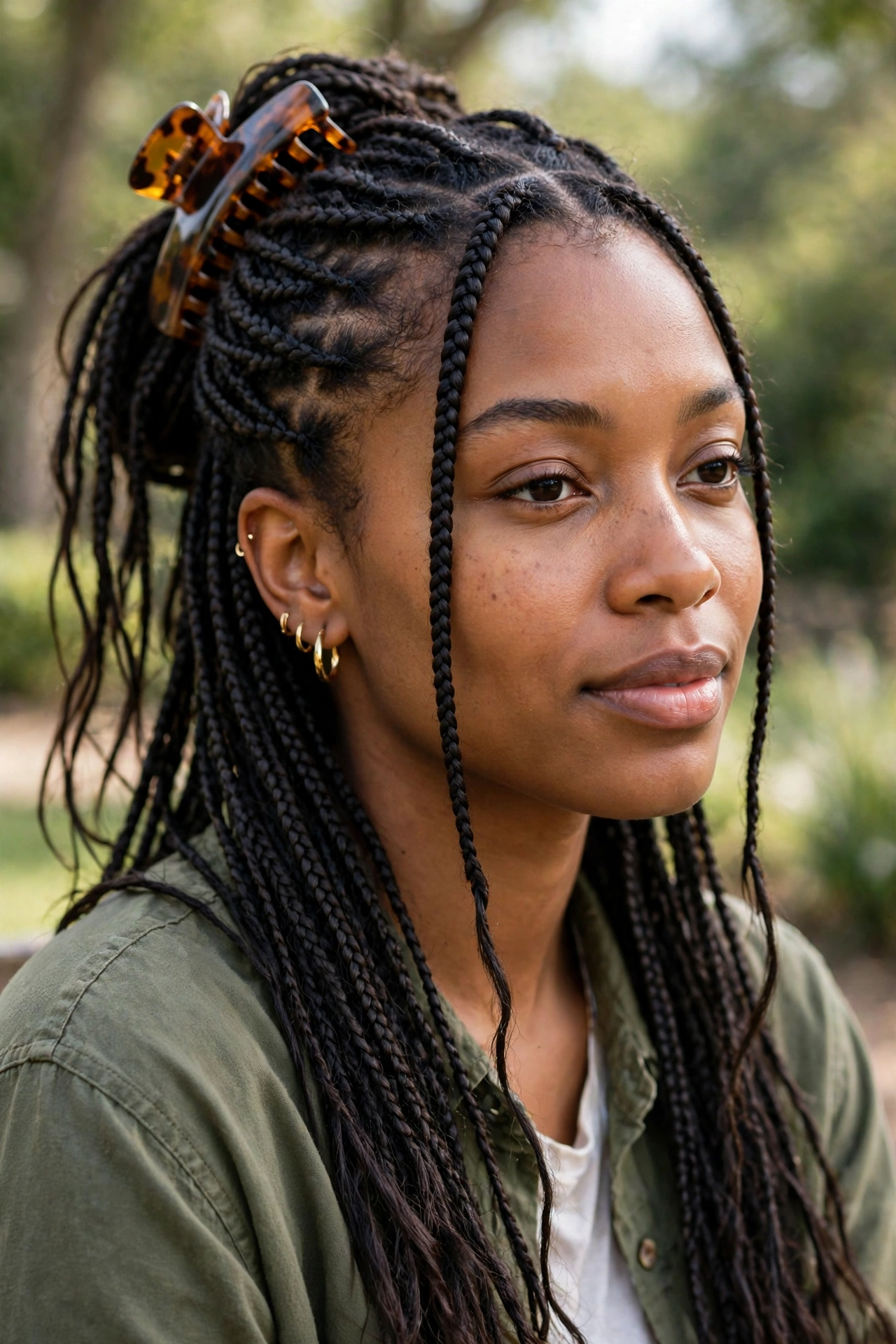
43. Knotless Braids Half-Up with a Claw Clip
A claw clip is the easiest way to style knotless braids half-up in seconds. The top section is twisted loosely and secured with a large claw clip, creating a relaxed, effortless look that works for errands, work-from-home days and casual outings. It is gentle on the hairline and takes almost no skill.
This style suits everyone and works best at mid-back length or longer, so the top section has enough length to clip. Choose a large, sturdy claw clip that can hold the thickness of your braids, and twist the section loosely rather than pulling it tight. Keep a claw clip in your bag for quick restyles during the day, and avoid clipping the same section every day if the clip presses on one spot.
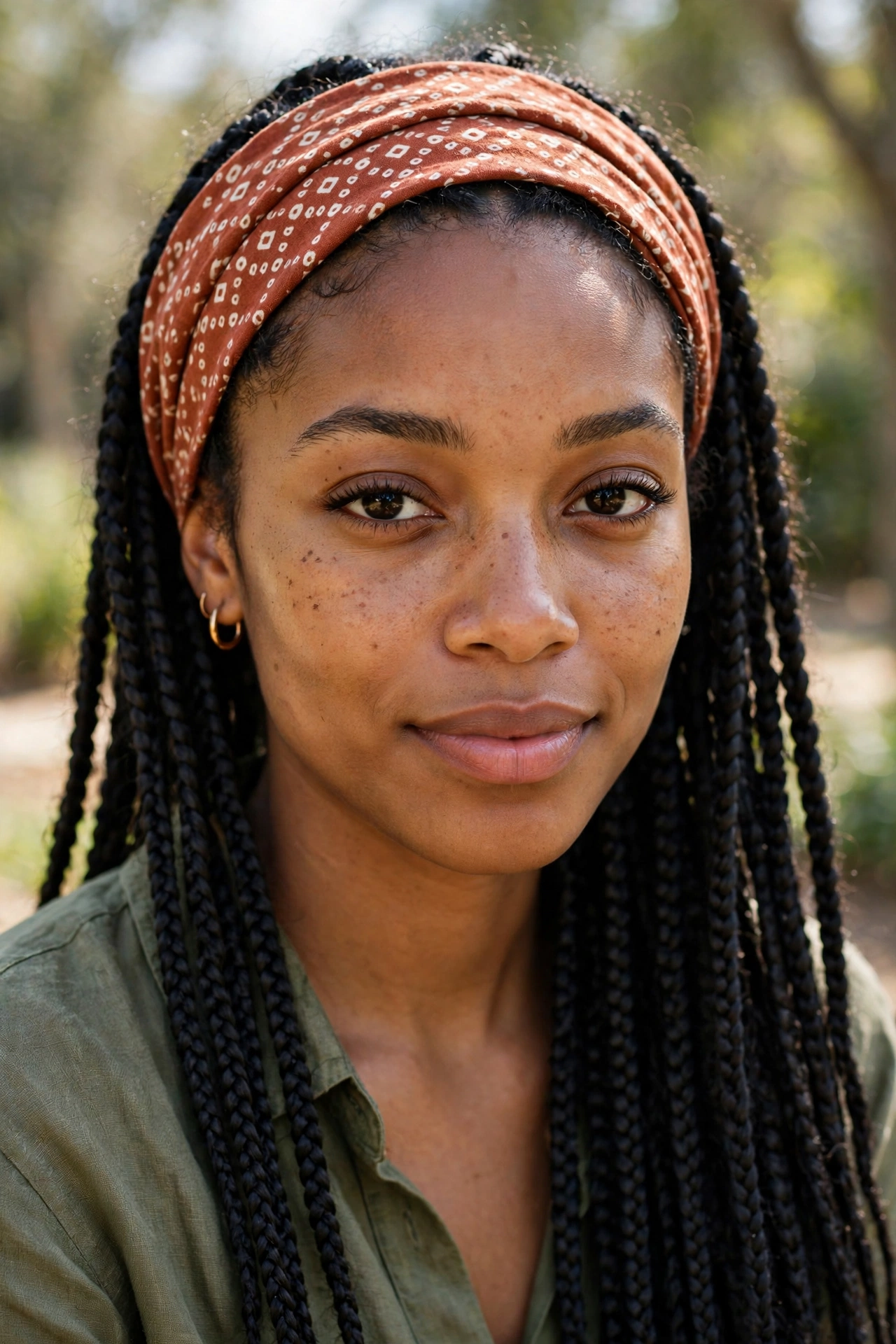
44. Knotless Braids with a Headband
A headband instantly changes the look of knotless braids, pushing the front braids back for a sporty, preppy or elegant finish depending on the band you choose. Wide fabric headbands feel casual and comfortable, while slim, embellished bands suit more formal looks, and a headband also keeps the hairline tidy on days when the edges need a break.
Headbands suit everyone and are especially useful for the gym, for bad-edge days, and for covering new growth. Choose a soft, stretchy headband that does not press too tightly, and avoid wearing a very tight band all day, as it can cause headaches and edge tension. Keep a few headbands in different styles to change the look, and wash fabric bands regularly so they stay fresh against the skin.
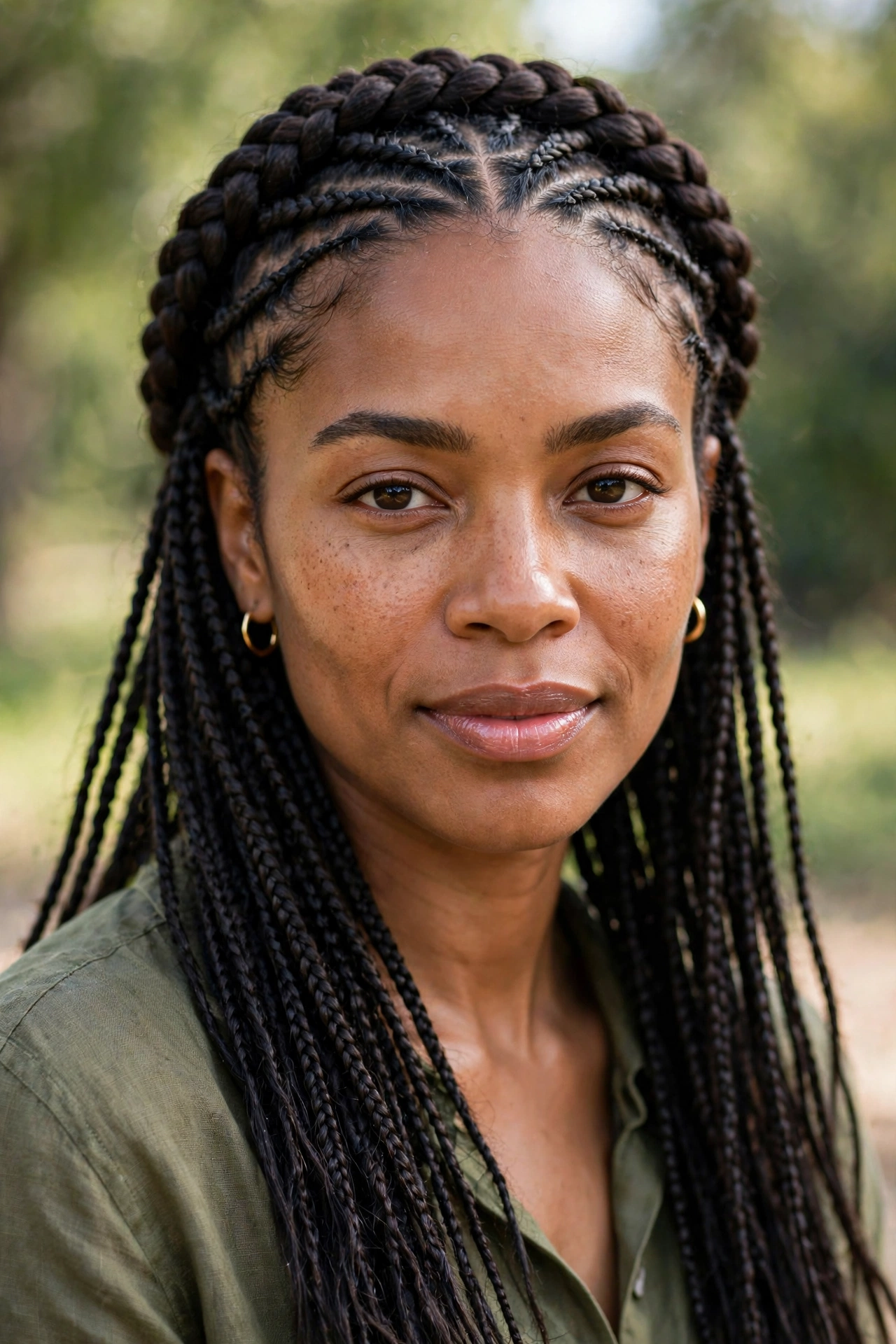
45. Knotless Braids with a Braided Crown
A braided crown wraps braids around the head like a halo, creating a regal, romantic style that suits weddings, formal events and special occasions. The crown can be made from two front braids wrapped back and pinned, or from the full head of braids arranged in a circular style, depending on how dramatic you want the effect.
This style suits formal occasions and anyone who wants an updo that looks intricate but feels secure. Ask your stylist for a braided crown made from your knotless braids, and bring reference photos so they understand the fullness you want. Pin the crown securely with bobby pins that match your braid colour, use a light holding spray, and do a trial run before important events so you know the style will hold comfortably all day.
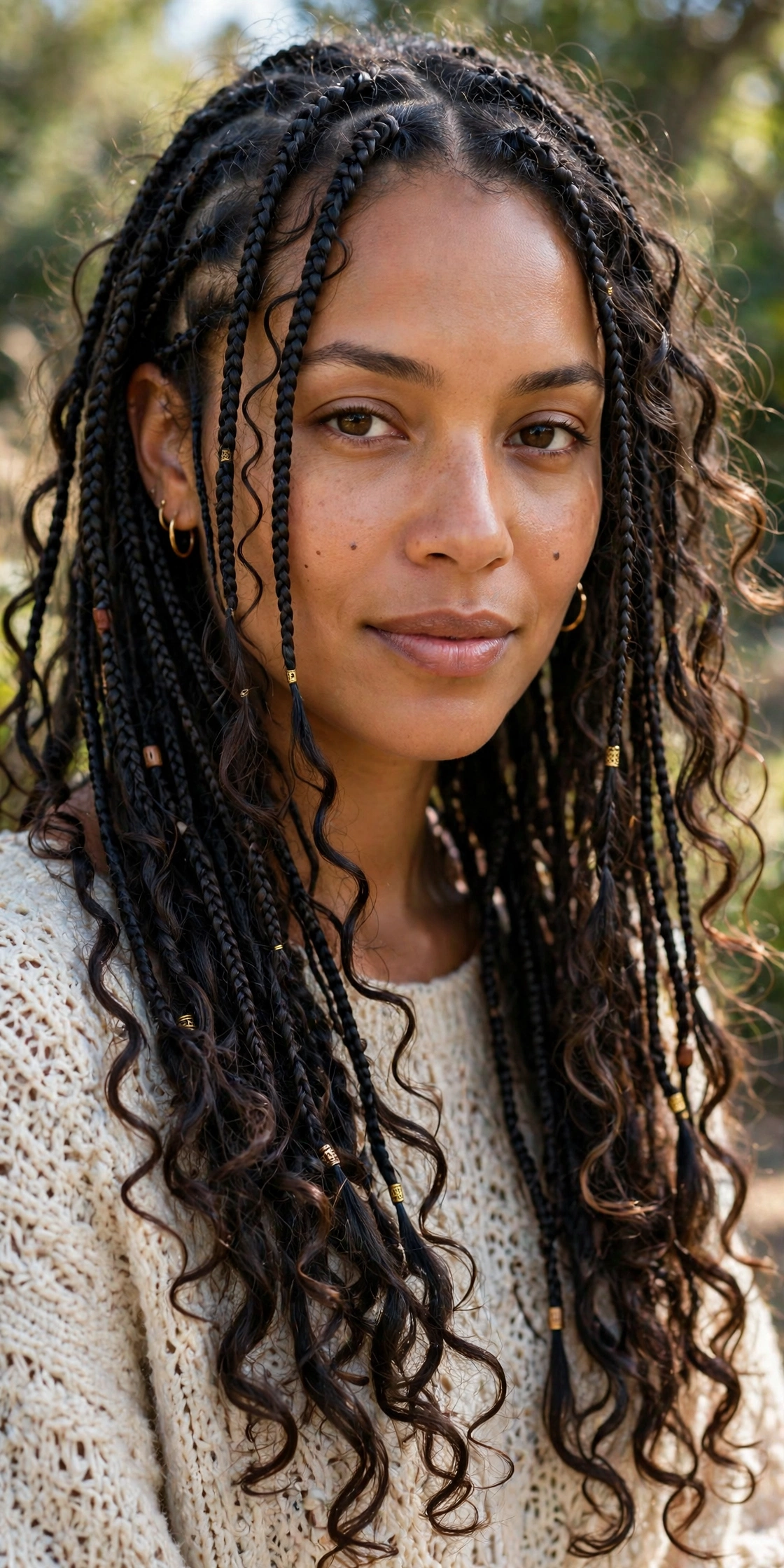
46. Extra Small Boho Knotless Braids
Extra small boho knotless braids combine the finest braid size with the softest boho texture, creating a full, detailed style with maximum movement. The many thin braids, mixed with loose curly pieces, look almost like natural loose hair while still offering the protection and longevity of braids.
This style suits people who want the most natural-looking braids and are prepared for a long appointment and careful maintenance. Ask your braider for extra small knotless braids with boho curls, and be clear about how much curl you want, since more curl means more daily care. Protect the fine braids with a bonnet every night, wash very gently, and expect the style to take a full day to install.
47. Knotless Braids with French Curl Ends
French curl ends finish knotless braids with bouncy, spiral curls that look glamorous and full. The curls are more defined than boho waves, giving the ends a polished, salon-styled finish that elevates the whole look and works beautifully for events and evenings out.
This finish suits anyone who loves defined curls and wants their braids to look dressed up even when worn down. Ask your braider for French curl ends, using pre-curled braiding hair or curling the ends during installation, and confirm the curl size you prefer. Keep the curls defined with a light curl cream, avoid brushing them, and gather them loosely at night so the spirals do not tangle.
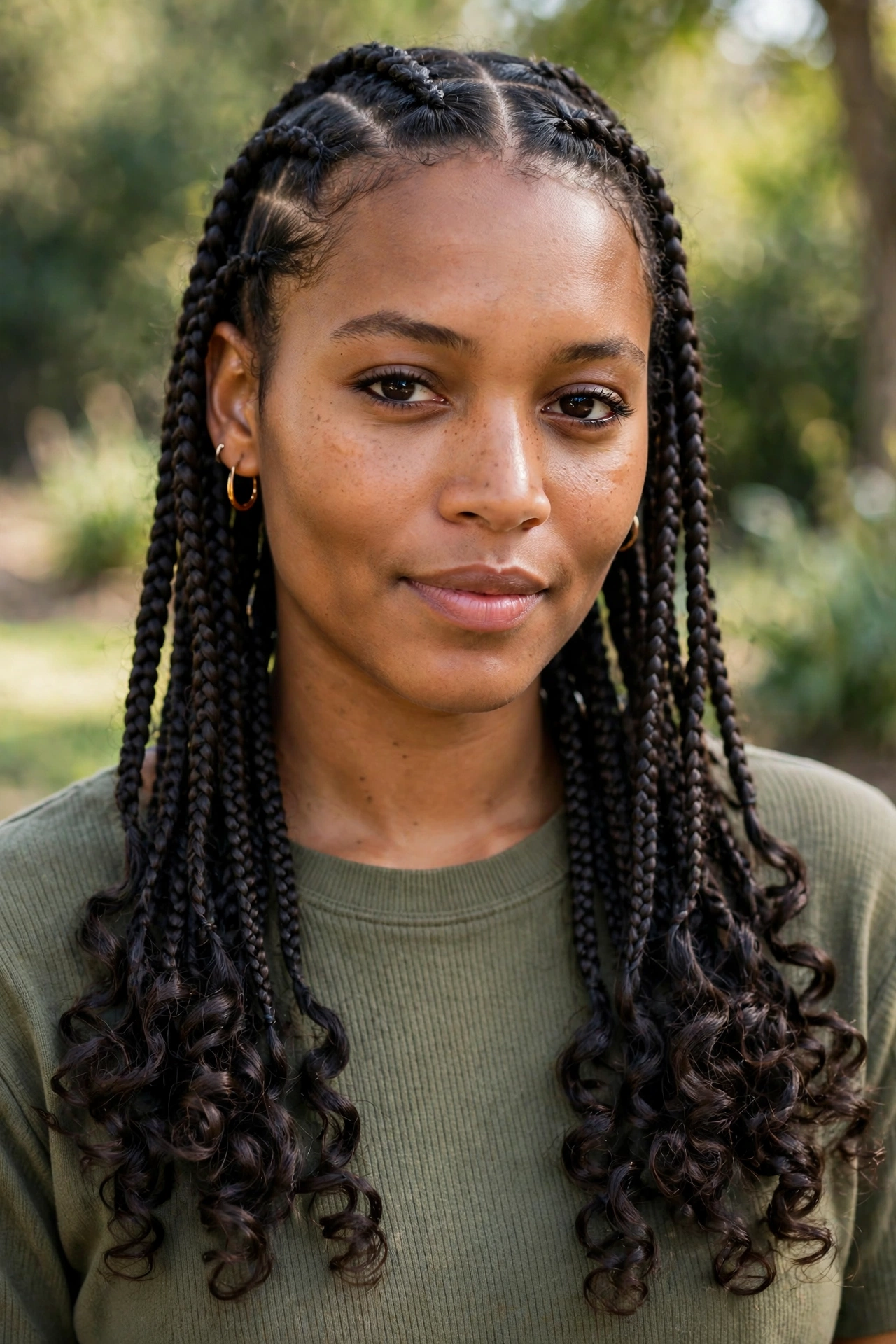
48. Gym-Friendly Knotless Braids
Gym-friendly knotless braids are chosen and styled for active lifestyles: a comfortable length, a secure but gentle way to tie them back, and a routine for dealing with sweat. Shorter lengths, bobs and mid-back braids work best, because very long braids get in the way and take too long to dry after washing.
This approach suits anyone who exercises regularly and wants braids that fit their routine. Ask your braider for a practical length and medium size, and plan your gym routine: tie braids in a loose high bun or ponytail, use a sweat-wicking headband, and rinse the scalp after very sweaty sessions. Wash the braids when needed rather than on a fixed schedule, dry them fully, and never leave sweaty braids tied up tightly for hours.
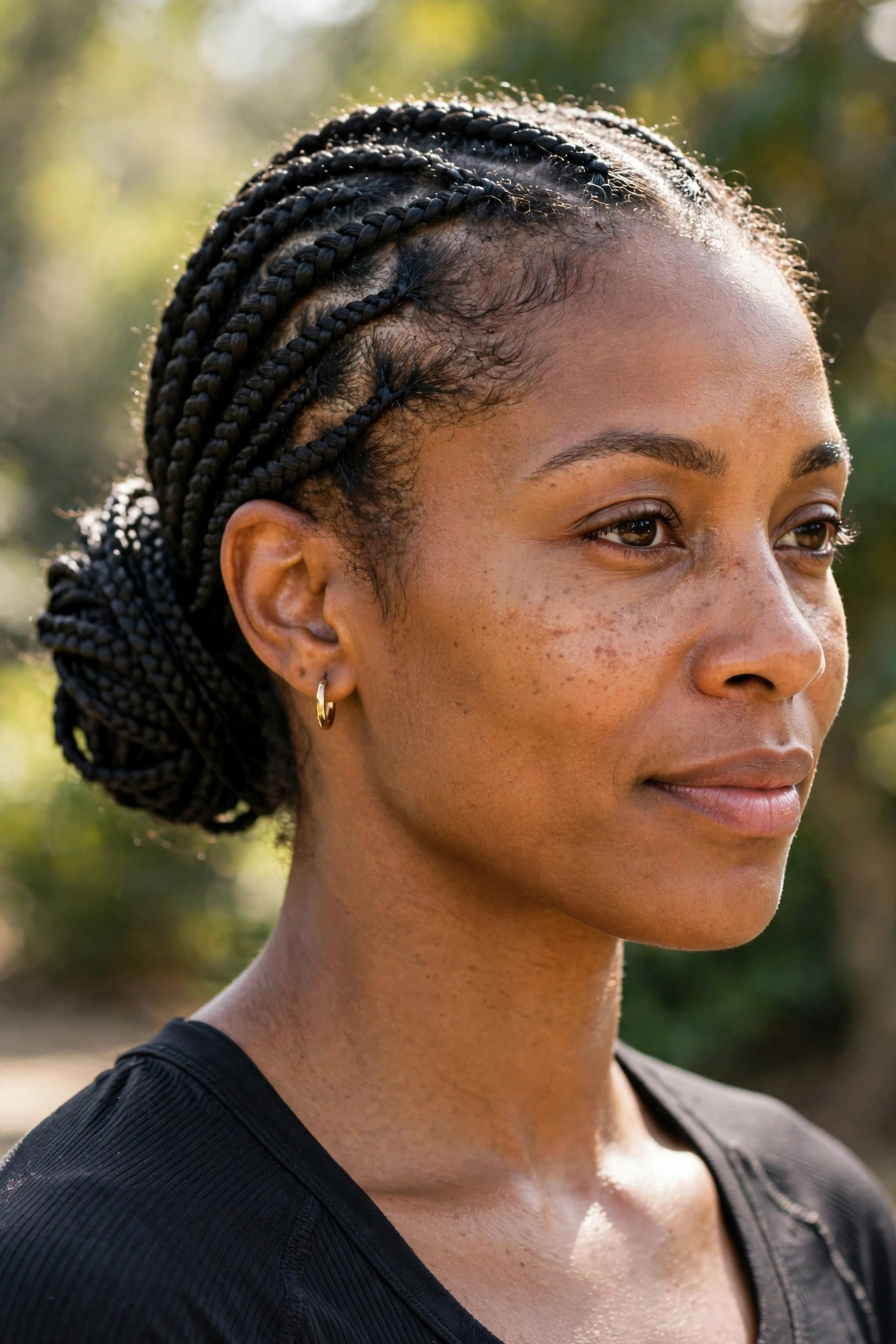
49. Knotless Braids Refresh-Friendly Style
A refresh-friendly knotless style is one that is easy to tidy up between washes, so it always looks neat with minimal effort. Medium-sized braids, a simple parting and sealed ends make refreshing simple: the edges can be smoothed, the scalp can be cleansed, and the braids can be re-moisturised without a full wash day.
This suits busy people who want their braids to look good for the full six to eight weeks. Ask your braider for a neat, medium knotless style with clean parts, and keep a refresh kit at home: diluted shampoo or a scalp cleanser, a light oil, edge control and a silk scarf. Refresh the edges and partings weekly, cleanse the scalp when it feels itchy or product-heavy, and re-wrap the braids at night to keep them smooth.
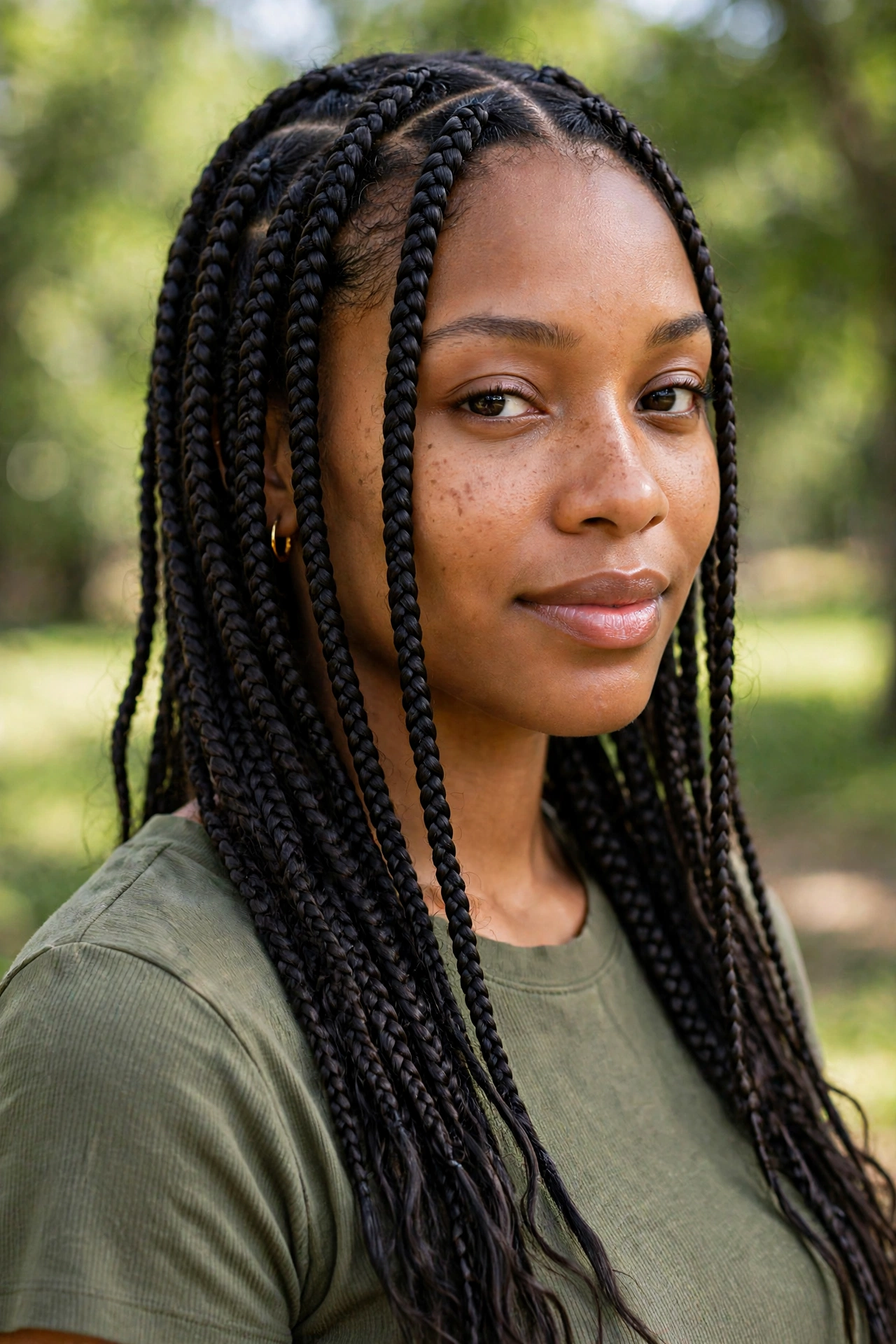
50. Knotless Braids with a Swoop Bang
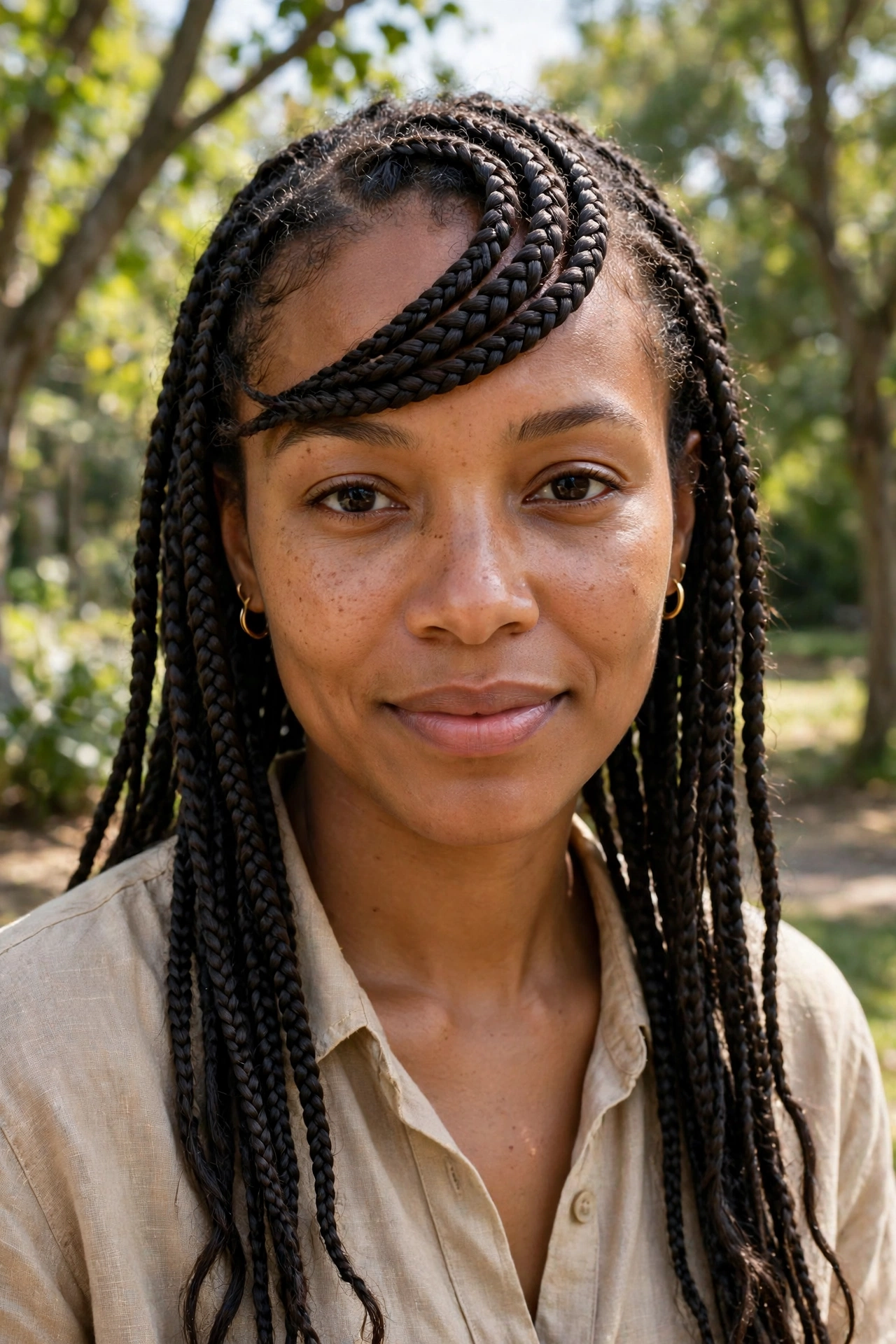
A swoop bang sweeps braided bangs across the forehead to one side, creating a soft, glamorous finish that frames the eyes beautifully. The diagonal line of the swoop adds movement and asymmetry, making it a more dynamic choice than a straight bang, and it pairs well with both casual and formal looks.
This style suits most face shapes and is especially flattering on round and square faces, where the diagonal line softens the features. Ask your braider for a swoop bang with the front braids finished at an angle, and be clear about which direction you want the swoop. Style the swoop with a light edge control if needed, keep it off the skin to avoid product buildup, and pin it back on days when you want a different look.
Frequently Asked Questions
How long do knotless braids last?
Knotless braids typically last six to eight weeks with proper care. Smaller braids and well-maintained edges can sometimes stretch a little longer, but keeping any braided style in for too long risks matting, breakage and thinning at the hairline. Plan your take-down when new growth makes the roots look puffy or when the braids start to look frizzy beyond refreshing.
Do knotless braids damage your hair?
Knotless braids are one of the gentlest braided styles because they start without a tight knot, which means less pulling on the scalp and edges. They only damage hair when they are installed too tightly, kept in too long, or neglected underneath. Never accept braids that cause pain, headaches or bumps, and always moisturise your scalp and hair while the braids are in.
How long does it take to install knotless braids?
Installation time depends on size and length. Jumbo braids can take two to three hours, medium braids usually take four to six hours, and small or extra-small braids can take six to ten hours or more. Boho styles with curls take a little longer than their classic equivalents. Book a full day for small braids and bring entertainment.
Can you wash knotless braids?
Yes. Wash knotless braids every two to three weeks, or when the scalp feels itchy or product-heavy. Dilute your shampoo, focus on the scalp, rinse thoroughly, and dry the braids completely afterwards, as damp braids left to air-dry slowly can develop a musty smell. A hooded dryer or a dryer on a cool setting speeds things up.
What should I ask my braider for?
Bring reference photos and agree on size, length, colour and parting before the braiding starts. Ask for a comfortable, pain-free tension, especially at the hairline, and confirm the price, the type of hair being used, and how long the appointment will take. A good braider will check in about tension and will not rush the partings.
Conclusion
Knotless braids remain a favourite for good reason: they are comfortable from day one, they suit every length from a bob to knee-length drama, and they adapt to any personal style, from sleek jet black to playful pastel pink. The 50 ideas in this guide should give you a clear starting point, whether you are booking your first set of braids or your fiftieth.
Whatever style you choose, the fundamentals stay the same. Insist on pain-free installation, protect your hair at night with silk or satin, keep your scalp clean and moisturised, and take the braids out before wear and tear turns into damage. Treat your natural hair kindly underneath, and your knotless braids will reward you with weeks of beautiful, low-effort style. Save this guide, share it with your braider, and enjoy finding the knotless look that feels most like you.